Subscribe now for full access and no adverts

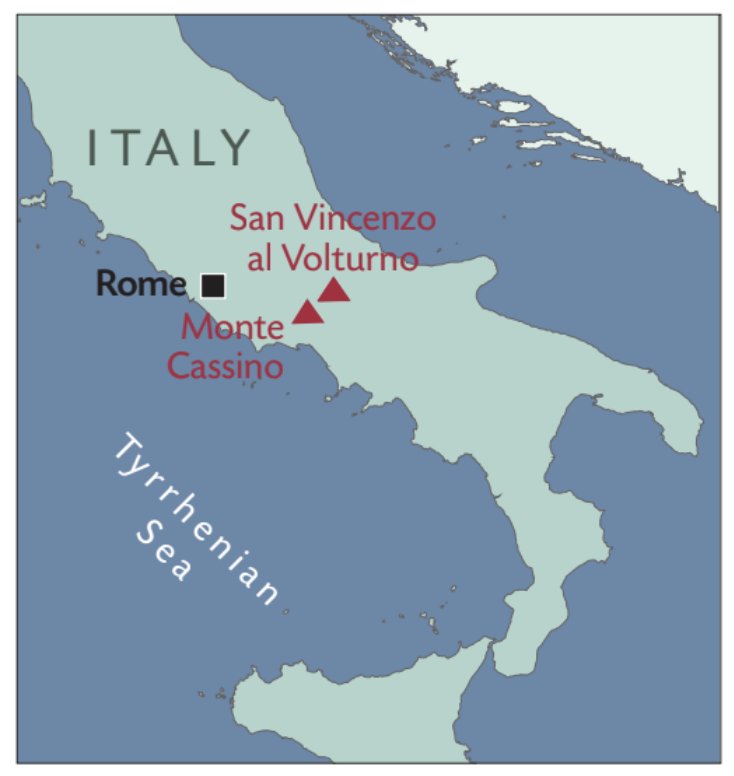
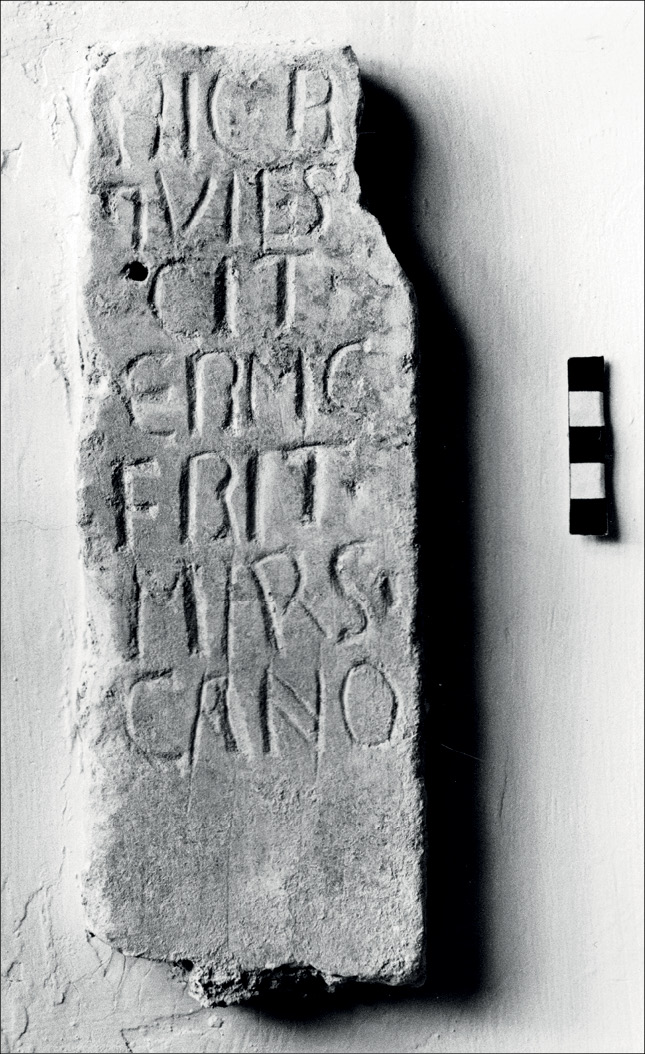
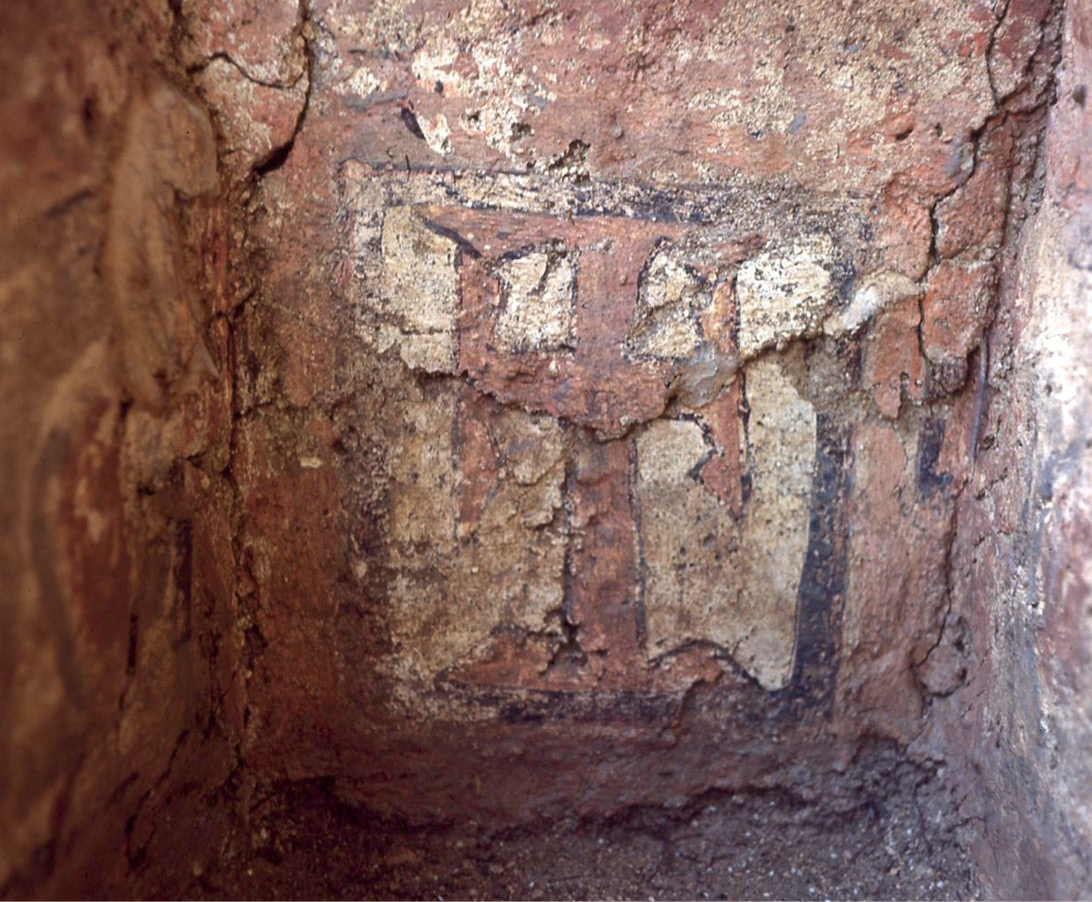
The majority of Monte Cassino’s 500 tombstones are believed to date to the period before it was sacked by an Arab band in AD 883. Angelo Pantoni, the great 20th-century excavator of the monastery, identified two types of tombs. The first was excavated into the rock and approximately followed a human form, often with a base made of two or three tiles, each deliberately punctured to permit the draining of decomposing bodily liquids. The second type of tomb was block-built, the stones being mortared together. These were covered with travertine slabs. One of these, dating to the 11th century, was covered with tiles. Many of these block-built tombs were lined with white mortar. Like the simpler first type, their bases were composed of tiles punctured with lines of holes. Two other types of tombs found at San Vincenzo – a neighbouring Benedictine monastery 50km to the east – appear not to occur at Monte Cassino. Major tombs set inside arcosolia (large arched niches) were absent. At San Vincenzo, arcosolia tombs served as pivotal points in the 9th-century topography of the monastery. Similarly, no painted tombs were discovered at Monte Cassino, in contrast to San Vincenzo, where many had decorated interiors adorned with prominent crosses and occasionally red flowers. Other 9th-century tombs at this monastery also included painted inscriptions, following formulae that are known from decorated tombs in Lombardy.
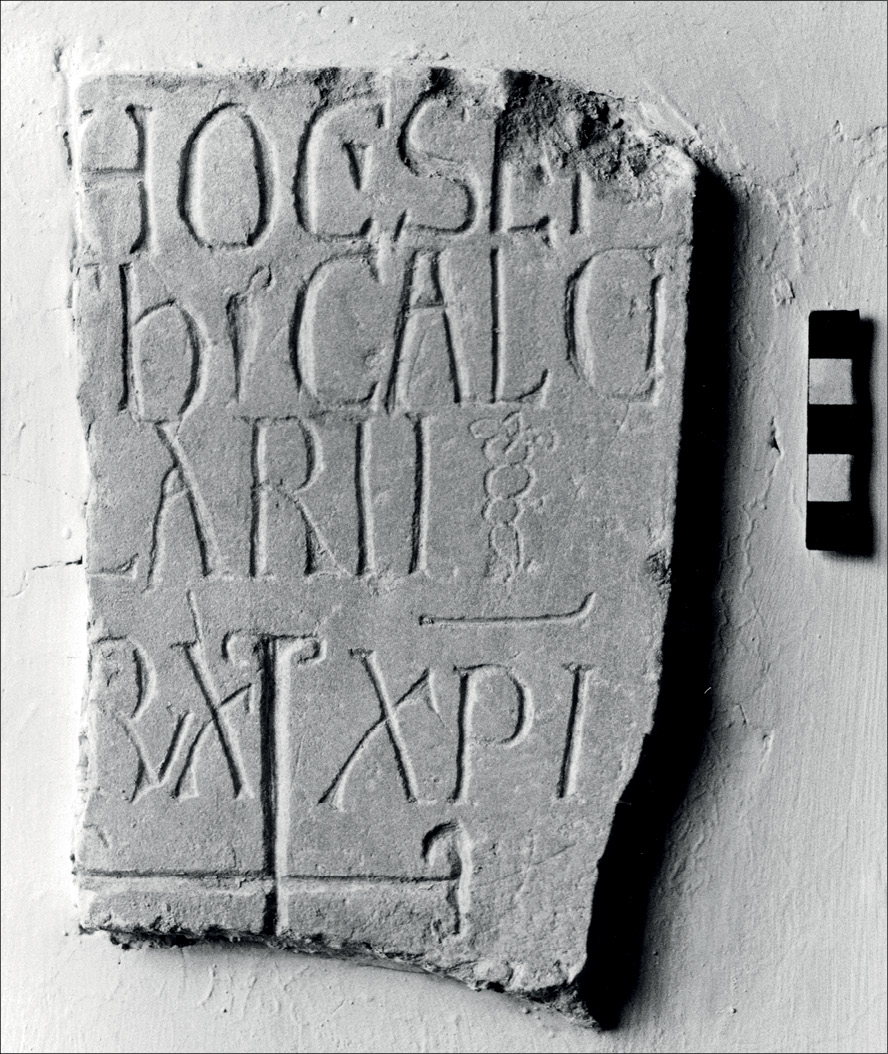
Several lines of the Type 1 rock-cut graves discovered by Pantoni lay close to the entrance of the basilica of St Benedict on the hilltop at Monte Cassino. These graves, a number with punctured tile bases, formed part of a larger cemetery that greeted visitors who arrived at the top of the flight of monumental stairs leading to the hilltop sanctuary. Other graves were located either side of the north and south walls. These seem to have been irregular inhumations made in order to be close to the shrine of St Benedict and St Scholastica, which now occupied the chancel of the earlier church. A second, more expansive cemetery is proposed to the east of St Martin, on the midslope portion of Monte Cassino, in an area later occupied by the library and the cloister of the Prior. Pantoni’s excavations were restricted in this area by the ruins of the major Early Modern buildings, so the exact number and arrangement of graves could not be defined. What is clear is that these were all rock-cut tombs of Pantoni’s first type. No less evident from Pantoni’s plan of the excavations is that these were loosely arranged in at least 11 groups of 3-5 tombs, often with an additional tomb close by. This graveyard closely resembles the cemetery of rock-cut groups of tombs found in the extensive hillside cemetery overlooking the monastic buildings at San Vincenzo al Volturno. These tombs have been interpreted as belonging to lay families, donors to the 9th-century monastery. Excavations show that the hillside cemetery had its own church in the 9th century, and, importantly, was effectively abandoned by the early 11th century, when a substantial tower was erected over many graves.
Given the San Vincenzo evidence, the likeliest interpretation is that the burials directly in front of Monte Cassino’s St Benedict represent the monks’ cemetery. The lower midslope cemetery at Monte Cassino, in the shadow of the shrine, was perhaps intended for donors and their families. We should note, though, that other cemeteries existed at San Vincenzo, illustrating how varied burial practice had become by the 9th century. Towards the northern limits of 9th-century San Vincenzo, the small church known as the Crypt Church, associated with the Beneventan princely palatium (palace), had its own small graveyard set within a sunken atrium. Notably, a block-built tomb with a painted inscription was placed in the little narthex on the threshold of the church, as if to suggest this was a key lay donor over whom any visitor passed. In addition, the palatium alongside the Crypt Church appears to have used its grand entrance hall flanking its south side as a place for privileged burial in block-built tombs during the 9th century.
The Arab sack in AD 883 and its aftermath
The Arab attack on Monte Cassino on 22 October AD 883 led to the murder of Abbot Bertharius in the church of St Saviour within Eulogimenopolis, the lower monastery that lay at the foot of the mount that was crowned by the upper monastery. Bertharius’s peer at San Vincenzo, Abbot Maius, was almost certainly one of the main targets of the earlier attack there in AD 881, judging from the devastation of the abbot’s house (see CWA 113). The other focus of the attack at San Vincenzo was the collective workshop producing rich objects, including metal ties for books. Neither the main church, San Vincenzo Maggiore, nor the lay palatium at the northern end of the site, show any signs of damage from the attack. Could it be that with the assassination of Monte Cassino’s abbot, and the likely destruction of the economic activities in the lower monastery, the Arabs’ objectives were fulfilled, and they left the precious sanctuary on the hilltop? As at San Vincenzo, the surviving monks promptly fled and found refuge at Teano, then Capua (close to the monks of San Vincenzo, but at opposite ends of the ancient town) before Abbot Aligernus re-established Monte Cassino in AD 949/950.

On returning, the community occupied the lower monastery at the foot of the hill rather than the hilltop sanctuary. (At San Vincenzo al Volturno, the few survivors settled into the 9th-century palatium for much of the 10th century.) Pilgrims, however, continued to arrive. Leo of Ostia, who wrote an 11th-century chronicle of Monte Cassino’s early history, records that Adalbert visited in 989-990; Romuald came with Bruno of Querfurt in 1001, though quite where they stayed is not clear. These visitors were the first of many major figures from the era to pay homage to the shrine of St Benedict. Odilo of Cluny visited in 1027; Conrad II came in 1037; Henry III in 1047; and Pope Leo IX in 1051. These visitors prompted successive abbots to renovate and rebuild Monte Cassino, culminating in Abbot Desiderius’s legendary works after 1066.

Monte Cassino’s apogee
By the earlier 11th century, Monte Cassino was aggregated around two points: the churches of St Benedict (on the summit) and St Martin (on the midslope). Two very different projects proceeded to take shape over the ensuing century. Up until about 1066, under the eye of a succession of abbots, the refurbishment of old buildings was pursued piecemeal. Then, beginning in about AD 1066, under Desiderius, the monastery was re-envisioned around an entirely new basilica, which was consecrated by the pope with a galaxy of European guests in 1071.
The first project comprised a succession of limited building works, recalled by Leo of Ostia. Beginning in the early 11th century, there was an intentional nucleation around the sanctuary on the summit of the hill. This meant that the cloister was now arranged beside St Benedict rather than beside St Martin on the midslope. This did not mean that St Martin was abandoned: far from it. Buildings now reached down past St Martin to the gatehouse close to the entrance church of St Stephen. The new construction work involved the obliteration of many of the graves from earlier periods, resulting in the wide dispersal of associated tombstones. In form, the monastery was now imitating the tiers of rising fortifications that characterised the castelli – fortified hilltop villages – growing up all over Italy.
Four phases of expedient construction pre-date the great re-envisioning of Monte Cassino in 1066.


To Abbot Atenulf (1010-1022), in about AD 1015, is attributed a new west front to the basilica of St Benedict, fragments of which were discovered in Pantoni’s excavations. At this time, a new refectory and dormitory were constructed, as well as a chapter house (which was needed to accommodate the growing administration) and an abbot’s palace.
Below, on the midslope, St Stephen was reconstructed. Atenulf also constructed (or at least refurbished) a tower on a peak on the steep hillside far below. This was the Rocca Janula, overlooking the ancient site of Casinum and the lower monastery. In a time of increasing political instability, the Rocca Janula – modelled on early feudal-era keeps – served as a potential refuge for the abbot and his monks. At exactly the same time, a similar tower was constructed on the summit of Colle della Torre, immediately above San Vincenzo al Volturno, by Abbot Ilarius. Excavations have shown that this was then destroyed in AD 1036/1037 by local lords, the Borelli, who were ruthlessly annexing the monastery’s lands in the Upper Volturno valley.


Abbot Teobald (1022-1035) is credited with a small atrium beyond the west front of St Benedict; to his successor, Abbot Richerius (1038-1055), is attributed a grander west front to the atrium, as well as a new palatium immediately south of the apse of St Benedict. Abbot Desiderius’ (1058-1087) earliest works between 1058 and 1066 were shaped by the sanctuary dedicated to St Benedict and the buildings erected in the half century before he arrived at Monte Cassino. Quoting Leo of Ostia, the historian H E J Cowdrey describes Desiderius’ first works as follows: ‘he found in the cramped, shapeless, and dilapidated state of the monastic buildings a stimulus to embark upon their reconstruction, despite his shortage of resources’. Desiderius boldly began by enlarging the basilica of St Benedict, traces of which were found by Pantoni. He remodelled the dormitory, presumably for an increasing number of monks; and he added a new apsidal dwelling for the abbot, alongside the north side of the chancel of the basilica. He also richly renovated the earlier 11th-century chapter house, dating from Abbot Atenulf’s time. Immediately beyond the sanctuary a small building was erected as a library and possibly a treasury; and an infirmary was located on the south-east angle of the hilltop. To Desiderius’ early years, too, is attributed the completion of Richerius’ palatium, on the east side of the cloister, occupying the hilltop. Finally, Desiderius ended this prolonged period of gradual rehabilitation by procuring, at the expense of an Amalfitan merchant named Maurus, a set of bronze doors for the old basilica. These were specially cast in Constantinople, in explicit imitation of doors that Maurus’ father Pantaleone had given to Amalfi Cathedral.


Desiderius’s great building works – his second campaign – were launched in 1066, according to Leo of Ostia. By then, having been abbot for eight years, Desiderius had earned prodigious support from all his neighbours. This led him to take a great gamble. Despite objections by some monks, he decided to build a small, temporary monastic church dedicated to St Peter and to demolish the old basilica of St Benedict, dating back to Carolingian times. Leo records the engineering works involved in levelling the summit and building new terraces. This feat was partially achieved by masons from the Campanian port of Amalfi using materials – columns, marble, and other building materials – brought from despoiling ancient ruins in Rome. The plan itself imitated that of the Old St Peter’s, with monumental stairs now replacing the old narrow steps that had approached Gisulf’s basilica. There were many other new landmarks: propylaea – a monumental entrance, an atrium, and a T-shaped triapsidal basilica (with a distinctive continuous transept whose heavy, stumpy bell-tower replaced a tower over the door). The rededicated basilica was now 48.40m long and 21.07m wide. Significantly, the church was no longer orientated on the summer solstice of 21 June, but on the spring equinox of 21 March: the day when Benedict had passed away. This symbolically denoted the pre-eminent patronage of the founder, as opposed to the original dedication to St John the Baptist.

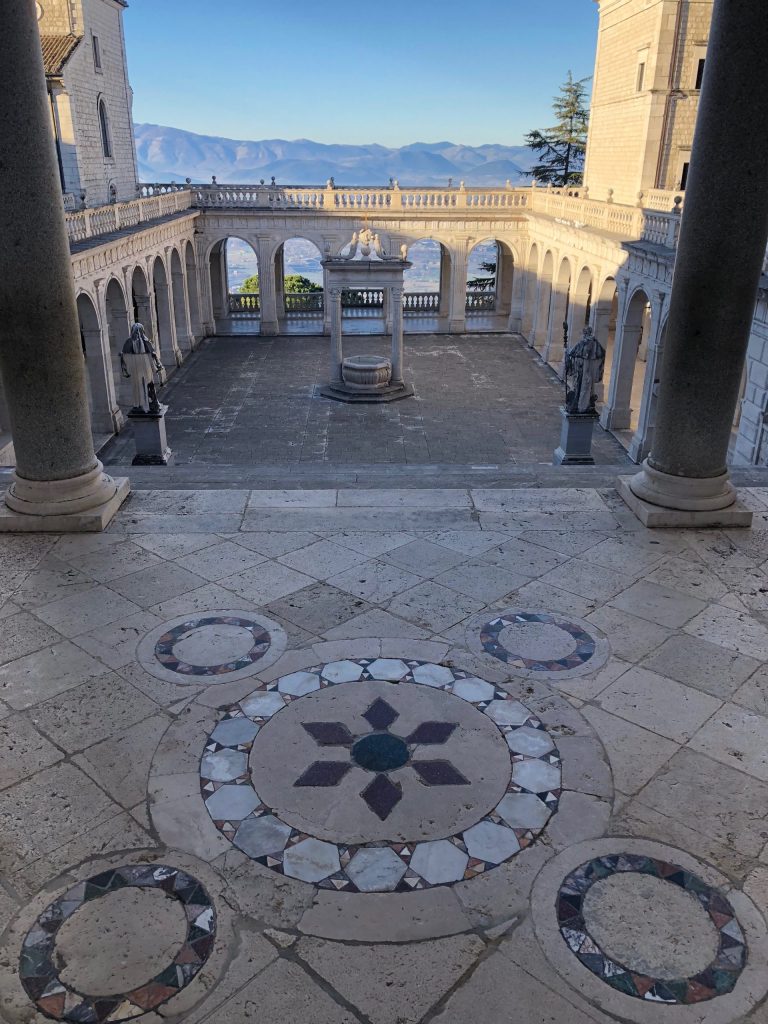
The new church possessed a grand Cosmatesque pavement of beautifully cut marbles, and wall mosaics made by Byzantine mosaicists, as well as marble columns that dazzled Leo of Ostia. To accommodate St Benedict’s tomb, found in the building works, the chancel of the basilica was elevated above the level of the nave floor. Commenting on this ambitious second campaign, the architectural historian Richard Krautheimer observed acutely: ‘Monte Cassino… in 1066 had reverted to the Early Christian models of Rome. Desiderius, disciple of Gregory VII, would tend to cast into visual form the concepts of the Reform Papacy and its reversion to the Christian past’.

More works followed. These involved demolishing the 11th-century cloister and erecting a massive replacement on the south side of the basilica, reaching down to the midslope. New buildings surrounded the north and east sides, elevated on powerfully built terraces. The approach to the monastic buildings was overhauled, too. The old gatehouse and the buildings around St Martin now formed part of the entrance area into the huge, fortress-like mass of buildings. Monte Cassino was no longer a polyfocal place, but in appearance a nucleated stronghold, which owed much to a revolution in engineering skills learned in Campania’s coastal towns. In little more than a decade, Desiderius transformed the monastery and enriched it as a beacon worthy of Benedict of Nursia and his rule.
Desiderius’s successor, Oderisius I (1087-1105), completed his visionary project. Oderisius added several important features: the chapel of St Andrew possibly replaced St Peter at the east end of the basilica. To him is also attributed a cemetery beyond St Andrew and an enlargement of the infirmary on the eastern confines of the ensemble of buildings. He added a hostel as well, for the burgeoning number of pilgrims, on the north side of the elevated atrium, and completed the restoration and enlargement of St Martin, initiated by Desiderius.
Finally, this re-envisioning of Monte Cassino culminated with Abbot Otto (1105-1107) adding further buildings on the south side of the old temple podium. Here was erected an oratory dedicated to St Saviour and Mary, and the repurposing of the tower of St Benedict, beside which was a storage building. Tucked under the podium, next to the church of St Stephen, was a porter’s lodge.

Keeping up with Cassino?
Desiderius was an architectural revolutionary who inherited a piecemeal project. But what now happened at San Vincenzo al Volturno in the same century or so? The archaeology of the 11th-century at San Vincenzo encompasses four distinct episodes.
First, around 1000, Abbot John IV (998-1007) refurbished the basilica of San Vincenzo Maggiore. There are no signs of new monastic buildings at this time. It is assumed from the archaeological evidence in the ground-floor rooms in the Beneventan palace that this site still housed the small community, as it had since AD 916.
Next, according to the 12th-century Chronicon Vulturnense, Abbot Ilarius (1011-1045) repainted the basilica and erected a bell-tower over its entrance. This closely resembles the structure Angelo Pantoni found in front of St Benedict’s at Monte Cassino. The excavated footings of San Vincenzo Maggiore’s new bell-tower respected earlier 9th-century tombs in the atrium in front of the basilica. Remains of a bell kiln, as it happened, were found just inside the door into the refurbished basilica. A few fragments of distinctive early 11th-century painting were discovered in the excavations of the basilica’s western crypt, including part of a face of Christ in an overtly classicising style. The entrance to the basilica itself was probably still by way of the mausoleum staircase on the north side of the elevated atrium (as it had been in the 9th century). Abbot Ilarius built himself a grand tower, too, similar to the Rocca Janula erected at Monte Cassino in c.1015. Recent excavations show that this tower was made of robbed stone, and incorporated a 9th-century funerary church, while also obliterating earlier 9th-century lay donors’ graves below.

Third, Abbot John V (1053-1076), previously a Cassinese monk, remodelled San Vincenzo in an ambitious project, according to the Chronicon Vulturnense. His works appear to be a strong statement in the face of the ongoing conflict with a local feudal family, the Borrelli. These may date to about AD 1059, when some resolution of territorial holdings was reached between the monastery and its nemeses. Certainly, San Vincenzo was re-envisioned. John V, along with his architect and painters, were surely influenced by the building works at Monte Cassino, as well as perhaps new initiatives elsewhere in Italy. At San Vincenzo, much of the northern part of the old monastery was demolished at this time, creating a large working area covered by white mortar overlying the area of the erstwhile cloisters. In this northern sector of the monastery, the only surviving 9th-century building was the Crypt Church on the far limit of the site. Otherwise, the new monastery was nucleated with the renovated basilica as its centrepiece. The tight new planned arrangements bear particular resemblance to the celebrated Burgundian monastery of Cluny, remodelled in the 1040s. San Vincenzo Maggiore was almost certainly partially repainted at this time, and floored with a Cosmatesque pavement (as well as multicoloured marbles, it included broken 9th-century tombstones). Around the abbey-church, numerous buildings have been excavated. Some can be identified; some cannot. A substantial cloister was erected on the south side of the elevated atrium. Its raised dormitory gave access to the basilica in its south-east angle. This dormitory was intended to accommodate as many as 50 beds, but it is likely that the community was much smaller in number.

One feature at San Vincenzo was far more modest than the Monte Cassino equivalent. Unlike the wide flight of steps (in imitation of contemporary churches in Rome) made by Desiderius in front of St Benedict at Monte Cassino by 1071, San Vincenzo retained a modest lateral staircase (incorporating a painted mausoleum) that dated back to the 9th century. This speaks to the contrasting ambitions of the two monasteries. In common with Desiderius’s Monte Cassino, though, mid-11th-century San Vincenzo now resembled a nucleated fortress.
Abbot John V’s monastery lasted for no more than 50 years. During the abbacy of his successor, another Cassinese monk, Gerard (1076-1109), John V’s monastery was systematically demolished in a favour of a fortified site 200m away. This occupied the old 9th-century borgo of the monastery. In pursuing this project, Gerard was perhaps imitating the Benedictine abbey of Farfa (in the Sabine Hills above Rome) whose abbot, Berardus II, built a new fortified monastery on Monte Acuziano in 1097. This was never completed, because the monks rebelled against such excess. In contrast to Farfa, San Vincenzo’s new abbey was consecrated in 1115 by Gerard’s successor, Benedict (1109-1117). In imitation of Desiderius’s remodelling of St Benedict at Monte Cassino, the new abbey-church possessed a tower on its north-west side, no longer over its door as had been the case since Ilarius added a bell-tower a hundred years earlier. It also possessed grand Cosmatesque pavements found, as it happened, by Don Angelo Pantoni’s excavations here in the 1950s. Gold-leaf covered tesserae for wall mosaics were found in the associated claustrum. However, it did not have a continuous transept, like that which characterised Desiderius’s triumphant sanctuary church. Instead, the new basilica, with its three apses, evoked memories of the old abbey-church of San Vincenzo Maggiore.

This monastic sequence at San Vincenzo shows that, in the earlier 11th century, it may have attempted to emulate the episodic remodelling of Monte Cassino. After the 1070s, this was simply not possible, because San Vincenzo had lost most of its revenue-generating estates. Nevertheless, the small details found at San Vincenzo beg important questions about Monte Cassino’s history. Beginning with the basilica and its atrium, was it only in the 1060s that the sanctuary church of St Benedict at Monte Cassino was refurbished? This was 60 years after Abbot Ilarius’s restoration of the basilica of San Vincenzo Maggiore, where the evidence of the wall paintings appears to resemble Cassinese work. Surely this delayed refurbishment at Monte Cassino must be questioned? By contrast, John V’s arrangement of the cloisters at San Vincenzo is similar to those erected earlier in the century by Atenulf at Monte Cassino. At both places, the abbot’s house was located close to the shrine in the chancel of their respective basilicas. These similarities suggest that Monte Cassino’s chapter house, erected by Atenulf, was imitated at San Vincenzo al Volturno by c.1059. If so, this key administrative hub was more likely to have been located next to the chancel of St Benedict, as at San Vincenzo Maggiore, directly opposite the abbot’s palace. Finally, the proposed guest house at San Vincenzo on the north side of the elevated atrium, with its frescoed depiction of San Tommaso, differs from Abbot Richerius’s palatium, which was located close to the chancel of St Benedict. Instead, it appears to anticipate Abbot Desiderius’s placing of Monte Cassino’s guest house beside the atrium after c.1071.
It is more than obvious that the Upper Volturno monastery never matched the great project launched by Desiderius after AD 1066. Gerard, John V’s successor at San Vincenzo al Volturno, may have aspired to Desiderius’s remodelling of Monte Cassino when he moved San Vincenzo al Volturno to a new, better defended location in the early 12th century. But, under Gerard and his successors, San Vincenzo al Volturno only had the means to create a worthy basilica, consecrated in 1115. The accompanying cloister and other ranges were modest by comparison with those erected after 1066 at Monte Cassino. San Vincenzo’s resources – unlike Monte Cassino, richly endowed by its extensive terra sancti Benedicti – were by this time greatly depleted. Gifts to the monastery were few, and it had lost about half of its lands in the Upper Volturno valley to the avaricious Borrelli family.

A concluding thought
Angelo Pantoni’s excavations at Monte Cassino provide only a partial glimpse of the great monastery’s early history. These show how Benedict occupied and remodelled earlier Samnite and Roman buildings in order to make his first monastery. This was essentially the monastery that Paul the Deacon grew up in and welcomed Charlemagne to, on his visit to central Italy in 787. His visit – and indeed the Frankish leader’s advocacy of The Rule of Benedict – prompted great changes at Monte Cassino. The principal church, St John the Baptist, was renamed and enlarged as a sanctuary dedicated to St Benedict on the hilltop. But the monastery was transformed as a place by the creation of a lower monastery, Eulogimenopolis, close to the ruins of ancient Casinum, on the Rome–Naples road at the foot of the hill.
This polyfocal arrangement remained in place until 883, when an Arab warband killed Abbot Bertharius in the lower monastery, causing the remaining monks to flee. When monks returned from exile in the mid-10th century, the emphasis in further rebuilding was on defence. By stages, until 1066, the upper monastery was enlarged piecemeal. In 1066, Abbot Desiderius took this concept and re-envisioned the monastery as a planned hilltop redoubt, filled with monumental buildings and splendidly decorated with frescoes and Cosmatesque pavements, that resembled an imposing fortress from afar. This new arrangement, rising in tiers over the peak on which Benedict of Nursia had made his home, remained in a modified form until 15 February 1944, and was skilfully reinvented after the Second World War. Finally, it almost goes without saying that Don Angelo Pantoni’s diligence in recording the ruins amid the devastated monastery after the Second World War remains one of the major acts of archaeological investigation in 20th-century Italy.
Further Reading: Richard Hodges’s new book La Pompei del Medioevo: San Vincenzo al Volturno dalle origini al sacco dei Saraceni is published by Carocci Editore of Rome.
All images: courtesy of Richard Hodges, unless otherwise stated

You must be logged in to post a comment.