Subscribe now for full access and no adverts
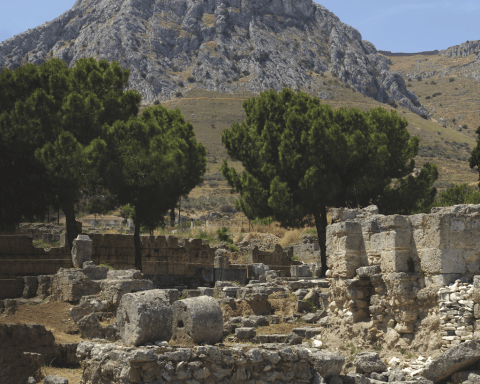
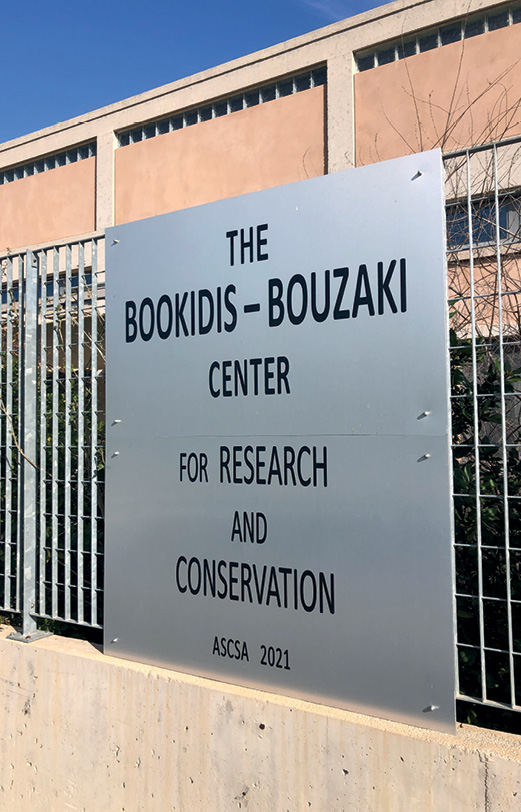
Charles Williams and I have resumed our conversation in the Bookidis-Bouzaki store – apotheki – that he designed and had built on the edge of ancient Corinth. It lies not far from the theatre, on a sleepy little road surrounded by fields full of spring flowers. He named the store after his lifelong friend and Corinth archaeologist, Nancy Bookidis, and the conservator who painstakingly worked on the fresco fragments found during the theatre excavations, Stella Bouzaki. Behind a curtain of bougainvillea, you enter a laboratory that at its far end has space for coffee-making. Beyond this are half-a-dozen smaller rooms, each now being used by Corinth’s Roman Painting Project. The main building, however, is a 50m-long, high-roofed and well-lit store that terminates in a long, open workspace. Either side of the central thoroughfare are shelves reaching up to the roof, stacked with, at first, wooden crates of frescoes and then the tons of pottery from the excavations, many being complete vessels.
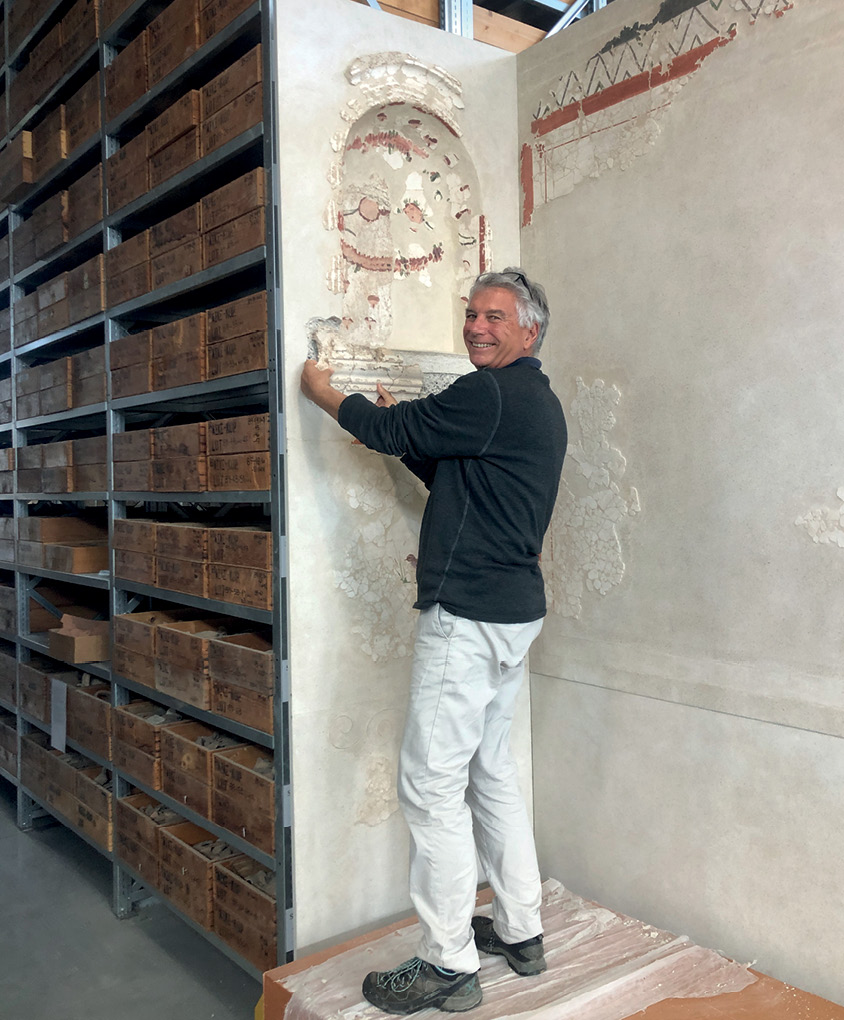
Roberto Nardi’s team from the Centro di Conservazione at Rome are working in every part of the apotheki. Their very presence brings a gleam to Charles’ eyes. In the small rooms, they are focused on details that are then fed into the ever-extending wall panels occupying the thoroughfare of the store and standing as high as the roof. At the far terminus of the building, a line of panels encloses the space, bringing to mind the original décor of the major rooms around the great Roman theatre.
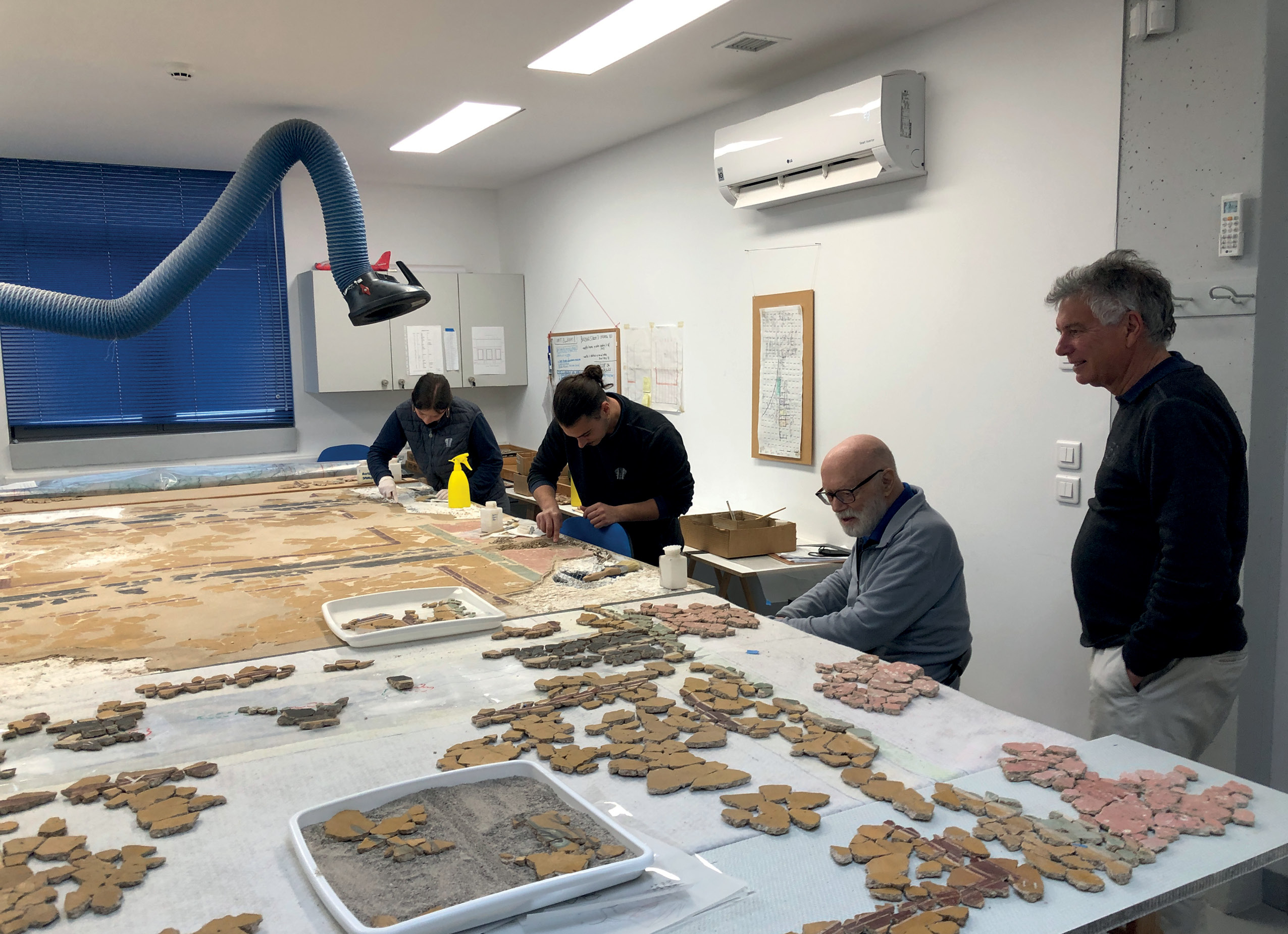
Visiting these workspaces in the midst of this project would be any archaeologist’s joy. Room after room is filled with jigsaw puzzles of different sizes, all accompanied by the gridded plans from the original excavations made more than 40 years ago. The intricate work with thumbnail-size fragments in one room calls for extraordinary patience. The remaking of the paintings is first sketched out by Andreina Nardi, Roberto’s wife. Her presence with decades of experience visibly charms Charles. One cannot pass by without leafing through her notebooks. They are works of art. Then, following Roberto, we stare at the reconstructed panels. It has taken three years with a team of a dozen or more conservators working full time to get this far. Charles points to a painted colonnade, then to an unfinished panel of overlapping crescents. After this, we reach a line of panels with a niche framed by garlanded bouquets, before his eyes fall lovingly on Aphrodite. She has been brought back to life, not with the richly modelled torso of a Knidian matron. Instead, the goddess has a watercolourist’s mien, finely evoked in fresh paint on a parchment background. To say she is mesmerising is understatement. The presence of her cult allows Charles to reinterpret the rooms around the theatre. With a smile, he admits that he had not expected anything like this. From the crates containing hundreds of thousands of fragments, a Roman past has been resurrected that could not be imagined from the bare walls uncovered in his excavations. Roberto’s team have worked miracles.
Surrounded by these diligent professionals, you sense that Charles has shed a few of his many decades, such is the intense intellectual pleasure the atmosphere in the apotheki gives him.
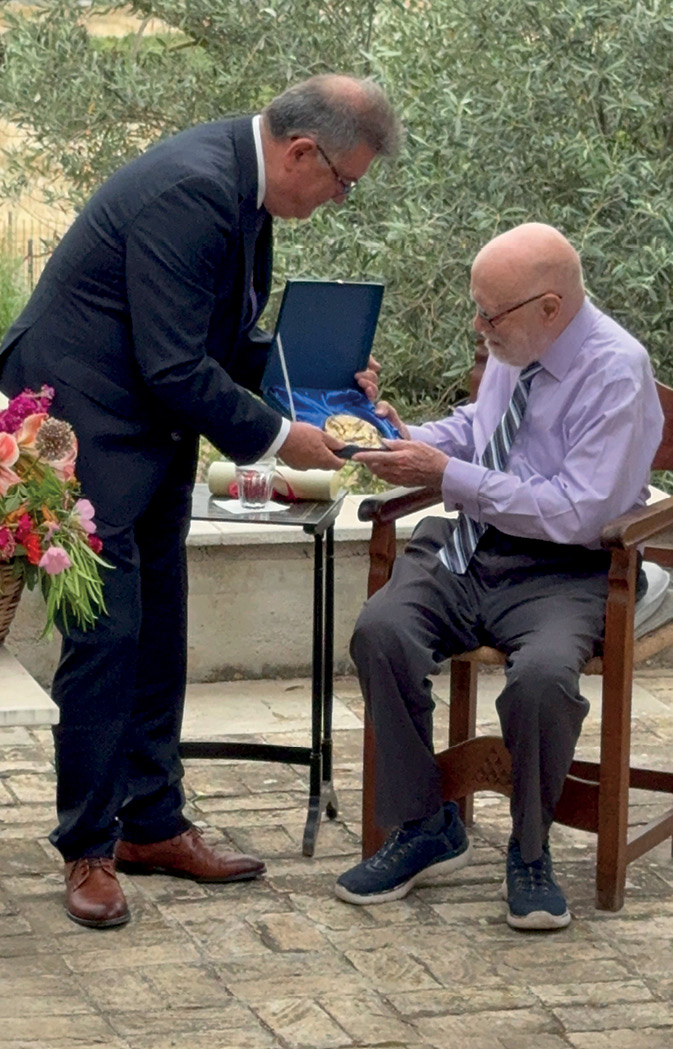
I resume our conversation by congratulating him on becoming a citizen of Corinth, and asking him about the ceremony.
CW: Very nice. Low key; very nice.
RH: After all these years?
CW: Yes, I’m a unique being!
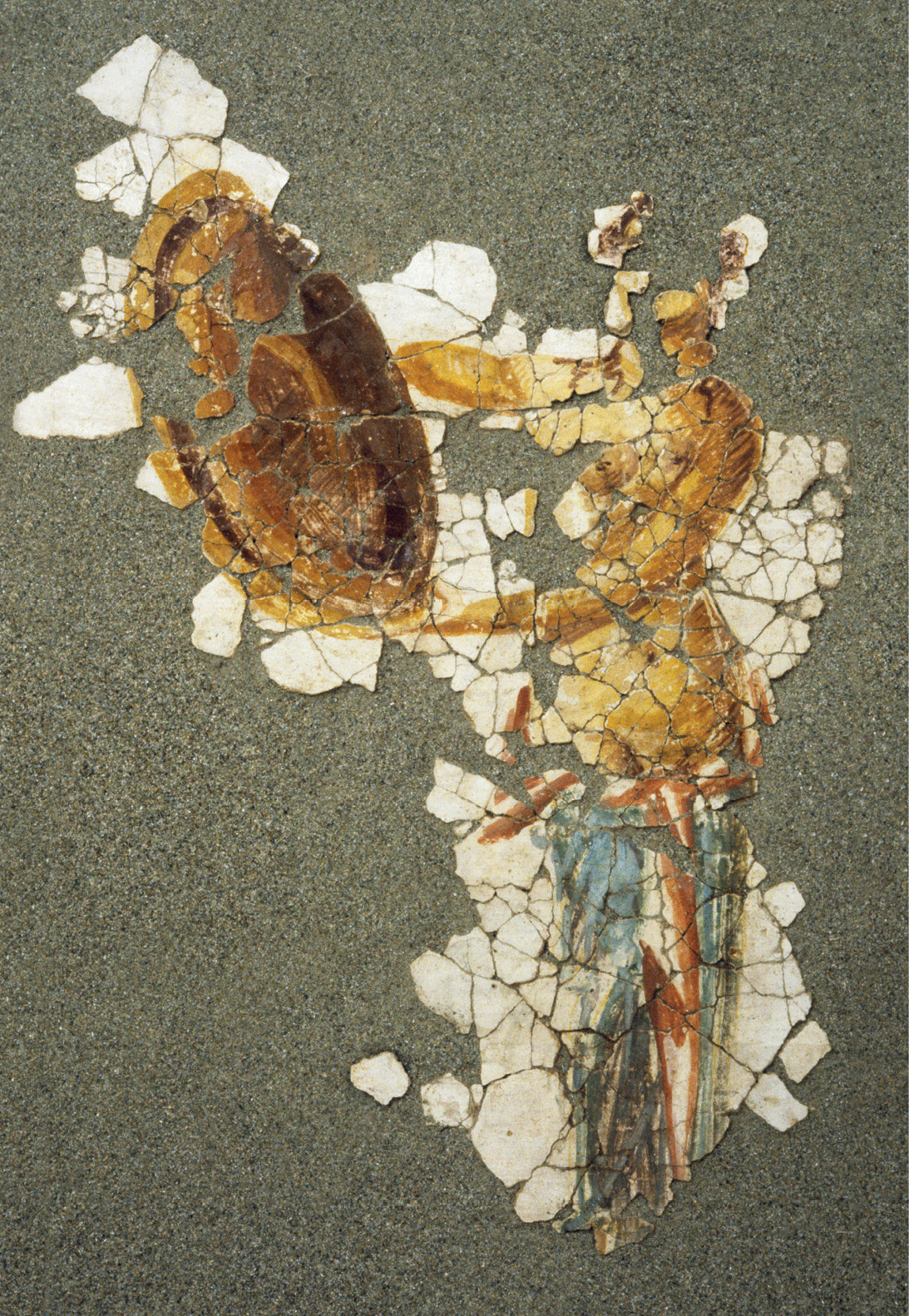
We then turn to the Roman Painting Project that began in 2019. Charles discovered the frescoes in the rooms to the east of the great theatre. I cut to the chase immediately. Having seen his gridded excavation plans and the various sizes of the recovered fragments, there is no doubting that his excavation was the apogee of masterful diligence.
RH: You carefully excavated these layers of frescoes that 40 years ago most excavators would have simply tossed away. It was very innovative. Why did you do it?
CW: I don’t know. It was just automatic. I had the help of Stella Bouzaki [a conservator with the ephoria of the Greek Archaeological Service], and she did the work. It all fell into easy order. If I hadn’t had her help, it would have taken a hundred years to do it.
RH: Tell me about Stella Bouzaki please.
CW: She was mending fragmentary architectural pieces in the museum. When we found the layers of frescoes, it made sense that she joined us. What was nice about it was that we worked in such a way that she didn’t hold the excavation up. We would move to another part to dig, leaving her to record and lift the fresco layer.
RH: Stella Bouzaki recorded the frescoes very accurately, which has made it possible to reconstruct the panels.
CW: She gridded the whole area. She did it day and night, more than her eight-hour day. She loved it. It gave her a feather in her cap because I sent her to the Istituto di Restauro in Rome to learn all the latest techniques. She was very good.
RH: Were you planning back then to reconstruct what she found?
CW: I couldn’t do it at the time because there wasn’t the space. Mending frescoes takes a lot of space. I was also working with a friend, Umberto Pappalardo, from Pompeii. I thought he could do the work. He thought he had a restorer, but he didn’t come. I looked at how frescoes were reconstructed at Pompeii. We didn’t have the space to do it – to lay out the fragments – or the troops. I had to store it until I did have these ready. I built this apotheki and you introduced me to Roberto Nardi. He fell right into it. Every time I did anything, I was lucky.

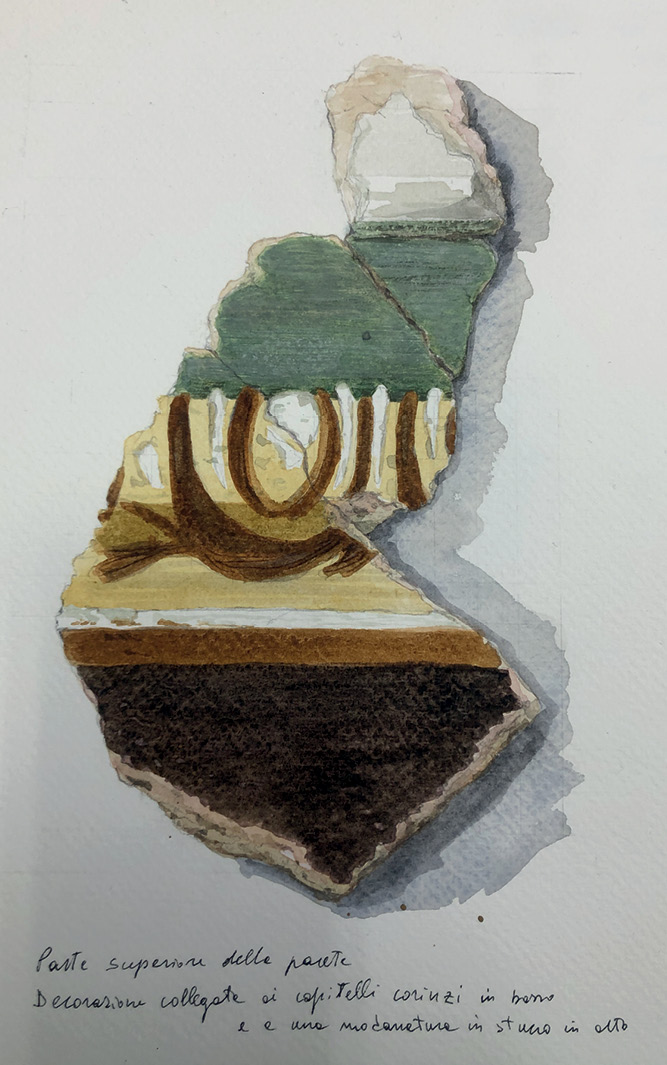
RH: When you excavated these fragments, did you imagine the size of these rooms and their decor?
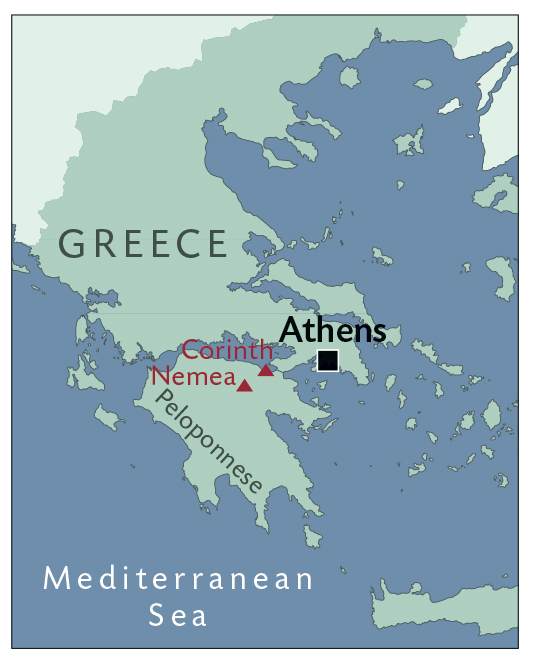
CW: No! We dug a lot of public buildings, such as the temple of Aphrodite, the Bema [speaker’s platform], buildings you find anywhere in Roman urban culture. You just don’t expect to find something unique.
RH: How has the painting restoration project work changed your thoughts on the area around the theatre and Corinth in general?
CW: It has changed my ideas about what Rome was doing in Corinth. The frescoes are so close in style to the paintings at Pompeii. It is middle-class decoration, but it is something more special than that. It is part of the sanctuary of Aphrodite. Rome was big and gruff. They were really clever. They had two officials, duovirs, to make decisions. They knew how to handle cities.
RH: You now believe that Rome played a bigger part in Corinth than you imagined?
CW: There is material that we are mending that duplicates exactly the style in Pompeii itself. You realise that the frescoes are good; it’s going to be important; and people will want to see them. Every time you think you are on top of Corinth, something surprises you. Things I never expected in Greece.
RH: Do the paintings help you interpret the buildings in specific ways?
CW: We now have enough reconstructed to know what was being done with the decoration. We haven’t had time to put it all together yet.
RH: Are all the paintings of one period, or can you see any later painting?
CW: I think there is late-Pompeian-style fresco work, later than the volcanic eruption at Pompeii. But no really late material from the 4th or 5th centuries.

RH: It is remarkable. You are gently trying to push those paintings after the end of Pompeii, after AD 79. You are making a big statement about Roman art, about Corinth’s connections to Italy, and, of course, about Roman Greece.
CW: I’m not. The paintings are…
RH: Would you like these to be shown in a museum perhaps, now you are a citizen, at the end of Charles Williams Street?
CW: (He smiles, ignoring my provocation) Yes. I think people would like to see these paintings. You don’t realise how much the Romans did to make their style an international style.
RH: Now you have done this, do you feel Corinth, which is known for its fame in the classical Greek period, was as important in the Roman period?
CW: I think Corinth was always important. We perhaps underestimated the Roman period. Yes, we were more interested in classical Corinth, and if you are interested in one thing, you don’t really focus on anything else.

RH: As the restoration work goes on, is there something in your mind that you want to discover?
CW: I hate to say it, but I’d like to see the end of it! I’m 95. If I don’t see the end of it, I won’t! Of course, I’d hate to see the end of it, too. There is nothing I like more.
RH: I cannot end our conversation without bringing up something very different. You stored the frescoes and then you went off to study Frankish Corinth, another direction. You did remarkable, innovative work. You were the first person in the Balkans to do modern excavations of Medieval archaeology. What made you do that?
CW: It was there! It’s all luck. I had dug lord knows how much from the theatre. Eleven tons of pottery. The museum storerooms were crowded, the pot workers were overworked, Stella was overworked. I decided we’d find a place where there was nothing to be found. Two years of digging. In the area behind the museum, it was near the temple. I thought I’d not find anything. There was little material on the surface. Well, I did. I realised after that it was all covered up by soil washed down from [the Frankish castle of] Acrocorinth.
RH: You changed the way people looked at Medieval Corinth.
CW: I liked Frankish material. It was very clear; easy to dig.
RH: You come from a tradition in the 1950s where digging Greek and Roman archaeology was canonical. What did your colleagues here make of you digging Frankish Corinth?
CW: The Frankish was over the Roman, so you had to dig it and dig it correctly. I do remember one definite criticism.
RH: How did you take that criticism?
CW: I ignored it. I was right in the middle of it; I wasn’t going to give it up!
RH: You were directing excavations for 30 years. What did you most enjoy about it?
CW: Running the excavations. Teaching the kids how to dig. It was a nice environment.
RH: You must have been sad to retire?
CW: Retire? I had to retire to publish. I couldn’t publish and dig.

RH: You enjoy writing?
CW: I’m not sure. Hmmm. It sort of makes sense of things that weren’t worthwhile at the time and now you see them differently and how important they are. I made all the drawings, so I can recall what I was thinking. I was the architect as well as the site director. When I was drawing, I could hear what the students were saying and what the pickmen were saying. That way, I understood what was going on.
RH: What project has most thrilled you?
CW: Porto Cheli [a port south-east of Nafplion]. It was a mud- brick fortification. That was exciting; I had never encountered anything like that before. A new world.
RH: It sounds to me that you like being challenged.
CW: No, I don’t! I like to work problems. I realised the paintings, for example, had to be taken care of. I did have a theory, but it wasn’t my goal to change anything. What came had to be excavated.
RH: You are very research-driven. Are you happy with what you did at Corinth?
CW: You know excavation, looking back at things, proves you didn’t do it right.
RH: Because you’ve published what you’ve done, you’ve been honest with the material?
CW: That you have to be. If you fudge something, it’s going to bite you later. You do not want that!
RH: You have pursued your excavations with diligence. It’s not normal! Many excavations in Corinth are unpublished.
CW: That’s not the way I’d put it. Each person had his own idea. They never went together. In many cases, it was a project that finished once they left Corinth.
RH: Looking back, which monument or project have you most enjoyed working on?
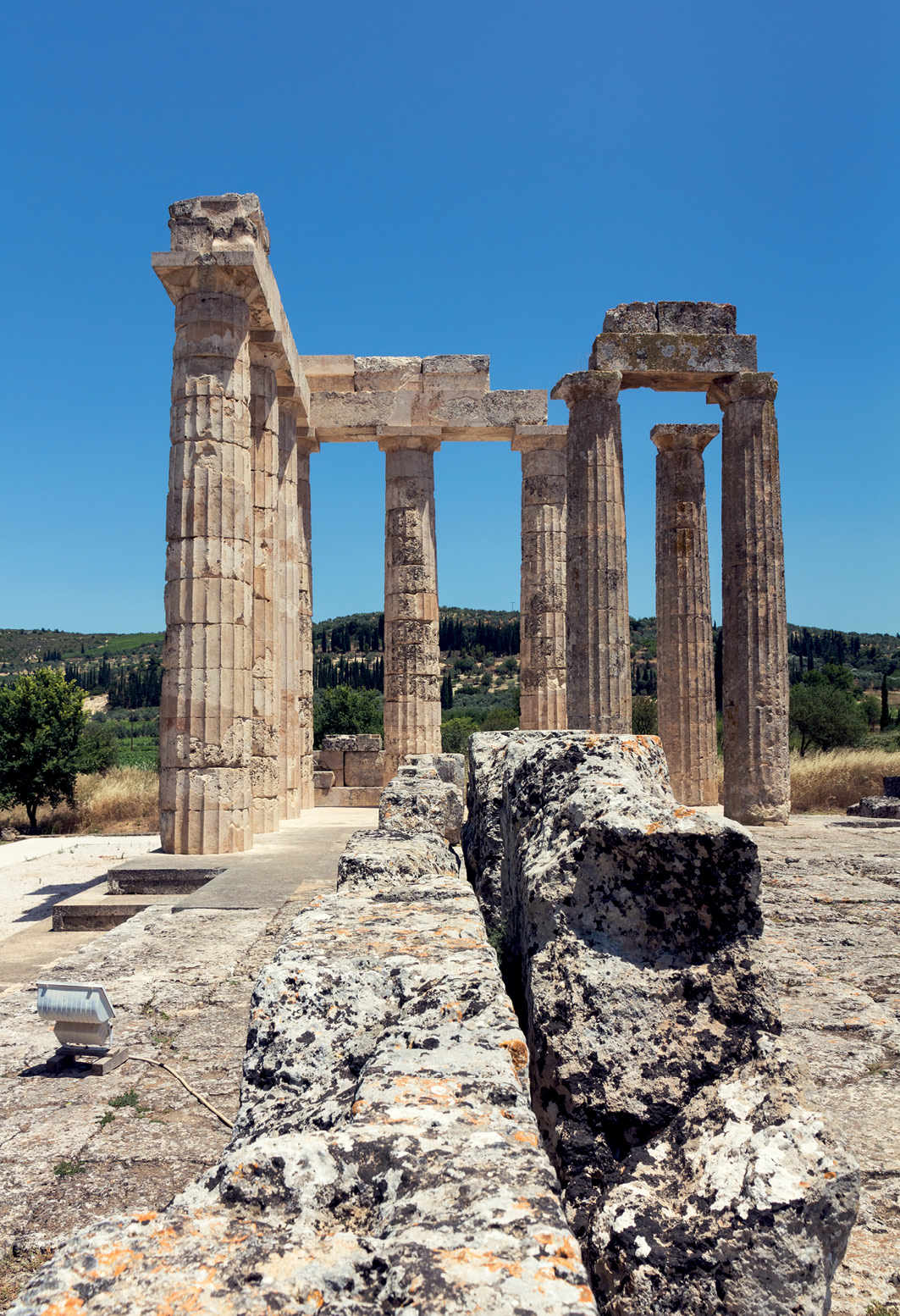
CW: Nemea: its temple, its architecture; you know where each piece goes. It’s like a jigsaw. It’s very expensive to put up the columns. I’d love to put more columns up. They’ve concentrated on one end, so you don’t realise how long it is. It’s a skeleton that needs more flesh.
RH: Where do you see Corinth going in the next 50 years?
CW: I can see what you could do in this village. It should be handled in such a way that you can see the Greek and Roman more clearly. You cannot walk through it easily. It needs to be rethought as a place. But this is hard and impacts the present villagers.
RH: You’ve worked in Greece for 60 years or more. You’ve seen great changes, the military junta in the ’60s, joining the EU, and so on.
CW: Change is based around each ephor [the head of a Greek archaeological region]. Very hard to make sense of it.
RH: Because this has been an American project, the ephoria have left it to you. You’ve done the scholarship; they’ve done the management.
CW: In the beginning, the ephoria was headquartered at Nafplion, now it’s here.
RH: You have changed things. You’ve made sure the museum shows how the landscape works, right the way through to the Frankish era. You must feel very proud. Your soul may be in Pennsylvania, but your heart is in Greece.
CW: If I had the chance, I might have worked more in Italy. When I was at Morgantina, I thought of doing more in Italy. I really loved it – the people, the place.

RH: Never tempted to excavate in Pennsylvania?
CW: My family told me I should excavate in the state. It was my home. I tried it, but I couldn’t get on with it. When I retired, I dreamed only about Corinth.
RH: You did do an excavation when you were in your 80s.
CW: I’d still be digging if they’d let me…
RH: One final thought, Charles. What do you think your doctorate supervisor Rodney Young would have made of you putting together pieces of fresco in your 90s?
CW: He was happy with anything that was positive.
RH: It strikes me that he was a big digger, robust in the way he excavated. You’ve done the opposite. Big digs, but not with a heavy hand. There’s a great deal of sensibility about the way you excavated these paintings, for example.
CW: Young had Gordion: it was huge. I think he wanted to open it up to the world. Even though you might think it was heavy handed and not the best way, it was perhaps the only way to do it at that time. If he’d excavated slowly, he’d still be digging at surface level.
RH: In the Gordion archives are copies of your notebooks, which show you were a master at recording.
CW: If you have time, you can be a master of anything! I had large, deep holes being dug at Gordion. I had time to make detailed records.
RH: You have changed with each generation.
CW: One of the things that is so much fun about archaeology is that nothing is ever the same; it always has its own point of view. It’s alive. Even though it’s been dead for over 2,000 years.
RH: You have done Corinth proud. You’re part of an archaeological history more than a hundred years old. I hope you see the end of the painting project, but not too soon. Your own century beckons.
Summing up
I filmed our conversation on my iPhone. The passionate clarity mixed with modest honesty shines through each segment of the film. Charles Williams’ heart is in the Corinthia and its Pompeian paintings. That said, when I have visited his apartment in Philadelphia, overlooking Rittenhouse Square, he is no less animated about the dozens of 20th-century (largely abstract) paintings that cover his walls. Most belong to the span of his lifetime; all are destined for his collection at the Philadelphia Art Museum. A few, concealed in less public parts of his apartment, are sketches by him. These express his love for European places and spaces, and have a modernist’s eye for simplicity as well as hues that conjure up a discreet sensitivity. His style is not so different from the painter who left us Aphrodite in the rooms next to Corinth’s theatre. His training as an architect is evident, but his passion and curiosity for antiquity are unquenchable. Then again, what stands out as you watch Charles’ eyes reacting to questions, is his love of companionship and conversation. He engages and still does with all his heart. Working with the supremely patient Italian conservators of the frescoes so magnificently recorded and lifted by Stella Bouzakis, Charles is in paradise. The dialogue between the architect and the restorers is never less than thrilling.
Sometimes, listening to Charles, I cannot resist thinking of Homer and how sublime it must have been to have sat and listened to such benign wisdom uttered with such refreshing clarity. I am far from alone in thinking this. Many of his friends hope the painting project never ends…

Further reading: See Charles K Williams II and Roberto Nardi (2024) ‘Aphrodite emerges: bringing an ancient Roman goddess to life’, Expedition 66 (2): 44-51.
Richard Hodges is President Emeritus of the American University of Rome.
All images: courtesy of Richard Hodges, unless otherwise stated