Subscribe now for full access and no adverts
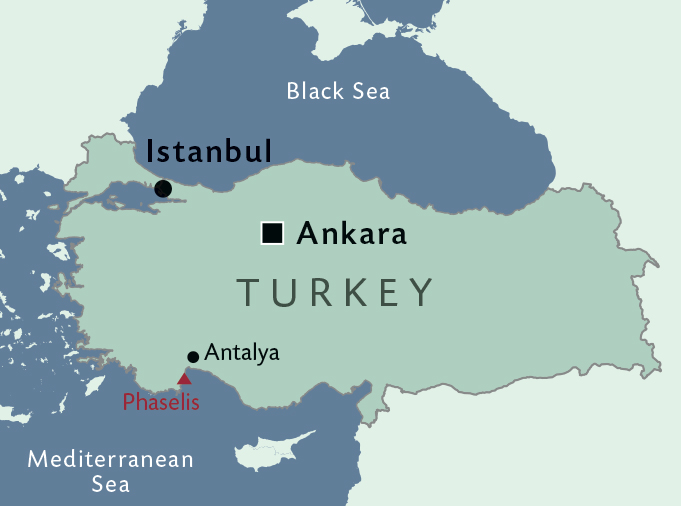
In 1811, a picturesque peninsula protruding into the Mediterranean from southern Turkey (Türkiye) piqued the interest of the crew of HMS Fredericksteen. This 32-gun frigate had been dispatched on the orders of the Admiralty to remedy a significant defect in their knowledge of the Mediterranean. No charts were available for a substantial tract of this coastline, and we are told that for much of the region the most up-to-date information available to the Royal Navy lay in the pages of the ancient authors. It was the role of HMS Fredericksteen, under the command of Francis Beaufort, to place knowledge on a surer footing by undertaking a survey. Beaufort’s interest was not restricted to purely nautical matters, though. He was intrigued by the ancient past of a region that he described as ‘the theatre of some of the most celebrated events that history unfolds’, and home to ‘the venerable remains of former opulence and grandeur, which every where forced themselves into notice’. One such ruin lay on and around the peninsula: the ancient city of Phaselis.
The naval team mapped the site, noting the presence of ports, a theatre, an aqueduct, a major avenue, and various inscriptions. Beaufort recorded the tangible excitement when an unopened sarcophagus was chanced upon, and the sense of disappointment after it was forced open and only a skeleton lay within. A worse fate awaited a set of sarcophagi that had been washed on to the beach. Although the fine sculpture adorning them remained crisp, when the frigate returned a year later, the waves had left the artistry ‘so bruised and disfigured, as to be hardly recognised’. When Beaufort subsequently published his findings, it marked the first fresh material about the fortunes of the site to enter the literature for some six centuries. It also set in motion a renewed interest in Phaselis that has continued to this day.

Sea power
It seems entirely appropriate that the 19th-century survey team arrived by ship, as the sea is integral to the story of Phaselis. The city was reputedly founded by Greek settlers from Rhodes in the 7th century BC, while the significance of its coastal location is emphasised by early coins minted at Phaselis, showing the prow and stern of a ship. By the Roman era, the geographer Strabo could describe Phaselis as ‘a notable city, with three harbours and a lake’. As Beaufort observed, the lake is now more akin to a swamp, but the remains of the harbours can still be made out. Two lie to the north of the city, with the smallest situated at one end of the wide avenue mapped by the crew of HMS Fredericksteen. Most visitors still arrive near here – although no longer by sea. Instead, the main car park lies a little inland from the small harbour, tucked behind the arches of a Roman aqueduct. Reaching it involves following a road that weaves through sun-dappled woodland, interspersed with vestiges of the city, including a Hellenistic temple and necropolis.
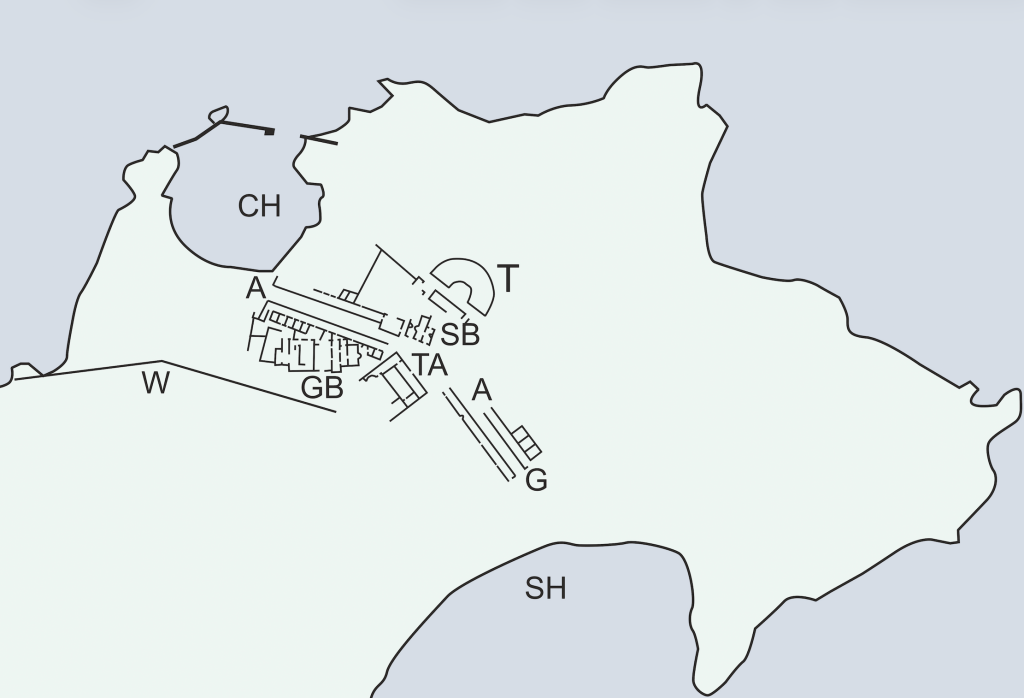
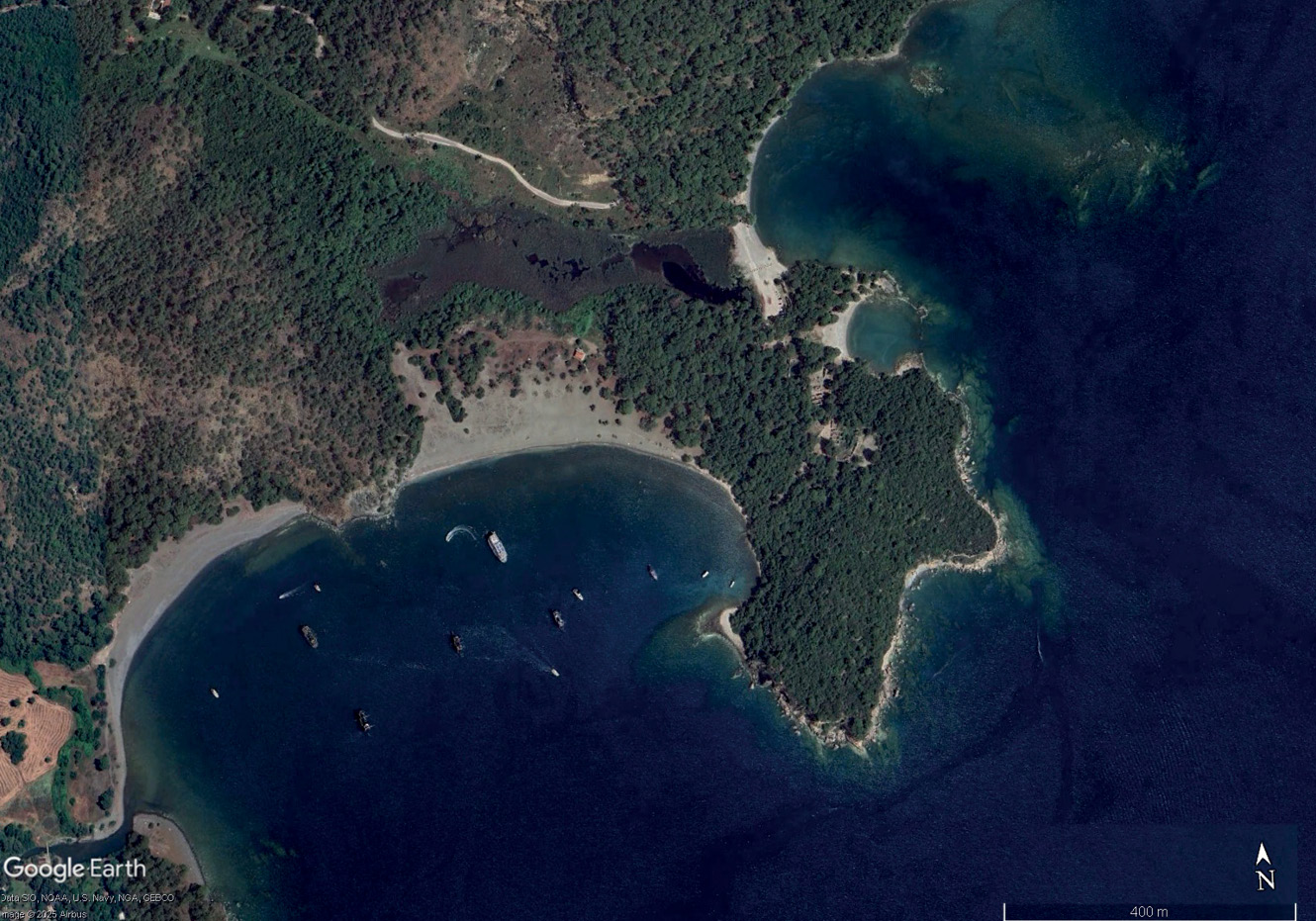
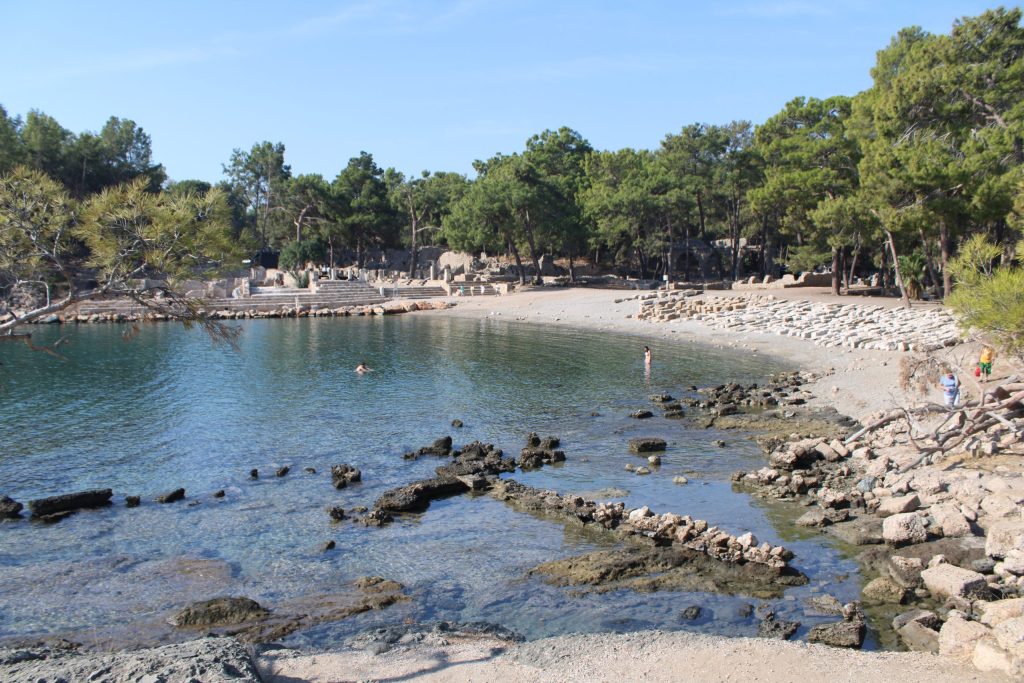
On arrival, it is the gentle beach leading into the inviting waters of the small harbour that draws the eye. The ancient breakwaters augmented natural rocks flanking the mouth of a small bay, covering about 0.95ha. One stretch of the walling can be traced beneath the waters, while the other stands proud of the sea, after being partially reconstructed in recent years. It is now known as the central, city, or military harbour. An association with warships has been proposed on the strength of the breakwaters incorporating towers and creating a narrow, easily controllable entrance to the harbour. The boat sheds typically associated with such facilities have yet to be detected. Instead, the visible structures in the vicinity of the harbour are a better fit with workshops or other commercial premises, which has been taken as a sign that its use evolved over time.
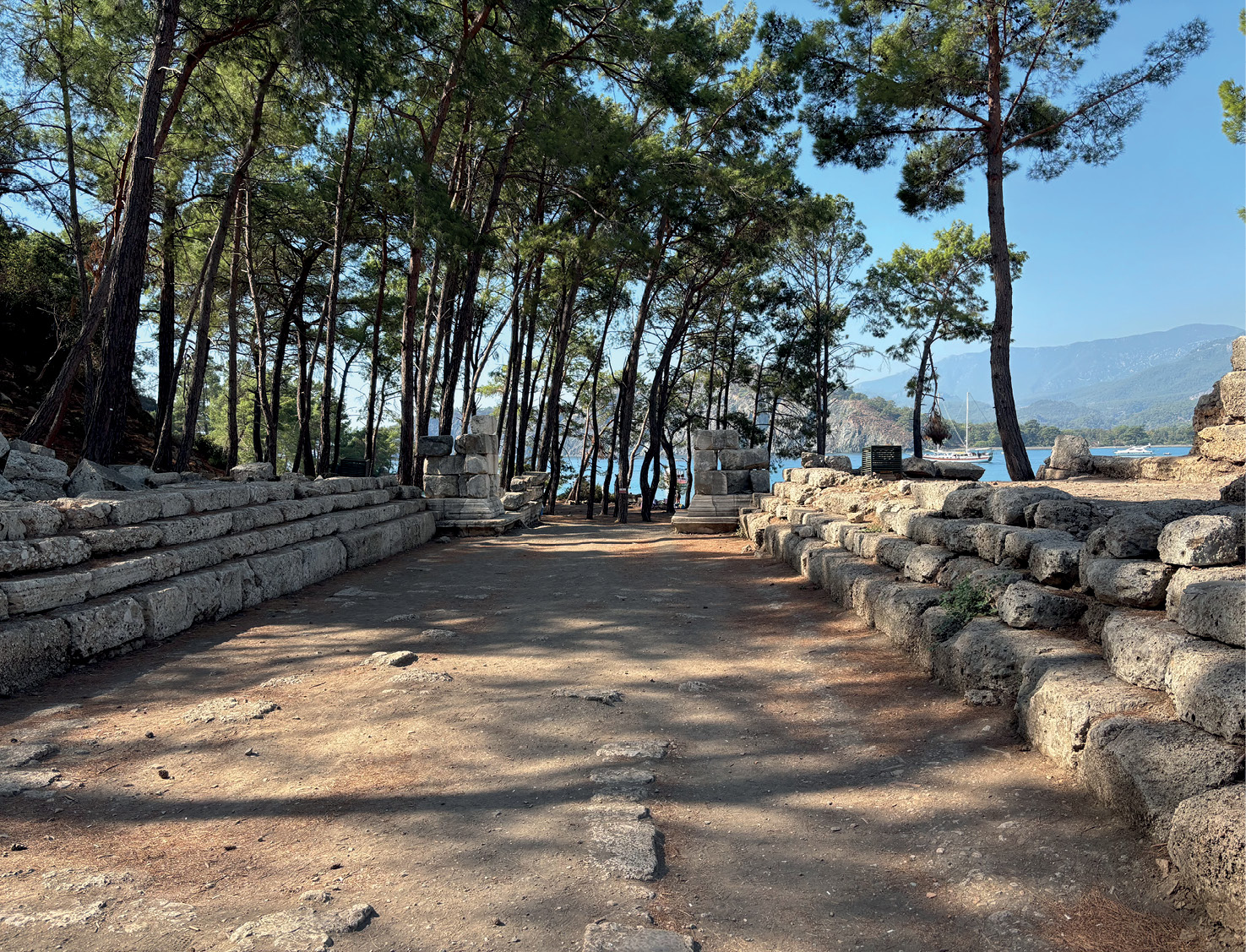
Goods were certainly arriving at the southern harbour. Reaching it involves following the main avenue across the neck of the promontory. This leads you through the civic heart of the ancient city, and the core of the visible remains. Along the way, there are plenty of signs of archaeologists at work, with new areas currently being opened up. Scientific excavations in the city commenced in 1980, under Kayhan Dörtlük at Antalya Museum, while more recent work has been led by professors Arslan and Aslan at Akdeniz University. Restoration work is also under way. As part of this, the northern length of the avenue was repaved in 2023, and in autumn a stage is erected here to host musicians performing as part of an annual cultural festival. The ancient thoroughfare is certainly impressive – it stretches for more than 200m, and ranges from 9m to 12m wide. Various inscriptions from the site have been placed along it, while to the east the land rises abruptly to the acropolis, which crowns the promontory proper. On a hot day, the climb up to the theatre, sunk into this slope, seems a daunting prospect. The fine remains mean the reward is worth it, though. It has been calculated that the 21 rows of seating could accommodate 1,500 people. While the eyes of ancient audiences were presumably focused on the stage, today it is the mountainous horizon that commands attention. The breathtaking view underlines that the city occupied a narrow coastal strip, caught between sea and stone. This was not the only way in which Phaselis found itself straddling two worlds: it lay on the edge of two ancient regions – Lycia and Pamphylia – and at different times was counted among the cities of both.
The northern and southern stretches of the grand avenue meet at a complex known as the tetragonal agora. This is named on a building inscription dating to the period AD 130-131, during the reign of the emperor Hadrian. Time did not stand still in the 2nd century AD, though. The remains of a later structure with a fine apse now stand within the building, presumably a Byzantine-era church or cathedral; the city is known to have been home to a bishop from the late 4th century. The tetragonal agora is not the only trace of Hadrian to be found at the site. Instead, his name adorns several inscriptions, and it is known that this famously itinerant emperor visited the city. Precisely when is a matter of debate, but if Hadrian arrived in 131, he would have been able to indulge his love for grandiose architectural projects by examining not only the tetragonal agora, but also the most eye-catching outcome of his engagement with the town: a monumental gate at the end of the southern stretch of avenue. The base of this edifice is still in place, while surviving elements of its superstructure, including much of the inscription and elements of the decoration, have been pieced back together nearby. From the gate, there is a fine view over the sweeping natural bay forming the southern harbour. It has been observed that the inscription on Hadrian’s gate faced this, raising the prospect that the emperor disembarked there.
Today, the southern harbour is a popular swimming spot, but underwater survey from 2012 to 2023 encountered numerous traces of its former use. In particular, remnants of breakwaters and various ceramics were discovered. Study of a selection of the amphorae and finewares by Ug˘urcan Orhan revealed that they span some 1,600 years, from the late 4th century BC through to the 12th-13th centuries AD, and originated in areas such as Rhodes, Italy, Kos, Baetica, Cilicia, Samos, Tunisia, and Egypt. This illustrates the enviable position Phaselis enjoyed for maritime trade, in an era when ships at sea often favoured courses that shadowed the coastline.

A double-edged sword
That traders from Phaselis did not just bank on a favourable geographic position for their wealth is indicated by the complaint of an Athenian merchant seeking to secure a debt repayment. He claimed that ‘the Phaselites have more lawsuits in [Athenian] maritime courts than [all other foreigners] put together’, and that they were ‘the most crooked and dishonest of men’. Whatever the full truth of this dispute, the history of Phaselis makes it clear that a few sharp commercial practices were far from being the worst things that could arrive by ship. Instead, the same siting that was so lucrative for trade left the city vulnerable to maritime powers, and it was repeatedly captured from the sea. This placed Phaselis in the orbit of a succession of great powers, although the city seems to have developed a knack for ensuring that such geopolitical ruptures did not greatly interfere with the business of making money. On one occasion, when Phaselis was under Persian control in the 5th century BC, the city was besieged by a Greek force. After the city submitted, it was incorporated in the Delian League, for which it initially sent the sum of six talents a year to Greece. After peace between Persia and Athens was agreed in 449 BC, Phaselis found itself within the sphere where Persian warships could operate, while also sending money to Athens as a member of the League.
Of course, not all threats arrived by ship. In 333 BC, when Alexander the Great marched on the city, the Phaselites took the precaution of surrendering before he arrived, and greeted him with gifts of gold. After such a warm reception, it is perhaps unsurprising that Alexander chose to enjoy the hospitality on offer. Plutarch records an episode after dinner one day, when Alexander set forth for the town agora, where a statue of a philosopher by the name of Theodektes stood. Alexander was familiar with this philosopher’s writings from his time as a pupil of Aristotle, and so crowned the statue with flowers. The city proved rather less obliging to one of Alexander’s generals, though. In 309, Ptolemy I was obliged to besiege Phaselis in order to bring it under his control.
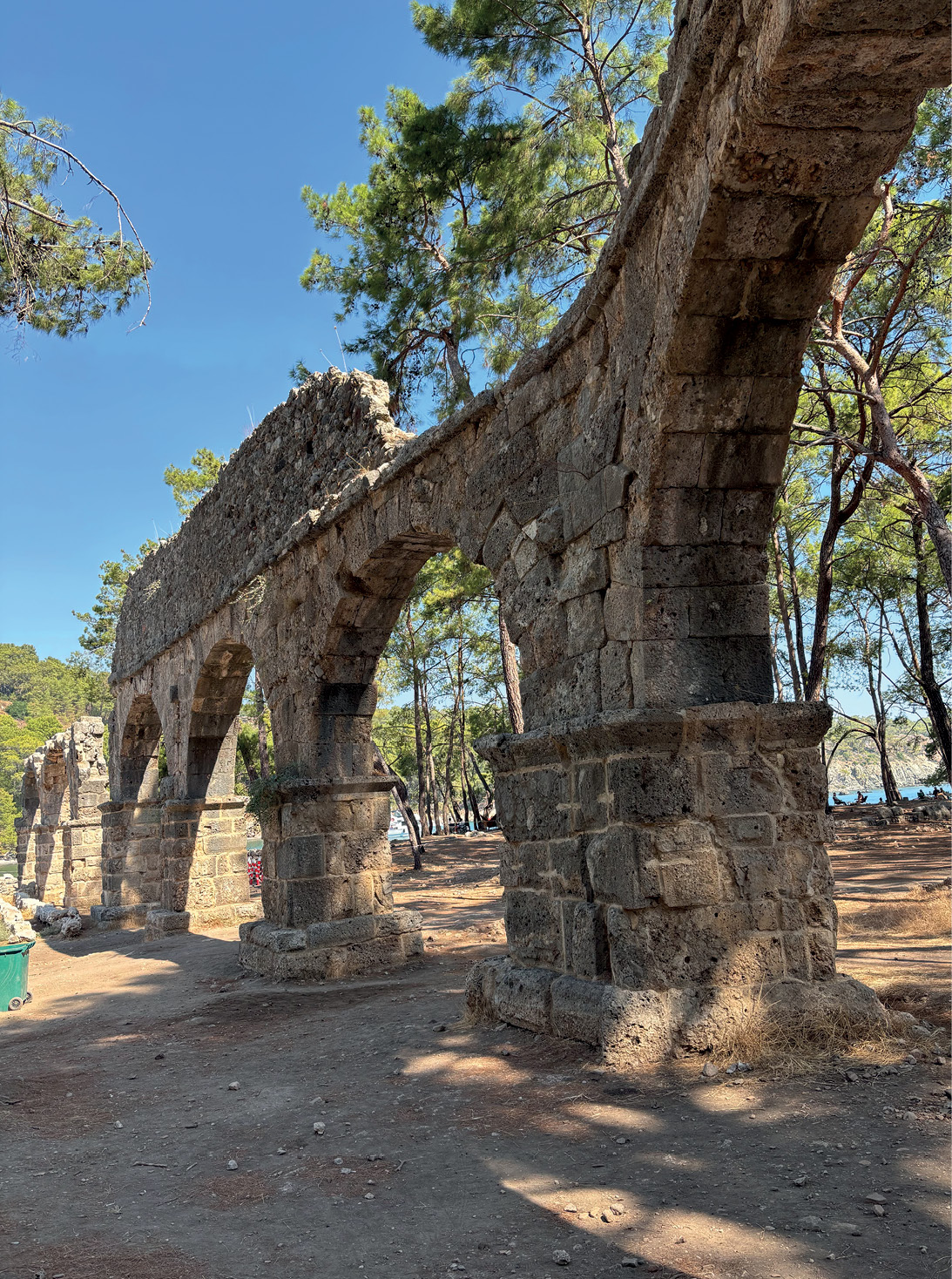
By the 1st century BC, as Rome began to take a keener interest in the region, it was pirates that were menacing the city. Strabo records a king among these marauders by the name of Zenicetus, who took possession of Phaselis. It was freed from his grip in 77 BC by a Roman force commanded by P Servilius Vatia, who punished the city by confiscating some of its land. After Phaselis became part of a Roman province, it went on to enjoy several centuries of relative peace. Although the name of the city appears in the ancient literature far less frequently during this period, its fortunes can be traced via inscriptions and monuments at the site. As well as documenting Hadrian’s visit, dedications honouring Vespasian, Domitian, Trajan, and Antoninus Pius suggest that the city successfully tapped into imperial largesse. Roman monuments are among the most impressive visible at the site today. Alongside those already discussed, the remains of a fine stretch of the aqueduct and two bath suites close to the avenue reward exploration. The walls of the complex known as the ‘great bath’ still stand high enough to convey its former grandeur. Within, traces of different phases can be teased out, alongside the remains of hypocausts, pools, and even fragments of the lavish cut stone that once graced its walls.
The city survived – if in a diminished state – into the Byzantine period, and it was long thought that capture by the Seljuks in 1158 brought an end to urban life at the site. The pottery from the southern harbour, though, seems to suggest some activity after this date. Either way, the modern visitor will find the site bustling once more, especially during the cultural Phaselis Festivali, when, alongside the usual opportunity to enjoy the monuments and take a dip, visitors can also get tickets for the evening concerts.
Further Information:
• F Beaufort (1817) Karamania (London).
• J D Grainger (2009) The Cities of Pamphylia (Oxford).
• H Schläger et al. (1981) Phaselis (Tübingen).
• U Orhan (2025) ‘Recent studies on the south harbour of
ancient Phaselis, Türkiye: a newly discovered breakwater, amphorae,
and trade’, International Journal of Nautical Archaeology 54 (1): 218-238,
https://doi.org/10.1080/10572414.2024.2315202.
• A wealth of information about archaeological work at the city is available here: journal.phaselis.org.
CWA is grateful to the Republic of Türkiye’s Ministry of Culture and Tourism.
All images: M Symonds, unless otherwise stated