
Subscribe now for full access and no adverts
Corinth in the spring is bursting with exultant acres of wild yellow mustard. Not by chance, the air is intoxicating with enriching scents. Swallows, who have just arrived, sense it and dip and weave through the ancient ruins and knee-high grass. Anticipation is in the air, too, as the tourist year is getting started. Lumbering buses are inching like leviathans into the village next to the excavations, many bringing pilgrims to visit where Paul preached to the Corinthians. This year has brought a special excitement. Hollywood has landed here. Christopher Nolan was filming at Acrocorinth, the Frankish castle that high above on its rocky eyrie dominates the ancient town. Notices invited locals to be extras in the filming. Following his success with Oppenheimer, Nolan is now making the Odyssey. Frankish Acrocorinth in the film has become Bronze Age Mycenae, the real palace being apparently insufficiently martial in its architecture to portray Agamemnon’s return from Troy. A lion gate was erected to provide a cardboard veneer of historical accuracy. The chromatic opulence of the surrounding landscape may have persuaded Nolan to make Acrocorinth into Mycenae. Of course, no less important are its sinewy battlements running like a slumbering reptile up and down the precipitous crags. This is a landscape that lies close to the sky. The form of things is irregular and refracted by the ringing morning light. In the enfolding viewshed that Nolan surely understood, to the west the surging heights rising to the mountains of Arcadia are still snow-capped, sparkling; to the north, beyond the blue miles of gulf waters, the faintest contours of the Pindus mark the trembling curtain of the farthest horizon. The Corinthia, at this time of year, feels blessed.

Two millennia of monuments
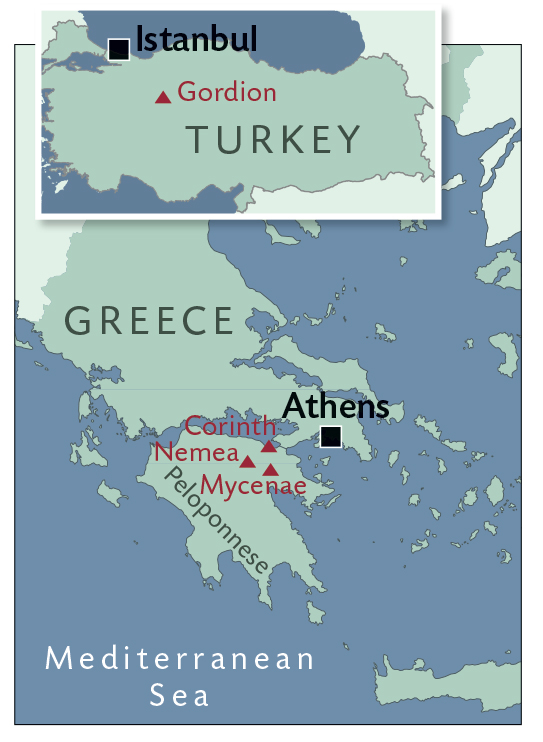
Corinth was once one of the great places in the Mediterranean. It has Bronze Age origins that account for the many myths about the town. In the 6th century, its argonauts established colonies from Italy to Crimea. Matching Athens as a power, it evolved into a metropolis by the standards of the early Hellenistic age. The Romans respected its antiquity. Its townscape was reinvented by the emperor Augustus and the wide plain running down to the gulf was centuriated. It was this fame that drew Paul to set up a mission here in AD 50-52. Like most Roman towns, it met its end in the later 6th and 7th centuries. Acrocorinth on its rocky pedestal high above, once the site of a Hellenistic temple dedicated to Aphrodite, became a refuge in post-Roman times and then, after 1204, a powerful Frankish fortress. In its shadow, overlying the ruins of the ancient city, a new Frankish town emerged. This prospered under Venetian rule and then faltered under the Ottomans. Now it is no more than a village that has grown up around the excavated areas, largely to serve the archaeologists and the tourists.

The many monuments of the earlier classical, pre-Roman city are scattered within the exposed remains dominated by Roman-period buildings. In the principal excavated area, the fractured remains of the Temple to Apollo catch your eye before anything else: its Doric columns soak up the sunshine and are evocatively photogenic. Beyond it lay the Roman Forum, surrounded by a cluster of civic buildings. Off this lay the cardo maximus of the Roman city, known now as Lechaion Road. Dating back to earlier classical times, the paved road lined with shops is another landmark of Corinth. The excavators encountered a palimpsest of later buildings overlying the Roman ones: some date to late antiquity, many belong to the reinvention of the site as a later Medieval town, when it was an untidy mass of small dwellings.
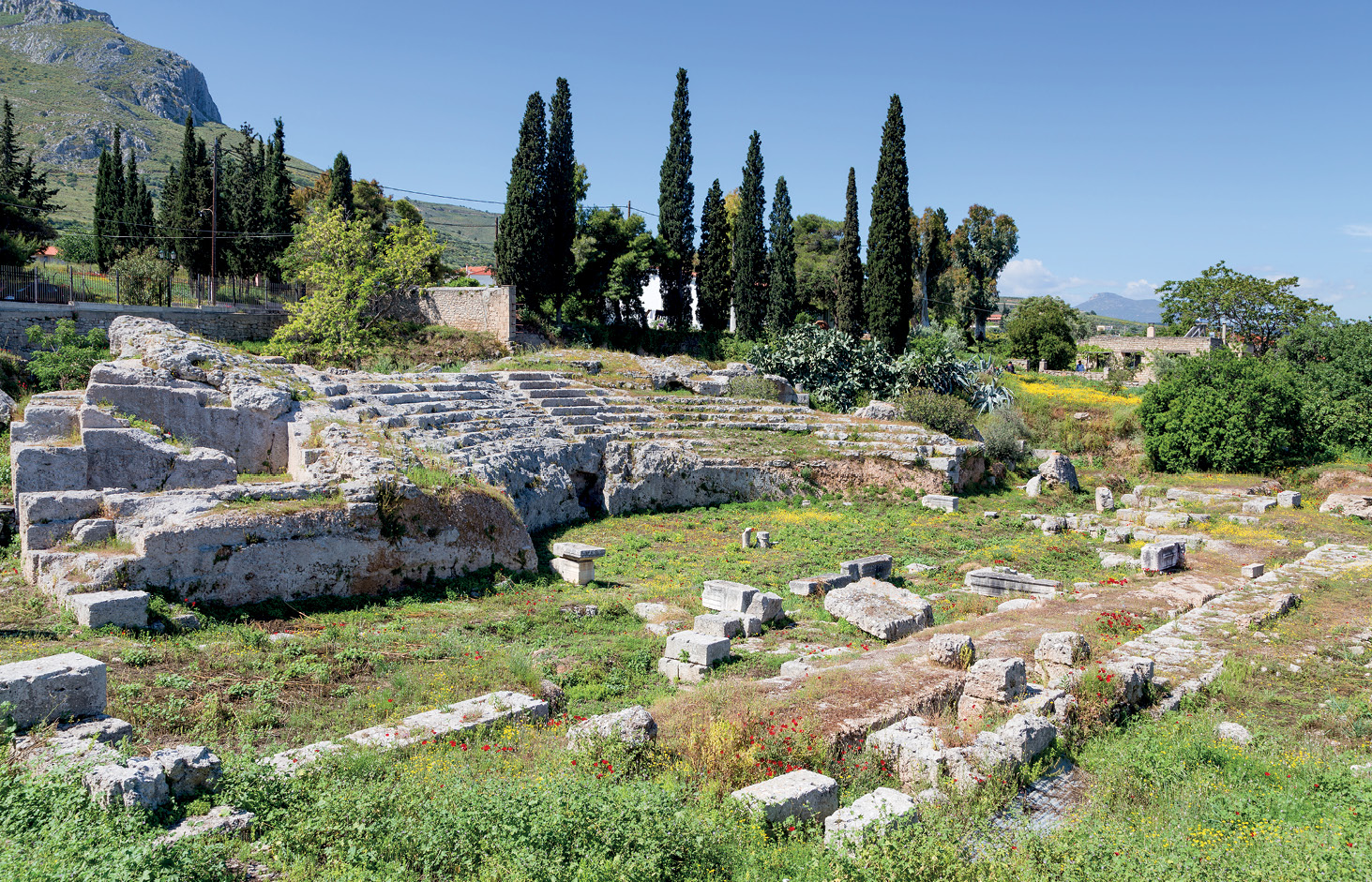
Outside the main excavated area, the little odeon beside the car park is invariably lost in tall grass. Looking down from the odeon on Corinth’s great theatre, it too appears to be lost in a sea of mustard. But passing down the path on its east side, you arrive in a cavernous bowl where as many as 15,000 attended all manner of dramas and festivities while gazing north towards the Corinthian gulf. Originally built in the late 5th century BC, it was refurbished first in the Hellenistic period, then early in the reign of the emperor Augustus. Its stage building dates to the 2nd century and was splendidly decorated with sculptures including scenes of gods fighting giants, Greeks fighting Amazons, and the labours of Hercules. Later in the Roman period, the orchestra was converted into a gladiatorial arena. In the courtyard east of the stage building is an inscription mentioning a certain Erastus, possibly the chamberlain of Corinth mentioned by Paul in Romans 16:23. Immediately to the east was a road lined with shops, offices, and perhaps shrines catering to theatregoers. Many of these buildings were decorated with wall paintings depicting deities, and destroyed in an earthquake in the later 4th century.
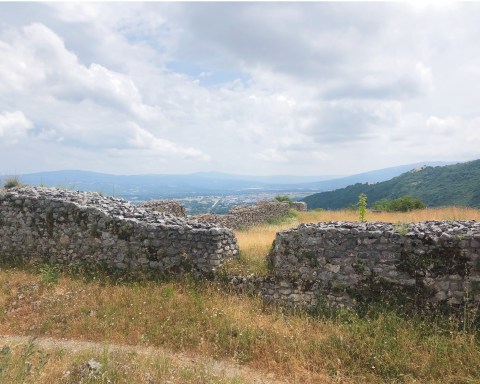
Overgrown trenches with walls are ubiquitous throughout the present village, most now seemingly forgotten. Some, though, are not. Pride of place surely goes to the unsigned amphitheatre on the eastern side of the town. This oval depression overwhelmed with tall grass is 79m long and 52m wide. Built in the late 1st century BC, its seating is largely gone, but traces of its seven staircases as well as the site of the Porta Triumphalis can be made out.
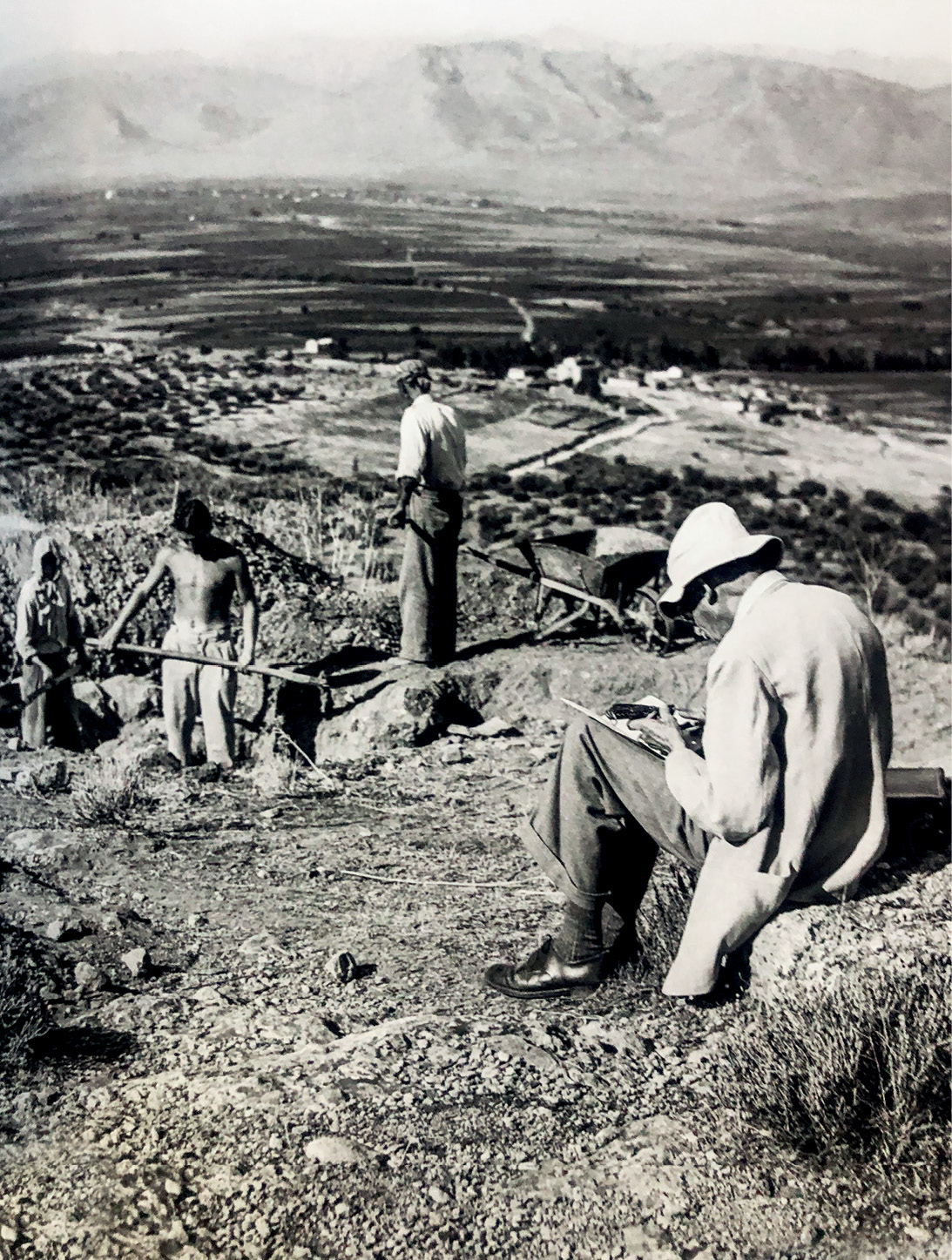
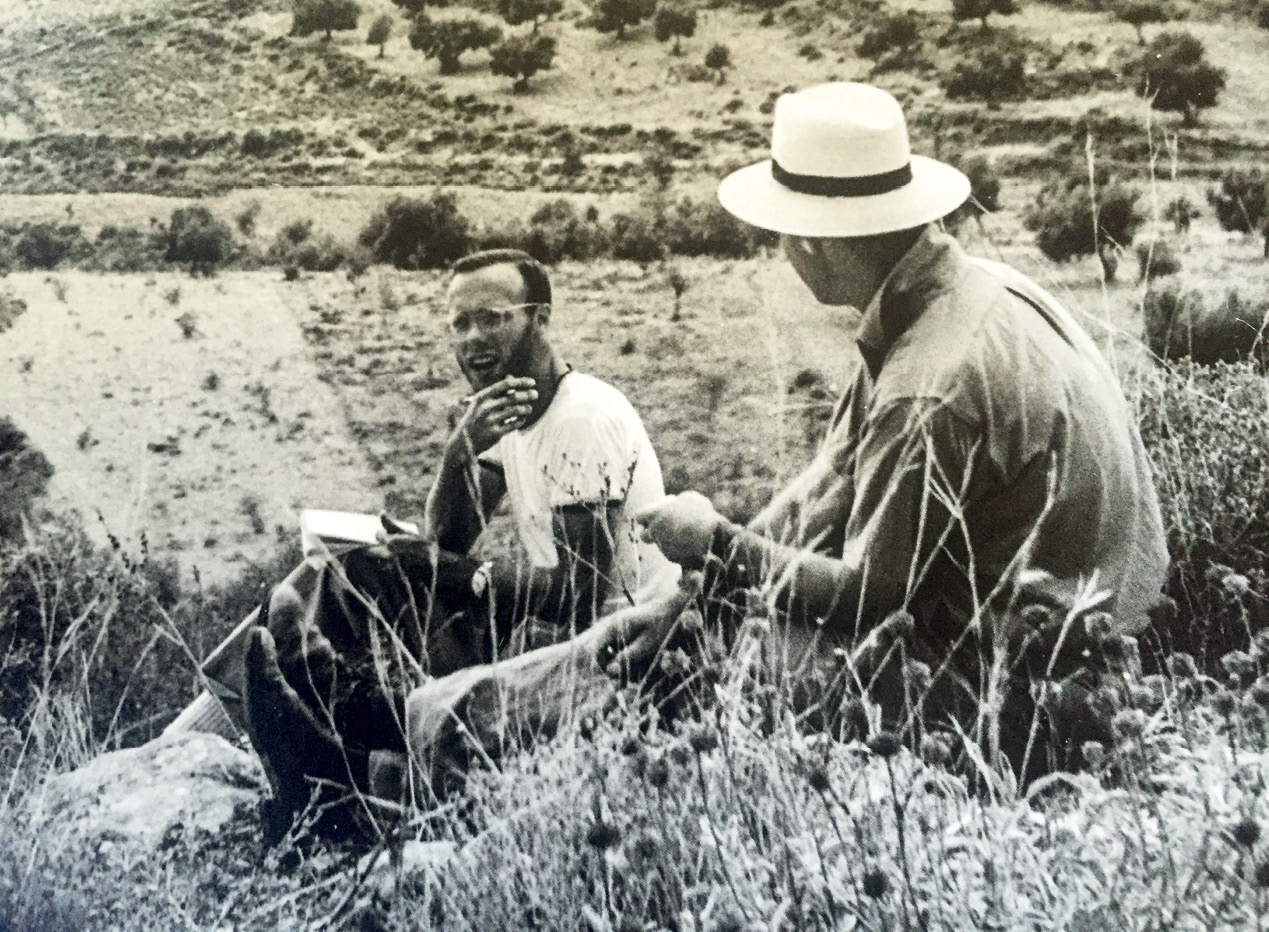
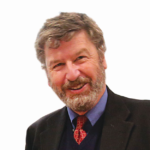
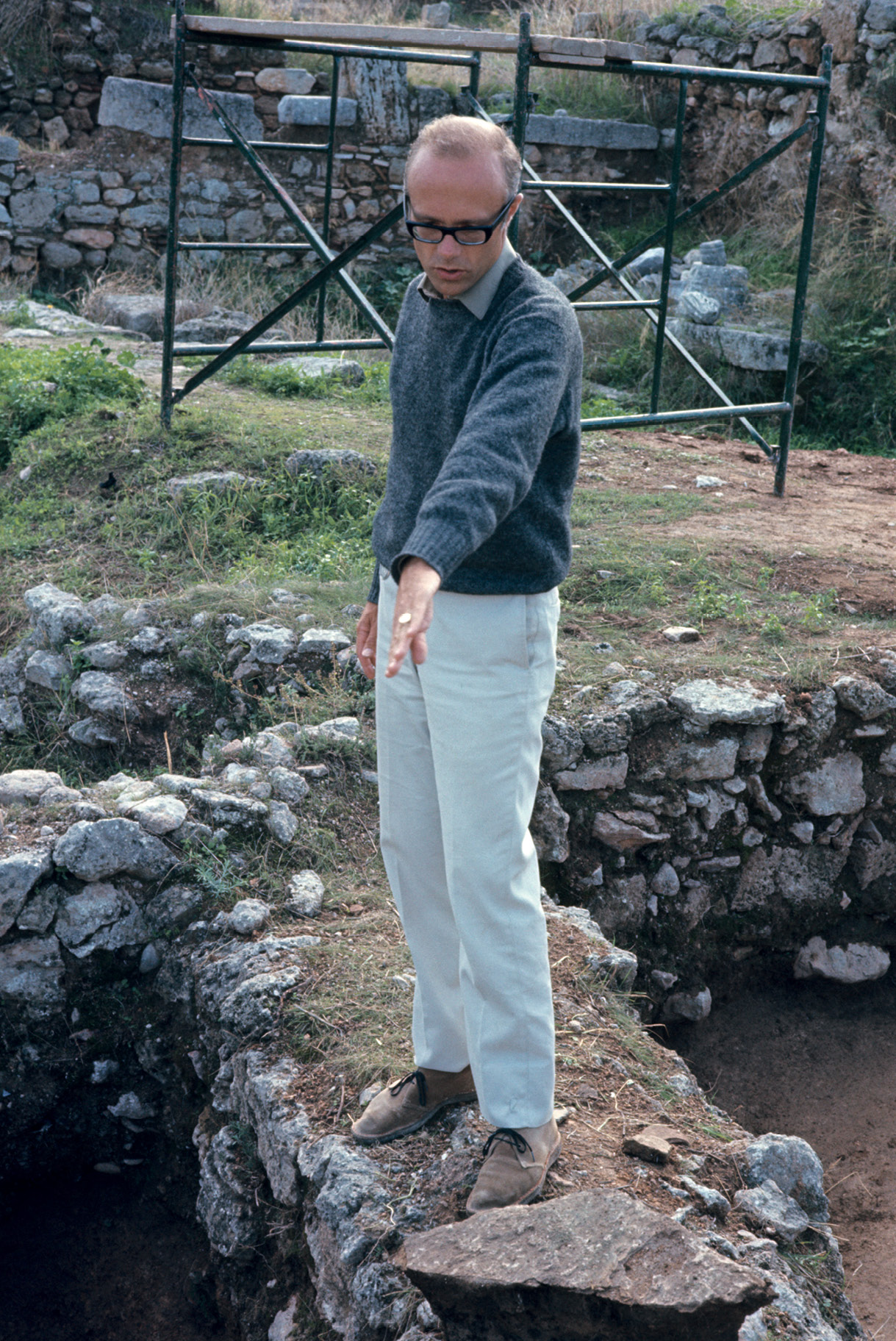
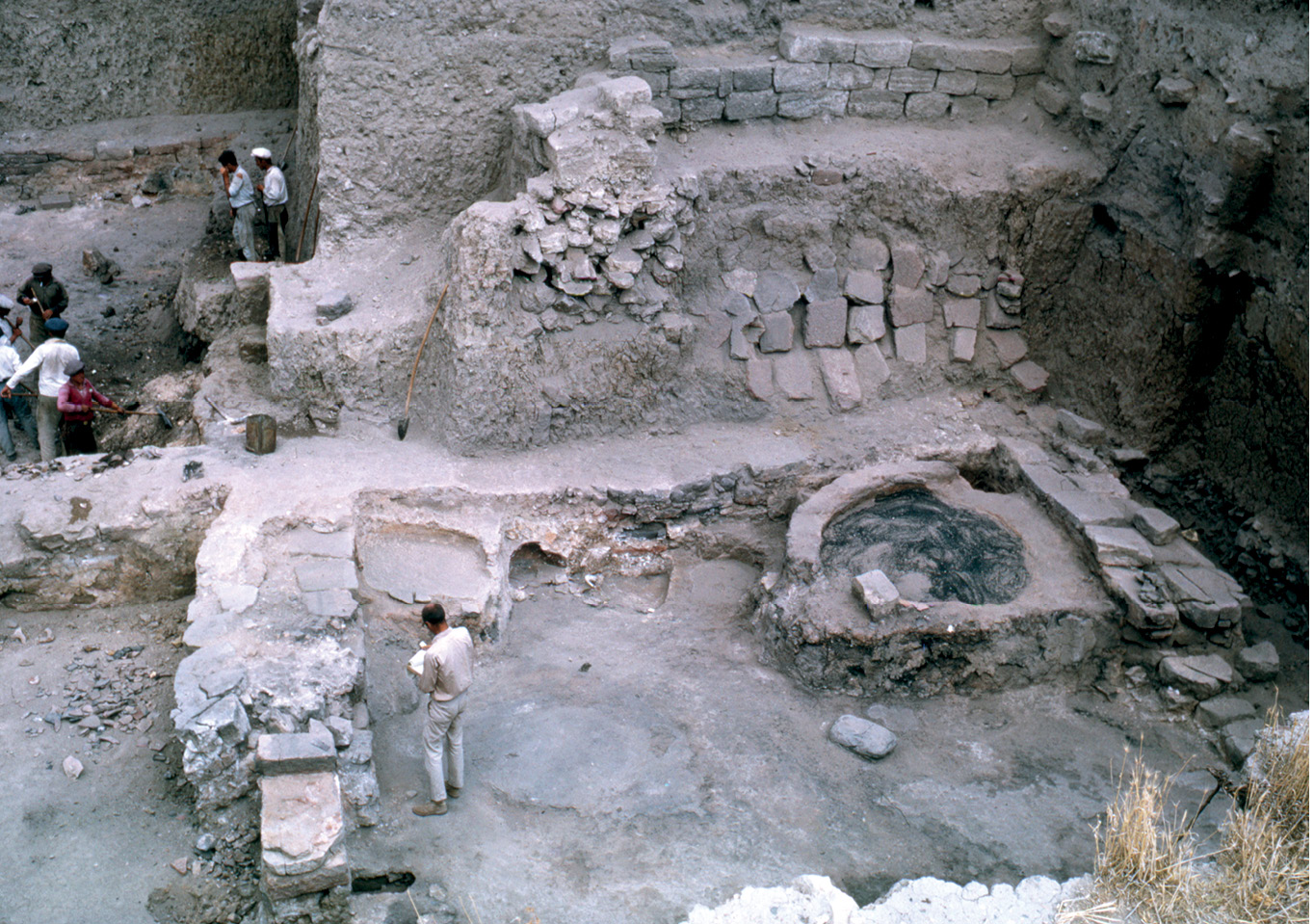
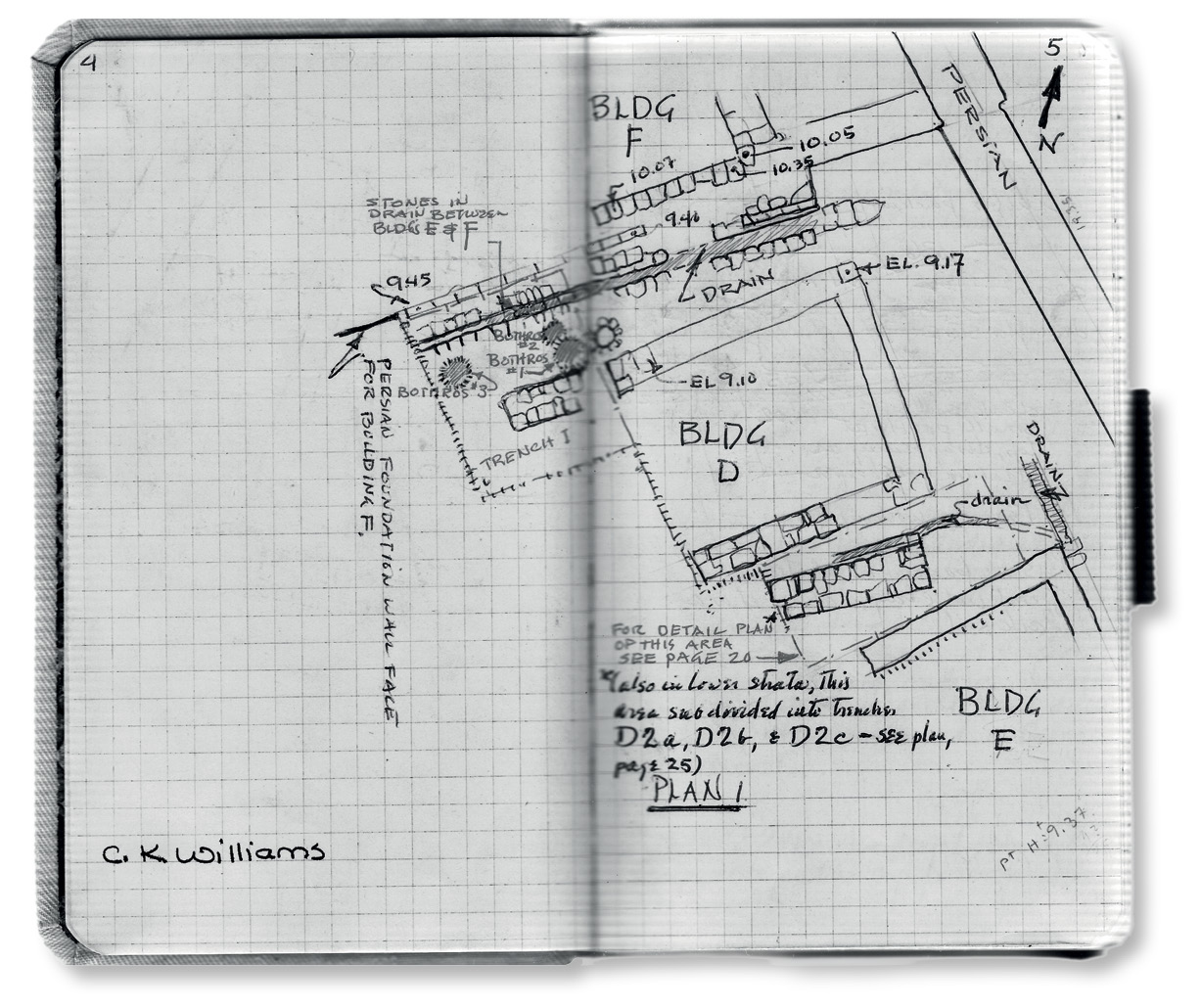
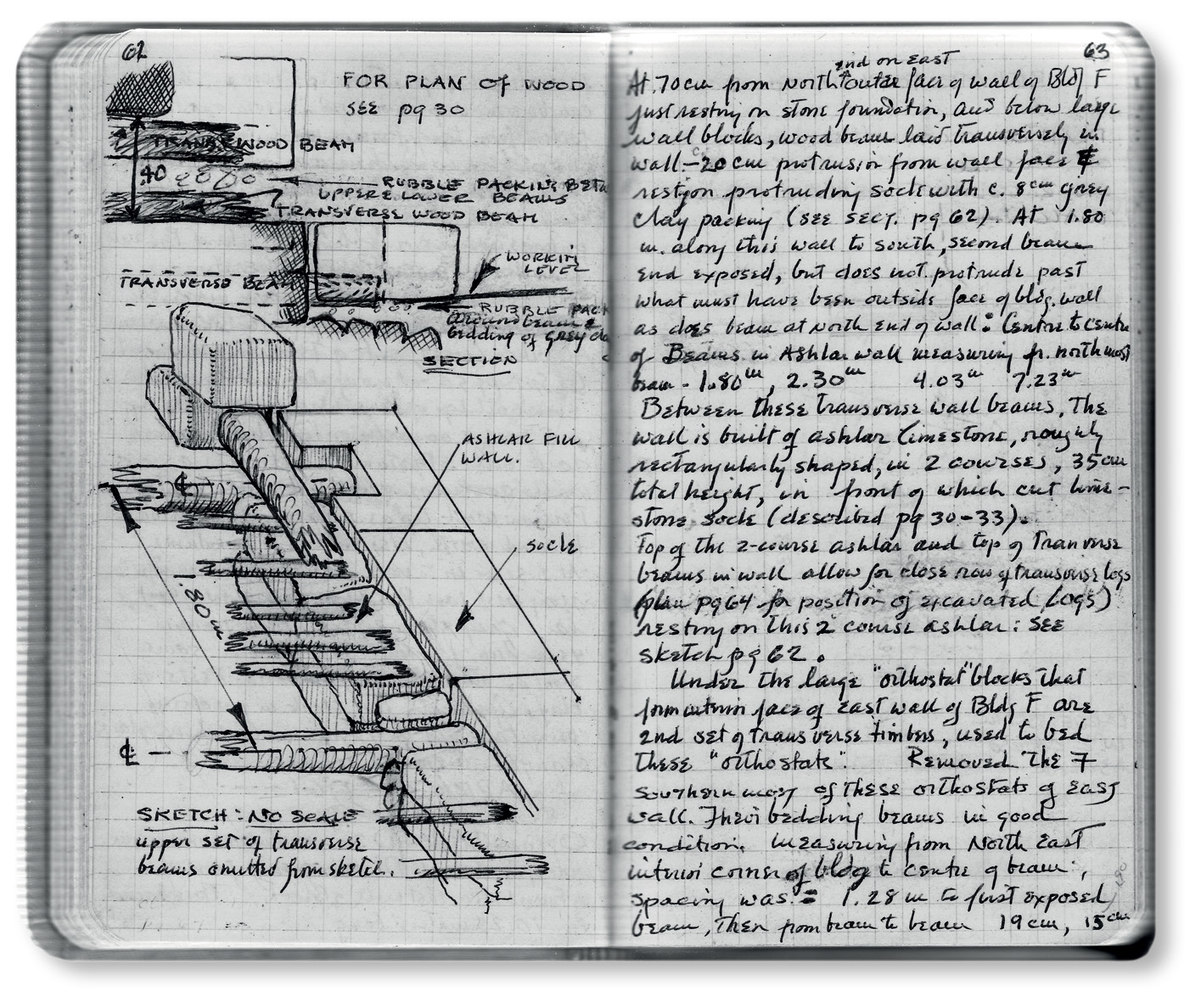
American archaeologists have been based in Corinth since 1896. This is an outlier of the American School of Classical Studies at Athens, a centre where stateside graduates, principally in classics, cut their teeth in excavations and studying opulent finds from decades of digs. The School built the site museum and stores, as well as Hill House, the residence for its distinguished participants and visiting students. Tucked inside a bower of cypresses above the odeon, it is here that the Philadelphian Charles K Williams spends much of his time now. Well into his nineties, Charles first came to nearby Mycenae in the 1950s as Alan Wace’s site surveyor. After studying the ancient sanctuary city of Nemea, Charles became Corinth’s site director for the American School in the 1960s. The principal guidebook to Corinth describes him as a revolutionary who brought new methods and ideology to the excavation campaigns. Rather than focus on single monuments, over his 30-year term as director (1966-1996) Charles shifted the study of the place to the human aspects of the ancient world, especially to defining the evolution of the urban and associated rural landscapes. Still active, he dedicates his working days to a report on his investigations along the street to the east of the theatre. Here, in the early 1980s, he found the collapsed decor of a public sector of Corinth that for 40 years has nagged away at his brilliant mind.
Charles Williams grew up in eastern Pennsylvania, trained as an architect at Princeton, worked in the studio of the postmodern architect Philip Johnson in New York (celebrated for the Seagram Building, the Glass House, and the David H Koch Theater at Lincoln Center), then set out to become an archaeologist. He excavated at Morgantina in Sicily (with Erik Sjöqvist) and at Gordion (with Rodney Young) in central Turkey, as well as Porto Cheli (with Michael Jameson) and Aghios Stephanos (with Lord William Taylour), before studying at the University of Pennsylvania and focusing his research on, first, Nemea and then, over more than six decades, Corinth. Celebrated in Philadelphia as a great philanthropist of archaeology, classics, and modern art, he is renowned for his grace and the intellectual heft he brings to all he touches. Without doubt, as hosts of academics and artists will attest, he is one of life’s great treasures.
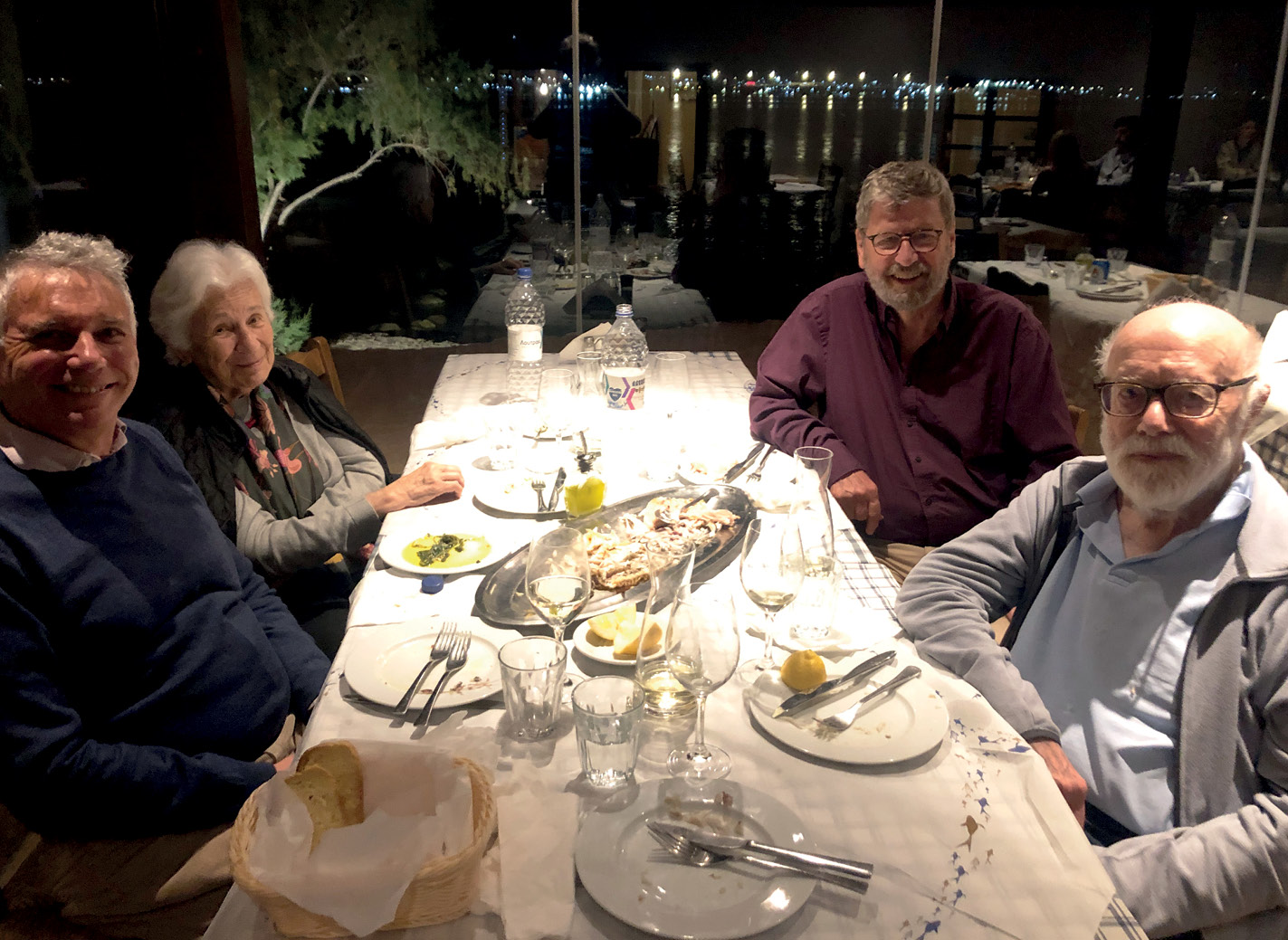
At first, Charles can appear a touch forbidding. He has the formal gravitas of a bygone age. This, though, is to deceive. Perhaps he is instinctively a little shy, certainly he has a modesty that conceals a sharp intellect. Once he knows you, the mixture of humour and lyrical stories are simply entrancing. He possesses a winning smile and a love for good conversation. He has a wonderful eye for archaeology and the arts, and, having travelled so much, he has the mien of a life well lived. On this early March Sunday, I felt honoured because, before lunching together with his great friend Nancy Bookidis in a taverna at Acrocorinth, he allowed me to interview him on film. We met in his little bedroom in Hill House, beside his laptop computer.
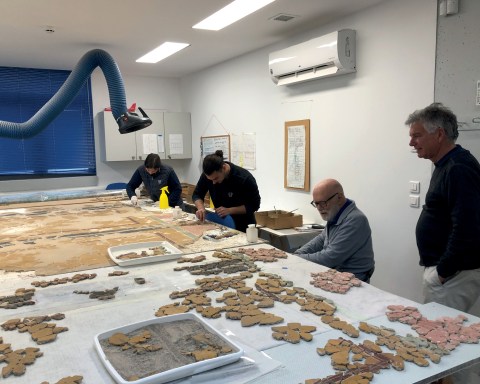
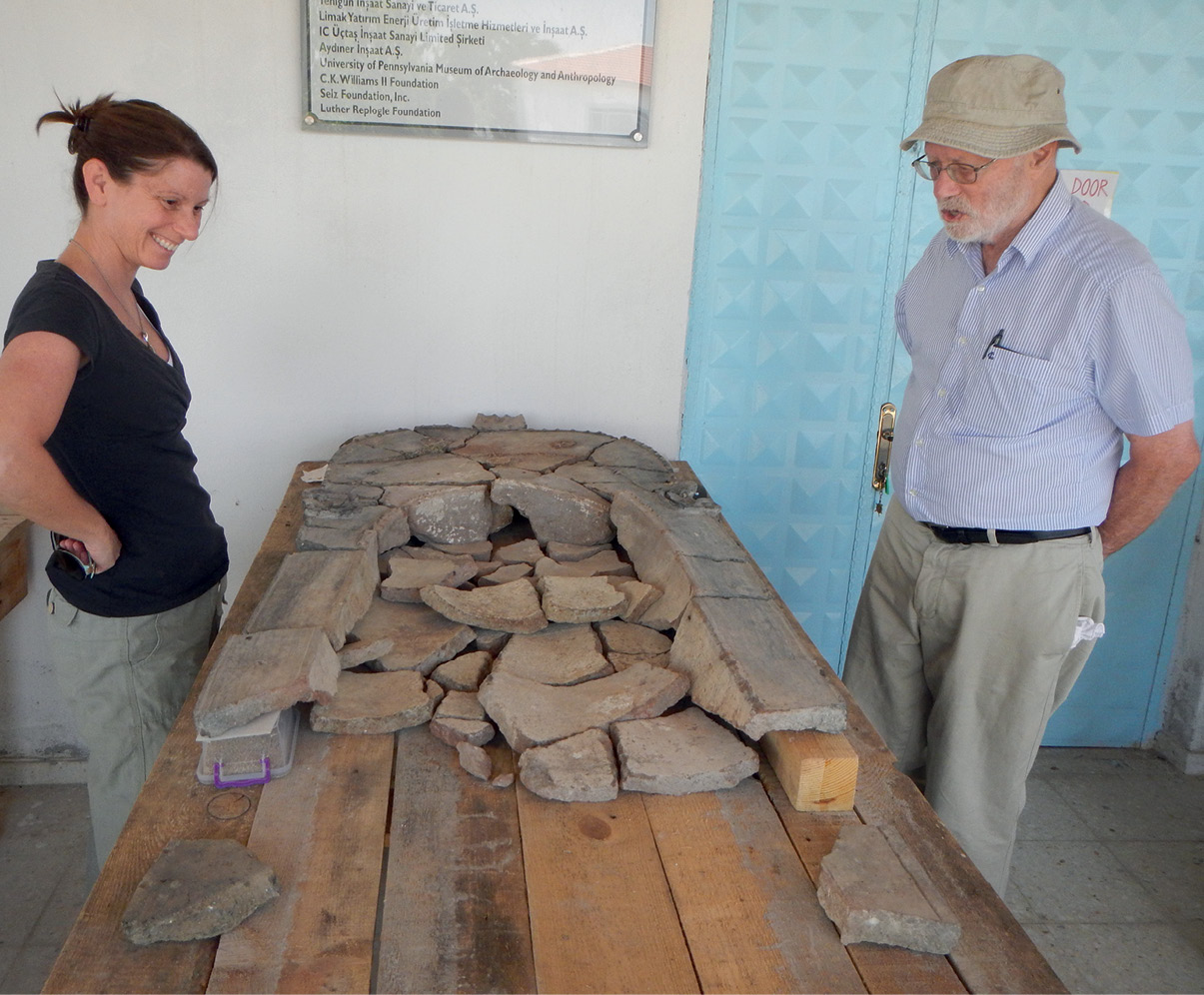
What follows is a sample of the riveting conversation I had with him. At times he lost his way, as is normal for anyone reflecting on more than nine decades, but his lucidity was, frankly, breathtaking. His eyes sparkle and his instinctive gestures showed how thrilled he was to engage in this journey back across his storied lifetime. Most of all, he positively beams when he speaks of the restoration project on the Pompeian-style paintings he excavated in the ’80s beside the theatre. The project, led by Roberto Nardi with a team of a dozen, is now in its fourth year.
The conversation
RH: When did you become an archaeologist?
CW: I was born one. When I was four years old, I thought it would be wonderful to dig a pyramid. I’d find the top of it in a desert and dig. I was a kid who wanted to dig. I started to dig a mastaba tomb. Yes, in the garden. But the tool handle was too long for the dig, so I cut it. My father later asked me why I had cut it and I told him that I didn’t like the gardener.
RH: What made you study architecture, not, for example, classics? And then you joined Philip Johnson, one of the most famous post-war American architects.
CW: My family said that I must do something that made a living for me. Even though the family had money, they said I had to make my own money. You can’t do that in archaeology. So I went to Princeton and followed architecture. After graduate school, I went to New York, joined a small studio, got myself an apartment, and Philip Johnson actually asked me to join him. He needed me for a specific reason. I showed my family I could make a living, and then I went into archaeology.
RH: Did you enjoy architecture?
CW: Yes, I liked it. They needed a worker. But the project I joined with Johnson was horrible. It was a Brown University commission. It was a huge hall of a building. Every morning Johnson would lean over my desk and ask what I had done. To be honest, he wasn’t an easy man. He was very much a driven businessman. Brown kept coming back, cutting it back in size. Johnson was very unhappy: the finished building looks horrible, it’s just not in scale. I learnt a lot from architecture. In an office like Johnson’s, everything was logical as you built. It was the same principle in archaeology. Take a Greek temple: the columns and pediment have to fit together as a unit. Johnson was good to me. He encouraged me to take night courses at the Institute of Fine Arts in New York. I went to them all and realised I needed to go to day courses, but of course I was working. So I then had to decide if I was going to do architecture or archaeology.
RH: Your family agreed to you being an archaeologist?
CW: Only because I could do architecture (to earn a living) if I wanted.
RH: How did you start as an archaeologist?
CW: I was in the graduate programme at Princeton. [Alan] Wace [sometime Director of the British School at Athens] was at the Institute for Advanced Study [Princeton]; he wanted someone to be the architect for his excavation at Mycenae. I knew nothing about surveying, but I did a little work, and he invited me to join him. I found it fascinating. Even though we were surveying rather than digging, he taught me how to work with pottery. Then the whole thing just fell together.
RH: What was Alan Wace like? You must be the last person on the planet who remembers this remarkable archaeologist. He had competed with Thomas Ashby to be Director of the British School at Rome in 1905; instead, he went to Athens during which time he excavated at Mycenae. He was also a great expert on Vlach textiles. A quite extraordinary man.
CW: He was old when I was there in 1954, but he was soft and willing to teach me pottery.
RH: Did he talk about his past?
CW: He didn’t like to talk about his past. He became Curator at the Victoria and Albert Museum. He did not like to talk about his time at the British School. He was very quiet. Every so often Mrs Wace would refer to it.
RH: You arrive in Greece as a young man. What was it like starting your archaeological career at Mycenae, one of the most famous sites in Europe?
CW: When you are out there working, you don’t realise how important it is. When you’re surveying the architecture, it was just a fascinating prehistoric site.
RH: What did your parents and Philip Johnson make of your new career?
CW: No one mentioned it. When I got the gold medal from the American Institute of Archaeology, my mother arranged a party for me. When I came to it, she introduced me to the fellow guests not as an archaeologist who had just got a medal but ‘This is my son – he’s a retired architect.’ Philip Johnson stated clearly that I was interested in archaeology.
RH: Johnson encouraged you, so you joined archaeological projects at Morgantina in Sicily and Cosa in Tuscany. Why those sites?
CW: It was Professor Erik Sjöqvist of Princeton University who really started me on the archaeological path – two seasons at Morgantina. The excavation team was an amazing group. It included a Swedish photographer, a retired naval officer, three professors, and Tom Hoving, who was excavating before becoming Director of the Metropolitan Museum of Art. (Charles paused and then continued.) Extraordinary though Morgantina and the experience was, I had had enough architecture, so I called Professor Stillwell in Princeton for advice about archaeological training. After an evening of discussion, he suggested Cincinnati or Penn.

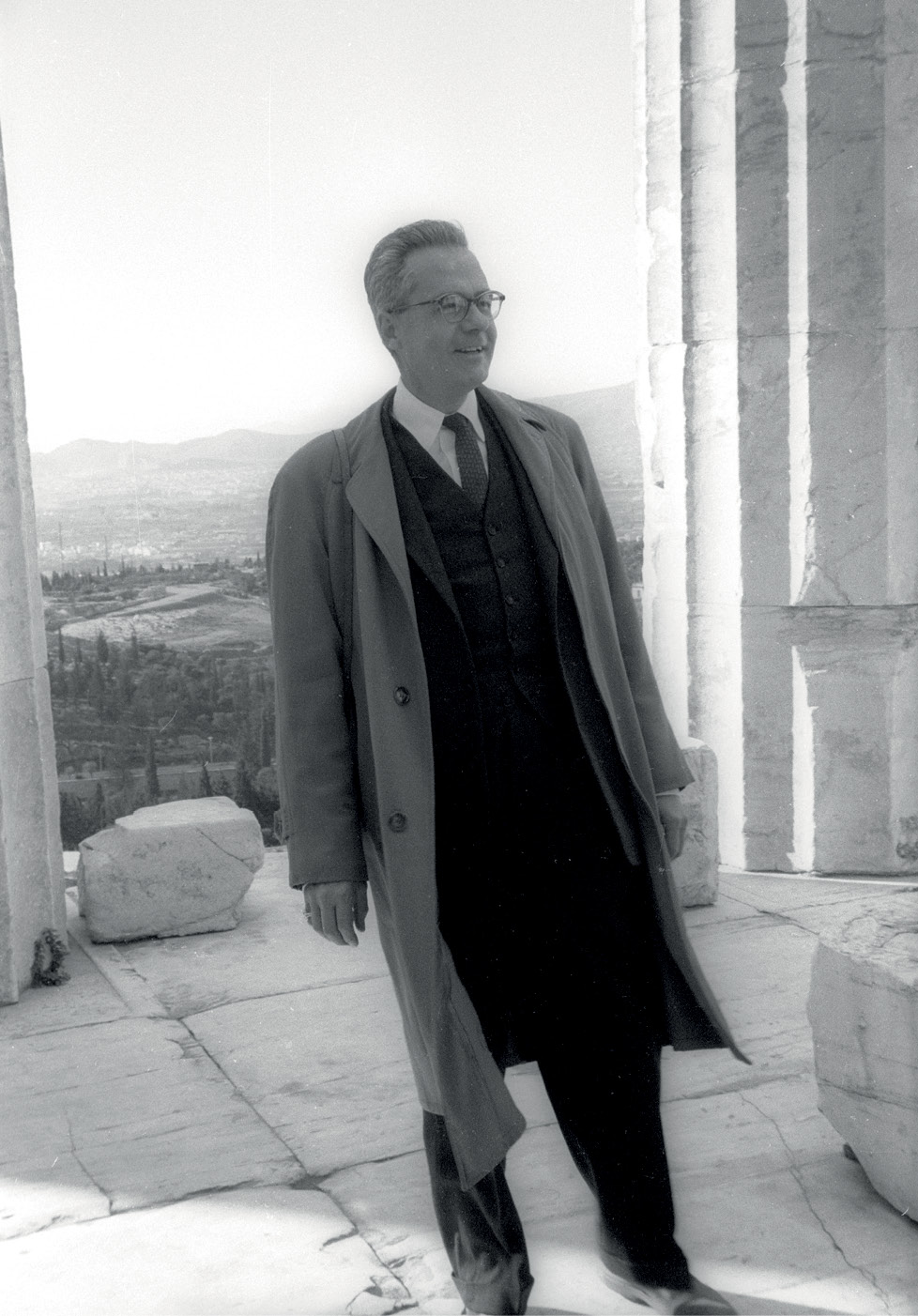
RH: You choose the University of Pennsylvania, and its professor of classical archaeology, Rodney Young. Did you go to Cincinnati and meet Jack Caskey before making your decision?
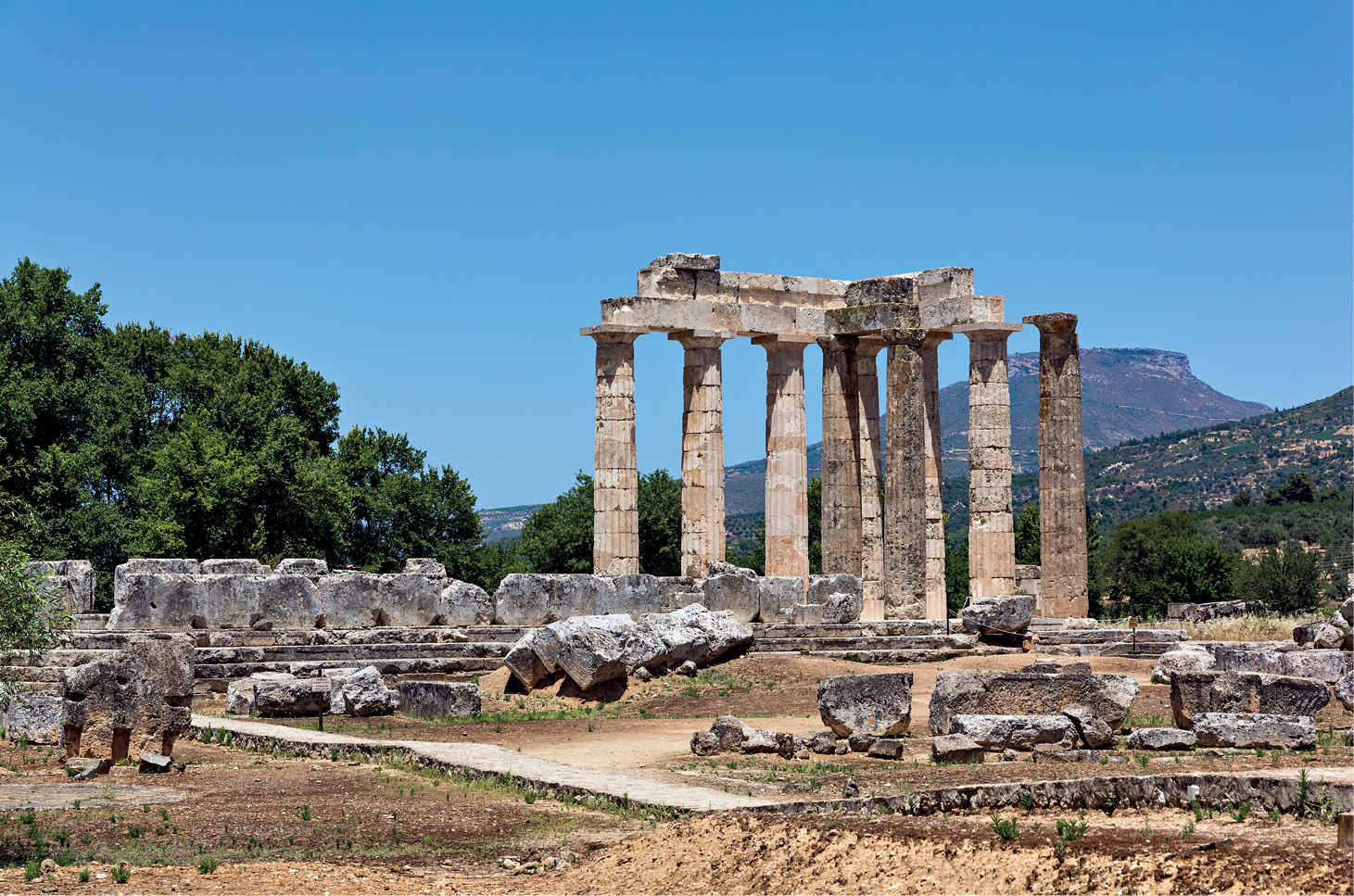
CW: I spent a weekend with Caskey and his wife. He was interesting, very nice. He gave me the material that [Bert] Hill had for his book on Nemea. He instructed me to get Hill’s manuscript edited and ready for the printer, then I would be ready to write a thesis on Nemea. He gave me an attaché case full of paper, which I didn’t open until I got home. At that time, you taped a line over an old line on a page if you didn’t like it. I opened the case, and it was confetti; nothing was attached. It was hideous. Anyway, I got it done! What I thought was – Wace believed there was continuity between the Mycenaean and Geometric periods. I took his idea. I wanted to find a new Mycenae. I didn’t think Caskey would move from the island of Kea, where he was digging. But Rodney Young was opening up a new area at Gordion, and he made it sound like a great opportunity.
RH: So you went to Gordion in the 1950s, right after Young brought in miners to dig the so-called ‘great tomb of Midas’. How was it digging with Rodney Young?
CW: Absolutely fantastic. I couldn’t have wanted it better. What happened was, I was given an area and told to dig it to the 6th century BC. I was given 20 trained workmen. I had my own excavation on his excavation. He would come out for 15 minutes and talk to me. I was all on my own and loved it.
RH: Tell me about Rodney Young. He made a big impact on you.
CW: (a warm smile crosses Charles’ face) He was an unbelievable personality. He had an office on a corridor in the museum. In that office, he had the top windows removed so that it was open aired. He would ask you a question and you would answer, and everything went up and down the corridor. He said it was one way he could keep things straight with students, and it was.
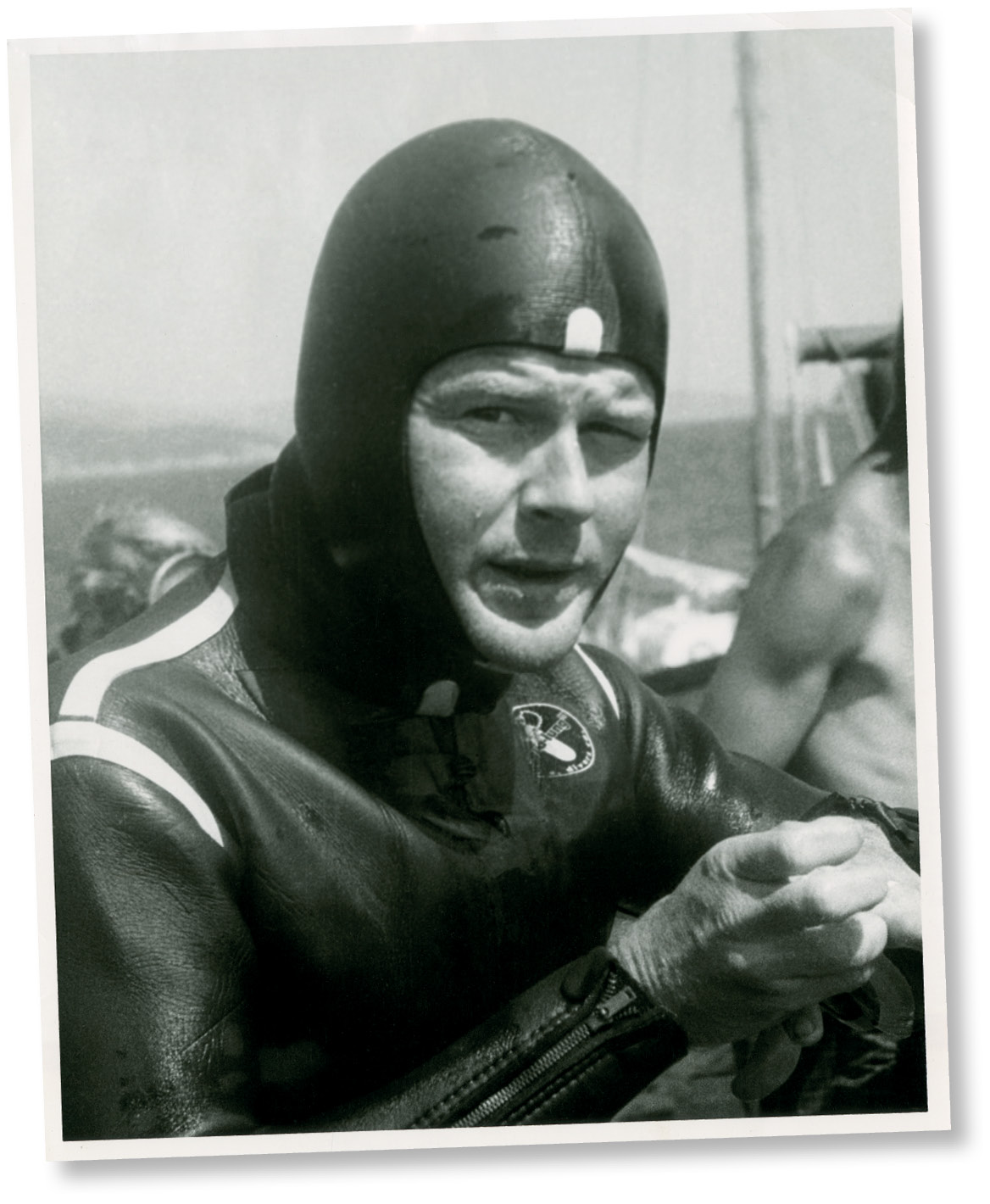
RH: He was a larger-than-life character. Did he like your thesis on Nemea? Did he approve? Was he a good mentor?
CW: Nemea, he never interfered with my plan. He was wonderful. If you wanted a job, he tried everything. He’d do anything for you. Even when disaster struck. My Nemea dissertation burnt up in a fire (in the dormitory at Porto Cheli in the Peloponnese – an excavation led by the University of Pennsylvania professor, Michael Jameson), along with all the copies, and I immediately changed topics, writing a second dissertation on a Corinthian subject. It was a less painful route to follow, and Rodney never interfered with my plan.
RH: Did he help you come to Corinth?
CW: No, I was doing Nemea for Caskey, so I stayed each night at Corinth and drove in my little car to Nemea. While I was doing that, the Director of the American School, Henry Robinson, came to visit Nemea. He liked how I was cleaning up the site. He was running the Corinth excavations, but finding it too much with the directorship of the School. So, in 1962, he asked me to take on the excavations, and in 1966 I got put into the (Corinth) Directorship.
RH: You came to Corinth by chance. Did you find it easy to take control? It was an immense project.
CW: I didn’t dig all Corinth. I started by excavating around the forum. It was a festival ground, in my opinion.
RH: You changed everyone’s interpretation of the forum…?
CW: (with an obvious smirk) Not for everyone, but for myself.
RH: Had you finished your PhD by that time?
CW: No. After I lost all of my Nemea manuscript at Porto Cheli, it made me decide to write another dissertation. On Corinth. I was trying to prove that the agora was not the agora. I was pointing out what the problems were.

RH: What did Rodney Young make of the new topic of your thesis?
CW: I never asked! It was up to me to do it. He was giving me so much else. He was talking to me about everything else. I enjoyed his company.
RH: You must have seen a very different School [American School of Classical Studies at Athens]?
CW: I had never followed the School’s annual programme, and I concentrated on Corinth.
RH: You were an outsider in a way, who had come here by way of the excavations at Gordion, Turkey.
CW: I was, but it was fine.
RH: Did Rodney Young want to become director in Athens? He had been at the American School before the Second World War.
CW: I think he may have, but Homer Thompson was appointed to run the excavations in the agora where he and Rodney had worked in the ’30s, and Rodney went to Penn and then afterwards surveys started at Gordion.
RH: At Penn you were in the company of some fine young graduates.
CW: Arthur Steinberg, George Bass, and Crawford Greenewalt.
RH: I knew Crawford and George, but not Steinberg. Tell me about Steinberg.
CW: Arthur was the smartest and, dare I say it, the laziest. He always came out top in what he did. He started metallurgy. So he got interested in archaeometry and was hired by MIT and disappeared. Never saw him again.
RH: Crawford was a good friend. He came on the bus from his excavations at Sardis to your 80th birthday party at Gordion in 2010 in shorts, and you pointed out he had holes in the backside.
CW: Right! He was always that way. He was wonderful and quite humble. Everyone thought he was the best thing in the world.
RH: George Bass – now there was a character. He was a pioneer of underwater archaeology.
CW: He was highly thought of at Penn and he got a submarine to do his work. He felt he was underappreciated and went to Texas A&M.
RH: I remember George told me that Froelich Rainey, the Penn Museum director, persuaded him to learn to swim to do underwater archaeology. He went to a local swimming pool…
CW: I didn’t know that. There are some things people just don’t tell you.
RH: How did you come to work at the theatre at Corinth, which brings us to the paintings you and Roberto Nardi’s team are working on now. Why the theatre after the agora?
CW: I did not like the idea that the agora was the agora. So I had to find a place where the agora should be. I thought it would be below the theatre. I started working on the east side of the theatre hoping to extend down to the agora.
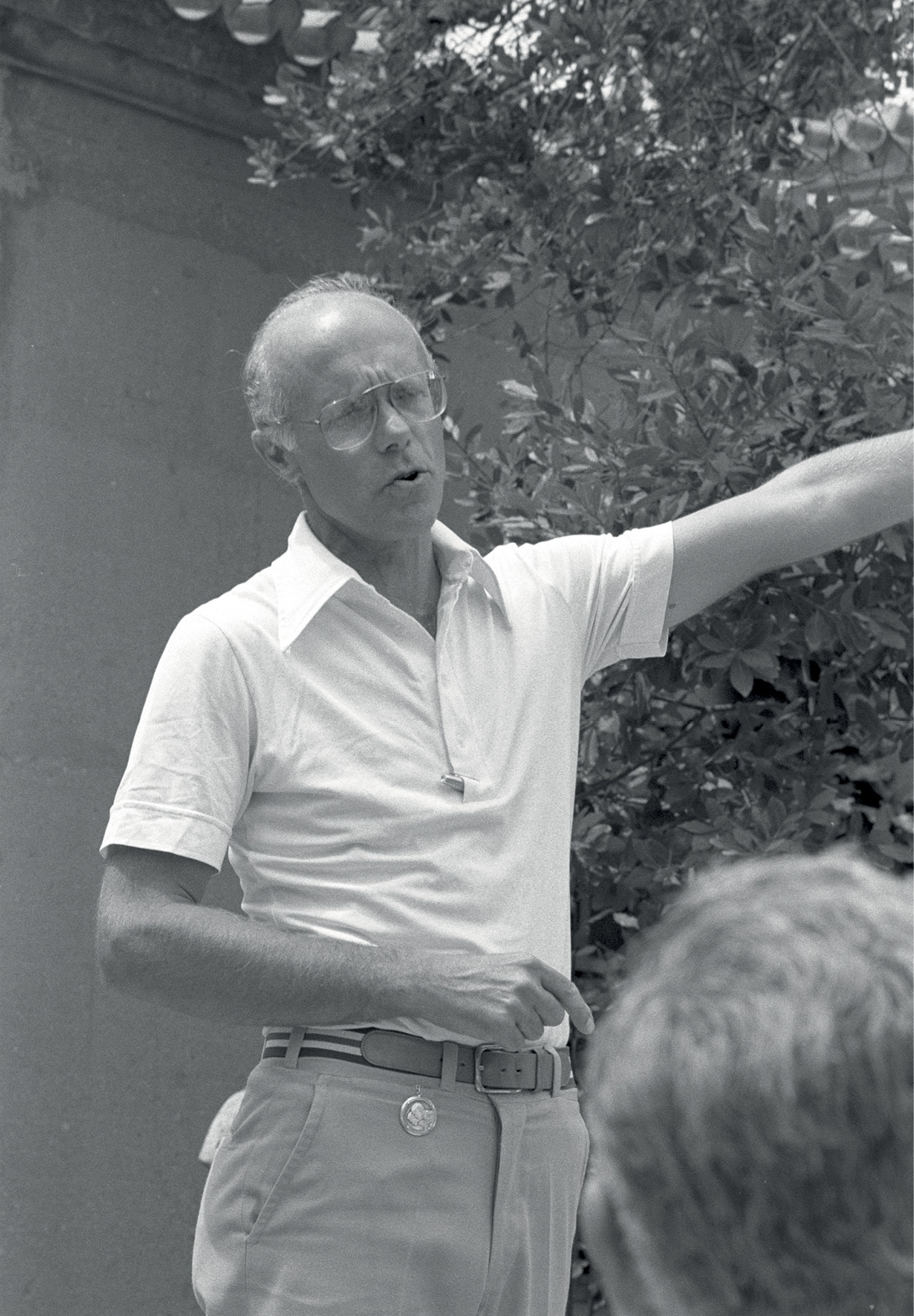
RH: Did you make that clear as a research aim?
CW: No, not at all. I didn’t tell anyone. I wasn’t sure. If I’d said I was going for the agora, I wouldn’t have got any support. I just told everyone I wanted to know more about the theatre.
RH: The theatre itself had been excavated by T Leslie Shear in the ’20s and published by Richard Stillwell.
CW: Stillwell showed that the Augustan theatre was transformed into an amphitheatre in AD 225-250. Frescoes showed animal hunts and gladiators – sadly, these no longer remain. It became a place for persecution and martyrdom.
RH: From your excavations beside the theatre, you discovered layers of frescoes that Roberto Nardi’s conservation team are reconstructing now?
CW: That was an accident. I was cleaning the road on the east side of the theatre. I stumbled into these paintings.
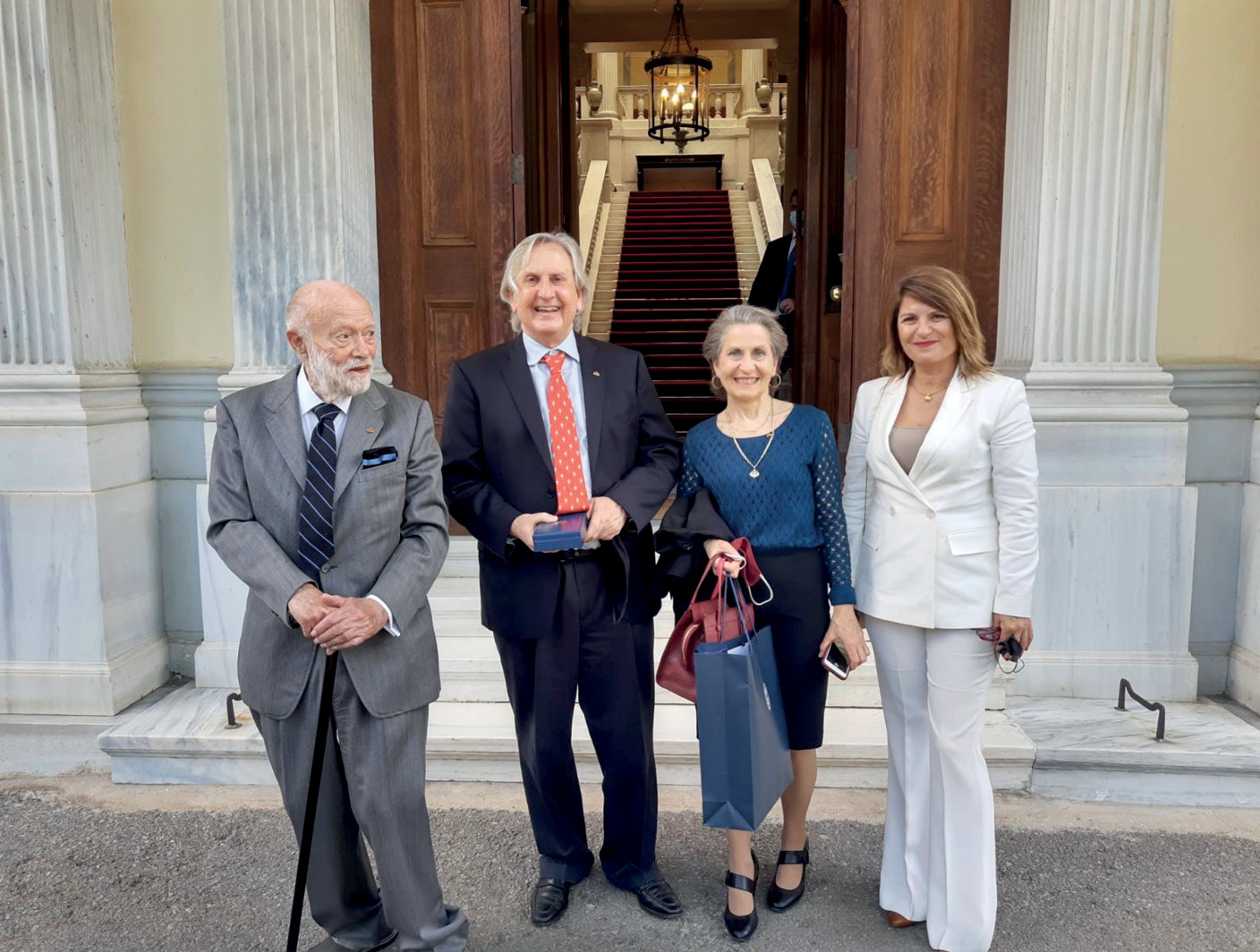
Here we took a break as Charles had to attend a ceremony in the village. He was being made an honorary citizen of Corinth. We agreed to resume our conversation in the apothiki, the storage building Charles designed and built to house, among other things, the thousand or so wooden crates of Roman painted plaster from his theatre excavations. We will pick up in the concluding part of this interview, in the next issue of CWA.
Thanks: My thanks to Jack Davis, Gareth Darbyshire, Manolis Papadakis, Alex Pezzati, and Chris Pfaff.