Subscribe now for full access and no adverts
Kea, also known as Tzia, is named after the ancient Greek hero Keos. It is the nearest island of all the Cyclades (so named because they are the ‘encircling ones’ round the sacred isle of Delos) to the Greek mainland of Attica. The ferry leaves from Lavrio on the east coast of Attica and takes just 30 minutes – but 70 minutes on return, indicating the strong currents and brisk winds through the strait.
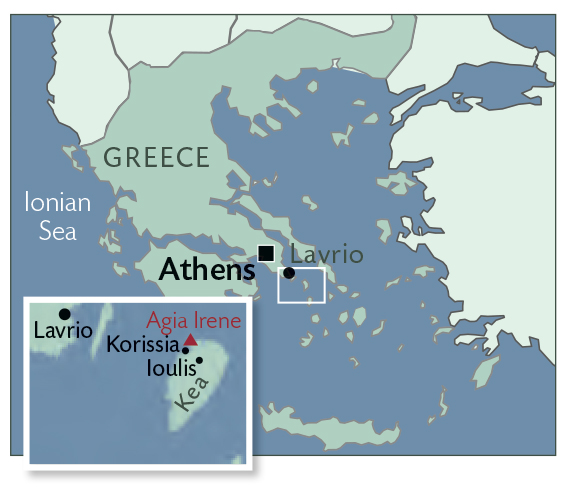
Kea is a beautiful mountainous island, more lush than some, and boasts archaeological sites that are perhaps best described as important rather than spectacular. The ferry arrives in the sheltered Bay of Agios Nikolaos at the small port town of Korissia, where I stayed, with the twin acropoleis of ancient Koresia rising above.
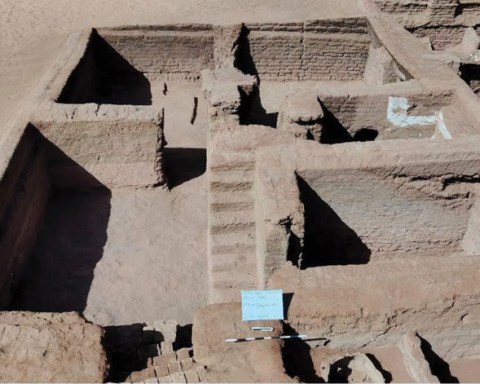
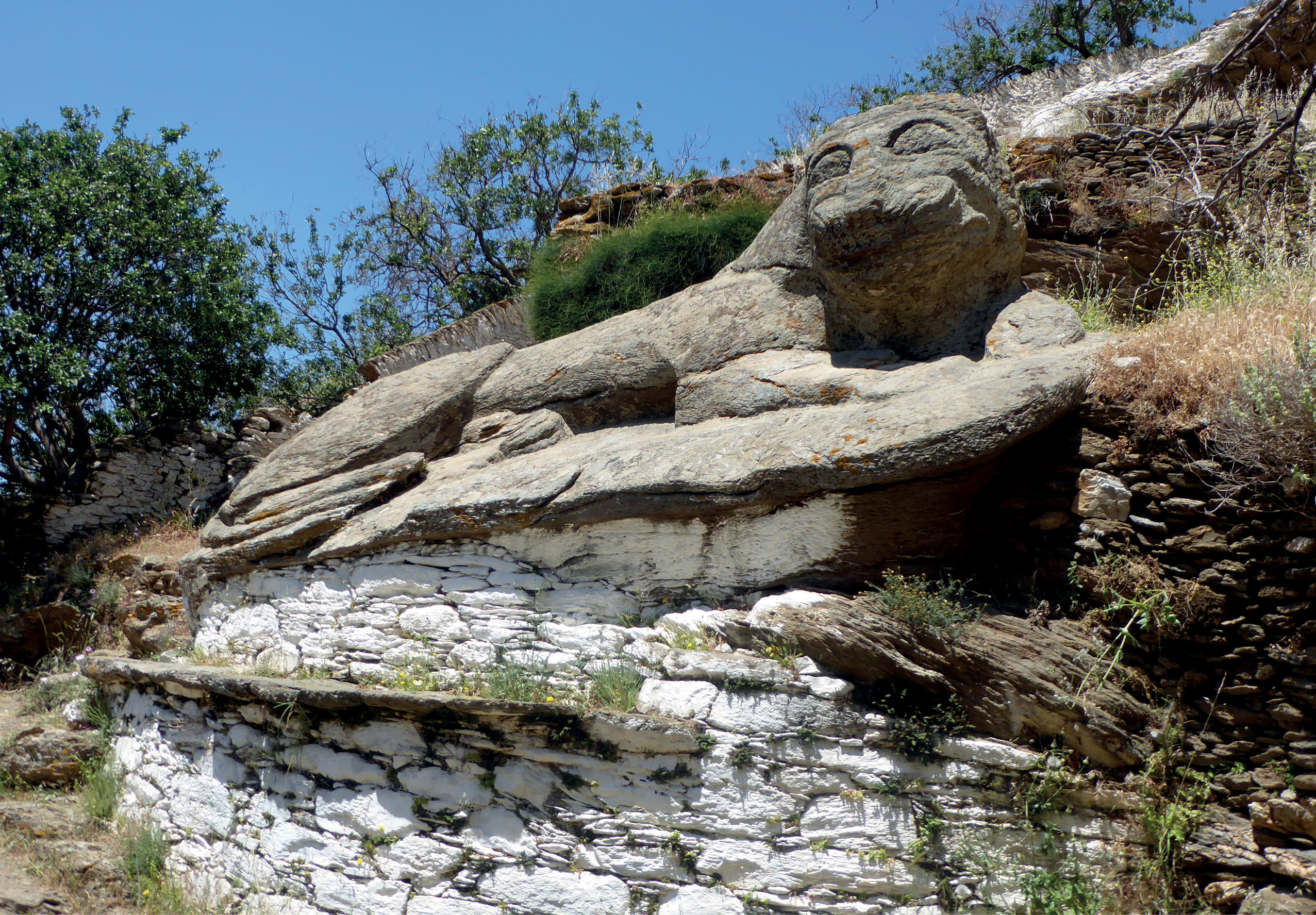
The Greek Bronze Age includes the Minoan (for Crete), Cycladic (in the Cyclades), and Mycenaean (on the mainland). Any reputable guidebook to Greece will stress the importance of the Agia Irene site, named after the small chapel (of ‘Holy Peace’) that overlooks it. Agia Irene lies on a peninsula and was excavated by John Caskey, of the University of Cincinnati, and his team from 1960 to 1976. I was first drawn to visit the island after reading about this site which, uniquely for the Cyclades, was occupied at the end of the Neolithic and then through the Bronze Age (c.3200-1100 BC). Although Agia Irene seems to have been devastated by an earthquake c.1450 BC, some structures were refurbished, with the temple remaining significant into the Iron Age. An inscribed cup dating to the 6th century BC found within it suggests a connection with Dionysos. A visit to the site is likely to prove disappointing, however: it is locked and surrounded by a stout wire fence – although everything is visible if you peer through it. A better idea is to visit the island museum first.
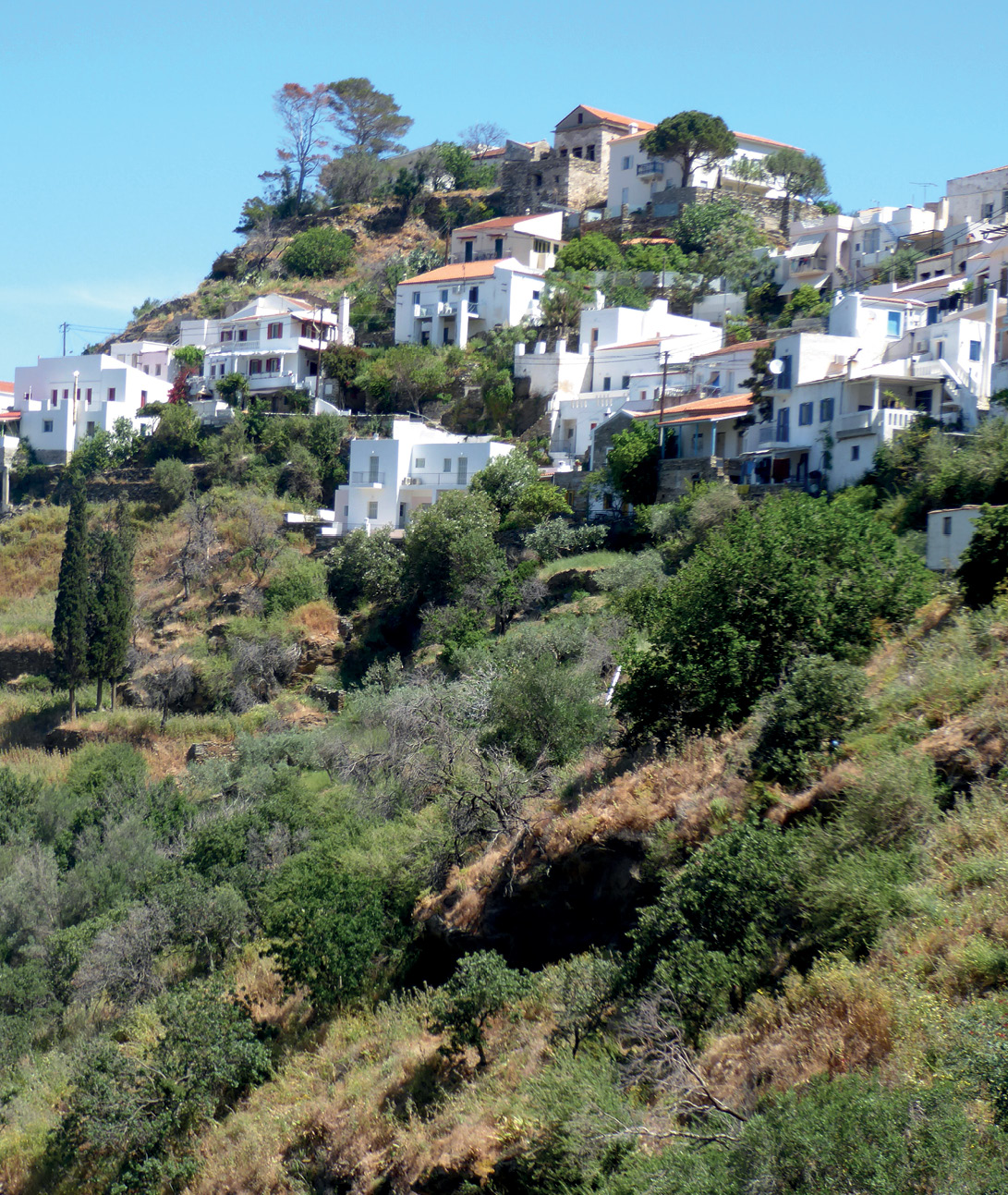
The Archaeological Museum of Kea is in the charming Khora – that is, the capital of the island – which is called Ioulis (though known locally as Ioulida). It stands high above the coast, and is laid out along a winding and vertiginous road. Its position made it an obvious choice for the site of one of the ancient cities of the island, which were a tetrapolis including Koresia, Karthaia, and Poieessa. The traffic-free town, with its whitewashed buildings and narrow alleyways, is understandably a popular day trip from the mainland. The Museum has a long history and in its current form is a fine example of the modern Greek archaeological museum. Although it is easily missed if you are strolling beyond the minute town square, just look out for the huge pithos at the entrance. Here you may buy a booklet about the island in the excellent series published by the Ministry of Culture, which covers all of the sites and museums in the country. It contains an essential plan of the Agia Irene site (which is also displayed on the wall of the museum) and a detailed account of the rest of the island.
The first floor has finds from the Classical/Hellenistic sites of Kea, of which very little remains above ground, apart from a couple of ruined towers. The display consists principally of architectural elements from the Classical temple of Athena at Karthaia, many of which have holes for now-lost bronze adornments. One still holds the bronze foot of a statue. The display is sparse by comparison with the third floor, which houses the remarkable and beautiful finds from Agia Irene. As well as a variety of fine pottery, the most notable exhibits are several large 15th-century BC terracotta figures that were associated with the temple and thought to be either priestesses or goddesses.

The Lion of Ioulis
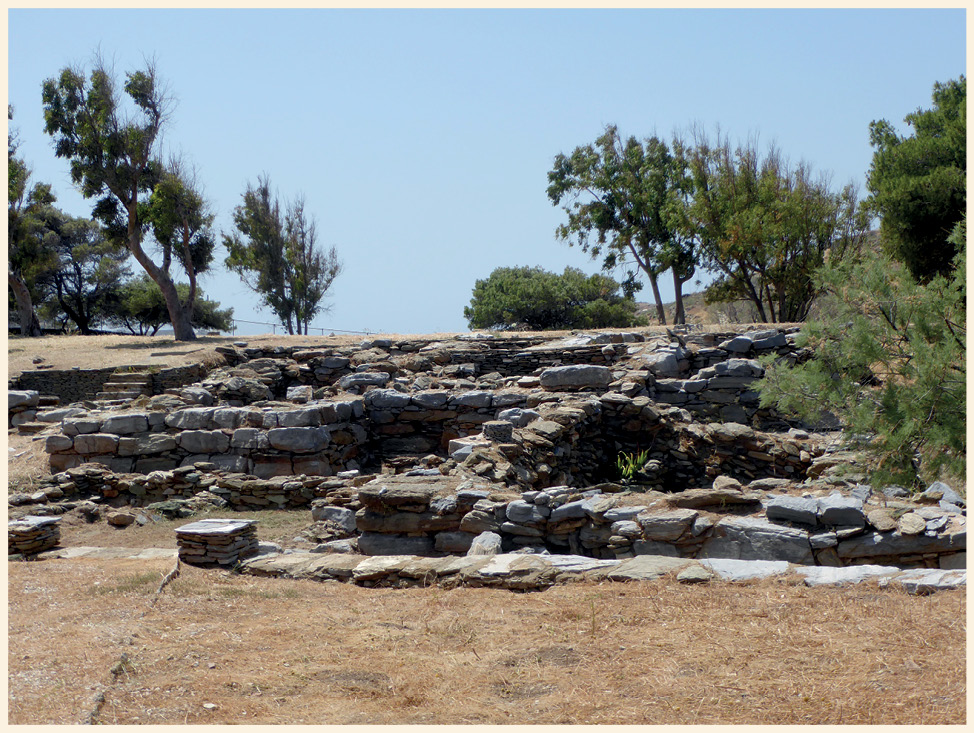
No visit to the capital would be complete without a trip to the famous Lion of Ioulis, which is located on a terraced hillside typical of the area. No one knows who created this masterpiece or why, though speculation has suggested it may be a memorial or the marker for an important grave at a discreet distance from the town. It has been dated on stylistic grounds to the late 7th or early 6th centuries BC. Commentators describe it as the first work of monumental Greek sculpture (though this accolade does somewhat overlook the two lionesses that guard the famous Lion Gate of Mycenae, which dates to c.1350-1200 BC).
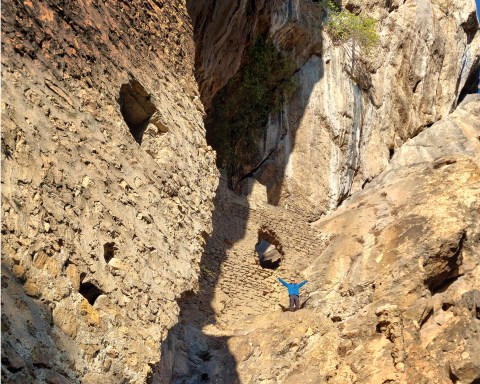
Approximately a 20-minute walk along an ancient kalderimi (paved path), the lion is carved from the living rock, reminding us of Michelangelo’s comment that stone sculpture is in fact freeing the work from the rock that holds it. There are no easy steps down to the site, but the scramble is well worth the effort to see the beast, which is nearly 6.5m long. The lion’s face looks remarkably benevolent, and the body is all but free of the rockface.
Kea is certainly not overrun with tourists – a recommendation in itself – and so is a peaceful and relaxing place to stay, popular with walkers (the map I used showed all the walking routes). It could even make a long day out if you are staying in or near Athens. A hire car is useful, but a taxi will take you (though not cheaply) to Ioulis and Agia Irene.
Source: Dr Martin J P Davies is a retired English teacher and Hellenophile; this is his fifth article for CWA. His thesis on Thomas Hardy and archaeology, A Distant Prospect of Wessex, is published by Archaeopress.
All images: courtesy of Martin J P Davies