Subscribe now for full access and no adverts
Archaeology essentially illuminates human entanglement with things, James Deetz pointed out 50 years ago in his classic book In Small Things Forgotten. ‘Don’t read what we have written; look at what we have done’, Deetz concluded in a clarion call to archaeologists to study the finds from their excavations. Objects are seldom mute. Deetz’s wise counsel was uppermost in our minds when my long-time collaborator, the jobbing art historian (as he calls himself) John Mitchell and I confronted a large pot in its own case in Venafro’s Archaeological Museum, housed in the 16th-century monastery of Santa Chiara, Italy. The museum is off the beaten tourist track, but boasts treasures (including a voluptuous version of the marble statue of Aphrodite from Knidos) from excavations in Roman Venafrum – home at one time to the poet Horace – as well as from the nearby early Medieval monastery of San Vincenzo al Volturno.
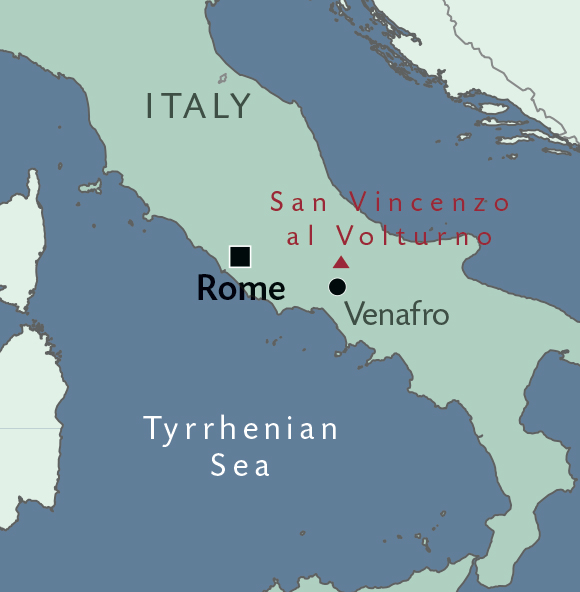
Passing walls of Roman inscriptions and sculpture, the finds from the excavations at the Benedictine monastery of San Vincenzo al Volturno are kept in a gallery far upstairs. Brightly coloured, re-composed frescoes depicting 9th-century saints and prophets catch your eye first. Less obvious, sitting in a large case in the centre of the first room, is a solitary pot with a difference. From afar, this vessel appears rather prosaic, not at all eye-catching like the great kraters, for example, of the local (Iron Age) Samnite era. Up close, though, it is patently unlike any other ceramic vessel of this period in Europe.
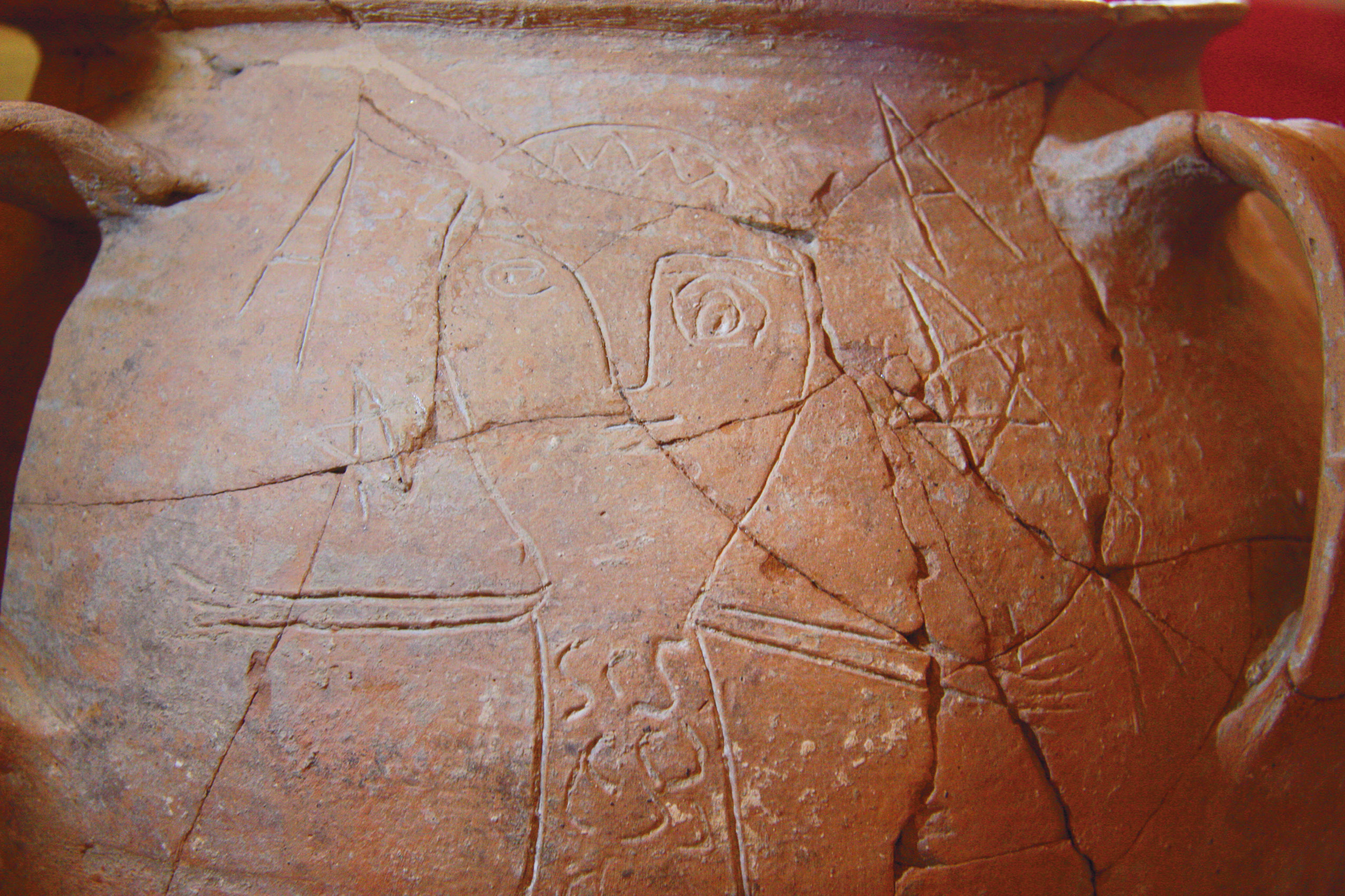
The inscription pot and its contents
The cheerful museum guard kindly unlocked the case, chattering away as he did, then promptly lifted the light perplex lid and, voilà, there sat this unusual vessel for us to study. Its basics are not especially interesting at face value. It has a flat, well-formed if thin everted rim. It is globular in shape, rather as if it began as an amphora on the potter’s wheel, and then morphed into a flat-based olla, as it is known in Italian. Uniquely for this age, it possesses four small strap handles, as though it was intended to be strung up. Its measurements give some sense of its scale. The pot stands 31.5cm high and is 27.5cm in diameter at its wide mouth, 33cm across its girth, while the base is 16cm across. This is a big vessel: it is estimated that it might have held up to 16 litres of liquid, perhaps water or wine. Its burnished, tawny fabric is tempered with minuscule inclusions, not unlike in colour and texture the many tablewares associated with the 9th-century monastic refectory at San Vincenzo al Volturno, many of which, when broken, were tossed into the adjacent river Volturno.
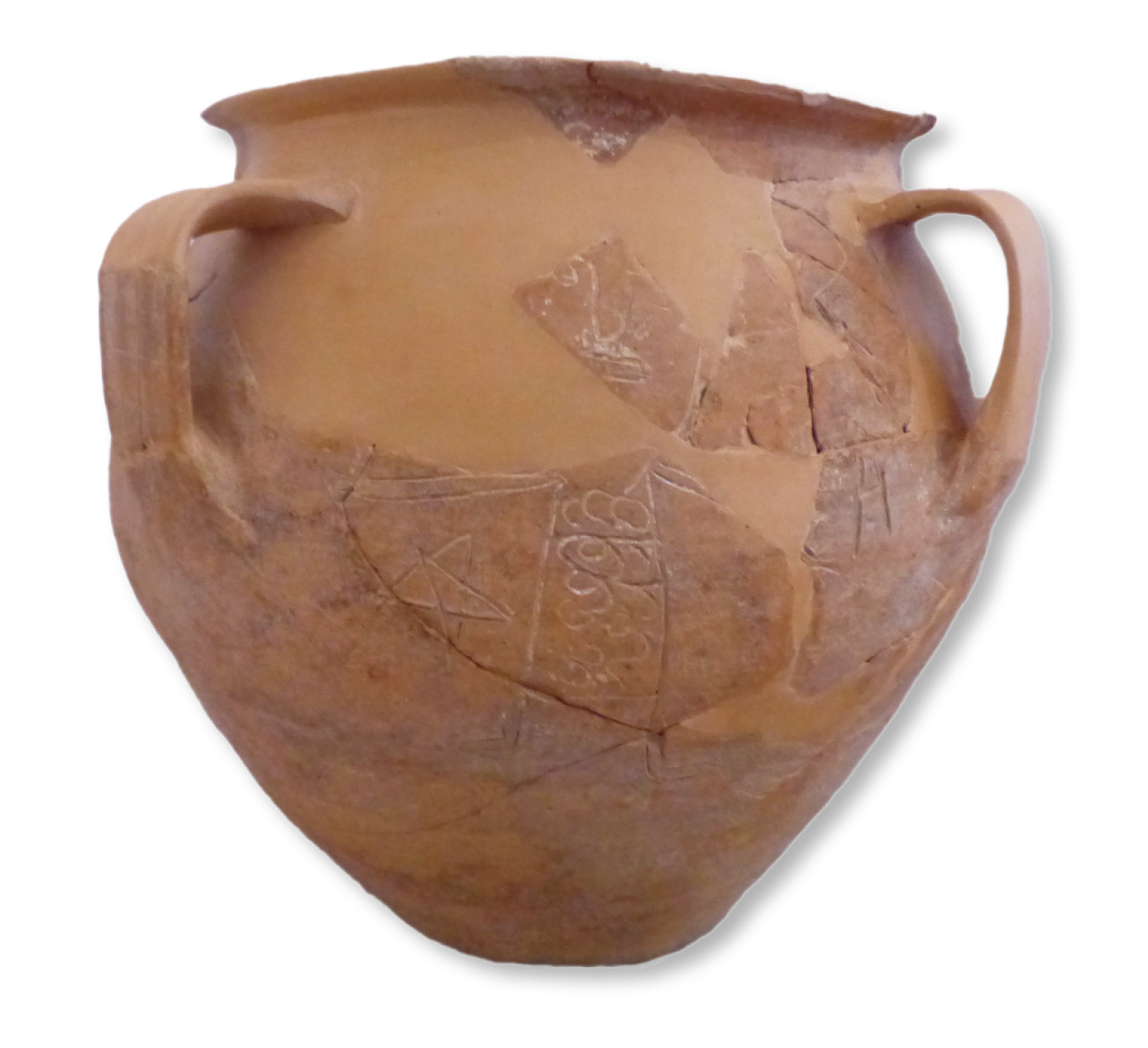
Size and form, of course, are not why this intact vessel has earned a case to itself in the museum! Before it was fired in a kiln, the hard body and base were incised with a line of cursive writing, as well as three cartoon-like figures, letters, stars, and swirls.
John immediately homed in on the inscription: two lines of fluent scrawled script running just under the rim, between two of the handles. Some of the letters are clear, some not. Some letters are missing where one of the handles has been broken away and replaced by a modern restoration.

With exaggerated delight, John reads Ego ma(giste)r ted?nanus/[indi]gnus d(e)i serbus and excitedly blurts out a translation: ‘I, master Tednanus/unworthy servant of God’. He hesitates, however, with, ‘just a minute, no, that’s not a “d”, it’s an “o”, and there is no contraction sign over mar, so not magister, but all one name, looks like Marteonanus. So: Ego Marteonanus/ [indi]gnus d(e)i serbus. It looks like that,’ he concludes, ‘even though it is a strange name.’
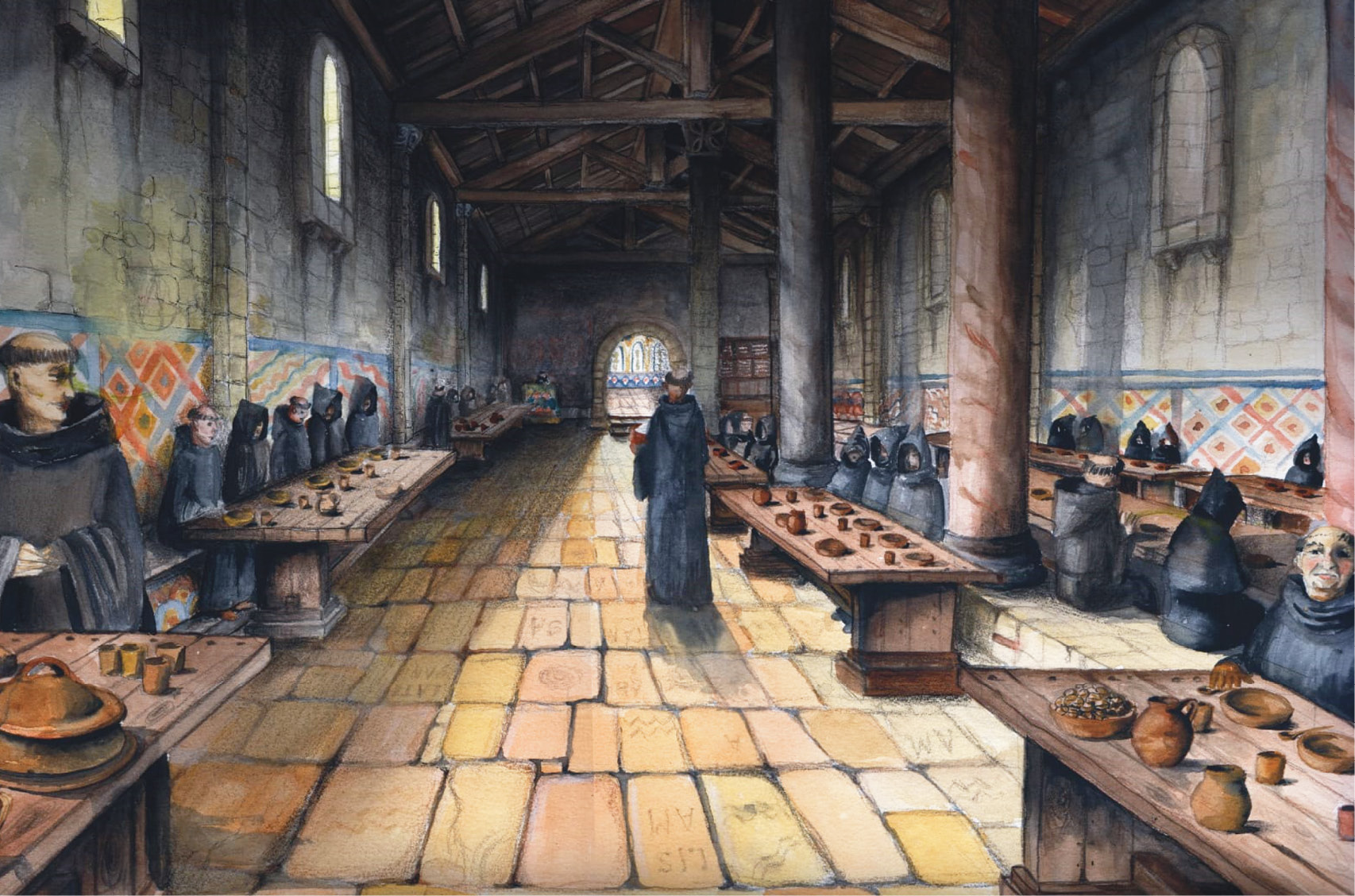

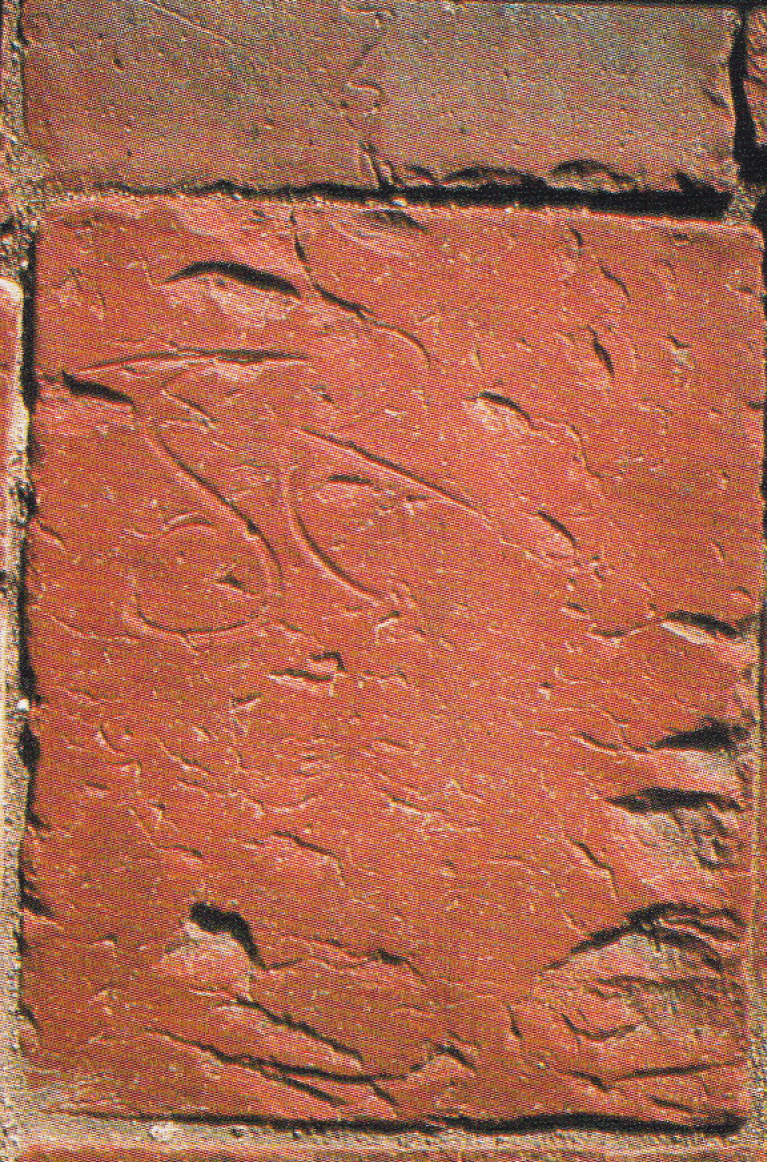
The uncertainty about the writer’s name apart, some aspects of the text are pretty clear. First of all, the cursive inscription appears to be the work of a single hand. The letters were made in a competent proto-Beneventan Latin script, from a tested hand, possibly one with experience of writing on vellum. The writing, with its open ‘a’ and its ‘g’ with two superimposed eyes and dramatic horizontal bar, is typical of the experimental phases of this cursive script, as it was developed in the southern Lombard principality of Benevento in the years around 800. In local terms, this dating accords well with the similarities that can be detected with the numerous coeval graffiti identified in the excavations at San Vincenzo al Volturno, executed on floor tiles, on plastered walls, and on the surfaces of columns and architectural elements, which must have been graphically inspired, in turn, by the example of the scribes working in the monastery’s scriptorium.
If the use of this alphabet alone does not allow us to assume the writer’s affiliation with the monastic community, it is nonetheless sufficient to surmise his cultural background. The inscription, strongly compromised in its initial part, bears a name accompanied by a Christian formula widely used in secular as well as monastic contexts: Ego Marteonanus/ (indi)gnus d(e)i serbus. The wording suggests that it was the potter himself, an experienced craftsman, who capably traced the letters into the leather-hard fabric of the vessel before it was fired in the kiln.

The inscription is only one feature of this strange pot. The potter turned the body and base of the vessel into a canvas for an array of images. The inscription occupies one side of the pot; on the other three sides between the handles, the cartoon-like figures of three men have been incised into the surface with a medium-sized point. These are extraordinary males, shown frontal, with great round faces, staring out from the vase, their stick-like arms extended to either side. They are all clean-shaven, with close-cropped hair, running across their foreheads in tight undulating fringes. They wear long tunics, covered with curling S-form lines, maybe referencing long-haired, possibly furry, animal pelts. Either side of their heads and falling down beside their bodies are a dense scattering of pentagrams – five-pointed intersecting stars – floating letters, ‘A’s and ‘R’s, and cursory round whirls. These are magical, wild men, psychopomps, surrounded by potent, empowering symbols. Pentagrams were deployed as ubiquitous markers of supernatural energy, protection, and good fortune. Single letters, titles of powerful gnostic spirits, sometimes just unelucidated, served as dynamic, enigmatic characters. The combination of pentagrams and letters typically accompany images of talismanic, salvific divinities on amulets from the post-classical Mediterranean world. And, to cap it all, two pentagrams, one large and dominant with a smaller companion, are powerfully incised, off-centre, into the wide base of the pot.

Above & below: Two of the images of males that were incised on the pot.
‘Golly,’ trills John to the obvious amusement of the museum guard, ‘this is magical, hermetic stuff!’
The decoration is remarkable, especially in early Medieval Latin Christendom, where no parallel for such an inscription and decoration exists on a ceramic vessel. Our first question is: what date is it? The globular form with the simple everted rim belongs to a period at the end of the 8th or early 9th century in Italy, before more distinctive collar rims became fashionable in the central decades of the 9th century. The flat base, extracted from the potter’s wheel by a wire of some kind, is also a diagnostic feature. Bases like this pre-date the inception of sagging bases in the 9th century. Sagging bases are very much the hallmark of the High Middle Ages in Western Europe.
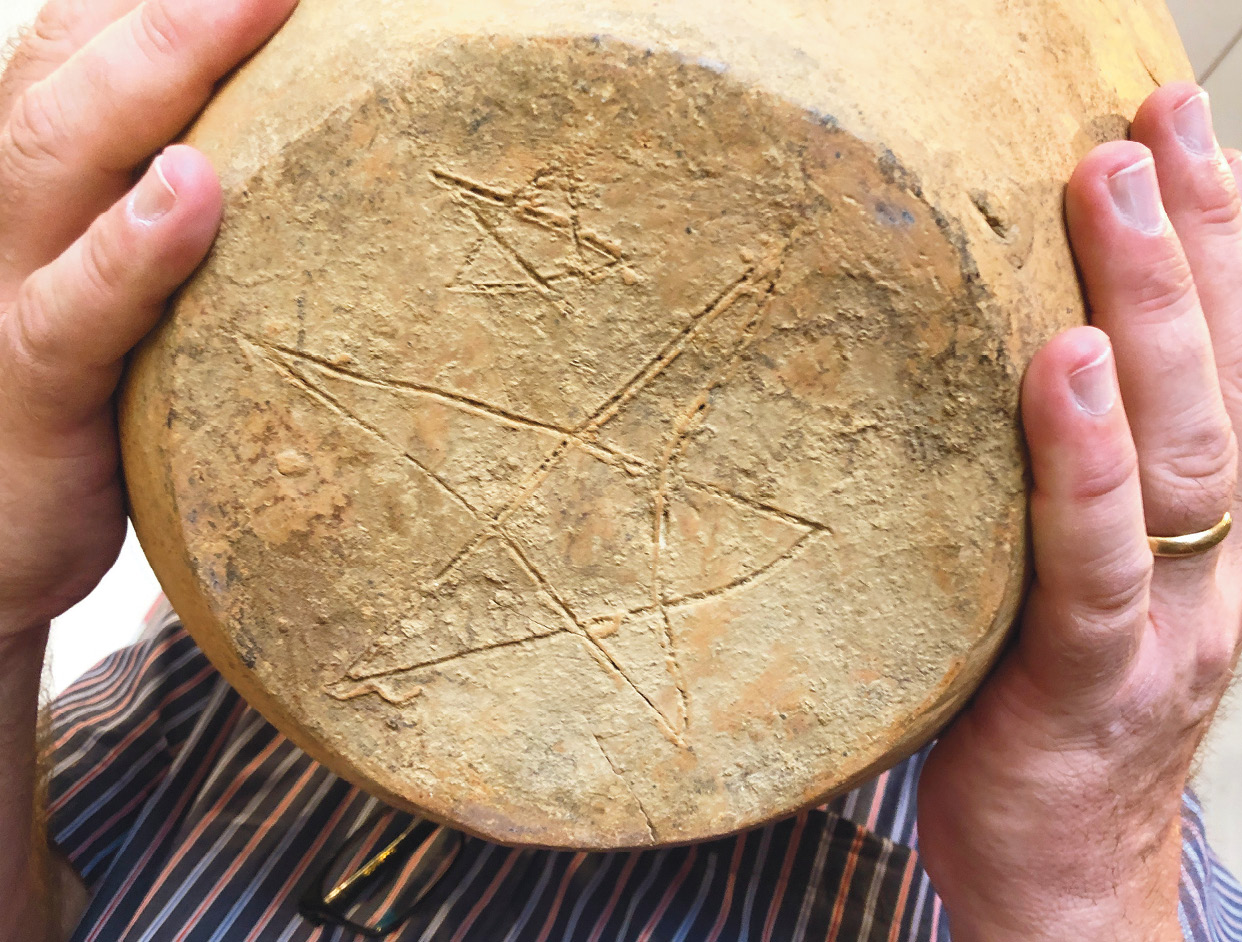
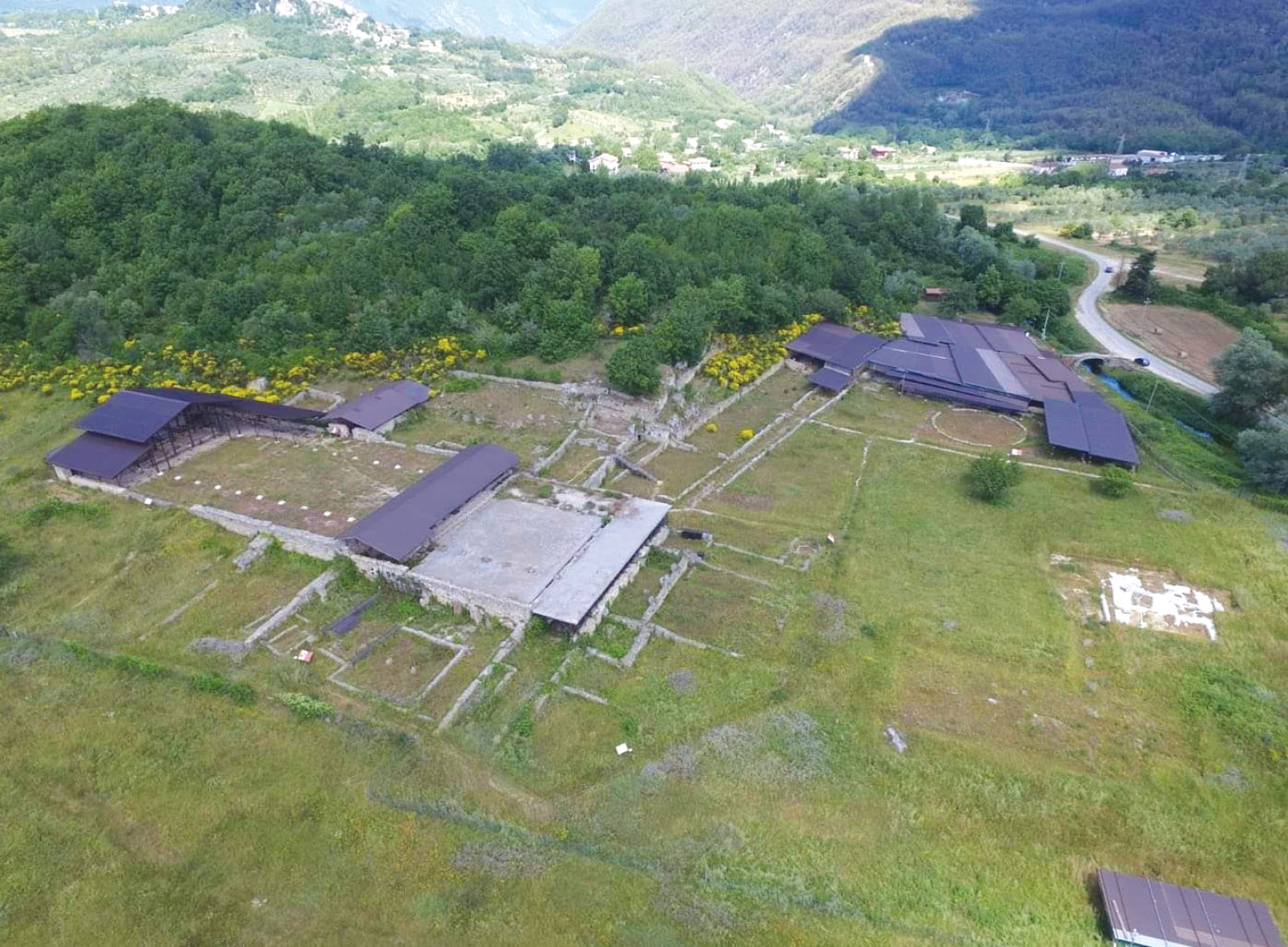
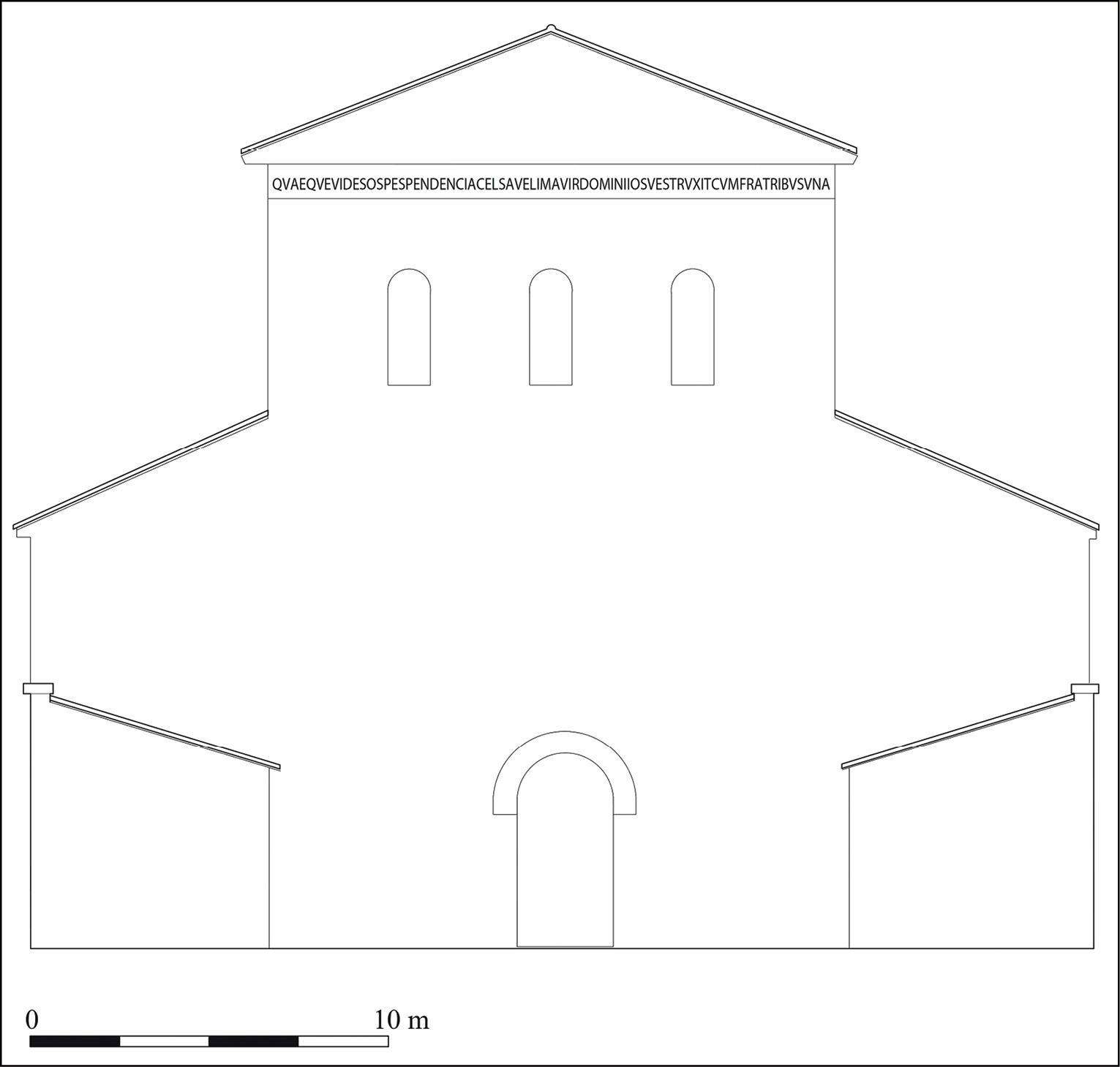
This largely intact pot, given its form, would seem to date to about AD 800, but, as we shall see, it was found in a shallow pit that dates to the later 11th or early 12th centuries. It belongs to a moment when Abbot Joshua (described in the 12th-century Chronicon Vulturnense as of Frankish origin), with Beneventan princely patronage, transformed the monastic plan of San Vincenzo al Volturno. Elected abbot in AD 792, he and his monks – as the 12th-century chronicler describes – were responsible for building a new abbey-church, consecrated in AD 808. A bronze inscription, set into a stone frame high above the door to his new church, records this feat, smashed fragments of which have been found in the excavations. The great church, San Vincenzo Maggiore, with its atrium where Joshua and his monks were buried, was only one part of this monumental reconfiguration of the earlier 8th-century Benedictine foundation. The abbot built himself a small palace as part of an enlarged claustrum, while an even grander palace was erected for the princely patrons who had made this sprawling monastic city possible. The monastery was now decorated throughout with frescoes – paintings depict prophets and saints above dados that imitate marble panelling.
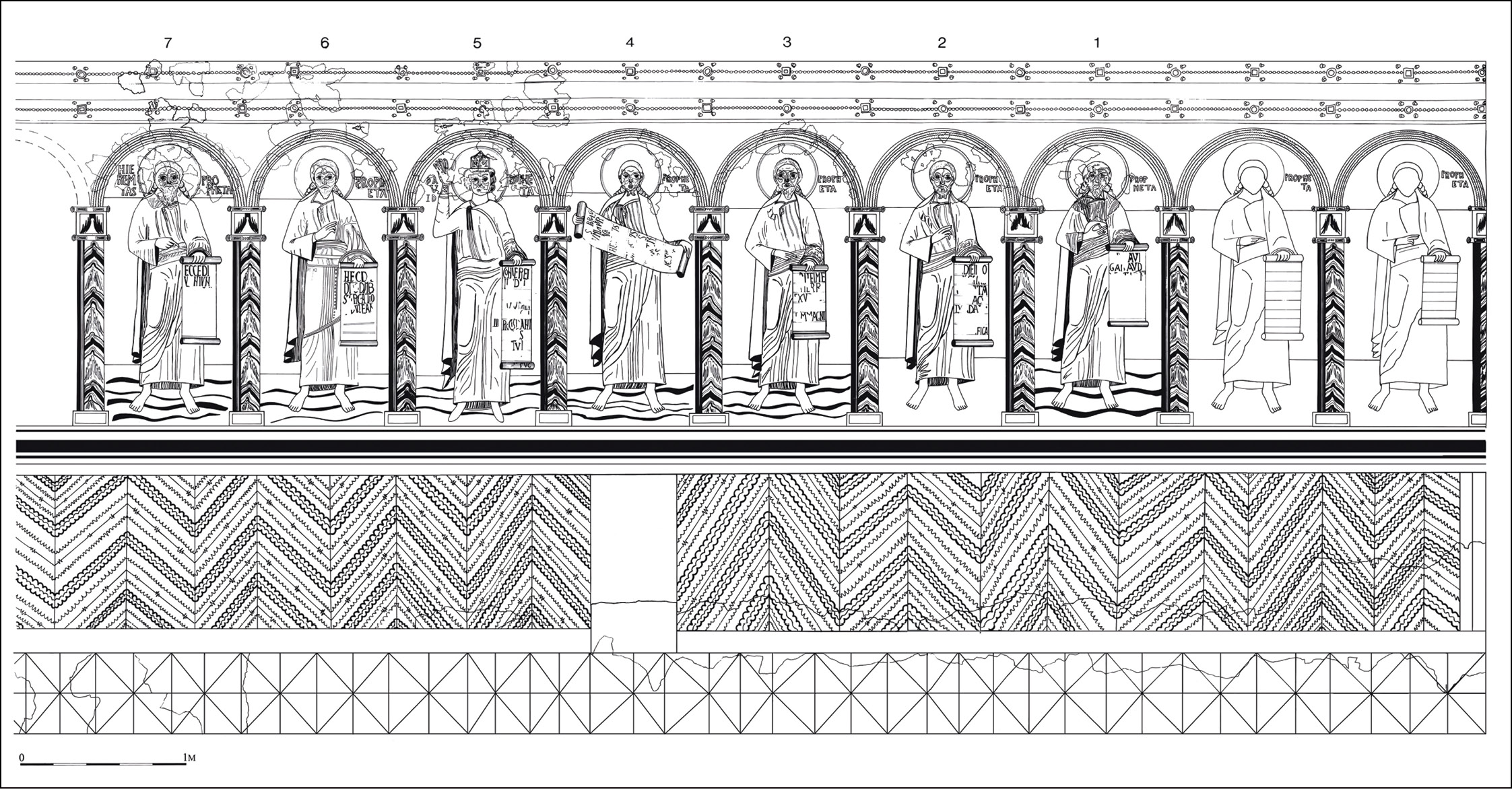
San Vincenzo seemingly contained a major scriptorium, and there were many examples of script and references to literacy on display in the monastery. Here we see reconstructions of near-life-size frescoes of prophets holding scrolls (above), and the text on the reconstructed façade of the basilica of San Vincenzo Maggiore (below). Both date to the 9th century.
Another feature of San Vincenzo al Volturno dating from Joshua’s abbacy is the profligate display of script. The monastery surely possessed a major scriptorium. Incised initials appear on thousands of floor tiles; scrolls in the hands of near life-size painted prophets with clearly painted writing are part of the decoration of the monastery; and elegantly carved tombstones show off the most exquisitely carved lettering. An inscribed pot, however, is a first and undoubtedly broadens the spectrum of conveying the ethos of literacy.
The inscribed pot, then, belongs to a moment when this monastery, far from the heart of the Carolingian Empire, pursued its artistic and literary spirit, albeit in forms familiar to the Principality of Benevento – a buffer state between the Carolingian realm and a Byzantine enclave in the very south of the Italian peninsula.
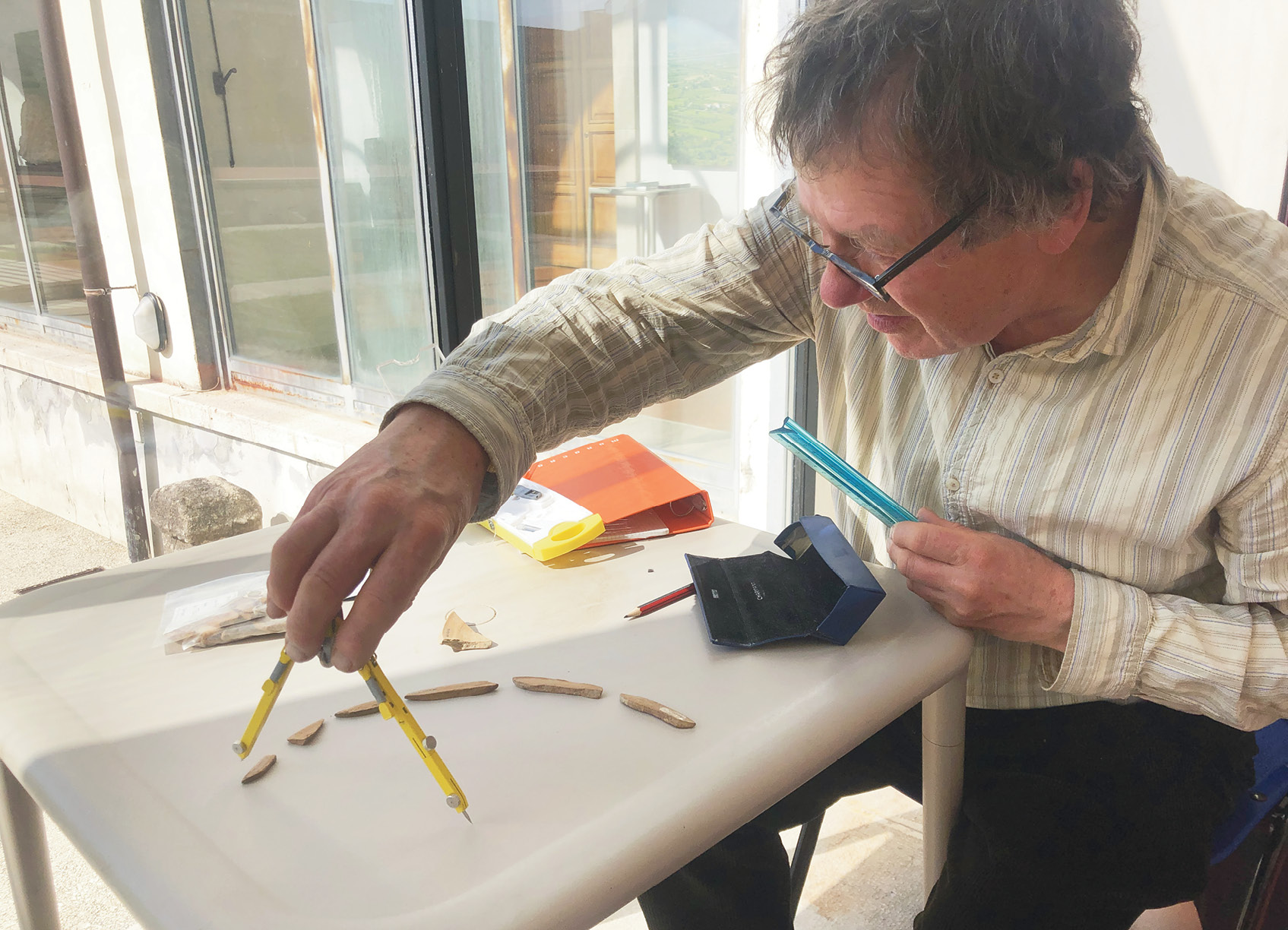
Beside the pot in its case were laid six potsherds, each little more than a ceramic sliver. These fragments also bear traces of pre-firing incisions, apparently remnants of letters, similar to those on the vessel itself. Tellingly, these slivers were discovered inside the vessel. It is these fragments from other incised pots that has led to a singular interpretation of the function of this unusual vessel. These sherds, so the published interpretation goes, were voting ‘slips’ for the purpose of electing an abbot. In other words, this was an early Medieval form of the ancient Greek ostraca: a democratic electoral device. It is this thought-provoking idea that has won the pot its special status in Venafro Museum’s gallery. Finding meaning in such an unusual object was exactly what James Deetz all those years ago urged us as archaeologists to do. But how likely is it that democracy ruled in an early Medieval monastery? Is the pot really telling us this or does it hold other Dark Age secrets?

John and I are doubtful, to say the least. Besides the handful of displayed slivers of other inscribed pots, the vessel contained another 22 fragments. These include 9 slivers that have the same fabric as the complete pot. Inscribed individual letters, however, are not at all clear. Significantly, the pot also contained 13 small, abraded sherds of Roman date. These sherds probably belonged to tablewares that once graced the small Roman villa that pre-dated the monastery by many centuries. These anonymous sherds make us seriously doubtful of the thesis that this pot was made for some form of electoral purpose. Its context, too, leads us towards an alternative interpretation.
Context matters
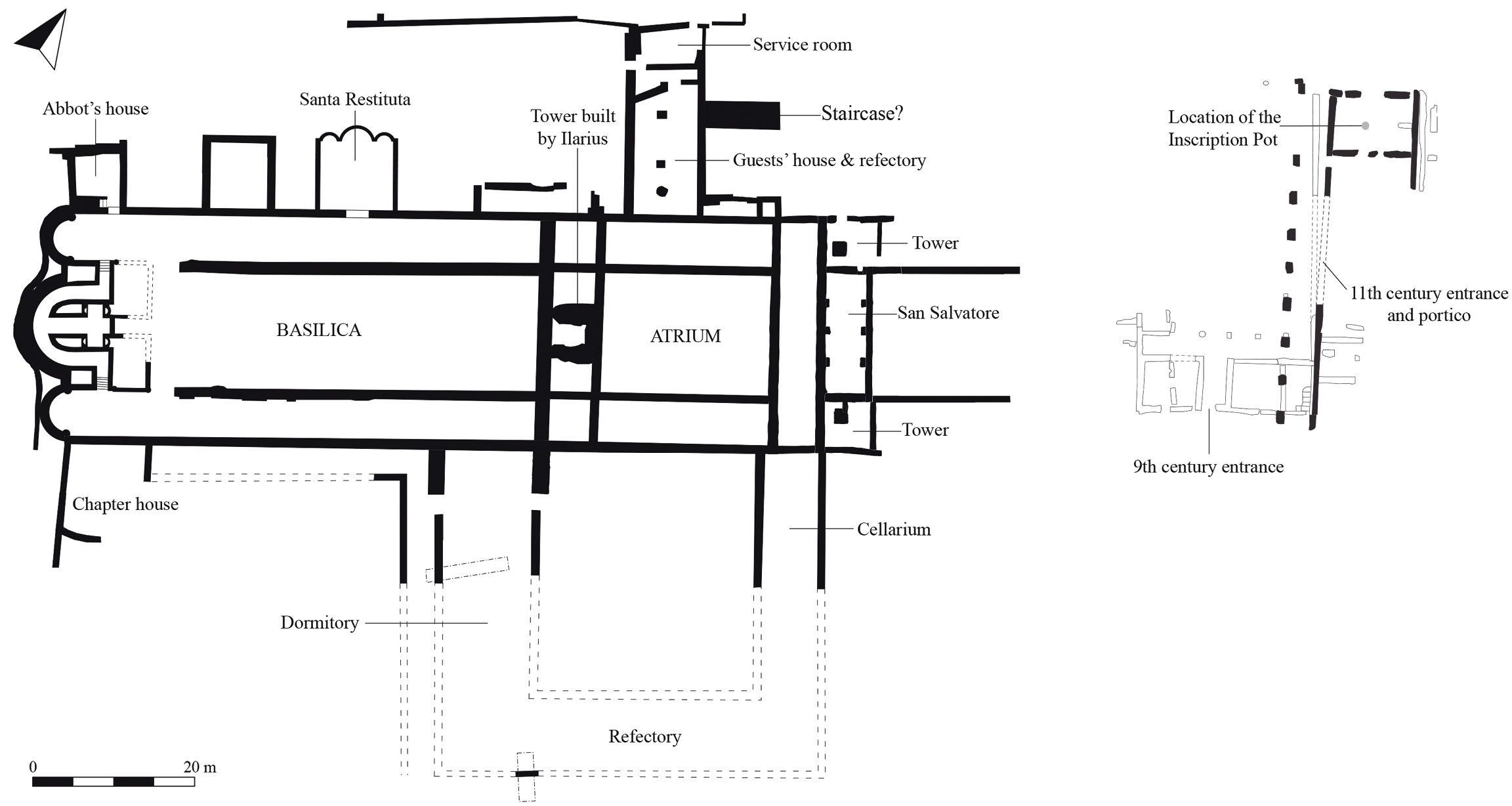
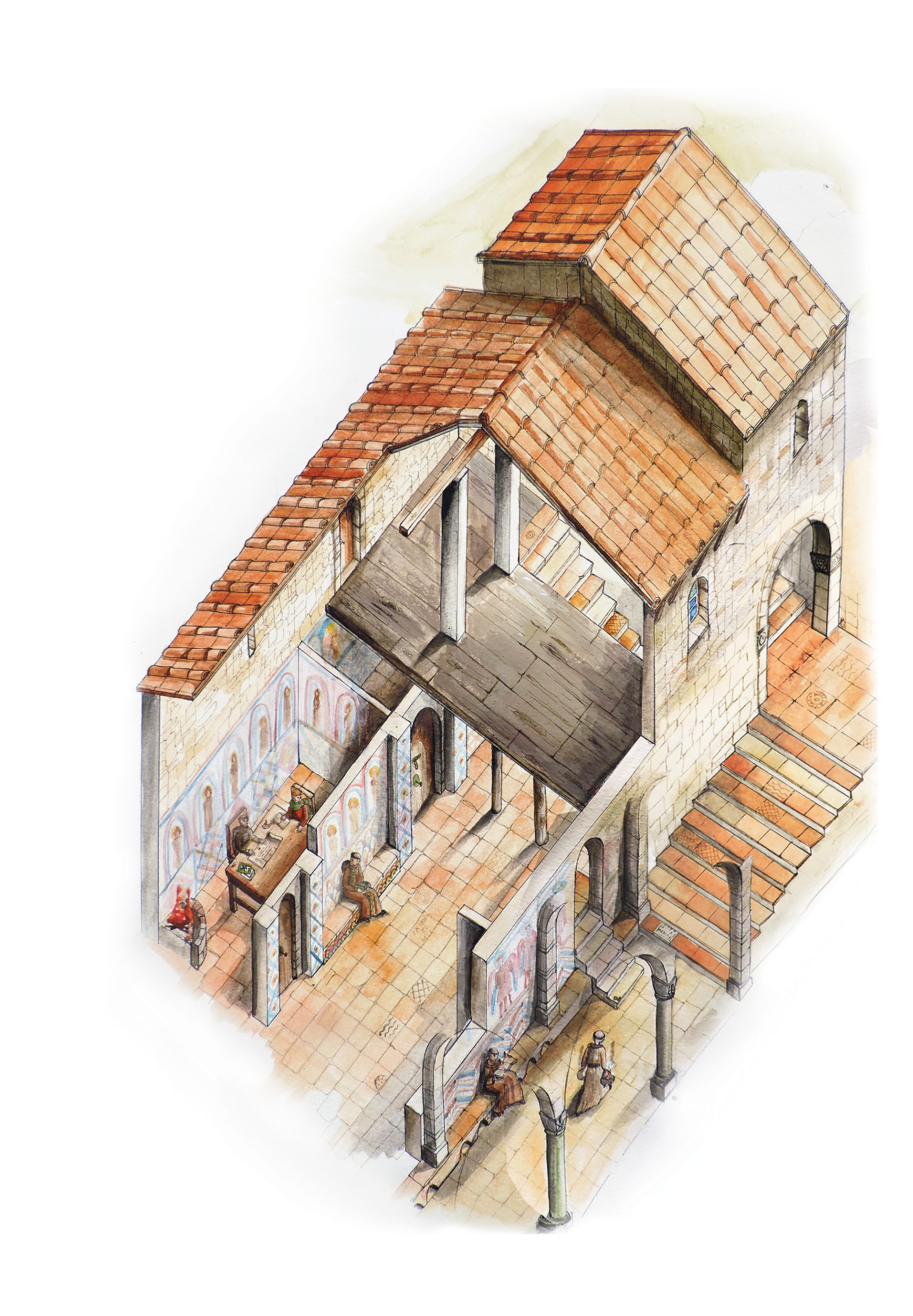
The four-handled pot was found in 2018 during the excavation of a small pit in a porter’s lodge belonging to the outer precinct of the later 11th-century monastery. Abbot John V in the 1050s re-envisioned San Vincenzo much as Abbot Joshua had done 250 years before, when the pot was made. John V richly refurbished the abbey-church and provided it with two cloisters, as well as a guesthouse, all tightly nucleated, almost fortress-like. In front of it he created a large outer courtyard with a monumental arcade through which visitors passed to reach the nucleated monastery. The pit containing the decorated pot was found in a room in front of this west-facing arcade. In other words, this intact ceramic vessel was an heirloom, at least 250 years old or more, when it was buried. Was it interred in the pit as the new lodge and colonnaded arcade were erected, or was it interred after the arcade and the monastery were demolished, on the occasion of constructing a new fortified monastery 200m away to the east? According to the Chronicon Vulturnense, this final iteration of the monastery, which still exists today, was consecrated by Pope Paschal II in AD 1115.
So, what is the meaning of this evidently special pot, buried centuries after it was made?
The decoration and unusual form of the pot with its four strap handles sets it well apart from the other ceramic vessels associated with early Medieval San Vincenzo in its pomp. Plainly, it is special, although the slivers of inscribed sherds found inside it point to the existence of other, similarly decorated pots in enigmatic forms. The potter would appear from the inscription to have been familiar with Beneventan script, as were some of the tile-makers at San Vincenzo in the early 9th century. Perhaps the potter was in fact a monk, and the large vessel was made at San Vincenzo itself. The monastery had many craftsmen throughout the 9th century, and waste from a potter’s kiln output dating to the mid-9th century has been found.
But was the vessel kept over the centuries for elections, and then concealed as a treasure once the monks quit their age-old home in about 1115? The Rule of St Benedict drawn up in the 6th century advocated the election of an abbot from within the community. Abbots were certainly elected by the brethren in the 8th and 9th centuries. Quite how this ballot was carried out remains a mystery. But was an abbot such as Joshua elected this way? It is hard to imagine. The Chronicon Vulturnense written in the 12th century, drawing on earlier texts, leads us to presume that a figure like Joshua was invited by a patron – in his case, a Beneventan prince – to take the helm at the monastery. Charlemagne and his son, Louis the Pious, regularly selected abbots and imposed them on monasteries. Abbots by this time were not only meant to be erudite and pious, but they had to manage a large community including (though rarely stated) its economy. Managing a community in excess of a hundred monks was no small task, hence many abbots in this era fell foul of their brethren. On occasion, abbots were even murdered as conflicts broke out.
One illustration of the new status of these ecclesiastical leaders in the Carolingian age was the changing formula for an abbot’s house. At San Vincenzo, until the end of the 8th century, the abbot had almost certainly lived and slept in an old Roman tower along with his fellow monks. Joshua’s new monastic plan changed such arrangements. His new house, conceived on the same scale as the prince’s palace, was made within the claustrum. Not only was it a large building, but like the prince’s palace it had a ground floor and an upper floor – a salone, presumably for entertaining visitors. Next door to it, in a long barn-like building, the monks lived and slept in rows. The contrast between the grand arrangements of the abbot and his brethren could not have been greater.
Election as an abbot to live such an exceptional life at this time was akin to winning the lottery. Perhaps we are overstating the status of the monastery’s abbots because they figure so prominently in the story of San Vincenzo. Certainly, each abbot is portrayed in terms of his success at church-building, as well as on occasion for his erudition or piety. Could the pot with its strange, even exotic, decoration have really been used to advance the career of one of San Vincenzo’s historical figures?
The small sherds associated with the pot must give us pause for thought. Why are some – just six – inscribed like the vessel itself, and the majority not? A total assemblage of 28 mostly anonymous sherds is somewhat mystifying. It hardly appears to amount to the postulated sum of the community members at San Vincenzo, except after its calamitous sack by Arabs on 10 October 881. Then, too, there is the location of the pit, close to the outer entrance of the monastery. Surely such a symbolically precious vessel would have been kept in the abbot’s house – located, in the late 11th century, next to the apse of the great basilica – or at least in a sacristy?
If the inscribed splinters were voting slips of a sort, how might that work? Each is anonymous. Only the odd indecipherable fraction of a possible letter is preserved. Individual letters are not at all clear. Given the importance of selecting an abbot, would not the medium have been far more explicit in terms of clearly written names? Added to this, the anonymous unmarked fragments – many abraded Roman potsherds – in a variety of fabrics suggests a task that was rather less sacrosanct.
No longer mute?
The location of the pit in which the vessel was found may offer the best clue to the purpose of this pot with a difference. In the later 11th century, the pit was made in a lodge within the outer entrance to the monastery. This east–west entry arrangement completely reconfigured an earlier entrance to the sacred precinct. Two hundred and fifty years before, in the earlier 9th century, the precinct was entered by way of a north–south passageway between flanking lodges. Is it not likely that the pot was intended to be held up by its strap handles (where its star-incised base might be seen) close to the original north–south entrance, and then shifted to be hoisted beside the new 11th-century east–west entrance? These are liminal locations, where the wild-eyed gesticulating shaggy cosmic psychopomps on its sides and the pentagrams on its hanging base would have watched over comings and goings, and caught every passing eye.
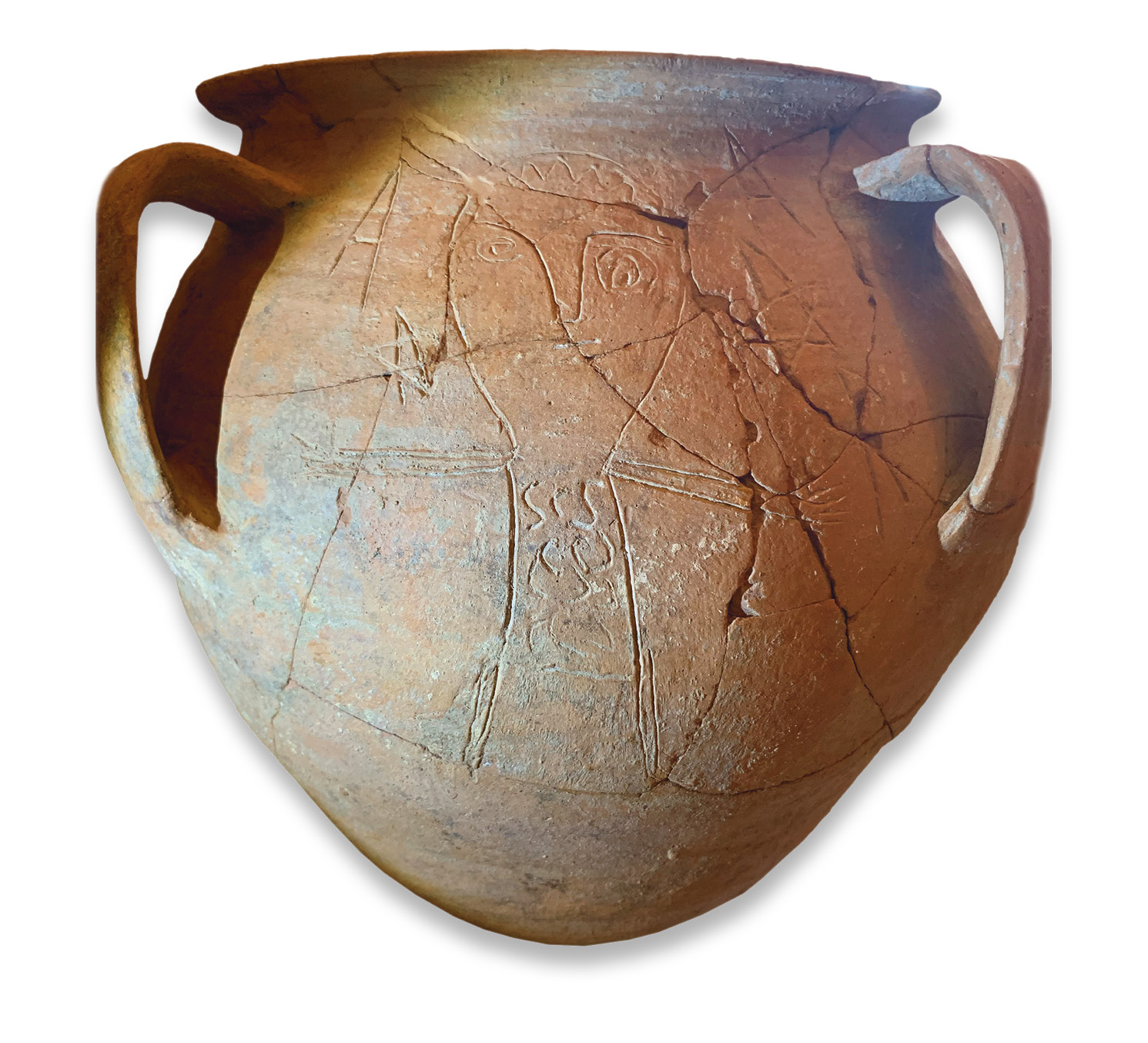
Subsequently, when the monastic community left the old monastery in the first years of the 12th century, for the new site on the opposite bank of the river, the pot with its glaring interstellar maguses, its pentagrams, characters, and swirls was buried by the threshold to the later 11th-century entrance. This was done in accordance with an old tradition in which a building – in this case, a whole site – was sealed with significant deposits at the time of its abandonment and the departure of its occupying company. The outlandish, transcendent figures with their panoply of empowering marks, who had once watched over and safeguarded the entrance to the monastery, now continued that service in concealed repose. In the mind-world of post-Roman Europe, old beliefs and reliance on powerful transcendent divinities and spirits to ease and overcome the travails of quotidian existence continued unproblematically alongside the overarching Christian salvific frame.
Of course, we shall never know precisely why this pot was specially made, nor indeed why centuries after its manufacture it was buried. Yet, given its inscription, figures, and other incised signs, it was far from mute to the community at the time. Herein was an entangled world where imagery from floor to ceiling spoke not just to a spiritual realm, but also to all who were drawn to the cult in the great monastery, whatever their frames of belief and trust were. In that sense, this small thing was never forgotten as the monastery reinvented itself several times over the pot’s long lifetime.
THANKS
My warmest thanks to the ‘jobbing art historian’ John Mitchell, who made the day studying this wonderful pot such fun. Thanks, too, to Dr Enrico Rinaldi, Director of the Polo Museale for Molise, for making this memorable visit happen. For Venafro Archaeological Museum, see the website www.musei.molise.beniculturali.it/musei?mid=213&nome= museo-archeologico-di-venafro.
All images: courtesy of Richard Hodges, unless otherwise stated