Subscribe now for full access and no adverts
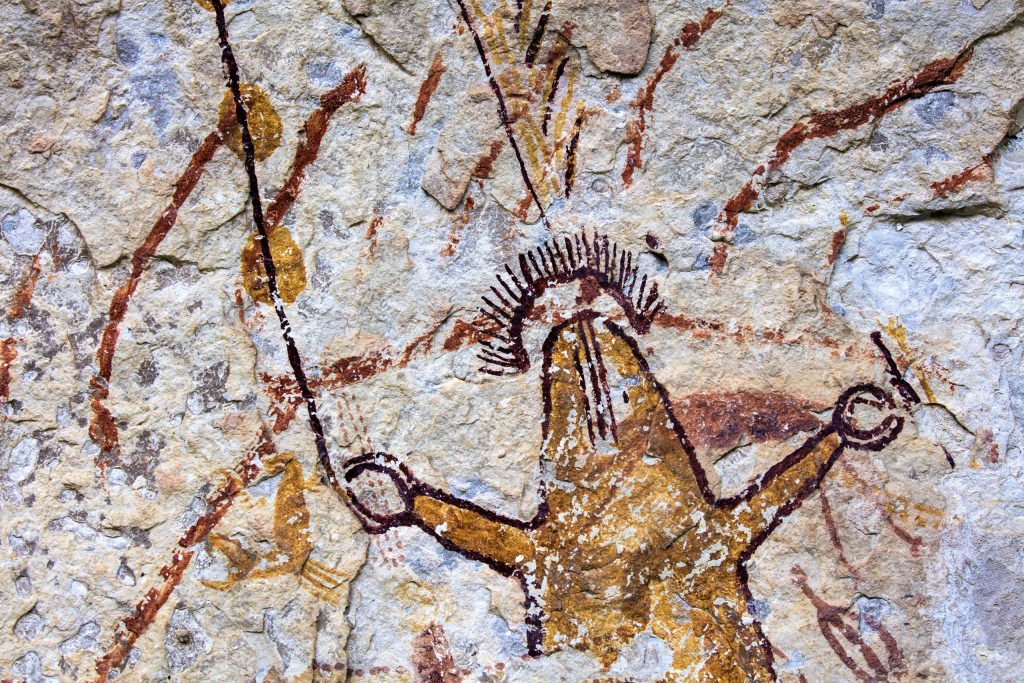
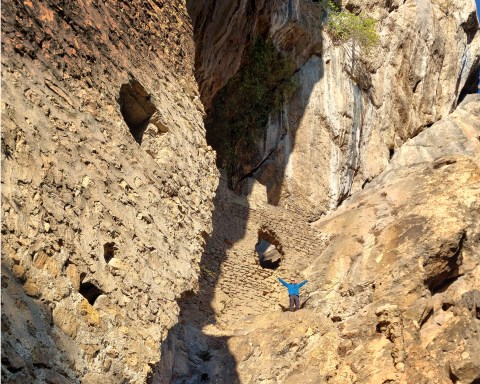
The Lower Pecos Canyonlands, in south-west Texas and northern Mexico, are home to an extensive collection of rock paintings in what is known as the Pecos River style.
These multicoloured murals cover the walls and ceilings of more than 100 limestone rock-shelters, featuring compositions made up of a variety of animals (most commonly deer, felines, snakes, and birds) and human-like figures, often accompanied by headdresses, body adornments, and accessories, or other paraphernalia with symbolic meanings.
Now a new study of these pictographs has been carried out, recently published in Science Advances (http://www.science.org/doi/10.1126/sciadv.adx7205). Radiocarbon and oxalate dates gathered over 12 sites have revealed that the tradition began at least 5,760-5,385 years ago, and continued for more than 4,000 years. The researchers also made the surprising discovery that many of these rock-art panels appear to have been intentional compositions produced within a relatively short period, or perhaps even a single event, rather than random collections accumulated over hundreds of thousands of years, as was previously believed.
Meanwhile, stratigraphic and iconographic analyses of the paintings have found that they were created in accordance with a set of rules that persisted for more than four millennia, with core pictographic elements, graphic styles, and even rules of paint application (moving from darker to lighter hues) remaining the same. The researchers therefore conclude that the Pecos River style paintings were connected to a belief system and worldview passed down through c.175 generations, with the murals expressing sophisticated metaphysical concepts that may have influenced later Mesoamerican cosmologies.
Text: Amy Brunskill / Image: courtesy TXST/Shumla

Please send your images to cwa@world-archaeology.com. They must be high resolution (300 dpi) and in landscape format, ideally 20cm high by 30cm wide.