Subscribe now for full access and no adverts
Excavations at the ancient Egyptian port city of Pelusium have identified a unique 2,000-year-old temple believed to be dedicated to the local deity Pelusius.
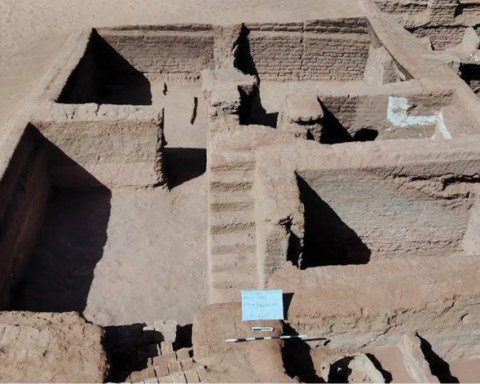
In 2019, archaeologists from Egypt’s Supreme Council of Antiquities working at the site of Tell el-Farama (ancient Pelusium) in northern Sinai uncovered a section of a circular Greco-Roman structure built of red brick. At the time, it was believed to be Pelusium’s Senate Council building. However, extensive excavations revealing the rest of the structure, combined with international scholarly discussions and comparisons to other sites, have now confirmed for the research team that this was not a civic building, but a sacred complex used for water-based religious rituals.
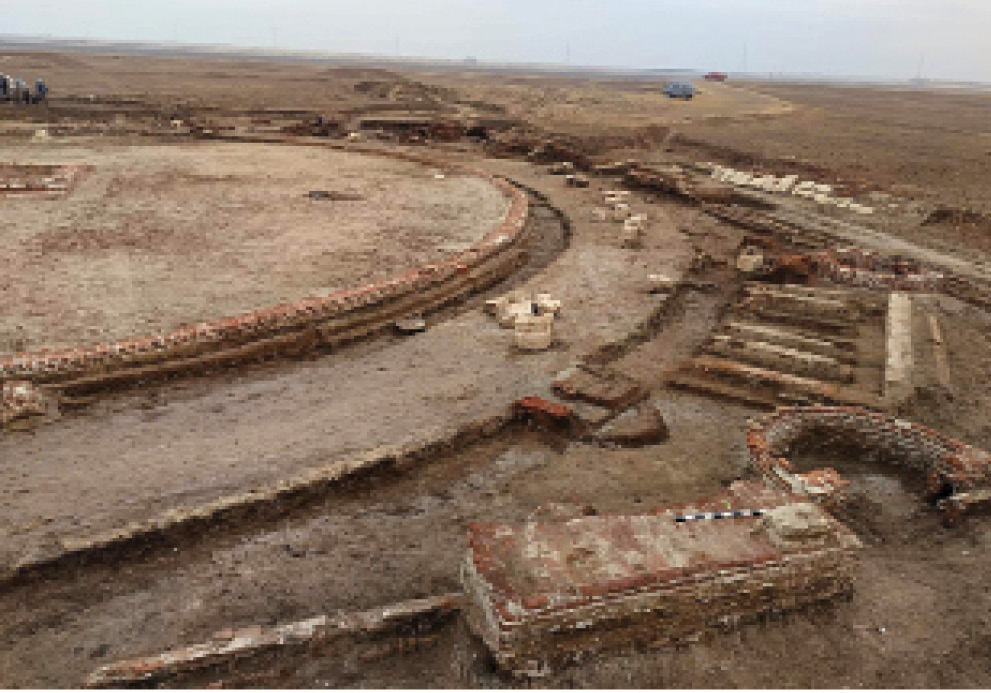
At the heart of the complex is a huge circular basin measuring 35m in diameter, in the centre of which stands a square stone pedestal that probably once held a colossal statue of the god of the sanctuary. The basin, which is surrounded by a comprehensive system of drainage channels and cisterns, was connected to the Pelusiac branch of the Nile Delta. The silt rich river water that would have filled the pool is understood to have had a symbolic significance for the god Pelusius, whose name is derived from the Greek word for ‘mud’.
The temple was constructed in the 2nd century BC and was used continuously until the 6th century AD with relatively little architectural change. The design features a combination of Egyptian, Hellenistic, and Roman styles, reflecting the extensive connections between Egypt and the rest of the ancient world in this period. Hellenistic influences were particularly prevalent from the late 4th century BC, after the conquest of Alexander the Great, and included the introduction of an array of new gods who were often amalgamations of Egyptian and Greek deities. Pelusius was one of these late additions to the Egyptian pantheon. Not much is known about this mysterious figure, but he is thought to be a local fertility god with close connections to the Nile. The 1st-century AD writings of Greek author Plutarch refer to Pelusius as a deity associated with Isis and Osiris. However, Pelusius is currently known only from such classical sources; if the structure at Pelusium is indeed a temple dedicated to the obscure deity, it would be the first discovery of its kind.
Text: Amy Brunskill / Image: Egypt’s Ministry of Tourism and Antiquities