Subscribe now for full access and no adverts
Life during the Mesolithic period in Scandinavia c.10,000-4000 BC was not always easy. This era is popularly perceived as a time when people lived peacefully side by side, among forests and vast expanses of land that granted unlimited access to food. Several archaeological and palaeopathological studies, though, point to a rather more brutal reality, where people could attack each other with both blunt and sharp weapons. Assessing the scale of such conflict is complicated by most violent acts not leaving any archaeologically visible traces, as they only affect the soft tissue of the victim’s body. In November 2025, however, a rare and remarkable discovery was made in Sweden of a Mesolithic individual who had clearly been attacked and killed.
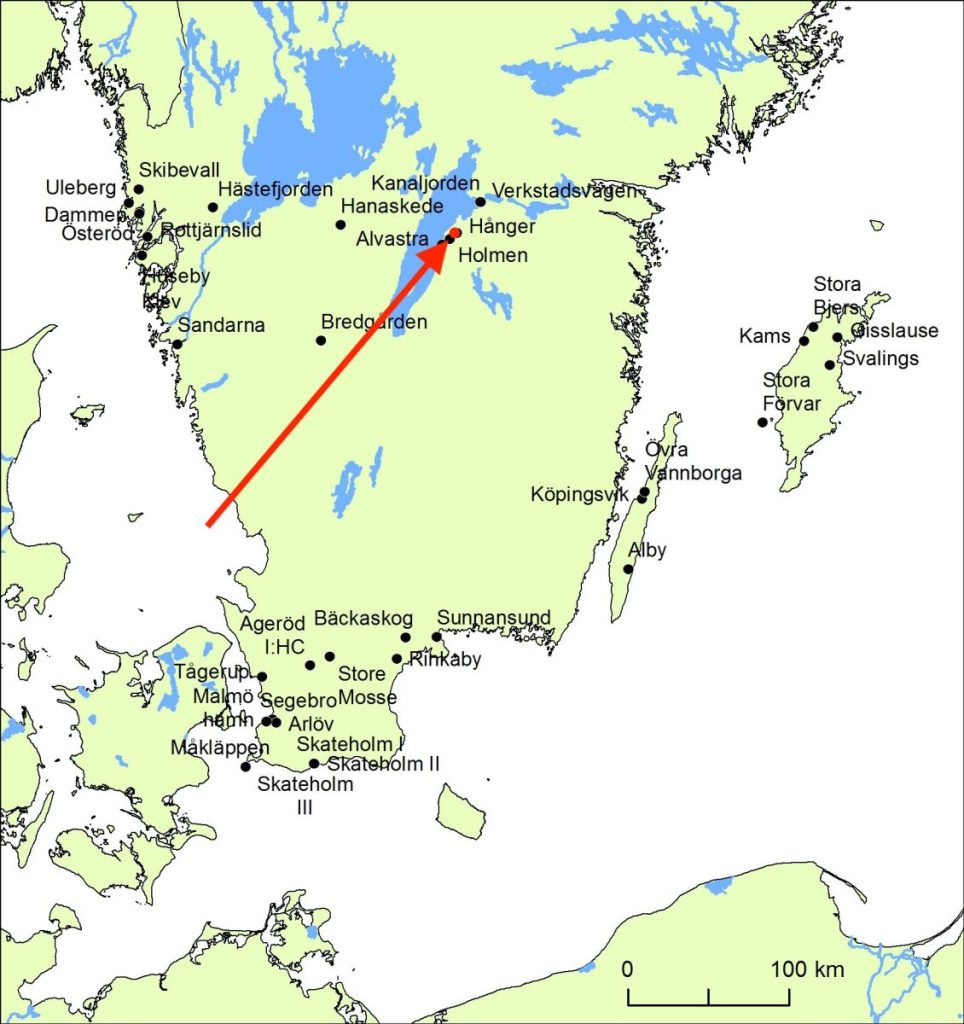
The discovery came about as a consequence of a subterranean high-voltage cable being replaced on Rävkullen, a hill in Väversunda parish, which lies within the Östergötland region. It had been known for sometime that there were ancient graves in the vicinity of this power line. As early as 1998, the initial installation of the cable accidentally hit four burials, but instead of conducting an archaeological excavation, the graves were left in place, and the cable simply rerouted. On the basis of what was seen at the time, those interments almost certainly dated to the Iron Age. By 2025, after almost 30 years of use, parts of the original cable needed to be replaced. Undertaking this was certain to involve further disturbance to burials at the site. As two graves were already being actively damaged by ploughing, it was decided to carry out an archaeological investigation, which resulted in the excavation of three graves.

Three prehistoric burials
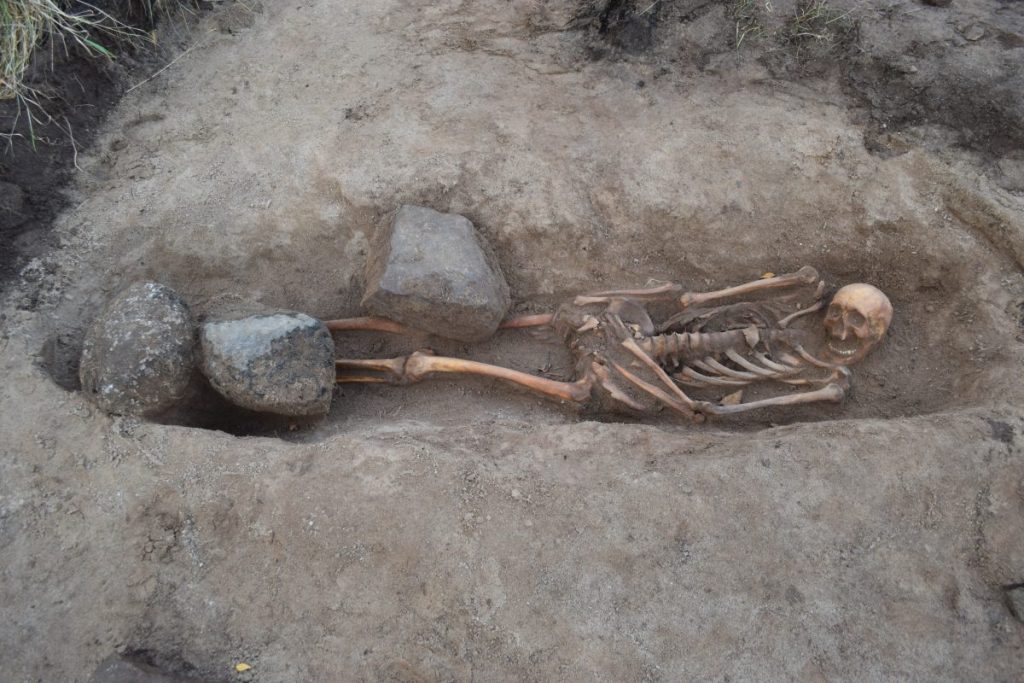
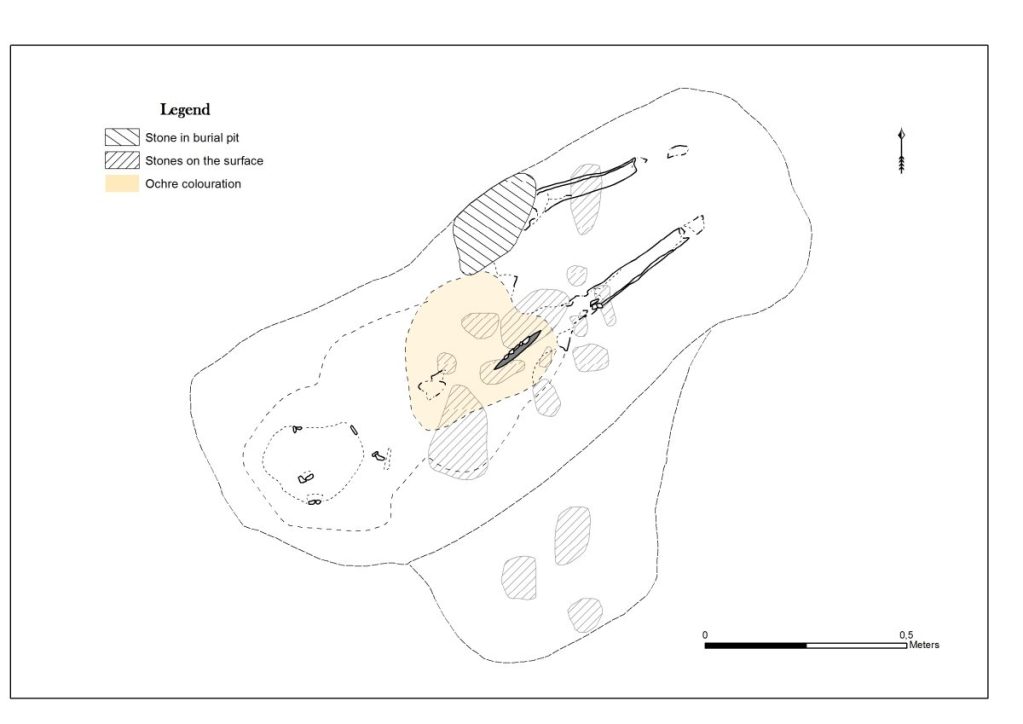
One of the graves was so degraded that a large part of the skeleton within it had already been lost, although it was still apparent that the deceased individual was a child. The other two graves contained adult males. Although the condition of the child’s skeleton made it impossible to determine how he or she had been placed in the grave, this element of the burial rite was clearer in the case of the adults. One was positioned lying on his back with several large stones placed over the lower part of his body. The other was arranged in a sitting position with his legs drawn up.
The first question the archaeologists set about answering was which period or periods these individuals belonged to. Here, it was possible that the position of the bodies within the graves could help to narrow the options. Interments in a seated posture, for example, are known to have occurred during various periods, but were most common in Sweden during the Stone Age. Indeed, the area where the graves were found lay close to Lake Tåkern, the shores of which have produced numerous seated burials dating to the Mesolithic period. Even so, exceptions are known from the area, with one such interment at Smörkullen belonging to the Roman Iron Age.
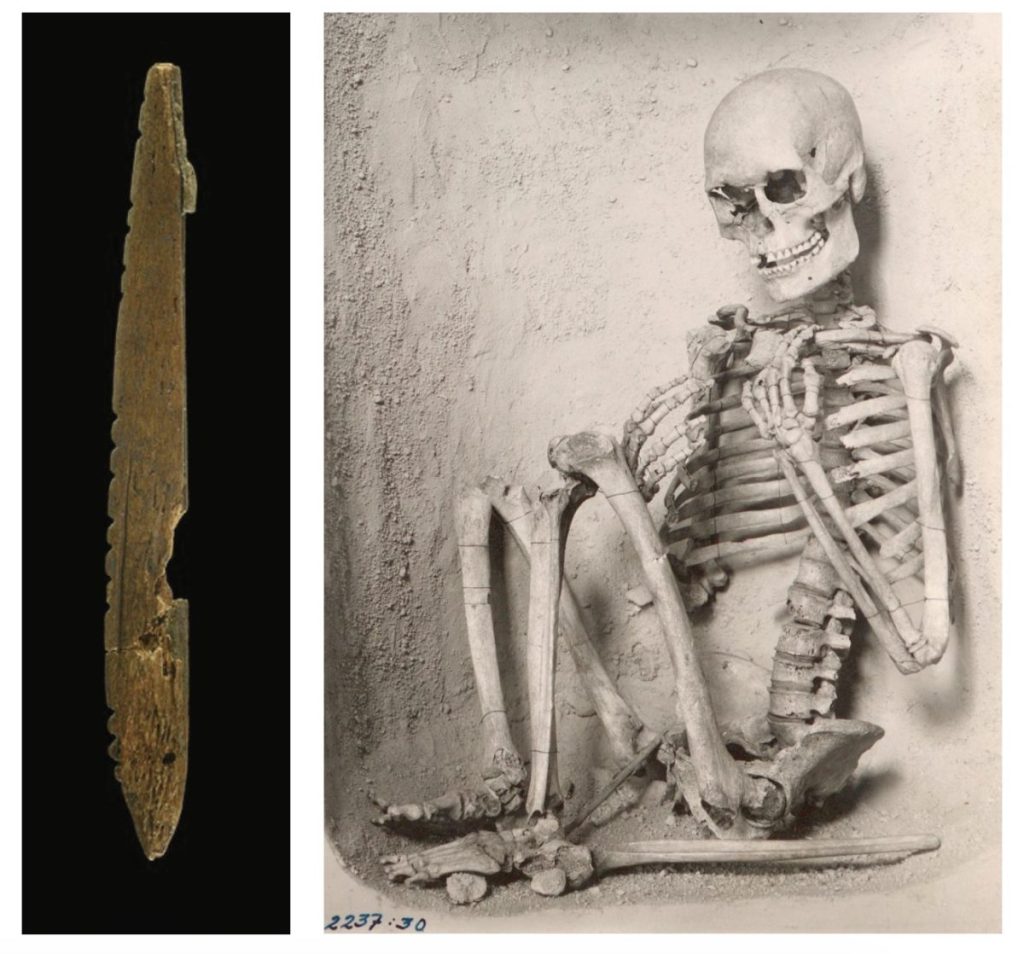
Although the seated individual was not accompanied by any grave goods, a bone needle was recovered from the grave of the recumbent man. Another factor contributing to the dating puzzle was that the two adults were unusually tall. The man arranged in a seated position was 174cm in height, while the individual lying supine reached 184cm. Previous analyses of individuals from Mesolithic graves in the Nordic region show that only a small proportion achieved such a stature, with the average height falling significantly below 170cm for men.
Establishing a secure chronology was therefore essential to determining whether or not these individuals belonged to the same period. Samples were taken for radiocarbon dating, and while the results were awaited, work began on cleaning the skeletons so that detailed study could commence. This was when the most surprising discoveries to come from the project were made. Portions of both adult skeletons had been brought to the lab within soil blocks, which incorporated large quantities of sand. This was slowly and carefully removed from the bones. It was a relatively easy job, as the sand had dried and so fell away when brushed. As the cleaning progressed, it became clear that the skeleton of the man who had been placed flat in his grave displayed signs of both injury and illness. In particular, his left thumb had been broken, while he also sustained an injury to his left shoulder blade. This took the form of a stab wound caused by a sharp object like an arrow, spear, or knife. In both cases, the injuries had healed, meaning that the man survived. It seems most likely that wounds of this nature would have been received in combat.

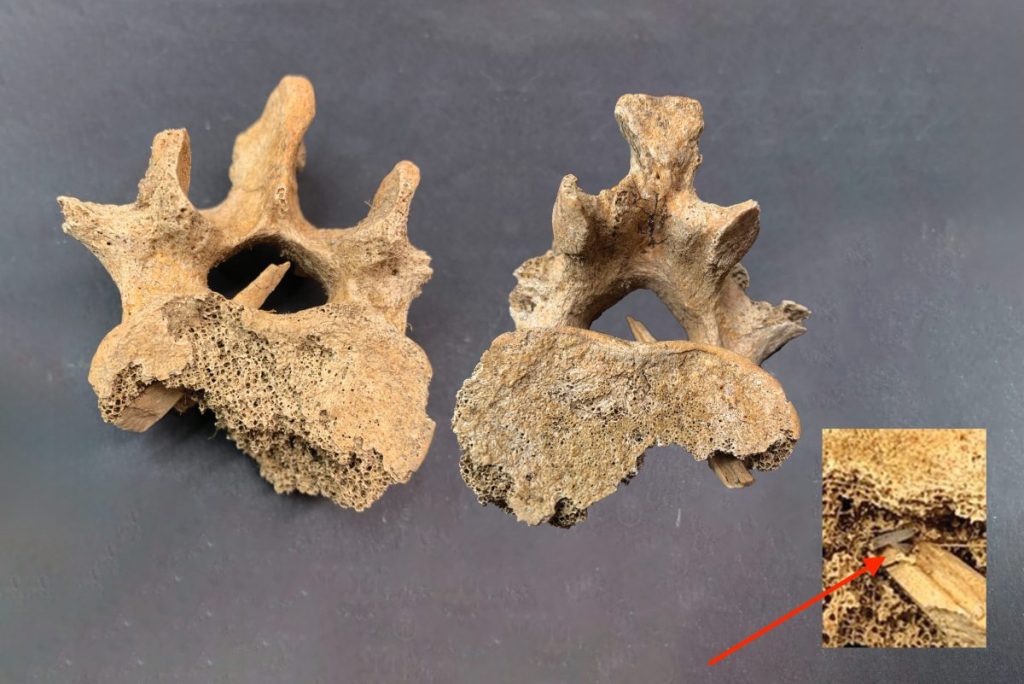
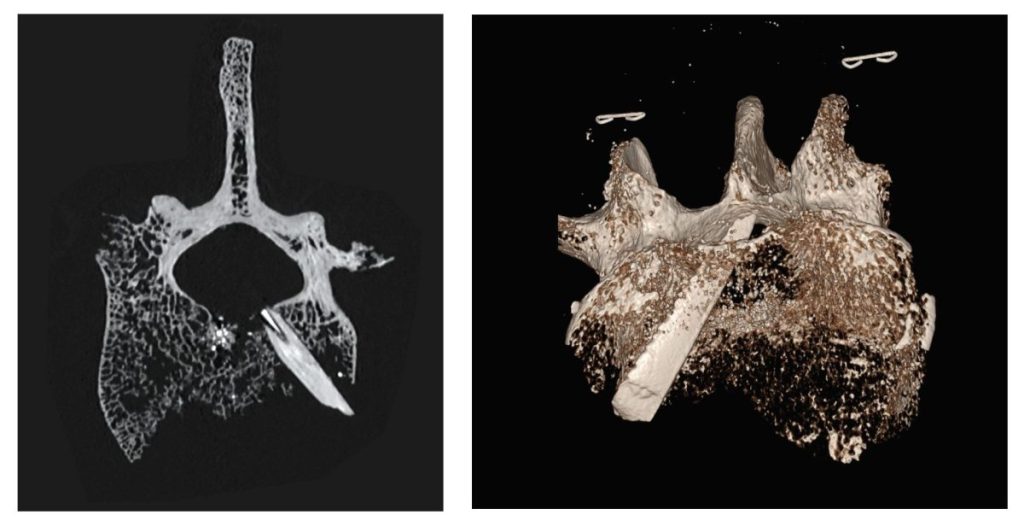
The next step was to clean the bones belonging to the individual in the sitting position. Work started with some of the vertebrae from the lower back. These were not complete, but three of them were comparatively well preserved and grouped together in a lump of sand. When the sand came loose, it became apparent that a sharp implement known as a bone point had penetrated one of the lumbar vertebrae from the front with sufficient force to enter the vertebral canal. Since part of this bone point remained lodged inside the vertebra, a computed tomography (CT) scan was needed to reveal the nature of the portion hidden within the bone. This was undertaken at the university hospital in Lund, using a high-end photon counting CT (Siemens NAEOTOM Alpha) with a 0.2mm slice thickness. It revealed that the bone point incorporated a sharp quartz insert that had been set into a carved groove on the weapon. In addition, small notches had been fashioned on the opposite side of the implement to the groove holding the quartz inset.

In form, this object could be identified as a single-sided, quartz-edged, slotted bone point. This is a type of bone arrowhead that has sharp stone inserts along one or both sides. It is assumed that the tang of the arrow, which can be up to 20cm long, was once attached to a wooden arrow shaft. In this case, the tip of the arrow had broken away, damage that could well have happened when the projectile hit the vertebra.
By now, the radiocarbon analysis of the skeletal material was complete and confirmed what we suspected, namely that the graves were not contemporary. The individual buried in the sitting position was dated to 7300 BC, and so placed firmly within the Mesolithic period, while the other man and the child belonged to the early Iron Age, c.50 BC-AD 200.
Osteological examination of the seated skeleton demonstrated that the Mesolithic man was 25-35 years old at the time of his death. His tooth health was very good, with no sign of cavities, and the skeleton did not show any other indications of trauma or disease.
A more detailed study of his anatomy revealed that the arrow would have struck him diagonally from the front and angled slightly upwards, before piercing the third vertebra of the lower back. The sharp, serrated edges of the arrowhead would have caused significant internal damage. According to the radiologists and forensic doctors, it is likely that the vena cava, a large vein located in front of the vertebral column, was hit, as well as possibly the intestines. If so, this individual probably lost consciousness within a minute and would have been dead within two minutes. If the arrow miraculously missed the vein, any damage to the man’s intestines would have caused inflammation that probably led to death within a couple of days.
A violent end
So, how was he shot? The fact that the arrow entered at an angle and was travelling upwards means that there are three main possibilities: he was attacked while standing on high ground, perched in a tree, or lying on the ground and facing upwards. Penetrating a vertebra requires an arrow to be moving with force and speed, so a long-range shot can seemingly be discounted. Assuming it was a deliberate act, it might be natural to imagine that the man was being chased, stumbled, fell, turned around, and was lying on his back when the arrow struck. If so, though, one might ask why the perpetrator, who would have been standing close by, did not aim for the heart rather than the stomach, if the intention was to kill. Perhaps, then, a more likely scenario is that the victim was shot while standing on raised ground, maybe 10-15m away from his assailant.
Whatever the truth, it is certain that a discovery such as this is extremely rare. Even so, there are additional examples of injuries from the Mesolithic period that were sufficiently grave to affect the skeleton and can be claimed as plausible combat wounds. Examples of these include injuries to the skull, although not all of the known cases were fatal, as some show signs of healing.
Weapons of various kinds have also been found in Mesolithic-era graves belonging to both males and females. These implements can generally be viewed as grave goods. In some cases, though, there is a debate to be had about whether the weapon might be present because it had been used to kill the deceased individual, even if this did not leave a physical mark on their skeleton. This is particularly true of a handful of further examples of flint or quartz slotted bone points that have been found in Sweden. Such arrows have been recorded in graves in the vicinity of vertebrae, ribs, the pelvis, and occasionally the extremities, raising the possibility that they were lodged in the deceased’s body at the time of burial.
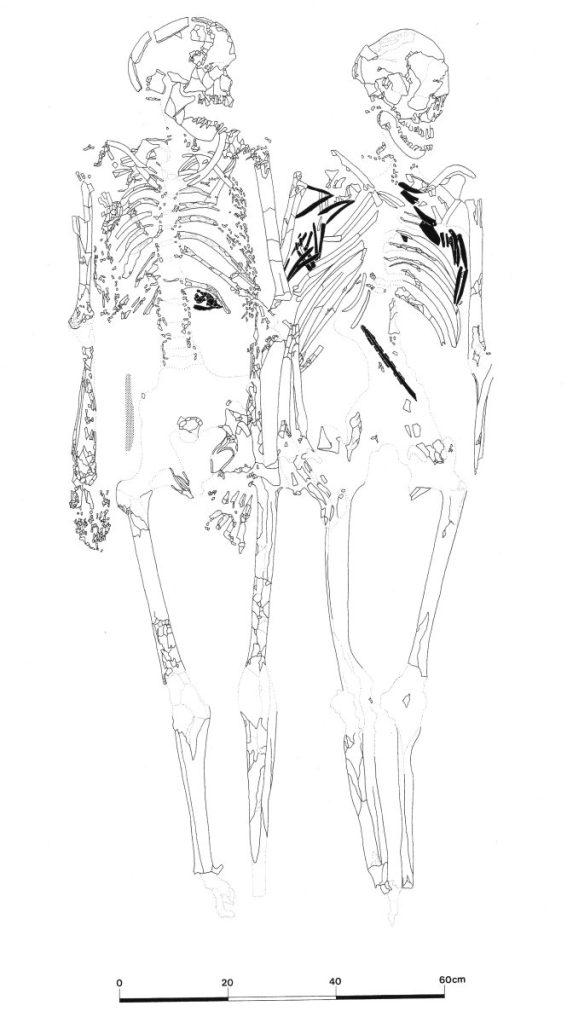
This double burial at Tågerup contained a bone point – visible in the stomach area
of the skeleton on the right – but the projectile did not display any signs of having been used.
Five other burials in Sweden have produced projectiles of this type: Barum in Scania (dating to 7041-6600 BC), Stora Bjers on Gotland (7062-6651 BC), Tågerup in Scania (6453-6089 BC), Skateholm in Scania (5250-4900 BC), and Strandvägen in Östergötland (c.7000 BC). With the single exception of Skateholm, all of these slotted bone points were found in the pelvis and/or stomach region of the deceased. The Skateholm grave, by contrast, contained the remains of a cremated individual, which means that the original location of the bone point relative to their body is unknown. At Barum, Tågerup, and Strandvägen, the flint inserts were still in place on the bone point, allowing the arrowhead to be reconstructed. However, in the grave of Stora Bjers, only a small portion of the bone point was left and no microliths were recovered. This could indicate that the arrow had been used and damaged – in other words, that the man was shot – but both the skeleton and the bone point are so fragmented that it cannot be determined whether it formed part of the man’s grave goods or had been used to kill him. As the bone points in Barum, Tågerup, and Strandvägen show no signs of impact damage, it is perhaps most likely that they had not been used.
Does this leave the recent discovery from Östergötland as the only clear-cut example of such a projectile striking a human, most likely during combat? The answer is ‘no’. Another case is documented in Ukraine, more specifically Burial 34 from the Vasilyevka III site in the Dnieper Rapids region. Here, the deceased was a female aged 18-22 years old, who was found with a fragment of a slotted bone point incorporating two composite microblade edges. This projectile was lodged in one of the woman’s lumbar vertebrae. Further details about the nature of this injury remain elusive, though, and no images have been published to show the position of the bone point.
Even so, it seems clear enough that stone-edged bone points were regarded as an effective weapon during the Mesolithic period. Seemingly, they could be taken to the grave as either a marker of the deceased’s prowess with a bow, or because the individual had been slain by an arrow that was buried with them. While clear evidence for interpersonal violence remains rare during this period, there are sufficient cases to suggest that episodes of fighting could break out between or within hunter-gatherer bands in Scandinavia. If this really was a Mesolithic land of plenty, seemingly some did not want to share.
All images: courtesy of Caroline Arcini