Subscribe now for full access and no adverts
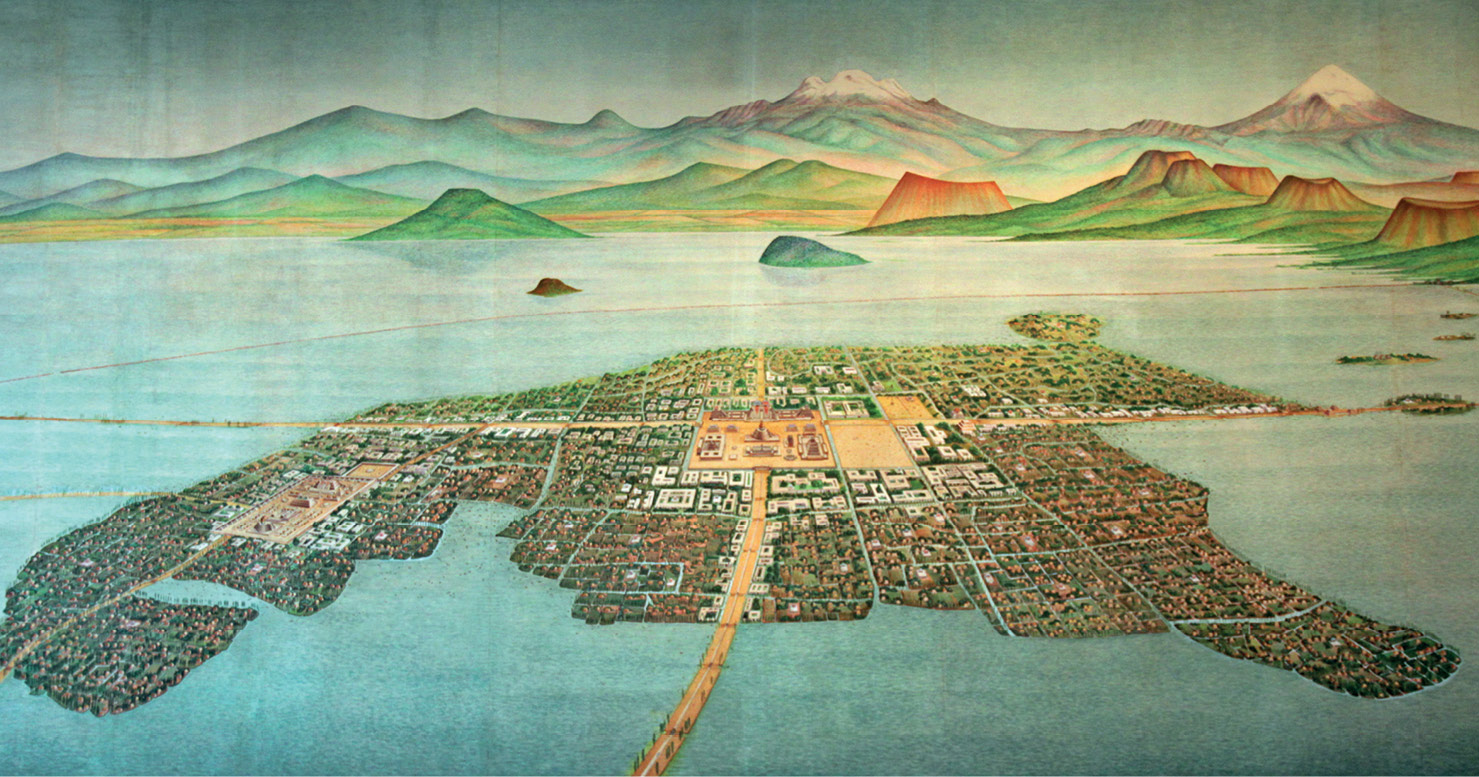
When news about Tenochtitlan (nowadays Mexico City), the capital of the Aztec Empire, started to reach Europe around the time of the conquest by the Spanish Conquistadors led by Hernán Cortés, the city was soon labelled the ‘Venice of the New World’. This was not a minor statement, since in the early 16th century Venice was one of the largest cities in the world, famous both for its wealth and distinctive topography. What could have led to this link between cities located in two completely different cultural contexts? The answer is simple: water. Both cities were defined by their aquatic settings, with complex networks of canals and bridges. They represented prime examples of how living with water could be used to people’s advantage, developing prosperous urban centres with wide- reaching spheres of influence.
In the case of Venice, the city had gradually developed on multiple islands of the Venetian Lagoon to become a major maritime and economic power, with dominions extending over the Adriatic and large parts of the eastern Mediterranean. Its characteristic layout is still visible today, making it a prime tourist attraction due to its iconic canals, footbridges, and gondolas. However, this comes alongside numerous challenges in terms of handling historic building preservation, rising water levels, and overtourism.
Regarding Mexico City, the landscape has experienced a dramatic change since its heyday as the Aztec capital, just before it was destroyed and subsequently transformed into a colonial metropolis. Located within Lake Texcoco, at the time of the Spanish conquest, Tenochtitlan was among the most populous cities in the world, with an estimated population of around 200,000 inhabitants. Founded in the 14th century, the Aztec city had developed on a number of islands, including both natural and human- made ones. It was a vibrant urban centre with canals and canoes, streets and bridges, marketplaces and residential zones. Monumental architecture included temples and palaces, with the Spanish Conquistador Bernal Díaz describing ‘cues [pyramids] and buildings rising from the water’. The so-called ‘chinampas’, artificial islands that were agriculturally highly productive, were also a defining feature of Tenochtitlan.
Water worlds
While Venice and Tenochtitlan might be the most famous examples of this type of urbanism, they are not alone. In Europe, numerous cities have received the nickname of ‘Venice of the north’, from Amsterdam to Bruges and Saint Petersburg. More globally, throughout history many cities around the world have been shaped by waterscapes, a phenomenon for which archaeologist Michael Leadbetter introduced the concept of ‘amphibious urbanism’ in his 2021 article ‘The fluid city, urbanism as process’. The expression ‘amphibious urbanism’ is part of a broader trend within scholarship on pre-modern urbanism, which in recent years has witnessed the introduction of other terms such as ‘steppe urbanism’ or ‘garden cities’. This reflects the growing recognition that urbanism has always been – and continues to be – a much more diverse phenomenon than traditionally thought. According to Leadbetter, amphibious urbanism can be defined as being ‘marked by a close creative engagement between people, organic and buoyant building materials, and a close engagement with water and wetland spaces’.
Some of the most interesting examples of amphibious urbanism are located in Southeast Asia. In the Philippines, the wetland site of Butuan represents a prime case, being characterised by the predominance of watercraft. This includes the discovery of boats from the 8th to 10th centuries AD on which people likely lived, rather than more ‘conventional’ terrestrial housing. The importance of the site is underlined by the discovery of abundant gold, as well as remains of pottery, iconography, and domestic refuse. The long-distance connections of this settlement reached as far as China and the Indian Ocean.
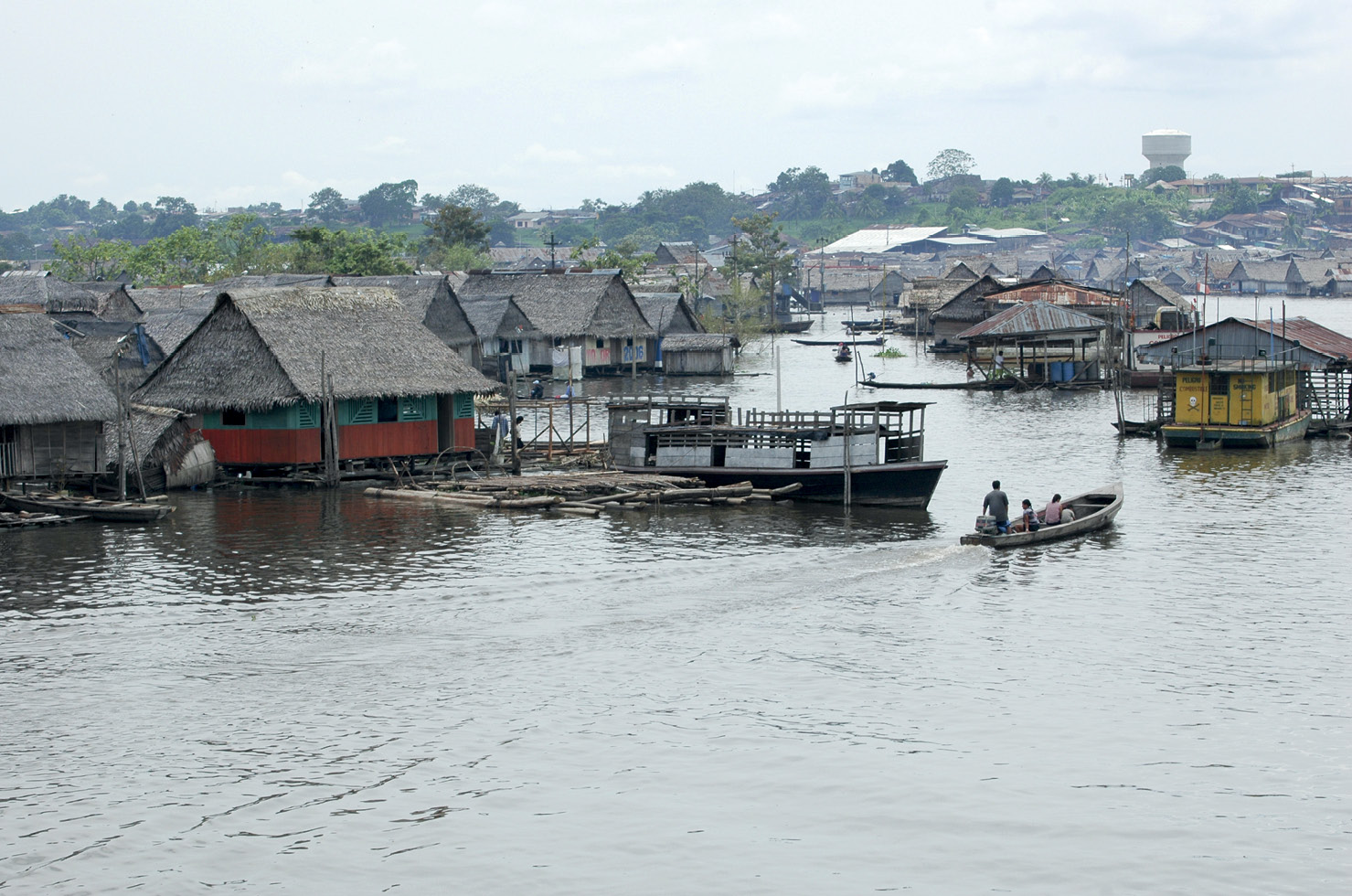
Amphibious cities challenge traditional notions of urbanism, showing how communities can organise life in large, complex settlements in manifold ways depending on factors such as geography, climate, and cultural traditions. In their 2025 Journal of Urban Archaeology article, ‘Urbanism and sustainability: Life with water’, Michael Leadbetter and Ruby-Anne Birin brought together a useful summary of amphibious sites from around the world. The importance of these types of settlement should not be underestimated: for instance, historical sources suggest that up to 250,000 people might have lived on water in the Brunei Bay in the 16th century. Moreover, amphibious urbanism is not necessarily restricted to coastal environments, but can sometimes also develop further inland: the case of Barrio de Belén in Iquitos, Peru, near the Amazon River, is paradigmatic in that regard, as the settlement is located thousands of kilometres from where the river meets the Atlantic.
Resource and risk
Living with water rather than living on water can have different implications, but nonetheless cities located far away from the coasts often develop special relationships with their water resources (or lack thereof). In a new article from 2026, also published in the Journal of Urban Archaeology, Olympia Bobou and Rubina Raja tackle evidence for water management in Middle Islamic Palmyra in the Syrian Desert, showing how archaeological evidence provides insights into evolving ways of preserving precious water resources, while at the same time preventing flash flooding through intense and ongoing damming of wadis. They illustrate how the relationship between this urban society and its water resources was complex, requiring refined techniques and methods for upkeep.
The same applies to numerous cities that flourished during the Roman period in the Near East, for example, and which were situated on or even spanned rivers, as in the cases of Zeugma or the Decapolis city of Gerasa. The latter was literally cut into two halves, with the city’s eastern and western parts solely connected by bridges in antiquity, making the city vulnerable if these structures were damaged, for example during earthquakes. While such cities might not be considered amphibious by definition, they were still deeply connected to water, which needed to be managed as not only a life-giving resource, but also as a potential source of danger to cityscapes and their communities. New fieldwork in the north-western part of Gerasa has shown that approaches to water management changed drastically between the 1st century AD and the middle of the 8th century AD, before shifting once again in the Middle Islamic period. This indicates that water resources and their availability varied, with such resources also being tackled differently depending on how water was brought into the city. Techniques included the use of pressurised pipes or catchment systems, such as private and public cisterns, in the higher portions of the city, at least, which could not be fed by the river located deep in the wadi.
Urban entanglements with water represent one of the best examples of the fluid nature of cities. From truly aquatic settings as in the cases of Venice or Butuan, where waterscapes define the urban fabric year-round, to the other extreme where water was usually scarce but could occasionally rise in episodes of flash flooding, engagement with water has always constituted a key element of urban building and planning. As our current world faces rising water levels and increased flooding episodes as a result of climate change, looking at the past can provide some answers (or at least inspiration) about how societies have dealt with similar challenges throughout history. Amphibious cities are, therefore, not just a matter of the past, but very much a feature of the world that lies ahead.
Rubina Raja is Professor of Classical Archaeology and Art at Aarhus University. She also heads the ‘Locally Crafted Empires’ Semper Ardens Advanced Grant project and the ‘Lost Cities’ Gerda Henkel Foundation project on urban excavation legacy data. She is the founder and main editor of the Journal of Urban Archaeology.