Subscribe now for full access and no adverts
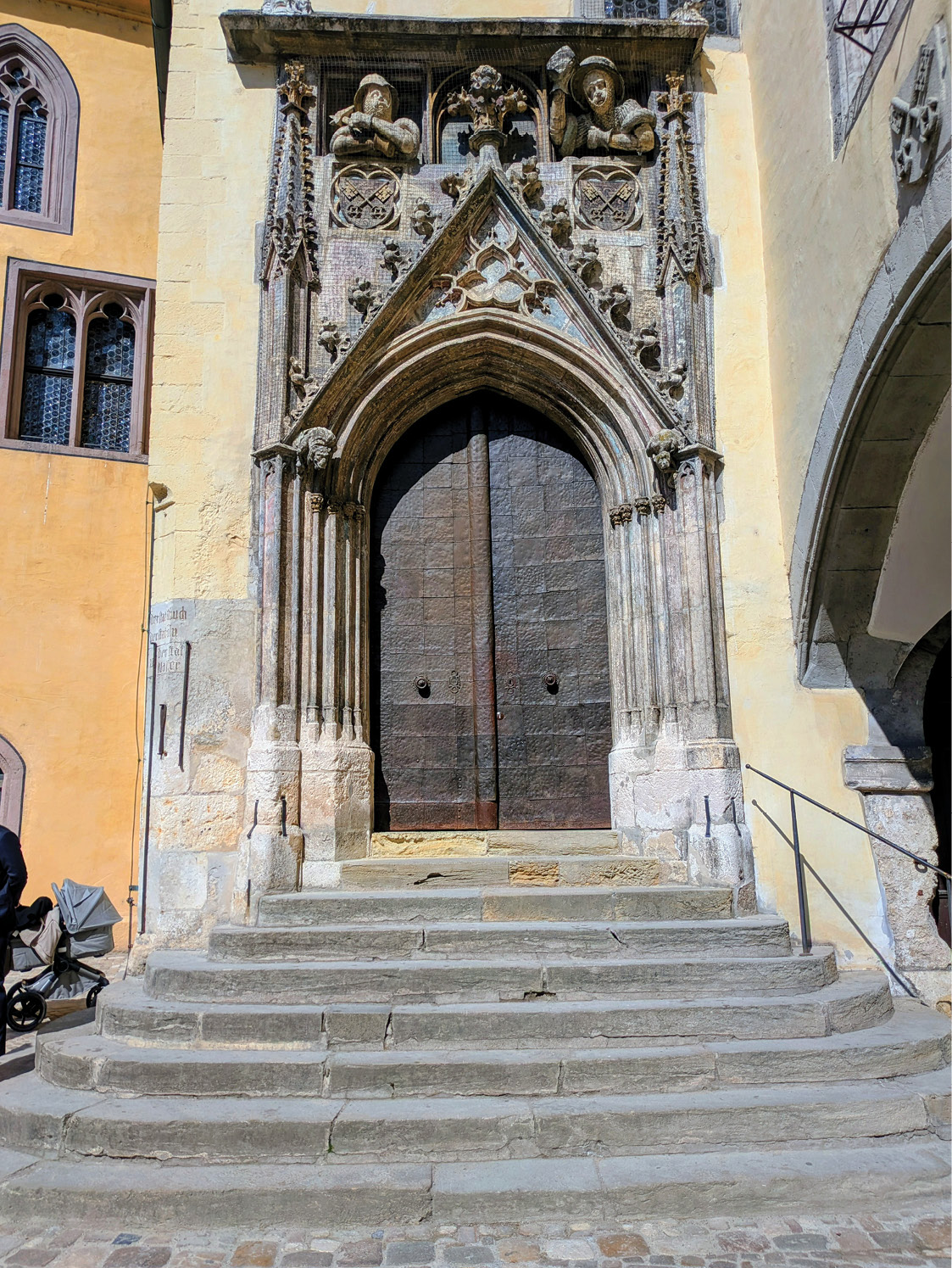
Regensburg is a delightful city. Situated on the Danube in Bavaria, its heart is a medieval town sitting within the walls of a Roman fortress. Few modern buildings have been erected within this perimeter. Two hundred and more years ago, Regensburg was a very important place, because from 1663 it was the seat of the Imperial Diet: the general assembly of the Holy Roman Empire. It lost this status when, on 6 August 1806, the Holy Roman Empire, a political entity that had existed for a thousand years, was abolished in the face of the triumphs of Napoleon. There are many reasons why Regensburg deserves its World Heritage status.
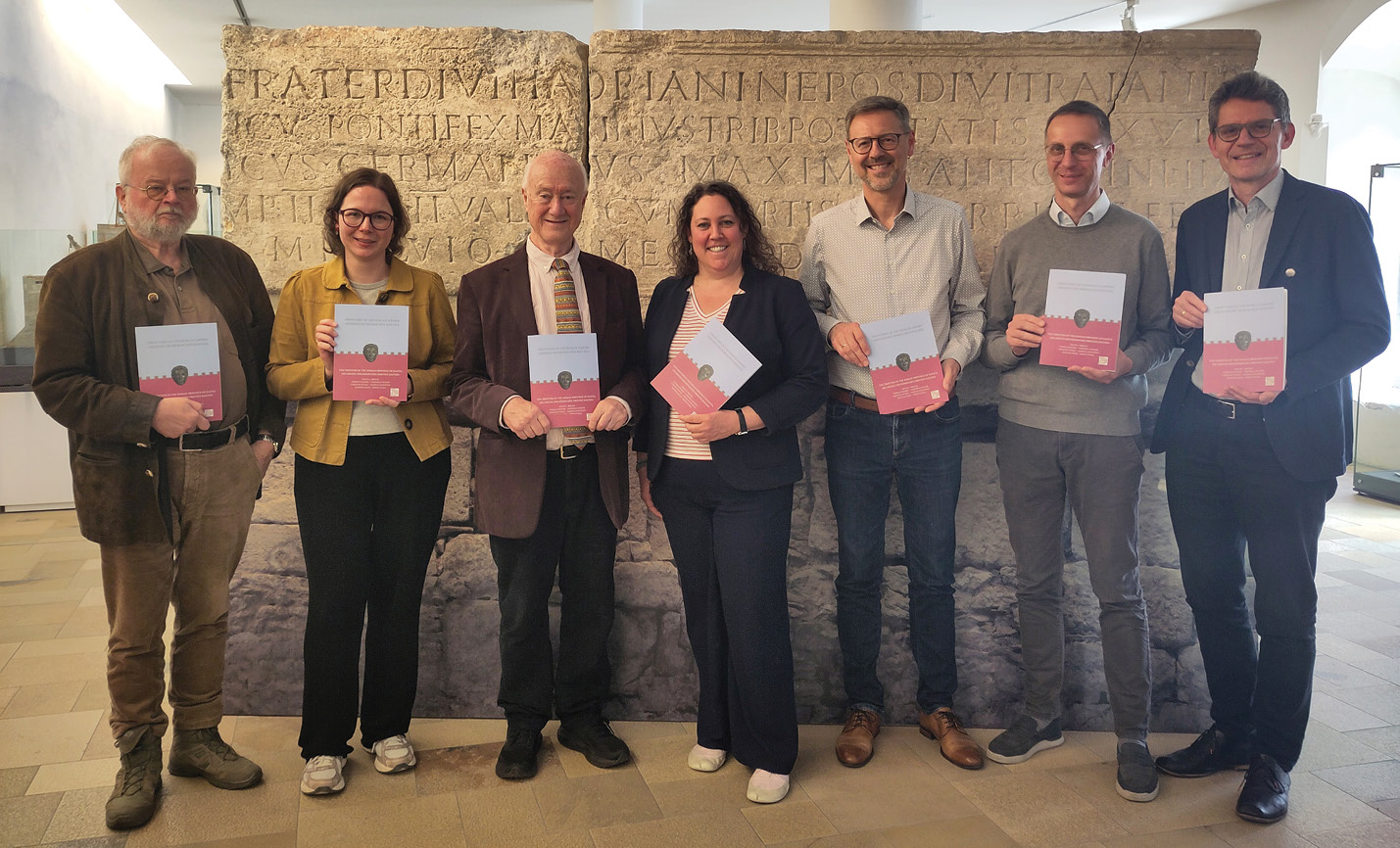
It was to Regensburg that I went in May 2026 to launch the 22nd volume in a series of multi-language books dedicated to the frontiers of the Roman Empire. The series was established in 2005 to support the nomination of these frontiers as a UNESCO (the United Nations Educational, Scientific and Cultural Organization) World Heritage Site (WHS).
A new type of WHS
Hadrian’s Wall became a WHS in 1987, and for nearly 20 years was the only Roman frontier to have achieved that status. About 2000, there was a move to nominate the Upper German-Raetian frontier as a WHS. This is the great land frontier that ran from the Rhine near Bonn to the Danube near Eining. It was a 550km-long linear barrier, initially in the form of a timber palisade, but later replaced by an earthen bank or a stone wall. Arranged along this line were forts of various sizes, fortlets, and towers. Many of the individual sites have achieved iconic status, such as the fort known as ‘the Saalburg’ in the Taunus Mountains, which was partially reconstructed with the financial support of Kaiser Wilhelm II; there are also numerous Roman towers that have been reconstructed with greater or lesser degrees of accuracy, but that are beloved by their local communities.
The proposal to nominate the Upper German-Raetian frontier sparked an interest that stretched well beyond the borders of Germany. Roman archaeologists meeting at the Annual Conference of the European Association of Archaeologists at Esslingen in 2001 mulled over the potential consequences of the German initiative. It was agreed that it was likely that other countries would wish to propose the remains of their own Roman frontiers. This would be a challenge, as traces of the former Roman frontier exist in at least 20 modern countries in Europe, the Middle East, and North Africa. How could proposals from so many countries be coordinated? The answer proposed in Esslingen was to suggest the establishment of a single World Heritage Site for all the frontiers of the Roman Empire. There was a logic to this, in that the frontiers were all interlinked and together formed the largest single monument of the Roman Empire, and in their entirety defined the extent of that empire.
Initially, the proposed WHS would consist of Hadrian’s Wall and the Upper German-Raetian frontier, to which other sections could be added over time on an incremental basis. The creation of a single WHS for all Roman frontiers, in its initial stages in Europe, would satisfy the wish of UNESCO for the overall number of proposals for World Heritage s
This approach was approved by the World Heritage Committee at its meeting in 2005, when it accepted the nomination of the Upper German-Raetian frontier as a WHS. At the same time, Hadrian’s Wall and the Upper German-Raetian frontier combined to form the Frontiers of the Roman Empire WHS. In this way, Roman archaeologists created a new type of WHS: in UNESCO speak, a serial, phased transnational World Heritage Site!
The book series
It is hardly surprising that, in discussions about the proposals with UNESCO in Paris, its staff sought background information. Having to prove one’s case is often most useful in forcing clarification of one’s own argument, and so it proved. We had to persuade not only international administrators that we had a viable way forward, but also local communities of our intentions. Thus was born the series of multi-language books on the frontiers of the Roman Empire, the first appearing in 2005, in support of the German nomination of the Upper German-Raetian frontier.
The aim of this series was two-fold: we wished to explain the project of securing World Heritage status for the frontiers of the Roman Empire and, within the same covers, describe the individual frontier being proposed. In that way, we hoped that each sector seeking World Heritage status would be understood within the framework of the whole project. We started with a general account, in Arabic, English, French, and German, but soon progressed to books on individual frontiers. In Europe, these were usually funded by the state authority and therefore tended to tackle a local section of the frontier focussed on one modern country. Such funding was not available in the Middle East and North Africa, and here Richard Beleson stepped forward to fund the books.
The launch of the book on the frontier in Raetia brought the series to 22 publications, including two in Arabic. To bring the series to this point has required a team of 46 authors writing in 10 languages with 25 translators, several cartographers, and many supporters providing illustrations free of charge, with most books designed by one person: Anna Adamczyk.
Those studying the Roman Empire have long shared their research interests, but the creation of the Frontiers of the Roman Empire WHS, together with its companion project the production of the multi-language series of booklets, have ushered in a new level of international cooperation, as archaeologists have been required to work together to achieve success in both areas. This is one unexpected result of the project to make the frontiers of the Roman Empire a World Heritage Site.

The Roman frontier in Raetia
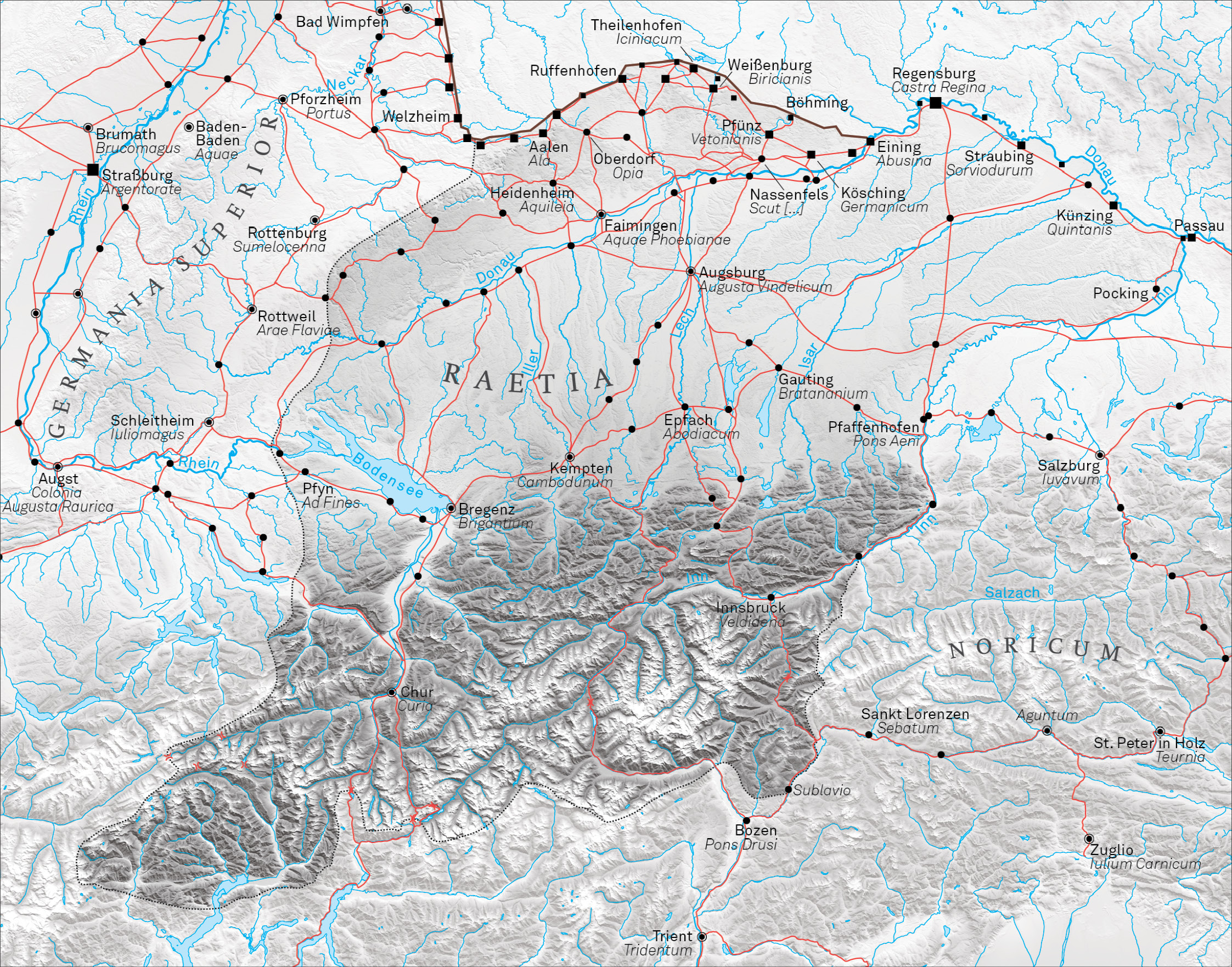
The Roman province of Raetia mostly lies within the modern German state of Bavaria, though to the west a sector falls within Baden-Württemberg, while to the south it extends into Austria and Switzerland. Over half of the line of its frontier – the artificial linear barrier with a length of 167km – became a WHS in 2005, as part of the Upper German-Raetian WHS. The eastern sector along the river Danube joined it in 2021 as part of the Danube Frontier (Western Segment). In addition, the city of Regensburg is a WHS. Uniquely, then, the Roman frontier in Raetia is protected through three separate WHSs.
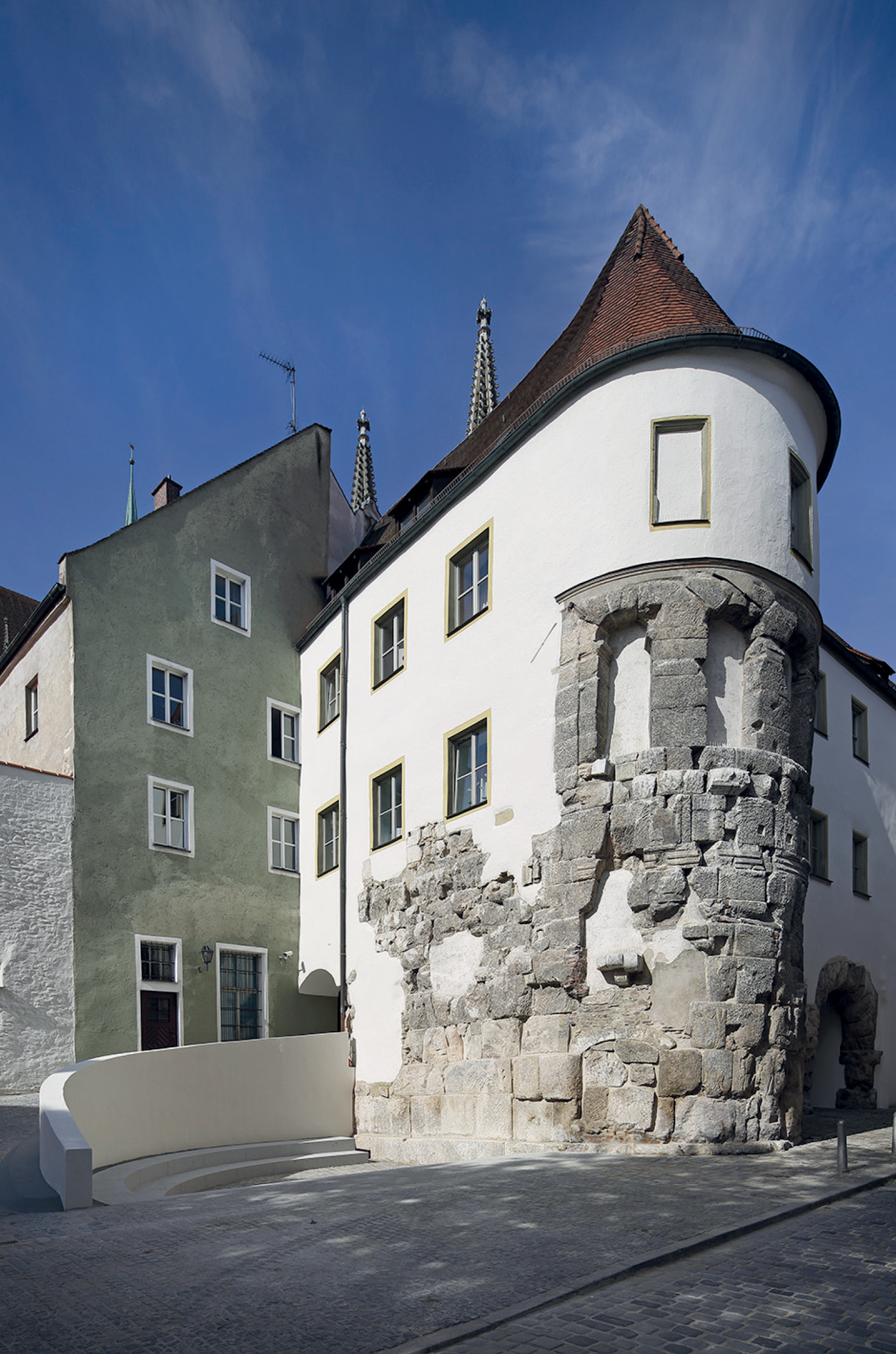
As on all Roman frontiers, the scale of the visible remains today is variable, though the range of heritage sites is extensive and reflects the long interest in the Roman heritage. Without doubt, however, the most iconic survival is the main gate, the porta praetoria, of the legionary fortress at Regensburg. Still standing three storeys high, it is a remarkable sight. Equally remarkable is the recovery of an inscription recording the completion of the building of the legionary fortress in 179. Up to this point, there had been no legion stationed in the province, but the Marcomannic Wars from 166 to 180, during the reign of the Emperor Marcus Aurelius, led to the strengthening of the Roman military presence on the Danube.
Raetia remained a focal point of warfare throughout its life. This warfare did not always emanate from beyond the borders of the Roman Empire. Raetia was centrally placed between the Rhine provinces to the west and the Illyrian command to the east. This caused problems in the civil war that followed the death of the Emperor Nero in 68: the governor of Raetia sided with Vitellius, the new emperor in the west, while the neighbouring province to the east, Noricum, adhered to Vespasian, the ultimate winner of this power struggle. Raetia found itself in a similar situation in 312-313, when it lay on the border between the Western Empire of Constantine I, following his success at the Battle of the Milvian Bridge in October 312 (CWA 85), and his rival Licinius to the east.
Raetia’s central position on the northern frontier of the Roman Empire led to it suffering from many invasions: seven are known in the 20 years from 268 to 287 alone. It is not surprising that the frontier line bristled with forts.


The evolution of the frontier
The earliest forts in Raetia lay along the river Danube, some established as early as the reign of the Emperor Tiberius (14-37). In the years following the accession of the Emperor Vespasian in 69, steps were taken to close the gap between the headwaters of the rivers Danube and Rhine, and as a result the frontier in Raetia was moved north. A further move northwards occurred in the reign of the Emperor Antoninus Pius (138-161). A new barrier, of timber, was erected along the frontier. Dendrochronological analysis has demonstrated that it was constructed over several years from 161 to 165. About 40 years later, it was replaced by a stone wall.
The warfare of the late 3rd century resulted in retrenchment, the boundary of the empire returning to the line of the Danube and in western Raetia even further south. Successive emperors sought to protect their domain. In the late 4th century, the energetic Valentinian I (364-375) was responsible for the construction of many towers.
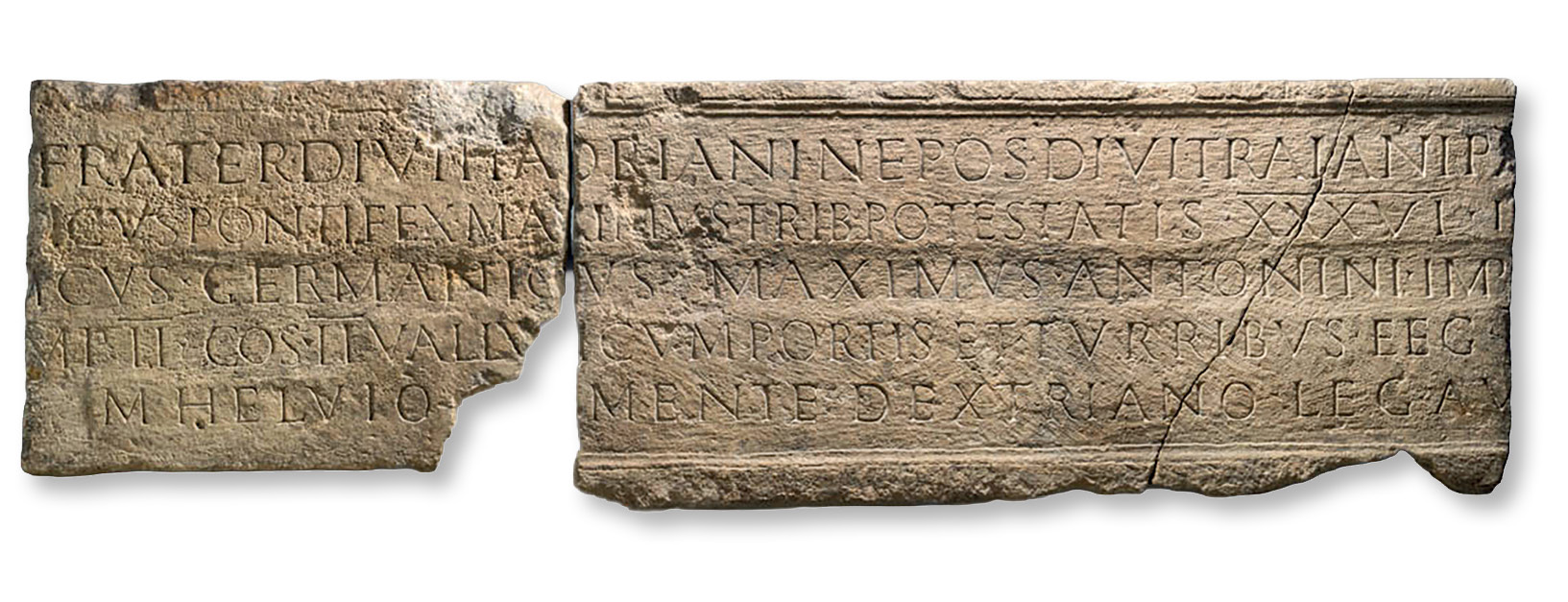
This monumental building inscription dates the completion of the legionary fortress at Regensburg to AD 179, during the reign of Marcus Aurelius. image: F. and O. Harl, lupa.at/6610
Forts and towers of Raetia
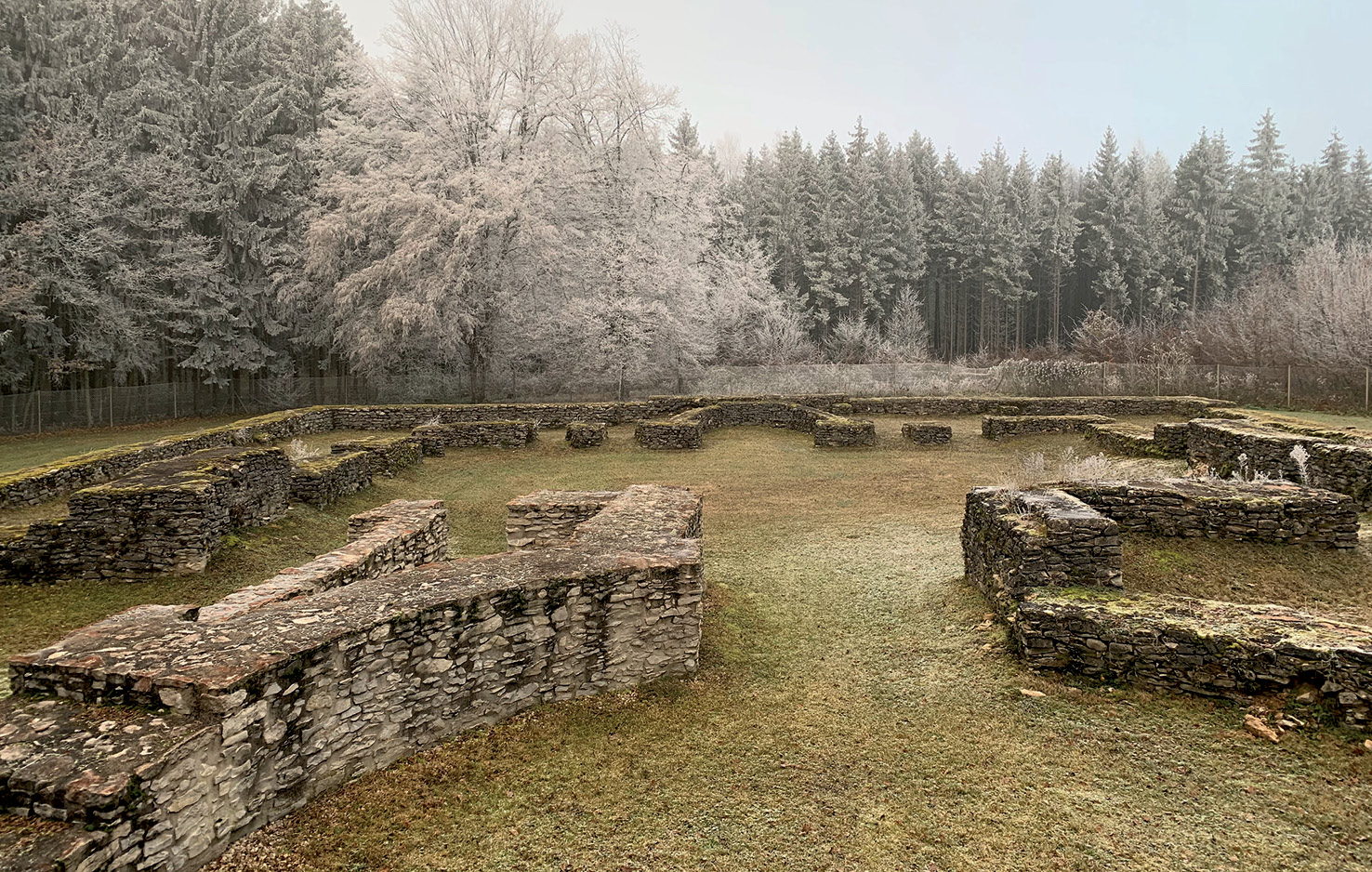
Regensburg is not the only celebrated military base in Raetia. To the west, also on the Danube, lies Eining. This fort should be on everyone’s list of iconic Roman forts, a list that would stretch from Housesteads on Hadrian’s Wall to the north-west, to Qasr Bshir in Jordan to the east (CWA 118). Eining was excavated in the late 19th century and laid out for public inspection. Visible are the 2nd-century fort, with a late fort tucked in one corner, and various buildings in the fort and extramural settlement, including a bathhouse. About 30 years ago, a major project was successfully undertaken to renew and improve the method of conservation of the standing remains and provide a new style of interpretation for the whole site.
Eining, which lay at the junction of the linear – or land – frontier and the river frontier, may have been selected for one of the earlier excavations and public presentation of the remains, but there are many other such heritage sites in Bavaria and eastern Baden-Württemberg, and between them they tell the story of archaeological research and display in Raetia.
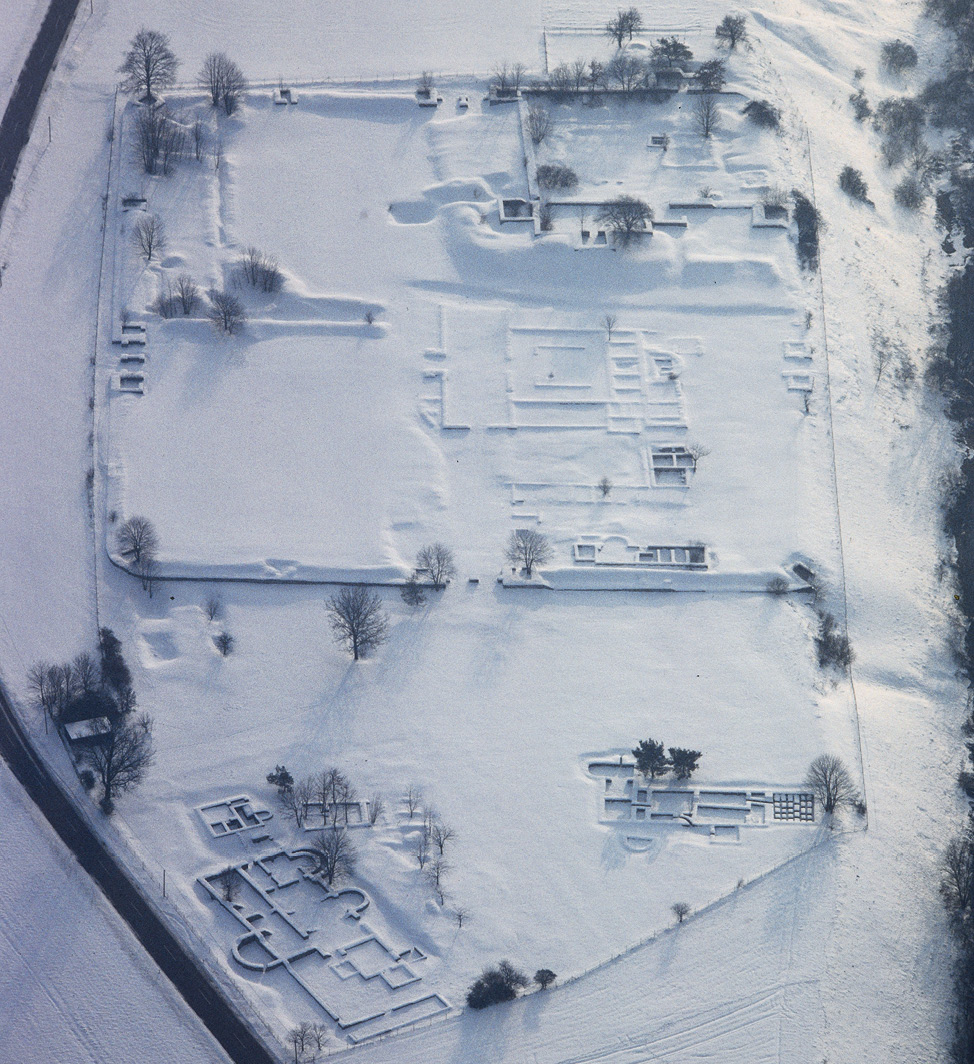
Before the addition of the legionary fortress at Regensburg to the suite of military fortifications in Raetia, the largest unit in the province lay at Aalen, located a short distance behind the frontier, towards the western boundary of the province. Here was placed a large cavalry regiment, the ala II Flavia milliaria, with a paper strength of 800 cavalrymen, making it a force to be reckoned with. The display of the remains here has gone a step further than at Eining, for a section of a barrack-block has been rebuilt, sitting alongside the surviving walls of the headquarters building.
An alternative approach to display was taken at Ruffenhofen. This is a site where nothing was visible above ground, so it was chosen to create a new archaeological park. The fort, civil settlement, and cemetery have been brought to life through visualisations created by the careful positioning of plant beds to show where structures lay. A new visitor centre/museum has been created, too. Amid this green space, the visitor can enjoy not just the Roman experience but also the lovely countryside at the foot of the Hesselberg.

The creation of a new archaeological park has antecedents in Raetia. At Rainau-Buch, also in the western part of the province, is the Limes Park, established in the 1970s. The visitor is treated to a wide range of miliary remains and reconstructions. Sections of the timber and later stone wall of the linear barrier have been built, together with a replica timber tower. Most striking of all the displays is the remarkable gate permitting access through the linear barrier at Dalkingen, now enclosed in glass for its protection. The purpose of this ostentatious access point – a facility without parallel on any other Roman frontier – is still a matter of conjecture, but one proposal is that it was constructed for the visit of the Emperor Caracalla in 214.
Dalkingen is not the only unusual military structure in Raetia. At Harlach, near Burgsalach, there is an atypical fortlet believed to date to the 3rd century and showing the influence of African military architecture from that era. Other buildings of that period survive as well. We have already mentioned Eining, but just beyond the far eastern corner of the province in neighbouring Noricum lie the remains of the late fort at Passau, which overlooks the confluence of the rivers Inn and Danube.
Civilian life
Roman forts attracted civilians. Some were the wives and families of the soldiers; others arrived with the intention of relieving the soldier of as much of his pay as possible. Remains of their buildings are visible at several sites. What is less usual is the display of traces of local farms, the name for which is the villa rustica. Such farming complexes are laid out at Möckenlohe, Nördlingen, and Treuchtlingen.

Image: BLfD Weißenberg i.Bay;
Museums and artefacts
Museums flourish in Raetia. It is hardly surprising that, in a province with such a long history in antiquity and of research in recent centuries, the standard of the collections is very high. No one who has seen the parade helmets displayed in Gäubodenmuseum in Straubing can ever forget them – and they certainly compensate for the lack of visible remains of the nearby forts.
Some museums are themselves of some antiquity. The Regensburg Museum of History was established in 1931 and resides in a former Minorite monastery founded in 1221. Other museums are more recent creations and often relate to excavations undertaken at the adjacent fort, as we have seen. These include the Limesmuseum at Aalen, while the Roman Museum in Weißenburg (where there is a reconstructed Roman gate) has an exceptional display of treasure. Indeed, the museums stretch across the province from Aalen in the west to the Quintana Museum at Künzing and, on its eastern border, the Roman Museum Kastell Boiotro in Passau.
Looking forward
The Frontier of the Roman Province of Raetia will not be the last in the FRE series of multi-language books on Roman frontiers. Work is in progress on the frontiers in Switzerland and in Croatia, with those in Slovenia, Israel, and Turkey under consideration. Perhaps we will end up with 27 books in total.
Until 2022, the books were published on an ad hoc basis, but in that year Archaeopress took over the series and now publishes all the books both in hard copy and online, where they are available on open access. Floreant Limites!
D J Breeze, T Fischer, V Fischer, C Flügel, M Gschwind, M Meyr, and B Steidl (2026) The Frontier of the Roman Province of Raetia (Archaeopress, ISBN 978-1805832775). An open-acess verison is available at http://www.archaeopress.com/Archaeopress/Products/9781805832775.
All images: courtesy of David J. Breeze and Anna Adamczyk, unless otherwise stated