Subscribe now for full access and no adverts
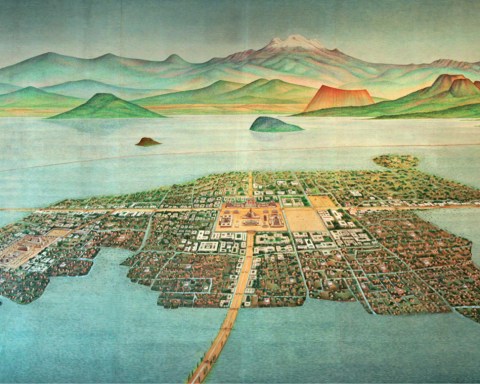
The wetlands of La Mojana in northern Colombia are home to an ancient raised field system made up of canals and ridges (camellones) covering a vast area of c.500,000ha. Often called the Zenú hydraulic systems, after the pre-Hispanic societies who created them, this infrastructure was in use from the last centuries BC up to the 10th-11th century AD.
The extensive network of canals and ridges controlled the distribution of water, defending against both floods and droughts, improving the fertility of the soil, and even bringing fish from permanent marshes closer to raised residential platforms. The complexity of these systems – coupled with the presence of goldwork and ceramics in the archaeological record – has previously been interpreted as evidence that they were created through top-down government in hierarchical societies. However, new research published in the journal Communications Sustainability (https://doi.org/10.1038/s44458-026-00128-5) suggests that this is not the case.

The recent study – carried out by Marcos Martinón-Torres and Jasmine Vieri at the McDonald Institute for Archaeological Research, Fernando Montejo Gaitán at the Colombian Institute of Anthropology and History, and Miguel Carrero-Pazos at the Universidade de Santiago de Compostela, Spain – mapped a 500ha area of the La Mojana field systems in San Marcos, Sucre, examining the infrastructure in close detail and recording the dimensions and volumes of ridges, canals, and housing platforms. Then the team worked out how much labour would have been needed to construct such a system, factoring in volumes of moved earth, as well as information about local geology, indigenous working practices and available technology, and population density.
As the estimated population of the study area was around 1,600, the researchers based their calculations on a workforce of 800 (a conservative estimate, as ethnographic research indicates that men, women, and children were all traditionally involved in subsistence farming). They calculated that a community of this size could have constructed a full system of major canals and raised fields in less than two months – around half of a single dry season. The researchers also concluded that the whole system could be renewed by the community once a generation with only a couple of days of annual work. These figures are much lower than previously assumed. They indicate that the hydraulic systems did not necessarily require top-down control: construction and maintenance would have been entirely manageable through communal efforts.
These findings have important implications for our understanding of Zenú socio-political and economic organisation. Martinón-Torres commented, ‘arguments for centralised, top-down planning, unsupported by data, risk obscuring the agency of indigenous pre-Hispanic populations.’
The researchers are hopeful, too, that the work could offer a potential solution to water management in Colombia today, which faces periods of heavy rain and flooding, as well as severe droughts. They propose that the results demonstrate a pre-Hispanic sustainable solution that could be organised collectively by local populations with relatively low effort. The initiative has already been tested on a small scale in a nearby region of the lower Sinú River: since 2012, raised field systems similar to those of the Zenú have been constructed across an area of 6ha, providing the community with access to land during flooding and water during droughts, when their neighbours had neither.

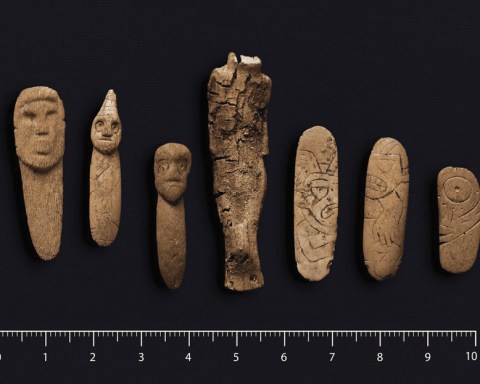
Text: Amy Brunskill / Images: photo by Sebastián Schrimpff, courtesy of Museo del Oro, Banco de la República; ICANH