Subscribe now for full access and no adverts
An assemblage of objects discovered at Peñico on the north-central coast of Peru, dating to 3,800 years ago, provides new evidence for the continuity of the Caral culture.
Caral is considered the oldest known ‘advanced’ civilisation in the Americas, emerging in c.3000 BC and thriving for several millennia. But around 1800 BC droughts and crop failure caused by climate change forced the Caral people to abandon their major cities. They started again, founding a new urban centre at Peñico, 13km upriver of the former main settlement of Caral-Supe, giving them better access to glacial meltwater from the mountains.
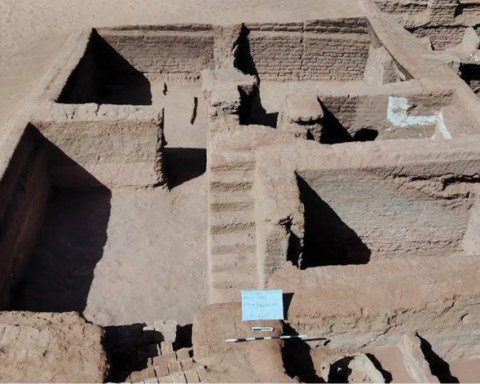
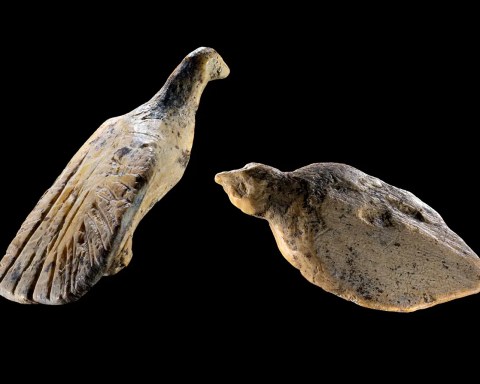
Excavations at Peñico, led by Dr Ruth Shady Solís, have revealed a settlement covering an area of 19.44ha, with 18 structures uncovered to date, including a central plaza, ceremonial buildings, and residential complexes. The latest discovery is an offering comprising 43 objects made of wood and bone, some featuring engraved designs, others bearing signs of exposure to fire. Among them are anthropomorphic figures – including a female figure as well as possible deities – and zoomorphic figures, such as birds, snakes, and tadpoles, in addition to geometric motifs and abstract forms. Archaeologists also found beads, mollusc shells, and fragments of minerals and semiprecious stones intended as inlays for the sculptures.
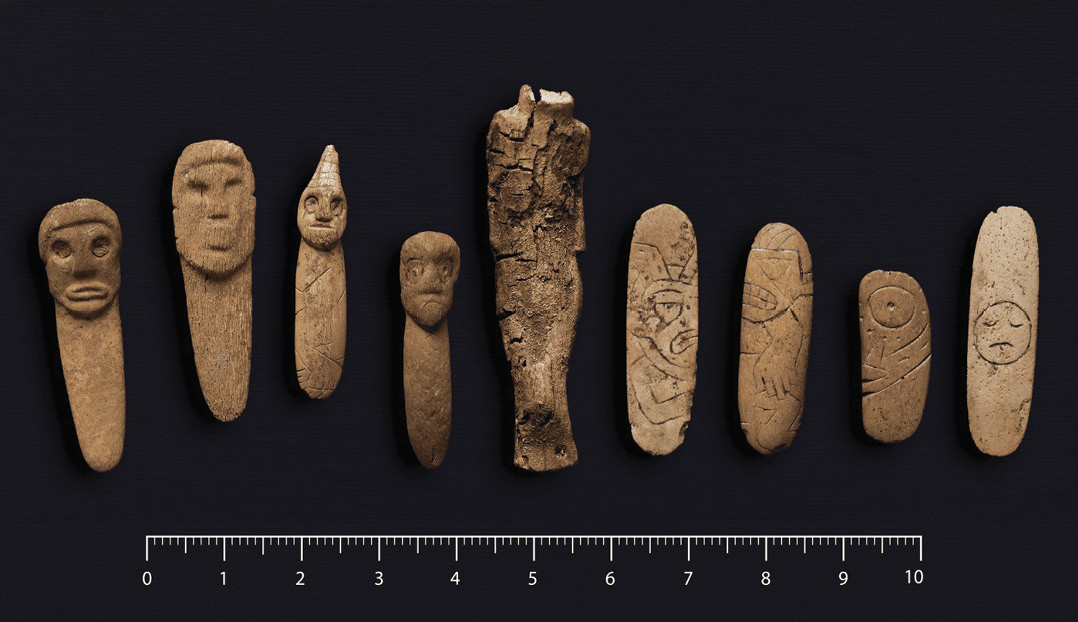
The collection of objects was found in a small area outlined by pebbles arranged in a semicircle, and covered with a large stone. It appears to have been deposited in c.1800 BC during the initial stages of construction at the site’s main public building, presumably as part of a ceremony related to the consecration of this significant space.
Analysis of the artefacts reveals similarities between the materials, carving techniques, and iconography of these objects and those found at earlier sites of the Caral civilisation. The discovery provides further evidence that Peñico was a place where the ritual practices, beliefs, and artistic traditions of the Caral people remained important and were incorporated into new cultural expressions.
Text: Amy Brunskill / Image: Ministerio de Cultura