Subscribe now for full access and no adverts
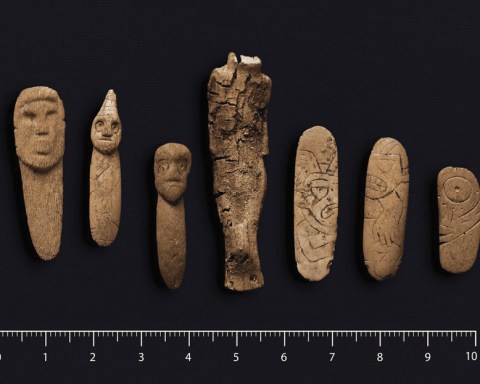
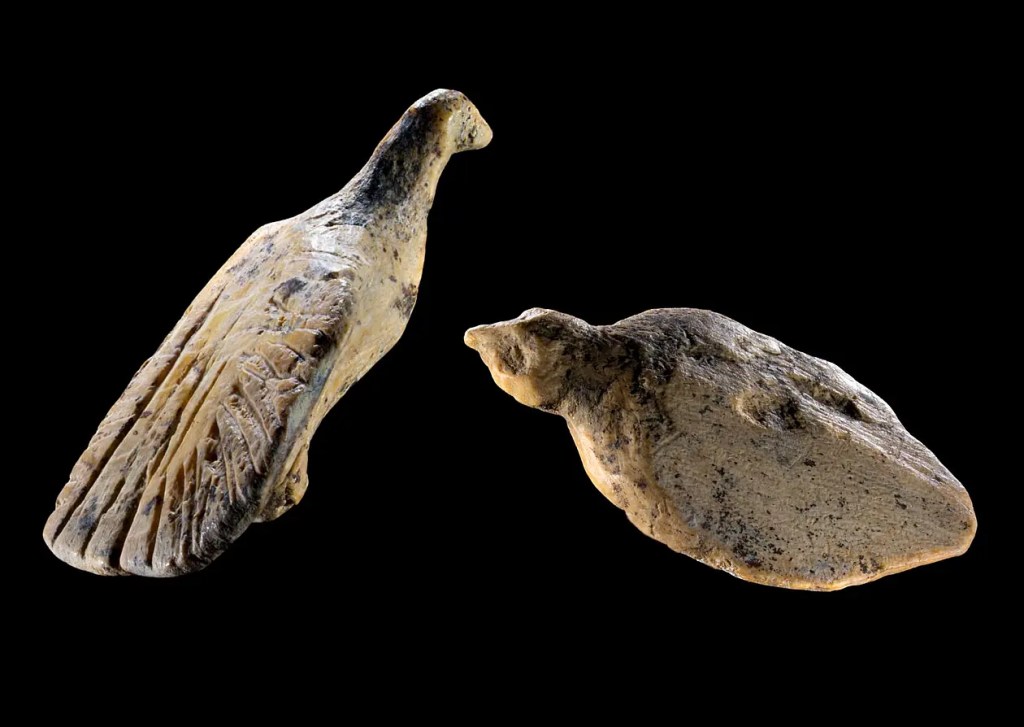
The cave, which is part of the UNESCO World Heritage Site ‘Caves and Ice Age Art in the Swabian Jura’, has produced an array of Upper Palaeolithic art and artefacts, including the famous Venus of Hohle Fels. The latest find comes from the lower layers associated with the Aurignacian culture, dating to 40,000 years ago, and comprises two tiny bird figurines carved from ivory. Each measures just 2cm long, 1cm wide, and 0.5cm tall, making them the smallest of all known Ice Age artworks from the World Heritage region.
Despite their tiny size, the figurines are incredibly finely crafted. The first, shown in an outstretched resting position, with its head close to its body and its legs tucked in, might represent a brooding bird. The other has its wings spread widely (although the left wing has broken off) and an elongated neck; interpretations include a bird in flight, landing on water, threatening, or displaying courtship. It has been hypothesised that they may depict ptarmigan (part of the grouse family), whose bones are commonly found in the archaeological record of this area.
It is unknown whether the two figurines were made by the same person or by different generations, as they were found around 1.5m apart. However, their discovery demonstrates the skill of ancient carvers. It also raises questions about the significance of birds for these cultures, and, in particular, why they are so prevalent at Hohle Fels: these two join another example discovered in the cave around 25 years ago, while no other images of birds have been found at other Ice Age art sites in the region.
The figurines have been declared Hohle Fels’ ‘Find of the Year’ and will be on display in the Blaubeuren Museum of Prehistory and Ice Age Art (URMU) until April 2027.
Text: Amy Brunskill / Image: © R Ehmann, University of Tübingen