Subscribe now for full access and no adverts
The Augustan era presents a period of prosperity that had rarely if ever been previously attained in human history. A massive standing army helped to keep the peace within Roman territory, while ambitious building projects flourished. As Rome became more proficient in the manufacture and use of cement, so too larger arches and vaults could be fashioned allowing buildings of a size never before dreamed of. This same material made it possible to build the walls of these structures faster and cheaper than ever. The results could be clad in a range of eye-catching stones, including marble, alabaster, basalt, and porphyry. Even today, we are amazed by the range of amenities and degree of refinement achieved: aqueducts, roads, bridges, venues for shows and games, baths with hot water where you could wash every day for a modest sum, latrines with running water, fountains on every block and drains in houses and streets, and huge paved squares with columns and statues of marble, if not bronze. In the homes of the wealthiest, there were underfloor heating systems, hot water taps, marble decoration, peristyles with columns and statues, tiles on the roofs, and glass or translucent sheets in the windows. It is only by appreciating this environment of luxury and refinement that the value attained by a type of rock known to the Romans as lapis specularis or ‘mirror rock’ can be fully grasped.
Exploring, finding, and measuring
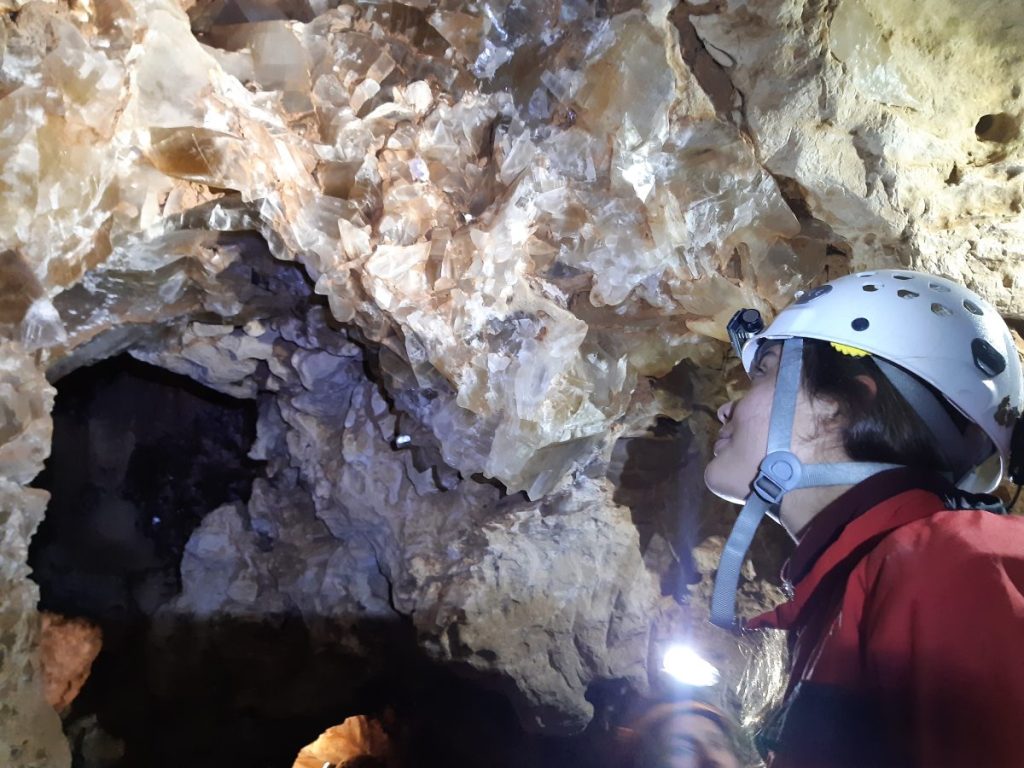
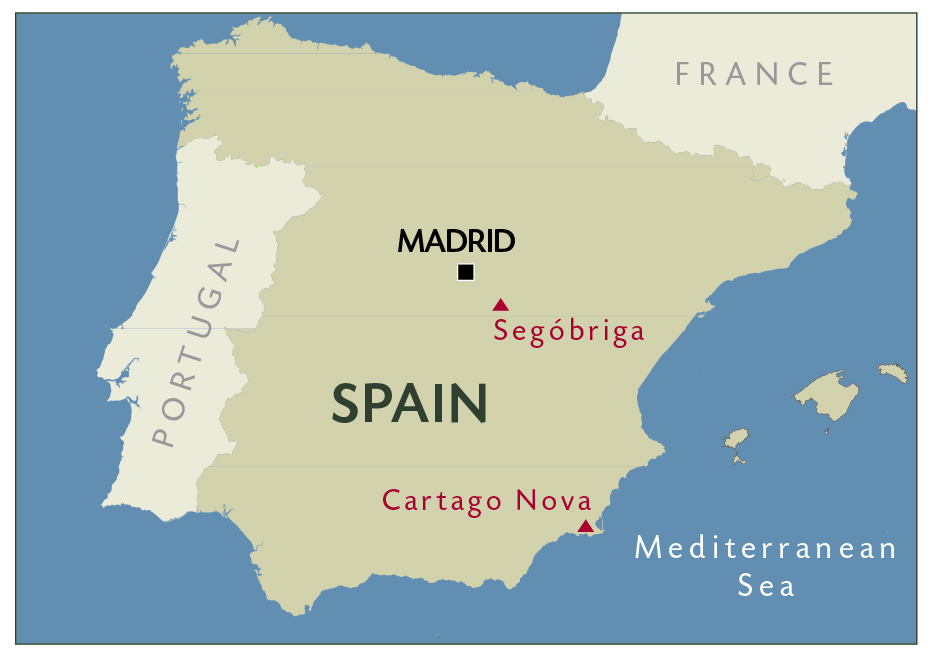
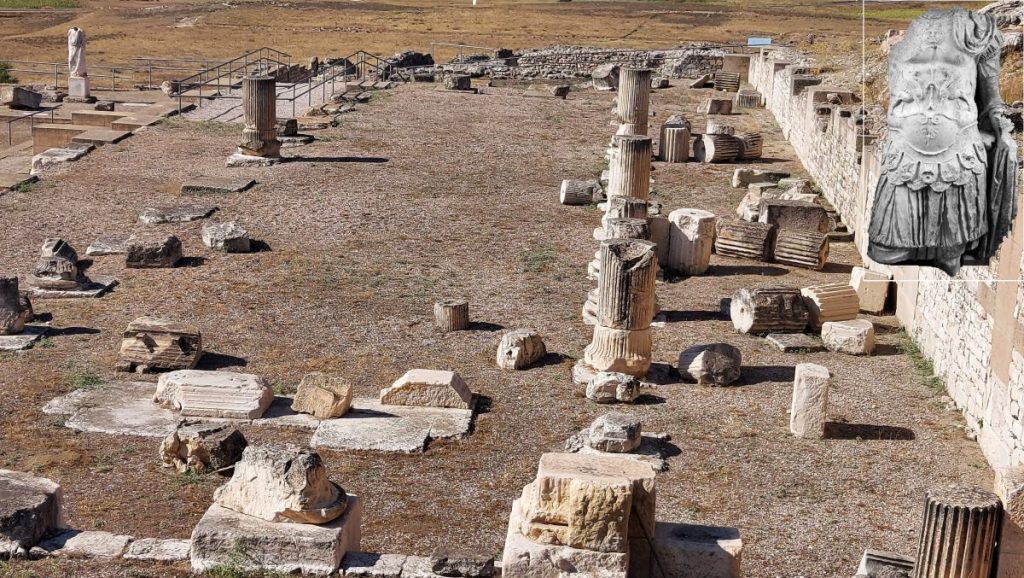
In geological terms, lapis specularis is of evaporitic sedimentary origin and composed of gypsum that, in its pure form, is crystalline and even colourless. The rock has a tendency to split into parallel layers, while its hardness is low, meaning it can be scratched with a fingernail. According to the ancient author Pliny the Elder, the province of Hispania Citerior in Spain was the only source of this specular stone, which was extracted in a district that stretched for roughly a hundred miles around the city of Segóbriga. There, this valuable commodity was extracted from a network of shafts and galleries that descend to a considerable depth underground.
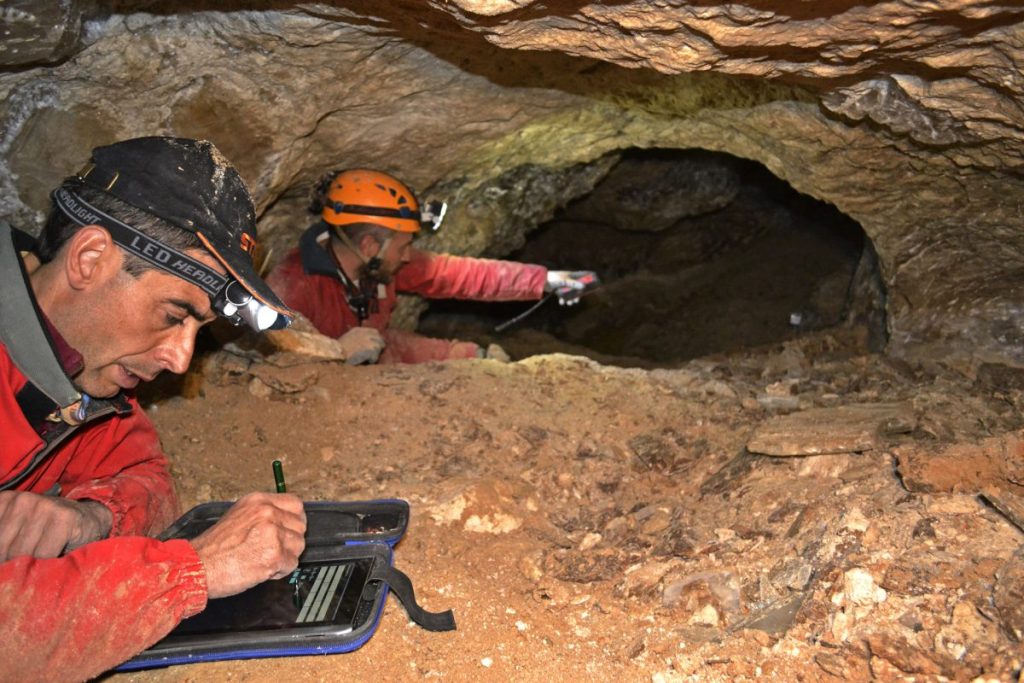
Although the location of this ancient mining district has long been known, no research has previously been conducted on its size and characteristics. As a consequence, the physical remnants of the Roman mining operations remain almost unknown. In order to address this, our aim is to explore the hundreds of galleries attested in the region, record them, and investigate the archaeology of extraction operations, in terms of both artefacts and tool marks. If this sounds like a simple task, nothing could be further from the truth. One complication is that almost all of the galleries are choked with rubble. It has traditionally been assumed that Roman miners routinely filled the workings they had already exhausted with debris from the new ones they were opening, as this involved much less labour than removing all of the material from the mine. As a result, it is often necessary to dig narrow holes through this mass of detritus in order to access new sections.
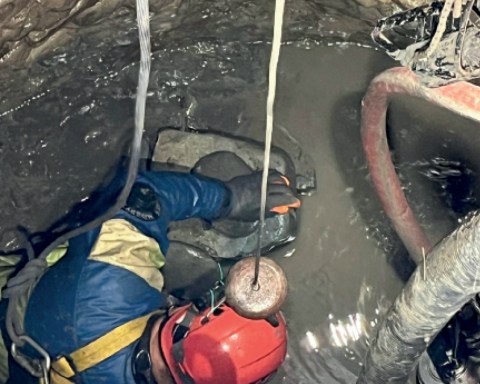
Time has contributed to this concealment, too, as many tunnels and chambers have collapsed over the last 2,000 years. Because the crystal forming lapis specularis occurs in uneven veins between layers of limestone and gypsum, all of the galleries are irregular and they often end abruptly when you least expect it. The deeper they descend, the more humid they are. Because of the damp, the network also includes drainage passages, which usually still carry water: sometimes this is only a few centimetres deep, but in other cases these conduits are completely flooded.
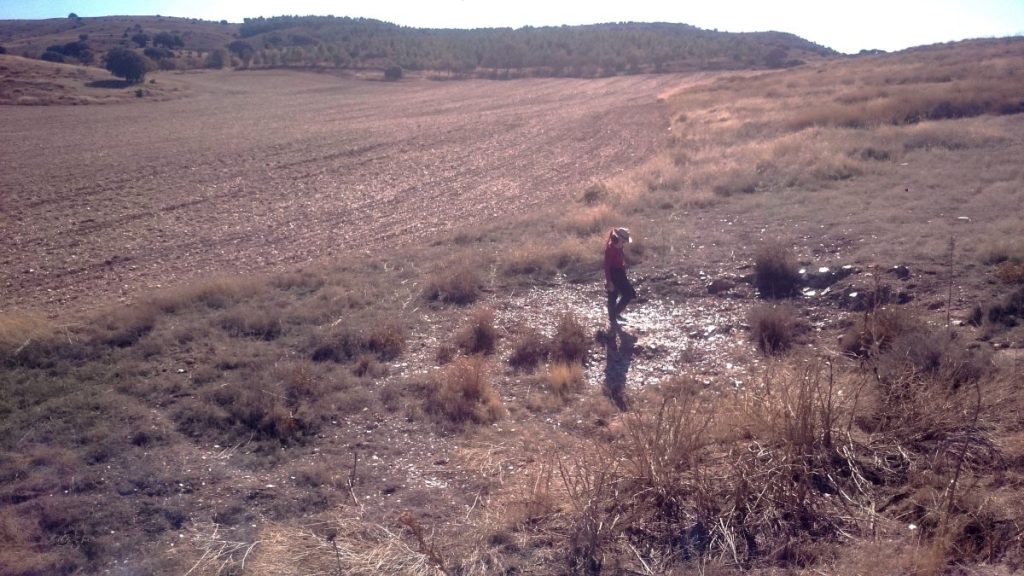
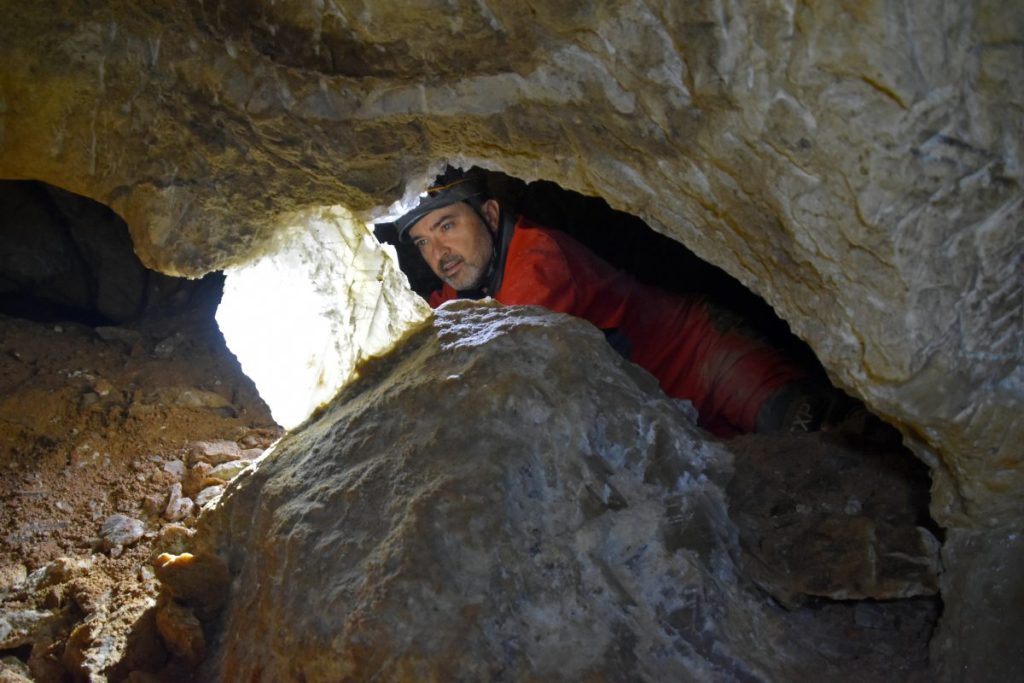
Unsurprisingly, the entrances to the mines are areas that have been heavily affected by the centuries of erosion, agricultural activity, and changes to the wider landscape. Only a tiny percentage of these access points are still open. Sometimes, there is no more than a rabbit hole to signal the presence of a passage leading to our own personal Wonderland. Other shafts survive as narrow fissures from which a steady stream of air bursts forth: the breath of kilometres of galleries at a constant temperature of 15∞C in the extreme climate of the Castilian moorland.
When it comes to undertaking subterranean survey work, our project involves archaeologists working alongside members of the Cuenca Ara Club of Speleology. The following section was penned by these experienced cavers to provide a sense of the impression that the ancient workings had on them.
Inside the mines
‘The exploration, prospecting, and surveying work is extremely difficult, comparable to speleological work in large natural caves. The extensive silting up of the Roman gallery network is compounded by the collapse of vaults and the debris cones from the centuries-old surface shafts already located, some over 25m deep and completely filled. At lower levels, water further complicates progress, with flooded galleries. The level of personal risk assumed is high, and there are truly dangerous places. Artificial caves generally have a higher level of danger than natural caves, but a mine this old, close to the surface, and hewn from soft rock presents a cocktail of risks that must be carefully considered.’

‘When you enter the network of galleries for the first time, the feeling is breathtaking, intoxicating. After oceans of time, once again a human footfall cries out within formerly sealed spaces. The labyrinth unfolds before speleologists and archaeologists: communication channels, drainage conduits, mining galleries, ventilation, and extraction shafts. Hundreds of branches on at least three levels create a sense of utter chaos.’
‘The reward is there, and it becomes apparent with every metre you crawl or wade through waist-deep ice: fairytale crystal formations, chambers like crystal palaces that Scheherazade herself could never have described; deep drainage channels, astonishing in their technical perfection, remain active some 20 centuries later. But all this pales in comparison when, after leagues of underground travel, the apparent chaos gives way to pattern and order, revealing an exploitation system as intricate as it is ruthless, executed with astonishing resources and engineering expertise.’
Underground archaeology
We archaeologists quickly learned from the cavers. Following them clumsily through this subterranean maze, we let them help us through the difficult sections, while concentrating so as not to lose our composure in the constricted passages, learning to use our elbows and the tips of our toes, and always smiling with satisfaction when we came back up to the surface, sometimes after eight hours of work in the darkness.
To access the lapis specularis veins, the Romans dug shafts measuring about 2m by 2m in plan and roughly 6m to 8m deep. At one of the corners of these pits, they would carve small holes to support their feet, allowing the miners to climb down with the aid of a rope. At the other end of the process, the extracted gypsum plates could be raised to the surface with the help of a winch. Galleries were dug opening off from the base of the pit, creating an intricate labyrinth, twisting this way and that in pursuit of the lapis specularis veins. New pits within the galleries allowed access to a second and sometimes even a third level of workings. Finally, at a depth of more than 20m, the drains can be accessed. These slender tunnels have a height of up to 6m and generally still hold water, although of varying depths. The drains channel their contents towards the Cig¸ela river valley, where for centuries the resulting water dribbling from its slopes has been mistaken for the product of natural springs. Unlike the mining galleries, these drainage passages were not deliberately filled with rubble, allowing us the opportunity to see them in their original form.

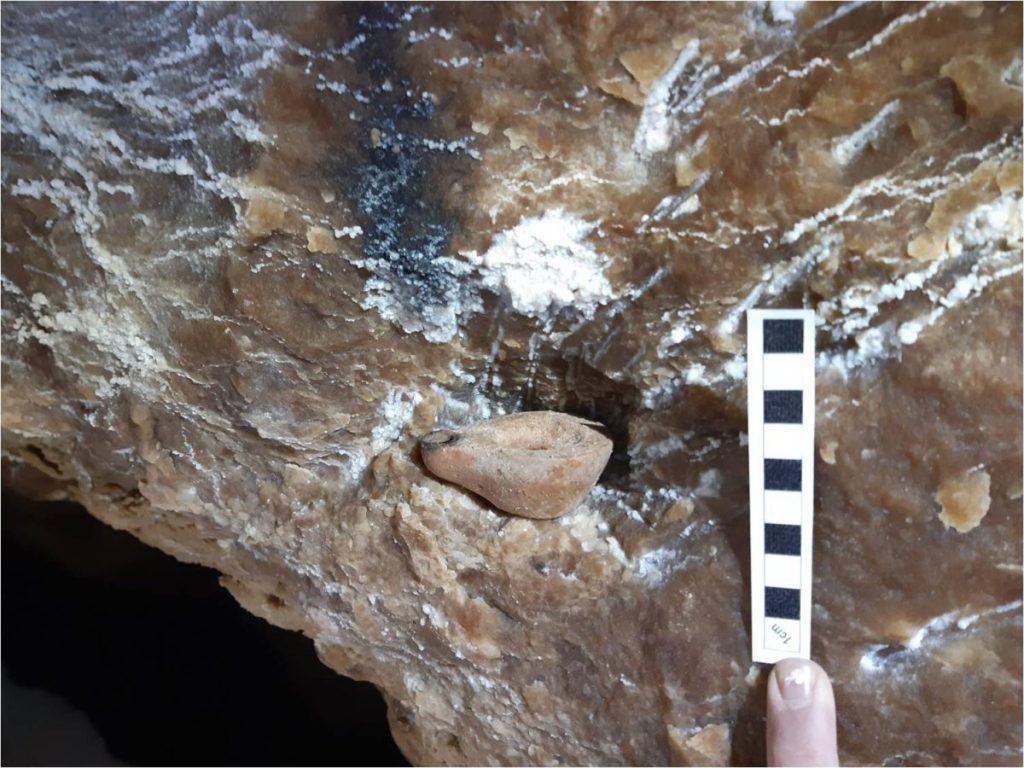
To illuminate this dark universe in the Roman period, thousands of small cavities were carved into the walls of the galleries, creating ledges for oil lamps. Numerous fragments of these have been found, all from lamps that were small in size and made without handles. Millions of them must have been manufactured. Many bear a ‘T’ on their base, presumably the mark of a potter who has yet to be identified. In most of these cavities, the smoke stains made by the lamps remain visible.

The veins of lapis specularis, which were highly variable in both size and distribution, were located using a sophisticated system of parallel galleries and small lateral prospecting tunnels, which often exploited weak points such as joints in the gypsum, demonstrating a profound geological understanding of these deposits. A system of shafts at regular intervals served simultaneously as access, ventilation, and extraction points. If prospecting uncovered new deposits, additional shafts were dug, demonstrating that vertical extraction was always favoured over horizontal transport of lapis specularis through the galleries.
A highly specialised work system allowed skilled miners to cut the delicate slabs with special tools, while other groups were responsible for reporting newly discovered deposits of lapis specularis, removing waste rock, and ensuring that water was channelled into the narrow drainage conduits that another army of workers carved into the rock. As the veins descended, shafts and drains were deepened again and again, reaching a maximum depth of 28.7m. All told, the complex of galleries currently being studied covers an area of approximately 200ha. To date, 20km of galleries have been surveyed.
The artefacts found inside the galleries are not numerous, but they are significant. As well as the lamps, there are fragments of abandoned pottery and tiles, while portions of what appear to be ancient tools are occasionally encountered as well. Because of the humidity, though, iron objects tend to be in very poor condition, making it impossible to identify most of them. The assemblage of pottery fragments discovered so far offers more clarity, and indicates that mining was probably already under way during the reigns of Tiberius and Caligula, before going on to continue through the Flavian period. This chronology is based on fragments of amphora rims, as well as South Gaulish terra sigillata. A small painted ceramic bowl of a type that displays both indigenous traditions and Roman production methods was also documented, with its thick sides and simple banded motif indicating manufacture in the early 1st century AD. The remainder of the vessels that have been found so far can be classed as kitchenwares, tablewares, or storage vessels, but can only be dated to a very broad timescale.

It has been possible to verify, too, that the backfilling of many pits and galleries was intentional. These worked-out cavities were used as handy dumps for waste created while processing the lapis specularis, with huge quantities of broken fragments present, many of which show cut marks. Other contents belong to the detritus of everyday life, including charcoal, animal bones, and portions of roof tile. Human remains were also found in one of the shafts, in the form of a jawbone and two ribs, which belonged to a male aged around 30-35 years old.
Human remains were found in one shaft – the jawbone and two ribs of a male aged 30-35 years old.
From veins to windows
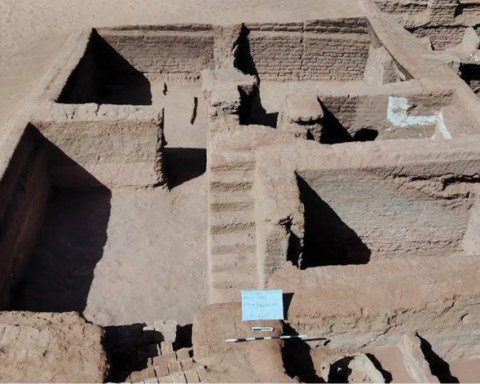
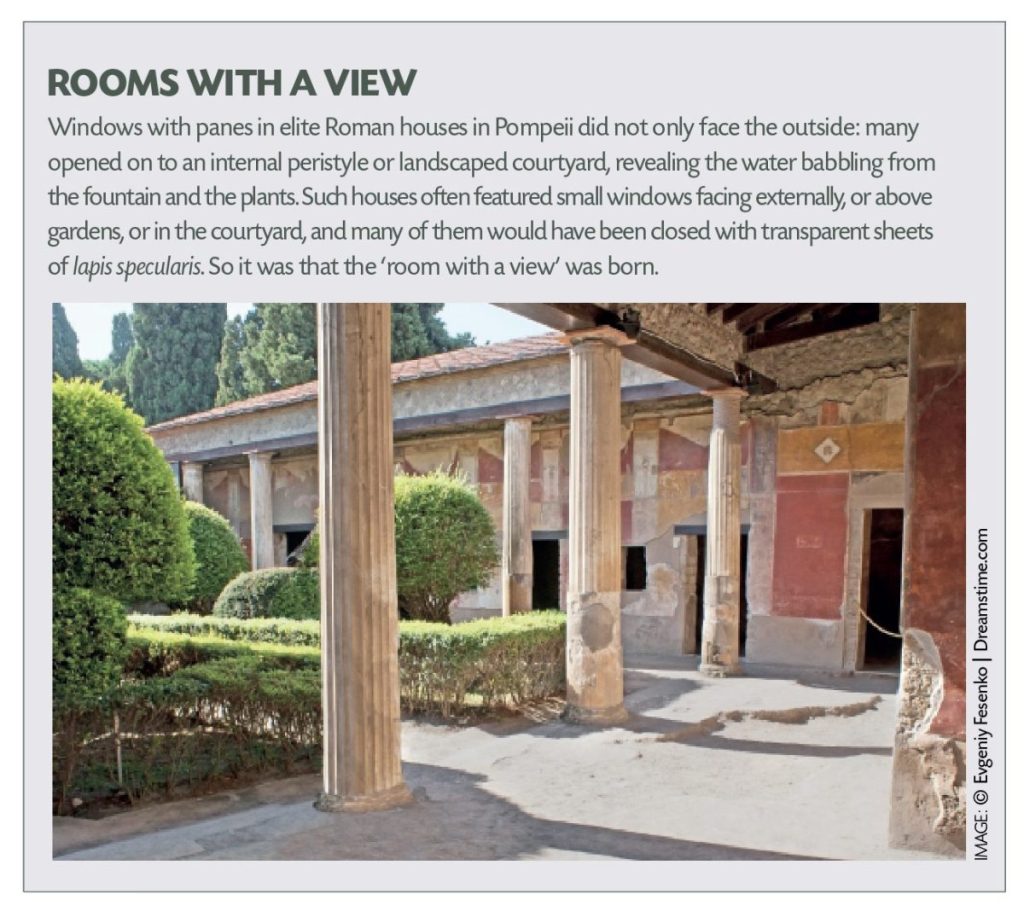
After the specular gypsum was selected and extracted, the blocks were then sawn into sizes that mules or donkeys could carry, if the galleries had an opening at ground level, or which could be hoisted up the shafts with the help of a winch. Associated settlements were built, too, and it was here that the blocks were separated into sizes suitable for use as windows. Gypsum is a soft material, easy to saw and cut into sheets that follow the natural veins within it. These slabs had to be properly packaged so that they would not break while being transported by cart to Cartago Nova (more than 300km from Segóbriga). From there, the district capital, they continued their journey by boat to the Roman port of Ostia. In Ostia, the cargo would be divided into consignments bound for different destinations. Some would have been conveyed to the huge imperial bath complexes in Rome, where Caligula decreed that only lapis specularis should be used. The mansions of the elite in the city surely also made use of this desirable commodity – lapis specularis windows have certainly been found at high-status residences in Pompeii.
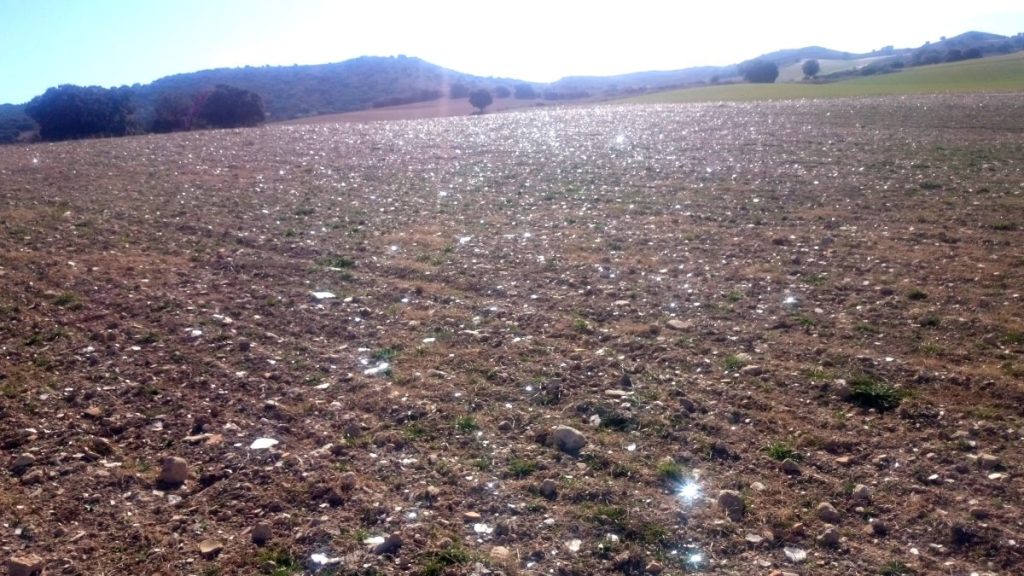
Pliny the Elder tells us that lapis specularis was not just used in windows. Instead, it could fulfil a range of exotic functions. A nobleman could surprise his guests with transparent beehives that allowed them to see the bees toiling within, while the emperor Tiberius grew melons and cucumbers in greenhouses on the island of Capri. Lapis specularis sheets were used in lanterns, which have once again been found in houses in Pompeii. Pliny comments that in the Circus Maximus in Rome, pieces of the rock were mixed with the sand between races, so that the track would sparkle in the sun.
In the Circus Maximus, lapis specularis was mixed with the sand, so that the track sparkled in the sun.
Digging deep
Now that our project is getting under way, we are beginning to grasp the true magnitude of the specular stone industry and the tremendous changes it brought about for the indigenous people living in the SegÛbriga region. We are also in a position to design a research strategy to measure and understand these changes through intensive surveys, involving teams specialising in Roman material culture. This will cover all known mining complexes and be capable of discovering new ones, while establishing more precisely the size of each complex and determining the period in which they were active. In this way, we will be able to obtain a comprehensive view of how this industry operated, based on the surviving evidence.
On the strength of what is known so far, it seems clear that the mines were exploited intensively during the 1st and 2nd centuries. The settlement at Segóbriga was established specifically so that its inhabitants could work in the mines. The extracted material was exported from Cartago Nova throughout the Roman Empire, as the use of lapis specularis was widespread within it, but mainly among the wealthier classes.

All images: courtesy of Dionisio Urbína and Catalina Urquijo, unless otherwise stated