
Current World Archaeology 138
• Terror or tolerance: taking a new look at the Mongol Empire
• Prehistoric violence: the killing of a Mesolithic man
• Transparent desires: delving into lapis specularis mines in Spain
• Exploring an early monastic site on Ireland’s Dingle peninsula
• The plaster casts of Pompeii on permanent display


Subscribe for Full Access →
Current World Archaeology 138
Highlights:
- Terror or tolerance? Taking a new look at the Mongol Empire
- Transparent desires: Delving into the Roman lapis specularis mines
- In a matter of minutes, his life was over: The violent death of a Mesolithic man
From the Editor:
In the 13th century, the Mongols carved out the largest contiguous land empire that the world has ever seen. At its height, under a million of these steppe nomads successfully controlled hundreds of millions of subjects. How did they do it? One answer lies in the Mongols’ status as fearsome warriors with a reputation for brutality. Focusing in on the violence visited on enemies, though, obscures another side to their empire. Western travellers report being stunned by the religious tolerance on display, while support for arts and crafts promoted the emergence of beautiful new styles. As an exhibition dedicated to the Mongols arrives at the Royal Armouries, we take a fresh look at their empire.
The Mesolithic period is often seen as a time of peace rather than human conflict. A discovery in Sweden, though, illustrates how the hunter-gather bands who roamed this region in search of natural resources could also deal in violence. Examining the circumstances that led to the killing of a 25- to 35 year-old male has prompted a search for other possible victims.
One of the natural resources that the Romans prized in Spain was a form of translucent rock that found favour among the elite as window panes. Extracting this valuable commodity brought wealth to the region, and left an extraordinary archaeological legacy. Investigating the labyrinth of Roman mines concealed beneath the surface is shedding light on the achievements of ancient workers toiling deep underground.
In our travel section, Richard Hodges has also been experiencing a marvel in stone: Gallarus Oratory. This magnificent corbelled church in Ireland is generally believed to date to the 8th century, but the building technique it perfected has a pedigree that stretches back far earlier into the prehistoric period.
Finally, Rubina Raja leads us from Dura Europos and Palmyra in Syria to Hadrian’s Wall, as she explores the fringes of the Roman Empire, and examines what makes these regions special.
MATT SYMONDS
Cover Story
 Terror or tolerance? Taking a new look at the Mongol EmpireThe conquests of Genghis Khan are traditionally associated with horrifying brutality, but this reputation has overshadowed another side to the empire that he forged. Matthew…
Features
 Transparent desires: Delving into the Roman lapis specularis minesA new project is examining the traces of Roman mining associated with extracting a particularly prized stone. Guillermo León, Catalina Urquijo, Dionisio Urbína, José Luis…
 In a matter of minutes, his life was over: The violent death of a Mesolithic manA recent discovery in Sweden has revealed details about the final moments of a Mesolithic man. Caroline Arcini, Ann Westmark, Gracijela Bozovic, and Marie-Louise Aurumskjöld…
Comment
 Technological evolutionA study of human remains from two cemeteries in Bulgaria, all buried with distinctively ‘Gothic’ jewellery, brooches, and belt buckles, suggests that the ancient Goths…
 Living among ruinsMost CWA readers will have visited some ruined cities for one reason or another; the majority of us will have let ourselves be fascinated by…
News


Views
 Homage to Gallarus OratoryFifty years ago, one of the most daring expeditions in modern times left Ireland’s Dingle Peninsula. Tim Severin set out with a crew of three…
 From the fringes of the Roman Empire: Locally crafted empiresIn our high-speed modern world, it can be easy to forget that the ancient world was experienced at a slower speed. Rubina Raja shares the…
 The plaster casts of PompeiiThe first permanent exhibition of the plaster casts of Pompeii has opened at the Archaeological Park.
Reviews
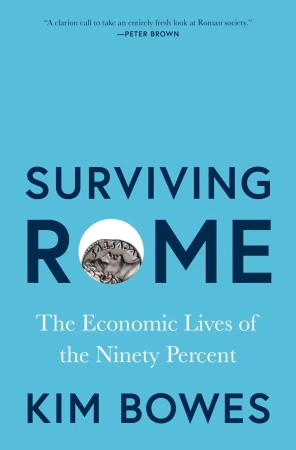 Surviving Rome: the economic lives of the ninety percentSometime in the 1st century AD, a crass graffiti artist carved a 2m-long graffito into the wall of a stairwell within the House of Julia…
 Alexander: god, king, manEvery new book about Alexander the Great needs to have its own unique selling point if it is to fight its way successfully into public…
 Travels through Prehistoric Spain: a guide In Travels through Prehistoric Spain, Jude Brown and Gary Lock provide a richly rewarding and deeply engaging exploration of Spain’s prehistoric heritage. Written with enthusiasm, knowledge,…