Subscribe now for full access and no adverts
The eruption of Mount Vesuvius in AD 79 lasted for around 32 terrifying hours. After an initial phase that buried Pompeii under a rain of ash and pumice, the city – and everyone who remained in it – was engulfed by a series of pyroclastic flows, fast-moving avalanches of superheated gas and volcanic material. When the eruption finally ended, the silent city was covered with a thick deposit of ash and lapilli, 5-6m high on average. As the ash cooled, it hardened around buildings, furnishings, decorations, and objects, as well as the people who had lost their lives to the volcano. As the organic material decomposed over time, it left cavities behind, creating a unique set of conditions that, several millennia later, would allow for the creation of plaster casts.
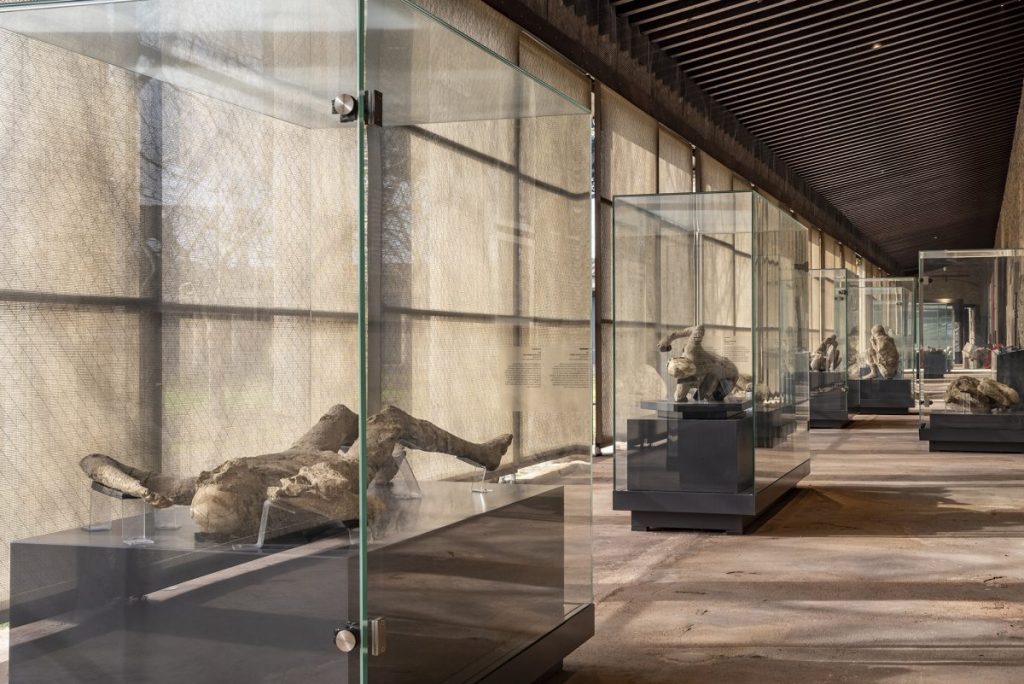
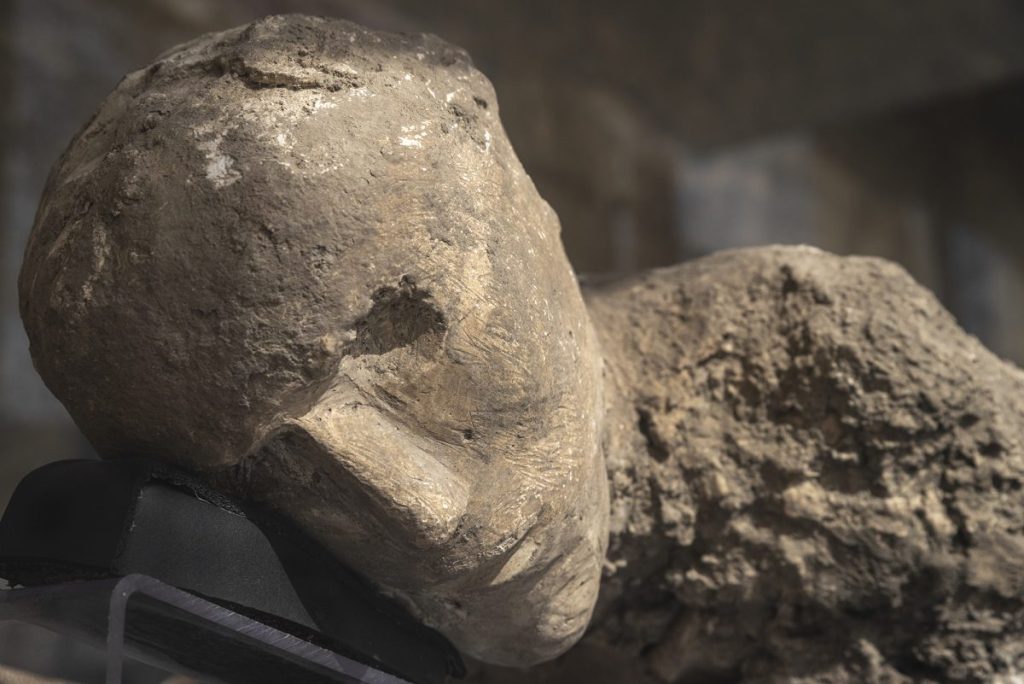
Archaeologist Giuseppe Fiorelli was the first to successfully pour liquid into the voids to make casts of people in 1863. Once set, the solid plaster would preserve the individual’s original appearance in remarkable detail, often with the deceased’s bones still present inside the plaster. Since then, around 100 casts have been created of the victims of Vesuvius. Previously, these were largely presented around the city. Now 22 of the best-preserved have been placed on display in a new permanent exhibit in the Palestra Grande.
Still life
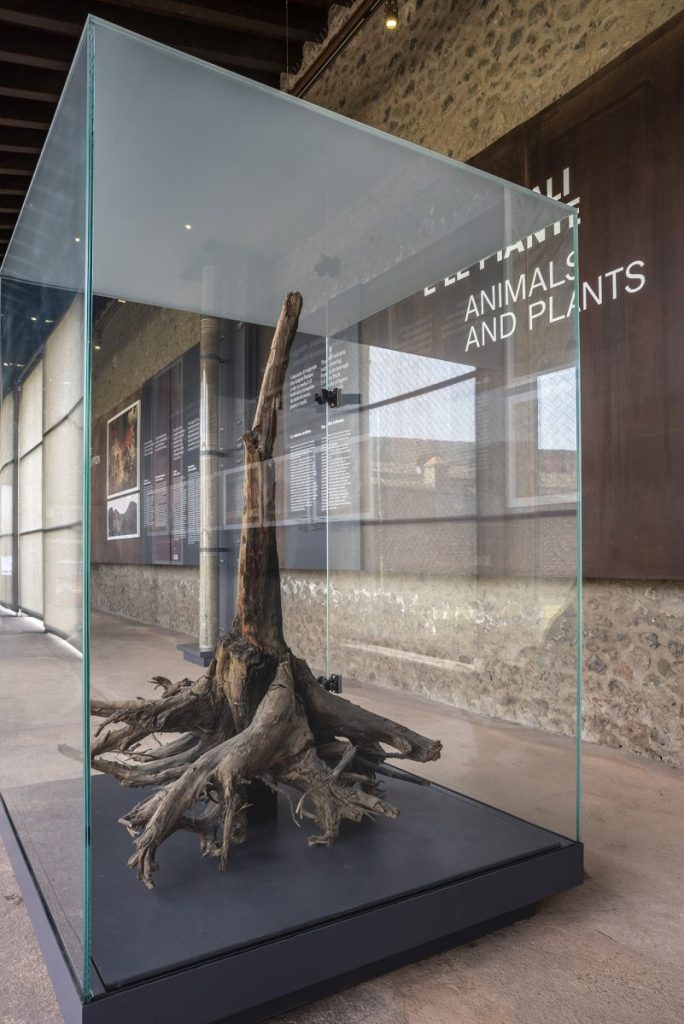
The exhibition begins in the Palestra’s southern portico with a section exploring the eruption itself and the plant and animal remains preserved, which paint a picture of life in Pompeii before its destruction.
Plant and animal resources had many functions for Pompeii’s inhabitants, most obviously as a source of food. The proportions, types, and quality of products consumed varied by social class, but a range of plant products were essential – in particular, vegetables, legumes, and cereals. Breads of many kinds played a fundamental role for everyone. We also know that fruit was being dried to preserve it for year-round consumption. Animal products made up a smaller proportion of most diets, but pork, beef, mutton, and chicken were all found on the plates of Pompeiians, as were fish and molluscs.
Both plants and animals had a wide variety of other purposes, as well. Wood was used in carpentry and the construction of furniture and other objects; the leaves and stems of many plants were woven into baskets, ropes, and mats; other species had medicinal properties; and textiles found in Pompeii were made of animal, vegetable, and mineral yarns. Horses and donkeys were essential to various activities and industries, while smaller animals like dogs, tortoises, and birds were kept as pets. During the eruption, working animals and beloved companions alike perished alongside people.
Final moments
In the northern portico, the second part of the exhibition features the plaster casts of people and objects frozen in time during those fateful days in AD 79.
In recent years, the technique has been applied in whole rooms in the House of the Lararium and the servants’ quarters of the Villa Imperiali in Civita Giuliana, preserving everything from doors and windows to beds, wardrobes, stools, and tables – even details like baskets and ropes – in startling detail. These casts reveal information about craftsmanship in ancient Pompeii, as well as occasionally offering insights into events during the eruption, such as the barring of a door as a last-ditch effort at survival.
The human casts, of course, offer even more poignant glimpses of the final moments of some of the city’s inhabitants. Among those on display are the casts of four people who died in the House of the Cryptoporticus, a large home on the Via dell’Abbondanza. They were part of a group of ten individuals who had climbed out of the windows of the cryptoporticus after the exit was blocked by falling rocks and lapilli, and were making their way across the garden in an attempt to reach the street when they were killed by the pyroclastic flow. All ten were found with a tile near their head, probably intended to protect them from the falling pumice.

In the House of the Golden Bracelet, a luxurious residential complex in Pompeii’s Insula Occidentalis (Western Block), casts were created of two adults and two children. These individuals are also believed to have been trying to escape through the garden, towards the sea, but were swept away by the pyroclastic flow, ending up in a service corridor. DNA analysis reveals that this was not a family group; we can only guess what brought them together in their final hours.
Other individuals made it further on their escape but were still ultimately unsuccessful. A number of people were discovered around the Porta Nola, a gate on the north-eastern side of Pompeii, while others were found along the Via Stabiana, heading towards the Porta Stabia, which would have taken them out of town and towards the port.
The remains of more than 70 people have been unearthed in the Palestra Grande itself. The display features a cast made in 1951 of a person thought to have been found in the central area of the Palestra, as well as another of an individual found not far from the exhibition space, in the latrine in the southern portico, near the eastern entrance of the building, where a group of 18 people had gathered. These discoveries are a vivid reminder of the human suffering spread across the whole of Pompeii; in total, more than a thousand victims of the eruption have been discovered to date.
The new exhibit is sensitive to the scale of this tragedy. Its structure ensures that the section featuring the human casts is protected from immediate view by dividers and warnings to visitors about what lies within, while its design intentionally eschews excessive colour and decorative elements in favour of texts and archival photos. As visitors walk among the casts of the people of Pompeii, preserved in the moment of their demise, it is impossible to forget that these are, in the words of the 19th-century writer Luigi Settembrini, ‘not art, not imitation; these are their bones, the remains of their flesh and their clothes mixed with plaster: it is the pain of death that takes on body and form.’
DETAILS
The Plaster Casts of Pompeii
Address: Palestra Grande, Pompeii
Open: permanent
Website: https://pompeiisites.org/en/comunicati/the-plaster-casts-of-pompeii-an-itinerary-through-the-eruption-of-ad-79/
All images: courtesy of the Archaeological Park of Pompeii