Subscribe now for full access and no adverts
Having recently embarked on a new research endeavour focusing on the border areas of the Roman Empire, I set out to revisit places I had been before, as well as to experience other fringe regions of the Empire for the first time. I aimed to take in the landscape, sensory impressions, and environment in different ways to those most common in our fast-paced world. In particular, I wanted to be reminded of how time might have been perceived in an era when the fastest you could dream of travelling was by horseback or sailing boat. After all, the Roman world was one where most people only ever travelled by foot, if they travelled at all, so I decided to experience a selection of sites by walking between them over several days. As well as the slowness, I wanted to gain a sense of how the world would have been perceived when you could not see it laid out from above, with only the natural contours of the landscape or human-built monuments offering vantage points. Many places I visited in the past, including sites in Syria, I can now only experience on paper – through photographs, notes, and publications – some of which were outcomes of the various research visits I have made to those parts of the world. Today, they are ‘off the map’ to most researchers and tourists, since they are located in what are currently conflict-stricken regions.
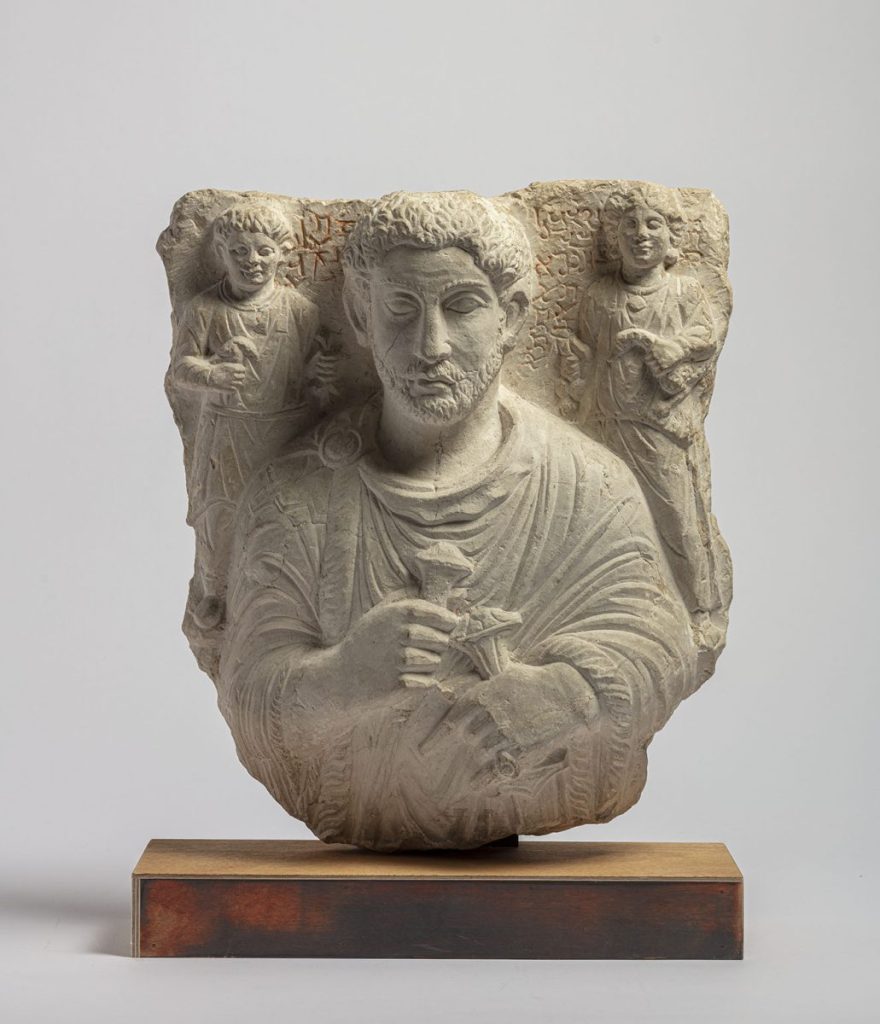
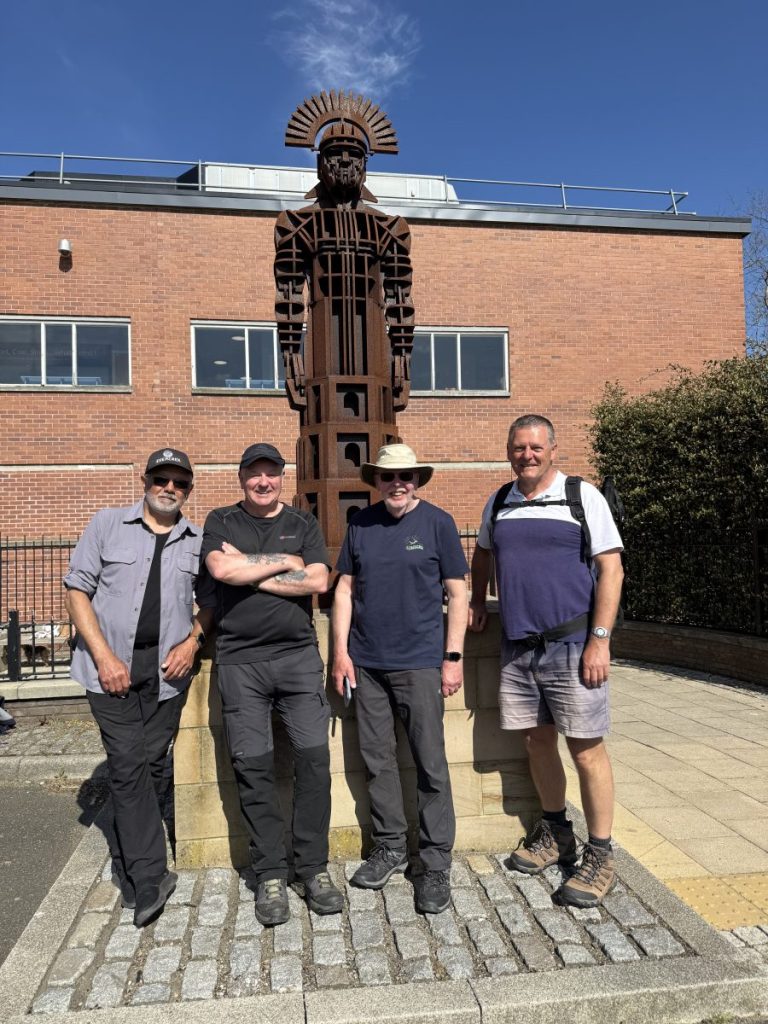
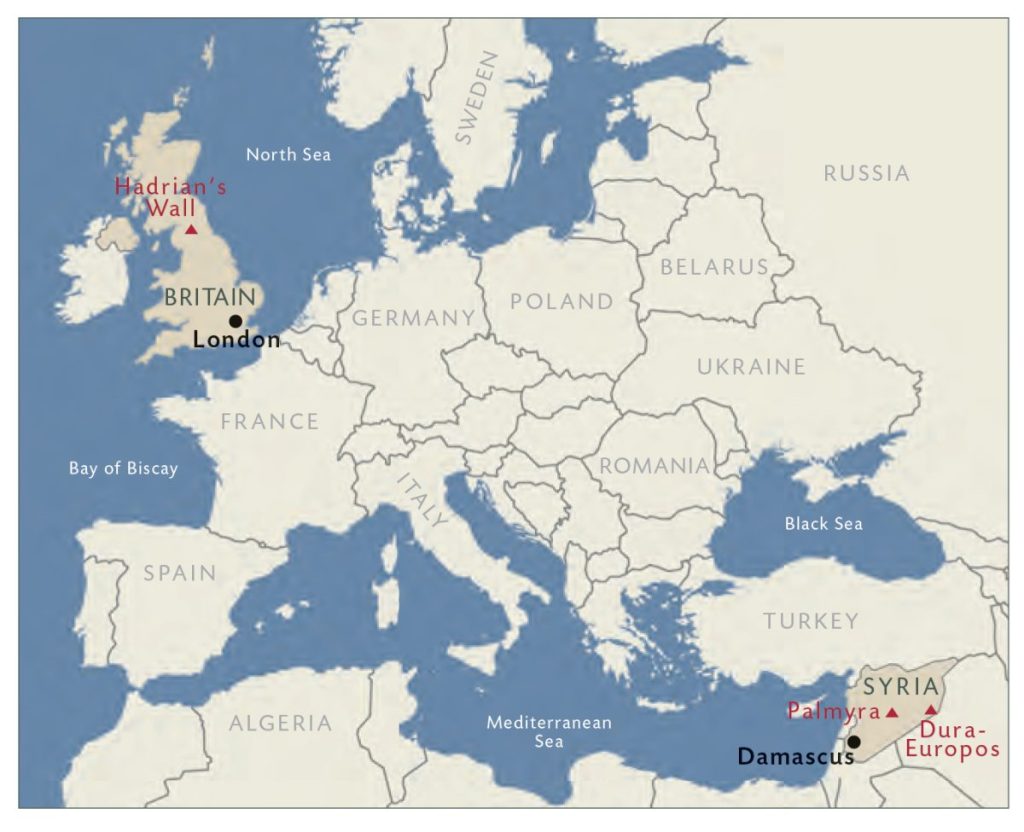
My new research project, entitled ‘Locally Crafted Empires’, embraces a bottom-up perspective by focusing on locally produced portrait sculpture in the East. These representations of inhabitants of the Roman Empire were not produced at its heart and then dispersed. Instead, they were crafted in the places where these imperial subjects were living: in the provinces of the Empire – including its fringes, which were often in close contact with a range of cultures, as well as being regions where borders could easily change as political and military power shifted. To understand such sculptural representations, however, one must also gain an appreciation of the local landscapes, the architecture, the climatic conditions, and the languages spoken in ancient times. In order to immerse myself in a region that was new to me in terms of its landscape, I decided to walk the entirety of the Hadrian’s Wall National Trail, which runs from coast to coast across northern England – beginning in Bowness-on-Solway to the west and ending at Wallsend on the banks of the River Tyne. My intention was to experience a different kind of border region – another fringe of the vast Roman Empire – which in some ways marks a departure, but in other ways is comparable to the region that is the usual focus of my research, namely the Eastern Mediterranean and the Near East, including the region around the oasis city of Palmyra.
Locally Crafted Empires and the portrait habit
In the ‘Locally Crafted Empires’ project, a monumental corpus of portrait sculpture is currently being collected by a team of researchers. An earlier study, the Palmyra Portrait Project (CWA 111 and 118), examined more than 4,000 portraits. These were produced between the 1st century AD and the 3rd century AD, and together represent the largest quantity known from one place in the Roman world. A recently published edited volume, Portraying the Individual, sets out the aims of the new project and also shows how the Palmyra Portrait Project has changed the ways in which we are able to research local identities and means of expression through locally produced portrait sculpture and the urban environments of fringe regions of the Eastern Roman Empire – a region that did not necessarily view itself as particularly ‘niche’, but rather as central to its own world and surroundings. After all, the Palmyrenes dominated large parts of the caravan trade in the first three centuries AD, while their economic power led to an uprising in the late 3rd century AD. This, in turn, precipitated the city’s downfall, when it was invaded by a legion of Roman soldiers during the reign of the emperor Aurelian in 272 and 273. Before this, in the first three centuries AD, Palmyra’s local culture thrived. One of the outlets for this creativity and expression of local identity and place within an imperial world were the thousands of locally produced limestone portraits. The new project expands the regional coverage to the entirety of Western Asia and refines the methodologies of the Palmyra Portrait Project.


From one fringe to another
In the 2nd century, at the same time that Palmyra was thriving as a caravan node under the protection of the powerful Roman Empire, significant effort was being expended on cementing Roman rule in another part of the Empire, namely Britain. It was during the reign of the emperor Hadrian – the most well-travelled of all Roman emperors – that his eponymous Wall was constructed in the north of England, with AD 122 traditionally seen as the year when work commenced. In parts 3m thick and probably standing about 4m high to the putative wall-walk, this monument cut across the country almost from coast to coast. It demonstrated the military and physical power of the Roman rulers, acting as a monument of domination, oppression, and control over people, animals, and landscapes. As such, the Wall ran through the landscape for about 117km, regulating and controlling movement and trade, in an area that seemingly presented some military difficulties. The Wall also created a visual expression of a border, a border that in some other parts of the Empire, including the regions of Palmyra and Dura-Europos (a city on the Euphrates river) in the East, came to be apparent more through the expansive steppe desert and river. Such terrain could, to some extent, serve as a natural border or fringe zone, which was capable of being controlled or tamed, if one had the right knowledge and techniques. In a new book entitled Palmyra, the Roman Empire, and the 3rd Century Crisis, numerous aspects of controlling the border region east of Palmyra are scrutinised by experts on that part of the world, providing insights into how people and terrain were tamed and managed, including through the control of water.


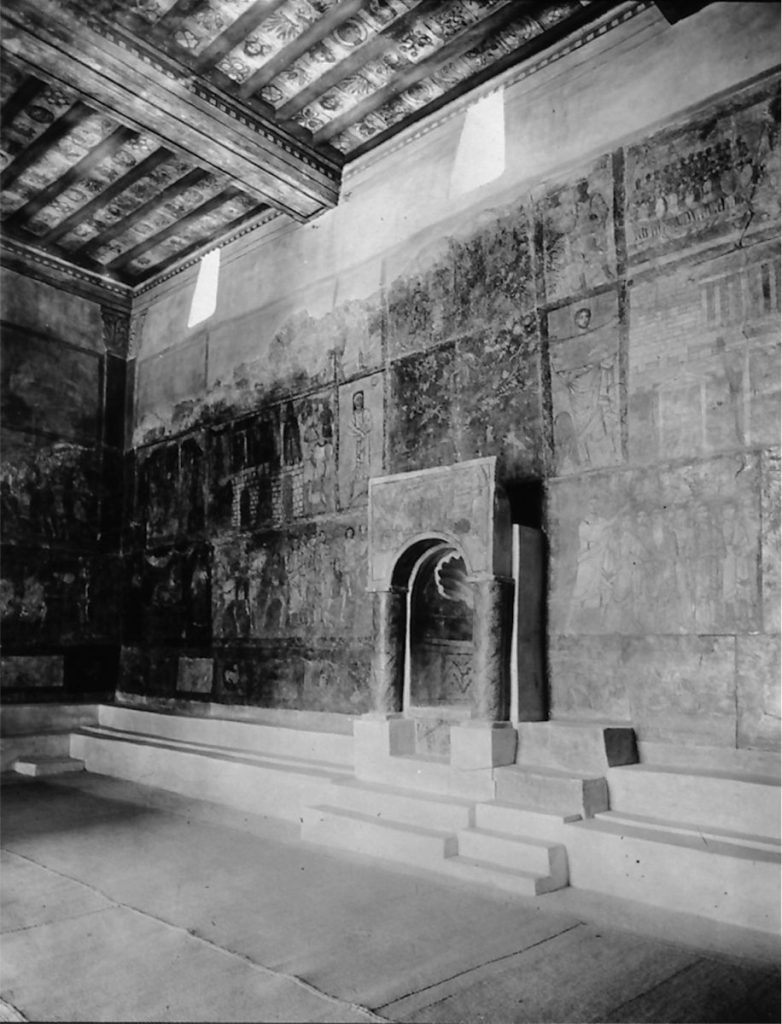
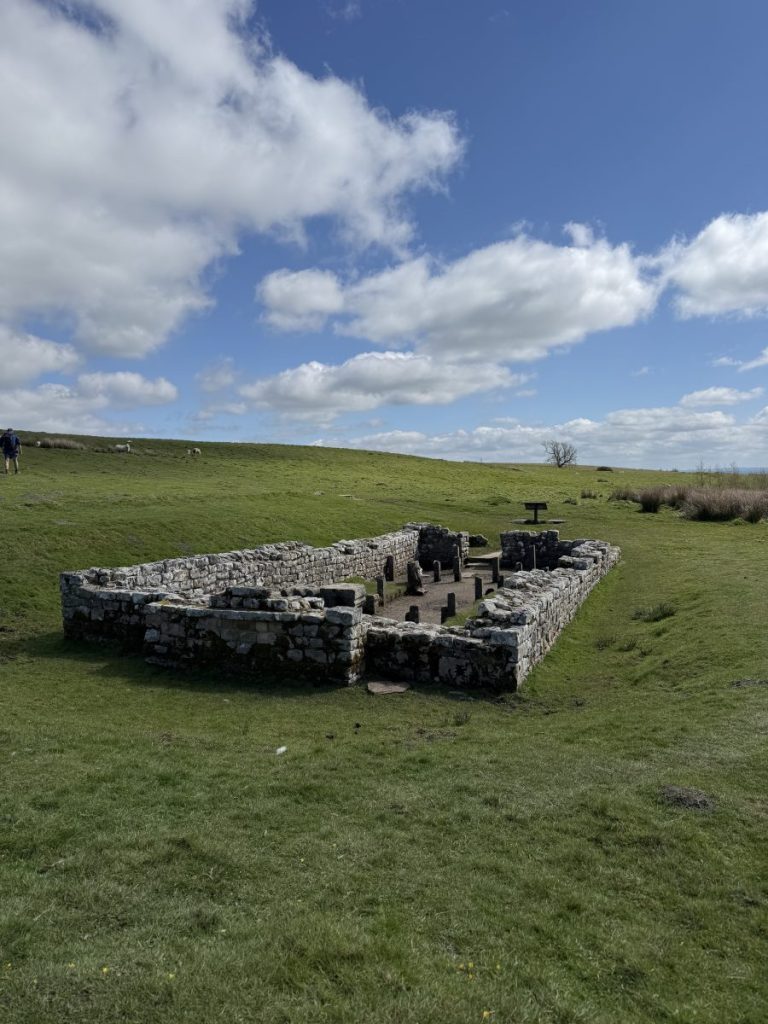
While the climate, landscape, and natural resources of northern England were very different to those in the East – both today and in antiquity – there are still certain aspects that on closer inspection appear comparable. These include the remoteness of parts of northern England and the East, and the multicultural nature of the communities that in some cases were forged in these places, where local populations, soldiers from across the Empire, merchants of many origins, and all the individuals who would have followed or been drawn to such groups (including wives, prostitutes, children, and enslaved people) interacted. We can see some of the consequences clearly in the archaeology of Dura-Europos, which held religious buildings that catered for worship by numerous groups, including early Christians and a Jewish community, alongside a string of temples dedicated to Roman, local, and eastern deities. The city and its archaeology were examined by J A Baird in a book published in 2018, while a more recent volume by the same author turns to the domestic complexes that are otherwise often overlooked. The cult of Mithras was also present in Dura Europos, as it is along Hadrian’s Wall. This eastern god became the focus of a Roman cult and is well-known to have been closely connected with members of the Roman army. At the site of Vindolanda, home to a succession of Roman forts, the archaeological work undertaken in the last few decades has illuminated numerous facets of life in and around the military bases. The findings do not only relate to the soldiers themselves, but shed light, too, on the people connected to them, including both locals and the individuals who travelled alongside the Roman army in various capacities.

Open and closed worlds
The Roman Empire was a world of cities. Although emperors travelled widely to visit the borderlands of their empires, ruling was achieved through an urban mindset, with cities forming both the arena where political power was exercised and centres for taxation, among many other roles. But, for cities to thrive, they required infrastructure to connect them with each other, while people needed to be able to move from place to place, just as information and goods had to be able to travel alongside them. As a result, while cities get a lot of attention in narratives about the Roman Empire, the non-urban material tells another side of the story. Often these alternative perspectives of empire are more readily visible in the archaeology of the fringes and borderlands, precisely because of the distances from or limited development of urban centres at these locations. Remote regions needed different types of monument and other kinds of architectural expression, such as forts, walls, gated communities, and controlled zones in wild landscapes, as was the case with the steppe desert around Palmyra and the region in which Hadrian’s Wall was constructed.

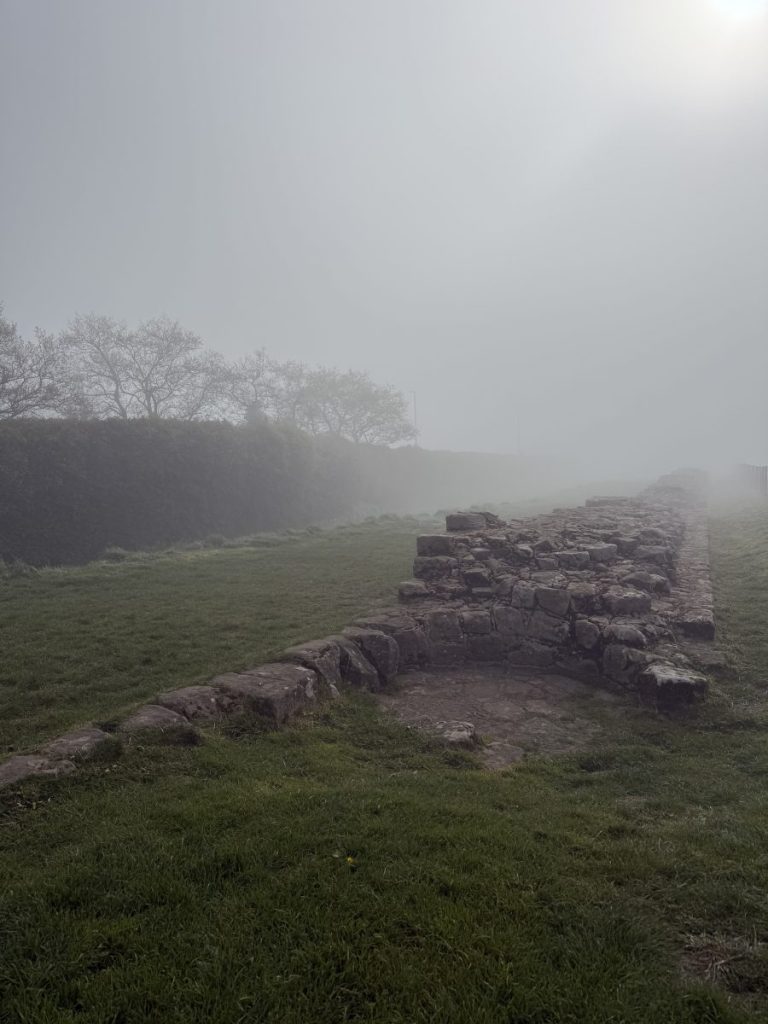
In more recent times, both Hadrian’s Wall as a monument and Palmyra as a site have been attracting curious visitors for at least several centuries. They are also places that have undergone significant change over a longer period, being spoliated, destroyed, and rebuilt in different ways. Such destruction, reuse, and reimagining is a product of both the changing needs of the populations that live in their shadows, and the varying views people have held of the significance of these places and the pasts they are associated with. Hadrian’s Wall gained attention not only because it was an impediment in the landscape, but also because it provided the local communities with readily available stone materials from which to construct religious buildings, castles, and ultimately houses and drystone walls. By the 19th century, it was receiving attention in terms of preservation, too, most famously from John Clayton, a local landowner who bought five Roman forts and many miles of the Wall curtain, often protecting or partially reconstructing the surviving remains. Palmyra, meanwhile, was already receiving attention from Europeans in the 18th century. The rise in European travellers from elite backgrounds, such as James Dawkins and Robert Woods, contributed to establishing the city in the European consciousness and initiating the fashion for collecting antiquities from the region in general and Palmyra in particular. The earliest Palmyrene objects whose modern movements we can trace entered Britain in the 18th century.
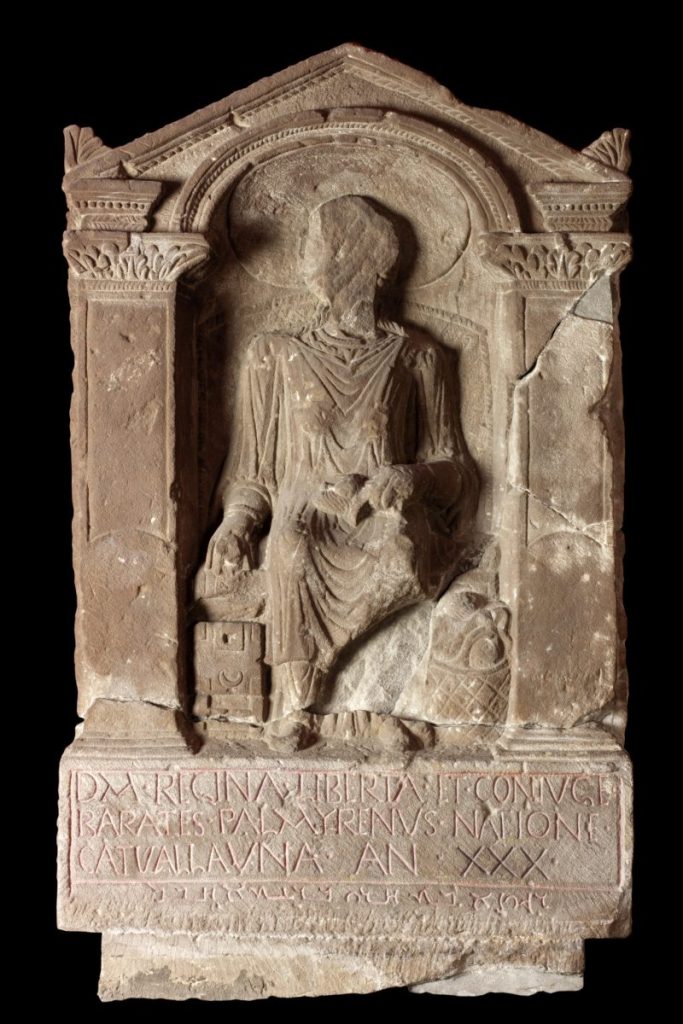
A large oil painting by the artist Gavin Hamilton, now in the National Gallery of Scotland in Edinburgh, depicts Dawkins and Wood as they discovered Palmyra. Today, this image stands as a testament to the affluence it took for Europeans to embark on expeditions to discover places with ancient heritage. In the case of Dawkins and Wood, this wealth came from plantations in the Caribbean where enslaved people worked. The topic of the enslaved is one which is ever present in one’s mind when walking along Hadrian’s Wall. One cannot help thinking about the numbers of people it must have taken to construct the Wall. While surviving inscriptions indicate that much of the quarrying and building work was undertaken by soldiers, we can be confident that many were not part of the endeavour of their own free will. Equally, writing tablets from Vindolanda reveal the important role that enslaved people played in supporting the military presence more generally. Staying with the notion of the enslaved, there is a monument that connects Roman Britain directly with Palmyra: the grave stele of Regina, today in the museum at South Shields fort. This locally produced tombstone depicts Regina, a Briton and wife of Barates, who was a Palmyrene man that lived in Britain. Barates had freed this female slave and taken her as a wife. We know all of this from the grave epitaph, which is chiselled on the monument in both Latin and Palmyrene Aramaic. And so the vast world of the Roman Empire seems, for a moment, to be connected from fringe to fringe via this memorial.
Tying fringes together
The Roman Archaeology Conference and the Theoretical Roman Archaeology Conference was hosted at Aarhus University, Denmark, in May this year, and had the subtitle Beyond the Fringes of the Empire. At the conference, a rich programme of research papers was presented, with the keynote given by Professor Annalisa Marzano from Bologna University. The programme underlined the vitality of the field of Roman archaeology, as well as the archaeology on and beyond the borders of the Roman Empire. In the run-up to the conference, several features in CWA presented archaeological finds in Denmark that underline past connections with the broader Roman world, despite the region lying beyond the fringes of the Empire. It offers a powerful illustration of how connectivity in the era was extensive and enabled by people and their movements.
While I was walking the Wall, thoughts about mobility and community were ever present. They manifested themselves through the people that I met along the way, in turn giving impetus to ponder community-building. People walked together, but sometimes at different paces, content to let one or two in their group take the lead, with the others walking alone at the back; indeed, some people walked the entire way alone, but chatted with others when resting; other people skipped stretches by taking a taxi or kept to the lower roads, where the terrain is gentler. But what most struck me was the sense of a community caring, while also giving individuals the space to be alone. When looking at the way the Wall works today, it is striking that this relic of power, oppression, and empire has in many respects become a monument that binds people together – even if just for a short while. While this might have been different in antiquity, we can be confident there were strong Roman-era communities all along the Wall, in and around the forts, and surely also among the local groups populating the region. It is tempting to believe that, then as now, walking the landscape the Wall runs through helped bring out another side to what has been described as a barrier lancing through the landscape. Here, too, was a collective and community-building experience on one fringe of the long gone Roman Empire.