Subscribe now for full access and no adverts
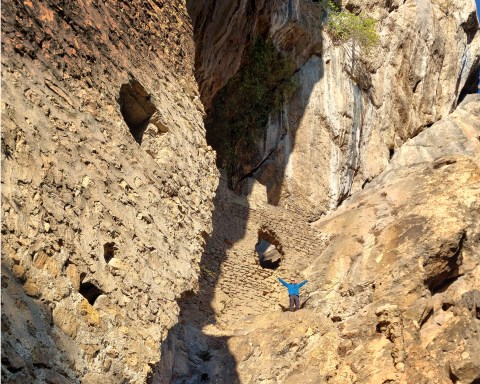
The discovery of a large collection of human remains inside a giant stone jar in a forest in Laos is revealing new information about the mysterious landscape known as the ‘Plain of Jars’.
The UNESCO-listed region on the Xieng Khouang Plateau in northern Laos is dotted with hundreds of ancient stone jars. They have been the subject of scholarly interest for over a century, but the use of these megalithic vessels remains a subject of discussion.
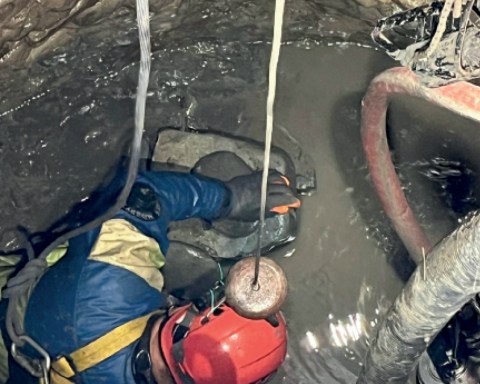
Between 2022 and 2024, excavations were carried out at a location 70km north-east of the town of Phonsavan known as Site 75, which is home to an exceptionally large stone jar, measuring 1.3m high and more than 2m wide. Inside, archaeologists uncovered the disarticulated remains of at least 37 people. Radiocarbon dating indicates that they were deposited in multiple phases, probably over several centuries, between c.AD 890 and 1160. The arrangement of the bones and the absence of various body parts suggests that this is an example of secondary internment, with the human remains having undergone an initial period of decomposition elsewhere before being deposited in the jar. It also seems that some were later removed from this secondary location to a different final resting place. A set of
seven smaller stone jars found c.500m away, which contained no human remains, has been proposed as a potential site for the initial interment of the dead. Although this is only a hypothesis, it could explain why so many vessels at other sites on the Plain of Jars do not contain human remains today, despite signs pointing to a funerary function.


In addition to the human remains, an array of artefacts was found inside the jar, including a number of earthenware sherds, five stone slabs, an iron knife, a small copper-based bell, and 20 glass beads. The objects largely date to the 9th-12th centuries AD, corresponding to the radiocarbon dating of the human remains. They are contemporaneous with burials at another Plain of Jars location, Site 1, where similar material culture was also found (see CWA 102). The 9th-12th centuries was a period when expansive trade routes were spreading across Asia. This interregional exchange is reflected in the glass beads from the jar, which analysis reveals originated as far afield as South India and Mesopotamia, demonstrating that the Lao highlands were part of these far-reaching networks.
Many questions still surround the Plain of Jars, but the findings recently published in Antiquity (https://doi.org/10.15184/aqy.2026.10352) shed important light on the complex and varied burial activities associated with these sites, as well as the cross-cultural connections of the communities behind them.
Text: Amy Brunskill / Images: Dr Nicholas Skopal