Subscribe now for full access and no adverts
It was only during my third trip to Abydos that I became aware there was more for visitors to see than the temples of Sety I and Ramesses II and the Osirion. Like many other tourists, I had been on long day-trips from Luxor and, among other constraints, time is such a major factor in how much you can see when you have just a few hours. I knew that Abydos was one of the oldest cities in Upper Egypt, holding great significance throughout Egyptian history as a place of pilgrimage. I also knew that there were monumental royal graves further out in an embayment of the low Western Desert, but I had always assumed, correctly as it happens, that visits to this area required special permission.
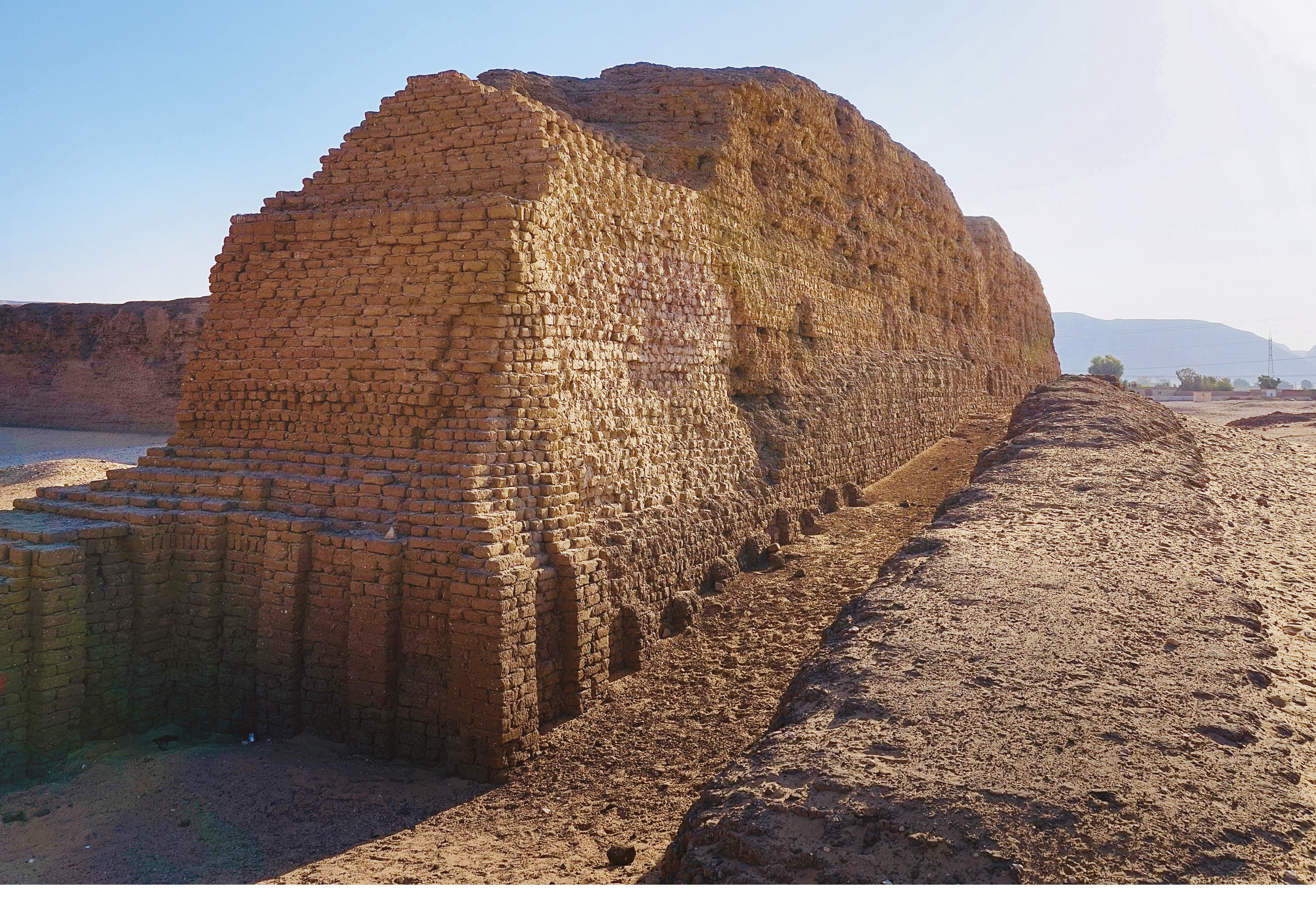
However, there are two ancient sites in north Abydos that you can visit very easily if you stay locally. Kom el-Sultan (Arabic for ‘King’s Hill’) is the location of a mud-brick walled settlement that the ancient Egyptians called Abdju (‘Abydos’ in Greek), and where the Great Temple of Osiris once stood. It is also the location of several small New Kingdom stone monuments, and was considered the starting point of an important, possibly annual, Festival of Osiris. In the same area, Shunet el-Zebib (Arabic for ‘Storehouse of the Raisins’) is an enormous mud-brick structure dating from the time of Khasekhemy c.2686 BC. Its true function is still not fully understood, but it does hold a key place in the evolution of the Egyptian pyramid. It is one of the oldest preserved mud-brick buildings in the world, as well. Neither site has much to observe in the way of fine details – stone blocks and any in situ carvings are few and far between – but the two sites combine to make a fascinating half-day out for anyone with an interest in large-scale construction work and ancient mud-brick.
Getting there
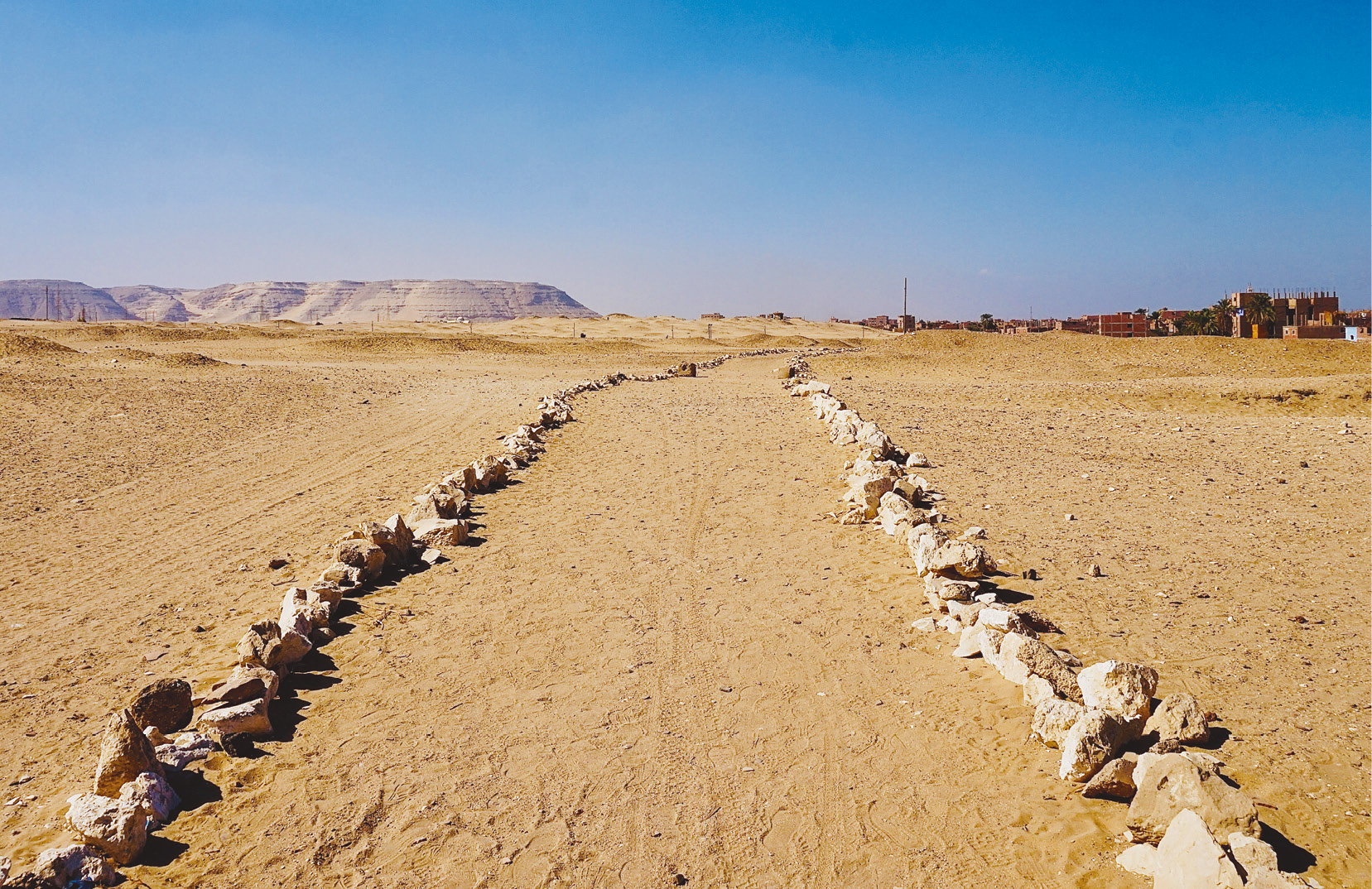
Modern-day Abydos is approximately 500 km south of Cairo and 170 km north of Luxor by road. It is possible to visit from either of those cities, and many tourists make the long day-trip from Luxor with an additional stop-off at Dendera. Much nearer to the town itself is Sohag International Airport, which is 25 km away, and el-Balyana train station, around 10 km away. My friend and I took the three-hour train journey from Luxor, and followed it with a 30-minute cross-country trek in a tuk-tuk. We were lodging for a week at the delightfully comfy Flower of Life Guesthouse in Arabet Abydos. The guesthouse is on the very edge of the village and directly overlooks the temple of Ramesses II, so we were treated to some wonderful semi-aerial views of this temple day and night. In the distance, towards the very edge of the low desert, I could make out the area known as Umm el-Qa‘ab (‘Mother of Pots’) – the approximate location of the mythical land of pqr (Peqer/Poker) – where several large subterranean tombs of the Early Dynastic Period are located. To the ancient Egyptians, this was a vast and sacred land of the dead and, by the Middle Kingdom, it was even considered to be the burial place of Osiris himself. During this time, Abydos grew into a major cult centre of ceremony and ritual, and remained so for many centuries to come.

Shunet El-Zebib
The 5,000-year-old necropolis of Umm el-Qa‘ab lies on a stretch of low desert around 15 km from the Nile. In Predynastic times, the necropolis served as the burial place for the local rulers of the ancient city of Thinis, and it was later the setting of several large tombs of Early Dynastic Period kings. Whether there was a direct ancestry between the earlier Thinite rulers and the later kings of a united Egypt who had chosen to be buried there is not known for sure. It was until recently thought that some of the earliest of the royal burials included the sacrificial graves of retainer servants and animals, although this is now in dispute. (We have an article on the latest research coming in a future issue of the magazine.)

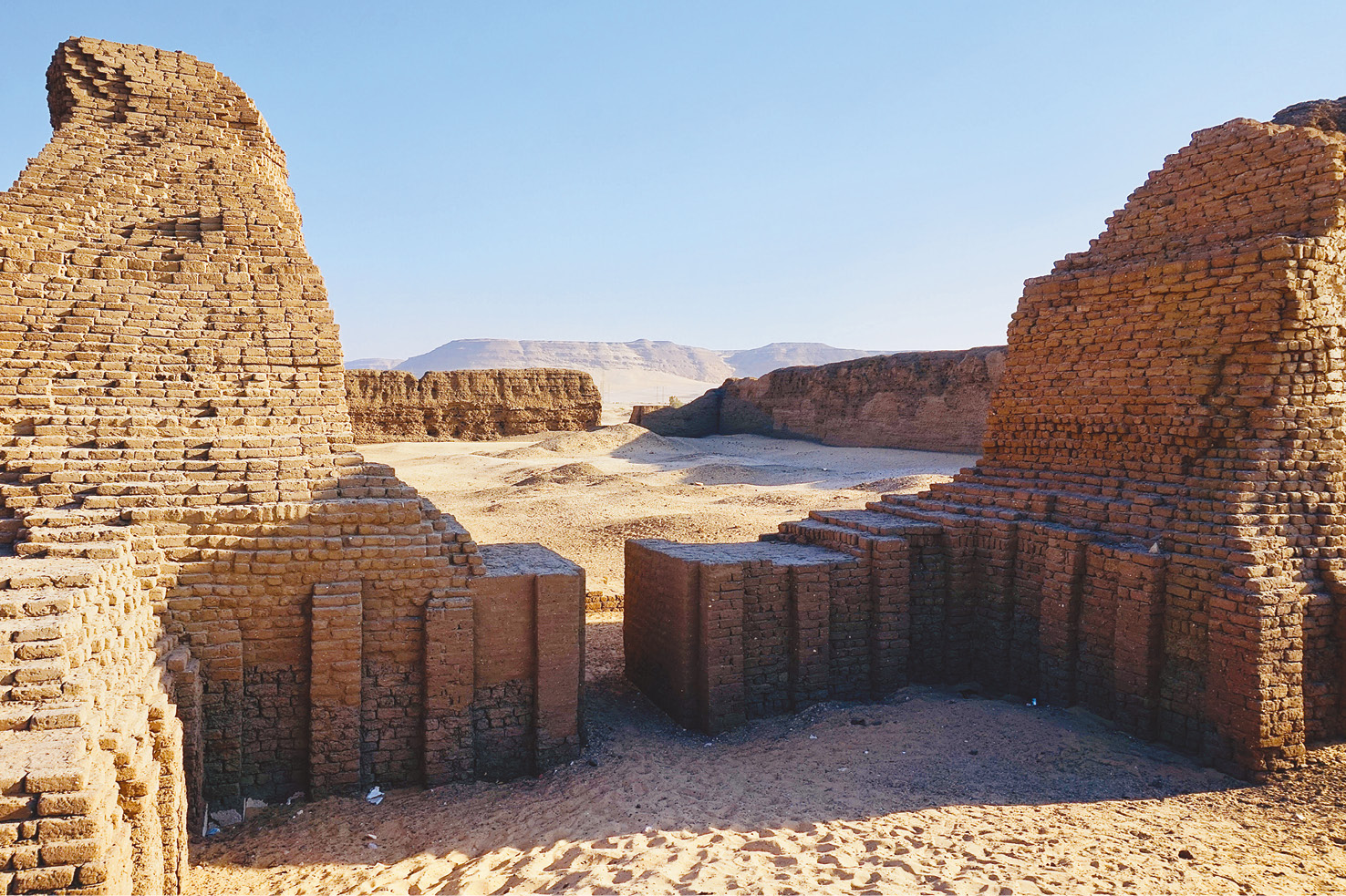
During the Second Dynasty, large enclosures made from very thick, high, mud-brick walls were constructed about 1.5 km to the east of the graves. The exact function of these enclosures is unknown, but most theories suggest they were used for funerary rituals, probably linked to the royal graves in a two-part funerary complex set-up much like the mortuary temples and pyramids of the Old Kingdom. It is believed, too, that the enclosures at Abydos were ritually knocked down on the death of each king, and the final one – that of the Second Dynasty king Khasekhemwy – is the only one still standing. His son Djoser went on to build the first known stone-built pyramid at Saqqara (the so-called ‘Step Pyramid’) and placed it within a large stone-walled enclosure. Another curious stone-built enclosure at Saqqara known as the Gisr el-Mudir is a possible in-between stage. On the external walls of both the Shunet el-Zebib (or more simply ‘the Shuneh’) and the Step Pyramid enclosure it is possible to make out the ‘palace façade’ pattern. In the case of the Shuneh, this pattern was originally plastered and painted.
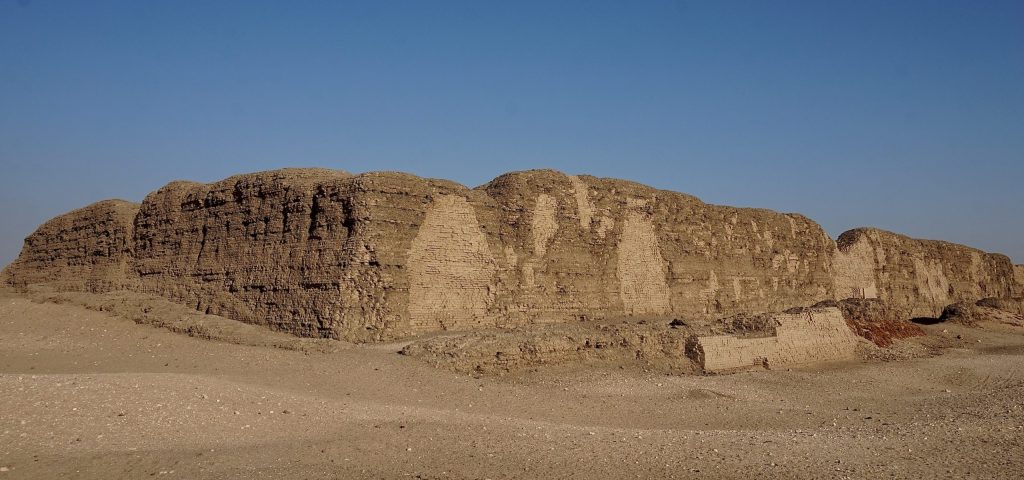
The Shuneh comprises two concentric rectangular walls, leading earlier historians to believe the structure was a fortress. Today, the inner wall is mostly intact, whereas the outer wall is largely non-existent. The overall enclosure measures 133.5 metres by 77.7 metres, while the inner wall is approximately 5 metres thick and, in places, 11 metres high. Archaeological work in the mid-1980s led by the Pennsylvania–Yale–Institute of Fine Arts, New York University Expedition confirmed that the interior had been used at the time of Khasekhemwy, reused as a sacred animal necropolis about 2,000 years later, and used once again in Late Antiquity by a Christian monastic community.
Fourteen wooden boats were discovered on the north-eastern side of the enclosure, lying in individual pits or ‘boat graves’ lined with mud-bricks. The boats were very large, made from tamarisk wood, and some were plastered and painted. Now dated to the First Dynasty, they are often cited as being early versions of the solar boat burials found at Old Kingdom sites. The construction techniques used indicate that they were possibly also working boats, rather than simply models. Unlike any other boats around Old Kingdom monuments, which were positioned individually, the Abydos boats are clustered together in a fleet formation. In 2008, the monument was added to the World Monuments Fund’s watch list of the World’s 100 Most Endangered Sites, and in recent years the WMF and the North Abydos Project have used more than 250,000 new mud-bricks to restore the enclosure walls and stabilise Shunet el-Zebib from the dangers of further human, animal, and insect destruction.
Kom El-Sultan
The ancient walled settlement of Abydos is known today as Kom el-Sultan, and is partially under the modern-day villages of Beni Mansour and Arabet Abydos. Archaeological work has unearthed temples of various eras and phases, as well as a multi-era settlement site. Although Abydos was not a royal city – rather, it was more a fundamentally ritual landscape – the town flourished for a long period of time. Still clearly visible are parts of an enormous mud-brick temenos wall that surrounds the settlement site where the temples of the jackal-headed deity Khentiamentiu and, later, the Great Temple of Osiris once stood.
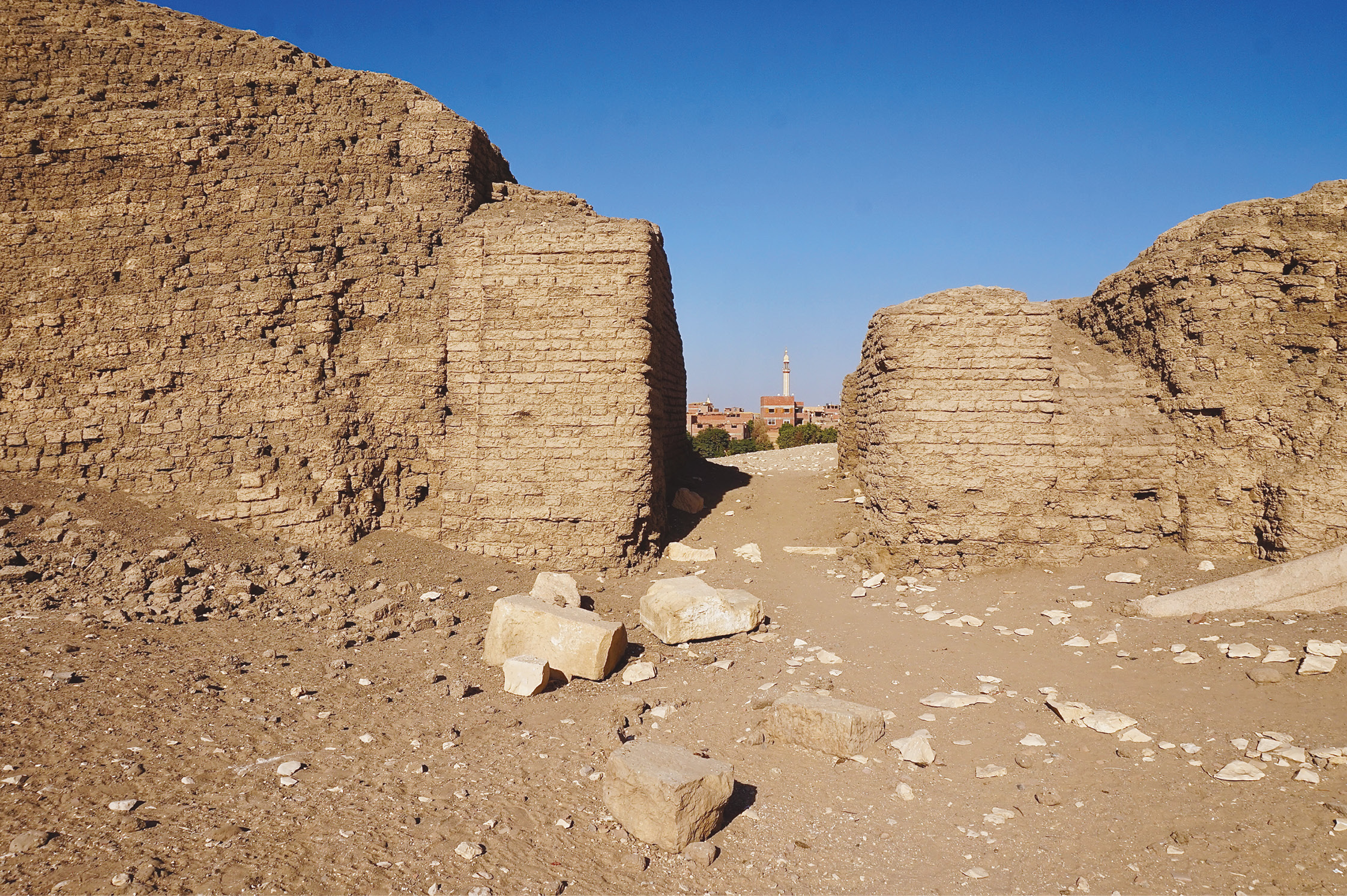
As the ‘Foremost of the Westerners’, Khentiamentiu was a guardian deity of the dead, and there is an early, and often complex, relationship between him and Anubis and Osiris. His name is often used as an epithet for both, and towards the end of the Old Kingdom he even starts to blend with Osiris eventually to become Osiris-Khentiamentiu, ‘Lord of Abydos’. By the First Intermediate Period, his temples at Abydos had all become centres of worship to Osiris, and during the Middle Kingdom important religious festivals, feasts, mystery plays, and processions began to take place from the Great Temple of Osiris, out to the Umm el-Qa‘ab Tomb of Djer. By that time, this almost 800-year-old tomb was regarded as being the actual burial place of Osiris, and the whole royal cemetery area became highly sacred. A major cult of Osiris developed among the ruling classes of the Middle Kingdom but, crucially, among the lower and middle classes as well. An annual Festival of Osiris was central to this. Abydos was undoubtedly a place of great importance to both the living and the dead from all sectors of society, and a true site of mass pilgrimage right up to Graeco-Roman times. The large and imposing Great Temple of Osiris was added to by successive rulers, with the most recently published evidence suggesting that the last additions were made during the Thirtieth Dynasty.

Many private mud-brick mahat (funerary chapels) were built on what was known as the Terrace of the Great God during the Middle Kingdom, when the cult of Osiris was at its height. In Abydos, these mahat were specifically a memorial/offering chapel, and not necessarily a tomb as they were in other parts of Egypt. Those members of society who could not be present in person had stelae and statues set up so they could attend the celebrations virtually. Scenes of the boat journey to and from Abydos were often painted on tomb walls to place the deceased symbolically close to Osiris for eternity. Many stone stelae from Abydos can be found in museums all over the world due to large-scale 19th-century plundering.

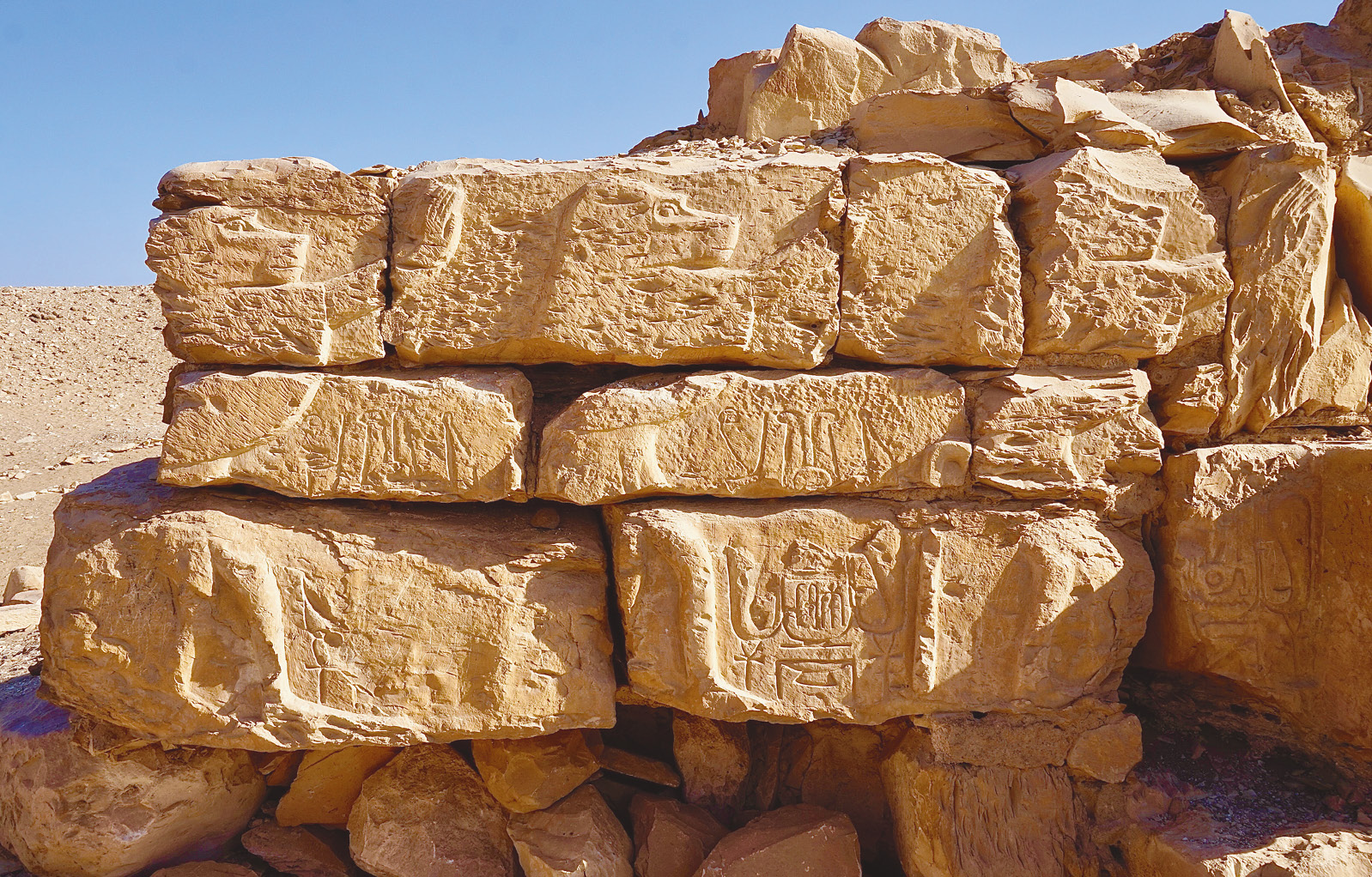
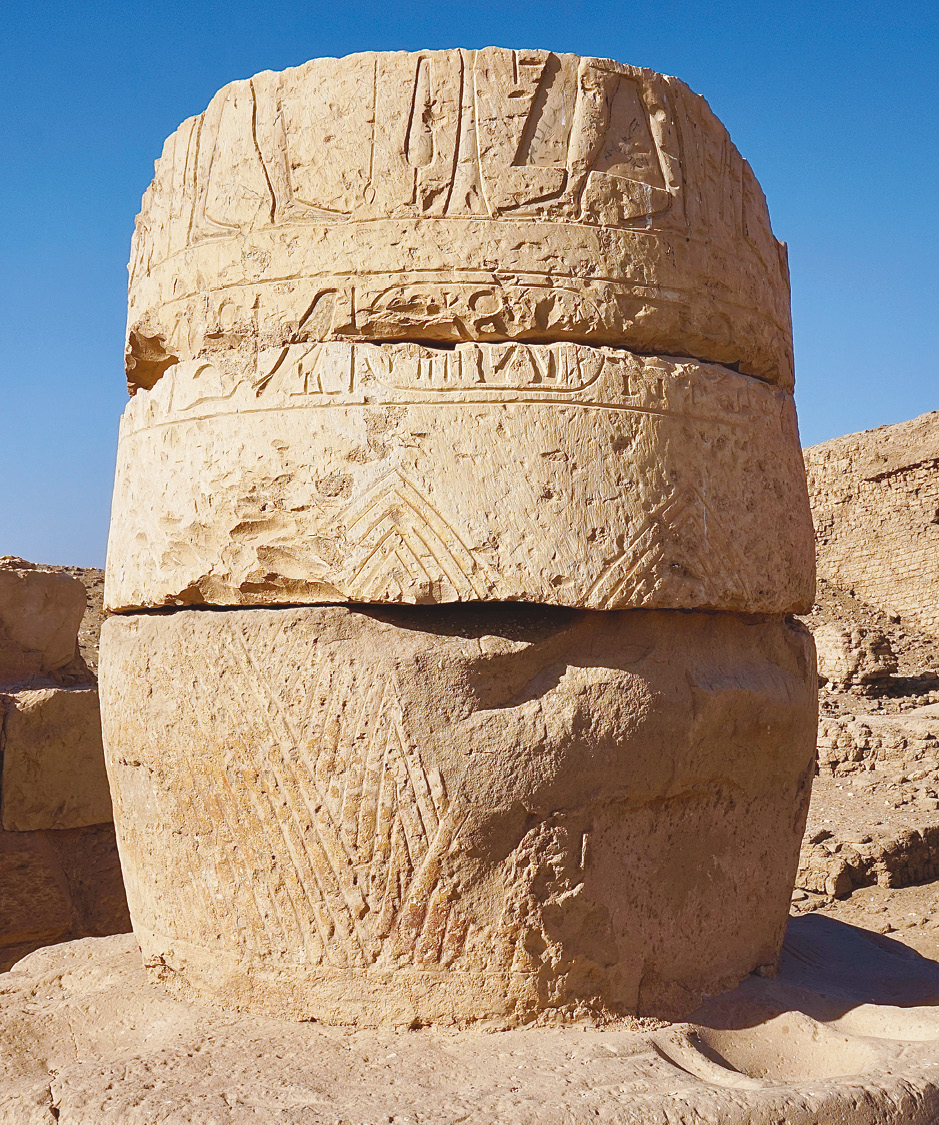
From the Eleventh Dynasty onwards, successive rulers razed and rebuilt, or simply added to, the Great Temple of Osiris. They also built structures further south in a possible attempt to alleviate the overcrowded situation that was occurring in north Abydos with the ever-increasing number of private mahat chapels. Significant monuments were created by Mentuhotep II, Senusret III, Ahmose I, Thutmose III, Sety I, and Ramesses II. The latter built what Petrie referred to as a ‘portal’ temple, parts of which can still be seen today. Locals now call it the ‘Temple of the Monkeys’ in reference to the scenes of baboons adoring the names of Ramesses on the walls of the portico entrance. More recent archaeological study has revealed that it is actually part of a much larger temple, and not merely the ceremonial gateway that Petrie had once thought. Much of the original stone from the temple was robbed or reused in antiquity and, in the late 1960s, many more Middle Kingdom mud-brick chapels were found under spoil heaps in what was once the bulk of the temple area. It is hoped that future excavation at this site will reveal more about this intriguing temple.



Ivory statuettes
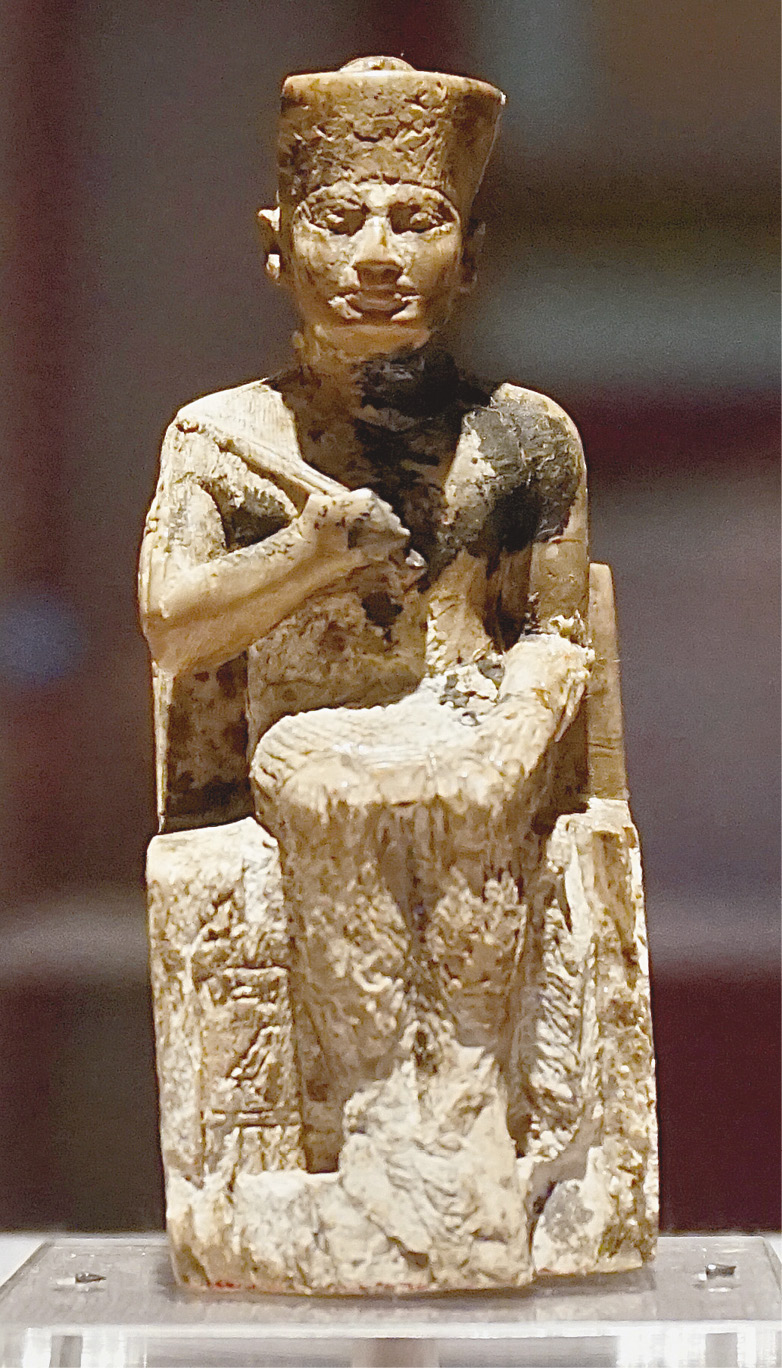
Readers will know how fond I am of visiting the find sites of iconic museum artefacts (see AE 139, ‘A Tale of Two Lions’, for instance) and my visit to Abydos did not disappoint. In 1903, a team of Egyptian workers led by Petrie and the Egyptian Exploration Fund discovered not one, but two such items at Kom el-Sultan. Both are the size of gaming pieces, and were carved from ivory. The more famous of the two is a tiny statuette of Khufu that is on display in the Egyptian Museum in Cairo; the lesser known is called the ‘Ivory King’ and can be seen in the British Museum in London.

Practicalities
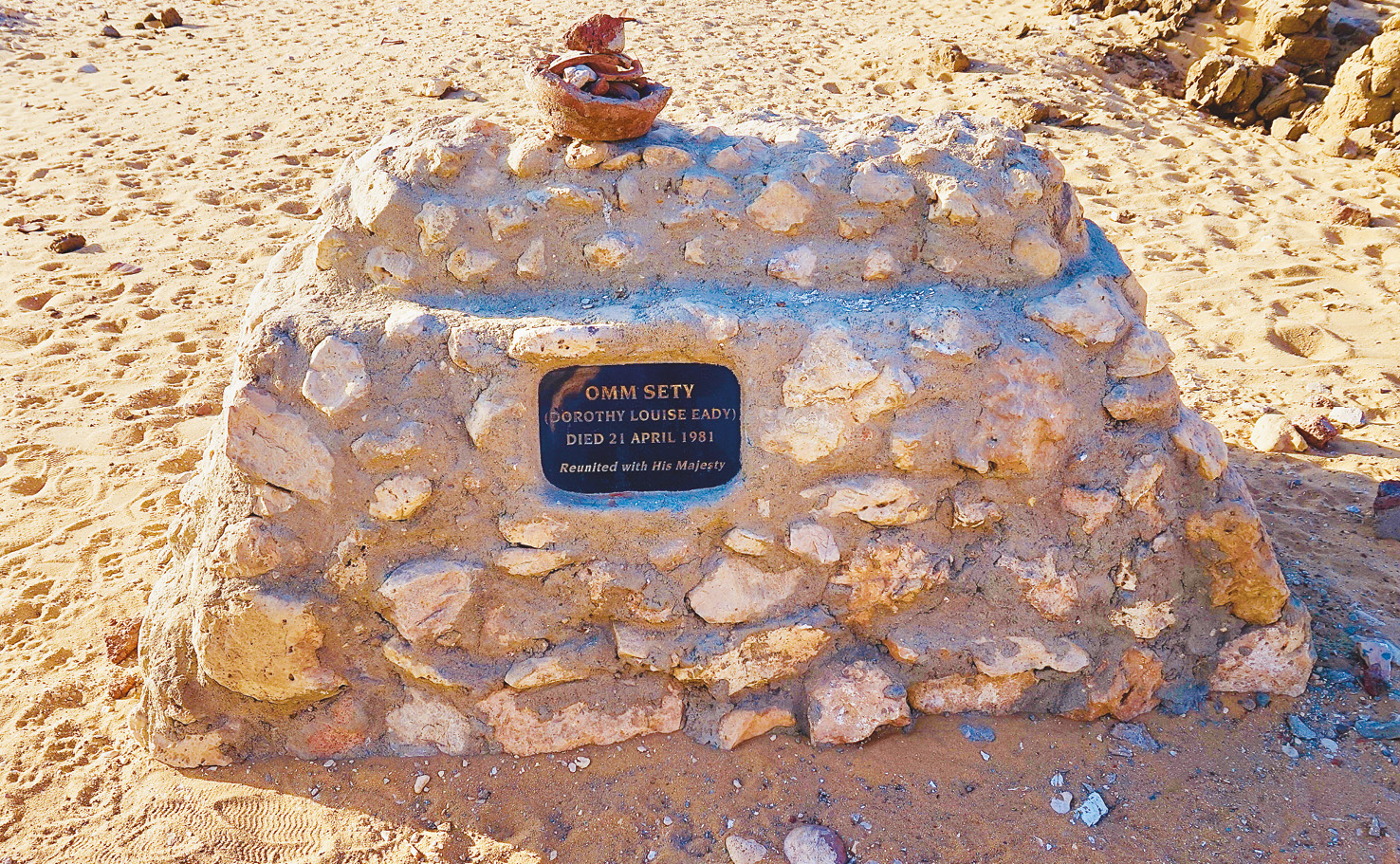
The necropolis of Umm el-Qa‘ab is currently out of bounds to visitors. The royal graves (like the boat graves) have been back-filled with sand to preserve them for future archaeological work, and there is almost nothing to see even if you were allowed to visit. To get to Shunet el-Zebib and Kom el-Sultan requires a ticket, which is bought from the ticket office at the Temple of Sety I. One ticket covers both and, at the time of writing, it was not possible to buy online. You are then (rather frustratingly) driven to the sites to be met by one of the site inspectors and armed security. The actual distance is only a few hundred metres, and could easily be covered on foot. The transport was arranged for us by the manager at our accommodation. While walking around the site, the inspector offered to show us the grave of Dorothy Eady, also known as Omm Sety, who was at one time the keeper of the Temple of Sety I, and a rather legendary lady in her own right. It was a nice ending to the visit.
Further reading:
For more on Abydos Archaeology, visit http://www.abydos.org.
D O’Connor (2009) Abydos: Egypt’s first pharaohs and the cult of Osiris (London: Thames & Hudson).
M Adams (2020) ‘Abydos in Late Antiquity: a view from the Shunet el-Zebib’, in British Museum Publications on Egypt and Sudan 9.
M Adams and D O’Connor (2010) ‘The Shunet el-Zebib at Abydos: architectural conservation at one of Egypt’s oldest preserved royal monuments’, in Culture and History of the Ancient Near East 38.
All images: the author, unless otherwise stated