Cover Story
 Hierakonpolis Julian Maxwell Heath describes the excavation history of the Predynastic ‘City of the Falcon God’ and some of the important discoveries made there.
 Features
 The Nile Mosaic at Palestrina Robert R Frost explores Graeco-Roman Egypt through the scenes in a stunning Nilotic mosaic.
  Senusret II Continuing his series focusing on the kings of the Twelfth Dynasty, Wolfram Grajetzki explores the reign and innovations of Khakheperra Senusret II.
  Hilary Wilson on… Hands Hilary Wilson describes the way ancient Egyptian artists and craftsmen depicted the human form (especially the hands) in wall paintings and sculpture.
  Aquila Dodgson 1829-1919: Collector and polymath Continuing our occasional series focusing on people who have made a significant contribution to Egyptology, but are often forgotten, Hilary Forrest discusses the life of Aquila Dodgson.
  Tattooing in the ancient nile valley In the second of her articles describing the practice of tattooing in ancient Egypt and Nubia, Renée Friedman looks at the surviving evidence from the New Kingdom onwards.
  The Oxyrhynchus Papyri: From ancient trash to historical treasure What can the famous papyrus corpus tell us about the ordinary people of late-ancient Egypt? Richard J Britton investigates.
 News
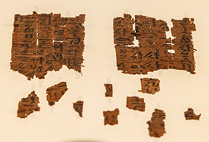
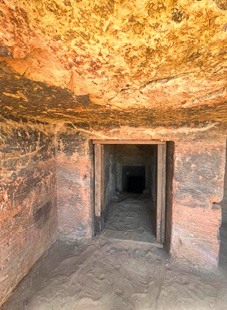
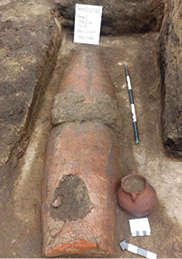
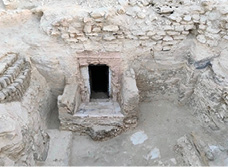
 New Graeco-Roman tombs in Aswan A joint Egyptian–Italian archaeological mission (University of Milan) has discovered more rock-cut Graeco-Roman tombs in the necropolis surrounding the Aga Khan Mausoleum on Aswan’s West Bank (for previous finds, see…
  Tell Nabasha The remains of large multistorey tower houses have been discovered at the ancient Delta city of Imet (modern-day Tell Nabasha) in the eastern Delta by an Egyptian–British team from the…
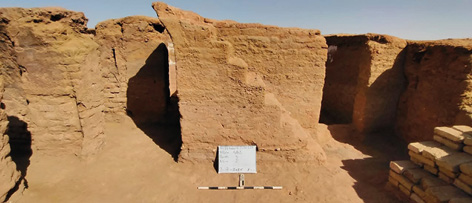
  More news from Aswan Three rock-cut tombs from the Old Kingdom, reused during the Middle Kingdom, have been found by the Egyptian team working at the Qubbet el Hawa necropolis opposite Aswan. Two of…
  Luxor discoveries A massive mud-brick enclosure wall has been found near Karnak by an Egyptian team working at Nagaa Abu Asba. Blocks from the wall bear stamps with the name of the…
  Karnak developments A residential settlement dating to the Middle Kingdom has been uncovered at Karnak by an Egyptian–French mission. The ‘city’ is in the south-east corner of the complex, dated to the…
  Restoration work The Ministry of Tourism and Antiquities has completed the conservation of a Roman Period tomb at Athribis (Naga‘a el-Sheikh Hamad, west of Sohag). The brightly painted tomb, consisting of a…
  Coptic building in Asyut A mud-brick building dating to the 6th to 7th centuries AD has been found by an Egyptian mission at Minqab in Asyut. The two-storey building, which was clad in white…
  Gene sequencing A 4,500-year-old Egyptian skeleton from a rock-cut tomb in Nuwayrat, near Beni Hasan, has provided the first biological evidence for links between ancient Egypt and Mesopotamia in the early Old…
  Hatshepsut’s statues A new study by Jun Yi Wong of the University of Toronto suggests that damage to Hatshepsut’s statues may not have been an act of animosity by Thutmose III. The…
 Views
 The temple of Qasr el-Sagha Travel Geoffrey Lenox-Smith visits an isolated temple in the desert north of the Fayum.
  Win a copy of Amelia B Edwards: The ‘Queen of Egyptology’ by Carl Graves, published by the Egypt Exploration Society Competitions Where is this? If you know, email the Editor peter@ancientegyptmagazine.com before 30 October with your answer, giving your full name, address, and a contact phone number. One lucky reader will…
  Ancient Egypt August listings What's on THE MYSTERY OF CLEOPATRA The legend of Cleopatra and her depictions in art over the centuries is explored through archaeological finds, paintings, sculptures, and works of contemporary art. Highlights include…
  The discovery of Tomb TT8 The Picture Desk The wonderful tomb goods of Kha and Merit at Deir el-Medina.
  Sphinx of Hatshepsut (Cairo) Objects Campbell Price selects one of a pair of sphinxes from the first ‘avenue of sphinxes’, at Deir el-Bahri.
  Ancient Egypt Letters 150 Letters Your opportunity to comment on articles in the magazine or on any Egyptological subject that interests you. Email the Editor peter@ancientegyptmagazine.com with your thoughts.
 Reviews
The temple of Qasr el-Sagha Geoffrey Lenox-Smith visits an isolated temple in the desert north of the Fayum.  Current Research in Egyptology 2023: Proceedings of the Twenty-Third Annual Symposium, University of Basel, 10-14 September 2023 REVIEW BY ROGER FORSHAW The 23rd Current Research in Egyptology (CRE) conference was held at the University of Basel in 2023. Bringing together an engaged community of mainly early career…
  The Decline and Fall of the Ptolemies: Ptolemaic Egypt 146-30 BC REVIEW BY SARAH GRIFFITHS In the third and final instalment of his Ptolemaic series, Grainger presents what he describes as a ‘deeply unpleasant and murderous succession of barely competent kings…
  Amelia B Edwards: The ‘Queen of Egyptology’ REVIEW BY HILARY FORREST Most Egyptology enthusiasts will be familiar with the name of Amelia B Edwards. This new biography sets out to reveal aspects of her life that have,… Ancient Egypt August listings THE MYSTERY OF CLEOPATRA The legend of Cleopatra and her depictions in art over the centuries is explored through archaeological finds, paintings, sculptures, and works of contemporary art. Highlights include…
Credit: Renée Friedman
From the editor
Many of the artefacts discovered at Hierakonpolis, such as the Narmer Palette, are hugely important in our understanding of the earliest periods of the ancient civilisation of the Nile Valley. But two of the discoveries described by Julian Heath in his article are both unique and uncomfortably disturbing in appearance: the pottery face masks found in an elite cemetery. The masks were clearly designed to be worn over the face. Were they the earliest examples of what many hundreds of years later became the golden mask that graced Tutankhamun’s mummy?
In addition to providing several of the images used in Julian’s article, Renée Friedman, the Director of the Hierakonpolis Project, concludes her two-part article on tattooing in ancient Egypt, this time focusing on the New Kingdom and later periods.
In the same way that the excavations at Hierakonpolis have thrown light on Predynastic Egypt, the thousands of papyri found at Oxyrhynchus have given us fascinating information about the private lives of the citizens of Ptolemaic and Roman Egypt. Richard J Britton spills the beans!
Several articles in this issue deal with aspects of Egyptology that have received less attention than they deserve. Because of its location, some 30km from Rome, few tourists have seen the Palestrina Mosaic described by Robert R Frost, and even fewer have made the difficult journey to the Temple of Qasr el-Sagha in the Fayum, described by Geoffrey Lenox-Smith. Wolfram Grajetzki gives us an account of the life and times of one of the lesser known Middle Kingdom pharaohs, Senusret II, and Hilary Forrest brings to our attention a 19th-century amateur Egyptologist whose (unusual) name has been almost forgotten: Aquila Dodgson.
Longer-term readers of AE may remember an excellent series of articles about Gebel el-Silsila that appeared from 2020 to 2022 in AE 113 to AE 130. The articles were written by the Co-directors of the Gebel el-Silsila Project, John Ward and his wife Maria Nilsson. As we go to press, the sad news has reached us of the untimely passing of John, whose work at the site began as early as 2007, and who has transformed our knowledge of this ancient quarry site, as well as providing employment and training to the local community. Our thoughts and condolences are with Maria and their family.
J Peter Phillips, Editor