Subscribe now for full access and no adverts
In the AD 130s, Arrian – the Roman governor of Cappadocia – paid a visit to what is now the Black Sea coast of Georgia. Arrian’s role was to inspect the military garrisons tasked with securing this far-flung corner of the empire. Fortunately, Arrian was also an author, whose account of the journey still survives. As befits a region where precipitous hills sometimes drop directly into the sea, complicating communications over land, Arrian travelled by sea. Among the forts he visited was that of Apsaros, where Arrian reported ‘five cohorts are stationed, to whom we delivered their pay, and inspected their arms, the walls, and the ditch, their sick, and their present stock of provisions’.
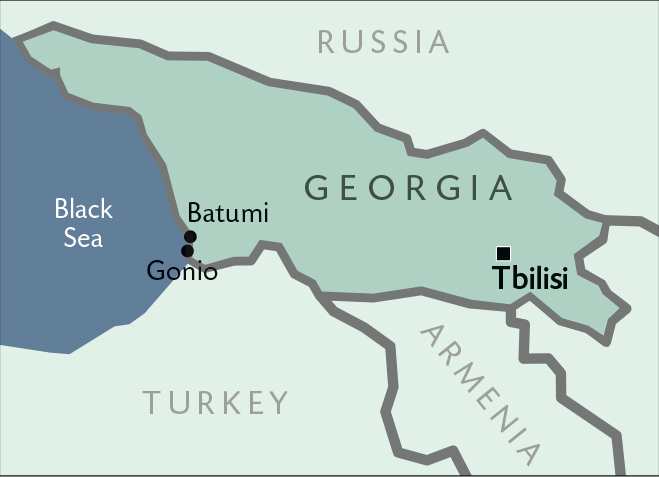
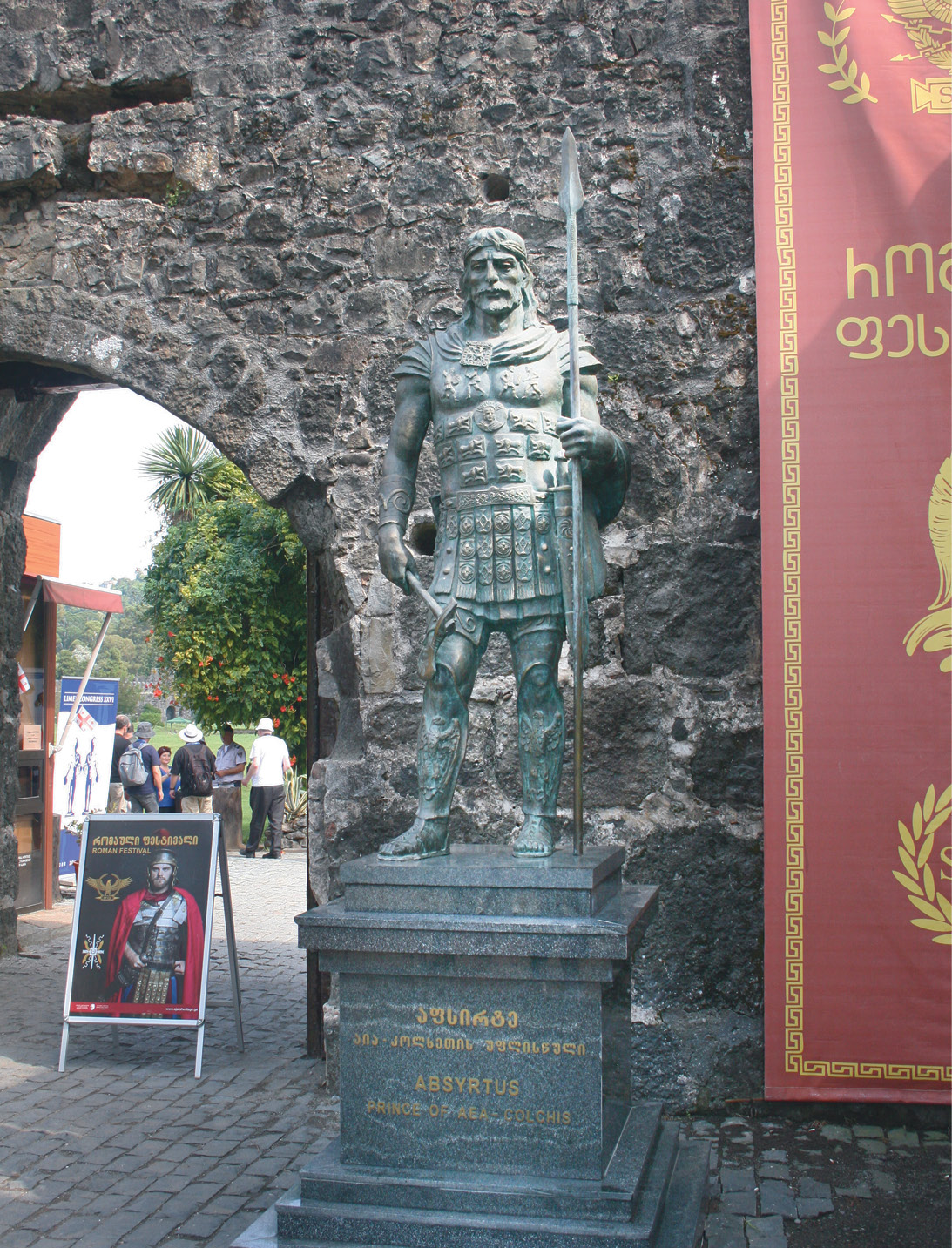
Alongside these practical details, Arrian also dabbled in mythology when he noted that ‘Apsaros, it is said, formerly bore the name of Apsyrtus, from the person who was murdered by Medea, and whose sepulchre is still shown there. Its present name was corrupted by the barbarians…’. Both Medea and her brother Apsyrtus figure in the story of Jason and the Argonauts, while the Roman fort of Apsaros lay on part of the coast of Colchis, whose riches were epitomised by the fabled Golden Fleece. This connection seems to have captured the imagination of Heinrich Schliemann, who applied to work in the region in 1882, although nothing came of it. By then, the location of Apsaros had been correctly linked with ruins at the village of Gonio by another European with a keen eye for ancient sites: F Dubois de Montpéreux.
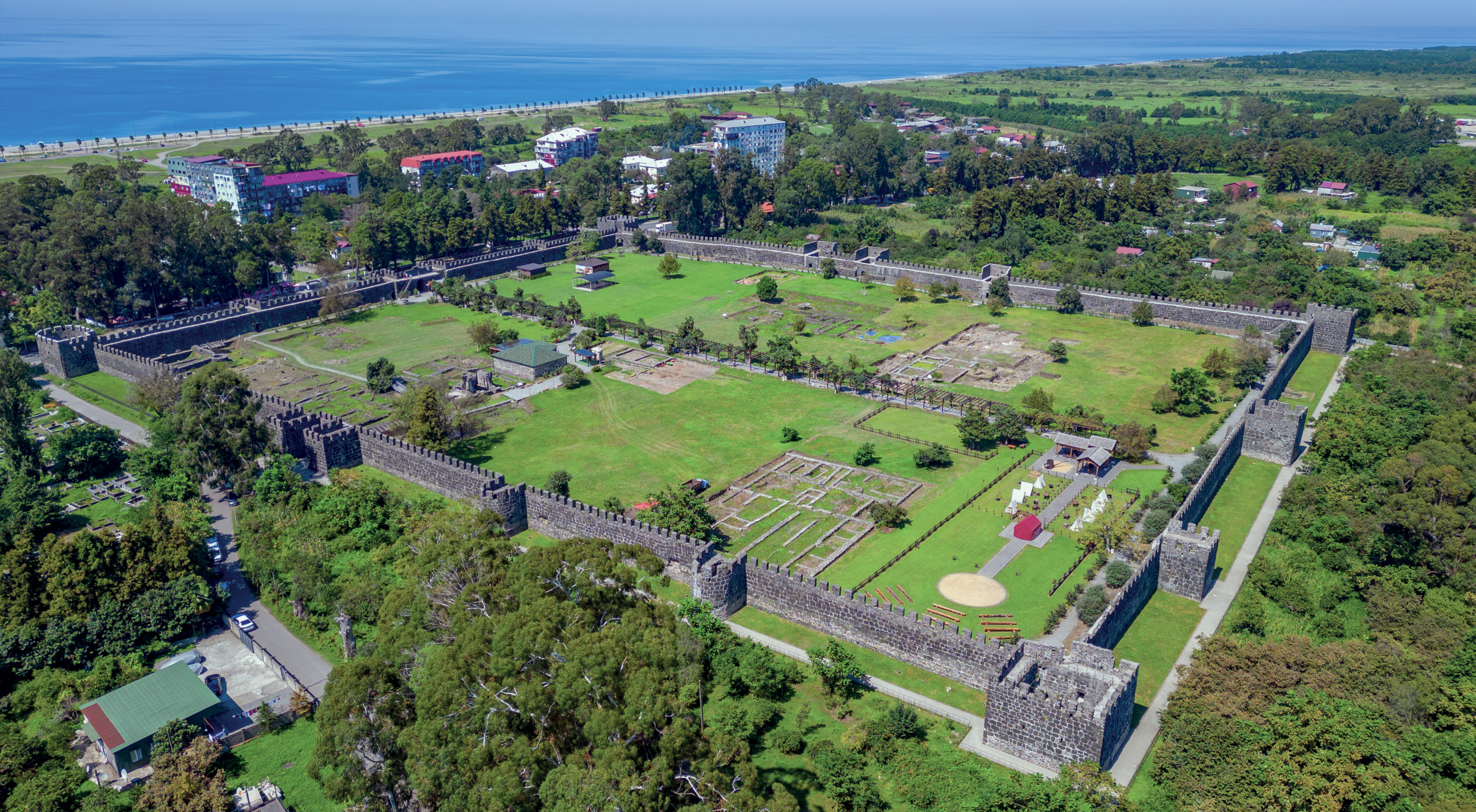
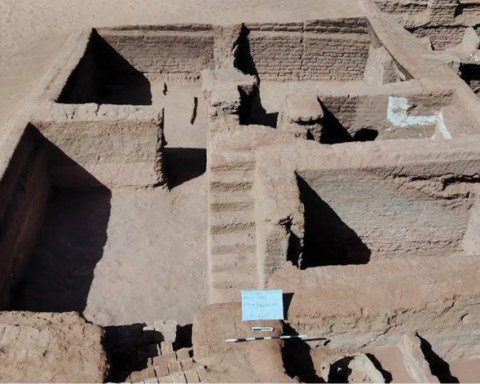
Today, wealth remains readily apparent at Apsaros, which lies just 15km south of the high-rises and casinos of the Black Sea resort at Batumi. The fort is perched on a slender shelf of ground between the sea and hills, with the river Chorokhi a short distance to the north. There is no mistaking the military nature of the site, as the final set of defences still stands tall. Although these are generally referred to as late Roman and Byzantine, their present form owes much to the Ottoman army, who also took advantage of the site. Various excavated structures are visible within the walls, but the footprint of this final iteration of the fort only partially overlies the area of the base that Arrian visited during the reign of the emperor Hadrian (AD 117-138). Even this was not the first Roman base to occupy the site. Pliny the Elder mentions a fort at Apsaros in his Natural History, indicating a military presence in the 1st century AD.
On the farther shore
It is fair to observe that the situation of Apsaros and the other eastern Black Sea forts is an unusual one. Their location has been memorably described as ‘on the edge of an alien shore’, emphasising that Apsaros did not command a huge, pacified hinterland. Instead, the uplands to the east of the fort belonged to the client kingdom of Iberia. What, then, motivated Rome’s desire to control this sliver of shore?
To answer this, dating is key. A wealth of fresh information has come from long-running investigations by a Polish-Georgian team. The coins, pottery, and glassware point to the first fort being founded during the reign of Nero (AD 54-68) and evacuated soon afterwards. In one area, lying within the north-eastern portion of the upstanding walls, archaeologists have discovered the remains of what appears to be a stone granary belonging to this era. When the fort was eventually rebuilt and reoccupied in Trajan’s reign (AD 98-117), this plot was overlain by a well-appointed bathhouse and latrine. The bathhouse was superseded in turn by an unusually spacious commander’s house, boasting a peristyle and private bath suite. As this is dated to the reign of Hadrian, it might be linked to the presence of Arrian. Alternatively, it could be a reflection of the five cohorts Arrian places at Apsaros – a surprisingly large force for a fort. In the later 130s, this house was damaged by an earthquake and replaced by another structure, probably a barrack block. Over a century later, the 250s brought more challenges to the coast of Colchis, in the form of another earthquake and seaborne marauders known as the Boranoi. These pressures led to the abandonment of Apsaros, which was seemingly only rebuilt and reoccupied once more in the 6th century.
From these dates, it is probable that Rome’s presence was often undertaken with one eye on the Parthians, and particularly their manoeuvring in Armenia, to the south. Nero fought a war to retain Roman influence there, though his interest in the Black Sea might also reflect a desire for an expedition to the Caspian Gates. Trajan was exercised by Parthian influence in Armenia, too, and duly annexed it as a province. Hadrian, in turn, abandoned Armenia, at which point the king of Iberia also made it clear that he desired full independence. This has encouraged suspicions that the presence of five cohorts at the fort in the 130s acted as a pointed reminder by Hadrian of who was boss. Of course, not all threats lay inland. There are indications that the Neronian fort faced the sea, at a time when the coast of Colchis was notorious for its piracy. Suppressing this scourge would certainly have been to Rome’s benefit.
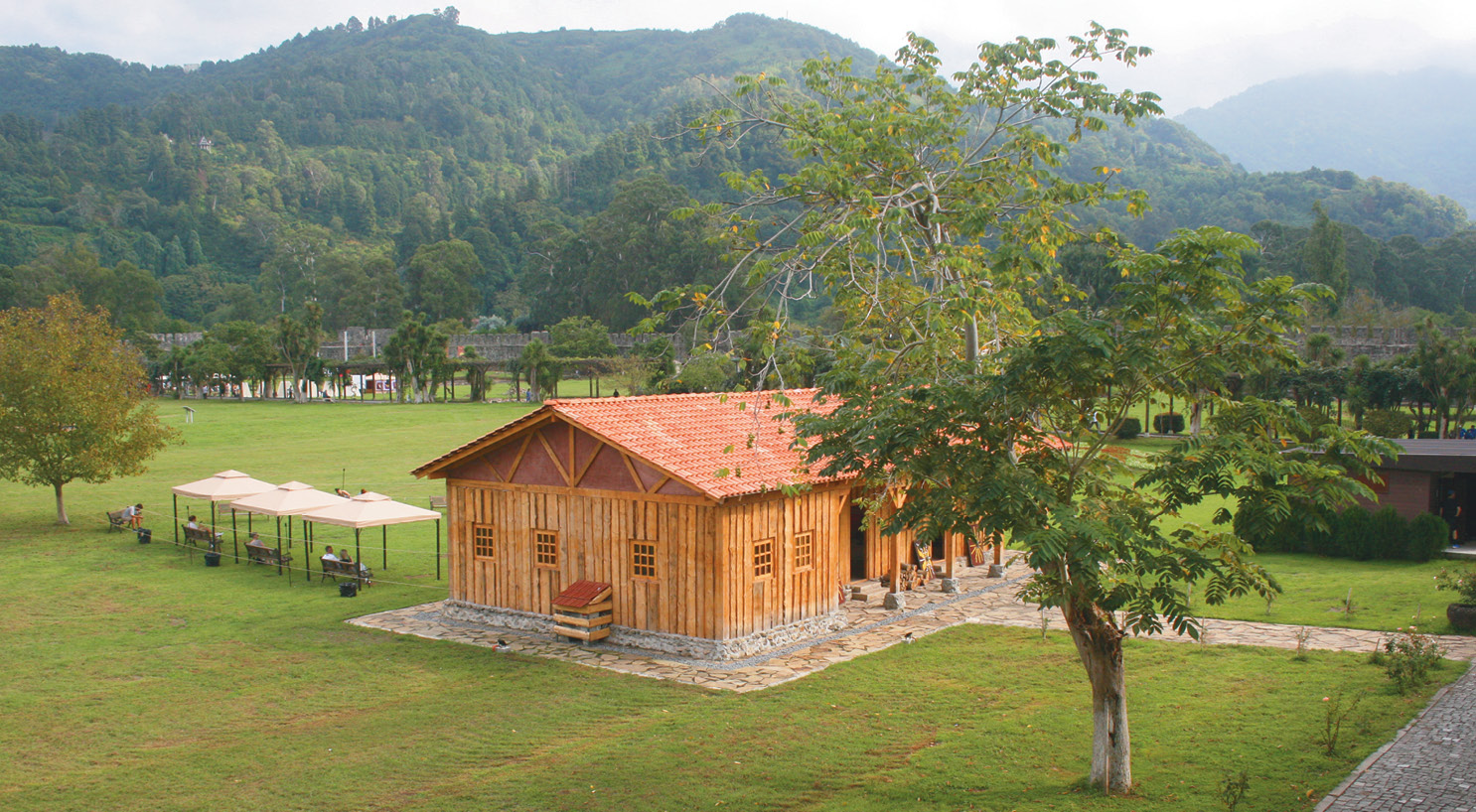
Even so, steep hills still press uncomfortably close to the fortifications of Apsaros. It is easy to imagine this dead ground being a source of discomfort to the garrison during times of tension with Iberia. But it is clear that not everyone in these uplands was hostile. Investigation of a wine press nestled in the hills near Apsaros revealed that it combined a local-style design with Roman hydraulic mortar. This testimony to ideas and cultures mixing in the shadow of the fort is a reminder that garrisons implanted as part of far-reaching imperial strategies still had very local impacts.
Further information:
• The fort at Apsaros was visited as part of the 2024 Limes Congress held in Batumi, Georgia.
• D J Breeze, R Karasiewicz-Szczypiorski, and S Mamuladze (2024) The Roman Frontier in Georgia (Archaeopress).
• P Jaworski, R Karasiewicz-Szczypiorski, and S Mamuladze (2021) ‘The rise and fall of the Roman fort in Apsaros: recent numismatic evidence’, Polish Archaeology in the Mediterranean 30(2): 289-306.
• M P Speidel (1986) ‘The Caucasus frontier: 2nd-century garrisons at Apsarus, Petra, and Phasis’, Studien zu den Militärgrenzen Roms III, pp.657-660.