Subscribe now for full access and no adverts
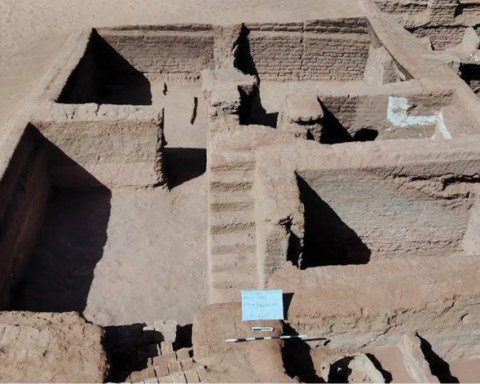
Excavations by an Egyptian archaeological mission at the site of Tell el-Kharouba in North Sinai have discovered a large military fortress dating to the New Kingdom period, c.1550-1070 BC.
Initial archaeological work has revealed part of the fortification’s southern wall, which measures 2.5m wide and c.105m long and features a narrow entrance in the centre. Eleven defensive towers have also been uncovered, as well as parts of the northern and western walls. Inside, a 75m-long zigzag wall divides the space from north to south, and an area has been identified that is believed to have housed the soldiers. The fortress appears to have undergone several phases of renovation and modification over the ages.
Other finds include various pottery fragments – some of which were discovered as foundation deposits beneath one of the towers, dating to the first half of the 18th Dynasty. Of particular note is a vessel stamped with the name of King Thutmose I, who reigned from 1506 to 1493 BC. Quantities of volcanic stone that appear to have been sourced from Greek islands provide evidence of far-reaching trade links, while the remains of a large bread oven and pieces of ancient dough offer insights into daily life for the soldiers who occupied the fortress.
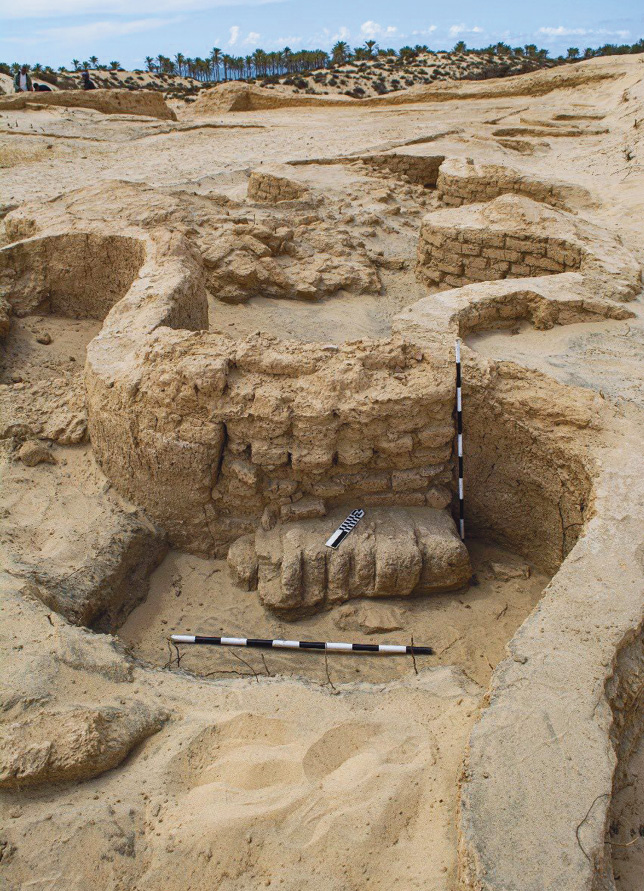
This site, located near the modern town of Sheikh Zuweid, represents a valuable new addition to a series of defensive fortifications known to have been built by New Kingdom rulers to protect Egypt’s eastern border and secure an important strategic route known as the ‘Way of Horus’, which connected the Nile delta with other areas of the eastern Mediterranean. The fortress at Tell el-Kharouba covers an area of c.8000m2, making it one of largest and most important defensive fortifications discovered on this important route. Dr Mohamed Ismail Khaled, Secretary-General of Egypt’s Supreme Council of Antiquities, described this discovery as ‘an important step in rebuilding the full picture of this network of Egyptian fortifications’ and expanding our understanding of the military organisation of Pharaonic Egypt.
Research at the site continues and it is hoped that future investigations will uncover the rest of the fortification’s walls and other features, as well as discovering a nearby port that may have served this military base.
Text: Amy Brunskill / Image: courtesy of the Egyptian Ministry of Tourism and Antiquities