Subscribe now for full access and no adverts
Recent analysis has shed new light on the circumstances surrounding a pair of unusual Neolithic mass graves in north-east France.
Around a decade ago, two late Middle Neolithic burial pits were discovered at the sites of Bergheim and Achenheim in Alsace, each containing the remains of multiple individuals with signs of excessive violence, as well as a number of isolated severed left arms (CWA 75 and CWA 78). The two sites are contemporaneous, dating to c.4300-4150 BC.
Now researchers have carried out multi-isotope analyses of samples from the bones and teeth of those buried in the mass graves and compared them with other individuals from the two sites who received conventional, non-violent funerary treatments. By using these data to examine diet, mobility, and other factors, the team aimed to reconstruct the life histories of the dead in order to understand better their contrasting ends.
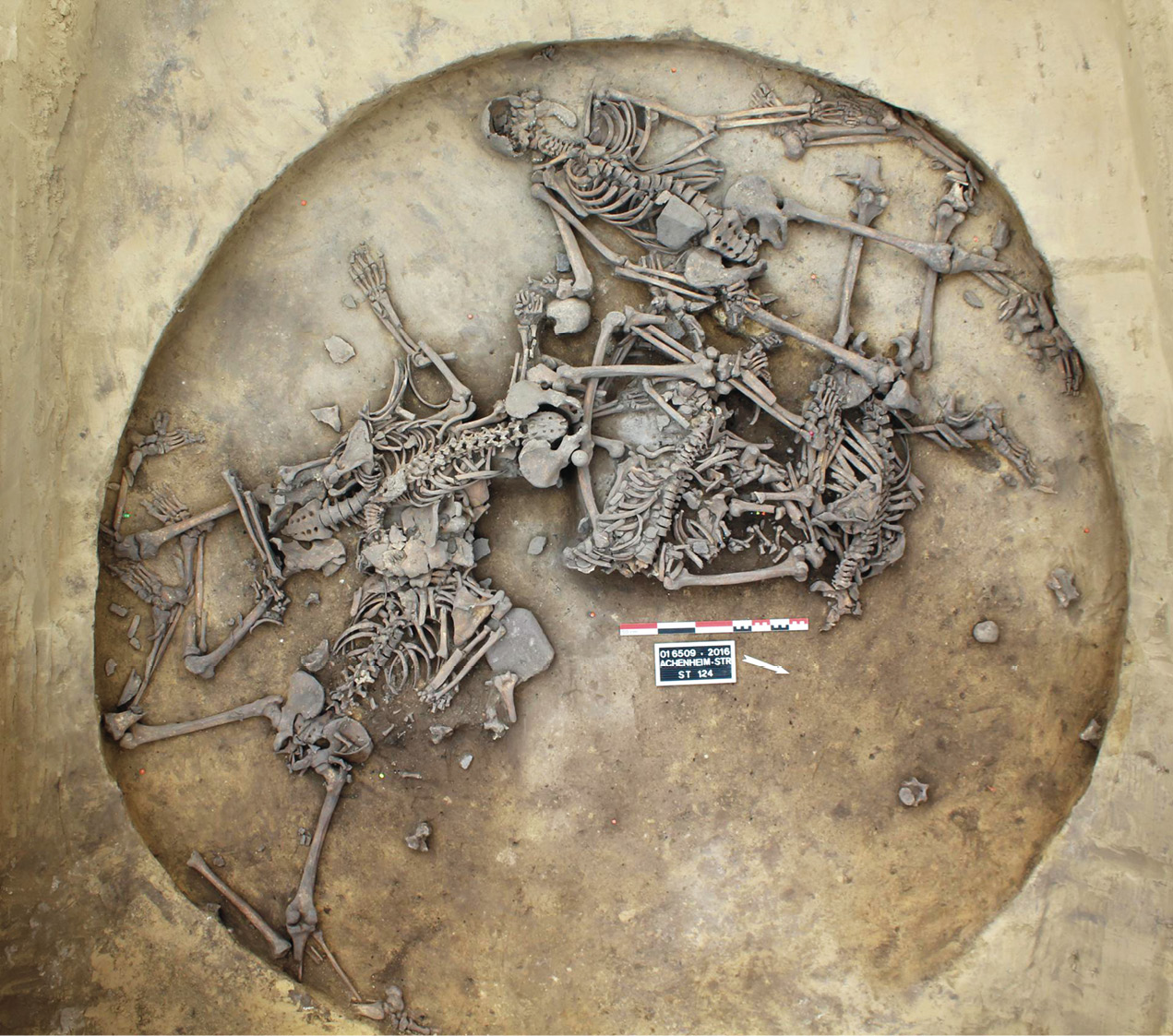
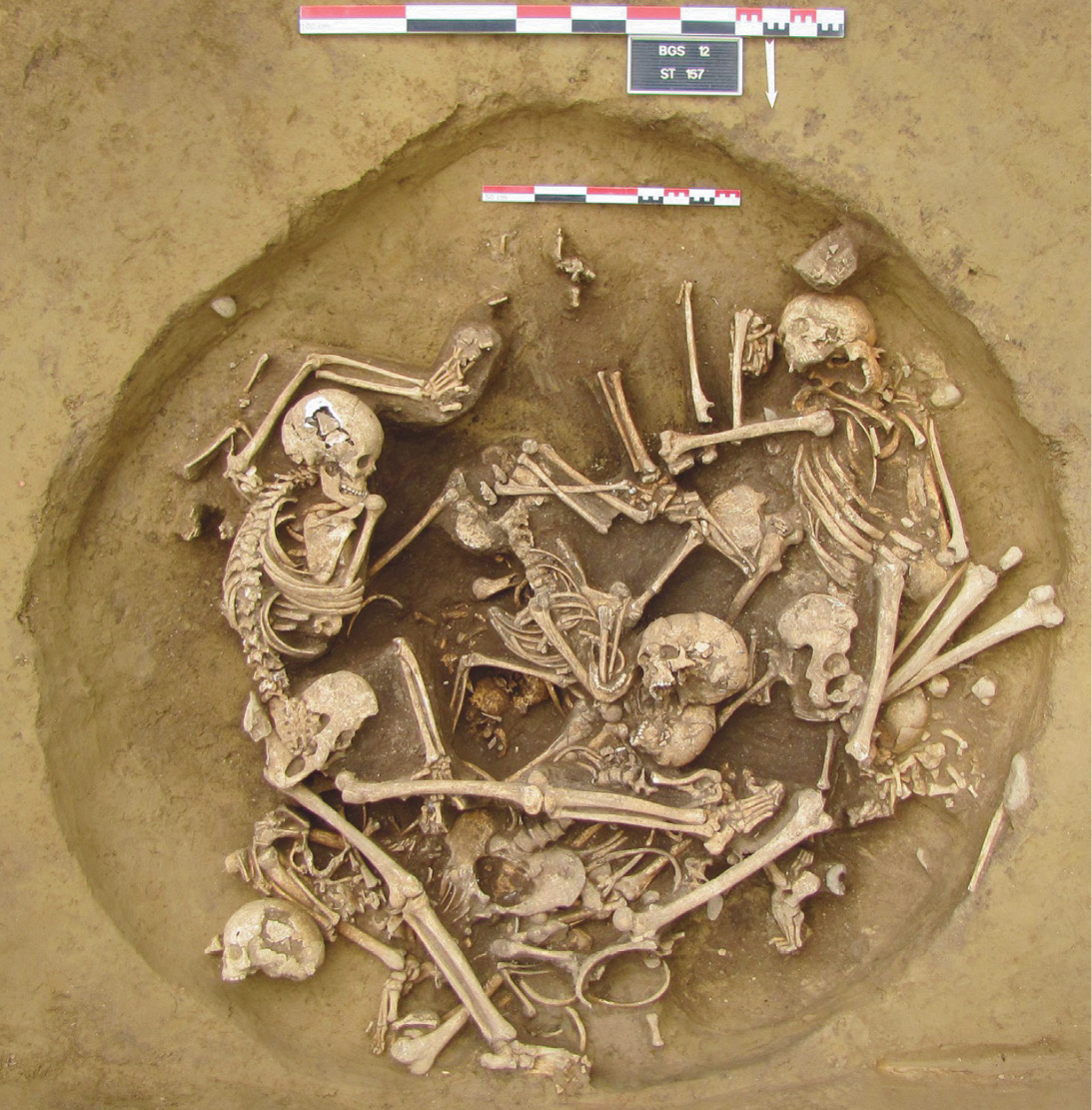
The results revealed that the individuals who met with violent deaths had greater mobility, more varied diets, and potentially higher levels of physiological stress in life than the local community buried at Bergheim and Achenheim. This suggests that these people were outsiders – perhaps invaders or migrants – with different lifestyles and geographic origins to the inhabitants of the sites. Unexpectedly, the isotopic values also indicate different origins for the massacre victims who were interred as complete skeletons and for those represented by isolated limb bones, despite them being buried together, raising the question of whether geography played a role in their differing treatments.
The archaeological record indicates that a rapid shift occurred in the Alsace area between 4295 and 4165 BC, with local cultural traditions being replaced by those of groups originating in the Paris Basin. In the same period, we begin to see the appearance of fortifications, as well as evidence for increasing violence. All of this points to armed conflict occurring between groups from different areas at this moment in time. It therefore appears likely that the people buried in the pits at Bergheim and Achenheim may have been members of invading groups who were brutally killed by local societies after violent encounters of this kind. The researchers also propose that the severed limbs could represent trophies from enemies killed in more distant combats, while the full bodies may belong to adversaries who were captured alive and subjected to public execution as part of a post-battle ritual celebration that served to ‘other’ the enemy and reinforce community solidarity. Pit 157 at Bergheim and Pit 124 at Achenheim may therefore be among the earliest documented instances of martial victory celebrations in prehistoric Europe.
The research has been published in the journal Science Advances (http://www.science.org/doi/10.1126/sciadv.adv3162).
Text: Amy Brunskill / Images: P Lefranc; F Chennal