Subscribe now for full access and no adverts
A c.12,000-year-old stone pillar decorated with a human face has been found at the archaeological site of Karahan Tepe in Turkey.
Karahan Tepe is a Pre-pottery Neolithic ritual complex that forms part of the Taş Tepeler group of prehistoric sites in the hills around Şanlıurfa, which also includes the UNESCO World Heritage Site of Göbekli Tepe.
Numerous distinctive T-shaped pillars have been found at Karahan Tepe, Göbekli Tepe, and other Taş Tepeler sites; many served a structural purpose, but they are also frequently decorated with intricate engravings. These designs often include human arms or hands, as well as belts and other clothing, which has led people to believe that these stelae were intended to symbolise human figures.
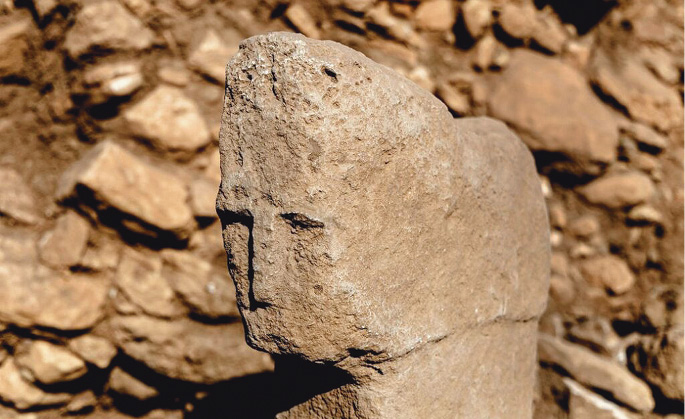
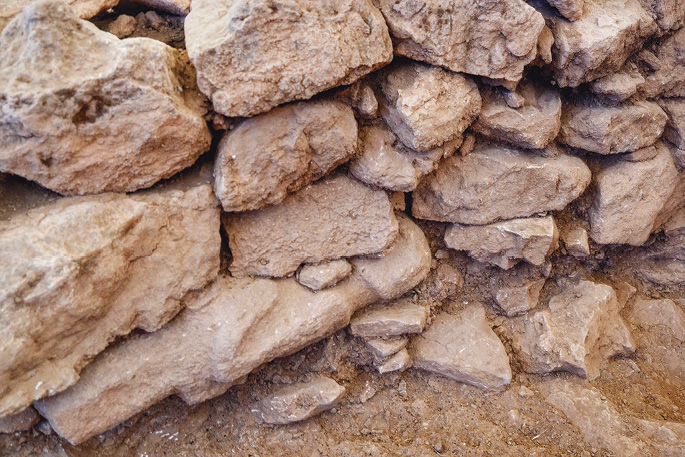
The recent discovery of a human face on one such pillar supports this interpretation. The discovery was made during recent excavations at Karahan Tepe as part of the Taş Tepeler project. The T-shaped pillar in question is 1.37m tall, made of sand-coloured stone, and features a face carved into the top of the stelae with sharp lines that carve out a prominent brow bone, a straight nose, and deep-set eyes. The engraving resembles carved human faces found on other types of object at Karahan Tepe, but this is the first example found on a T-shaped pillar at any of the Taş Tepeler sites. Its existence provides strong evidence that these pillars did indeed symbolise human beings. The find has been described as ‘a new turning point in Neolithic research’, providing important information about how Karahan Tepe’s builders understood and expressed themselves.
Meanwhile, at Göbekli Tepe, 40km away, another human representation has been found. The life-size human statue, which also dates to around 12,000 years ago, was unearthed during a recent restoration project at the site. It was discovered in a horizontal position, embedded in the base of a wall between two buildings known as Structures B and D, and is believed to have been placed here intentionally, most likely as a ritual offering during the construction of these sacred spaces. Similar human sculptures are known from Karahan Tepe, but this is the first example found to date at Göbekli Tepe.
Both finds shed valuable light on the belief systems, artistic practices, and identities of the people behind some of the world’s most remarkable Neolithic sites.
Text: Amy Brunskill / Images: Turkish Ministry of Culture and Tourism