Subscribe now for full access and no adverts
Recent research suggests that engraved stones discovered on the Danish island of Bornholm may have been ritual offerings in response to climatic change caused by a huge volcanic eruption almost 5,000 years ago.
Over the past few decades, hundreds of fragments of engraved stone plaquettes have been unearthed at Bornholm’s two Neolithic enclosure sites, Vasagård and Rispebjerg. The most common decoration is a solar design featuring lines or ‘rays’ emanating from a central circular motif, which has given these objects the name ‘sun stones’. There are also examples featuring stylised cereal plants, as well as other more abstract engravings. These plaquettes are unique to the island of Bornholm, and all date to a very narrow window around 2900 BC. The majority appear to have been deposited in the ditches of the causewayed enclosure at Vasagård either during a single event or over just a few occasions, before the ditches were infilled as part of wider changes occurring at the site.
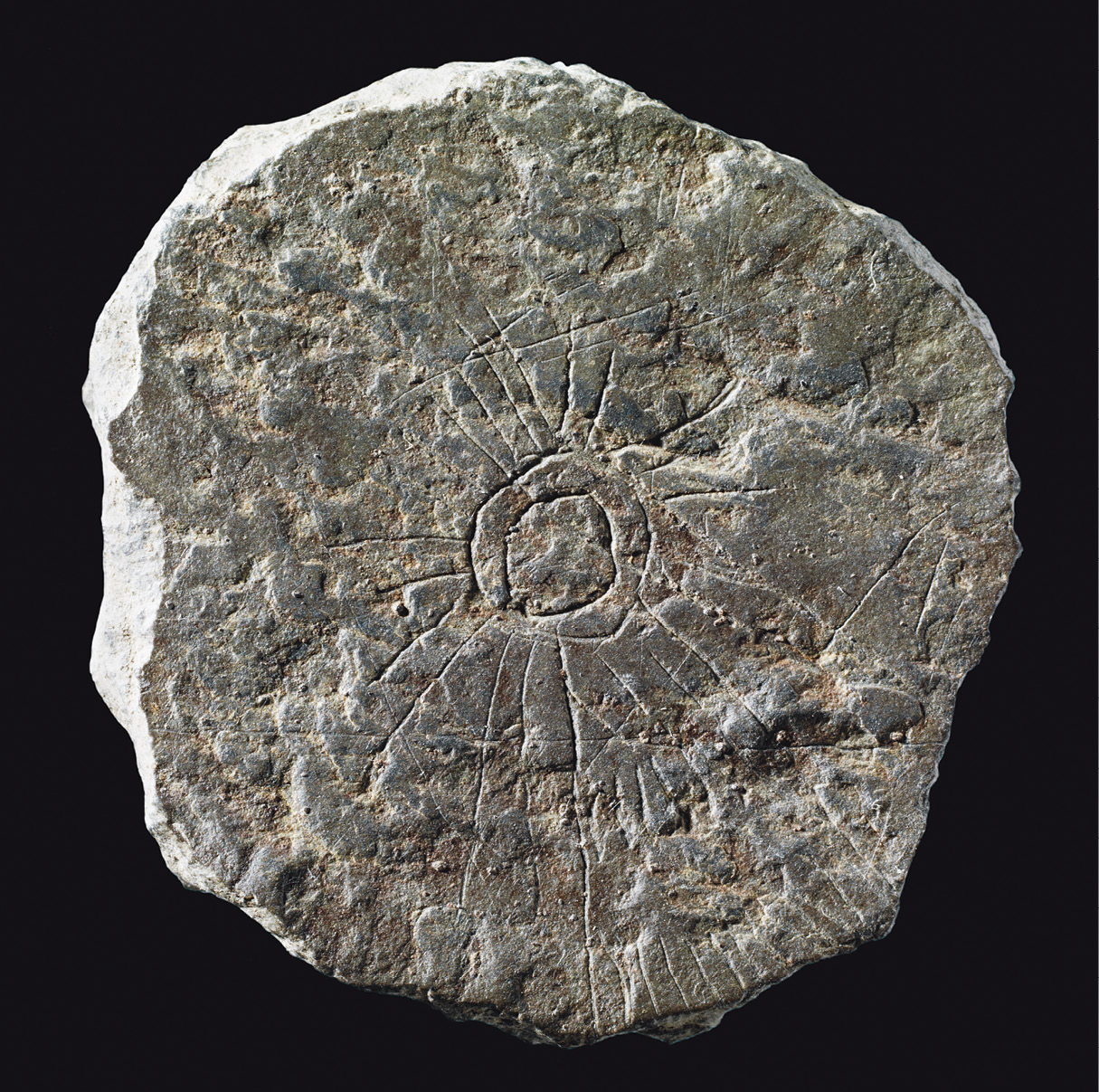
According to the researchers behind a new study, the large scale and limited timeframe of these depositions indicates that they were triggered by some kind of dramatic incident, very probably related to the visibility of the sun or the growth of crops, given the imagery depicted on the sun stones. This theory is supported by multiple environmental sources, which provide evidence for a sudden climatic shift around this time: annual lake sediments in Germany reflect a dramatic reduction in sunlight for several years around 2900 BC, while tree rings in multiple locations were affected by a string of frosty springs and summers. But what caused this sudden drop in temperatures and solar radiation? The answer, it seems, can be found in ice cores from Greenland and Antarctica, which contain evidence of a major volcanic eruption at the time in question. The sulphate aerosols ejected into the atmosphere by such an eruption would have created a haze that blocked out the light and warmth of the sun, causing a drop in global temperatures, as has been observed after other historic volcanic eruptions.
The eruption of c.2900 BC ranks among the most powerful in the Holocene. It is believed to have been on par with the Alaskan Okmok II eruption of 43 BC, the impact of which is documented by several ancient Greek and Roman scholars who recorded cold weather, crop failures, famine, and disease across the Mediterranean for over two years after this event. We can assume that a similar period of poor weather followed the eruption of c.2900 BC. This would have been both devastating and terrifying for the Neolithic people of Bornholm – and others affected across the northern hemisphere – for whom farming and the cycles of the sun were a central part of life.
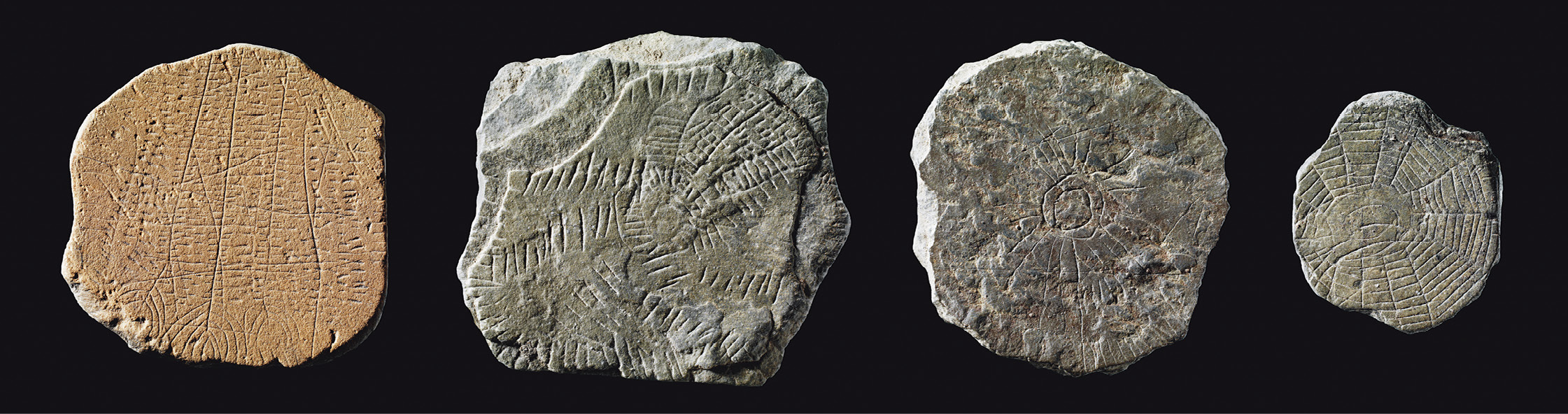
The recent paper in Antiquity (https://doi.org/10.15184/aqy.2024.217) therefore proposes that the deposition of the sun stones at Vasagård and Rispebjerg represents a community’s symbolic response to the sudden (and, to them, unexplained) climatic change they experienced as a result of the eruption – scattered in the ground either as offerings in hopes of ending these dark days or as a way of giving thanks when the sun returned.
Text: Amy Brunskill / Images: John Lee, National Museum Denmark