Subscribe now for full access and no adverts
Ongoing excavations in Insula 10, Regio IX, at Pompeii have uncovered a luxurious private bathhouse, one of the biggest ever found in a domestic context in the ancient city. The thermal complex is the latest remarkable discovery inside the grand house in the southern part of Insula 10 that has been the subject of recent archaeological investigations (see CWA 126).
The large bathhouse featured a caldarium (hot room), a tepidarium (warm room), and a frigidarium (cold room), as well as an apodyterium (changing room) with vibrant red walls, a mosaic floor inlaid with marble, and sufficient benches to accommodate up to 30 people. There was also a furnace room with pipes that brought water in from the street, and a boiler where it was heated for the caldarium; conditions would have been incredibly hot and unpleasant for the slaves working in here, in stark contrast to the luxury found on the other side of the wall. The frigidarium was particularly impressive, comprising a porticoed courtyard measuring 10m by 10m, with a large pool in the centre big enough for 20-30 people. The space had colourful red columns and was decorated with frescoes depicting athletic scenes, conjuring a sense of the Greek gymnasium, in order to highlight the erudition and cultivation of the owner of the baths.
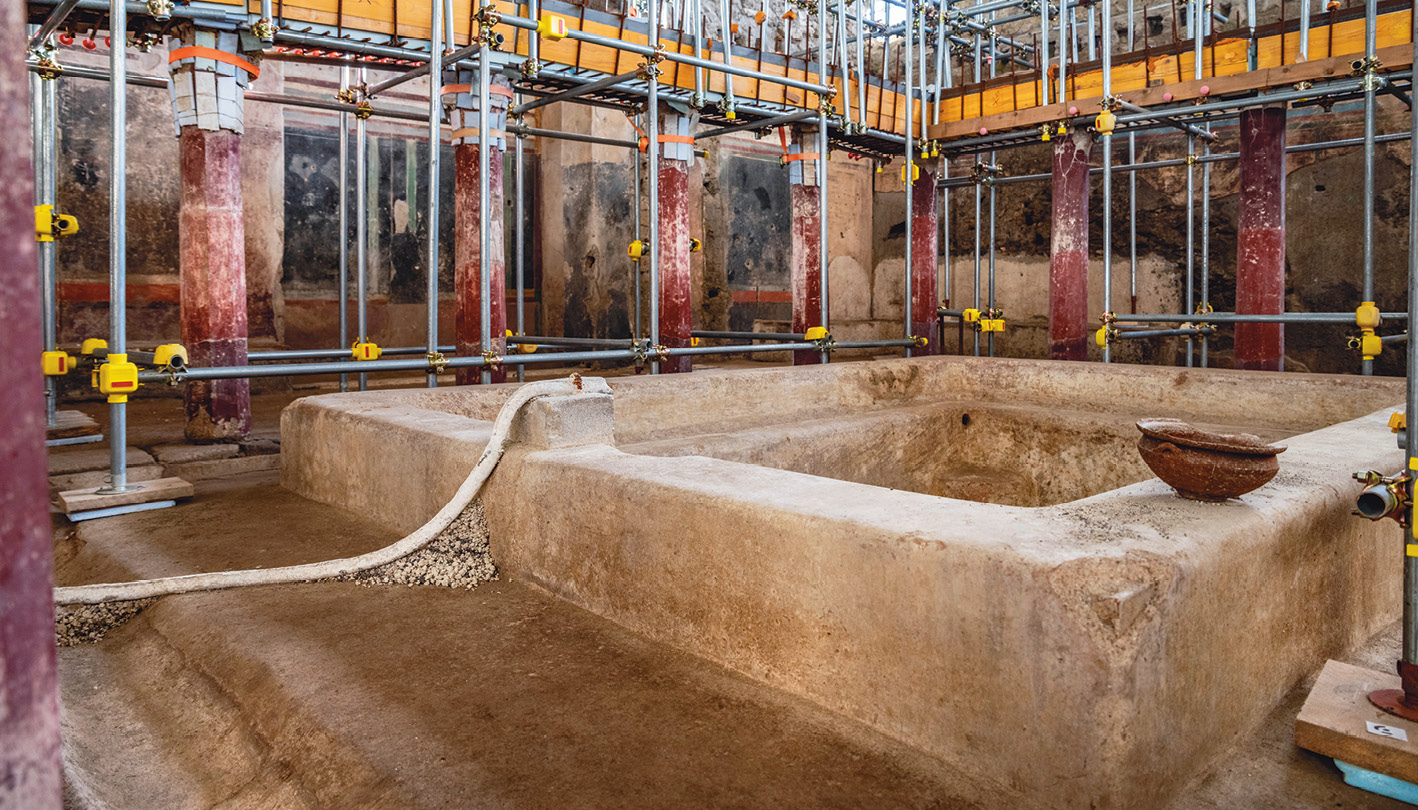
In fact, the whole complex was designed to send a message. Although this was a private bath, it was not intended for the use of the family alone. For the wealthy owner of the large house – possibly an influential Pompeiian politician called Aulus Rustius Verus – the home was a place to entertain guests, too. Gatherings hosted in this imposing domus offered a vital chance to show off wealth and social status, build business relationships, and consolidate political power. The bath complex is directly connected to the ornately decorated black banquet hall that was discovered last year, suggesting that visitors invited to dine here would also have been offered an opportunity to bathe and relax in the sumptuous private spa before their meal: all part of the lavish experience carefully designed to impress guests.
Text: Amy Brunskill