Subscribe now for full access and no adverts
Bahrain is not a place that many would associate with Christianity today: Islam has been the dominant religion since the 8th century AD. However, historical sources tell us that a branch of Christianity known as the Nestorian Church, or the Church of the East, flourished here from the late 4th to the early 8th century. Archaeological evidence for this has remained almost non-existent though, until now.
Beneath the mound
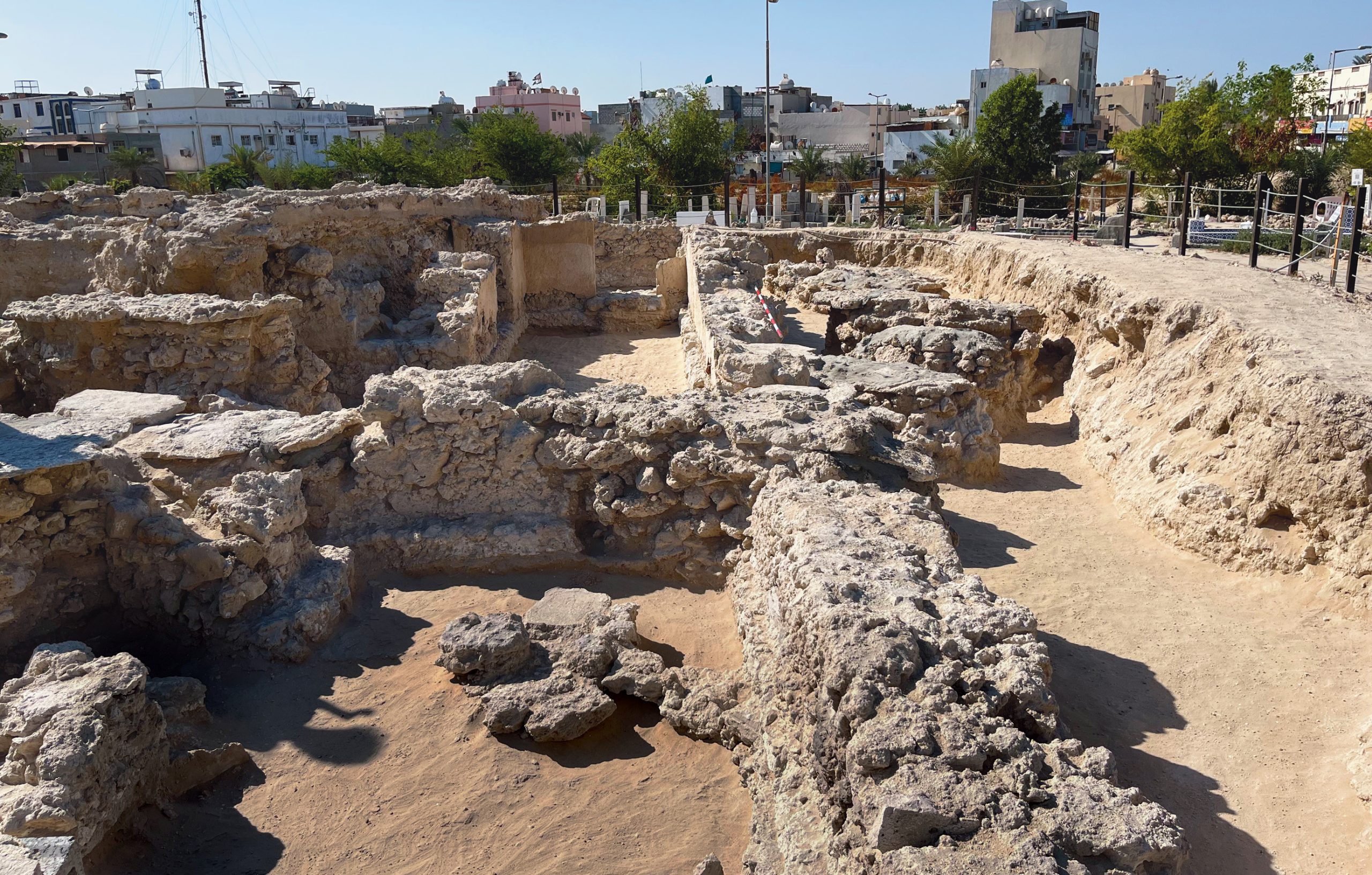
In the centre of a Muslim cemetery in the village of Samahij on Bahrain’s Muharraq Island, beneath the ruins of a mosque abandoned in the 17th-18th century, lay a small mound that the local community had long believed concealed something of importance. They therefore granted archaeologists permission to investigate inside the consecrated area, and excavations were carried out in 2019 and 2021-2023. The work was led by Professor Timothy Insoll from the University of Exeter in the UK and Dr Salman Almahari, General Director of Archaeology at the Bahrain Authority for Cultural Antiquities, as part of the Early Islamic Bahrain Project, which has been ongoing since 2001, supported by the Crown Prince of Bahrain.
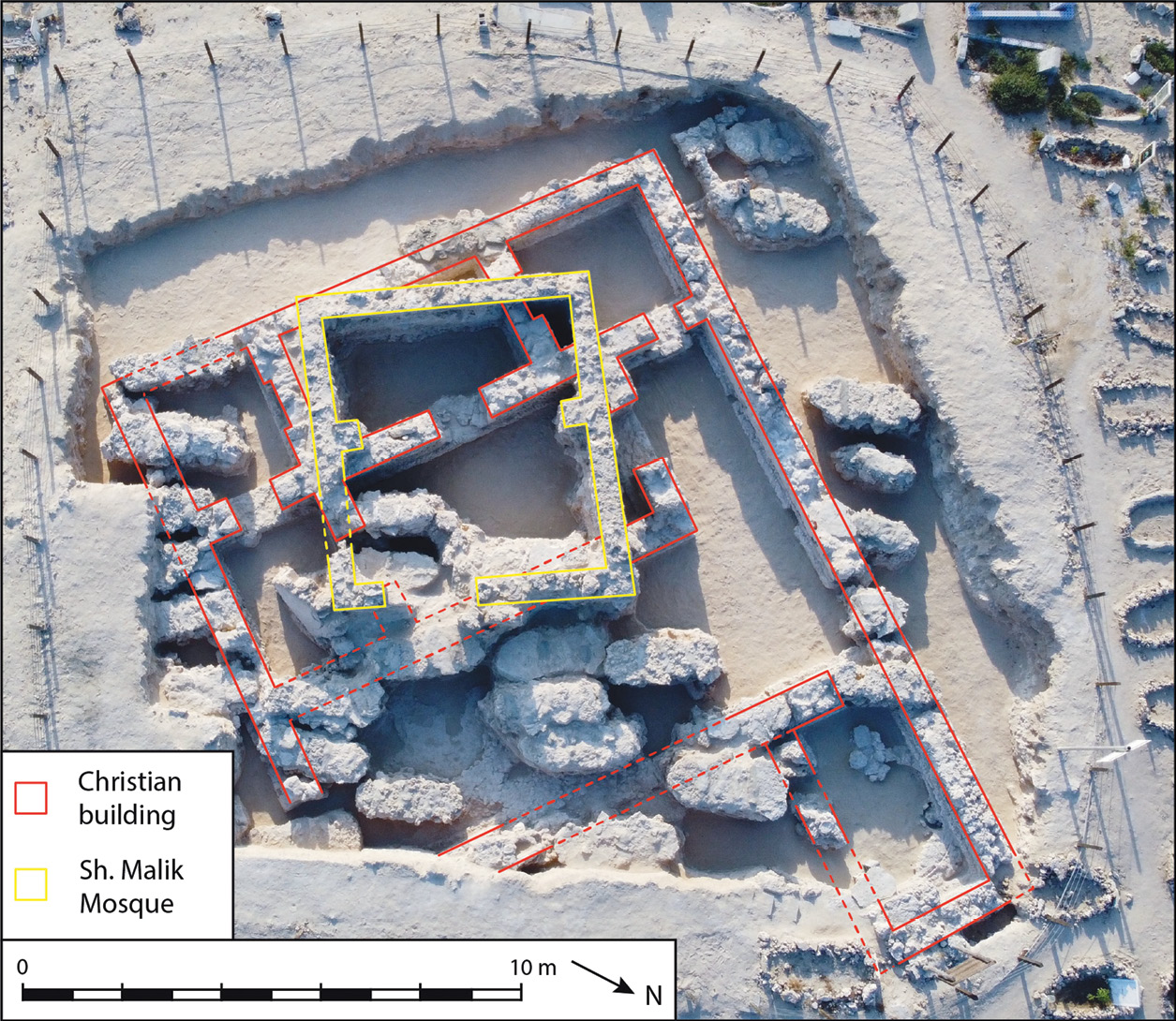
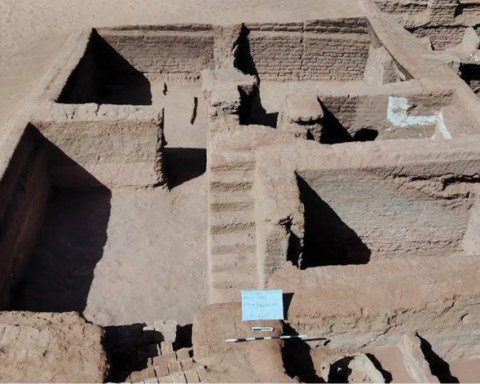
Before long, the local people’s suspicions were proved correct. Beneath the remains of the mosque, the team found evidence of a much older and larger structure. Measuring 12m by 16.5m, the building had thick, well-plastered coral-rag walls. Inside were plaster floors and distinct door surrounds and thresholds with indications of wooden fittings. Radiocarbon dating and ceramic chronologies reveal that the structure was in use from the mid-5th to the mid-8th centuries, when the Nestorian Church was at its peak in Bahrain, and the archaeology confirms that this building was indeed associated with the Church.
The structure comprises eight rooms, some with functions that remain unclear, but several spaces contain clues to their use. One is a workshop where spindles and copper needles were found, suggesting that the production of textiles for ecclesiastical vestments may have been taking place here. A long, narrow room with walls bearing peg marks from wooden furniture, possibly tables or benches, has been interpreted as a refectory or dining room. Another room ultimately became a kitchen, with several clay ‘torpedo jars’ reused as hearths. However, there are also signs of earlier activity in this space, including the remains of a circular structure that may have been an immersive baptismal font, potentially connected with the site’s church, which has not been identified but must lie somewhere nearby, outside the excavation area. Part of a bathtub coffin from the Late Dilmun period, c.1200 BC, was found in the kitchen area as well, revealing that the land was being used for burial long before it became Christian.
A wealthy Christian community
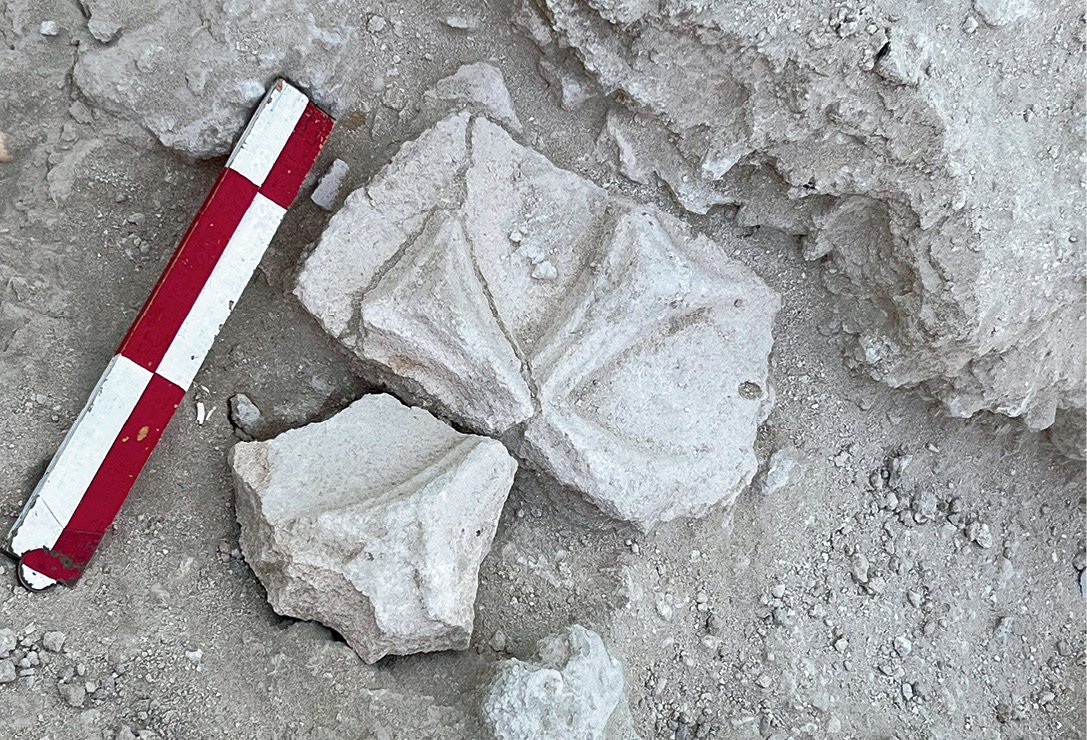
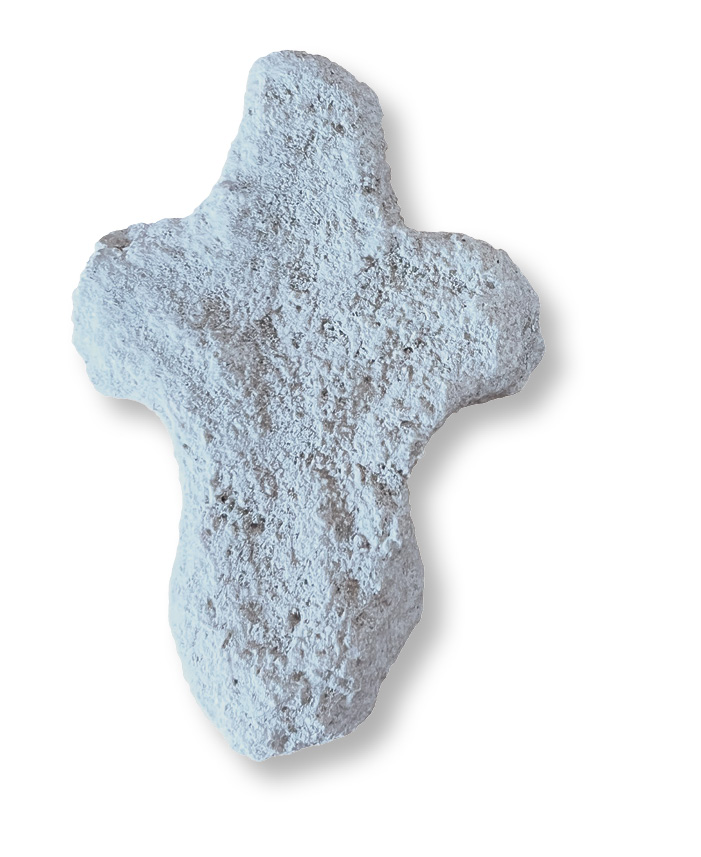
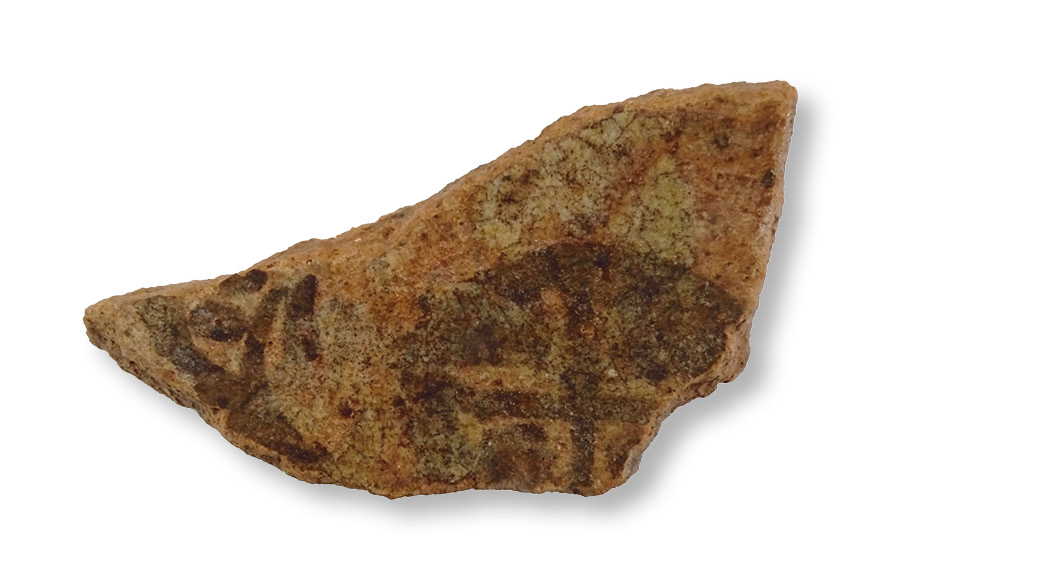
The building also features two living rooms with rich stucco decoration, including two plaster crosses with the flared terminals typical of the Nestorian Church. A smaller plaster cross was found, too, which appears to have been cut out of a larger lattice-work screen and rounded off so someone could carry it around as their personal mark of Christianity. Other indications of Christianity include a sherd of Coptic Glazed or Syrian Ware marked with a cross, and pieces of plaster inscribed with graffiti depicting a Chi-Rho and a fish: both early Christian symbols. There is also evidence that pork was being eaten here on a large scale, and fragments of wine glasses demonstrate that alcohol was being consumed as well: both activities that ceased entirely after conversion to Islam.
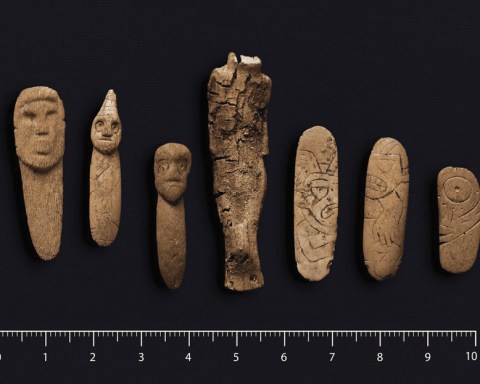
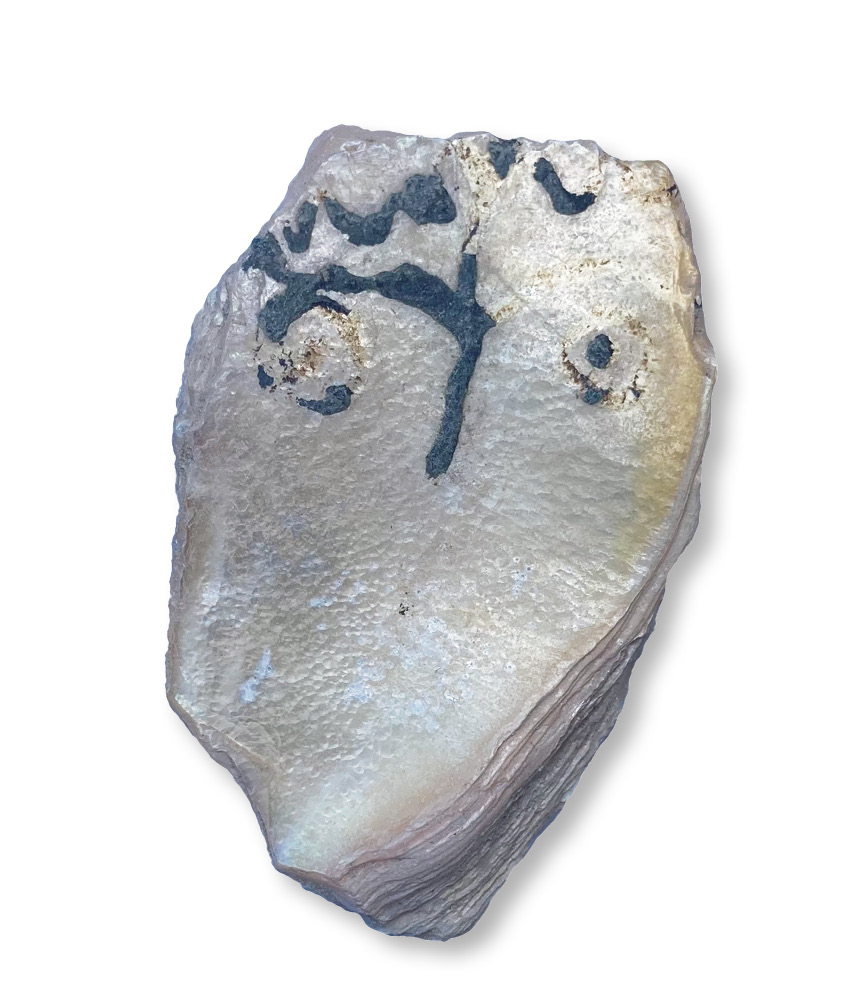
Other finds include faunal remains from several types of mammals, fish, shellfish, and turtle, as well as various crops, indicating that the building’s inhabitants were eating well. The archaeologists also uncovered signs of connections with other parts of the world, including carnelian beads and pottery originating in India, and glass vessels and copper coins from the Sasanian Empire in modern-day Iraq. One more unusual discovery was a pearl shell decorated with a face drawn in bitumen, presumed to be a toy for a child, suggesting that family groups were present here too.
A lost episcopal palace?
The area surrounding this impressive building remains a mystery, as it lies beneath the extant Muslim cemetery and therefore cannot be excavated or surveyed. However, the corners of several other structures were uncovered during excavations, suggesting that the site lay at the heart of a wider settlement, estimated to have been home to several hundred people.
The size of the building and the luxurious nature of the finds within make it clear that this was an important and wealthy Christian centre. The archaeologists therefore propose that it was an episcopal palace, home to the bishop of the diocese. Several historical sources include references to the bishopric or episcopal seat of ‘Mashmahig’, which seems to have been the most important diocese within the north-eastern Gulf. Scholars have previously suggested that this name could be a variation of the contemporary village name, Samahij. Now the archaeological findings appear to confirm this. Excitingly, it seems that the team has uncovered the location of the palace of the bishops who once controlled a large area of the Gulf region.
The discovery represents the first building associated with the Nestorian Church to be found in Bahrain, and one of the oldest examples currently known in the Arabian Gulf. It is also one of only a handful of Christian sites found across this whole region and, to date, the only one located in the middle of a densely populated modern settlement. The findings at Samahij therefore offer a valuable contribution to our understanding of this fascinating period of history, both confirming details from written records and shedding new light on what life was like for the members of these early Christian communities.
Excavations at the site are now complete and plans are under way for a site museum, which is hoped to open in Samahij next year and will be tied into a new display at the National Museum of Bahrain. The publication of an excavation monograph is planned for next year, too.
All images: copyright T Insoll