Subscribe now for full access and no adverts
Excavations in coastal Ecuador have uncovered an intriguing burial belonging to a woman who appears to have died under violent circumstances before being interred with a striking selection of grave goods.
Buen Suceso is a site primarily from the Valdivia period (3750-1475 BC), but several years ago bones began to erode to the surface from a set of later burials associated with the Manteño tradition, which existed along the coast of Ecuador between AD 650 and 1532. Rescue excavations were carried out, uncovering a total of seven Manteño period burials, but one stood out from the rest.
This burial, dated to AD 771-953, belonged to a woman aged 17-20 years old, who was between seven and nine months pregnant at the time of death. Skull fractures suggest that she may have been killed by a blow to the front of the head, and her hands and left leg appear to have been removed before burial, a practice not commonly seen in mortuary contexts in coastal Ecuador.
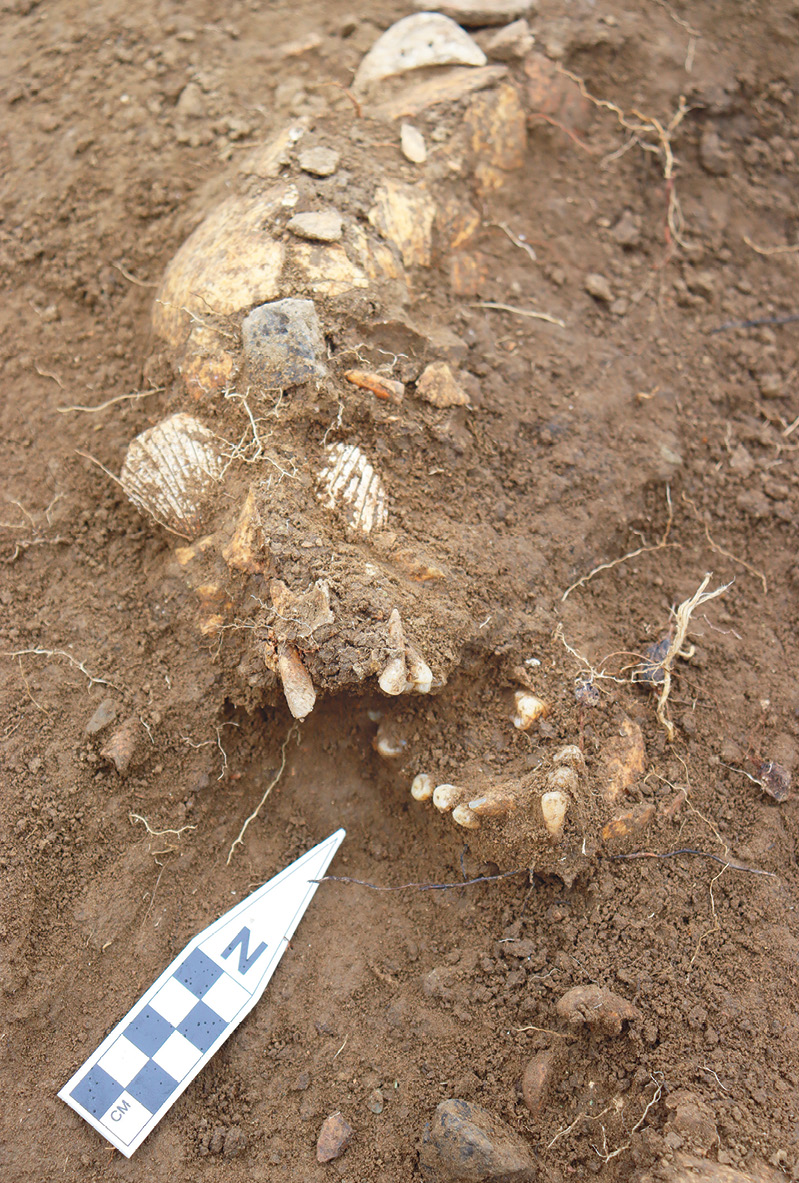
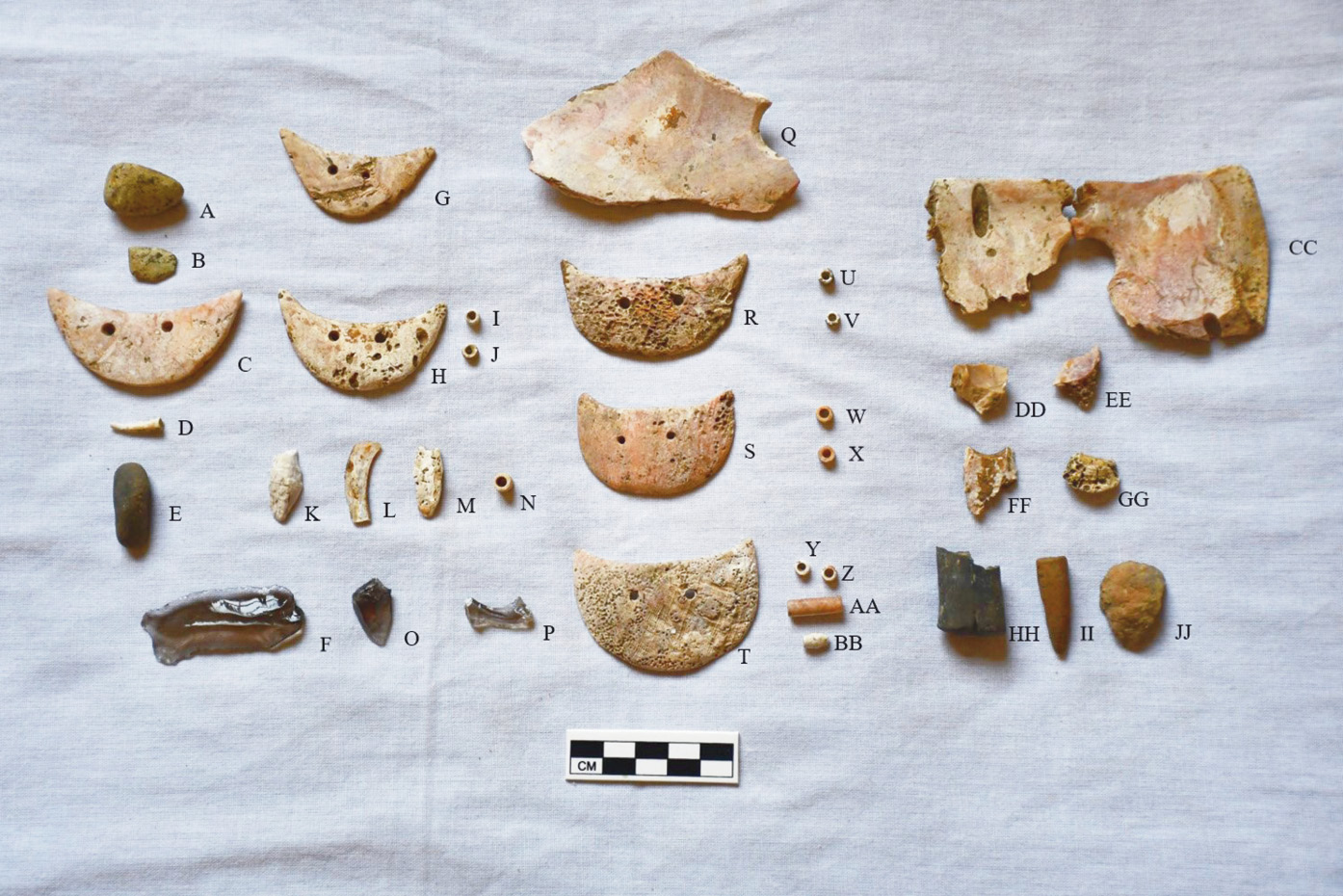
The cranium of another individual, aged 25-35, was placed in the burial pit near the woman’s left shoulder. She was also interred with a collection of notable grave goods, including cockle shells placed in her eye sockets, a large green stone and several ceramic fragments on her forehead, a crab claw on her abdomen, three obsidian blades on the left side of her body, and a star-shaped limestone mace found nearby. A number of Spondylus ornaments were found around the body as well: rectangular Spondylus pendants and small chaquira-type ornaments, which are common in Manteño contexts, but also crescent-shaped mascaras, which are associated with the Valdivia culture and are likely to pre-date the burial by around 2,000 years. The use of green stones like the one placed on the woman’s face was more common in Valdivian burials, too, where they represented a link between death and fertility. Finally, it seems that the burial was reopened at a later date, c.AD 991-1025, and a burnt offering placed in the thoracic cavity.
Many of the artefacts found in the burial are related to either rivers or oceans, and Spondylus shells were also associated with fertility in pre-Hispanic South America, sometimes given as offerings during times of environmental upheaval. The presence of these objects, as well as the pregnant condition of the young woman, has therefore led researchers to suggest that the burial may represent a rare example of human sacrifice in prehistoric Ecuador, possibly linked to an incident involving water or the ocean impacting the fertility of people or the landscape, such as an El Niño event. Another potential interpretation posits that this woman could have been a powerful individual (thus deserving of valuable grave goods) who was killed and dismembered by a political rival seeking to eliminate both her and her unborn child.
At present we can only hypothesise about the exact circumstances surrounding the woman’s death. Regardless, this unique discovery represents a valuable addition to Ecuadorian archaeology, providing fascinating evidence of previously unseen mortuary practices. The research has been published in Latin American Antiquity (https://doi.org/10.1017/laq.2024.20).
Text: Amy Brunskill / Images: Sara Juengst