Subscribe now for full access and no adverts
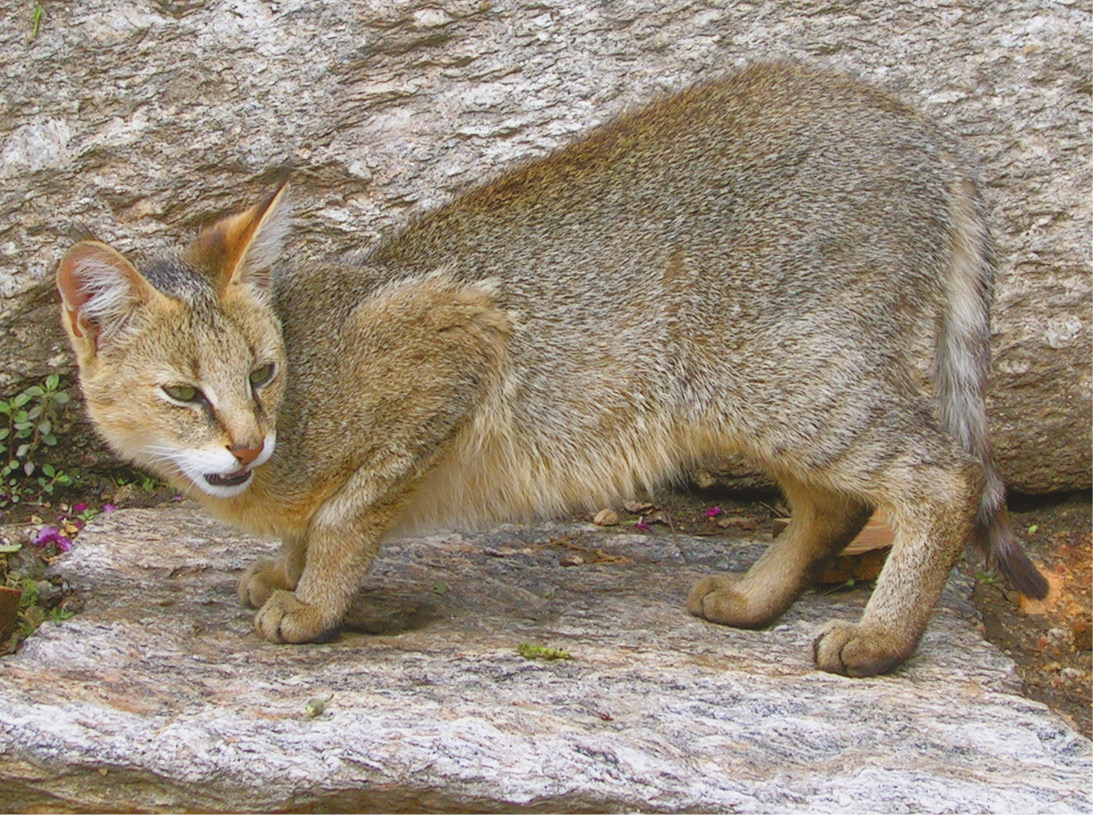
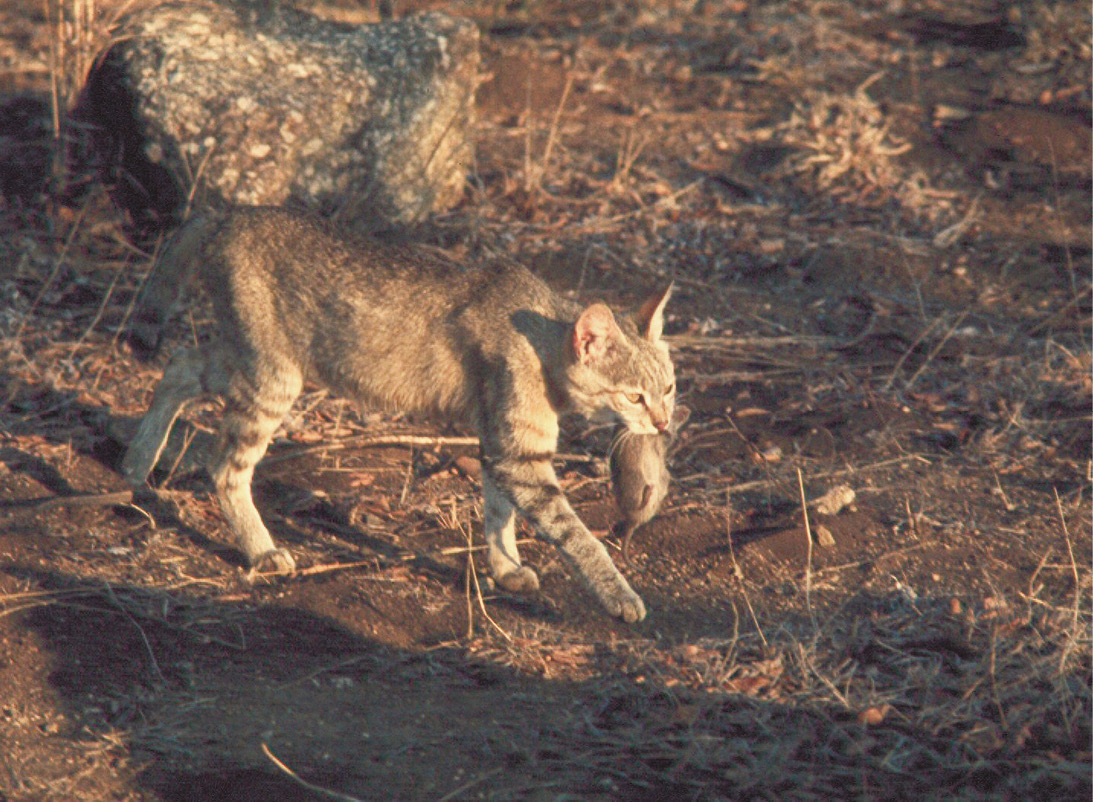
The oddly solitary nature of cats has intrigued humans since ancient times. The inherent mysteriousness and aloofness of the cat and other felines have made them ideal for representing divinities, while their propensity to be tamed, and ability to hunt harmful vermin, have helped them form intimate relationships with humans, particularly in agrarian societies. The African wildcat is believed to be the common ancestor of the majority of modern domestic cats. The two species of smaller felines most common in ancient Egypt were the jungle cat (Felis chaus) and the African wildcat (Felis silvestris lybica), which are still present in small numbers today. The Egyptians did not distinguish between wild and domesticated felines as such; all types of cats, including lion, cheetah, and caracal, were known by an onomatopoeic name: miu, translated as ‘he or she who mews’.
Earliest evidence
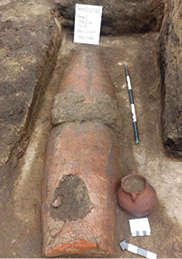
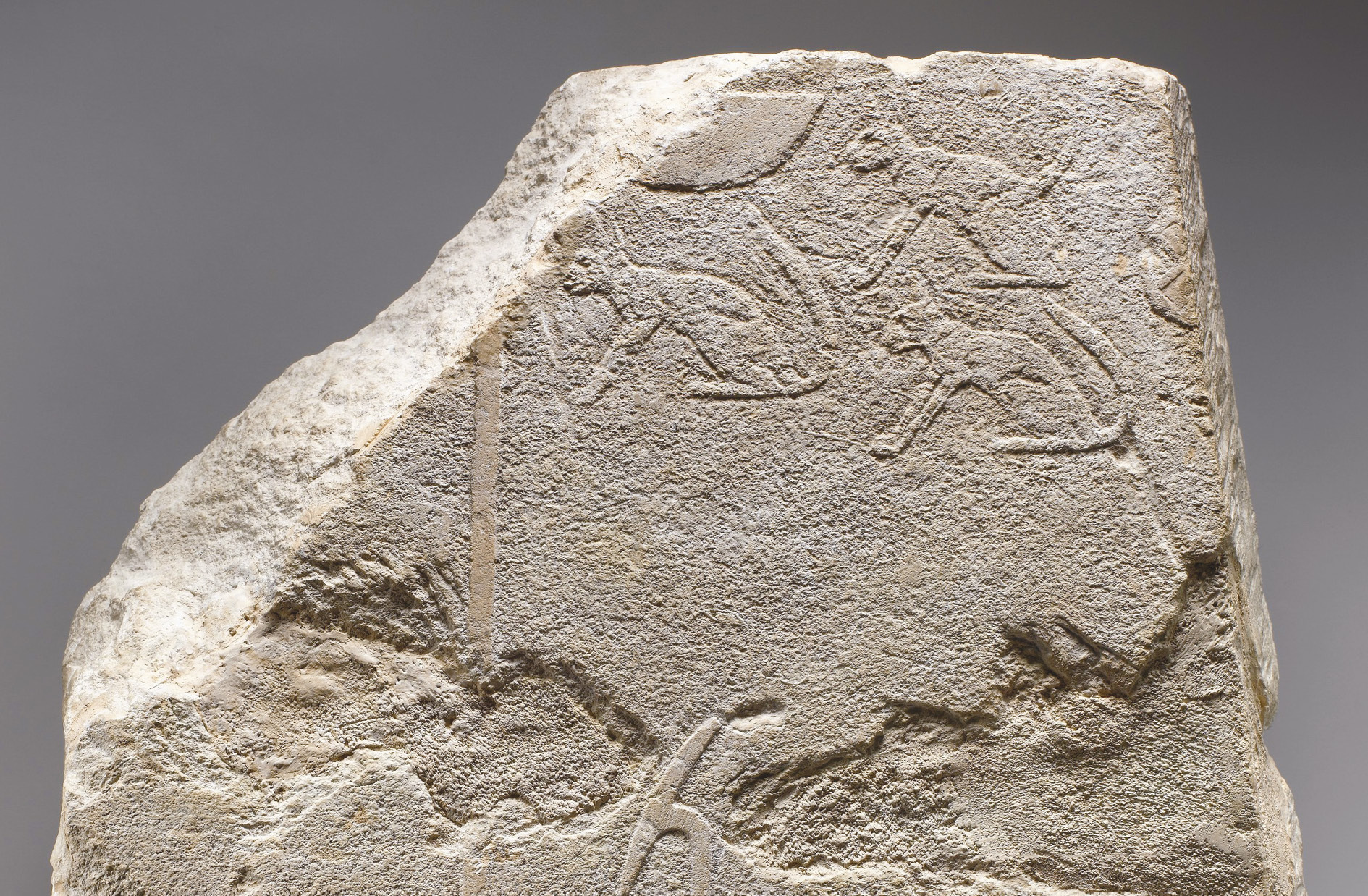
The first physical evidence for potentially domesticated cats in Egypt is found in a tomb at Mostagedda, in Upper Egypt, dating to the Badarian period (c.4400-4000 BC), while at Predynastic Abydos (c.5300-3000 BC) the skeletons of 17 small domestic cats were found, together with a row of small milk pots for feeding them. The oldest images of cats in ancient Egypt appear as hieroglyphs at Lisht. A block relief dating to the later Old Kingdom (found within the Middle Kingdom pyramid complex of Amenemhat I) names a city called Miuu, written as three seated cats that reads ‘Lord of Cats’ Town’. However, it is not known if there was actually a ‘town of cats’, or if the cat signs are there to spell out the name of the location phonetically.
Depictions of cats
There are only a few examples of representations of cats dating before the Middle Kingdom, including a wildcat depicted in a wildlife scene from the Old Kingdom temple of Nyuserra at Abu Gurob (which is now destroyed) and the image of what appears to be a cat and a mongoose in the Giza tomb of Meryranefer (Qar) from the reign of Pepy I.
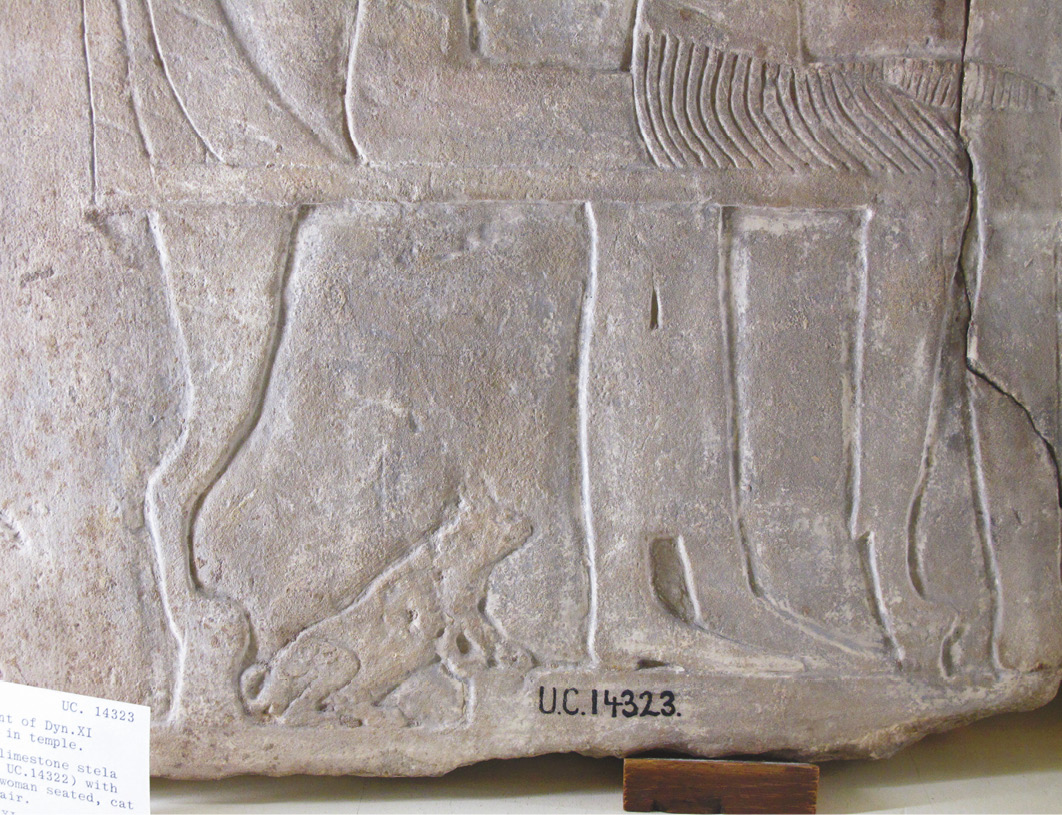
Cats are more commonly depicted from the Middle Kingdom onwards. A small cat-like animal with a curled tail can be seen sitting under a chair in a fragment of a stela from Coptos dating to the Eleventh Dynasty (c.2125-1650 BC). Textual evidence from the same period suggests that the cat was a particular favourite of Mentuhotep II, who kept cats as pets.
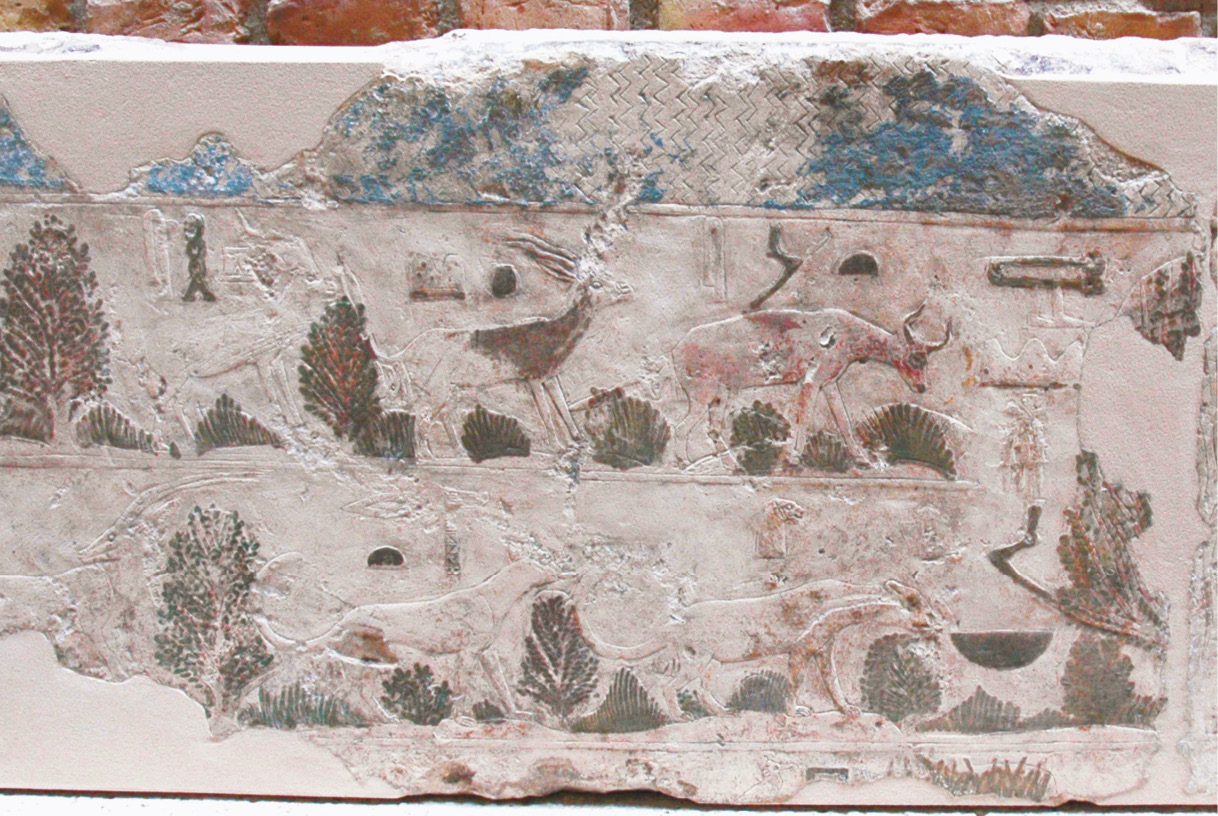
The Tomb of Khnumhotep II at Beni Hasan has another example of a cat, which is shown balancing on a papyrus stalk while hunting in the marshes. Scholars have argued over whether this is a representation of a wild jungle cat, and so part of the natural fauna, or of Khnumhotep’s pet, brought by its owner to flush out the birds, and thereby aid the hunt.
The number of cat depictions in reliefs peaked during the New Kingdom (c.1550-1069 BC) and the Third Intermediate Period (c.1069-747 BC), most of which were found in Theban tombs. Specifically, four categories of motifs are identified by scholars, representing idealised manifestations in the afterlife:
(1) cat with a raised paw;
(2) cat seated under the chair of a woman;
(3) cat in hunting and fowling scenes; and
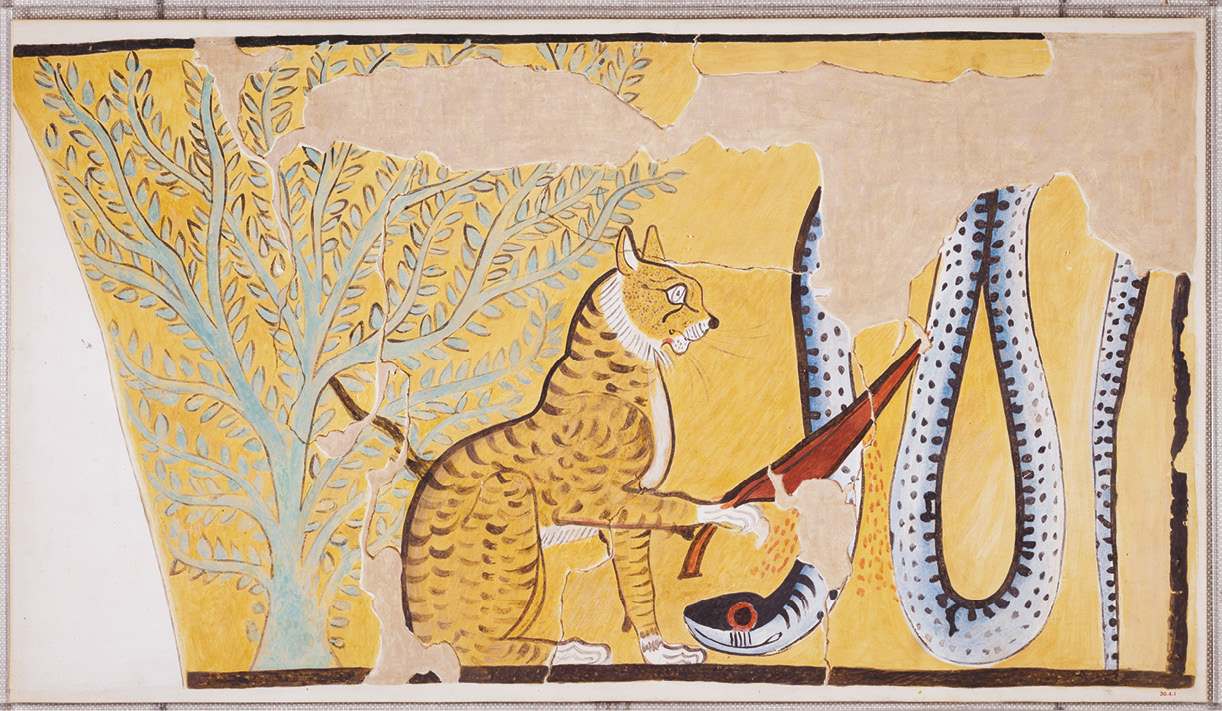
(4) cats and cat-headed creatures attacking the serpent Apep (Apophis).
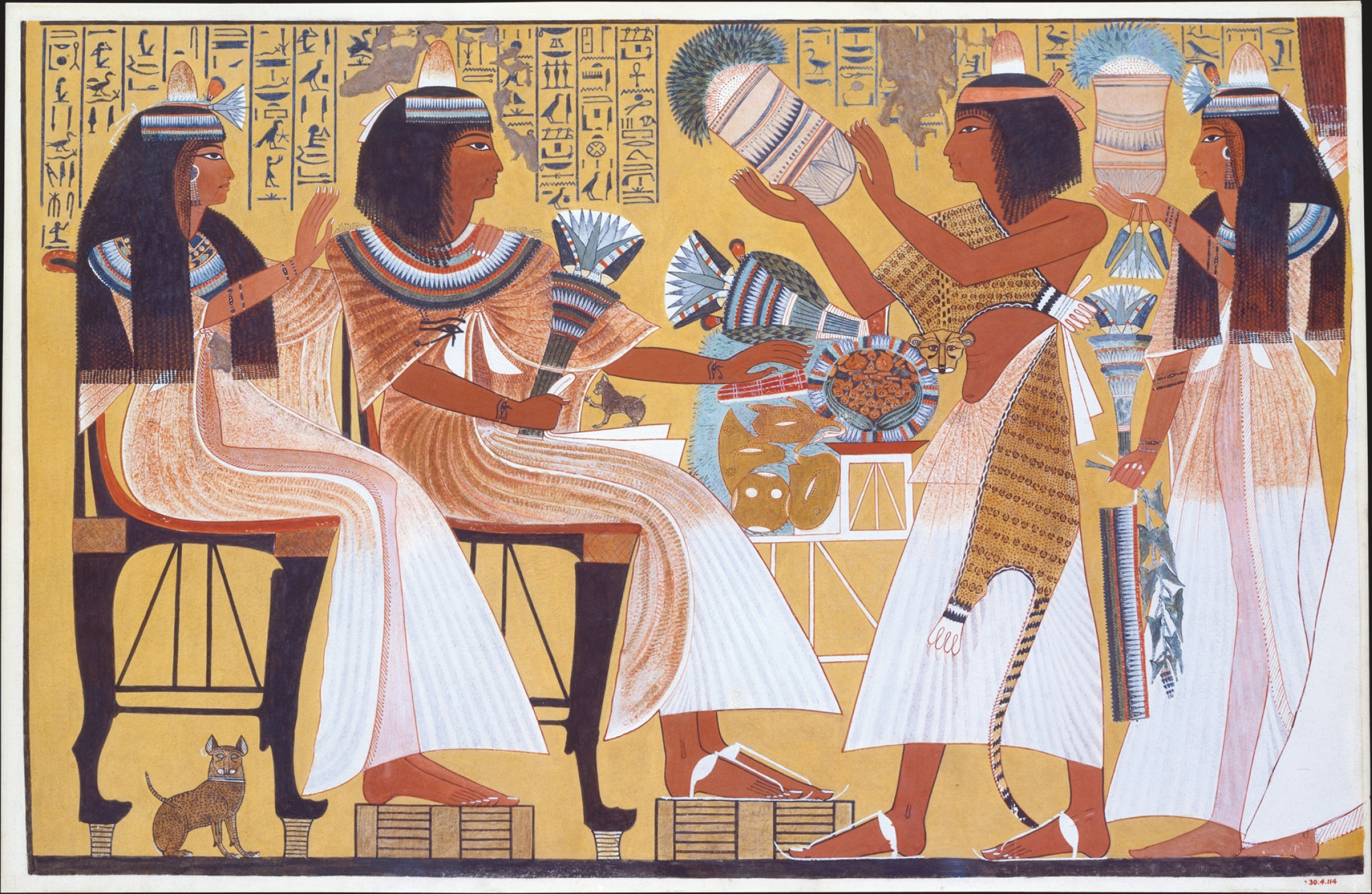
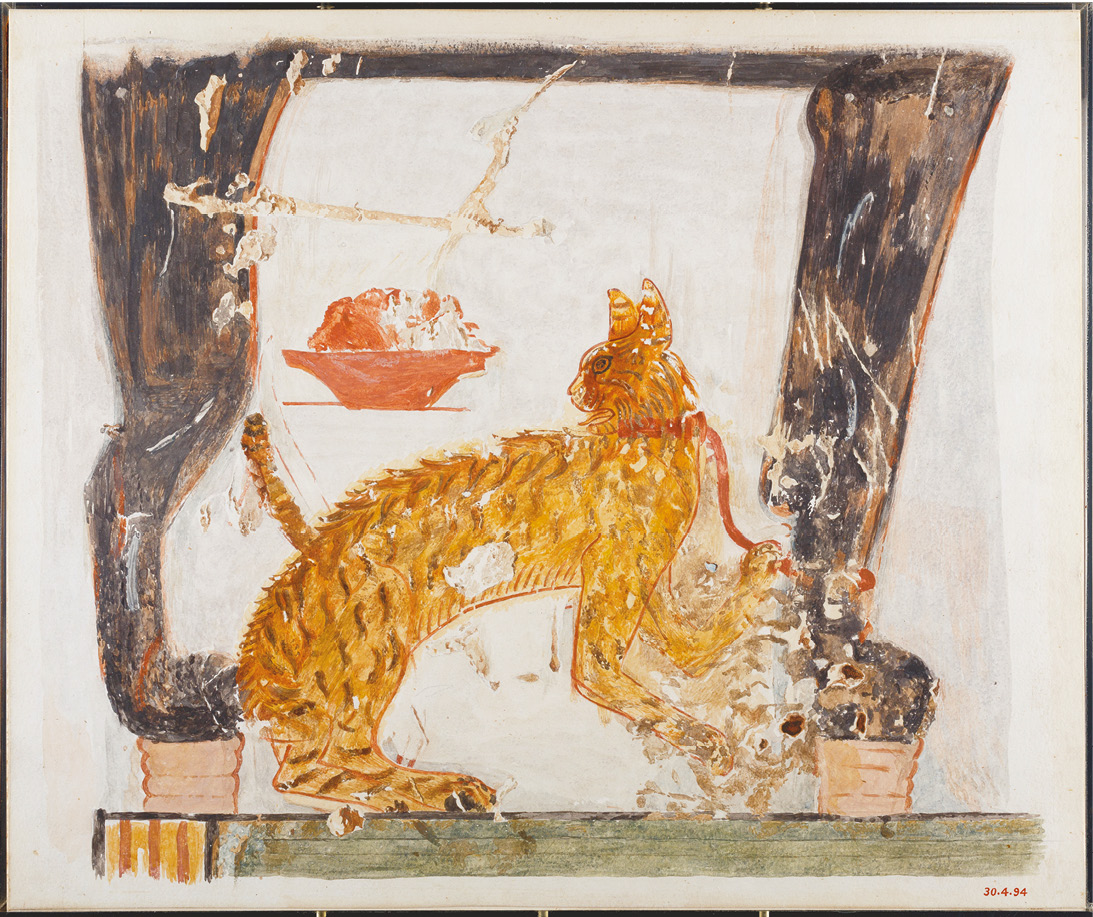
An example of the first and second motifs can be seen in TT217, the tomb of the royal sculptor Ipuy and his wife Duammeres, who are shown dressed in fine clothes, accepting decorative bouquets from their son and daughter. A playful kitten sits on Ipuy’s lap with its front paw raised, batting at Ipuy’s sleeve, while an adult cat sits under the chair of Duammeres. This cat is unusual in being depicted looking straight at the viewer. It also has a silver earring and a striped collar around its neck, suggesting it is being pampered.
The motif of ‘the cat under the chair’ was common in Egyptian art, not only filling the empty space between the chair legs, but also confirming the cat’s importance to the mistress of the house during this period. Similar scenes are found in the tombs of May (TT130), Raya (TT159 – see p.57), Penbuy and Kasa (TT10), and Neferrenpet and Kenro (TT178).
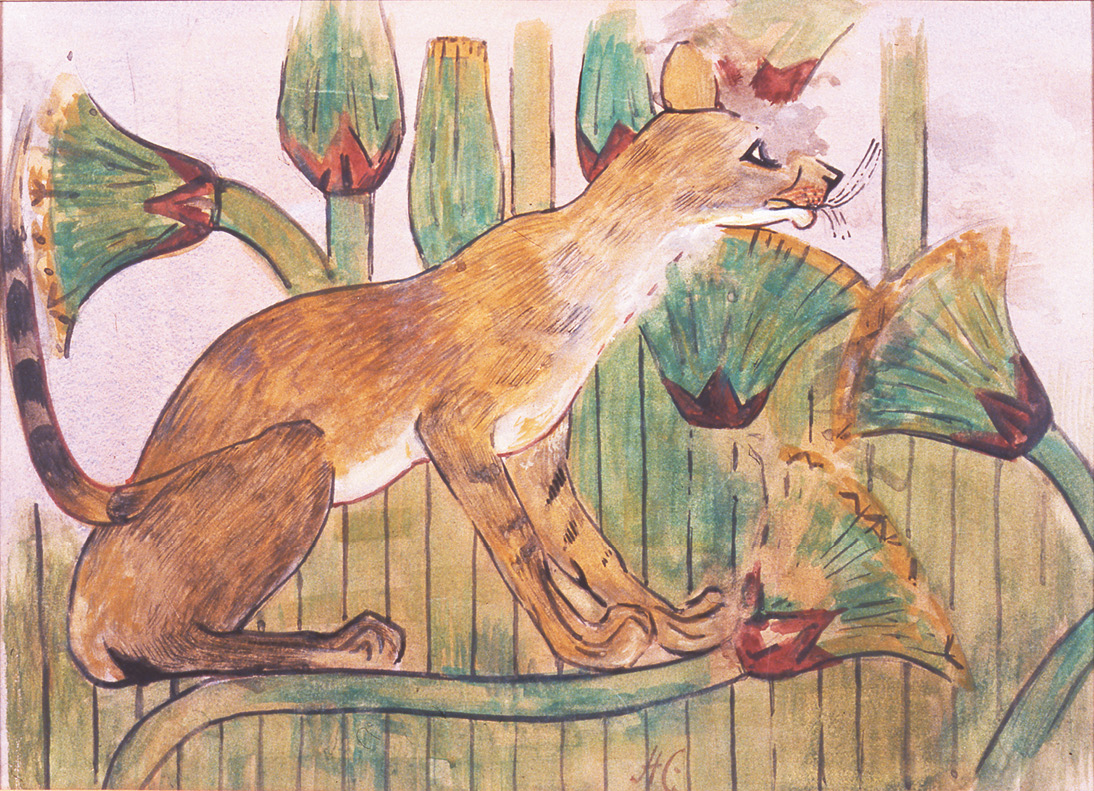
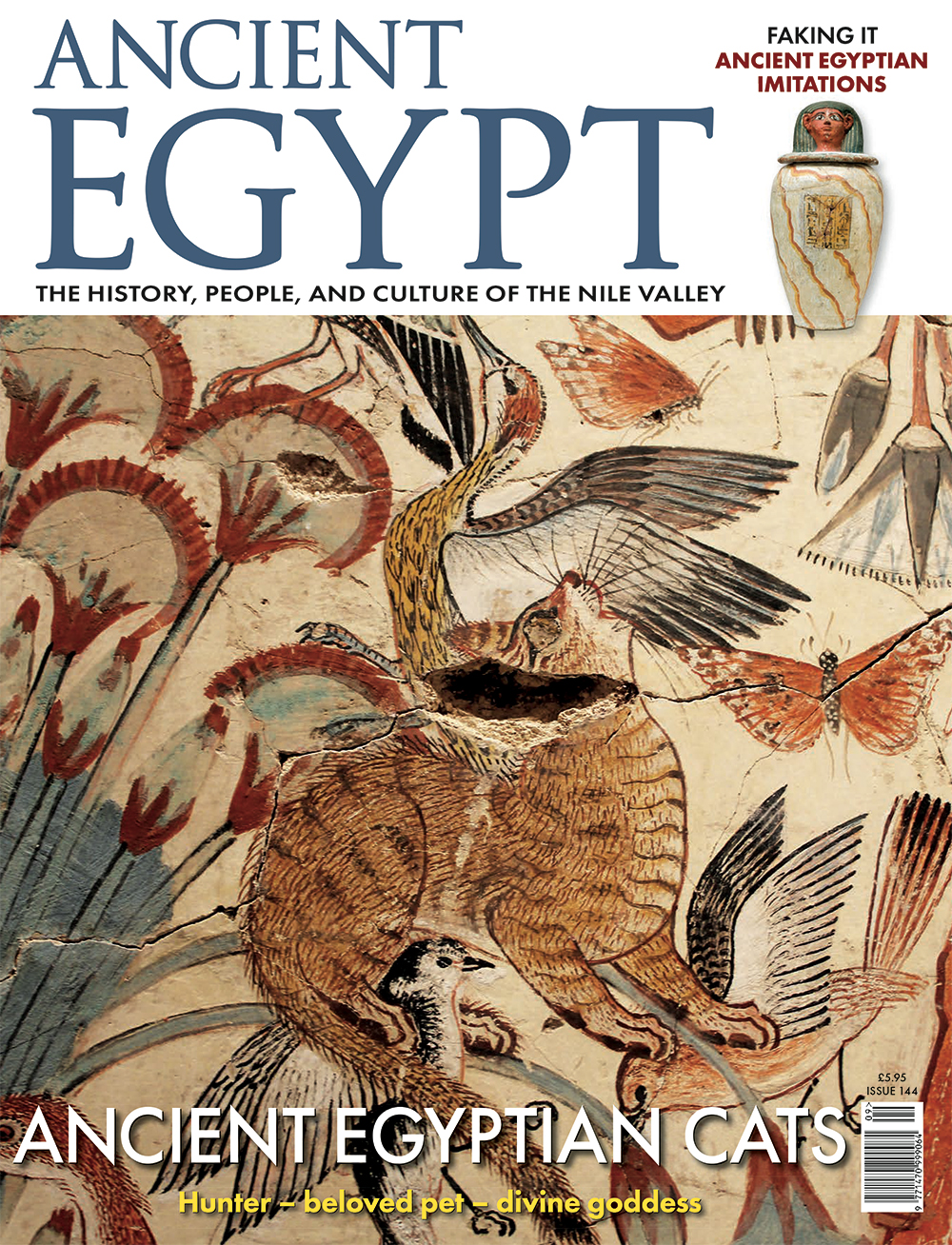
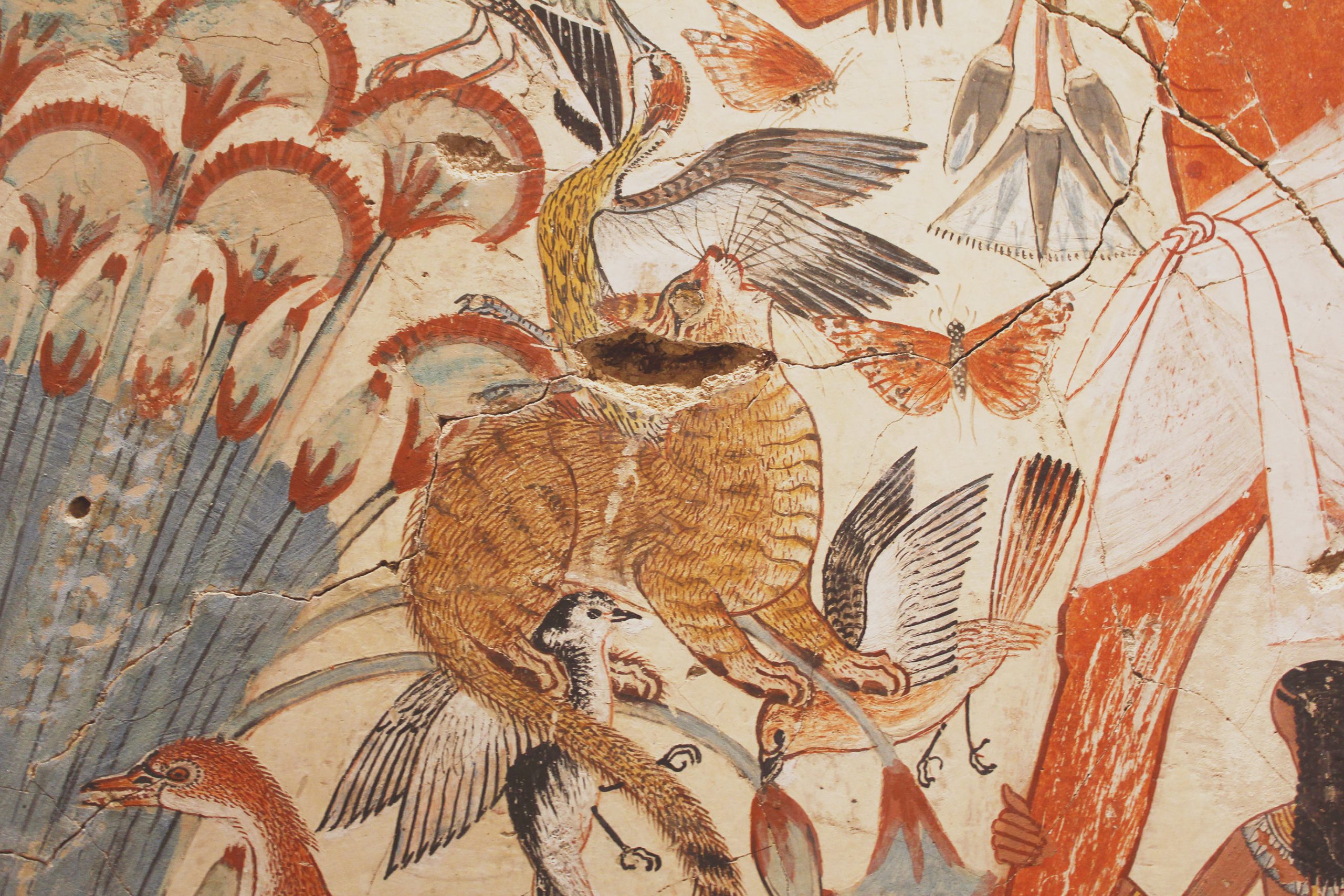
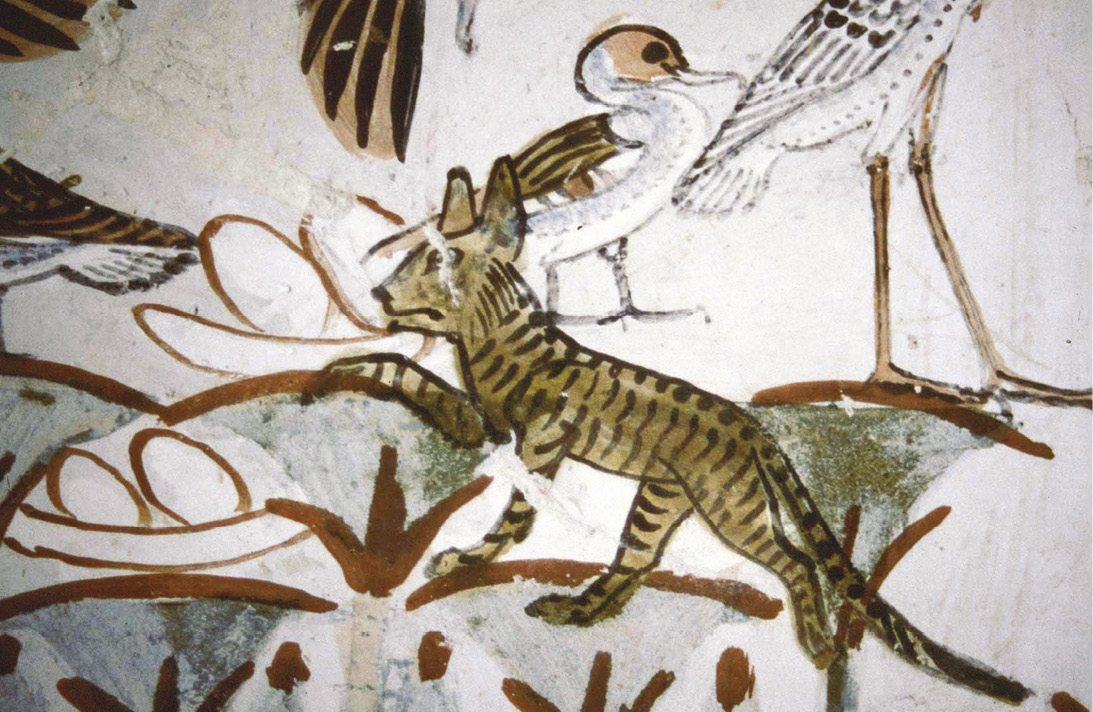
One of the earliest depictions of a cat hunting in the marshes is in the Tomb of Menna (TT69) – where the cat is seen climbing papyrus stalks to reach the birds, while one of the finest examples is from the Tomb of Nebamun, which shows a cat balanced on two papyrus stalks, clutching three birds with its hind legs, front paws, and in its mouth.
Religion, magic, and worship
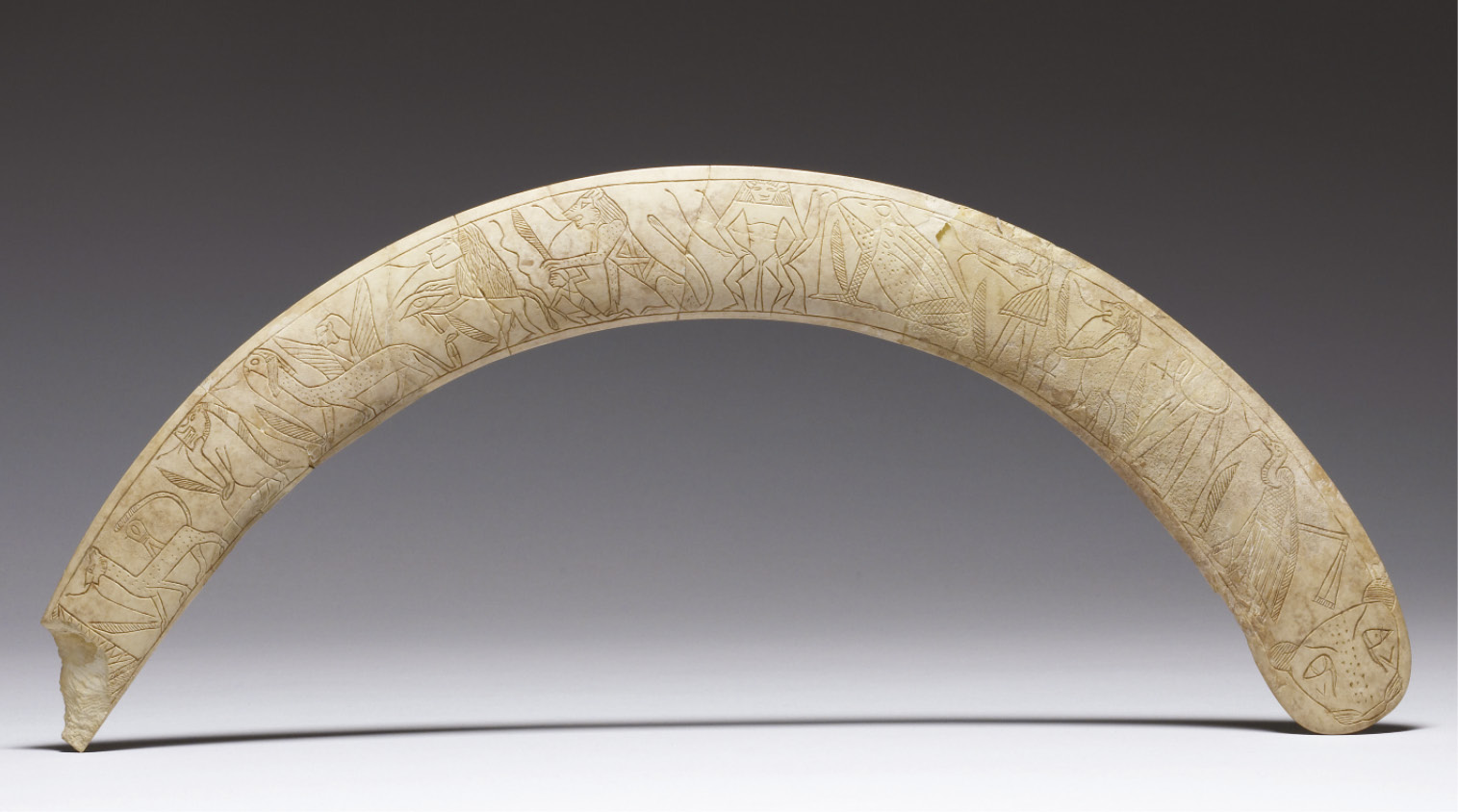
Depictions of cats in a religious context began to appear in the Middle Kingdom in the form of apotropaic symbols on ‘magic wands’ or ‘magic knives’. Represented in standard ‘hieroglyphic poses’, these symbols specifically portrayed the cat’s protective nature, linked with its ability to kill snakes and scorpions. Their magical abilities extended to agriculture: according to a New Kingdom dream interpretation papyrus, seeing a large cat was a good omen, predicting a large harvest.
Egyptian religion was relatively fluid, and over time cats were associated with a number of Egyptian goddesses and gods – most closely with Bastet, but with other feline goddesses too, such as Sekhmet and Pakhet. Cats were primarily raised and kept in the temples of their special deities. The cat-goddess Bastet, like all other feline goddesses, was the ‘Eye of Ra who protects her father Ra’, and displays the same ferocity when invoked as a war goddess.
Cat-headed goddess
Evidence for the origins of the cat-goddess is scanty. Bastet was originally depicted as a lioness-headed goddess with similar characteristics to the other feline goddesses, although she was considered less aggressive. She was shown wearing the sun disc and uraeus, and carrying an ankh and papyrus sceptre. By the New Kingdom, a cat or a cat-headed woman had become the most common representation of Bastet. Her main cult centre was Bubastis (Per-Bast) in the north-east Delta, but from the beginning of the Third Dynasty (c.2686 BC), Bastet was linked with other places too, especially Memphis (possibly through Sekhmet), Heliopolis, and Herakleopolis.
Bastet’s popularity increased dramatically during the 1st millennium BC, reaching a peak during the Ptolemaic era (332-30 BC). During this period, Bastet was the second most popular element in personal names (with Osiris being the most popular). Examples include Bastetirdis and Pedibast meaning ‘s/he whom Bastet gave’; Senobastis meaning the ‘son of the daughter of Bastet’; Ankh-Bastet meaning ‘may Bastet live’; and Nakhtebasterau meaning ‘Bastet is powerful against them’. The reason for the transition from lion-headed to cat-headed goddess is not fully understood, although it is likely that people felt a greater affinity with cats and cat symbolism than with the more dangerous aspects of lionesses.
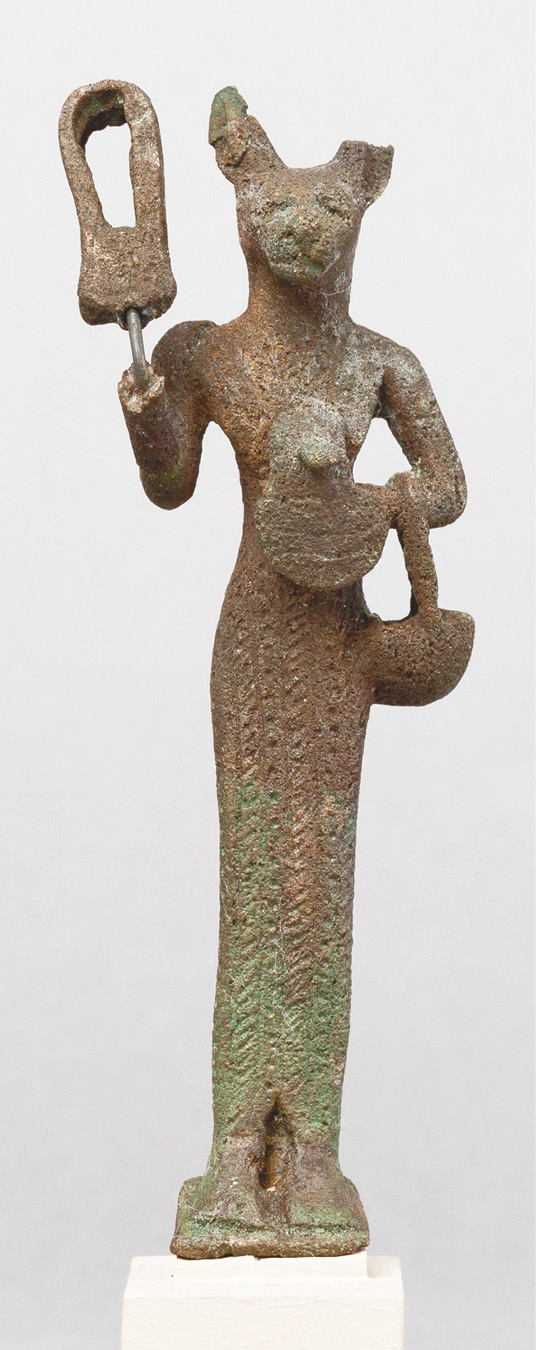
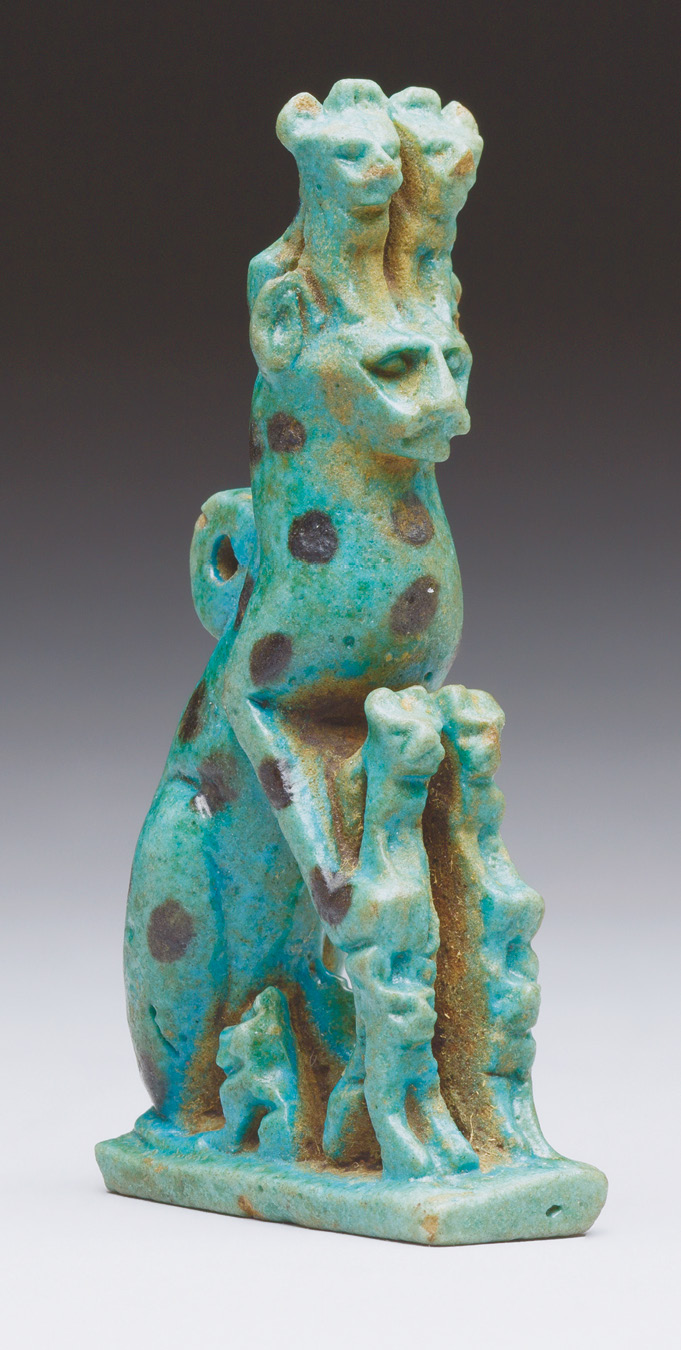
The cat-headed Bastet is usually shown carrying a sistrum, an important cult instrument which, when shaken, produces a tinkling sound, mimicking the sound of rustling papyrus. Its function was to drive away evil and to pacify the angry goddesses. Another cult object associated with Bastet is the menat, a multi-strand necklace with a large counterpoise of metal, wood or stone, usually worn by royal women and priestesses. It was also used for pacification rituals to calm dangerous feline goddesses. The goddess usually wears earrings in pierced ears, with a scarab on her head, and always carries a basket. Sometimes the goddess is accompanied by kittens, representing the child Horus, or her own son Nefertum.

The name Bastet, ‘she of the ointment jar’, suggests a strong link to perfume, and she was associated with music and dance as well. A text from the Eleventh Dynasty states: ‘so that you will be happier than the Mistress of Bubastis’, suggesting Bastet is frequently related to festivals as a goddess of love and joy. People often thanked her and dedicated to her, particularly at New Year, when people exchanged small blue-glazed flasks, amulets or statues of cats, often inscribed with the name of Bastet. The goddess in her more dangerous aspect could inflict plague, so the festivities may have allowed the people to thank her at the end of a plague-free year.
The cat goddesses eventually lost their divinity with the introduction of Christianity in the 1st century AD; the closure of the Temple of Philae in AD 553 marked the official end of the ancient Egyptian religion, although some aspects may have survived as folklore to this day.
Attitudes to cats
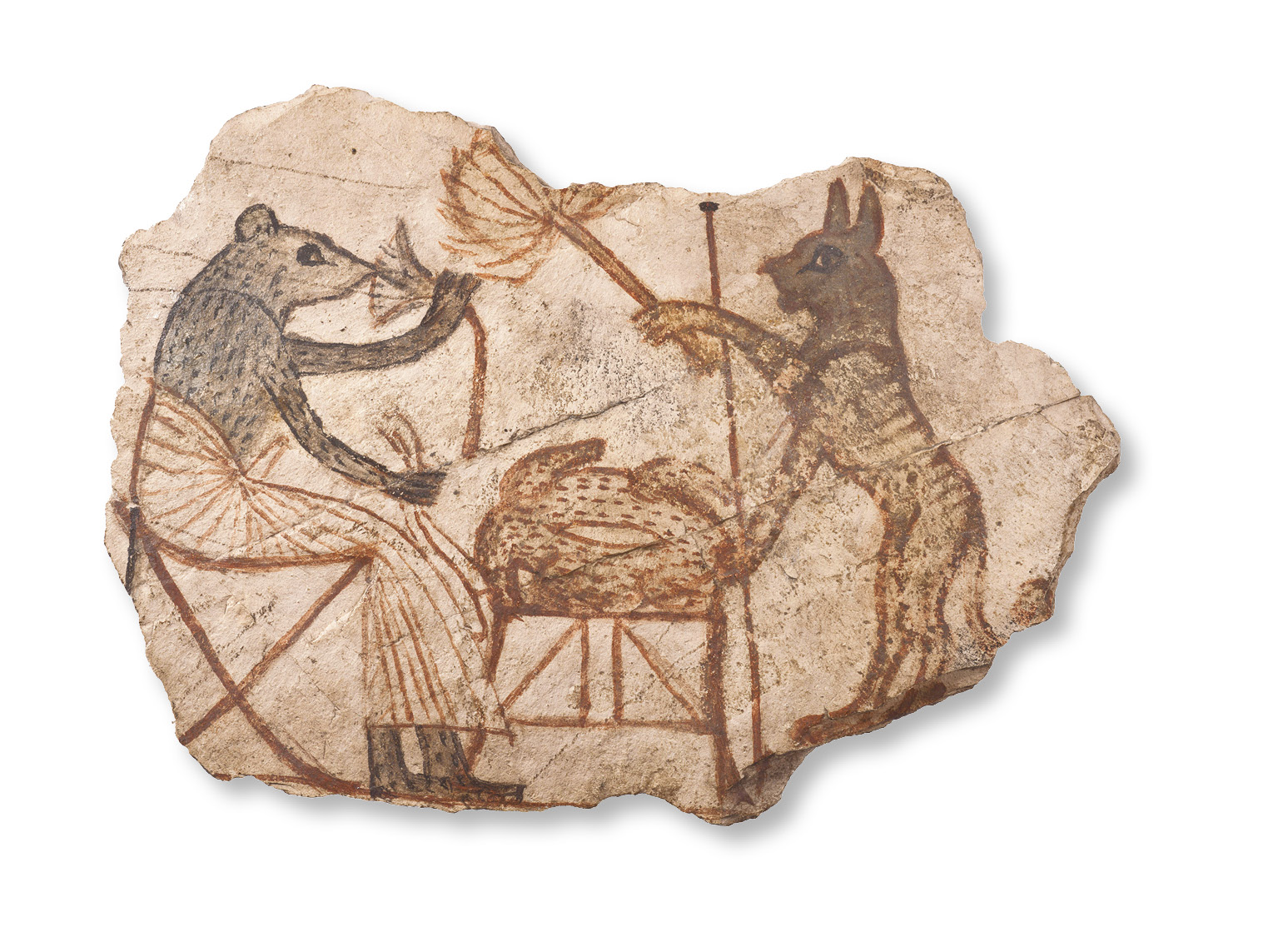
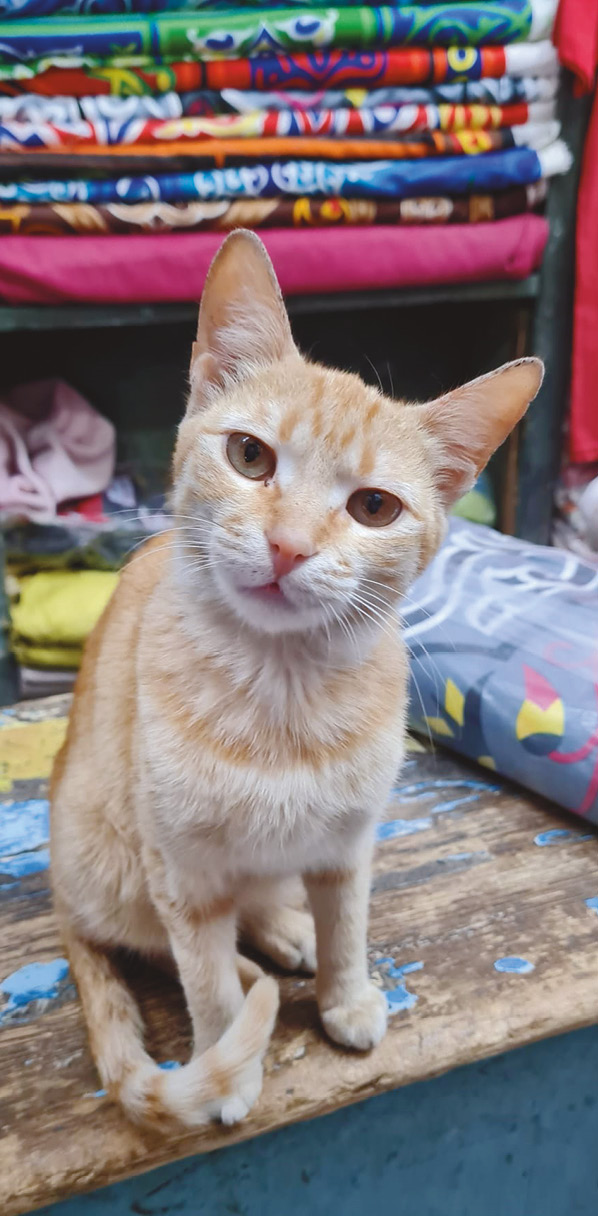
While the domestic cat today is one of the most popular pets, we cannot be certain about the nature of the intimacy between cats and ancient Egyptians. Many different animals were depicted in wall paintings, and the people clearly enjoyed being entertained by them, with humorous and lively moments depicted in tomb scenes. Most of the paintings depicting cats are concentrated in Theban New Kingdom tombs, which may be due to better preservation in the south, or that cats were kept as pets only in the south, for a short period of time, and only by the elite. In later periods, cats were revered by ordinary people to the extent that failing to carry out mourning rituals for a dead cat was punishable by law. This veneration was influenced by the cat’s divine abilities of retribution, but we could argue that the physical attributes of cats themselves influenced the divine attributes of the goddess Bastet. Because of its divine representation, the cat remained a popular and protected animal throughout pharaonic history, and still retains a special status in Egypt today.
Meilin Lyu holds an MA in Eastern Mediterranean and Greek Archaeology, and a European MSc in STS (Science, Technology, and Sociology) studies. She is currently a PhD candidate at the Department of Archaeology, University of Athens, researching the effects of climate change and the conservation of Greek archaeological sites.
Further reading:
J Malek (1993; revised 2006) The Cat in Ancient Egypt (London: British Museum Press).
L Jackson (2018) Sekhmet and Bastet: the feline powers of Egypt (London: Avalonia Books).
D Navarro (2015) Cats of Egypt: an AUC Press nature foldout (Cairo: American University in Cairo Press).