Subscribe now for full access and no adverts
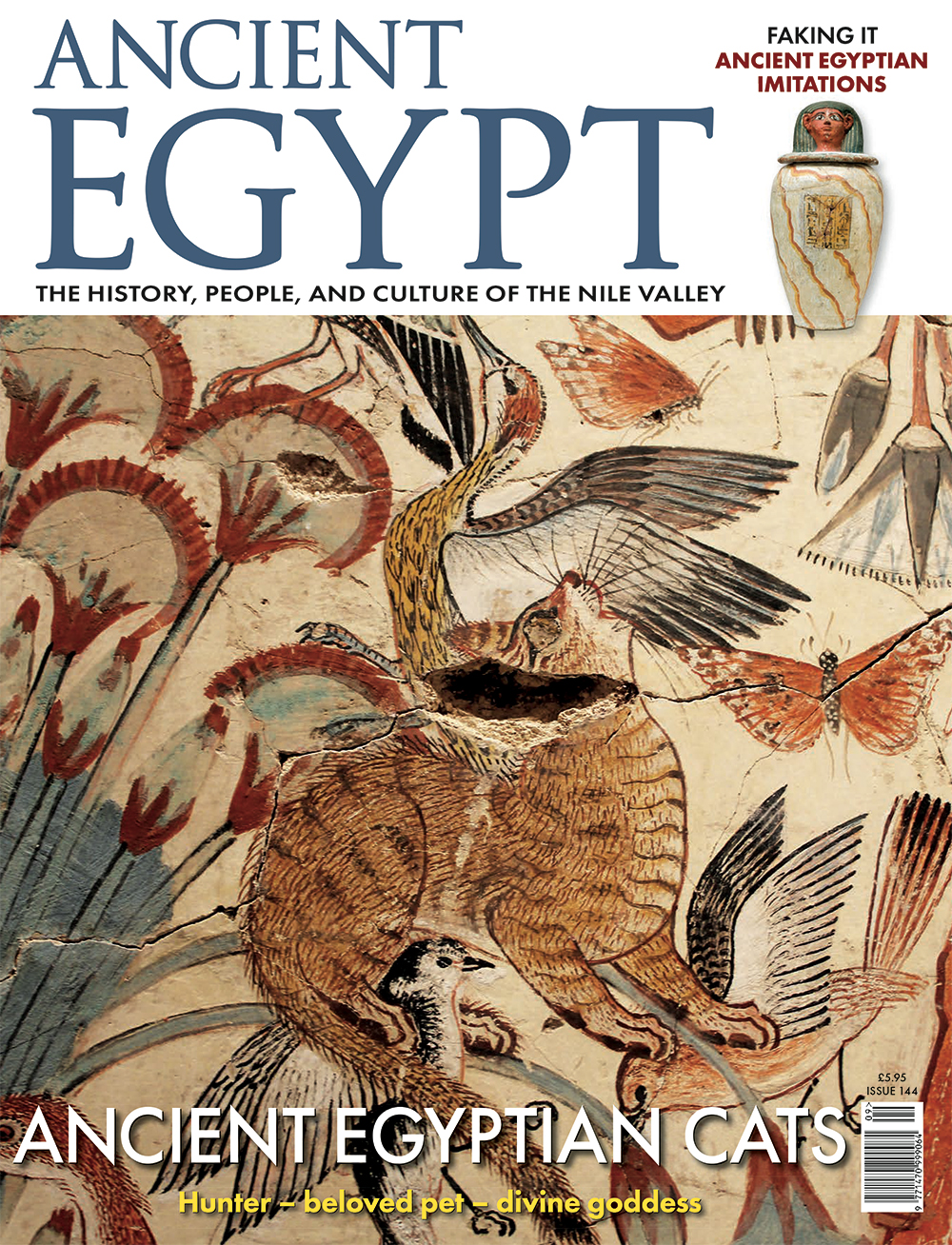
Tell el-Amarna is perhaps best known for the religious revolution that took place more than 3,000 years ago, but it is also famous for the art revolution that flourished there. The Nefertiti bust, the sculptures of the Amarna princesses, and many other artefacts are icons of ancient Egyptian art, as are its murals and pavement paintings. A recently discovered archive of letters tells the story of a unique Amarna fresco and the heroic attempt to preserve this important mural.
One of the central characters in our tale is Alfred Lucas. Trained as a chemist, Lucas began his career in government laboratories in London but developed lung disease and moved to Egypt in 1897. He worked as a chemist in the government Salt Department, but, when his talents as a conservator were recognised, transferred to the Antiquities Service (1923-1932) and is best remembered for his work conserving the objects found in Tutankhamun’s tomb. As a result of his well-deserved reputation, he was often asked to preserve artefacts from other excavations, such as the unique Amarna mural.

The discovery of the fresco
The Egypt Exploration Society’s 1926-1927 expedition to Amarna was a difficult one. The previous season was led by F G Newton, who had also been the Director of the Society’s Amarna expedition in 1924, but he had died of sleeping sickness in the American Hospital in Asyut on Christmas Day 1924.
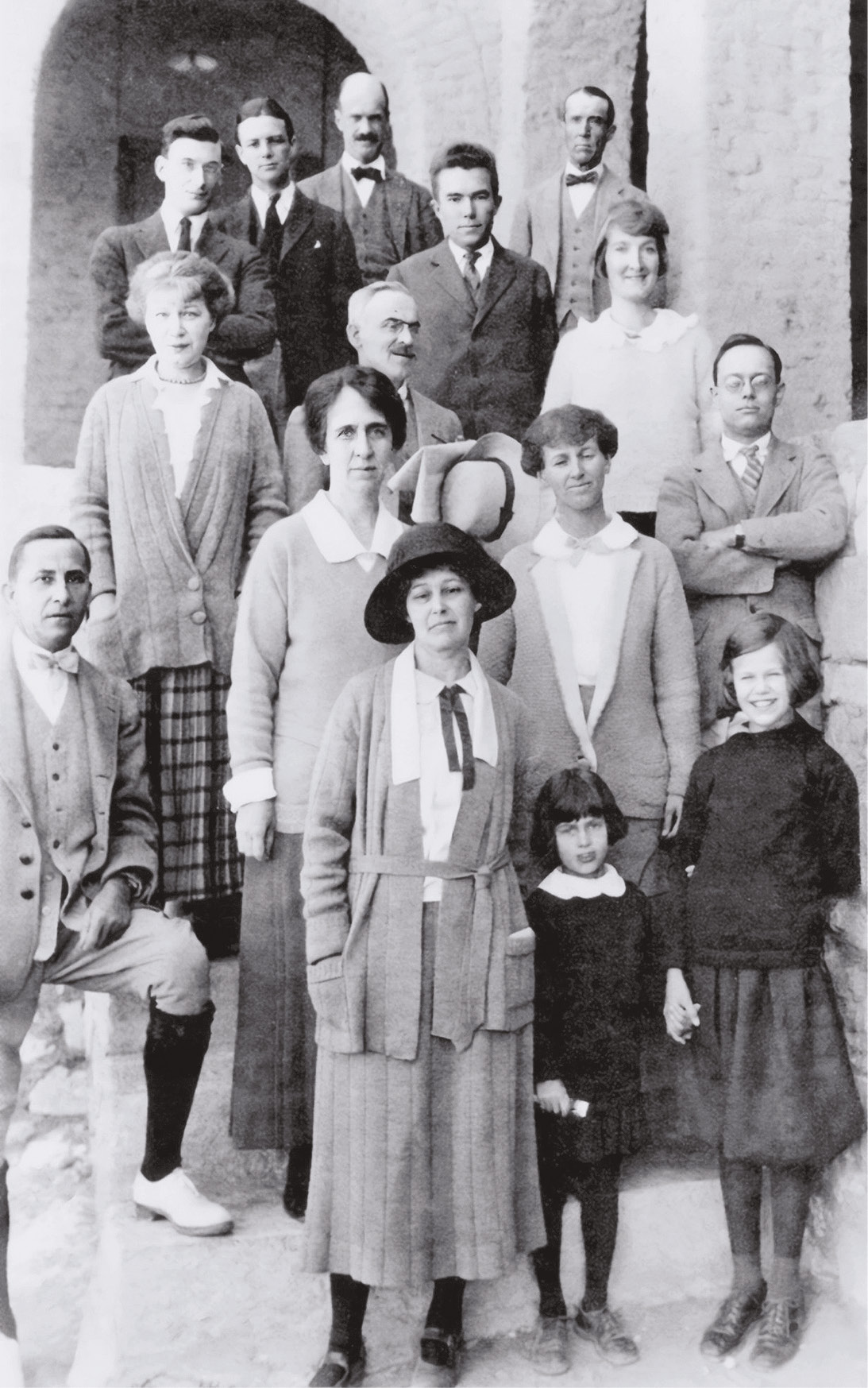
The 1926-1927 expedition was led by Henri Frankfort, who did not really expect to be at Amarna. The EES had concessions for two sites – Amarna and Abydos – and Frankfort had anticipated working only at his site at Abydos. With the loss of Newton, and the Society low on funds, Frankfort found himself the Director of both sites. He knew he would be spending most of his time at Abydos, and intended to keep his time at Amarna to a minimum – just enough to keep the concession. Indeed, on 4 February 1926 he wrote to C C Edgar at the Egyptian Antiquities Service to find out how much time had to be spent at Amarna to keep the concession:
Mr & Mrs Davies will be there to copy the frescoes. They will work for 3 to 4 weeks; will that be enough to keep the concession?
The previous season Newton had found some frescoes in the Northern Palace, but they had not been recorded, and thus Norman and Nina Davies were asked to copy them. In a letter dated 7 February 1926, Edgar replied to Frankfort that the Amarna site had been reserved for the Egypt Exploration Society, but if the Davies were working there, it would be considered not just ‘reserved’ but ‘occupied’. So it looked as if Frankfort’s plan to spend almost all his time at Abydos, excavating the Osireion, would work out.

Frankfort at Amarna
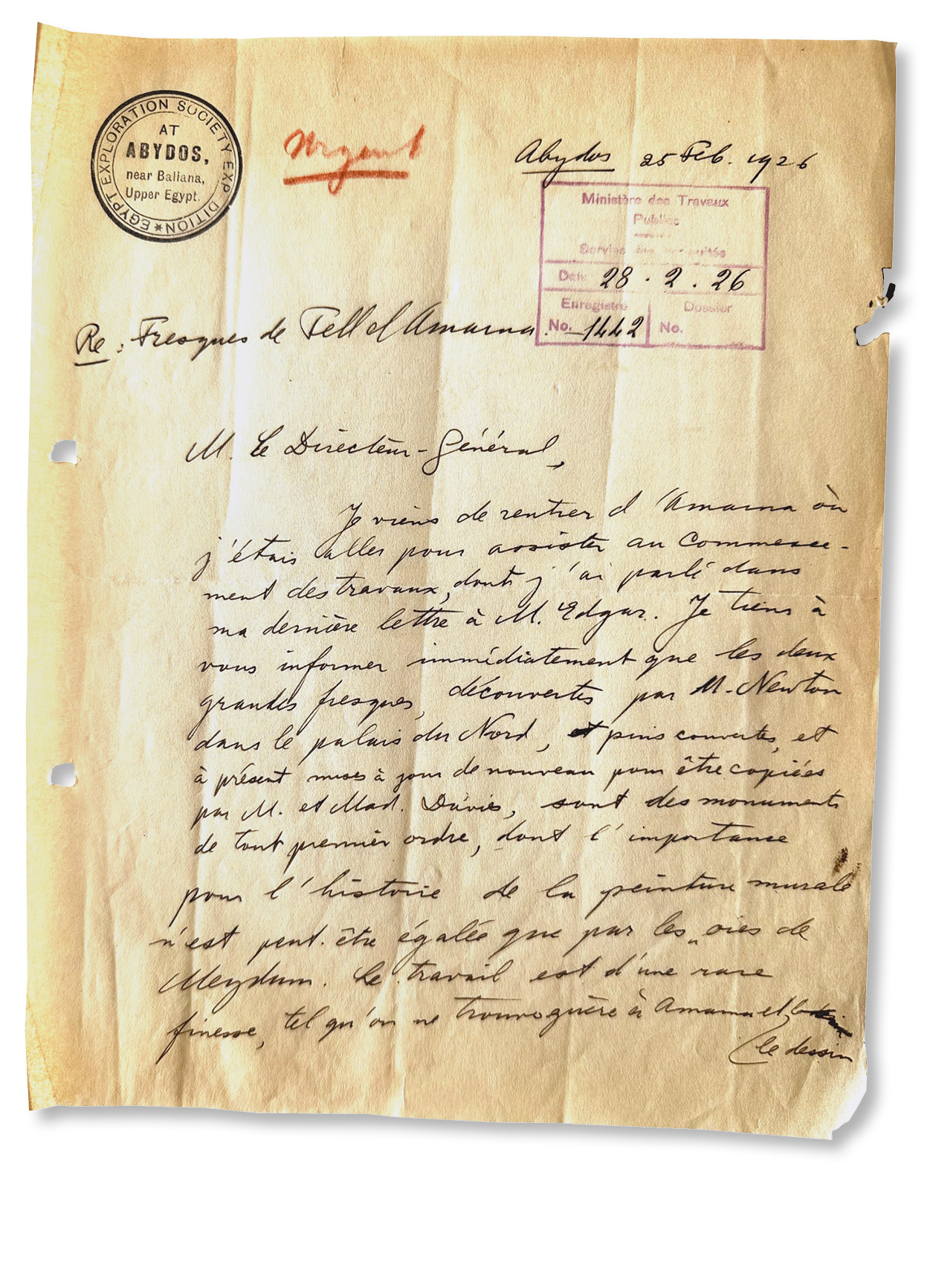
However, Frankfort did take time to visit Amarna and was soon far more involved in the site than he had planned. We have Frankfort’s six-page, handwritten letter to Pierre Lacau, Director of the Service des Antiquités. It is headed: ‘Frescoes of Tell el-Amarna’. It was written from the Abydos camp (note the circular stamp in the upper left corner). Frankfort informs Lacau that:
the two large frescoes discovered by Mr Newton in the Northern Palace, to be copied by Mr & Mrs Davies, are of the highest quality and are of great importance to the history of painted murals. The work is one of finesse, the design is not only original but also executed by an incomparable master.
Unfortunately, the plaster contained vegetable material that had been attacked by insects, making the murals very fragile. A photograph of the fresco taken in situ shows the delicate and fragmentary nature of these artworks. Without waiting, Frankfort erected brick walls to protect them.
Frankfort was being drawn to the Amarna site by the beauty and importance of the murals; he felt responsible for protecting them. He even asked if Lacau could visit the site, and wondered if it would be possible for the EES to have one of the murals. In a letter dated 25 February 1926, he requested a conservator be dispatched, and suggested that Alfred Lucas would be the man for the job.
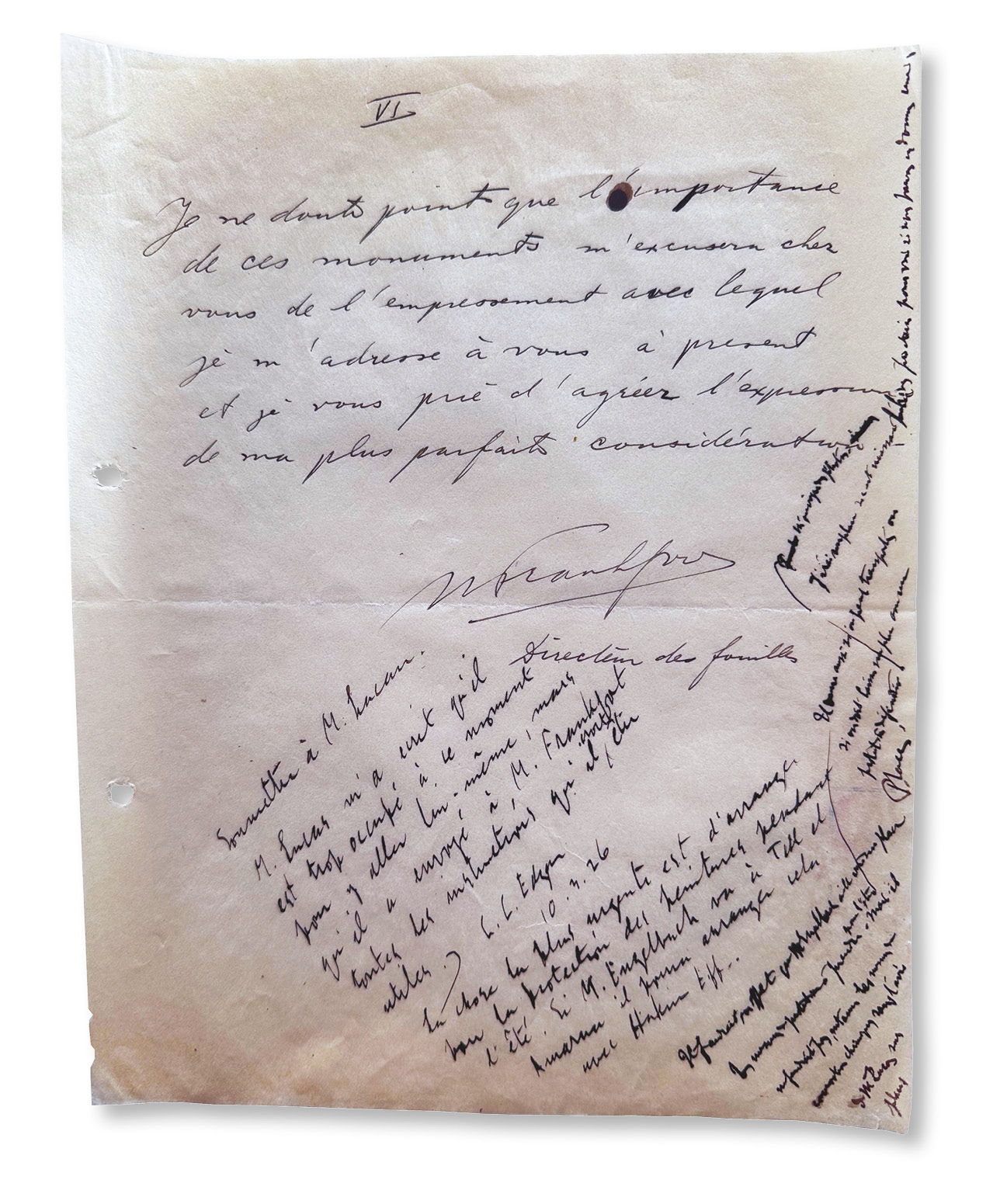
It was common practice in the Antiquities Service for each person involved in a particular topic to annotate the original letter, so all comments would be together. A note added by Edgar at the bottom of Frankfort’s letter states that Lucas was too busy (he was conserving the objects in Tutankhamun’s tomb), but that Rex Engelbach was available. Lacau also added his long note to the bottom of the letter. Clearly, everyone realised the murals were important: someone even marked ‘Urgent’ in red crayon at the top of the letter. The question was how to preserve them. Eventually, Alfred Lucas was dispatched to Amarna to see what could be done. In a three-page, handwritten letter to Lacau dated 17 December 1926, Lucas gave his assessment.

Attempts to preserve the murals
Lucas viewed the paintings at the Northern Palace at Amarna and, with Mrs Frankfort’s help, removed some unimportant fragments for experimentation. He also experimented on fragments taken from houses at the site. The paintings were badly deteriorated and were in such a precarious state that atmospheric conditions would inevitably destroy them. Reburying them would not work, because the impact of the soil would cause more damage.
Applying a solution of celluloid dissolved in amyl acetate, or a solution of bleached shellac dissolved in alcohol, would strengthen most of the surfaces, but not the edges. Lucas concluded that ‘removal of the paintings, difficult and dangerous though it would be, seems the only way in which to save them’.
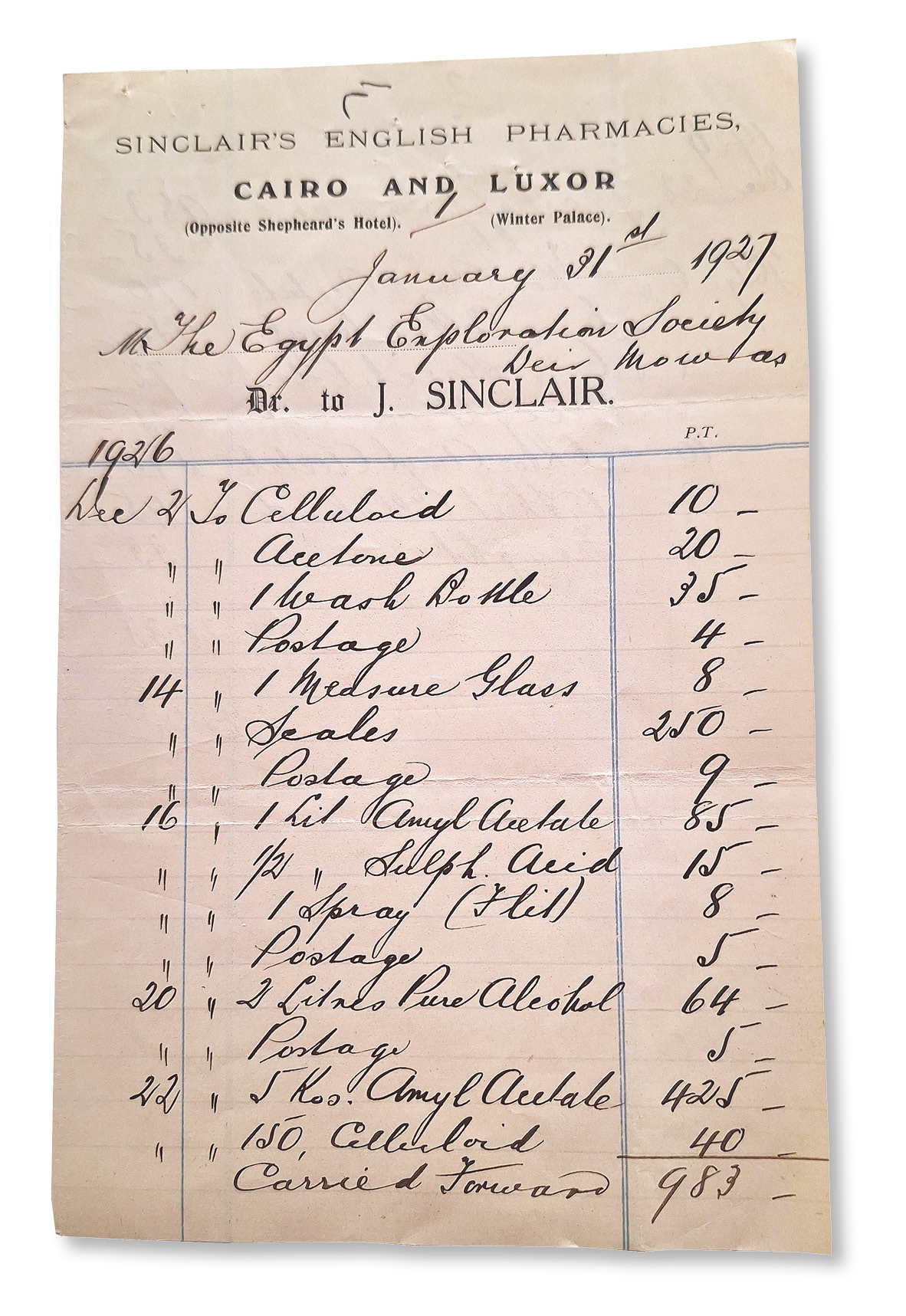

We are fortunate to have the bill from Sinclair Pharmacy for the chemicals and other materials used by Lucas to preserve the murals. It gives detailed insight into conservation techniques during the 1920s. However, an even more vivid description of the problems involved is given by Mary Chubb, who was sent out by the EES to assist on the excavation. Lucas himself did not carry out the preservation: he worked out the method and left the task to others. Chubb writes:
I had just finished copying a painted wall fragment, a stretch of about two feet showing a bird flying against a bright yellow background. The eye still gleamed soft and bright and dewy, the feathers on the gray neck and out- stretched wings were dappled green and purple. It glowed with an iridescent sheen out of the dusty rubble of the low ruined wall. John (Pendlebury) wanted to get the original away from the wall, if possible, and taken up to the house. So now Hilda and I were busy on the tricky business of detaching the plaster on which the painting has been done – a skin only a fraction of an inch thick – from the wall behind it. Actually what we did was to take the wall away from the plaster…
First of all we sprayed the front of the painting with a solution of celluloid in amyl acetate – which is much the same as nail varnish – putting a thin, transparent but strengthening coat over the terribly fragile painted surface. Then, working from behind the low wall, we loosened the mud bricks and cut them away a bit by bit. A young Gufti, sitting by us, stirred a bowl of plaster of Paris, keeping it from setting before it was needed. As the tiny crevices developed between bricks and painting, we dipped in spoonfuls of plaster, until at last the painting was backed by a new white wall about an inch thick. After that there would be a long wait while the plaster hardened properly, before the final process of moving the whole fragment could begin.
Chubb (1954)
They had a longer wait than expected. At this point in the process, a workman discovered – literally – a pot of gold (coins), which caused quite a commotion.
Although they were using the best-known techniques of the time, the team’s attempt to preserve the murals was not a success, partly because of the materials used. As Frances Weatherhead points out in her book on mural paintings:
Unfortunately and unknown to the users at the time, the consolidant ‘celluloid’ used with cloth to support the paintings from the front while the plaster was cut away from the back has the undesirable effect of discolouring and darkening with age.
Weatherhead (2007)
As we will see later, discoloration was not the only problem with preserving the fragile murals.
Making copies
On the same day that Lucas was writing to Lacau about the method of preserving the mural, Frankfort was also writing to Lacau. Frankfort clearly was spending far more time thinking about Amarna than he thought he would at the beginning of the season:
After having the advice of Mr Lucas, who fortunately came to stay with us for several days to discuss the problems of the frescoes of the ‘Northern Palace’, we continued experiments on the pieces without value…. As we have to leave for Abydos towards the end of January, and as the treatment of the frescoes is a delicate work and requires much time, we must begin to preserve them immediately. Afterwards, Mrs Davies will finish the copies, that is to say, at the beginning of January.
So there were two approaches to the Amarna murals: Lucas and others would use the best chemical techniques of the day to preserve them, while the Davies would use their considerable skills to make detailed copies.
Removal
As we have seen, from the very beginning Frankfort recognised the beauty and importance of the frescoes, and wanted one for the Egypt Exploration Society. On the typed list of finds of the Egypt Exploration Society at Tell el-Amarna for the 1926-1927 season, Item 1 refers to the frescoes that were too fragile to be left behind at the Northern Place. They were to be divided between the Egyptian Museum and the Egypt Exploration Society. So Frankfort obtained his fresco, but it was not everything he had hoped for.
Frankfort mentions the frescoes in his preliminary report on the 1926-1927 Amarna season, but it is a very brief account. His full account appears in a volume he edited, The Mural Paintings of El-Amarna (1929), dedicated to their discoverer, F G Newton. Chapter III, ‘The Paintings of the Northern Palace’ by Norman de Garis Davies, gives details of the procedure he and his wife used to copy the murals, but first he discusses their condition:
The paintings, which were seen by me in February 1926, after their second excavation, were in a bad state of preservation, less in respect of loss of colour, though this was much darkened by that kind of red rust which is apt to encrust the surface of the green pigment embraced by later Egyptian artists, than in its lack of adhesion to the walls. The mud plaster on which the colour was directly laid had been so riddled by white ants that it consisted almost entirely of their excreta, and the thin film of colour adhered to the wall so slightly in parts that a touch would bring it down…
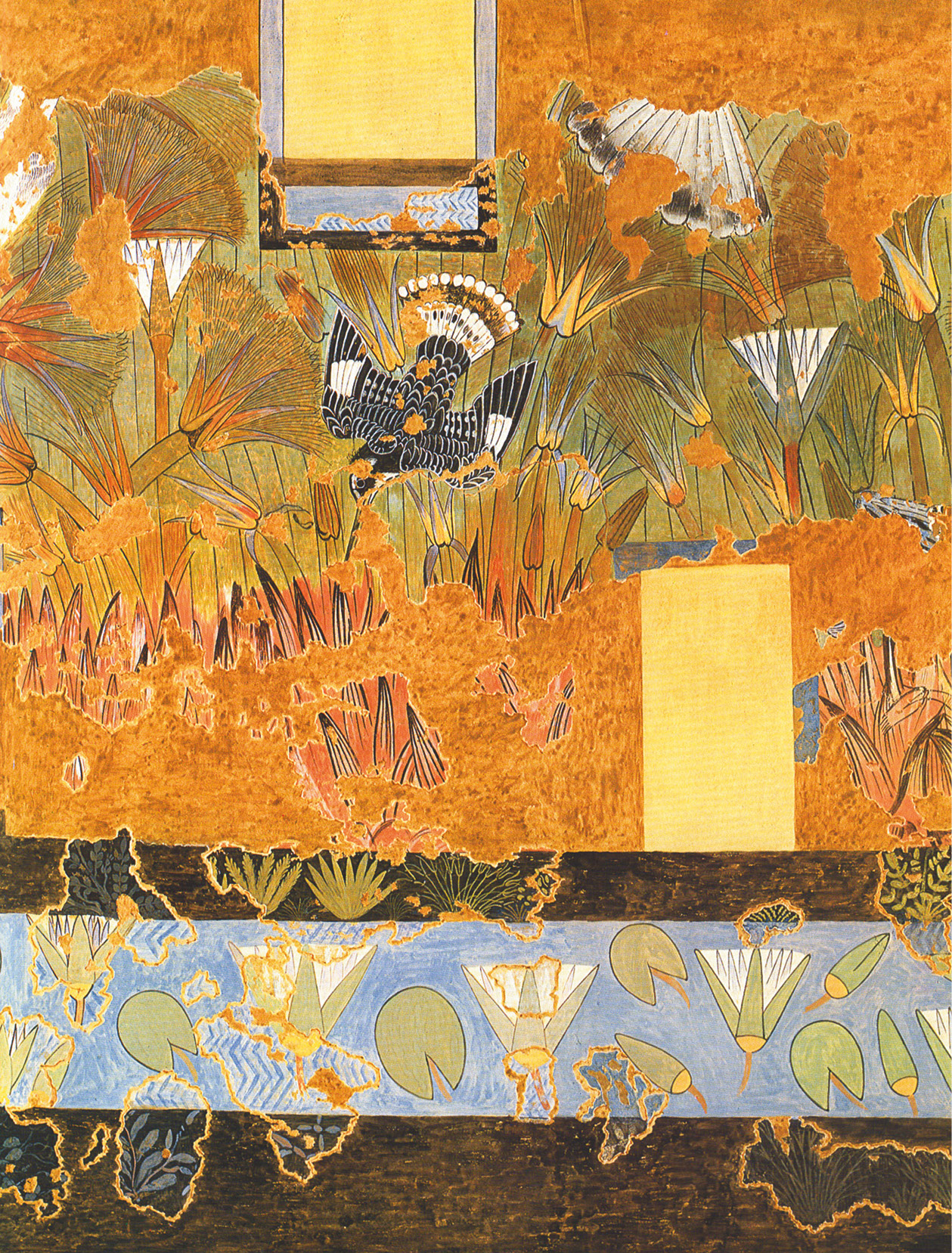
It is good to have this account of the wall’s condition, as it adds to the descriptions of Lucas and Chubb. However, what is most important about this account is that Davies gives a detailed description of the method used to record the fragile work of art.
The left-hand portion of the west wall had at some time been badly damaged by fire, and the design here could only be secured by washing off the carbon. The right half, on the other hand, though very defective, retained its colours in a state not far removed from the original, save for a certain dulling and deepening of greens. In five weeks of continuous labour, my wife and I traced the whole of the east wall and copied in colour the painting on the west wall from end to end, sharing both tasks, as time was pressing.

Despite extensive efforts to preserve the fresco, it was not possible. When it reached the Egypt Exploration Society in London, it was in pieces. The Society, not having a museum of its own, made a practice of distributing its finds to global museums, which, in turn, funded future excavations. In the Society’s handwritten list entitled ‘Distribution 1927’, the first item is ‘Frescoes’ and there are 15 entries: the British Museum received a ‘Large fresco with birds – framed’, the Metropolitan Museum of Art a ‘Square panel with lotus flowers’, the Ashmolean Museum a ‘Goose – framed’, and Leiden a ‘Lotus fragment in box’. In this way, the fresco’s broken pieces were distributed around the world. In the end, it was in pieces and scattered among the world’s museums. But the information contained in the mural was not lost. Thanks to the careful, detailed copy made by Nina de Garis Davies, we have an accurate record of how it was in 1926, when it was in situ in the so-called ‘Green Room’ of the Northern Palace at Amarna. The failure to preserve the mural highlights the importance of making accurate copies of fragile artefacts such as these.
Today, the best place to study the mural is at the Metropolitan Museum of Art in New York. In their Gallery 135, they display Nina de Garis Davies’ original copy. Her painting is over 4 metres across and 1 metre high. If scholars want to study the fresco, it is this copy that they use. A recent essay by Christopher Stimpson and Barry Kemp in Antiquity 97, based on the copy of the mural, attempts to identify several of the birds depicted. Undoubtedly, in the future the Amarna Green Room will be studied by other scholars, but it will be through the wonderful copy that progress will be made.
Bob Brier is a senior research fellow at Long Island University/LIU Post, specialising in palaeopathology. He is the author of numerous books, has appeared in many television documentaries, and has investigated the mummies of Tutankhamun and Ramesses II.
Further reading:
M Chubb (1954) Nefertiti Lived Here (New York: Thomas Cromwell).
H Frankfort (1927) ‘Preliminary report on the excavations at Tell el-‘Amarnah 1926-7’, The Journal of Egyptian Archaeology XIII (3/4): 209-218.
H Frankfort (ed.) (1929) The Mural Paintings of El-Amarna (London: Egypt Exploration Society).
C M Stimpson and B J Kemp (2022) ‘Pigeons and papyrus at Amarna: the birds of the Green Room revisited’, Antiquity 97 (391): 104-119.
F J Weatherhead (2007) Amarna Palace Paintings (London: Egypt Exploration Society).
All images: the author, unless otherwise stated; all quotations are from letters in the author’s possession