

Subscribe now for full access and no adverts
The principal products of grain were bread and beer, the staples of the Egyptian diet.

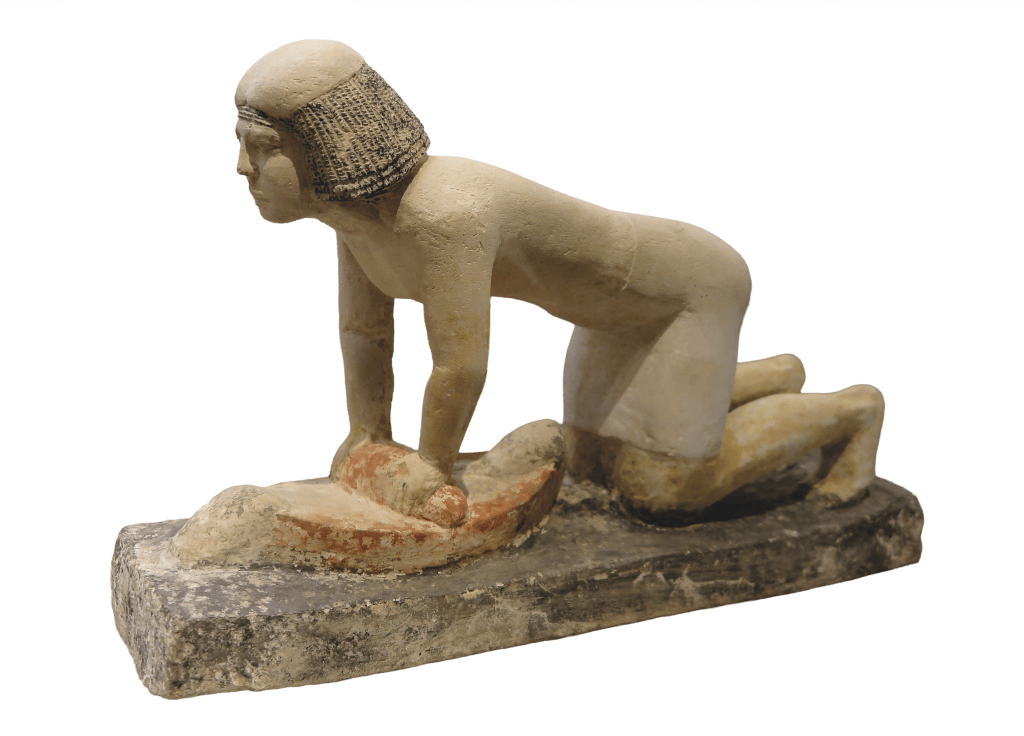
Above & below: The processing of grain into bread and beer was depicted in tomb models, like these Fifth Dynasty servant figures from Giza, now in the Boston Museum of Fine Arts.
From its first Prehistoric agrarian settlements, Egyptian society depended on the cultivation of grains. Barley predominated in the Old and Middle Kingdoms, while wheat gained importance from the Eighteenth Dynasty onwards. By Roman times, vast areas of Lower Egypt were devoted to growing cereals, and Egypt was known as the Empire’s granary.
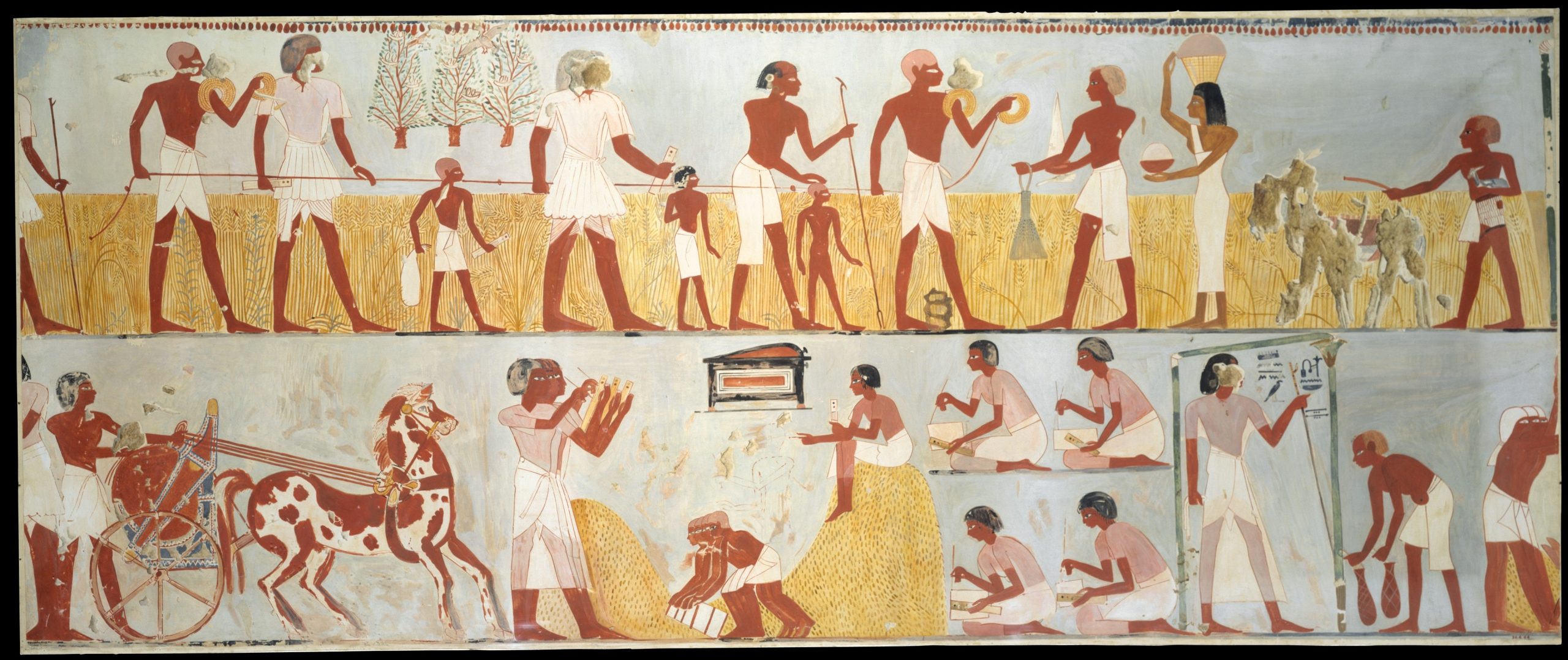
The principal products of grain were bread and beer, the staples of the Egyptian diet. Every stage in the cultivation, harvesting, and processing of cereals is represented in tomb scenes and models intended to provide a perpetual supply of grain in the afterlife.
Although no distinction is made in the pictorial record between barley and wheat, documentary sources recognise several varieties designated by colour or region of origin. But however important its nutritional value was for the Egyptian population, the grain crop held a much deeper economic significance. Grain was not solely a food source, it was a negotiable currency.
Currency and taxes
Until the Graeco-Roman Period, Egypt was essentially a moneyless society. Coins introduced by the Persians were hardly more than curiosities. For nearly 3,000 years, the Egyptians had no need to invent money. Workers, especially state employees, were paid in kind – food, clothing, and such luxury goods as their status warranted – but the largest part of anyone’s wage was paid in grain. This could be ground into flour for bread, turned into beer, or bartered for other goods at recognised rates of exchange. The grain harvest constituted the bulk of a landowner’s annual income. Wealth, as measured by full granaries, guaranteed a comfortable lifestyle in this world and the next.
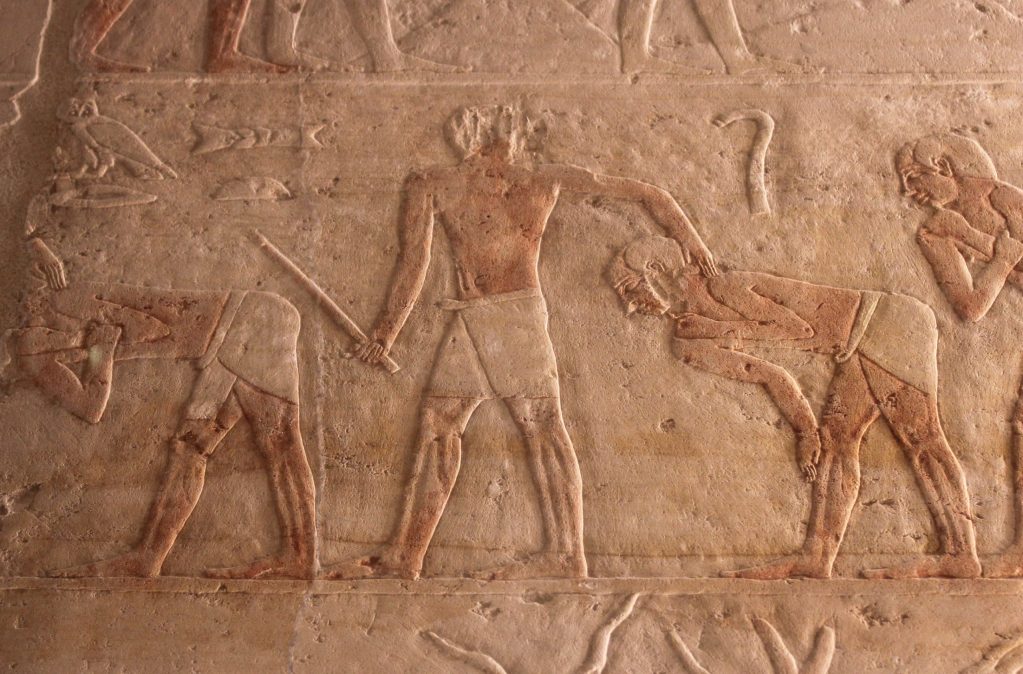
During the growing period, fields were surveyed by taxation officials who assessed the prospective yield on behalf of royal, temple, or local authorities, and issued a tax demand – typically 20% of their estimate. Tax was paid at harvest time with no allowance made for disasters like fire, animal damage, theft, flood, or storm, because the taxman was impervious to all pleas of mitigating circumstances.
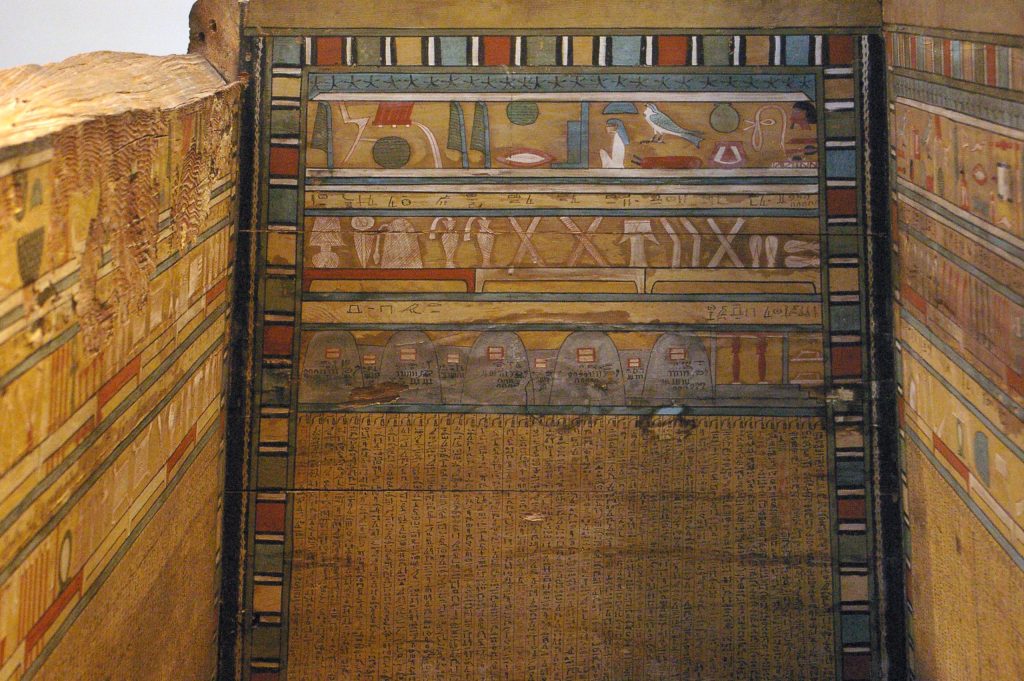
The grain paid as tax went either to the king or to the temple foundations, which were the greatest landowners in Egypt. Wealthier men could commute part or all of the fiscal burden into commodities such as processed or worked goods, or even manpower, but the bulk of tax was paid in the form of grain.
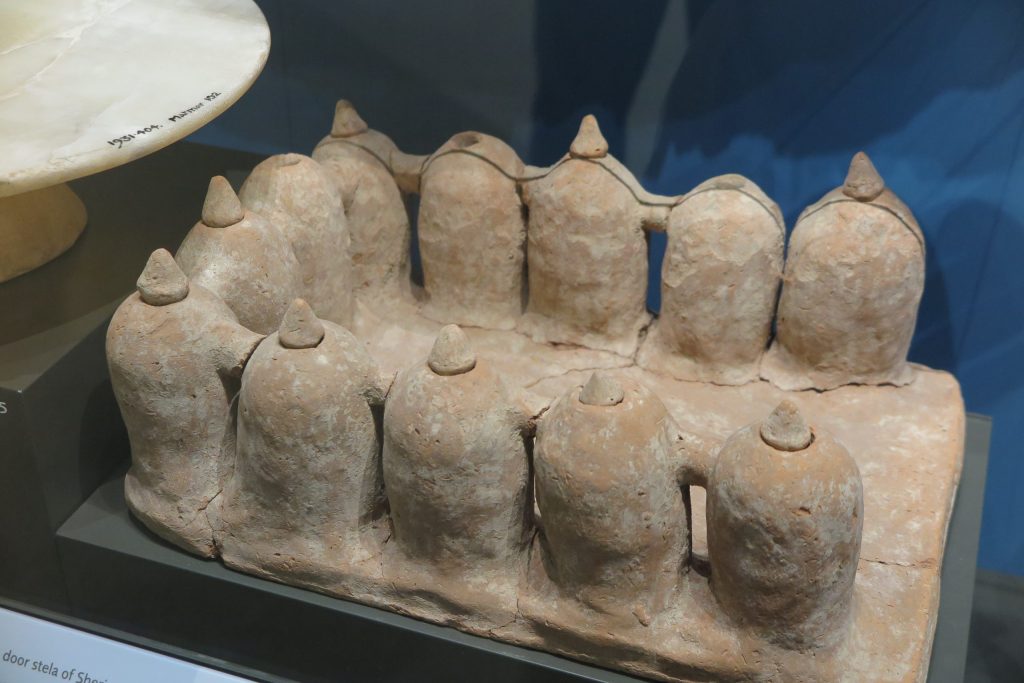
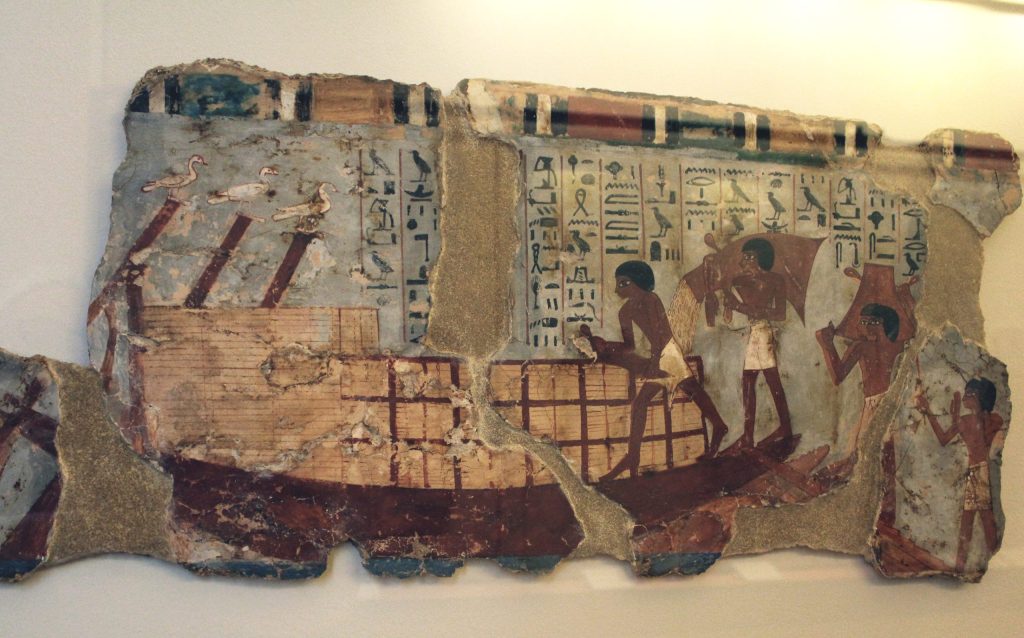
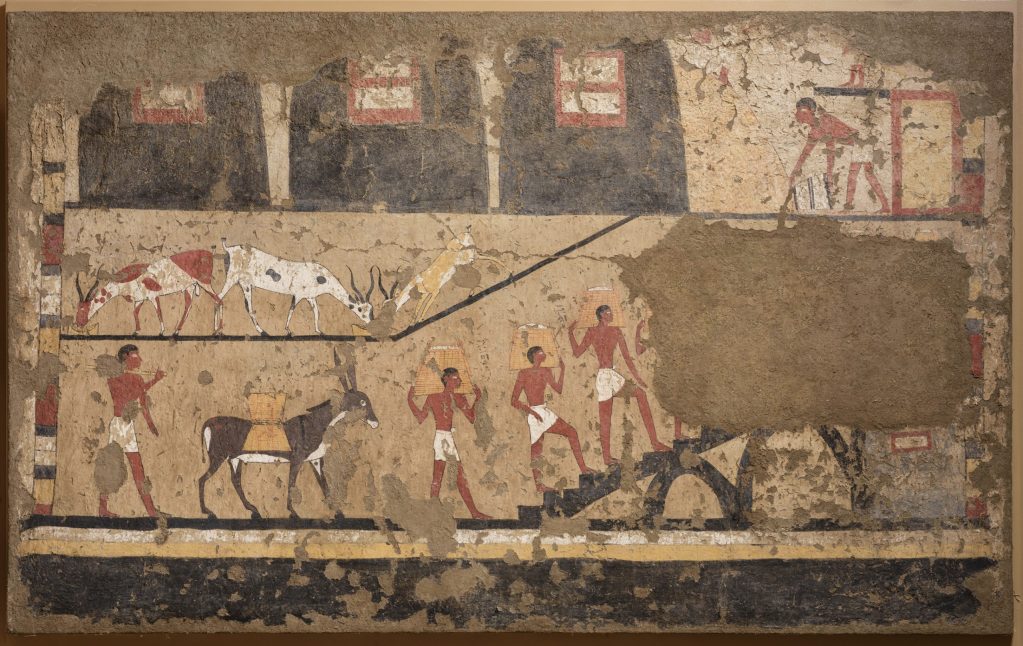
Grain was measured by volume and collected by the sack, khar, or basket, hekat, then transported on barges, or by donkey train, to storage granaries. There scribes recorded the delivery of every sack as it came through the door, and noted every withdrawal. Granary officials were Egypt’s bankers, and the title of ‘accountant’ translates literally as ‘Scribe of the Grain count’. The chief finance officer was ‘Overseer of the Double Granaries of Upper and Lower Egypt’ – theoretically he was controller of all royal grain stores, such as the magazines of the Ramesseum, whose estimated capacity would have supported 3,400 families for a year.
Granary officials were Egypt’s bankers, and the title of ‘accountant’ translates literally as ‘Scribe of the Grain-count.
Workers’ wages
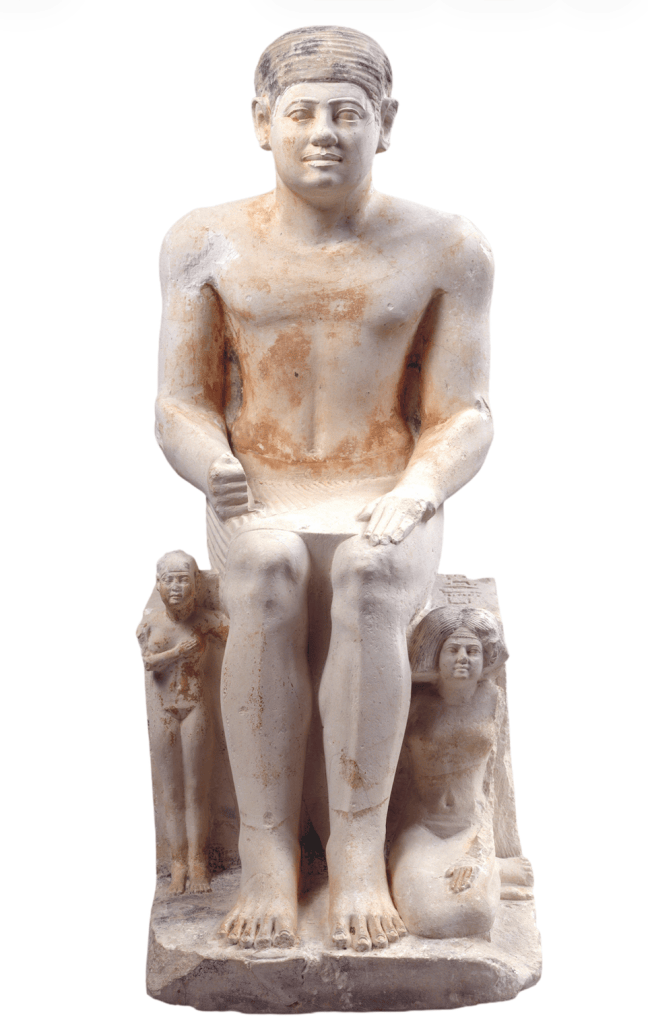
A sophisticated system of weights and measures allowed the assessment of the relative worth of different cereals and their values compared with other goods. Textual evidence suggests that, from the New Kingdom, wages were paid primarily in emmer wheat. Egyptian mathematical texts demonstrate calculations of granary capacity, and the values of types of loaf or strengths of beer, based on the quantity of raw grain used in their production. The ‘rations’ lists from Deir el-Medina indicate that a workman’s monthly grain allowance comprised 4 khar of wheat and 1½ khar of barley. The formal quantification of the cereal element of a workman’s ‘rations’ was considered separately from any other food supplies. In Ancient Egyptian Medicine (1996), John Nunn estimated the calorific value of the daily grain allocation for an ordinary workman at Deir el-Medina as more than 35,000 kilocalories – ten times the energy requirements of a manual labourer. Clearly the grain ration represented more than just food, and what a workman did with it, or how he chose to ‘spend’ it, was his personal choice.

When the Deir el-Medina villagers went on strike during the reign of Ramesses III, their main complaint was that grain supplies had been cut and deliveries had become unreliable. They pleaded that their children were starving, which might have been the case had grain been their only means of sustenance. In reality, the workmen were suffering from an economic squeeze – in modern terms, a cash-flow problem – but some were obviously less hungry than others. During one period of negotiation, a village scribe bought a batch of fancy pastries from the bakery of a royal mortuary temple. His receipt was included in the account of the strike.
Temple wages
Some texts from religious establishments are wholly devoted to the collection and redistribution of food, principally grain and bread, which was sent as tribute or taxes to the temples, and then paid as wages to temple personnel. In his Saqqara tomb, Metjen (Third Dynasty) records that, in his capacity as a mortuary priest, he was entitled to 100 loaves per day from the temple of Queen Nemaathap. This bread would have been shared among Metjen’s family and dependants, or he could have come to an arrangement whereby he was paid 100 loaves’ worth of goods from the temple foundation for serving the dead queen’s cult. With no way of knowing the value of a single loaf, this information gives little idea of a temple official’s salary, but, since he felt it worth mentioning in his tomb, 100 loaves a day was probably a substantial remuneration.
Though officials appear to have received payment in kind based on an elaborate barter system, they really worked within a very efficient economic organisation. The archives of the Fifth Dynasty Abusir temples provide more details about the wages system. The total received by the temple over a year was divided by 365 to calculate a ‘temple day’. Each temple employee was allocated so many temple days, or fractions of a day, as his pay. Despite different institutions working with a variety of administrative systems based on local conditions, logistics, and traditions, Egyptian bureaucracy functioned at a high level of abstraction – without money, as we understand it, but with all the appearance of a monetary system. Within Egypt’s highly bureaucratic society, all the principles of banking, such as double-entry book-keeping, exchange rates, loans, and interest, were in place and working well before the complication of money was introduced.
All images: Hilary Wilson (HW), unless otherwise stated