

Subscribe now for full access and no adverts
Pregnancy was a major hazard for women in the ancient world. According to Tod Brisbane (2007), the odds were that at least one in every 60 pregnant women would die. This is difficult to comprehend in the developed world today, where the chance of dying in pregnancy is one in 10,000. There are documented statistics from Roman Egypt that establish the ancient mortality rate. Interestingly, similar odds prevailed throughout the world until obstetrics became a medical speciality, about 200 years ago. Similar high mortality rates are also seen in other, far later societies that have a greater number of surviving records. For example, in 18th-century rural England, maternal mortality averaged one in every 40 births. Sadly, such statistics remain true today in Sub-Saharan Africa, in areas where there is no modern medical core.

The birth process
The passage of a baby through the human birth canal is a very complex process, which involves turning, and either flexing or extending the head to keep the widest part of the foetal skull in the widest part of the pelvis at each level during descent. This was not fully understood until about 100 years ago. It is paradoxical that the ancient Egyptians understood how to manipulate a calf to deliver it, regardless of whether the animal came out leg first, buttocks first, or head first. However, there is no evidence they understood the need to manipulate a human baby to facilitate birth. The only thing an attendant could do in the event of a stalled birth was to grasp whatever was available and pull. The result was often disastrous for the baby, but might have saved the life of the mother.
Divine help
The swnu (physicians) were not involved with pregnancy, and there were no midwives until very late in Egyptian history (even then, they had little to offer except emotional support). The best way to ensure a safe birth was to enlist the aid of the gods, and certainly to avoid offending any of them, although priests and priestesses, like physicians, had no involvement in childbearing. Two of the most important gods offering protection to pregnant women were Taweret and Bes (see AE 141). The third – and critically important – divinity was Meskhenet, the goddess of the birth bricks and the actual birthing process.
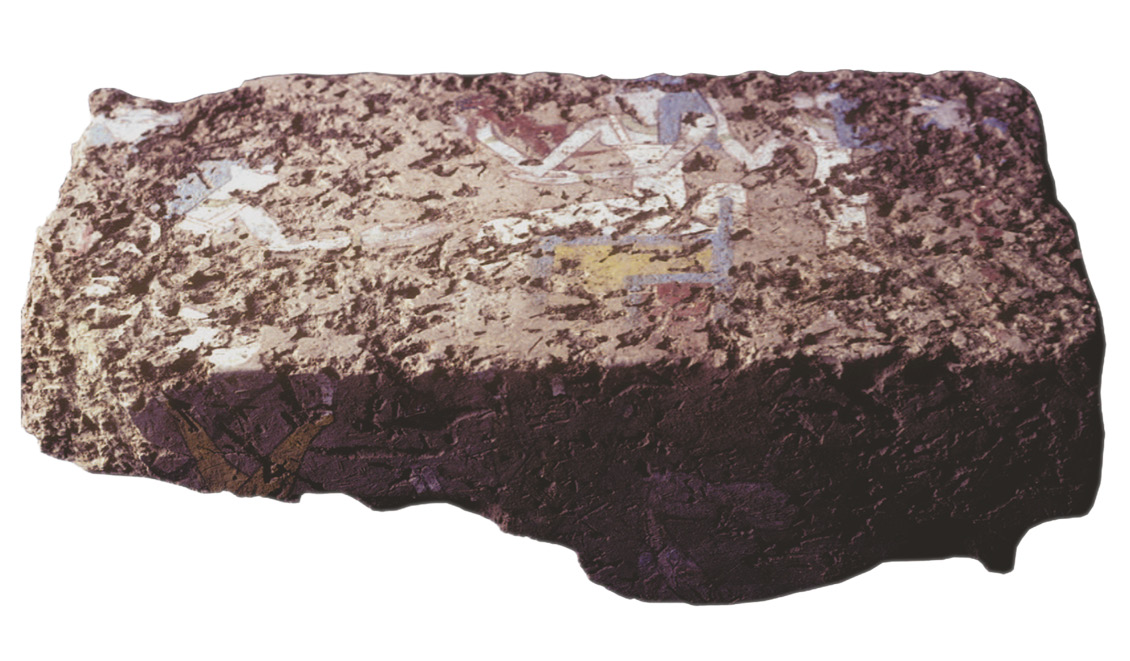
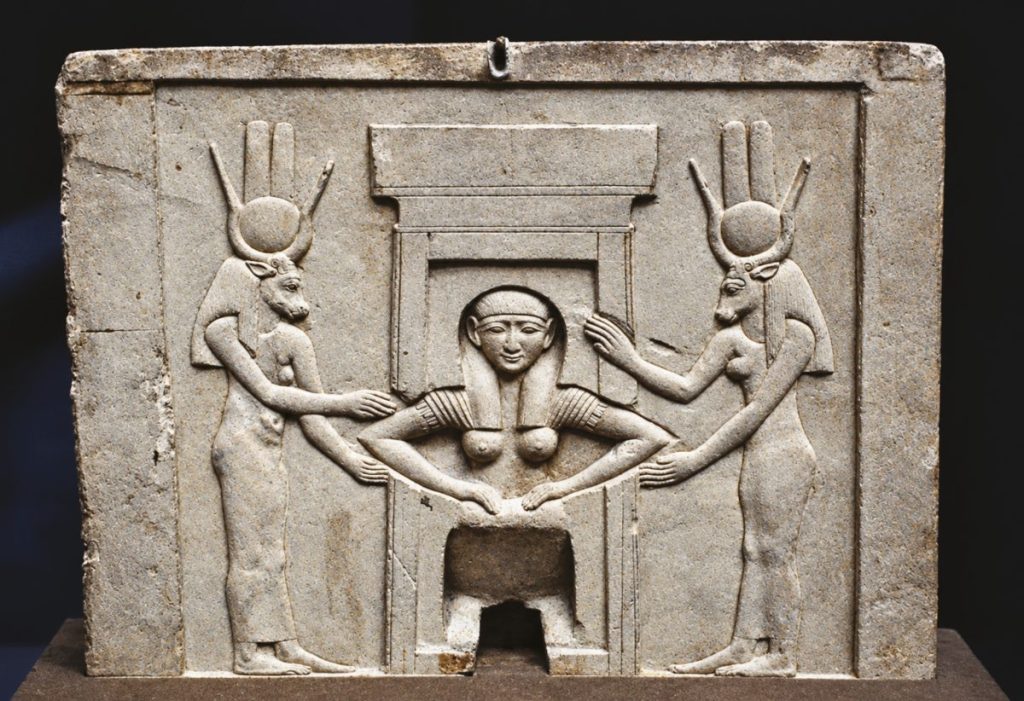
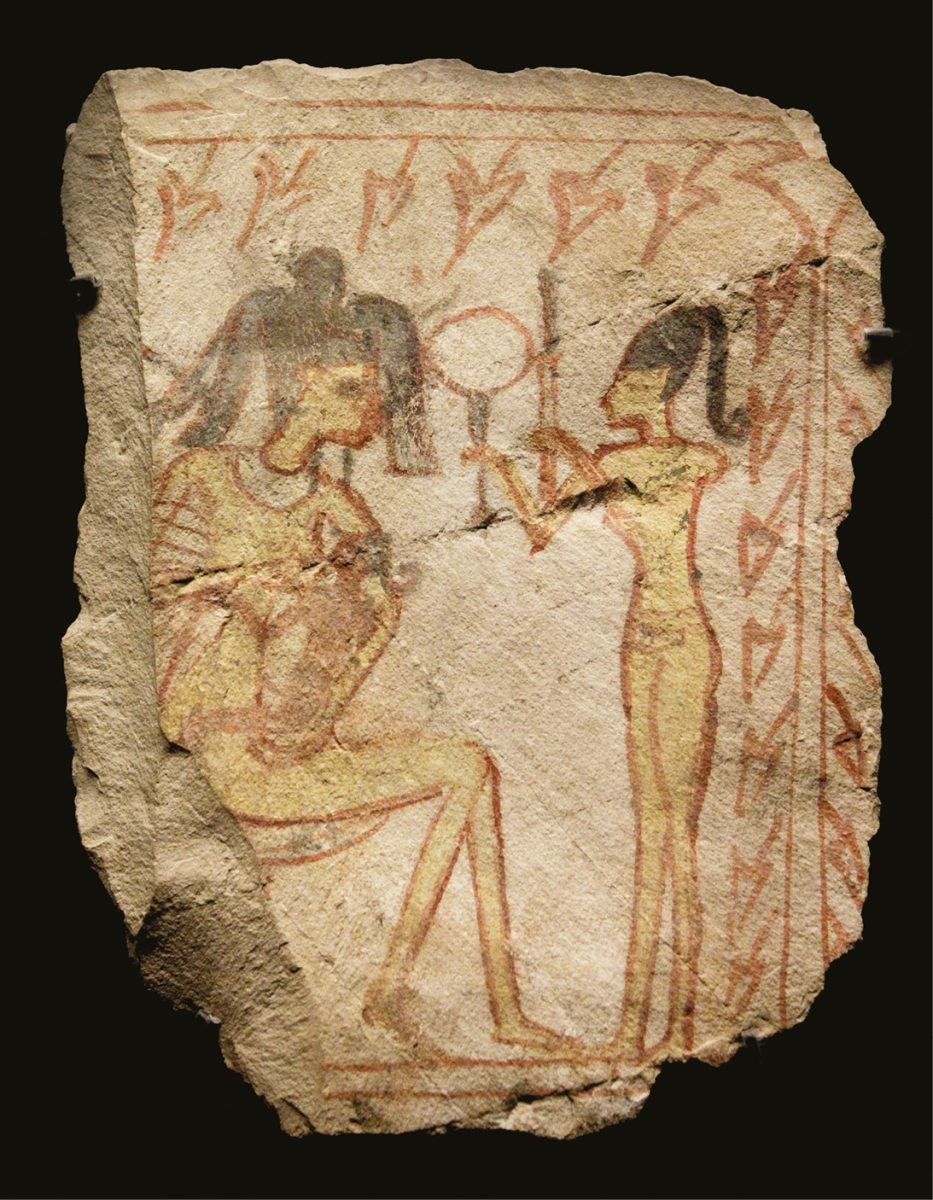
Above & below: The underside of the Abydos birthing brick, with a reconstruction of the decoration, depicting a woman giving birth helped by two attendants, with a Standard of Hathor at each side. Images: courtesy of Josef Wegner

Birth bricks
The Egyptian term for being in labour was to be ‘on the bricks’ and it has long been accepted that such magic bricks were used to support a woman in labour. How the woman actually used these bricks has not been fully determined. No documentation or depiction has been found, and only one used birth brick has ever been discovered.
In the Late Period there were a few magicians, called heka, who appear to have specialised in helping with difficult births. They assumed the role of Bes or Taweret, and used instruments with magical powers. There is no evidence that they provided anything more than moral support. Nevertheless, we should not dismiss the value of such support for ancient Egyptian women.
Abydos birth brick
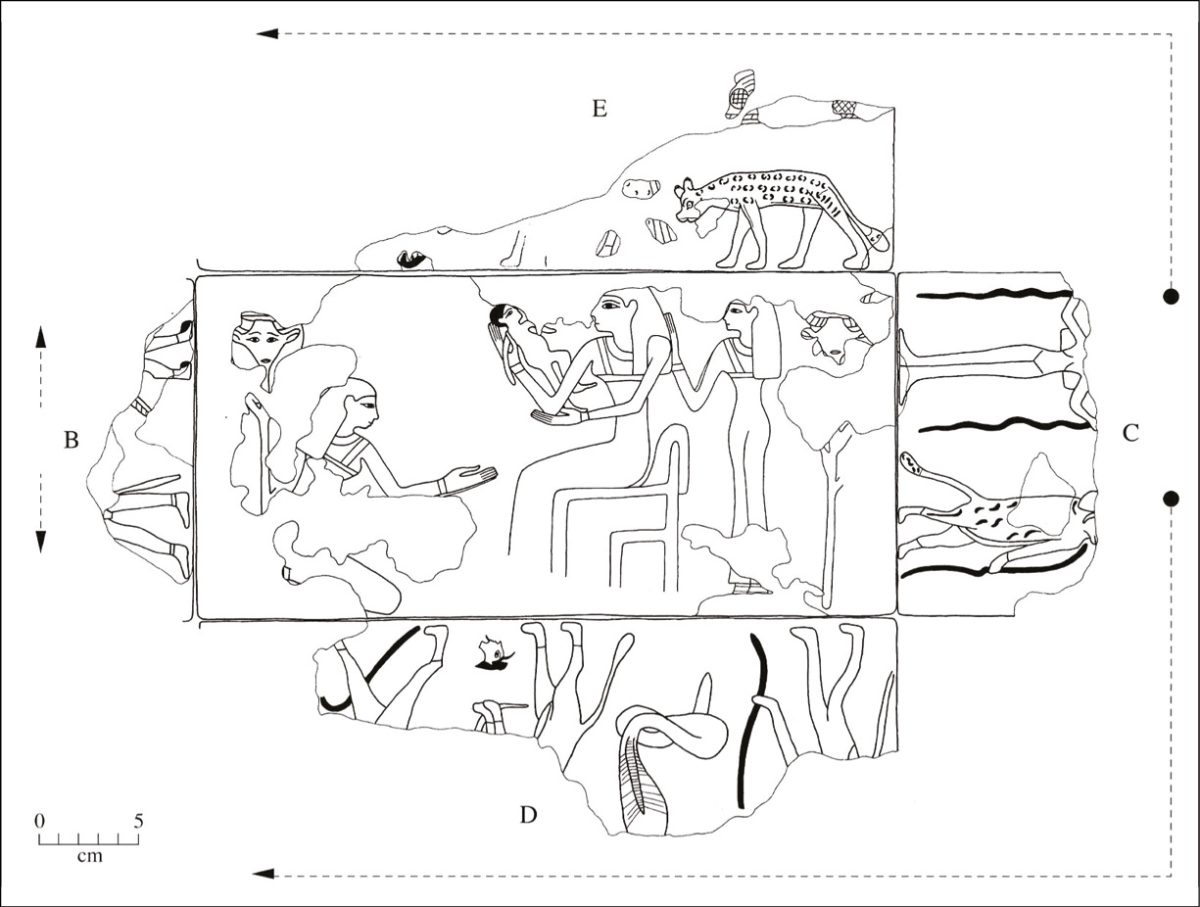
The powerful goddess Hathor, who controlled sexuality and fecundity, also played a vital role in childbirth, as seen in her depiction on the only known surviving birthing brick. An expedition from the University of Pennsylvania in 2001, led by Josef Wegner, discovered this brick in a Middle Kingdom settlement at Abydos, in the bedroom of the daughter of the mayor. Measuring 36cm in length, the unfired mud brick is decorated with polychrome imagery. Unfortunately, the top of the brick is missing, but the decoration on the bottom and on all sides is intact, and features numerous magical figures. Wegner was able to reconstruct the scenes and identify the figures. The missing top scene might have provided information on how the bricks were used, but sadly we can now only guess at this.

The full scene on the underside of the brick demonstrates the importance of Hathor for a successful birth. The mother is depicted holding her newborn baby, with two other women in attendance, bordered at each side by the Standard of Hathor. It is pertinent that Hathor and the women all have blue hair, as that colour is associated with divinity. It suggests that Hathor came into the bodies of the women to assure a successful outcome. Several magical spells are known to invoke Hathor’s aid in birth. No doubt prayers to Hathor along with such spells were part of the labour process.
The identities of the figures on the sides (which are incomplete) include:
• Taweret or another hippopotamus deity
• An anthropomorphic deity (or king) wearing a kilt and bull’s tail
• A naked blue goddess with a yellow headdress or mane who is grasping serpents
• A leonine and a baboon deity, each grasping or biting a snake
• A coiled cobra (Renenutet)
• A standing lion grasping and decapitating a human enemy, whose head has fallen below; the head has a beard which identifies it as a generic Asiatic enemy
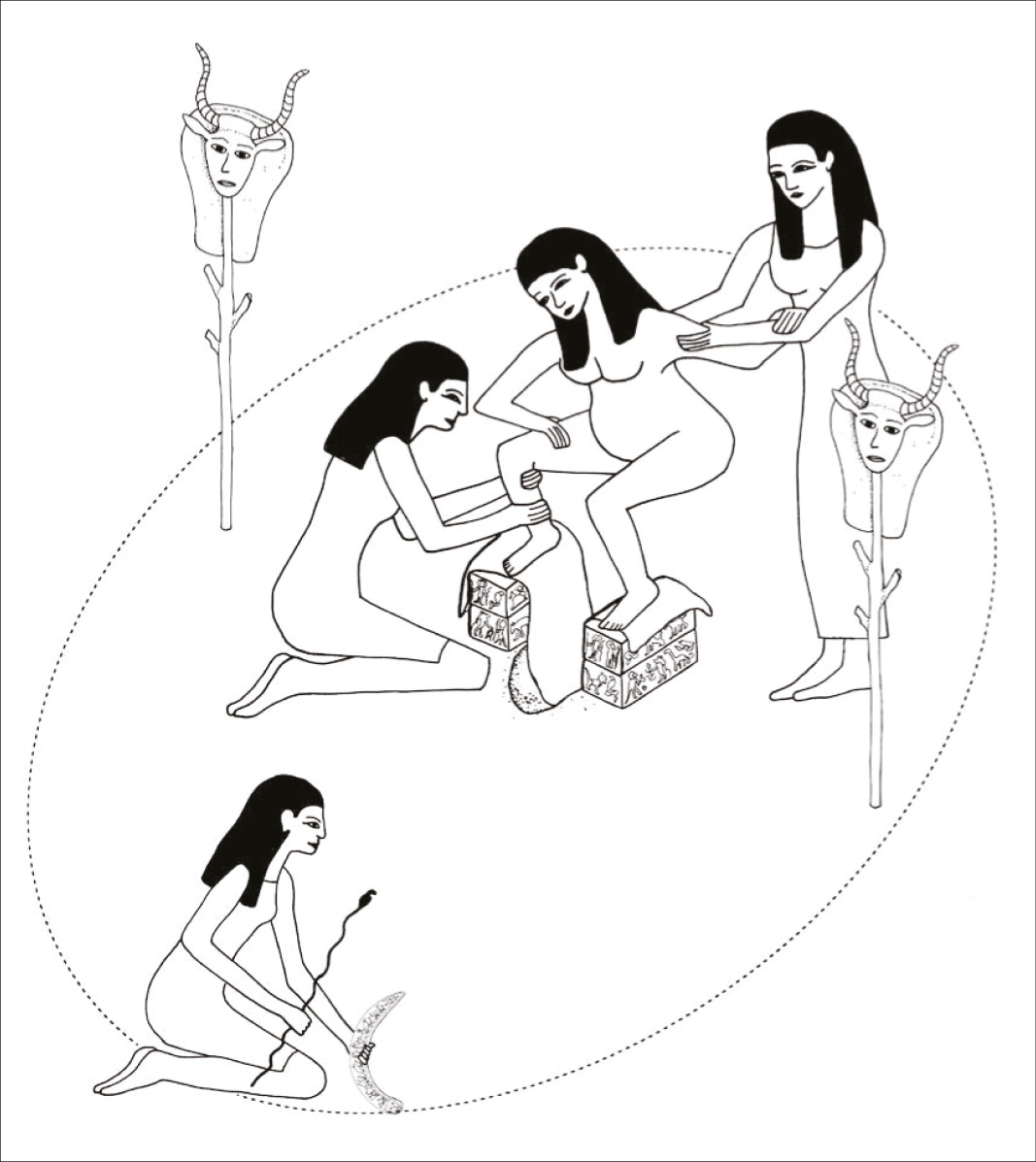
The same figures are well documented on several apotropaic (magical) wands, as detailed in a comprehensive article by Wegner (2009). He proposed that the woman in labour stood on stacks of two bricks, with one woman supporting her, and another poised to receive the baby.
New theory
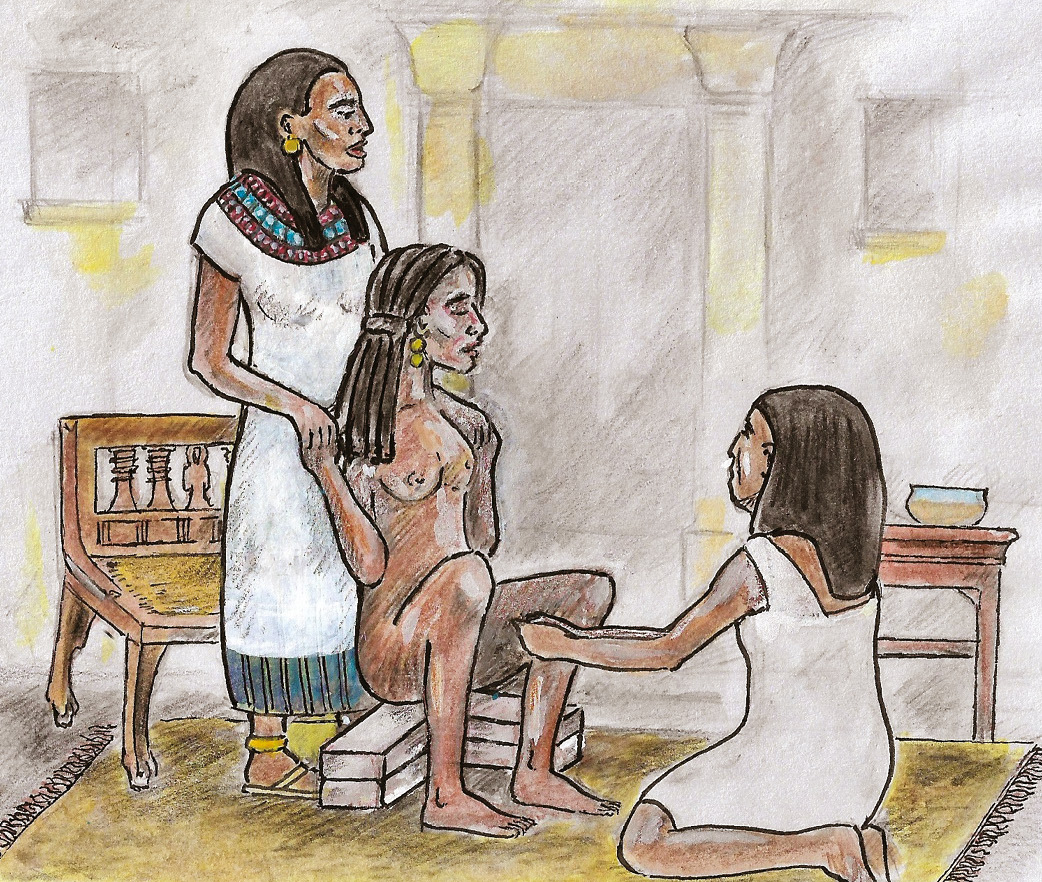
During a long career as an obstetrician and gynaecologist, I have delivered thousands of babies, and I can confidently state that it would not be possible for a woman to maintain the standing posture proposed by Wegner through the final pangs of labour – even with two sturdy friends supporting her – and particularly so for a first birth. Furthermore, that position would make it impractical for an attendant to receive the baby from the front. It would also be very awkward to receive the baby from the rear.
I propose a different method, which I believe would be more sustainable and efficient. I suggest that the Middle Kingdom women assembled the bricks in two stacks of two, placed with two corners touching and the long sides of the bricks forming a right angle. This would permit the woman in labour to sit with one buttock on each stack and to spread her legs so the attendant could easily receive the baby from the front when it was delivered. A sitting position would be relatively easy to maintain, even if only one attendant assisted. Sitting is an effective position for both labour and delivery.
Bricks, stools, and chairs
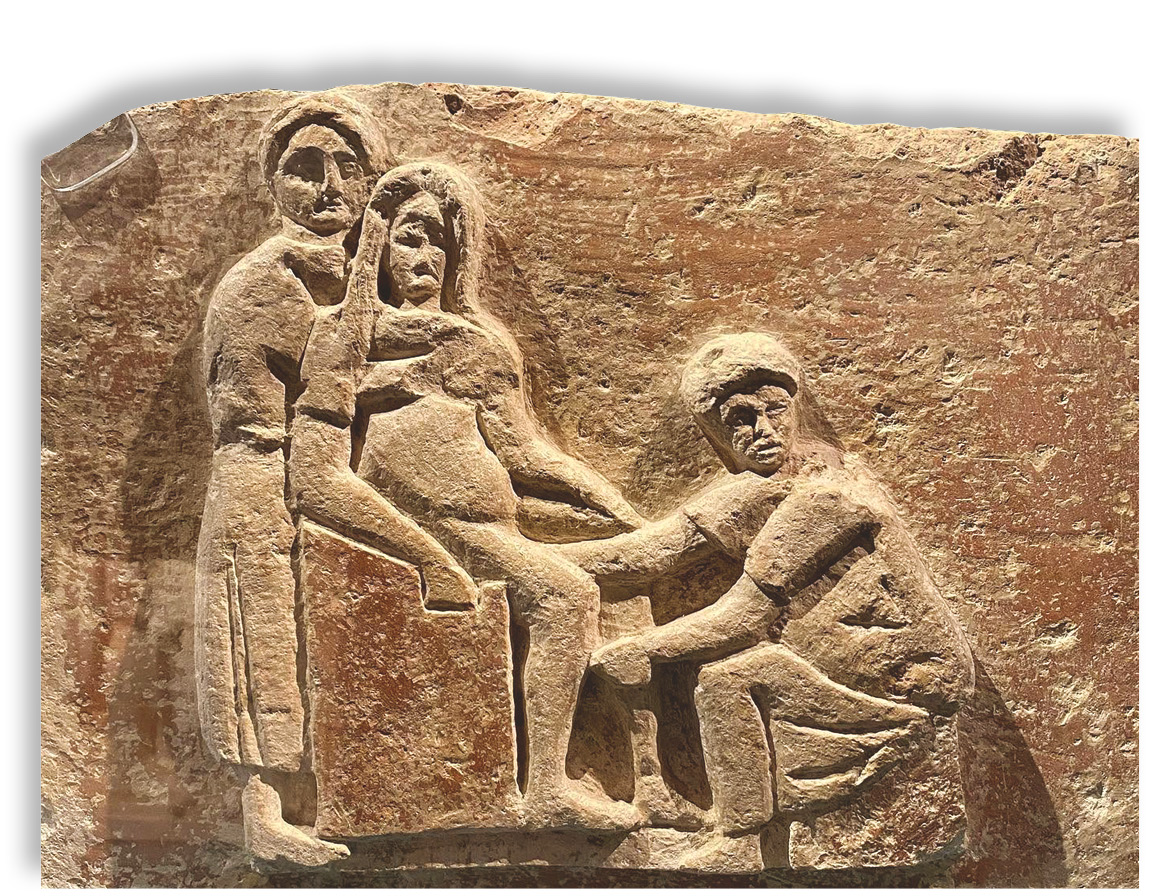
The use of birth bricks may have extended into the New Kingdom. Ceremonial bricks have been found or depicted in several New Kingdom tombs. Typically, one was placed at each corner of the burial chamber to aid birth into the afterlife, suggesting that real birth bricks continued to be used in the same manner as they were in the Middle Kingdom. However, New Kingdom scenes of birthing from Deir el-Medina suggest women may have used a birthing stool and delivered in a seated position. They gave birth in a special birth bower, which was often shown decorated with a stylised vine suggestive of the plant Aristolochia (birthwort or pipevine) – its flower was thought to resemble the birth canal. The plant’s Greek name translates as ‘excellent birth’. It grew wild in Egypt and is known to cause the uterus to contract.
During the Late Period, the birth stool may have evolved into the more comfortable and practical birthing chair used in Graeco-Roman Egypt. Variations of such chairs have been used periodically up to the present day (I have had experience delivering babies with a birthing chair, but did not find this method better than letting the woman lie on her back, and patients too had similar opinions). If my proposed theory for how birth bricks were used is correct, it is not hard to see how birthing methods evolved from such bricks to birthing stools and the modern birthing chair.
W Benson Harer Jr, MD was President of the American College of Obstetricians and Gynecologists and a Clinical Professor of OB/GYN at Western University of Health Sciences. He was also an Adjunct Professor of Egyptian Art at CSUSB. He has published and lectured extensively in both fields. In Egyptology, he notably published on the narcotic properties of the blue lotus and identified the sexually transmitted diseases of ancient Egypt. He is a regular contributor to AE magazine.
• J Wegner (2009) ‘A decorated birth-brick from South Abydos: new evidence on childbirth and birth magic in the Middle Kingdom’, in D P Silverman et al. (eds) Archaism and Innovation: studies in the culture of Middle Kingdom Egypt (New Haven: Yale; Philadelphia: University of Pennsylvania), pp.447-496.
• T Brisbane (2007) ‘Childbirth in ancient Rome: from traditional folklore to obstetrics’, Australian and New Zealand Journal of Obstetrics and Gynecology 47(2): 82-85.