Subscribe now for full access and no adverts
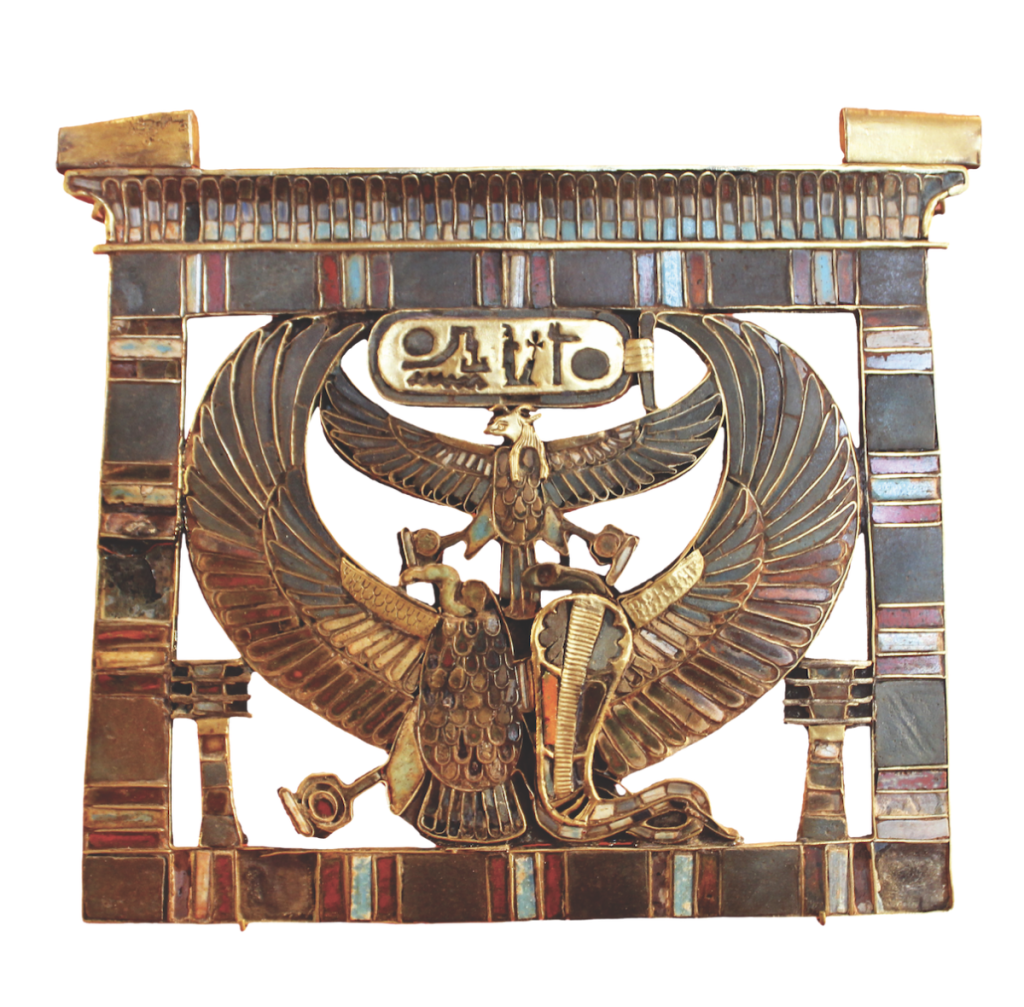
The dating of this pectoral – made of an alloy of gold and silver with coloured glass inlays – is immediately apparent from the well-known cartouche in its centre: Usermaatra Setepenra, the throne name of Ramesses II (which is written back-to-front, leading to suggestions that the piece had been clumsily usurped). Below are the winged goddesses Nekhbet (vulture) and Wadjet (cobra), with a ram-headed winged entity above them. The whole composition is framed in a cavetto-cornice-topped shrine shape, emphasising the divinity of the beings illustrated and named within.
Such an impressive piece of jewellery might be expected to have come from the king’s tomb. However, the place of its discovery is – at least at first sight – rather unusual. It was found during significant excavations of the Saqqara Serapeum in the 1850s, led by Auguste Mariette (1821-1881). Using techniques that included blasting with gunpowder, Mariette’s team revealed many of the catacombs of the sacred Apis Bulls. The pectoral was found in a mass of material, including fragments of bovine bones which were shaped like a human mummified body and placed in a coffin. This is a particularly important indication that the ancient intention of mummification was not ‘preservation’ (in this case of the bull), but transformation into quite another form.
The presence of a mask made of sheet gold suggested to Mariette that he might have found the Tomb of Khaemwaset, a son of Ramesses II who was responsible for several bull interments during his father’s reign, although the remains were definitely those of a bull. Also in association with this and similar bull mummies were shabtis naming officials such as the vizier Paser, as well as many examples for Prince Khaemwaset. In fact, none of the named individuals were buried here – but their metaphysical presence in association with the god was assured by contributing a named object to the burial. A similar situation is likely for royal burials, and is known for that of Tutankhamun – but the practice was surely more widespread. It may be that this pectoral was simply a gift from the king, which could have been an object which he himself wore on occasion, or a donation on his behalf by one of his officials – or even by his son.
Image: Sarah Griffiths