Subscribe now for full access and no adverts
Early hunter-gatherer populations in the Near East, Levantine, eastern Sahara, and the Nile Valley were fluid, as climate changed, and forest acreage and grassland expanded and contracted from 15,000-7000 BC. By the 5th millennium BC, the northern Sahara had become arid. Populations were forced to settle near water sources, and begin domesticating plant and animal species. As people from the lands west of the Nile, the eastern Sahara, and in south-west Asia (Sinai and Transjordan) moved towards communities in and around the Nile Valley, they brought with them different materials. Items found in burials and settlement remains from this period indicate relationships with other cultures.
It is possible to trace increasing sophistication in the use of materials by ancient Egyptian populations from the Neolithic (c.7000-5000 BC) to the mid-Predynastic (Naqada II, c.3500-3200 BC) time periods. By the late Predynastic (Naqada III, c.3200-3100 BC) and the Early Dynastic (Dynasties 0-2, c.3100-2686 BC) periods, ancient Egyptians were sourcing commodities from elsewhere. Plants and animals, skills such as animal domestication, and materials such as metal and minerals came through trade and/or migration not only from the Egyptian Nile Valley, but also from more distant locales such as the Egyptian deserts, Nubia, the Levant, Sinai, Libya, Anatolia, and Mesopotamia.
How did the use of these materials develop from their origins in early prehistoric populations? In addition to other objects, materials used for personal adornment – such as bracelets, necklaces, and pendants – can provide insights into how and when those materials were used. From the Neolithic Period through to the Naqada II time period, personal adornment objects found in settlements and burial sites were made from foreign materials as well as those from the local Nile Valley. By the end of Naqada III and into the Early Dynastic periods, a variety of materials such as gold, lapis lazuli, and turquoise from the Nile Valley and elsewhere were being used to construct beads, bracelets, and necklaces.

Predynastic (C.5500-3100 BC)
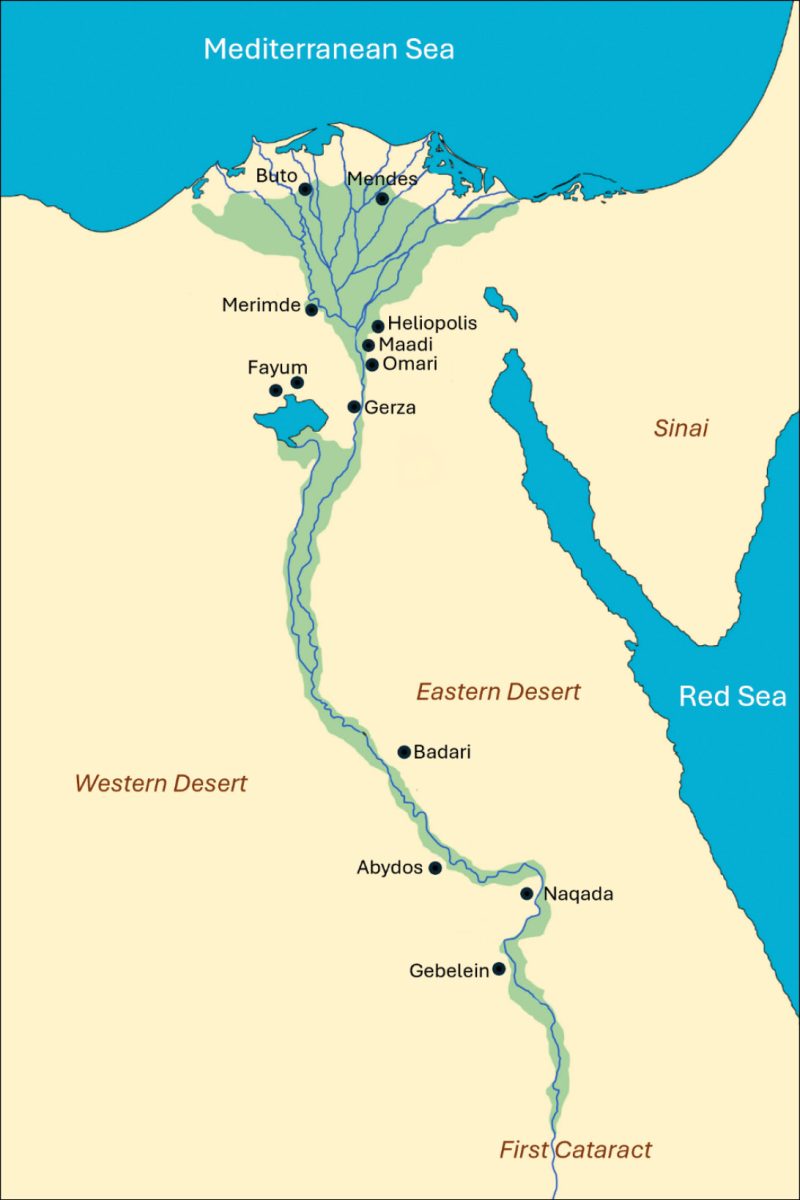
In the period before the formation of the Egyptian state (and the development of writing), Egypt consisted of a series of independent settlements and their satellite farming communities. In Lower Egypt, the main cultural sites included the Fayum, el-Omari, and Merimde Beni Salama. The communities here primarily depended on hunting and fishing, but also appear to have raised cattle, sheep, and cereals, suggesting their origins lay in the Levant. Their burials were simple, containing rough stone and flint tools and implements (metalworking had not developed at this time), as well as clay figurines.
Objects for personal adornment were mostly made from local materials such as bone and shell. At el-Omari (c.4600-4400 BC), rough cylindrical, barrel, and spheroid bone beads were found. Materials at Merimde (c.4800- 4200 BC) included bone discs, simple stone and clay barrel-shaped beads, and drop-shaped pendants of slate – a material found in the Eastern Desert. Finds at the Neolithic Fayum settlement sites such as Kom W (c.5200-4000 BC) included ornamental objects of bone and clay, and also ostrich-eggshell beads. Occasional finds of marine shells suggest interaction – possibly trade – with Eastern Desert groups near the Red Sea.

The hard stone amazonite (a form of feldspar) was also used to manufacture beads and pendants. Although amazonite can be found today in small quantities at a mine at Gebel Migif, in the Eastern Desert, the amazonite beads found in the Neolithic settlements in the Fayum may have been obtained through trade with the Levant or Nubia, or from mine sources in southern Libya or Ethiopia. This raises intriguing questions as to whether the mineral was collected closer to home or obtained by specific trading groups on seasonal trips to and from the Nile Valley, thus widening the regions from which adornment materials were accessed during these early times. This material has not been found at Merimde or Omari. Thus it is possible that it was obtained through trade between the Fayum and the Red Sea.

Badarian culture
Further south, the Badarian culture existed c.4400-4000 BC, contemporary with the Fayum and later Naqada I cultures. The Badarian people appear to have had simple lifestyles, and were not permanently settled at specific sites in the valley, possibly moving seasonally. Their burials, however, were more complex, with the culture known for its fine pottery and carved ivory bracelets, combs, spoons, beads, and figurines, as well as slate and porphyry palettes. These were mostly carved using flint, but some small copper tools have been found.

Compared with the communities further north, objects for personal adornment were far more prevalent in Badarian burials, and included shells, bones, alabaster, agate, and other more local materials. The types and quantities of stone beads from necklaces, bracelets, and anklets found in individual burials may indicate some form of social stratification. In addition to the bone, clay, and ostrich-shell objects also seen in northern Egypt, Badarian materials derived from the Nile Valley and Eastern Desert included soft stones such as alabaster, calcite, steatite, and limestone, and harder stones such as green jasper, malachite, quartzite, flint, smoke quartz, and serpentinite.

Other materials from beyond the Nile Valley and Eastern Desert included shells from the Red Sea, ivory from Nubia (although ivory from hippopotami could be local), copper from the Sinai or Palestine, and garnet from the Sinai/Aswan. The gemstone carnelian, a medium-to-dark red, brown or orange gemstone, could be found in pebbles in the Eastern Desert, and possibly in northern Nubia. However, it has been suggested that, in order to create the number of carnelian beads found in certain grave sites, large-scale manufacturing of the beads, not apparently available in Egypt at this time, must have taken place elsewhere, such as in northern Sudan. (For more about carnelian, see AE 156.) Similarly, glazed blue steatite beads were probably sourced from outside Egypt – possibly through trade with Mesopotamia.
Generally, the materials used during this time period were still raw, and not very polished. They were mainly shaped either into short cylinders or thick rings, and fashioned primarily from soft stone. Beads around the neck, waist, and ankles appear to have been worn by women and children, while a small number of steatite belts were found wrapped around males.

Maadi-Buto culture
From about 4000 BC, the Maadi-Buto culture existed in the northern Nile Delta, consisting of a number of settlements across the area. Although contemporary with the early Naqada settlements in the south, the Maadi-Buto culture developed independently, and may have had its origins in the earlier Merimde culture. These areas showed clear connections with the Levant, with some Levantine-like subterranean dwellings, V-shaped bowls, and Levantine-influenced tools and timber for boats. Tools made of copper (possibly sourced from the Sinai) were found, too. Flints and shells that appear to be Maadian have been found in southern Palestine, indicating the possibility of cross-settlements and/or low-level trading in this northern area. Burials were generally simple: beads have been found in some of the graves with limestone and alabaster personal ornaments. In one case, a string of carnelian beads was found, possibly indicating trade with other communities.
Naqada culture
The cultures of Upper Egypt in the south did have some contact with those to the north, but were quite distinct from those of the Delta, with a greater emphasis on domestication, and on social status and rank. The Naqada periods began with a continuation of Neolithic practices in Naqada I, with later rapid growth towards a more complex society during Naqada II. Ultimately, the Naqada culture spread as far as the Delta in the north and Nubia in the south.
Naqada I
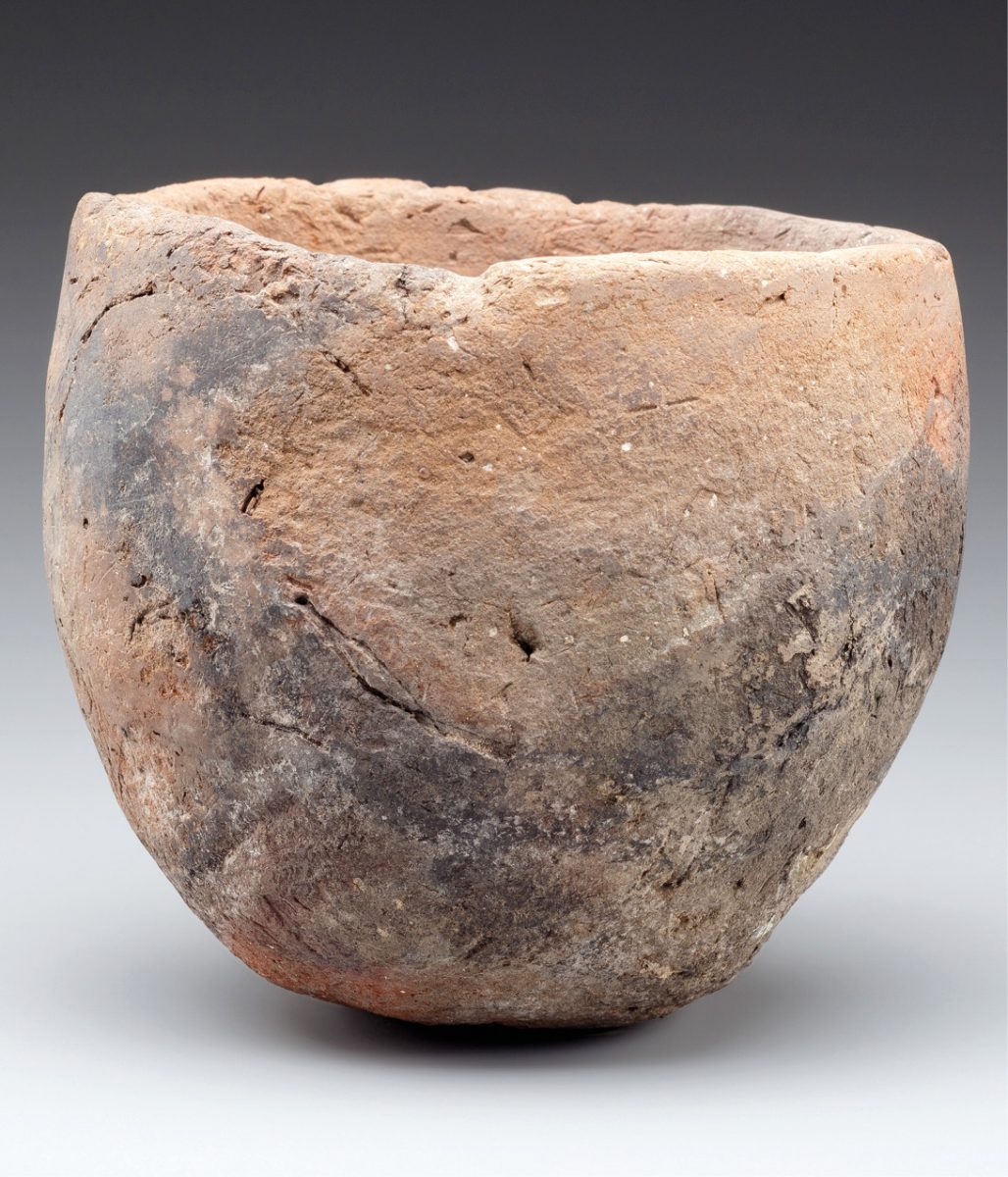
The Naqada I culture (Amration, c.4000-3500 BC) consisted primarily of village settlements, and appeared in Upper Egypt contemporary with late Çatahöyük of Anatolia and Halafian/Samarran cultures of the eastern Fertile Crescent. The characteristics of these Naqada I cultures appeared similar to those at Badara, although Naqada I sites were somewhat larger, wealthier, and more permanent. Grave goods in particular contained items that may be associated with identity and rank, and had a more diverse array of pottery, including red polished bowls, and red pottery cross-lined with white, which depicted plants, animals, and basic human figures. A number of cosmetic stone palettes and combs, figurines, and spoons made of ivory were also found in Naqada I burials.

In Naqada I, there was an increase in the use of hard and soft stones, including schist, granite, limestone, and alabaster, as well as the use of hammered copper in pins, beads, and other objects. Evidence for contact with other areas included objects containing malachite from the Eastern Desert and the Sinai, and shells from the Red Sea. Generally, in addition to shells, soft stones such as black steatite from the Eastern Desert were used primarily for personal adornment.

There appears to have been a growing demand for unique imported goods and increased cultural interactions. In addition to the use of carnelian, as seen in Badarian jewellery, harder stones that may have been sourced outside the Nile Valley included garnet (Eastern Desert, the Sinai, and northern Sudan), olivine (Red Sea), and agate (Eastern Desert). Archaeological reconstructions of the adornments indicate that, from this period onward, various types, shapes, and sizes of material were used to create a single piece of jewellery.
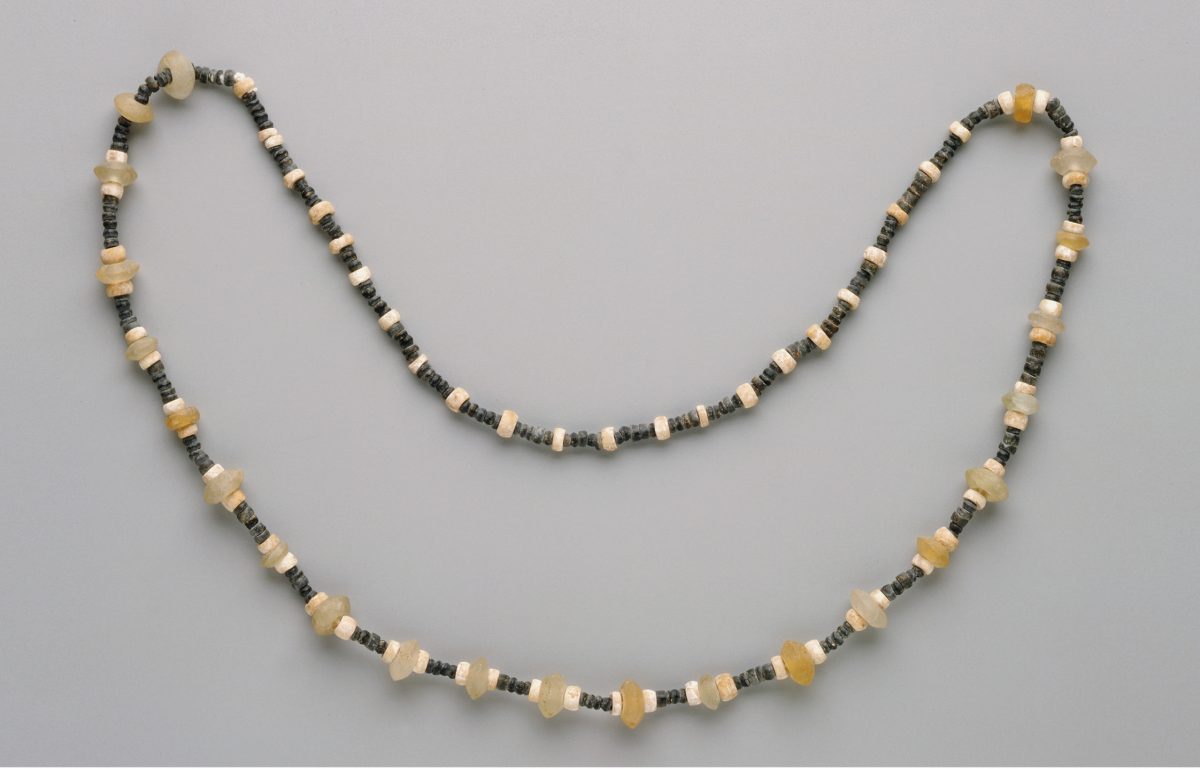
There appears to have been a growing demand for unique imported goods and increased cultural interactions.
Naqada II
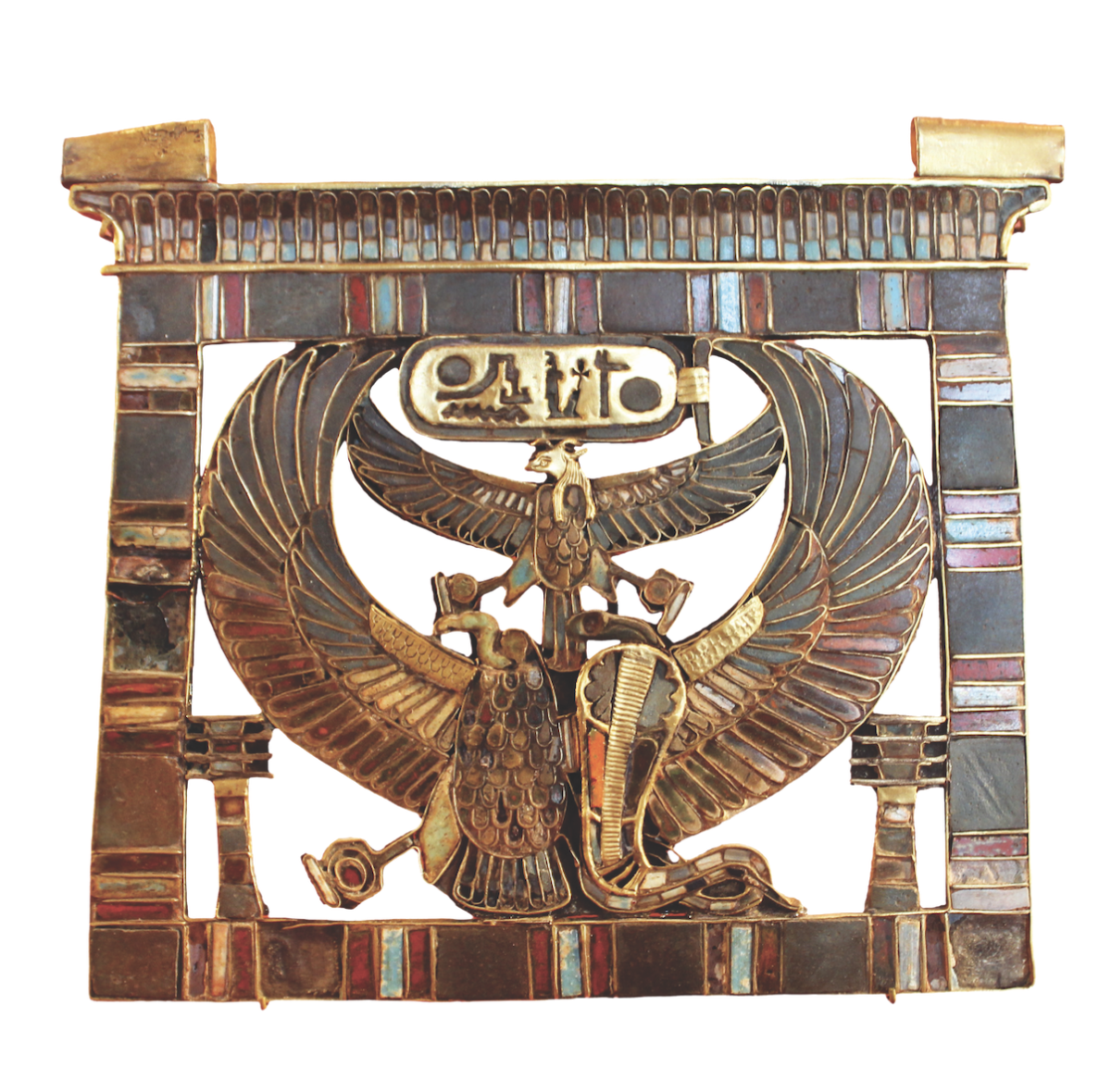
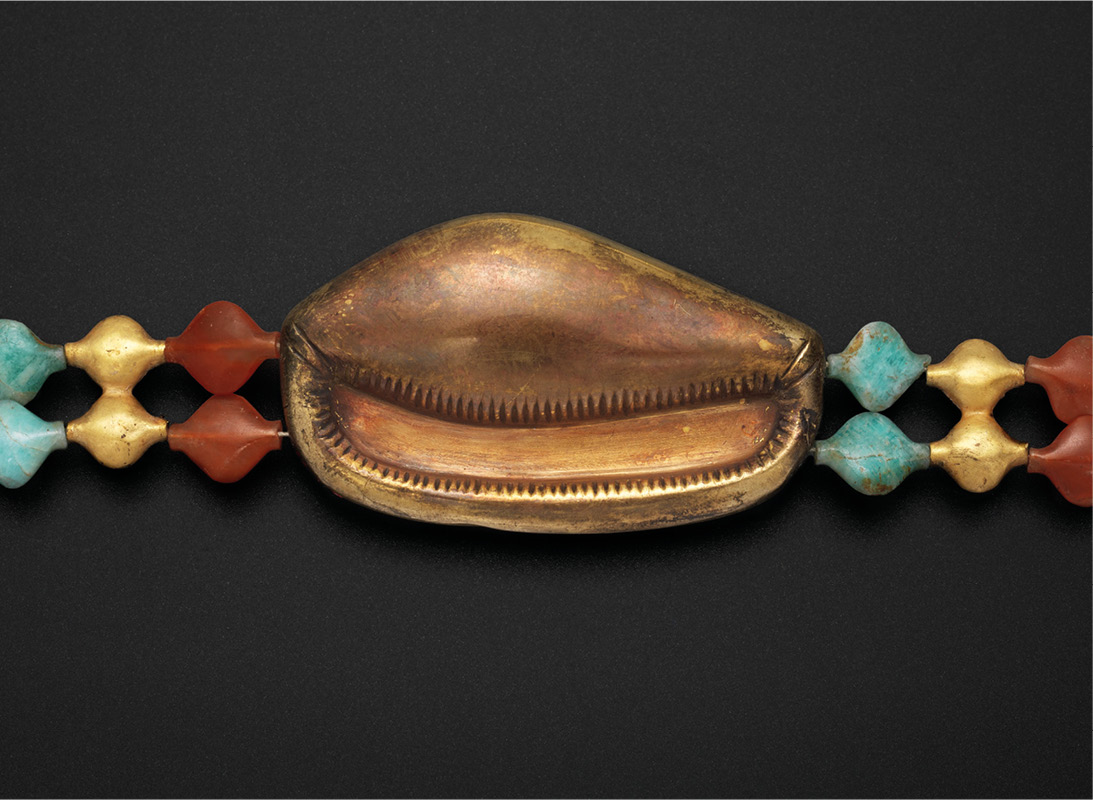
Early Naqada II (Naqada A and B) culture (Gerzean, c.3500-3200 BC) was much like that of Naqada I. However, communities were growing north and south along the Nile, and their burials included an increased diversity of cosmetic implements, and ceramic and stone vessels. Towards the end of Naqada II (Naqada C and D), there appeared to be complex social/political/economic institutions, and larger settlements at Hierakonpolis and Naqada. Cemeteries, although still separated from settlements, were larger and more elaborate, with signs of the beginning of funerary cults and craft/manufacturing zones. These burials indicate a wider range of levels within the social structure, including a distinct artist and craftsman class. Burial goods included painted ‘decorated ware’ pottery (with detailed line drawings), many ivory and stone items, vases, slate palettes, and large stone ceremonial blades. There was also an increase in the number of copper objects, such as blades and bracelets, and gold and silver foil was used to ornament vessels, knives, and beads.
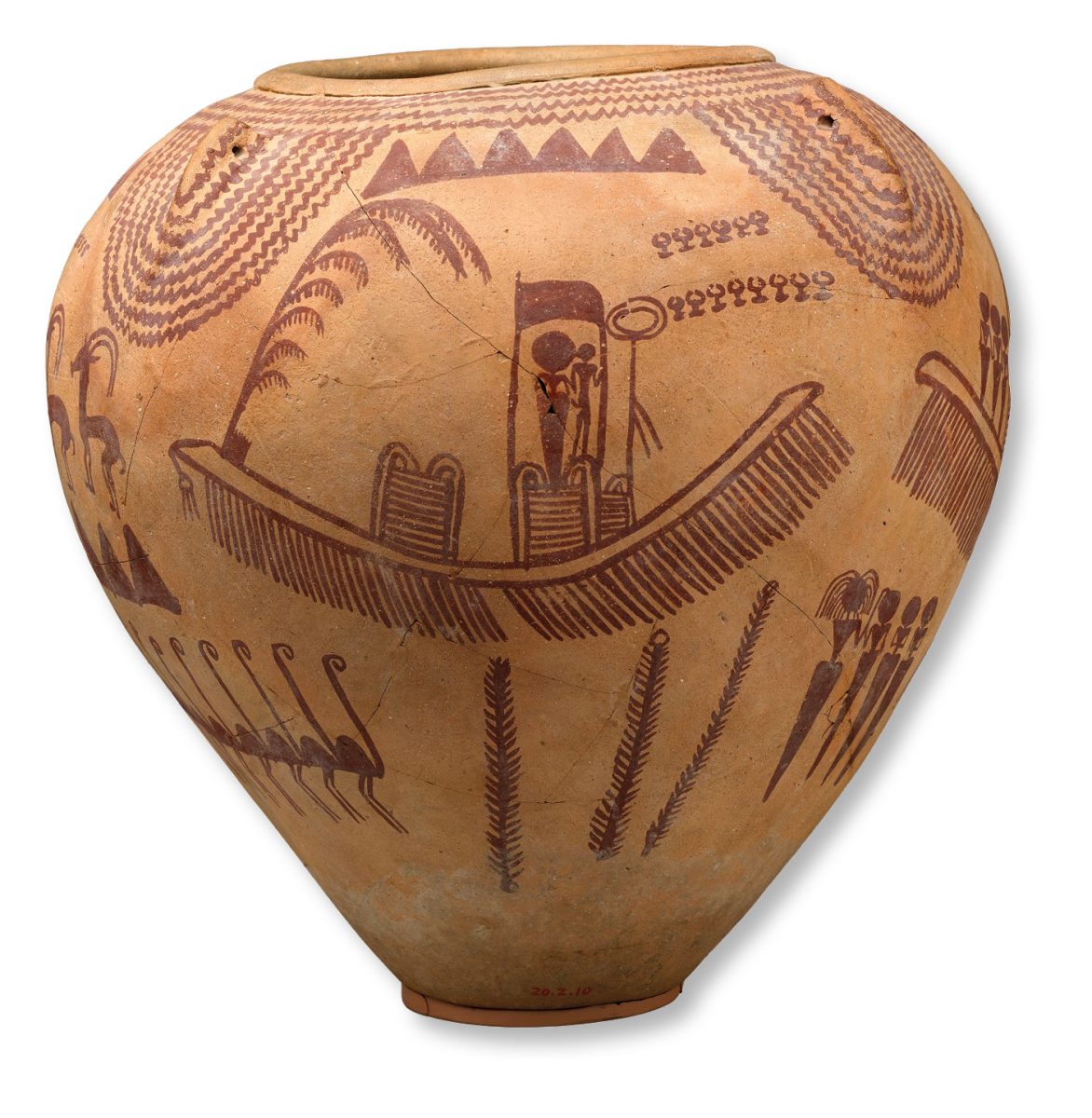
Image: Rogers Fund, 1920, MMA
Generally, materials used in earlier ages such as shells, ostrich eggshell, bone, ivory, and soft local stones continued to be used for adornment objects. However, with increased wealth and social stratification, increased amounts of luxury materials from outside the Nile Valley such as turquoise (the Sinai) and carnelian (Eastern Desert, northern Sudan) were incorporated into personal adornment objects.

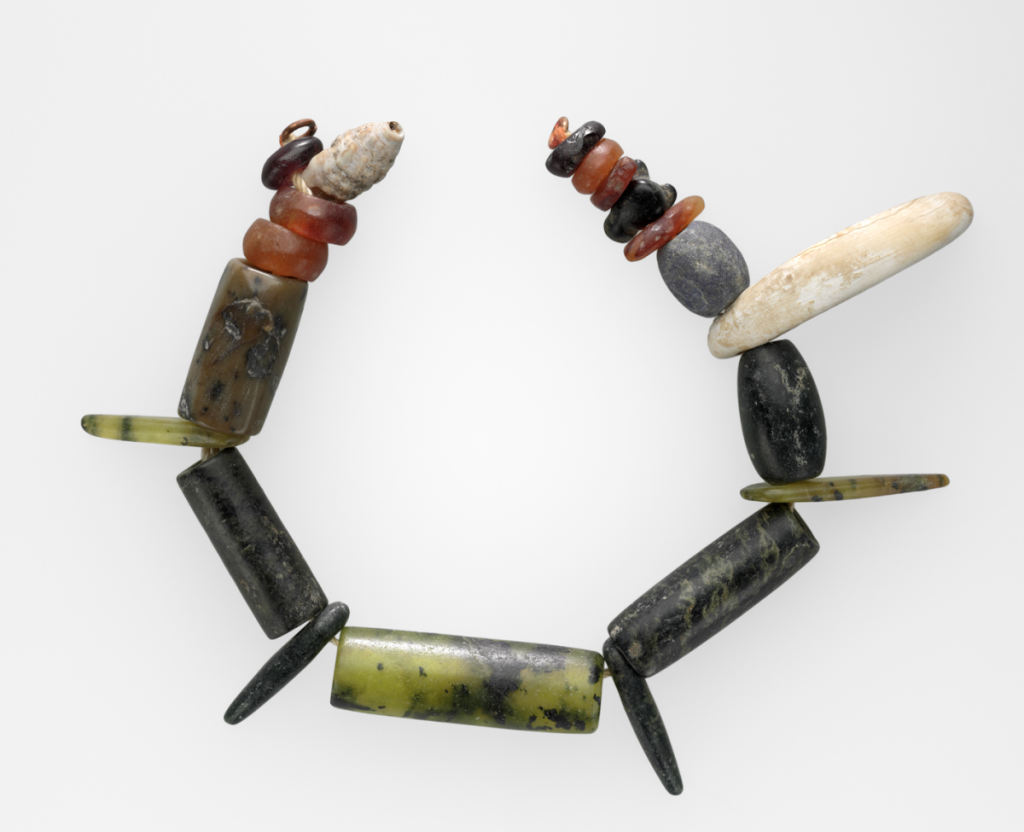
Some materials were obtained from much further afield. Lapis lazuli, found in present-day Afghanistan, was probably obtained through Mesopotamia and land- or sea-based routes through the Levant, while obsidian possibly came from Anatolia (modern-day Turkey). A very small number of objects have been found made of faience, which is made from quartz, alkaline salts, lime, and mineral-based colourants. With the advent of more advanced drilling techniques, harder stones – such as amethyst, garnet, and lapis – could be made into beads, some of which were bored more cylindrically. Often, there were specific sizes and types of bead used for particular materials, possibly indicating specific uses.
Naqada III
During Naqada III (c.3200-3100 BC) and the periods beyond, the Maadi culture in northern Egypt disappeared, and increasingly larger regions were annexed by local rulers until a large portion of the Nile Valley was under a single ruler. During these periods, burials continued to contain large quantities of grave goods, and society became more hierarchical. Long-distance economic interaction and trade increased, particularly with the southern Levant, but also with Anatolia and Mesopotamia, either directly or through intermediaries. While the materials used for bracelets and necklaces were similar to those used during Naqada II, beads became more defined and smoother, with a far greater abundance of objects made of faience.
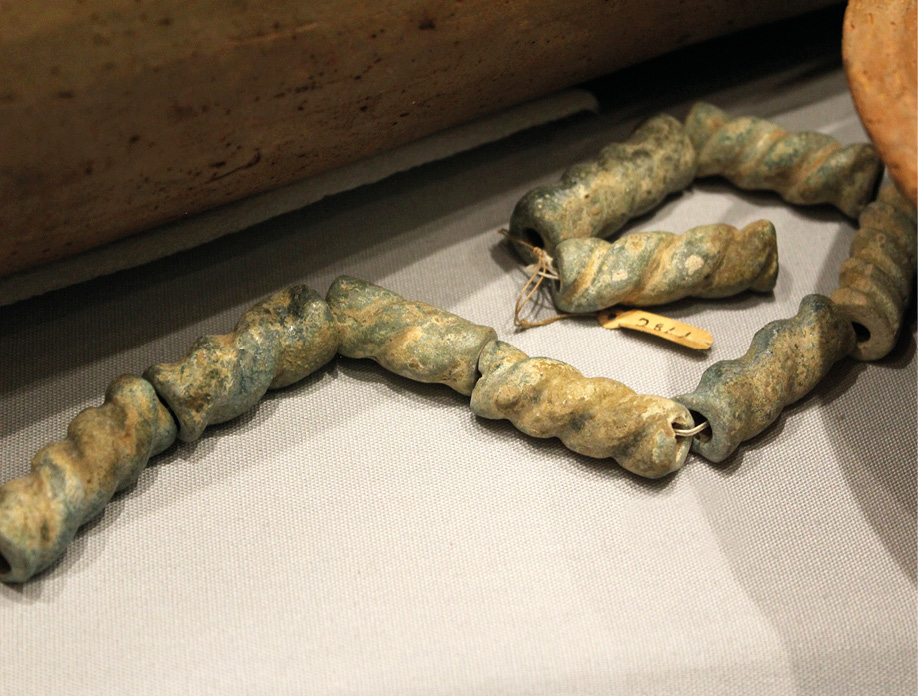
Image: SG
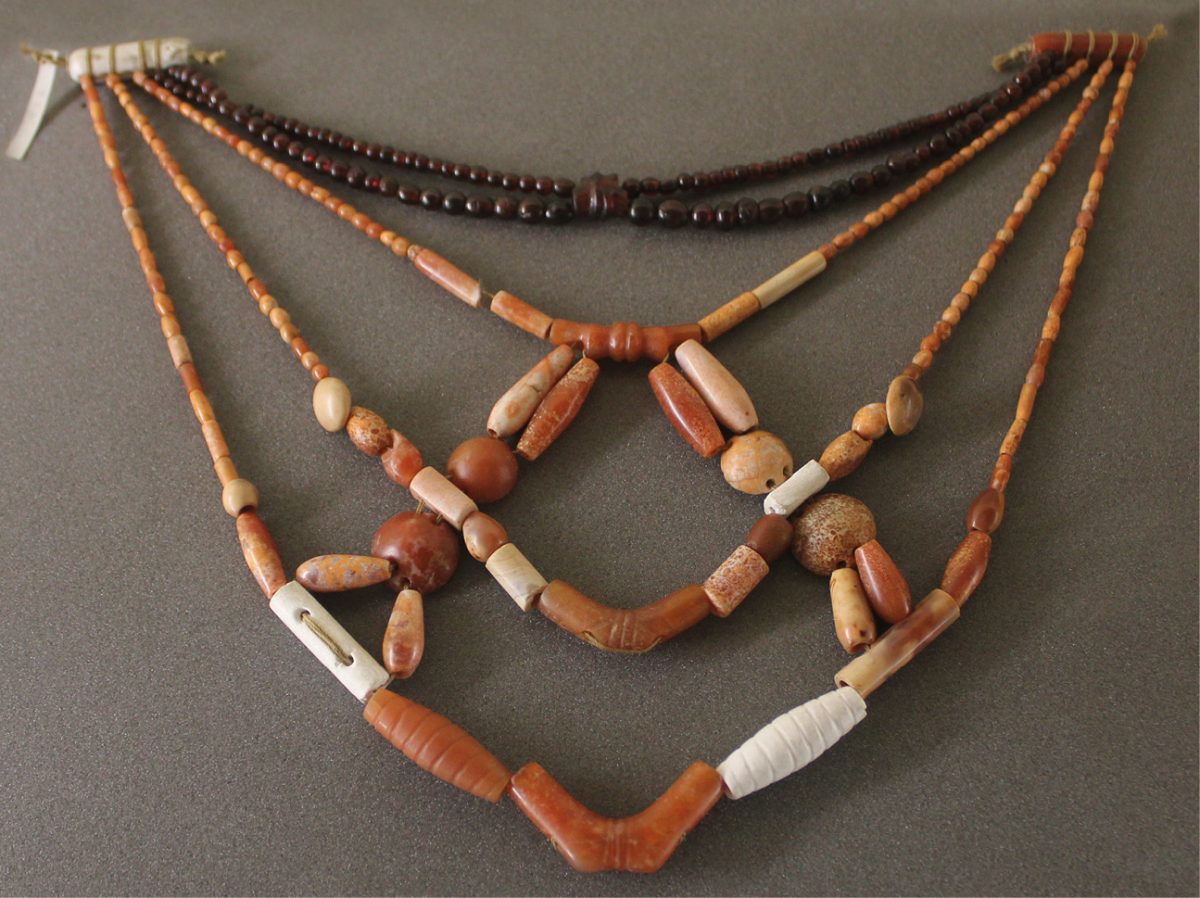
Personal adornments
The study of personal adornment materials and origins in early ancient Egypt can give valuable insights into the trade and social hierarchy of the different cultures during these periods. Beads, bracelets, and necklaces were primarily found associated with grave sites, accompanying their owners to the afterlife. It has been suggested that the objects and the materials they were made of expressed status, religious beliefs, and style. As populations became more settled and trade became more sophisticated, so objects for personal adornment became increasingly complex both in their appearance/colour, and in the materials used. Differences in the ways adornment objects were used in Lower and Upper Egypt appeared significant, although it is important to note that looting and the continued building of settlements on top of earlier levels could lead to bias. Generally, adornment objects appeared more prolific in Upper Egypt, with a greater variety of materials found in the burials. Although communities in Lower Egypt had ties to the Levant, there does not appear to be a significant material exchange with regard to personal adornment with the Levant, or the populations that may have traded with the Levant, such as Anatolia or Mesopotamia.
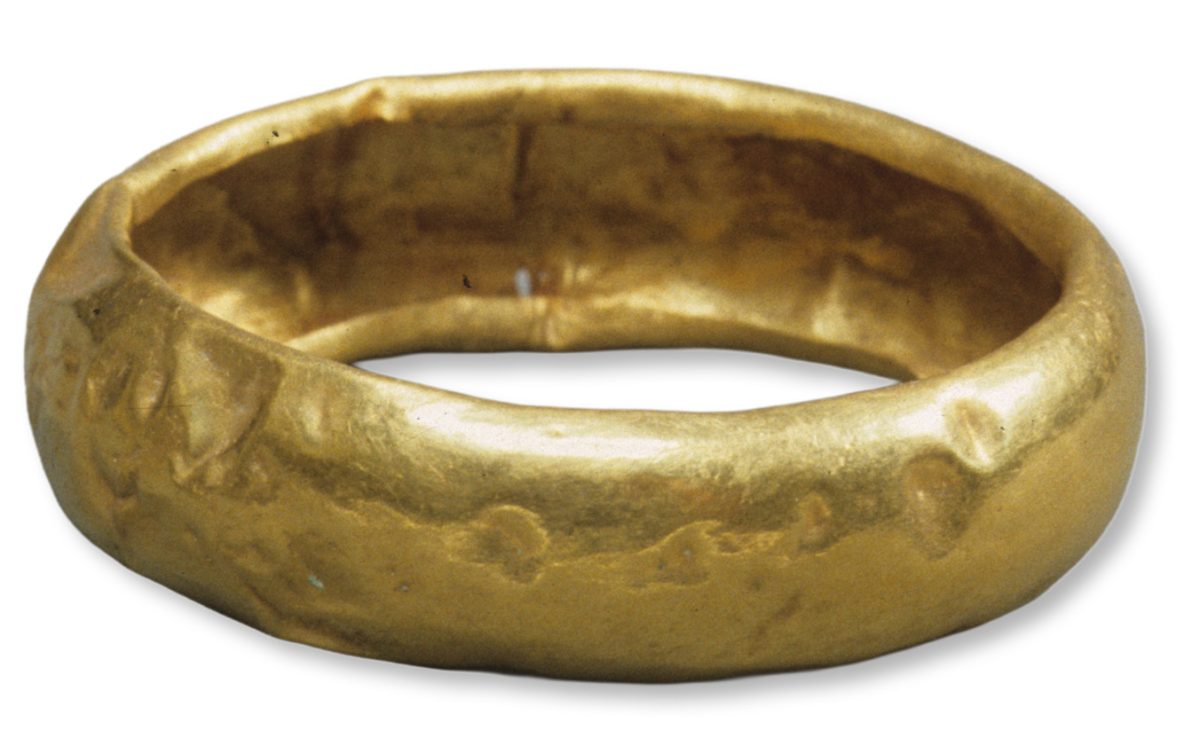
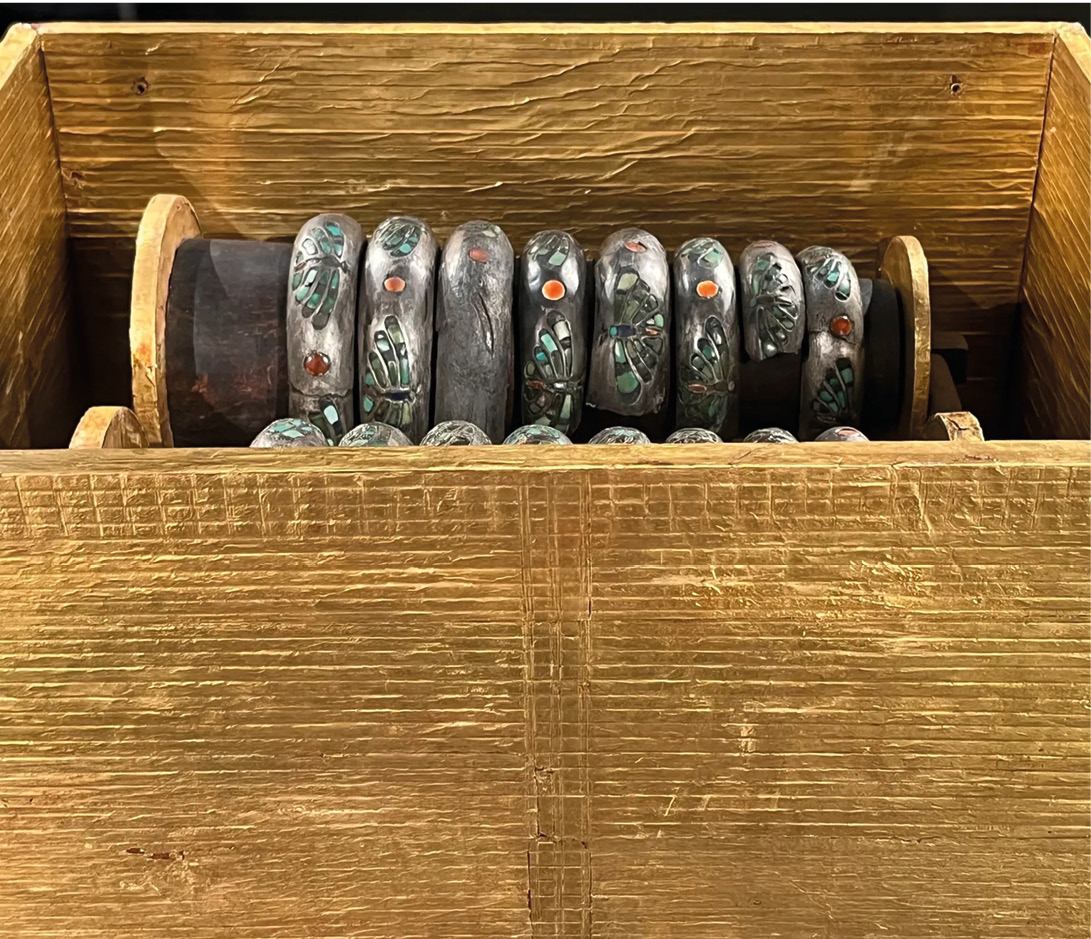
By the end of the Early Dynastic Period, the unification of the Nile Valley populations led to a significant increase in trade, bringing in new materials for adornment such as turquoise from the Sinai, silver from Anatolia or the northern Mediterranean via the Levant, copper from Nubia, the Sinai, and the Eastern Desert, and gold from the Eastern Desert and Nubia.
Barbara Boczar has a PhD in biological sciences from the University of California, Santa Barbara, a JD (law) from Stanford University, and an MA in Egyptology from the University of Manchester. Her previous articles include the sources of ancient Egyptian colours (AE138), and the imagery of Egypt’s Naqada periods (AE142).
• B Midant-Reynes (1992) The Prehistory of Egypt: from the first Egyptians to the first pharaohs (Oxford: Blackwell); translated I Shaw, 2000.
• N Xia (2014) Ancient Egyptian Beads (Heidelberg: Springer).
• J A Harrell (2017) ‘A preliminary overview of ancient Egyptian stone beads’, PalArch JAEE 14(2): 1-16.