Subscribe now for full access and no adverts
In AD 1218, the armies of the Fifth Crusade invaded the Nile Delta. It was the first time that a major European expedition had targeted Egypt. The invasion was part of a series of holy wars – the Crusades – that took place between 1097 and 1291, in which Christian armies from Europe competed with Islamic powers for control of Jerusalem, the Holy Land, and the wider Near East.
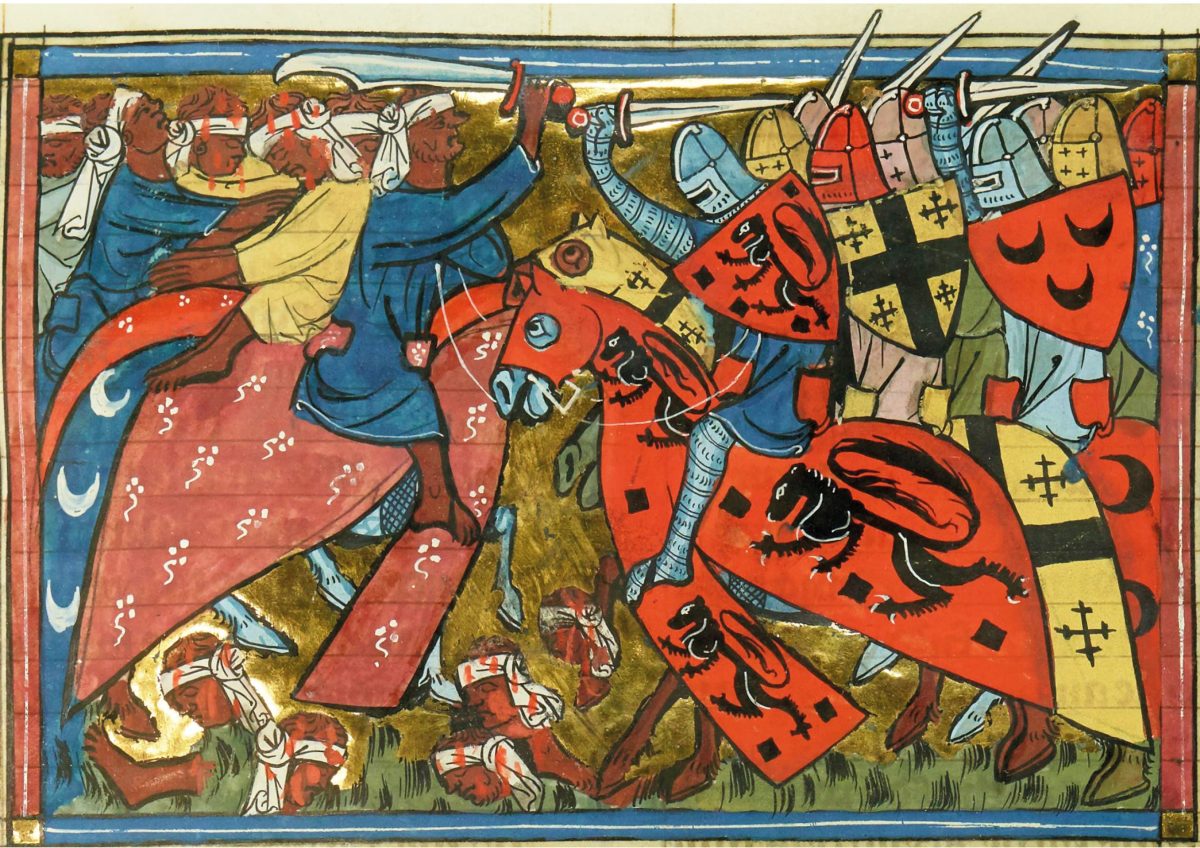
After the triumphal capture of Jerusalem by the First Crusade in 1099, the Europeans – or ‘Franks’ as they were called at the time – had established the ‘Crusader States’ in Palestine and Syria, which were surrounded and outnumbered by the Islamic powers of the region. Maintaining military dominance on the battlefields of the Near East proved difficult for the Franks, as the Muslims began to coalesce under a series of effective leaders and the banner of jihad – the counter-crusade. After Saladin (the Ayyubid sultan of Egypt and Syria) crushed the Frankish field army in 1187, decisively tilting the balance in the wars, his host swept across the Holy Land and recaptured Jerusalem for the Muslims.
As the European response to the loss of Jerusalem mustered from the end of the 12th century and into the 13th, the crusading strategy shifted: rather than attempting to recover Jerusalem directly, the Crusaders targeted Egypt, which was the source of Ayyubid wealth and power in the region. The theory was simple: conquer Egypt and, with the resources of the great land in their hands, the Franks would be able to reconquer Jerusalem and the rest of the Holy Land, and hold on to them in the long term.
Invasion
In Egypt, the Fifth Crusaders encountered remnants of ancient civilisations, the latest in Islamic fortifications, and an obstacle that they could not overcome: the River Nile. Where the Nile had given life to the civilisation of ancient Egypt, on the Fifth Crusade it brought death to the European invaders, and determined the downfall of the entire expedition.
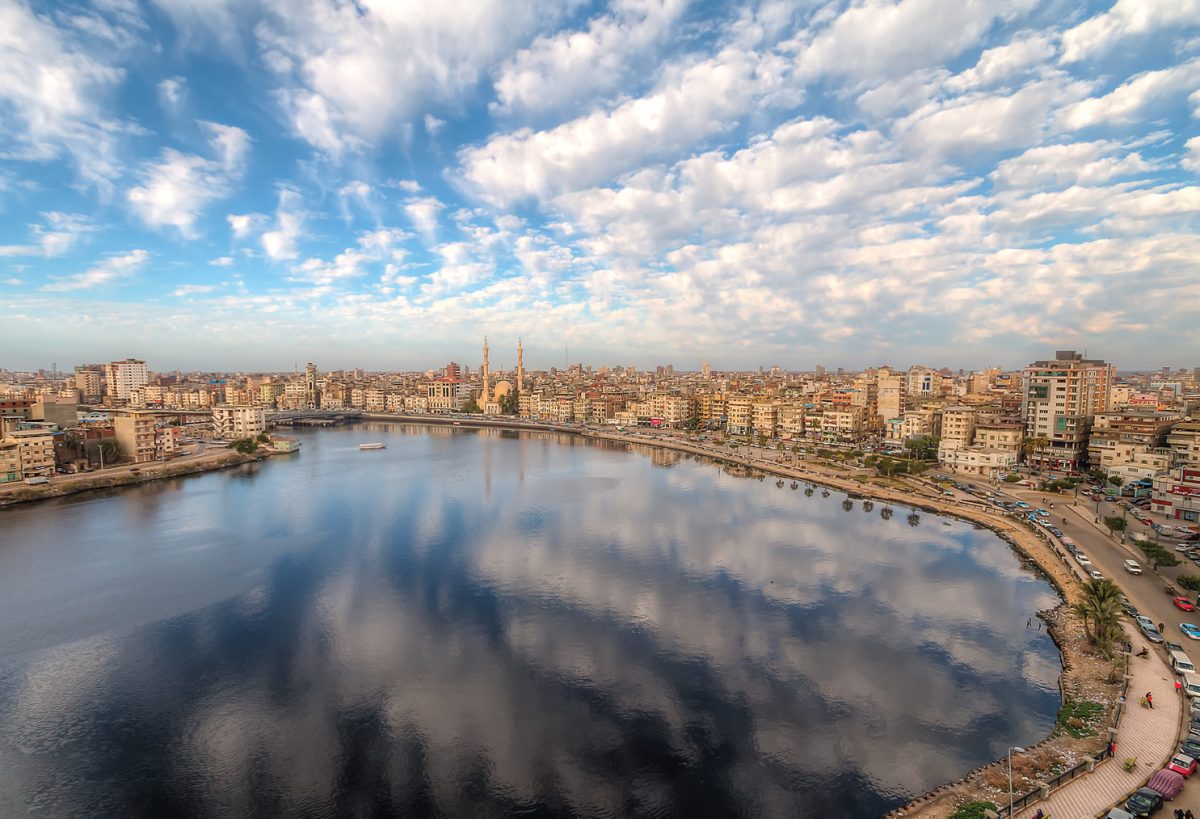
The source of Egypt’s wealth and power in the Middle Ages had not changed from ancient times, based on the fertility of the Nile Delta, which allowed the widespread cultivation of grain. This wealth had allowed its Muslim overlords to finance the largest army and navy in the Mediterranean basin, which they had used to great effect against the fledgling Crusader States. And the Nile Delta was where the Fifth Crusaders began their invasion in 1218. Crusader ships emerged off the coast of Damietta on 29 May. Along with Alexandria, Damietta was the greatest port city on the Egyptian seaboard. With a population of about 20,000, it was one of the most important hubs in the trans-Mediterranean trade. It made sense for the Europeans to target Damietta, since they needed a secure route back to the Crusader States and to their supporters in the West.

The Crusaders’ amphibious assault began with a beach landing on the west bank of the Nile. Using fast-moving, flat-bottomed landing craft – not dissimilar to those seen 700 years later on D-Day in 1944 – the Crusaders rowed rapidly to the shore, where the sailors dropped the bow ramps, disgorging fully armed knights already mounted on their horses. The knights charged out of the landing craft and engaged a Bedouin force that had mustered on the beach to oppose them. One of the Crusaders aimed at them with a javelin from long range. He launched his spear with such force that it struck one of the Bedouin cavalry dead, causing the fallen soldier’s comrades to scatter. The Crusaders had secured a beachhead.
Lethal landscape
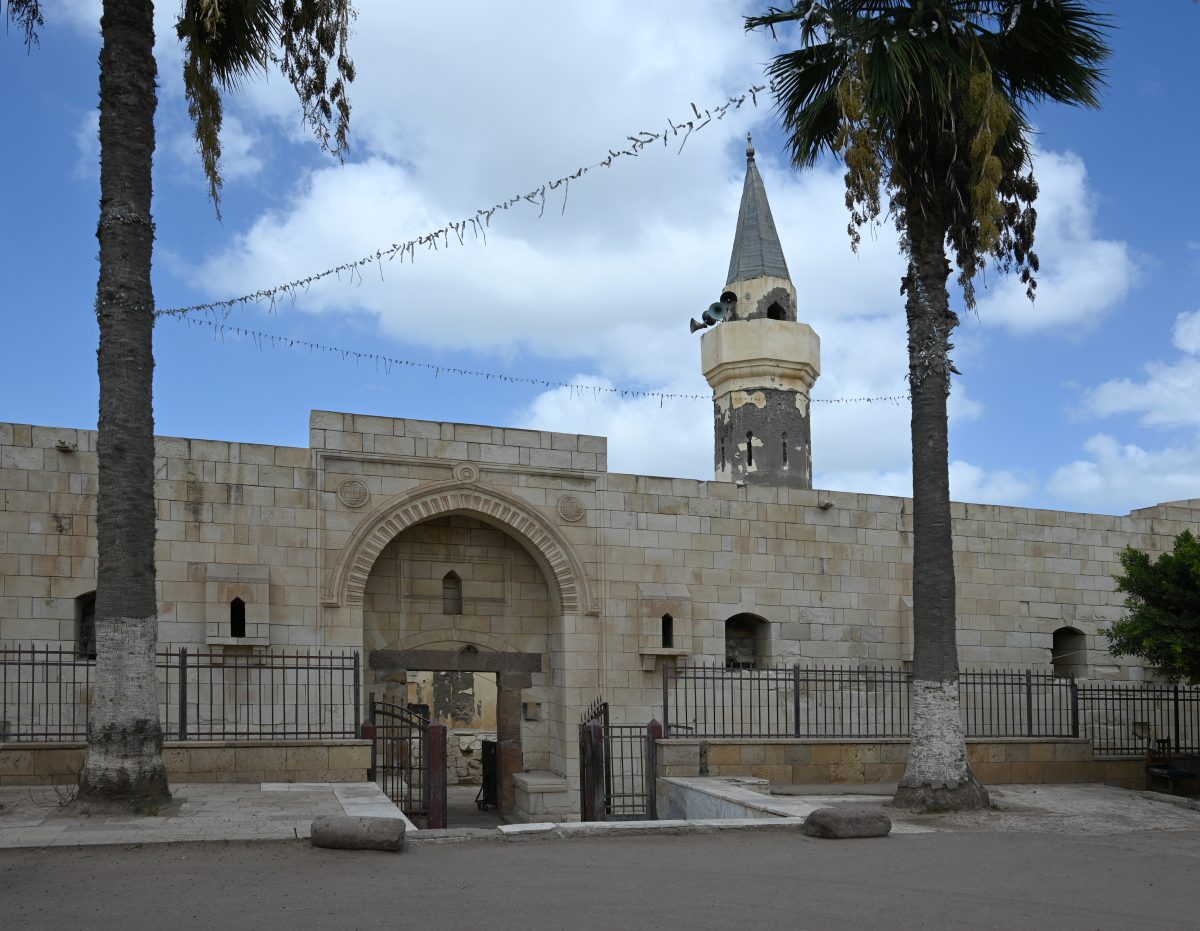
After setting up camp around a captured mosque on the west bank of the Nile, the Crusaders began to explore the strange new world around them. Although many of the soldiers had already campaigned in the Holy Land, few had encountered a landscape like this. The old city of Damietta was located at the mouth of the Nile Delta, on the eponymous eastern distributary of the great river, where it discharged into the Mediterranean Sea. The fertile silts deposited in the Delta by the annual inundation had created a verdant landscape rich in flora and fauna. Despite their lack of practical experience, the Crusaders had a working knowledge of the region’s hydrology. One contemporary on the Crusade wrote a letter back to Europe where he explained that the Nile swelled miraculously every year in August, without rainfall, and then flooded the whole of Egypt, whereby the river fertilised the soil.

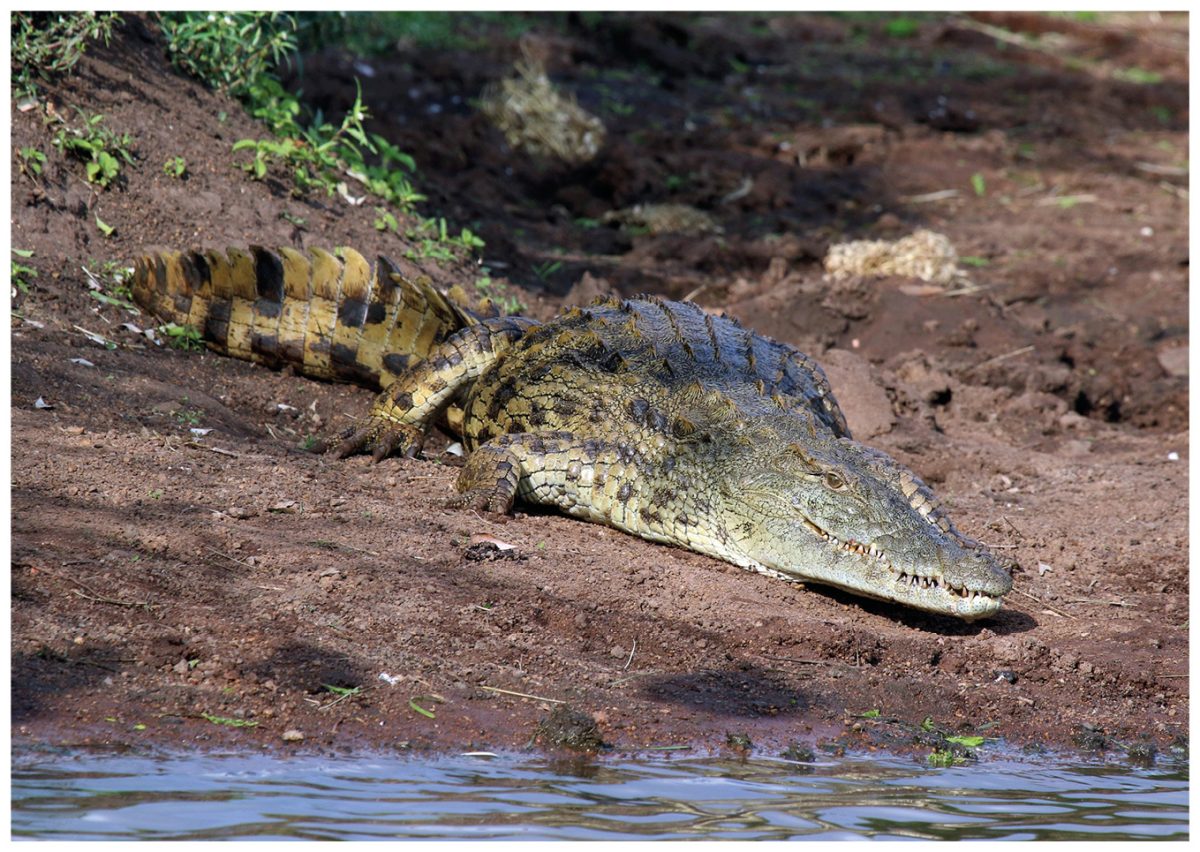
The invaders were surprised by the lushness of the Delta: it was positively teeming with life. Another Crusader observed that there were fish, birds, pastures, grain, gardens, and orchards all around Damietta. The animal that made the greatest impression on the Europeans was, understandably, the crocodile. The Crusaders were fascinated by crocodiles, and managed to capture and kill some. In their observations of the animal’s behaviour, one eye-witness noted how it was a ‘cruel beast’ that would eat both humans and animals, and that it even devoured its own young when they hatched – apparently the Franks lost some of their number to the crocodiles lurking in the water.
Other Crusaders died as a result of their ignorance of the hazards of the landscape. In the early phases of the invasion, some drank the muddy Nile water and died from dysentery, writhing in agony on the sand as their comrades looked on helplessly. But, through a brutal process of trial and error, the Europeans slowly learned to adapt and survive in the lethal landscape of the Delta, which was so different from what they had encountered before.

Ancient remains
The Crusaders were operating in a region that was also rich in archaeology and the ancient remains of the peoples who had gone before them, from the ancient Egyptians to the Romans and Byzantines. As the Franks began fanning out in the Delta on military operations, they came across the remains of these lost worlds and wondered about their provenance.
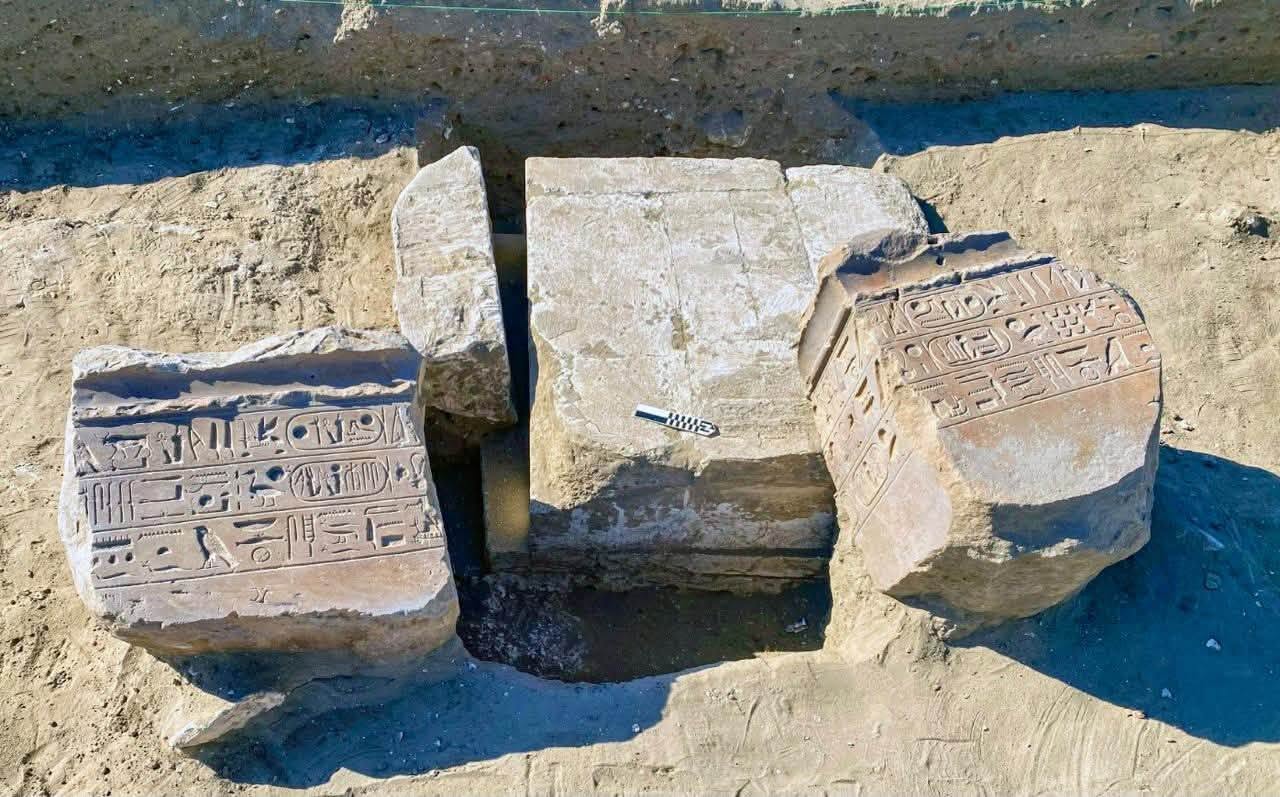
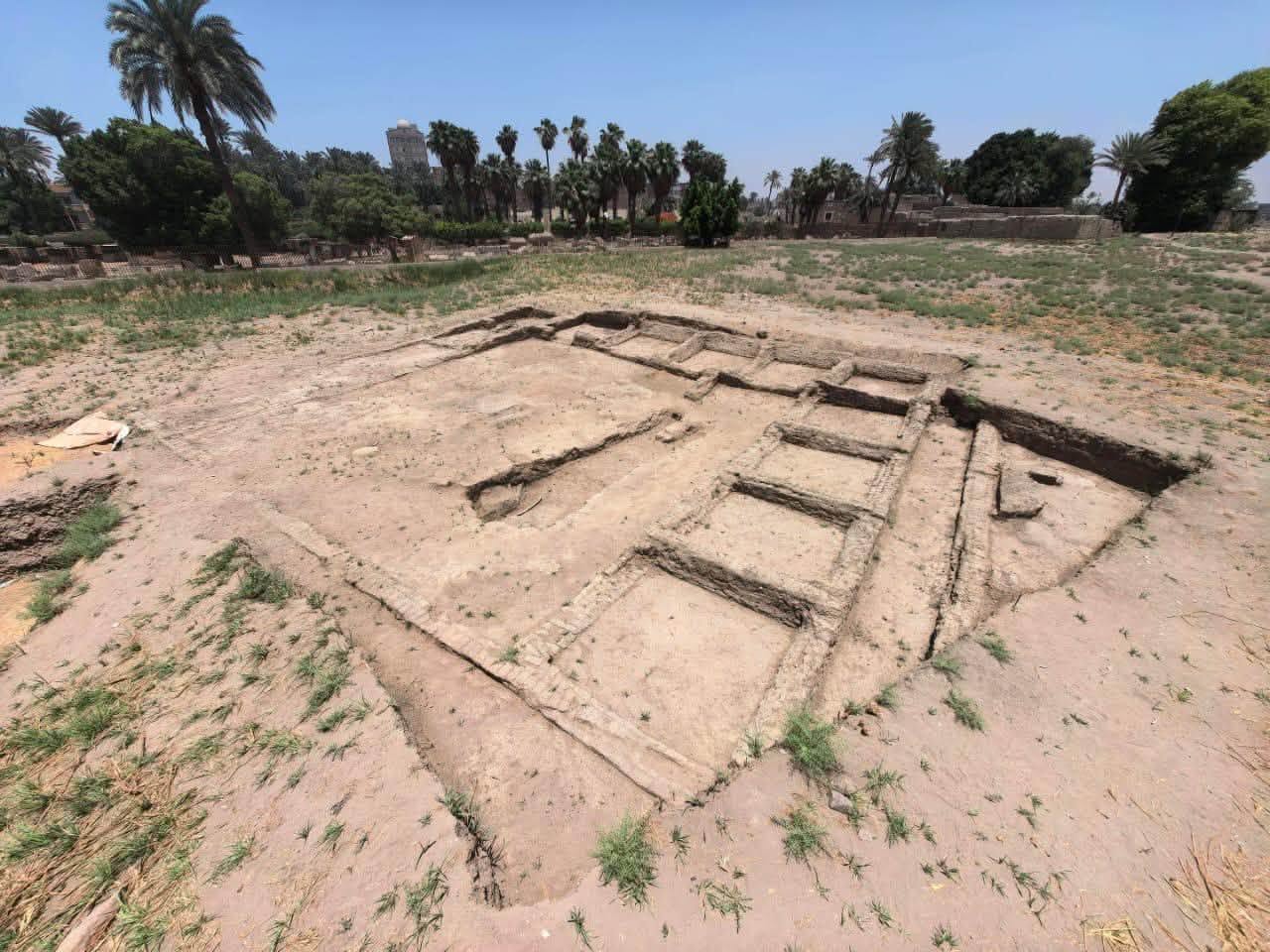
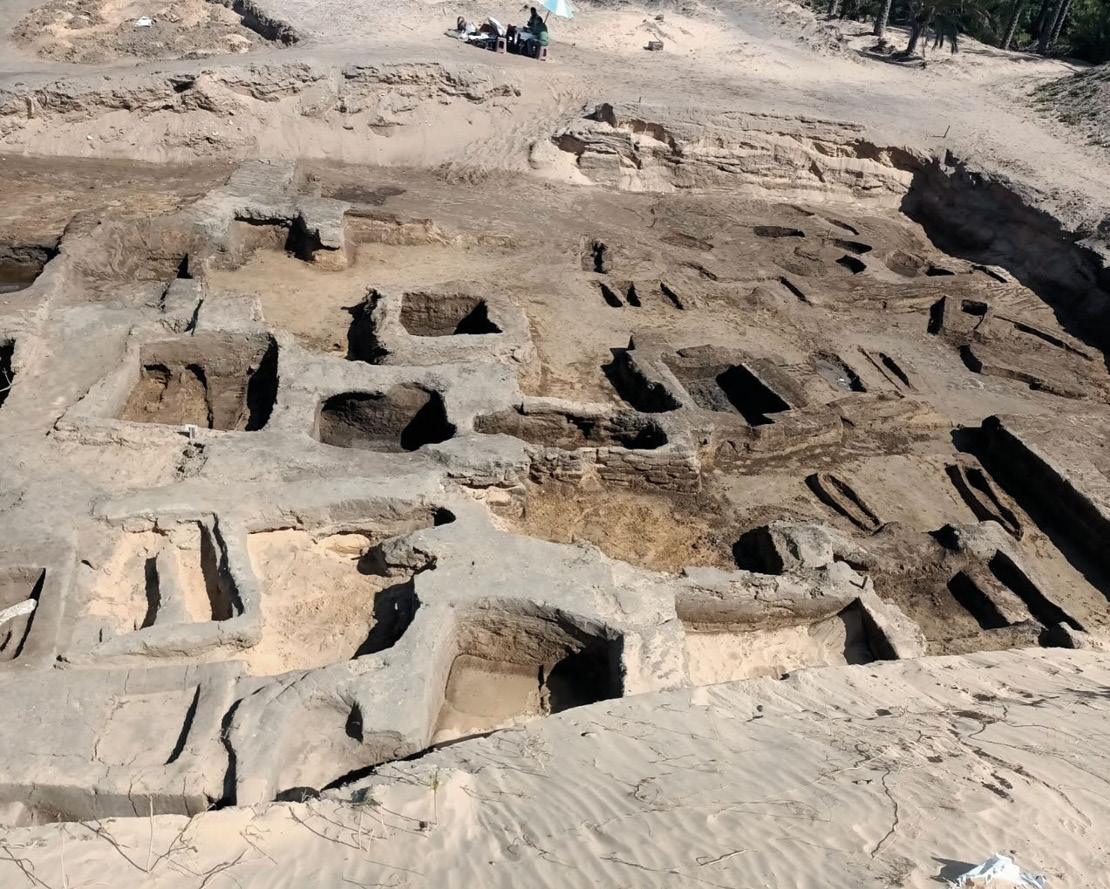
Just five miles to the south-west of Damietta were the ruins of Tell el-Deir, an ancient Egyptian and Roman necropolis which later became a Byzantine settlement. Modern excavations at Tell el-Deir have uncovered 63 mud-brick tombs and pit burials from Egypt’s Late Period (c.747-332 BC), most of which date from the Twenty-sixth Dynasty (c.664-525 BC).

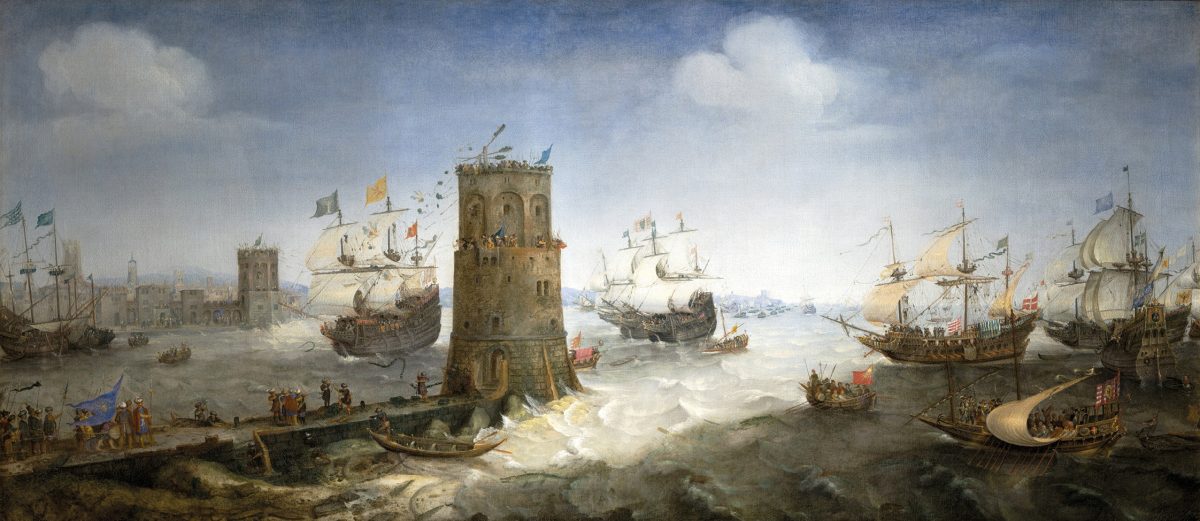
A later medieval depiction of a Crusade siege camp. Though the Fifth Crusaders did not have cannon, the Siege of Damietta involved both amphibious warfare and siege works on land, as depicted here. Image: public domain via Wikicommons
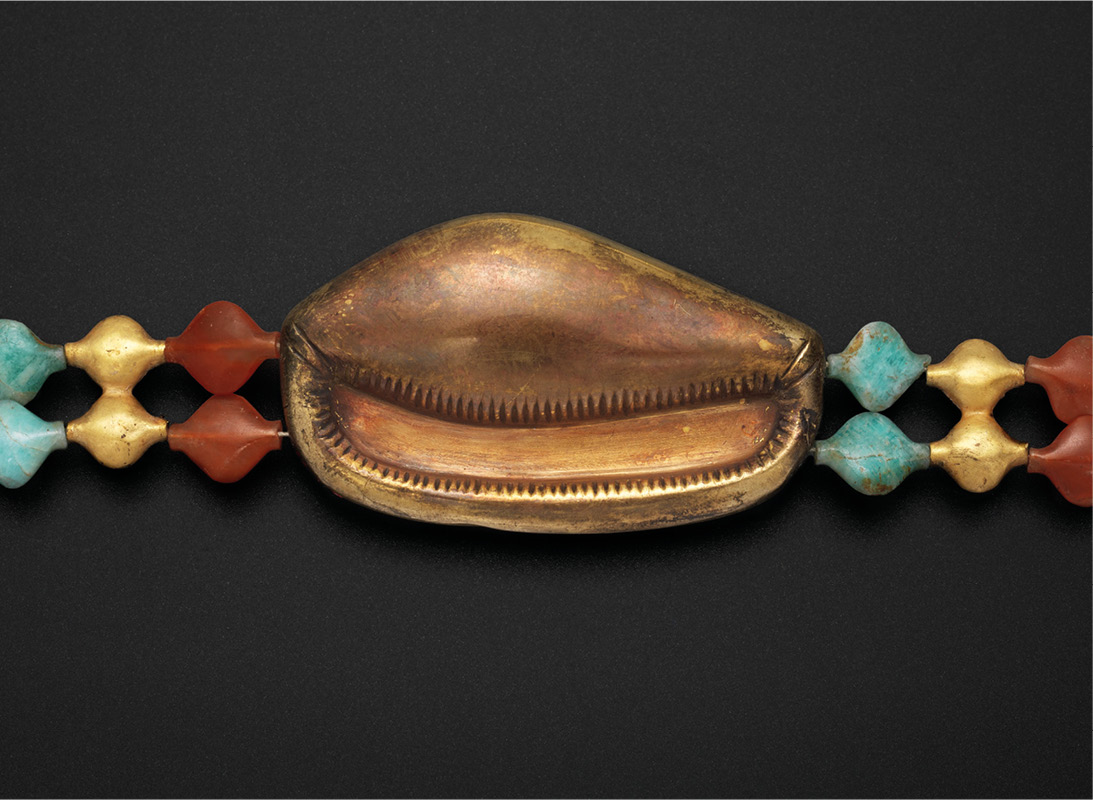
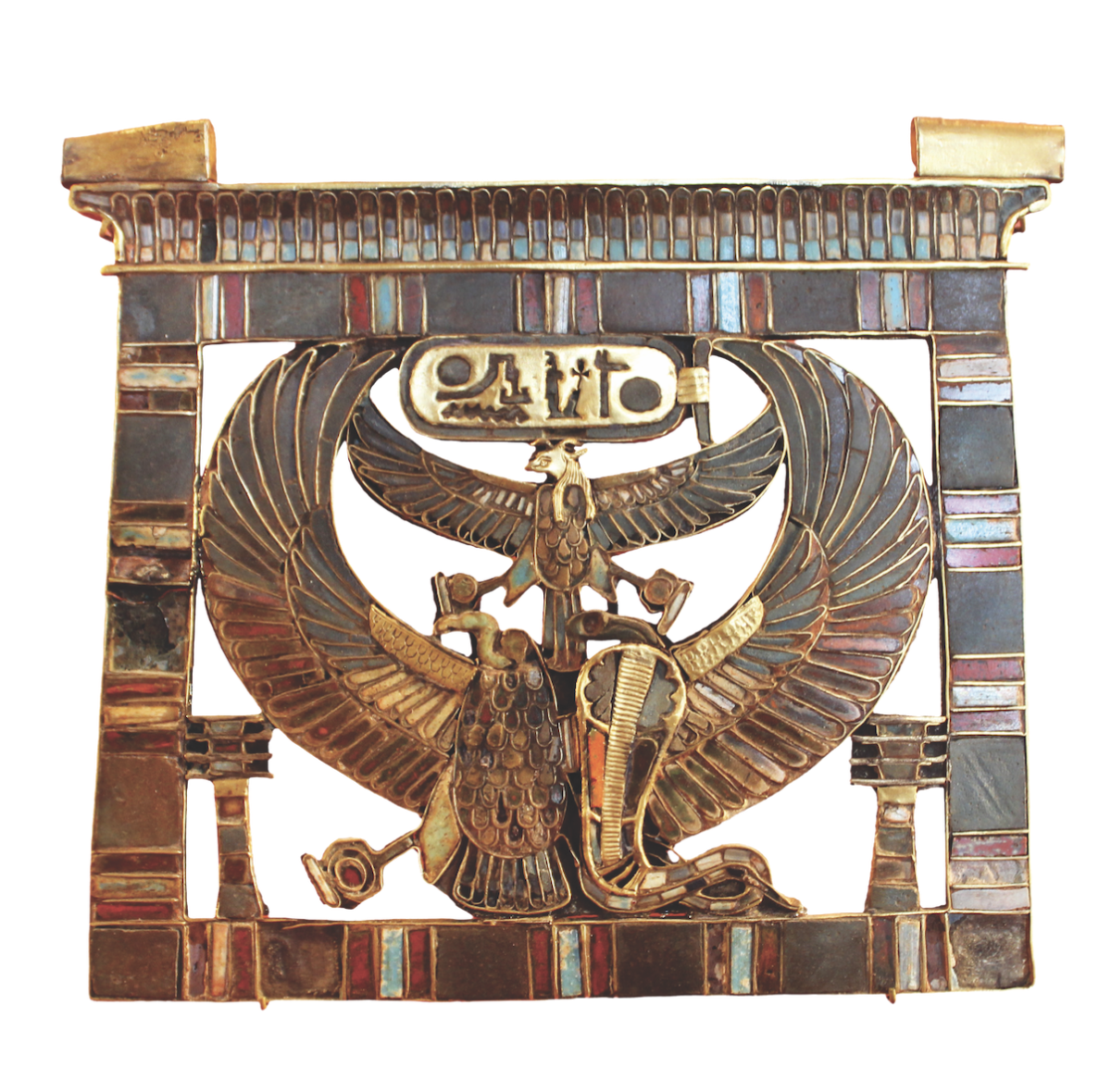
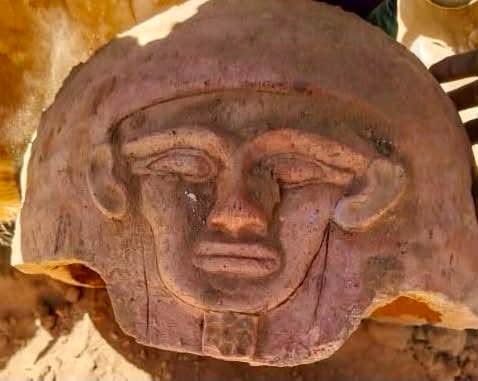
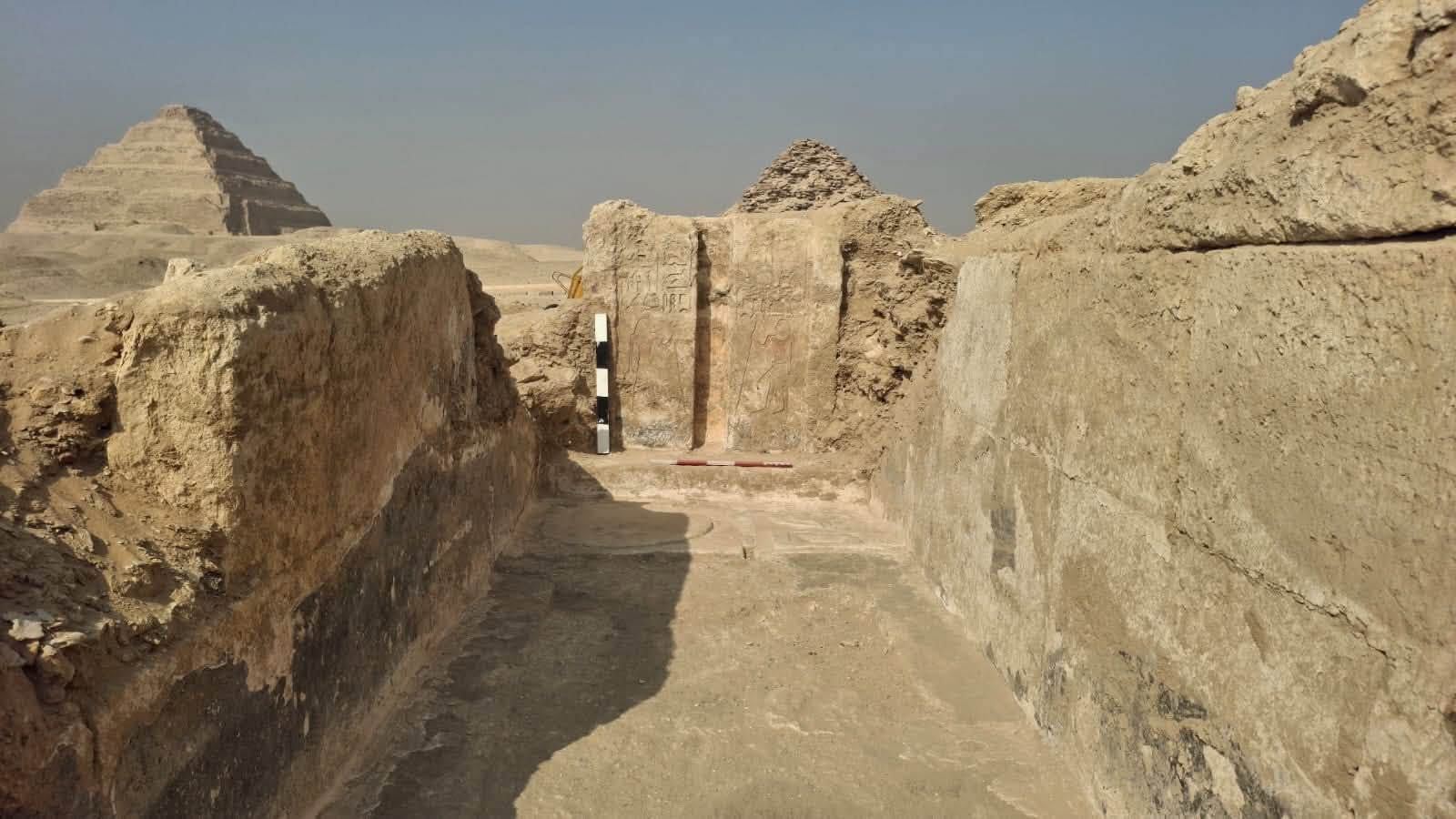
The grave goods that modern archaeologists have discovered include shabti with Psamtek II’s name; intricate gold-foil figures of the ancient Egyptian gods Isis, Heqat, Horus, and Bastet; stone sarcophagi and Roman pottery coffins; more than 700 amulets; gold jewellery; and 38 bronze coins from the Ptolemaic Period (305-330 BC). Even today, the surface of Tell el-Deir is covered in sherds of late Roman glass and pottery; there would have been even more remains in the Middle Ages for the Crusaders to discover.
The wider delta was rich in archaeology. When the Crusaders moved east to Lake Manzala (located close to Port Said and the ancient site of Tanis), they may have come across Tell el-Gassa, an ancient Roman mound surrounded by reeds. Still visible there today on the surface are small limestone blocks, mud-brick walls, coins, pottery, and fired bricks, all dating to the Roman Period.
Bible links
The Crusaders were acutely aware of the ancient and biblical history of Egypt. Early medieval pilgrims to the Holy Land had often visited northern Egypt and the Sinai as part of their itineraries, and accounts of their experiences circulated in Europe throughout the Middle Ages. Writers who were part of the Fifth Crusade were well versed in the ancient history of the region, and the letters and chronicles they produced are interspersed with references to the pharaohs and Egypt’s biblical past. They directly compared their crusading deeds to those of Alexander the Great and Julius Caesar, and passed on knowledge about the ancient history of cities such as Alexandria, Cairo, Rosetta, and Tanis – the latter two were noted as being once-great cities that lay in ruins. The same authors also referenced the Exodus into the Promised Land, as well as the time that Jesus spent living in Egypt with his mother, the Blessed Mary. The Crusaders thought of themselves as walking in an ancient landscape, treading in the footsteps of the great peoples and empires that had gone before them.
The Siege of Damietta
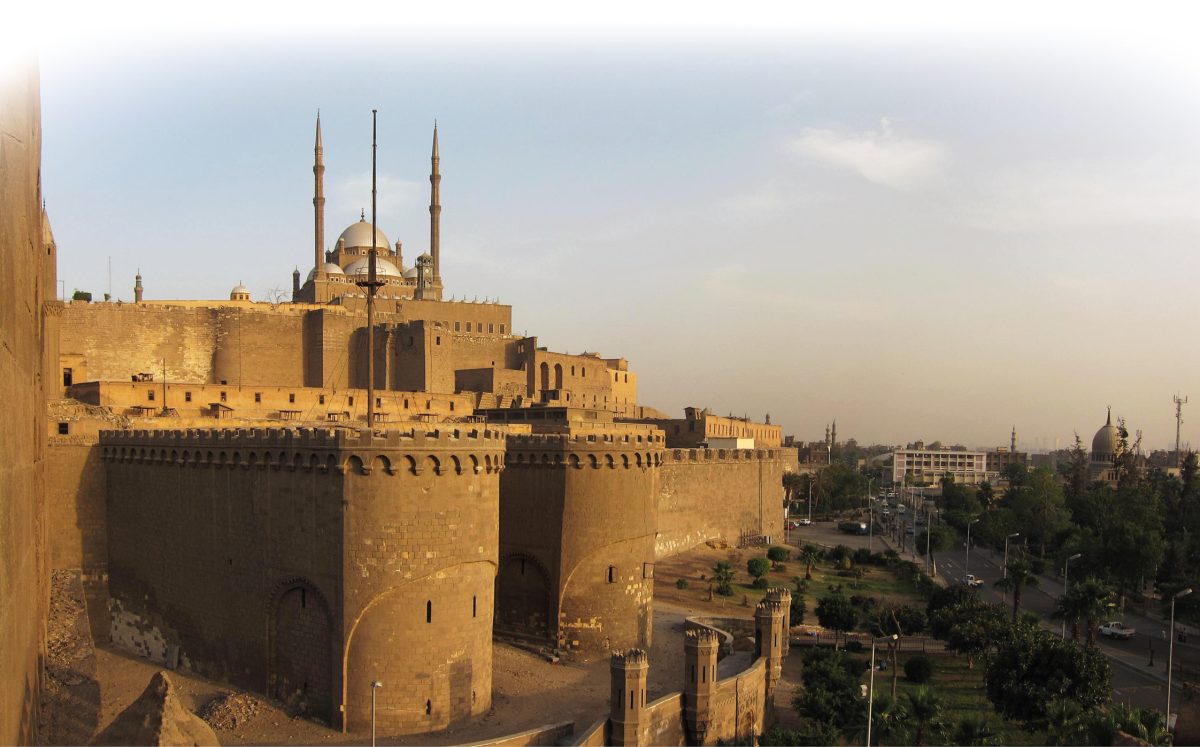
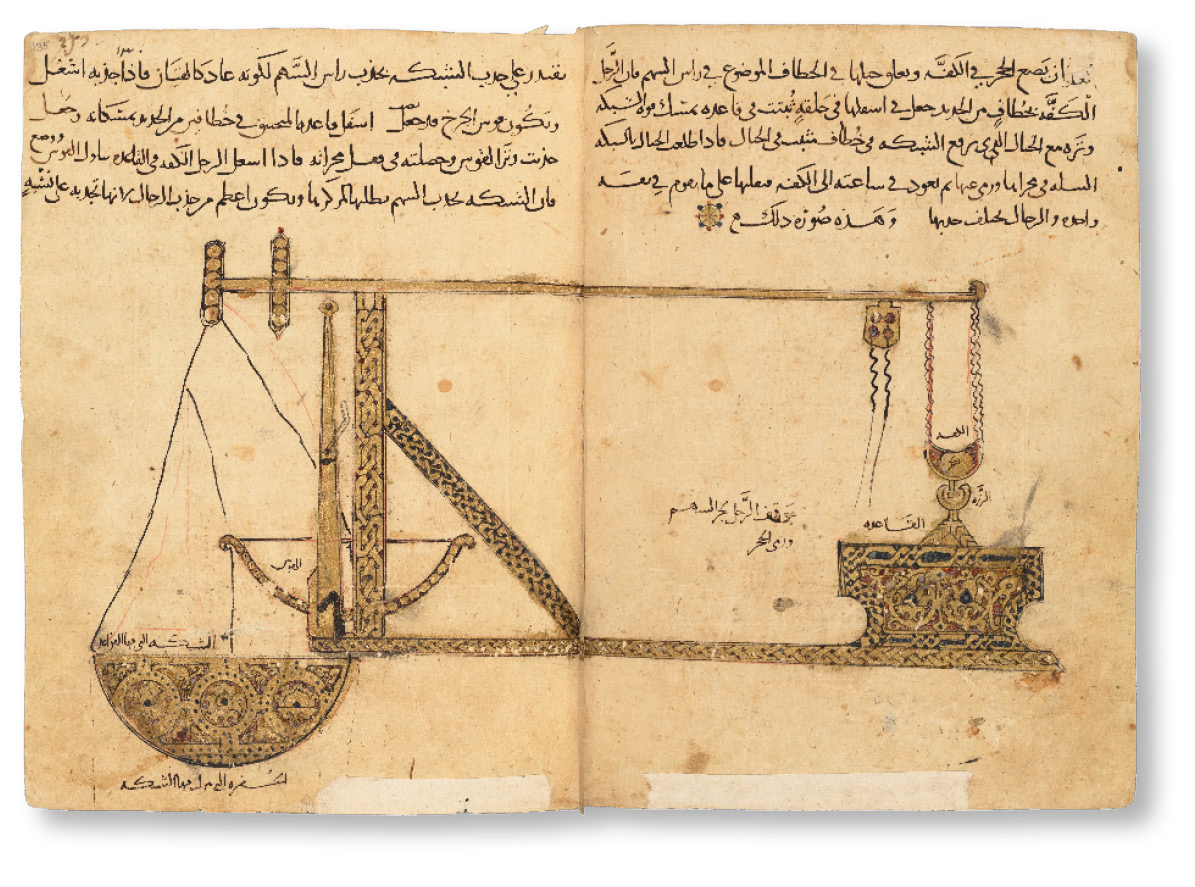
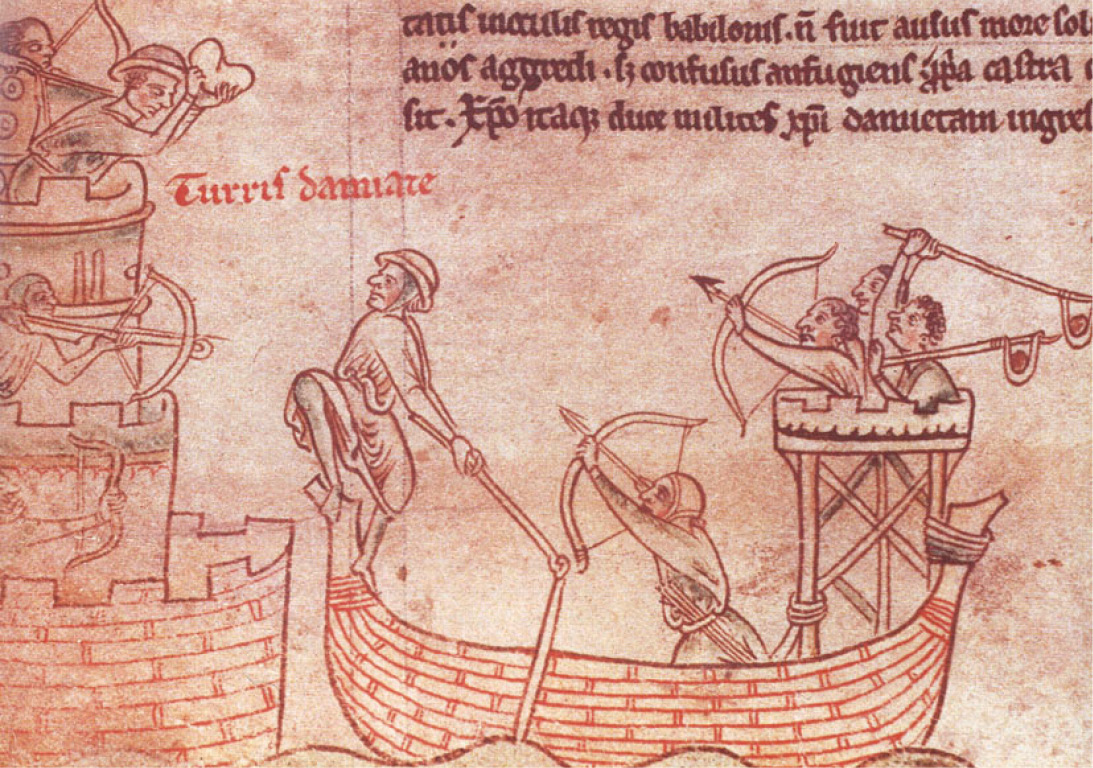
The Crusaders may have thought of themselves as adding pages to the ancient history of Egypt, but what they faced at Damietta was the last word in medieval Islamic defences. Damietta was built on the east bank of this branch of the Nile and was defended with a formidable set of fortifications. The city was surrounded by a triple ring of sandstone-coloured walls, each higher than the last (imagine the form of a modern three-tiered wedding cake). The Ayyubid rulers of Egypt had recently strengthened the defences, making them even more intimidating. In 1196, the sultan had dismantled several ancient Egyptian pyramids, including one of quartz, to provide stone for the walls. There were 28 towers on the middle wall alone. In addition to the huge walls, the Damiettans controlled access to the Nile upriver – and to Cairo – by use of a chain that stretched from one wall to a stone tower in the middle of the river. This ‘Chain Tower’ could be raised to prevent passage. If the Crusaders were to conquer Damietta and advance south to threaten Cairo, they needed to first knock out the Chain Tower. Leading the defence of Damietta – and Egypt – was Sultan al-Kamil, a wily general who would later prove himself to be a master tactician in his use of the Nile as the ultimate weapon of war.
After bombarding the Chain Tower with trebuchets (stone-throwing catapults) but making no headway, the Crusaders changed tactic. The Franks invented a unique floating siege engine, designed and funded by a German schoolmaster named Oliver of Cologne. Oliver’s contraption consisted of two ships joined together with a raised wooden platform, or fort, erected on top. A long siege ladder, which could be lifted and rotated as required, was attached to the front. At the end of August 1218, Oliver and the Crusaders sent their strange machine into battle. As the marines on deck wrenched the unwieldy siege engine into place, to the soundtrack of creaking timber and tensing ropes, the Crusaders attempted to storm the Chain Tower.
The Chain Tower was defended by 300 Egyptian troops who deployed the ancient weapon of Greek Fire against the Franks. This functioned like modern napalm, burning through everything with which it came into contact. Famously difficult to extinguish, there were only two types of liquid acidic enough to put it out, and the Crusaders had stinking vats of old urine and vinegar slopping around on deck for the purpose. Arrows, javelins, stones, and Greek Fire rained down from the Chain Tower on to the Crusader marines, and the Christians returned fire using slingshots and ballistae (oversized crossbows mounted on deck, which required two men to crank and shoot). Finally, in the middle of the storm of projectiles whistling through the air, the Crusaders managed to get the siege ladder on to the turret, and a Frisian warrior armed with a modified agricultural flail – effectively medieval nunchuks – managed to storm the roof of the tower. Lashing out violently, the Frisian brought down the sultan’s standard bearer. After storming the Chain Tower and capturing it, the Franks could at last cross the Nile and begin the Siege of Damietta proper.

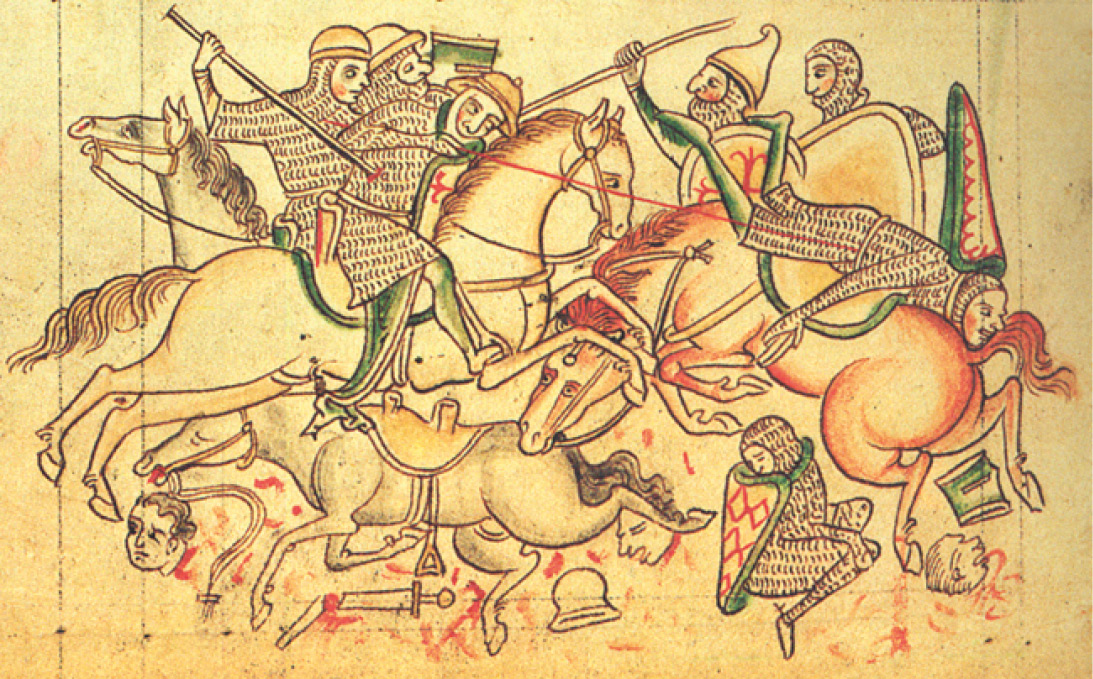
The Siege of Damietta ground on into the following year, as the Crusaders and the defenders fought hand-to-hand battles outside the city, but neither side proved able to dislodge the other. The Franks tried everything: head-on assaults, amphibious attacks, battering the city using trebuchets, and tunnelling under the walls. But, in the end, it was the slow and unglamorous weapon of starvation that allowed them to capture Damietta. Just before midnight on 5 November 1219, a special force of soldiers slipped out of the Christians’ camp and made their way silently to the city walls. Using ladders and boards to cross the ruins of the outer defences, these crack troops set fire to one of the city gates on the outer wall. After burning their way through the first ring of defences, they used their ladders to scale the middle wall. The sight that greeted their eyes was almost apocalyptic: everywhere in Damietta lay dead bodies. The Crusaders’ encirclement of the city had prevented food coming in from the surrounding countryside, and the citizens had suffered greatly from famine and pestilence. The Crusaders had captured Damietta, at last.
Drunk and defeated
Crusader authors observed that Damietta was the key to all Egypt, and the leaders now planned to invade the interior and march towards Cairo, the capital of the Ayyubid regime. After the jubilation at the conquest of Damietta, there was a long period of inaction between November 1219 and July 1221, while the Christians awaited reinforcements from Europe under the leadership of the Holy Roman Emperor Frederick II. These imperial reinforcements arrived with instructions to fight their way up the Nile and strike the coup de grâce before Frederick II’s arrival in the East, and the soldiers of the Fifth Crusade finally assembled to push south at the beginning of July 1221. The only problem was that the River Nile was about to begin its annual flood: the Crusaders would have to march quickly.
The Frankish strategy was to conduct a fighting march in the face of harassment from Sultan al-Kamil’s army. This strategy worked well initially, and the Christians faced little opposition from the sultan, whose army appeared to flee before them. In late July, after advancing 40 miles, the Crusaders reached the tip of a triangular ‘island’ opposite Mansoura, where, ahead of them, the Nile forked into the Damietta and and the now long-vanished Tinnis branches. The Fifth Crusade was only 75 miles from Cairo, and the city had begun to evacuate as panic spread. The conquest of all Egypt seemed to be in their grasp. All they had to do was cross the river.
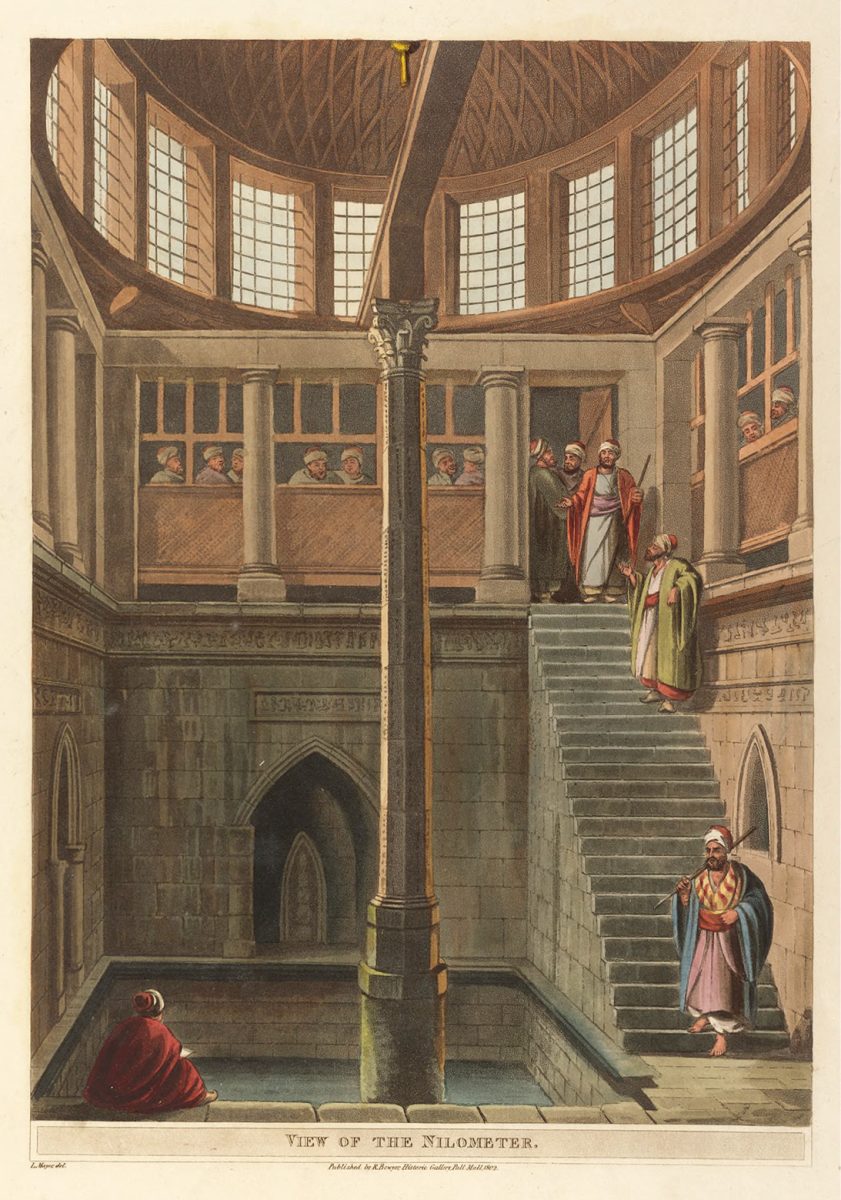
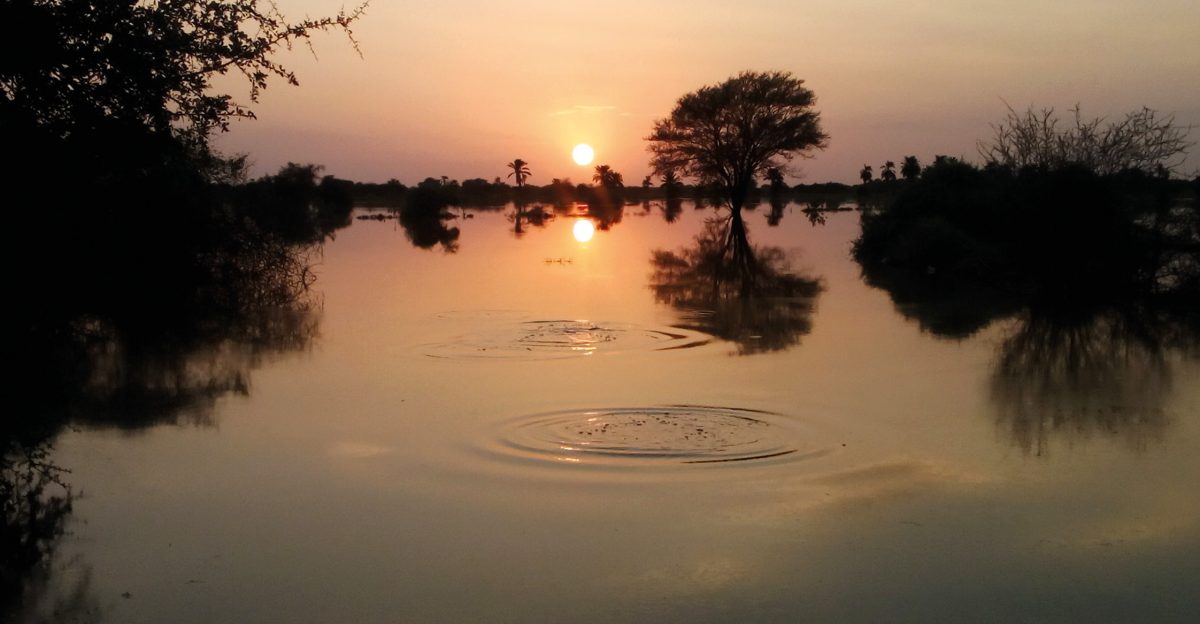
From the opposite bank, Sultan al-Kamil began to subject the Franks to a withering storm of stones launched from his catapults, hemming them in. It was at this point that the Crusaders showed their ignorance of the hydrology of the Nile. As trebuchets swung, and stones crushed unfortunate Crusaders and animals who tried to collect drinking water, the sultan outmanoeuvred his foes in spectacular fashion. As July turned into August, the annual floodwaters began to rise, turning the stream behind the Crusaders – which they had previously crossed – into a navigable waterway. Al-Kamil used his superior knowledge of the geography of the Delta to land amphibious forces behind the Crusaders on the triangular ‘island’, cutting them off from escape to Damietta. The sultan then opened the sluice gates to the surrounding fields, which, combined with the floodwaters of the Nile, unleashed a torrent on the helpless Crusaders as they were sleeping. Their camp was washed away, and the soldiers found themselves in knee-deep water.

The bedraggled Crusaders attempted to put up a last stand, but it was clear that they were in an untenable position. They planned a covert night-time retreat to slip away into the darkness, but many had been reluctant to leave their stores of wine behind, and spent the day drinking their supplies dry. When night fell and the time came to retreat, many were so drunk that they set fire to their own tents to prevent them falling into enemy hands, alerting the Ayyubids to what was happening. The Egyptians fell on the inebriated Crusaders and chaos broke out. Drunk Crusaders wandered off into the surrounding fields, losing their bearings, never to be seen again. Others could not be roused and were left sleeping in their tents or passed out in the roads, where they fell easy prey to the sultan’s soldiers.
With no chance of victory, on 30 August 1221, the Crusaders sued for peace, giving the sultan the keys to the city of Damietta in return for their lives. After its initial great success in conquering Damietta and opening the way to Cairo and the rest of Egypt, the Fifth Crusade had failed. Its epic campaign represents one of the most significant strategic developments in the history of the Crusades, but, surprisingly, it is rarely mentioned today. It changed the axis of crusading warfare in the Near East, making Egypt the focus of the Seventh Crusade under Louis IX of France in 1249-1250 and the Alexandria Crusade of 1365. What is remarkable about the crusade on the Nile is not that it failed, but that, despite all the challenges it faced, it came so close to succeeding and completely remaking the Near East.
Dr Thomas Smith is the author of The Fifth Crusade: a history of the epic campaign to conquer Egypt (Yale, 2026), which is reviewed on here. He is an elected Fellow of the Royal Historical Society and the Royal Asiatic Society.