Subscribe now for full access and no adverts
Pain has been a companion of life since before our species existed, and it serves as an important warning in case of injuries or disease. Although pain causes various physiological changes, it is really the conscious perception of pain, particularly when prolonged, that makes life miserable, even unbearable. People have long sought ways to reduce its impact. This two part essay explores the ancient Egyptian understanding of pain, its perceived causes, and the diverse methods the ancient Egyptians employed to alleviate it, and points out the correlation between ancient and modern therapies.
Pain can come from a variety of sources. Of course, trauma and burns cause tissue damage, which can directly activate pain nerves. Another cause of pain is inflammation, which is the body’s reaction to diseases, infections, or even later stages of trauma. Inflammation has five hallmark symptoms, which are still taught in medical schools: rubor, calor, dolor, tumor, and functio laesa (redness, warmth, pain, swelling, and loss of function). Although Celsus in the 2nd century AD is given credit for recognising the hallmarks of inflammation, the Egyptians did so a millennium and a half earlier. The cardinal symptoms were called out in all the major medical papyri, and the collective term šsm.wt or srf.t was used to describe it. The Egyptian approach to treating painful inflammation was to ‘draw the heat out’.
We now know that pain travels along specific bio-chemical and neuronal pathways from injured tissue to conscious perception. Modern medicine can block pain at multiple points along this pathway. Of course, the ancient Egyptians were not aware of this physiology, but they did make use of ways to block pain at several points of these pathways. The Egyptian beliefs regarding non-traumatic pain involved three possible mechanisms: a blockage of the metu (mtw) channels; imbalance of bodily humours (blood, bile, tears, semen, and so on); and spiritual invasion by demons. Metu channels were a central concept in Egyptian medicine, as laid out in the Ebers medical papyrus in Formula 854. Many kinds of anatomically tubular structures in the body, such as arteries, veins, lymphatics, nerves, bronchi, and even tendons were considered metu. Metu emanated from the heart, and carried fluids and spiritual energy around the body.
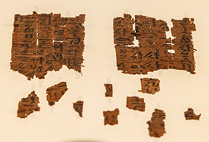
Egyptian medical practice used a combination of both spirituality (magical spells) and empiric practices that developed from careful observation of injuries and wounds. Often internal medical diseases and the related pains were thought to be supernatural in origin, and were usually treated with magical spells. Physical injuries sometimes had a more empirically based treatment. Between 5000 BC and AD 100, Egyptian physicians, known as swnw, treated pain through a combination of herbal remedies, surgical interventions, and magico-religious rituals. Their knowledge was meticulously recorded in medical papyri, among them the Ebers Papyrus, the Edwin Smith Papyrus, and the Kahun Gynaecological Papyrus. These papyri provide accounts of ailments and their treatments.

Herbal and pharmacological treatments
Egyptian physicians used a wide array of plant-based and mineral remedies, many of which we now know had genuine analgesic, bacteriostatic, or anti-inflammatory properties. These were often applied to skin, or as oral and rectal concoctions, often mixed with beer, wine, or milk for better absorption. Some of the pharmacologically active agents available in the Egyptian environment include the following species:
Willow bark (Salix species): The bark and leaves of the willow tree contain a compound called salicin. When ingested, salicin is metabolised to salicylic acid, which in its synthetic form we call aspirin. When tissue is injured, an enzyme known as COX-2 releases inflammatory compounds called prostaglandins, which stimulate the familiar pain, redness, and swelling. Willow bark, aspirin and other common modern non-steroid anti inflammatory drugs like ibuprofen block the creation of prostaglandins by interfering with COX-2. Willow was available in the Nile valley and was known as tr.t. The Edwin Smith Papyrus treats inflamed, non-healing surgical wounds with a poultice of willow leaves (Case 41). The Berlin Papyrus recommends willow leaves for toothache. The Brooklyn Papyrus includes it as a remedy for venomous bites. The Ebers Papyrus recommends willow for inflammation and to improve appetite. Unfortunately, the salicin content of willow leaves is only 10% of that in willow bark. Furthermore, absorption of salicin from a poultice through intact skin would probably be negligible. Willow leaves do, however, contain some additional compounds, including some polyphenols (such as flavonoids and tannins) that act topically to reduce inflammation and promote the healing of wounds. This seems to be a recurring feature of Egyptian herbal practice, where the marquee ingredient (the dominant component of the remedy) is not the principal active agent, particularly in topical uses, such as the use of oil for ointments.

Henbane (Hyoscyamus niger or H muticus): Henbane, also called ‘stinking nightshade’, is a poisonous shrub of the nightshade family. The seeds and leaves of the plants contain several chemicals that act on the nervous system, most importantly scopolamine and hyoscyamine. These drugs interfere with certain neurotransmitters in the brain and can cause an altered state of consciousness, with hallucinogenic experiences and, typically, delirium. Scopolamine is still widely used today, usually in transdermal patches for treating nausea from motion sickness, and as premedication for surgery, because in small doses it causes a degree of amnesia and relaxation.
According to Eugen Strouhal, the Egyptian word for henbane is psD. References to henbane exist at the Ramesseum and in the Ebers medical papyri. It also appears in Formula 163 of the the Berlin Papyrus: ‘To relieve pain in the limbs, which combines henbane and opium in a topical paste, applied to the head’.

Frankincense (Boswellia sacra): Frankincense – in Egyptian, snTr – is a fragrant plant resin which the Egyptians used in many formulations. It contains boswellic acids and essential oils which have anti-inflammatory actions. Ebers 86, 164, and 210 suggest its use in an elixir or an enema for the treatment of belly pain. Formula 652 uses frankincense to relieve metu ‘vessels’. Ebers also treats draining abscesses (861) with a topical mixture using frankincense. Frankincense and myrrh were not originally native to Egypt, but were imported by trading expeditions from Punt.

Myrrh (Commiphora myrrha): The sap resin ant.w has analgesic and anti inflammatory effects by blocking the production of prostaglandins in a similar mechanism to willow bark. It contains some essential oils, too, which have a degree of antibiotic and anti-inflammatory effect. Myrrh is used in Ebers Prescription 130 with emmer, acacia, and sweet beer, as a poultice for painful wounds. In Prescription 164, it is used as a rectal suppository for anal and lower abdominal pain.
Garlic (Allium sativum): Garlic was used medicinally in ancient Egypt and is attested in several medical papyri. Its purported applications include abdominal pain, heart conditions, and ‘bad blood’. However, in Ghalioungui’s translation of the Ebers Papyrus, the same Egyptian word HD.w may have been used for either garlic or onion.

Mandrake (Mandragora officinarum): Mandrake is a plant related to henbane and contains some of the same active compounds (atropine, scopolamine, hyoscyamine) in its fruit (rrm.t) and roots (HnT). The Egyptians used mandrake as a sedative analgesic. Mandrake was also used for abdominal pain because of its anti-spasmodic properties. Interestingly, mandrake is not unequivocally mentioned in the major medical papyri. However, mandrake appears widely in iconographical contexts starting in the New Kingdom. The plant’s distinctive fruit – a round, yellow-orange berry – is recognisable in several tombs and at Malqata Palace. Actual mandrake fruit was found among the funerary offerings in Tutankhamun’s tomb.

Poppy (Papaver somniferum): Opium derived from the P somniferum poppy is not originally native to the Nile Valley, but its cultivation and use is documented starting in the New Kingdom. International trade probably brought opium to Egypt from Anatolia or Crete. The active ingredients are concentrated in the seed pods, and not in poppy seeds. Unwashed seeds, however, are often contaminated by the pod resin. Opioids act by mimicking the body’s own pain-killing neurotransmitters. Notably, natural opiates such as morphine and codeine remain in widespread use today. The opium resin derived from the poppy produces analgesia, sedation, and mild euphoria when taken internally. The Egyptian word for the opium poppy is špn.
Poppy flowers are a frequent motif in the tomb paintings of nobles and artisans, and poppies have been found in funerary wreaths, garlands, and bouquets. A particular ceramic vessel known as a ring-based juglet (or bilbil) has been found in many New Kingdom and later tombs. These juglets, made in Cyprus, were proposed by Merrillees (1962) to have been used for the importation and storage of opium. An early report that a juglet found in the tomb of architect Kha tested positive for opium has now been disproved. However, more recently, several bilbil juglets from a New Kingdom tomb in Sedment (Beni Suef) have indeed tested positive for opium and its associated alkaloids, using modern, highly sensitive analytic chemistry.

The funerary connection probably stems from the poppy’s association with sleep, and the use of poppy seeds in the medical papyri. Ebers Formula 782 is a treatment for excessive crying (possibly due to pain?) in children, which combines poppy seeds and fly excrement into a drink. According to Ebers, the crying stops immediately. Other Ebers prescriptions (440, 443, and 445) are intended to treat the xnsj.t disease (inflamed skin, possibly pustulent eczema). They combine poppy seeds with exotic ‘magical’ ingredients like hippopotamus skin and mineral powders into topical ointments. Unless taken internally, even unwashed seeds will have minimal effect through intact skin.
The red poppy plant (Papaver rhoeas) is native to Egypt and is very commonly seen is scenes of feasts, festivals, and gardens. Women are frequently depicted sniffing the bright red flower. However, the red poppy contains no opioids, and the sniffing can only be for its fragrance. The red poppy does have traces of some non-narcotic compounds like rhoeadine, which are slightly sedative.

Image: RBP
‘Lotus’ (Nymphaea species): The water lily – erroneously referred to as the lotus – is often depicted in funerary art. There are two varieties: ‘blue lotus’ and ‘white lotus’ (Nymphaea caerulea and N lotus respectively). The blue form (sšn) contains apomorphine and nuciferine, both dopamine antagonists that have mild sedative, psychoactive, and analgesic effects. In modern times, these are considered annoying side effects to its current usage in Parkinson’s disease, and as a treatment for erectile dysfunction. The Ebers Papyrus Formula 258 mentions lotus blossom mixed with other plant products into a paste, applied to the head for headaches. White lotus may have had a role in aromatherapy but is not mentioned as an analgesic.

Alcohol: In the form of sweet beer (Hnq.t nDm), alcohol is an ingredient in 68 of Ebers prescriptions, and including other forms of beer raises the total to 111. Beer was used widely in Egyptian society as a replacement for impure water, and as a food source. Beer is cited in Ebers for use as an analgesic for intestinal pain (86-89, 97-99, and 130), for sedation, as a tonic to treat skin rashes (92 and 94), for fever (93), as an agent to kill intestinal worms, and for a variety of other purposes.

Juniper berries (Juniperus phoenicea): Juniper berries (wan) are a product of certain coniferous trees found in northern Sinai. Foreign species were found among the funerary accessories of Tutankhamun. It was also a component of sacred purifying incense. These berries contain a host of compounds that have analgesic and anti-inflammatory effects. Myrcene is directly analgesic, and anti-inflammatory too. It is also a minor component of cannabis. Limonene modulates pain and inflammation pathways; it is found today in several over-the-counter digestive aids. Juniper contains some flavonoids as well, which inhibit the COX-2 enzyme (the same mechanism occurs with modern aspirin and other NSAID drugs). These flavonoids are found in chamomile and dietary supplements. The Ebers cites juniper berries in Prescriptions 86, 88, 89, 101, and 137 for abdominal pain, and 122 for mouth pain. Prescriptions 140, 144, and 164 use it as an ingredient in suppository form to ‘cool’ the anus.

Coriander (Coriandrum sativum): This culinary herb (SA.w) is suggested as an ingredient in treating different types of headache (Ebers 247-249). It is also mentioned in the Hearst Papyrus Formula 83 for headaches. Its active ingredients include linalool, an essential oil with analgesic, anti inflammatory, and antimicrobial effects.

Dill (Anethum graveolens): Another culinary herb, dill (jms.t) is an ingredient described in the Hearst, Ebers, and Berlin medical papyri. In Hearst 44, dill is incorporated into an elixir with dates, raisins, and wine to treat pain. In Ebers 650, dill seed is incorporated into a plaster to treat shoulder pain, and in 249 to treat ‘harmful doings on the head’. In the Berlin Papyrus, dill is used in a plaster on the neck to treat thigh pain and weakness. Dill has both antibacterial and anti-inflammatory effects, due to its flavonoids.
Colocynth (Citrullus colocynthis): Colocynth (DAr.t) – also known as bitter apple or bitter cucumber – is a very bitter and highly toxic desert plant widely used in the Egyptian medical literature. It was used widely as a laxative, an antiparasitic, a cough suppressant, to treat blindness and burns, and to stimulate an abortion. As an analgesic, it was prescribed both externally and internally as an anti-inflammatory for joint pain (Ebers 654). Ebers 248 and 259 employ it for headache. Regarding its application in pain relief, colocynth contains cururbitacin B and E, which block pro inflammatory cytokines, a pain pathway independent of the prostaglandins blocked by aspirin and other non-steroidals. Thus, it would be synergistic with willow extracts.

As I have shown, the ancient Egyptians relieved pain using a wide variety of plants, many of which are today known to contain pharmacologically active ingredients that are still in use in medicine today. In the next issue, I will look at other methods of pain relief, including mechanical and spiritual therapies.

Ira Rampil MSEE MD is a retired Professor of Anaesthesiology with a specialism in neurological surgery. He has also written several Egyptology oriented smartphone apps. You can read his articles on malaria in AE 132 and the brain in AE 120.
Further reading:
• P Ghalioungui (1987) The Ebers Papyrus: a new English translation, commentaries and glossaries (Cairo: Academy of Scientific Research and Technology).
• G Majno (1975) The Healing Hand: man and wound in the ancient world (Boston: Harvard University Press).
• L Manniche (1988) An Ancient Egyptian Herbal (London: British Museum Press).
• E Strouhal et al. (2010) The Medicine of the Ancient Egyptians (Cairo: AUC Press).