Subscribe now for full access and no adverts

Djoser (c.2667-2648 BC), the second ruler of the Third Dynasty, was the pharaoh whose chief minister Imhotep is credited with the idea of creating the first pyramid by layering a series of steps on top of an original mastaba. He surrounded the pyramid with an enclosure wall, modelled on the mud brick ritual precincts of Khasekhemwy (c.2686 BC) at Hierakonpolis and Abydos, but built entirely of dressed limestone. Within this enclosure, he created a series of stone buildings modelled on ones made of perishable materials, so that Djoser would continue to be able to perform ritual ceremonies after his death.
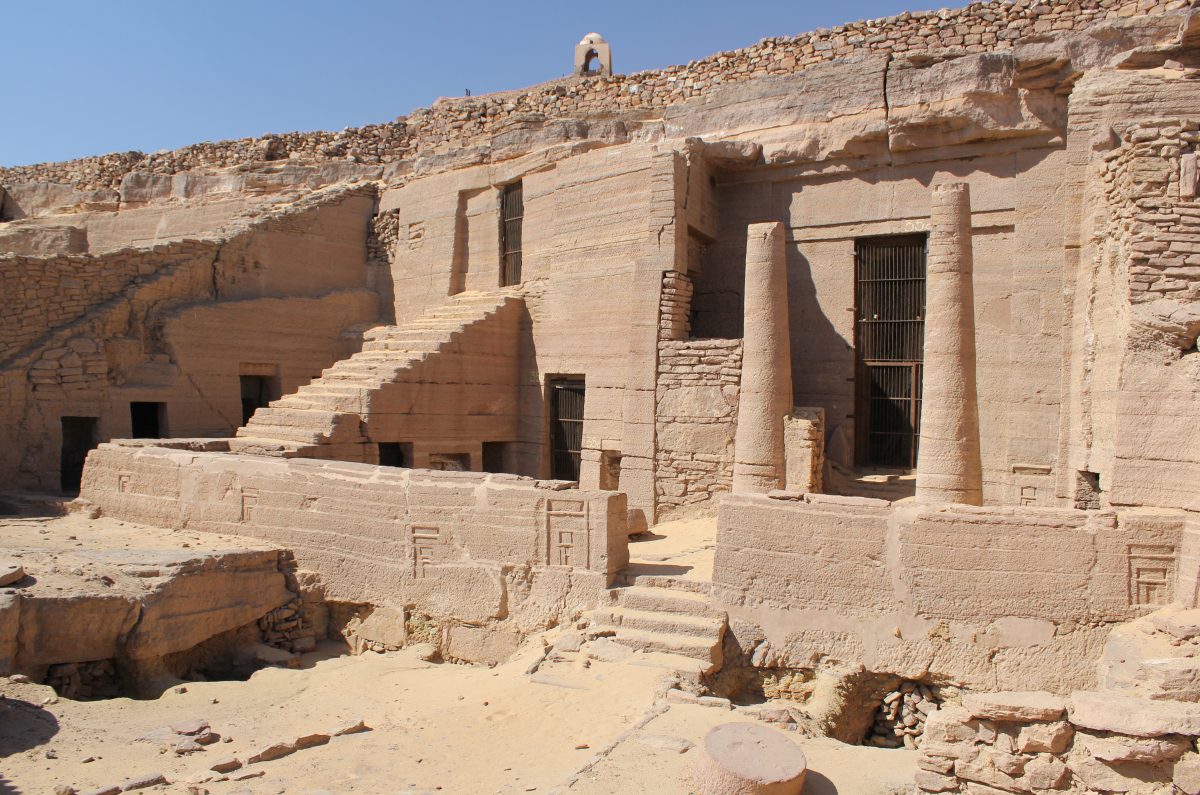
In the south-east corner of the complex lies a courtyard lined with imitation offering chapels. Every detail of their outward appearance is faithfully reproduced in dressed limestone, but there are no interior spaces, merely solid stone cores. Particularly interesting are the three columns on the front of each chapel. They are attached to the front wall rather than being free-standing, and are of a design that was never repeated in pharaonic history. The shaft of each column is fluted, and the capital is carved in the shape of two pendant leaves, so that the column seems to represent the trunk of a plant of some kind (perhaps the giant hogweed that may once have grown in Egypt, in the wetter climate before 3500 BC). Between the leaves is a cylindrical hole that may have held a pole for a flag or emblem of some kind, but which has been adopted as a nest box by the local bird population.
Text: JPP / Image: J Peter Phillips

You must be logged in to post a comment.