Subscribe now for full access and no adverts
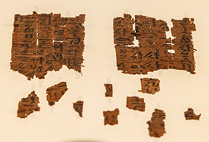
For many of us, the term ‘ancient Egypt’ conjures up images of grand monuments, the Nile determining the rhythm of life of the ancient Egyptian people, and the perpetual pursuit of immortality. However, just below the surface of this fascinating civilisation lay many of the same health challenges we face today – including cancer. Although it is usually considered a modern-day disease, research shows that ancient Egyptians were also afflicted with cancer, raising critical questions about its prevalence in antiquity. Ancient Egyptian medical understanding was based on observable symptoms rather than on the underlying pathology, and thus did not recognise cancer as uncontrolled cell growth. The Papyrus Ebers (c.1538 BC) contains references to swelling and lesions; however, these descriptions cannot be clearly connected to a specific condition, and are interpreted today only speculatively as possible references to malignancies.


At first glance, investigating cancer in ancient populations may seem like an academic exercise suitable only for the proverbial ivory tower. One might ask what practical value is there in the study of disease in people who lived thousands of years ago. But there are compelling reasons for such lines of research in that it can benefit people living today. By examining how frequently – and in what forms – cancer occurred in the past, we gain a valuable reference point for understanding the disease today. Studying cancer in ancient populations enables us to disentangle which aspects of its prevalence are deeply rooted in human biology, and which are shaped by modern-day environmental conditions and lifestyles. Far from being irrelevant, this line of inquiry contributes to a more nuanced perspective on one of the most pressing health challenges of our time.

Contemporary understanding of cancer is profoundly shaped by its relentless increase in prevalence. The case numbers of nearly all types of cancer have been escalating worldwide for decades, frequently challenging our models and assumptions about the mechanisms of this complicated disease and the factors that most significantly influence it. Perhaps one of the most pertinent insights is the relatively recent realisation that there is no single cause. Rather, a cancer diagnosis is the result of a vast array of factors. Despite some victories in this ongoing battle, such as the development of highly effective vaccines to prevent cancers induced by human papillomavirus (HPV), and ongoing advances in treatment options, we have yet to discover a comprehensive, potent weapon to ward off this daunting disease.

Cancer is primarily a disease of old age; while young people are not immune to developing cancer, the risk of such an illness increases with age by 51%. We know that this high risk is significantly influenced by various factors associated with our modern lifestyle, including highly processed foods, alcohol, tobacco smoke, and exposure to environmental toxins. Considering these factors, it seems only natural to assume that cancer must have been less common in antiquity than it is today. That assumption seems to be correct at first glance: the list of confirmed cancer cases from ancient Egypt is relatively short (approximately 50 confirmed and published cases to date). However, we must be careful not to draw hasty conclusions from these figures. The perception of cancer as something exceptionally rare in antiquity should be changed for good reason.

Cancer in the archaeological record
The belief that cancer was much rarer in antiquity has largely been shaped by two factors: the overall shorter life expectancy in the past, and the limited availability of archaeological evidence. Although ancient Egypt is typically associated with more or less well-preserved mummies, the archaeological evidence is usually limited to skeletal remains, which do not always reveal the presence of cancer in an individual. Tumour lesions tend to make bone brittle and more susceptible to various sorts of decay over the millennia, so that affected bones are even more likely to be lost than unaffected ones. However, the absence of evidence is not evidence of absence. This idea is closely linked to what researchers call the ‘osteological paradox’ – the fact that skeletal remains can only show us what has survived, and not everything that once existed. In other words, just because we do not find signs of cancer in many ancient bones does not mean it was not there.


Many cancers do not leave marks on the skeleton, and bones with such marks may not have survived well enough for us to detect them. So the archaeological record can seriously underestimate how common certain diseases really were. Therefore, while several cancers (such as lung, breast, thyroid, renal cell, and prostate carcinomas) are more likely to be detected in human remains because of their high tendency to metastasise (spread) to bone, often – in as many as 80% of cases – the true prevalence of cancer in ancient populations is probably higher than the evidence from skeletal remains suggests. However, not every cancer metastasises: overall, it can be assumed that up to 40% of all advanced cancers develop bone metastases. Among cancers with bone metastases, certain types are disproportionately represented.
These factors have important implications for archaeological detectability. When generalising across all cancer types, it is reasonable to assume that in antiquity, particularly in the absence of any therapeutic intervention, only a limited proportion of cancers would have produced observable skeletal changes. Even in such cases, detection is highly dependent on the state of preservation, the anatomical location of any metastases, and the analytical methods employed. These constraints make clear that the archaeological identification of cancer cannot be regarded as representative of its true prevalence in past populations.
The detection methods available to contemporary archaeologists and palaeopathologists are geared towards identifying cancers that impact the skeletal system, resulting in an inherent bias in the archaeological record. Thus, the low detection rate in ancient remains should not be mistaken for evidence of the rarity of cancer in antiquity, but rather viewed as a reflection of the selectivity of current methods and incompleteness of the findings. This bias leads to an under-representation of the true prevalence of cancer in antiquity, and constitutes a major challenge for current research. Researchers are integrating diverse methods – ranging from anthropology, palaeopathology, and epidemiology to, increasingly, molecular multi-omic approaches (combining several layers of biological data) – to overcome the limitations of traditional skeletal analysis.


The epidemiological perspective
Approaching the issue from an epidemiological perspective (considering disease in populations, rather than individuals) involves much more than simply counting cases and assembling tidy tables – even if that is, admittedly, something of which epidemiologists are rather fond. A wealth of data on the health status of modern populations is available, making it possible to derive some foundational conclusions that go beyond basic numbers. These epidemiological insights allow us to explore broader patterns, trends, and factors that contribute to disease prevalence, thus deepening our understanding of the context in which conditions like cancer develop.
Nevertheless, the application of epidemiological methods to ancient contexts presents certain problems. While modern epidemiology can calculate precise rates based on both disease frequency and well- defined populations at risk, archaeological contexts are characterised by limited information. The scant data concerning ancient population structure and composition, and the occurrence of disease in the past, make it difficult to use these methods. The field of palaeoepidemiology thus faces the challenge of extracting as much insight as possible from inherently incomplete datasets.

What do we actually know? What data can we work with? In terms of population demographics, we know that in antiquity people generally died much earlier, and while reaching the age of 60 or beyond was not impossible, this was clearly the upper end of the age spectrum. Even though we know some individuals lived into their 80s and 90s, let us assume for a moment that the maximum age (and not the average age) at death in ancient Egypt was around 65 years of age. We know that, in contemporary, medically studied cohorts, the risk of developing cancer by the age of 60 is approximately 10% for men, and slightly higher for women at around 12%. A range of environmental factors clearly play a role in this risk assessment, which we will set aside for the moment. In a hypothetical modern cemetery, composed solely of individuals who died by the age of 60, we would therefore expect to find up to 12% cancer cases. Consequently, this figure should serve as the modern benchmark against which cancer prevalence in antiquity is assessed, rather than the widely cited modern lifetime risk of 51%.

An illustrative example can be drawn from data published by Nerlich et al. (2006) on excavations at Thebes-West and Abydos. Nerlich’s group identified five cases of clear cancer evidence among 905 individuals, corresponding to a minimum crude cancer prevalence of 0.55%. This number is so low that it leads to a straightforward conclusion: cancer must have been exceedingly rare in antiquity.
However, this figure likely represents, at best, only 10-20% of the actual number of cancer cases, and there is sufficient reason to adopt the lower end of that estimate. When cases that are archaeologically invisible are taken into account, the expected cancer prevalence at the cemetery in question increases significantly – from 0.55% to as much as 5.5%. If we now recall that the probability of a modern individual developing cancer by the age of 60 is approximately 10-12%, the 5.5% estimate seen in the ancient cohort no longer appears profoundly distant from modern expectations, particularly when contrasted with an archaeological record that suggests a tenfold lower prevalence. This estimate, naturally, is subject to a range of limitations. Nevertheless, this example – along with the accompanying considerations – makes it clear that the actual prevalence of cancer in antiquity was probably higher than is commonly assumed. Using a younger population as the basis for comparison makes the gap between ancient and modern cancer prevalence appear notably smaller than is often suggested.
The actual prevalence of cancer in antiquity was probably higher than is commonly assumed.


These figures also suggest that modern cancer prevalence remains about twice as high as the estimated rates in antiquity. However, one could argue that cancer prevalence in the ancient world – particularly in the absence of major negative environmental and lifestyle factors – may represent a biologically typical baseline. These numbers offer us a general idea of the level of cancer occurrence that can be expected in a population up to the age of 60. The data thus serve as a quiet warning, too. As a natural baseline, they highlight just how many contemporary cancer cases are likely to be attributable to environmental and lifestyle-related factors and, by extension, how many could potentially be avoided. This inference is even more striking when we consider that we now have access to a wide variety of preventive measures and medical interventions.
The arguments presented here, along with the accompanying case study, broaden our understanding of the subject and lay the foundation for a more nuanced analysis of cancer in ancient populations. I strongly advocate a shift in how we perceive cancer in antiquity. From an evolutionary standpoint, it seems unlikely that human biology has changed so significantly in the relatively short period between antiquity and the present day that it could account for a marked rise in cancer rates. In fact, contemporary understanding is often reversed: rather than presuming cancer was exceptionally rare in the past, ancient cancer epidemiology should be viewed as the biological norm. Although the environmental and lifestyle factors that contribute to modern cancer rates differ from those affecting ancient Egyptian populations, biological susceptibility to cancer is a constant. Cancer was not unusually rare in antiquity – instead, it is disproportionately frequent in modern times.
Gerrit zur Hausen is an epidemiologist at Philipps University Marburg, Germany. He holds a doctorate in Medical Sciences, a PhD in Humanities, an MA in Egyptology, and an MSc in Biomedical Egyptology, combining expertise in both medical and historical disciplines.
Further reading:
• A Nerlich et al. (2006) ‘Malignant tumors in two ancient populations: an approach to historical tumor epidemiology’, Oncology Reports (pre-print). Available at https://doi.org/10.3892/or.16.1.197.
• R David and R Forshaw (2023) Medicine and Healing Practices in Ancient Egypt (Liverpool University Press).