

Subscribe now for full access and no adverts
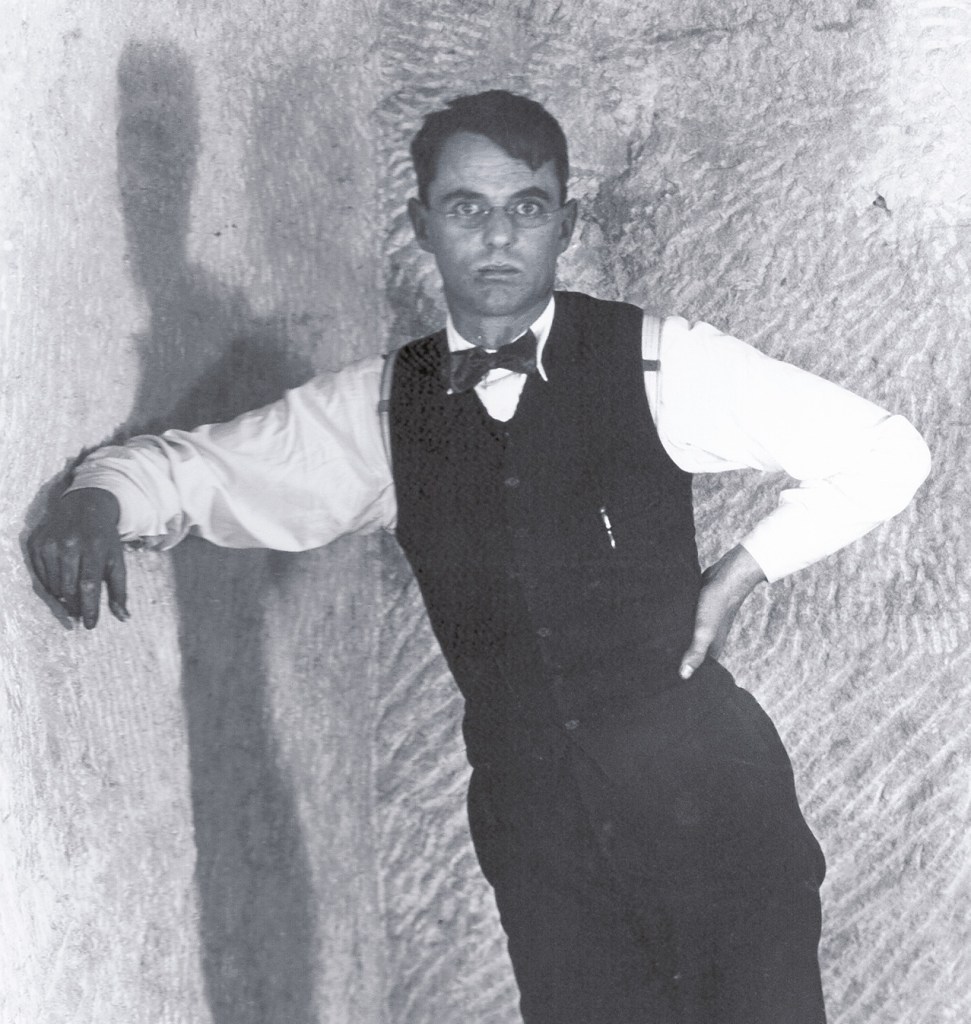
The excavation of the Fourth Dynasty (c.2613-2494 BC) Tomb of Queen Hetepheres was one of the crowning achievements of George A Reisner and the Boston Museum of Fine Arts Expedition, but it would never have been possible without the hard work and dedication of Reisner’s chief assistant, Dows Dunham. Born on 1 June 1890 to a prominent New York family, Dunham grew up with an appreciation of art and culture. After graduating from high school in 1908, and before his departure to college, he toured Europe with a tutor and travelled on to the Middle East, including Egypt, which particularly fascinated him. On his return, he enrolled at Harvard University and, inspired by the sights of the Old World, concentrated his studies on art history.
Dunham was fortunate to attend a course in the archaeology of ancient Egypt taught by the legendary George Andrew Reisner (1867-1942). Reisner rarely left his headquarters – ‘Harvard Camp’ – at the foot of the pyramids of Giza to return to his teaching duties in Cambridge, Massachusetts, and curatorial obligations at the Museum of Fine Arts, Boston. In class, he immediately recognised Dunham’s intelligence, artistic skills, and potential as a field archaeologist, and invited him to join the expedition. Dows began work at the Giza Pyramids in April 1914. There he was supervised by Reisner and his Egyptian foreman Said Ahmed, whom Dunham credited with teaching him the particulars of excavation, and who became a lifelong friend. Dunham was soon given the responsibility for conducting the Sudanese excavations, while Reisner concentrated on Giza.
Saqqara
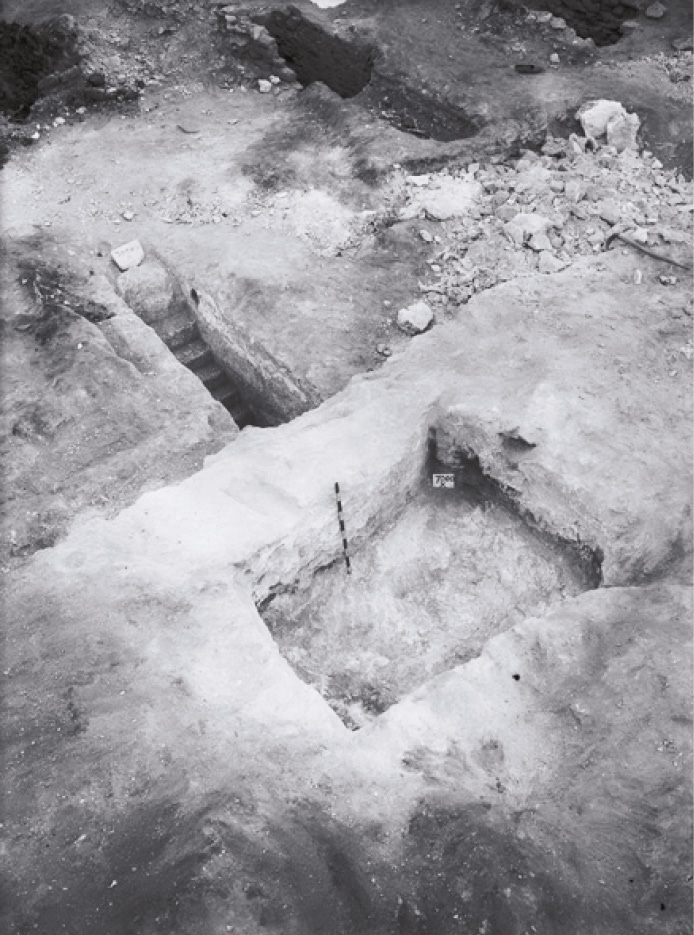
In 1923, Reisner’s old friend and colleague Cecil Firth asked if he could borrow Dunham for some important work at the Step Pyramid at Saqqara. Dunham was thrilled with the experience, particularly in finding the statue of Djoser, and asked if he could stay on another year. Reisner fired Dunham on the spot for having the temerity to want to remain, but he was soon forced to eat humble pie. On 2 February 1925, while his photographer was setting up his equipment to take photographs of the Great Pyramid, a leg of his camera tripod dug into the rock. This ‘rock’ turned out to be plaster covering the hidden mouth of a tomb shaft descending 88 feet (27 metres). When the blocking stones covering the entrance to the burial chamber at the bottom of the shaft were removed, the archaeologists were greeted with a daunting spectacle. The wooden objects placed in the tomb had turned to powder with only the inlays and gold sheet coverings remaining.
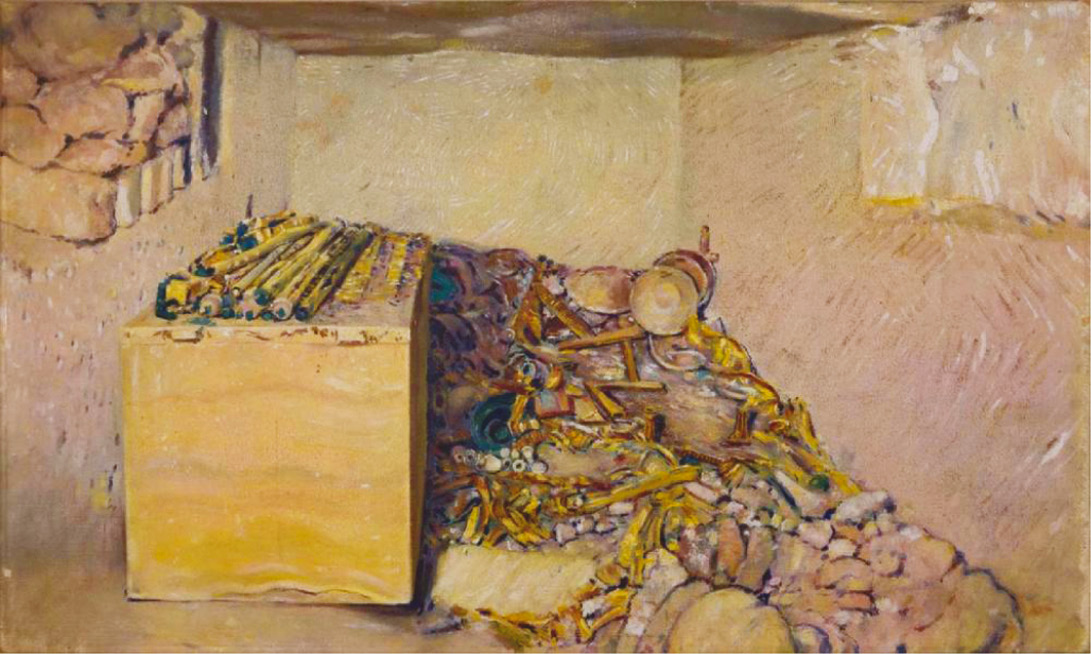
Reisner knew only Dunham could make sense of it all and so implored him to return. It was a difficult excavation, working in a cramped, hot space filled with delicate rubble.
We had to be extremely careful, ourselves, of how we moved about. In the course of the four and a half millennia during which the deposit in the tomb had lain undisturbed, the natural processes of decay had caused the items of furniture to slowly fall apart and had led to a surprising state of instability. We soon learned that abrupt movements and loud sounds had to be avoided so that air currents in the chamber should not be set up. I remember once quite early in the work, while Reisner and I were together in the tomb, I made some remark that he found amusing, and he let out one of his hearty laughs. Instantly, there was a slight rustling noise as a fragment of sheet gold at the back of the chamber slid down to a lower position as a result of the vibration of air set up by the noise.
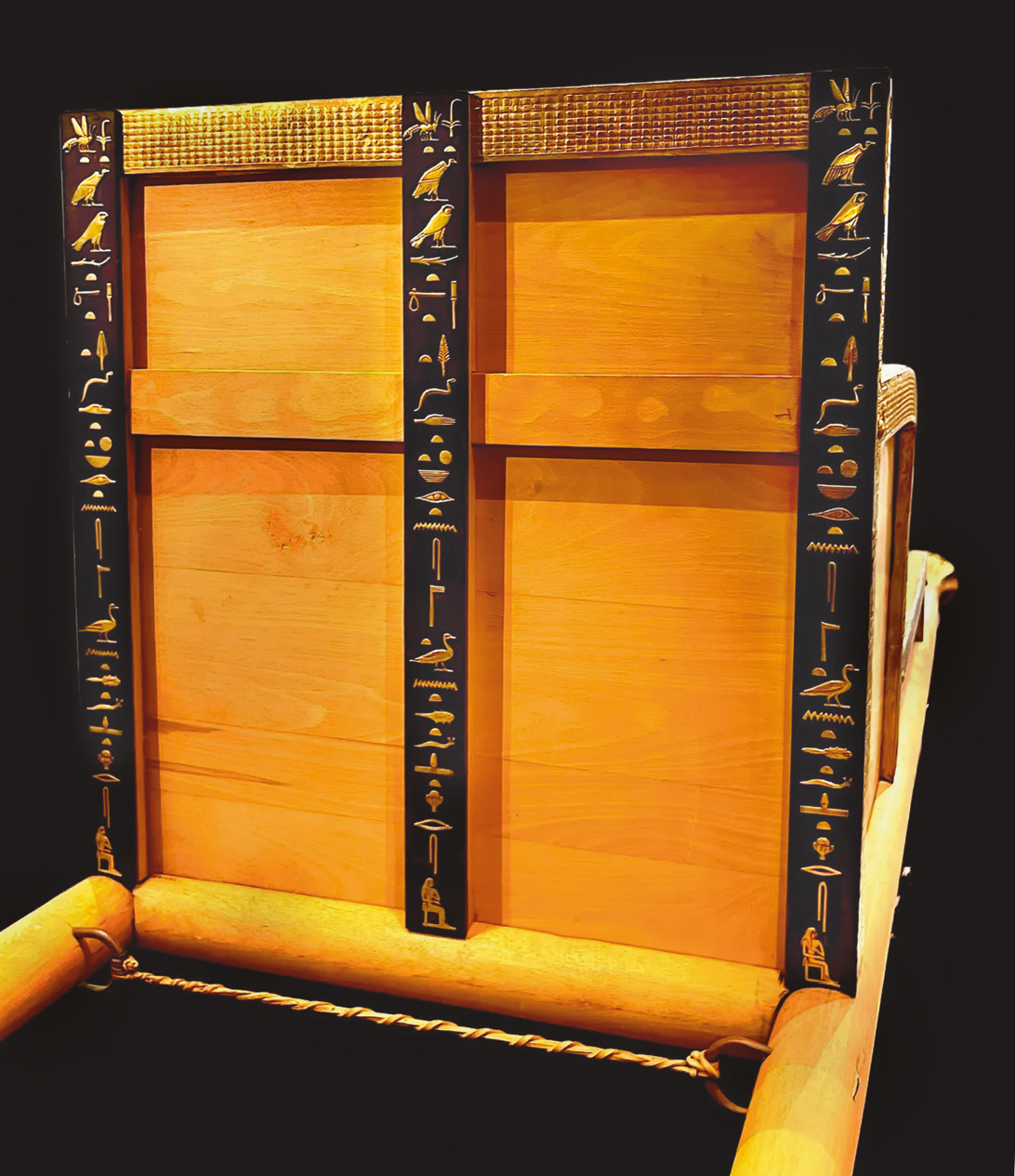
The tomb had no chapel or superstructure to identify it, but fortunately, as Dunham noted:
One of the finest pieces of furniture in the tomb was the queen’s carrying chair. The back had been decorated with hieroglyphic inscriptions, giving her name and titles, and it was from these inscriptions that we were able to discover the ownership of the tomb.
The carrying chair of Hetepheres had been made of ebony and cedar, but the wood had decayed. Fortunately, the inlaid gold hieroglyphs on the back had fallen to the floor of the tomb in order and so her name and titles could be easily read.
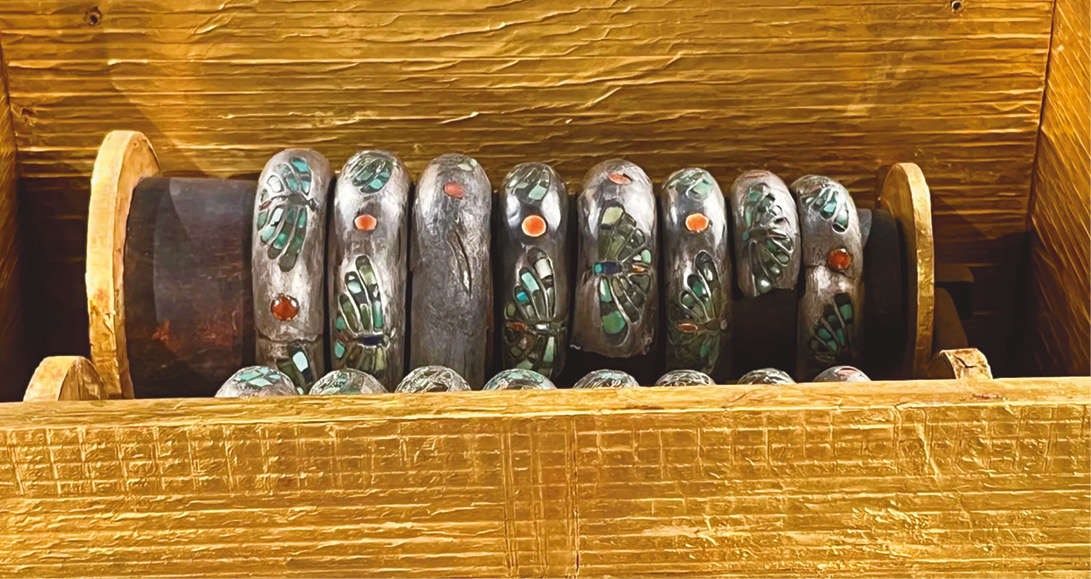
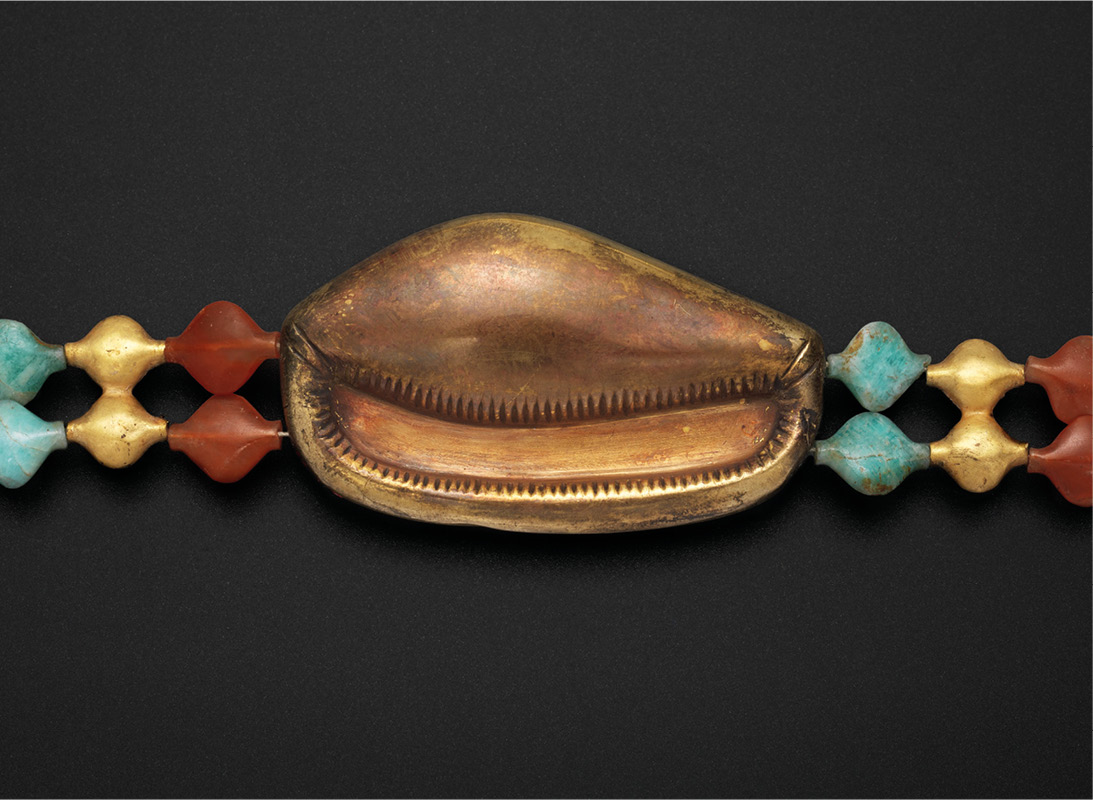
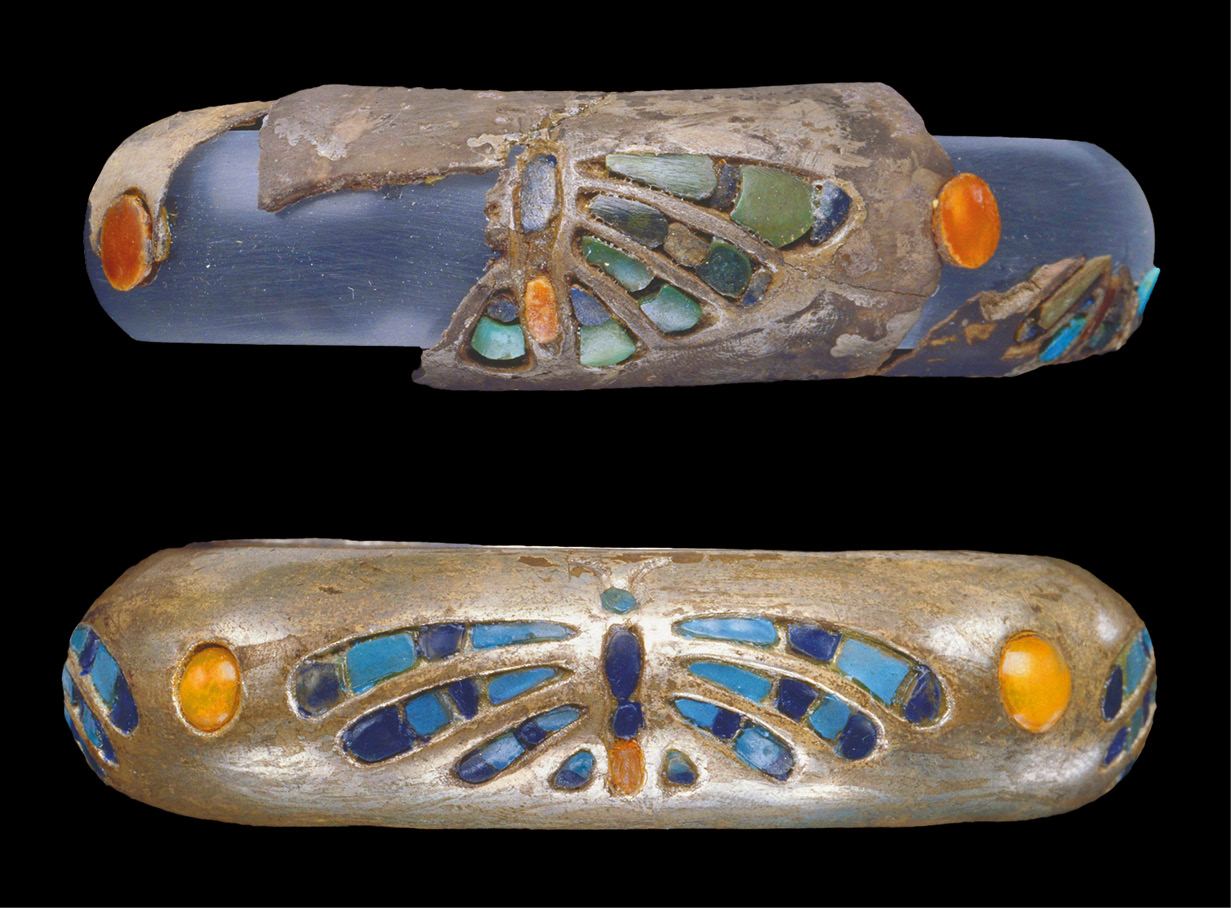
Another intriguing piece was the queen’s jewel box. Covered inside and out with sheets of gold, it had been placed beside the sarcophagus. Inside were ten silver bracelets, graduated in size and inlaid with butterflies in lapis lazuli, turquoise, and carnelian. Reisner identified them as anklets, but Dunham thought the smaller ones would never fit over a foot and so must have been bracelets. Reisner did not brook disagreement and insisted that ‘the official position of the Expedition is that they are anklets’. Later, a representation of the queen wearing them as bracelets was found in the tomb, but Reisner never acknowledged his mistake.
The flat stone inlays that form the butterfly patterns on Queen Hetepheres’ bangles were set into depressed areas of the metal so that they are flush with the silver surface.

Reconstruction of the contents of the tomb
It took two years to completely clear the small chamber, as every scrap and fragment had to be drawn and photographed in place before being collected. By carefully noting the position of each piece and studying tomb carvings of contemporary burial goods, Dunham was eventually able to reconstruct the contents of the tomb. Working with William Arnold Stewart (Inspector of Arts and Crafts for the Egyptian Ministry of Education) and Egyptian conservator Ahmed Youssef, Dunham was able to recreate all the furniture from the tomb for the Cairo Museum and had a copy made for the MFA, Boston. By carefully studying the remains in the tomb and depictions of furniture from ancient Egypt, Dunham was able to reconstruct the contents of the tomb on paper as well.
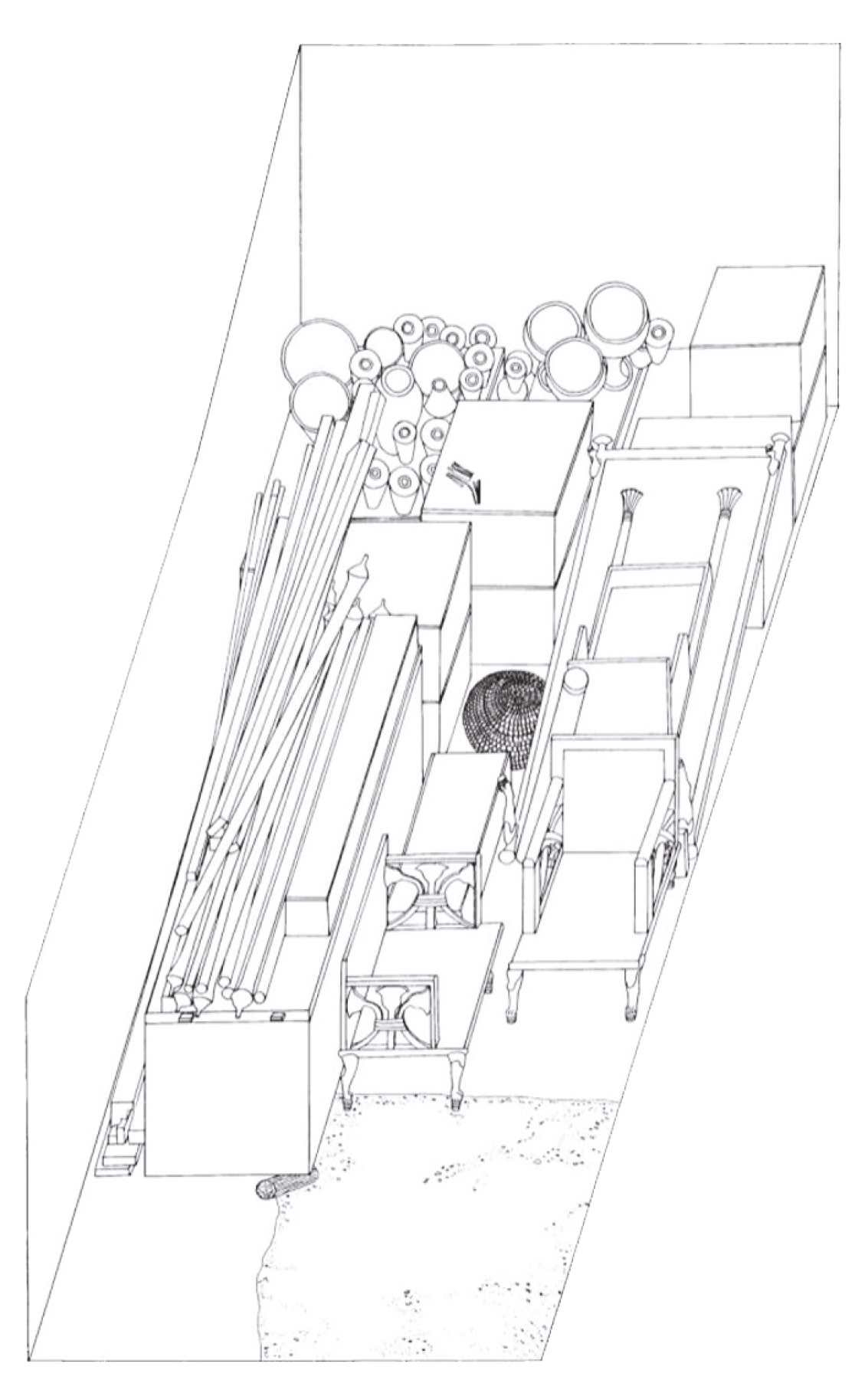
Images: G A Reisner and W S Smith (1955) The Tomb of Hetep-Heres the Mother of Cheops (Harvard University Press)
When the tomb was finally cleared, it was time to open the alabaster sarcophagus. Reisner made it a grand affair, inviting the Director General of Antiquities and the Chief Inspector of Antiquities for the Giza area, along with the press and the entire expedition staff. However, as the lid was slowly opened it soon became apparent that the sarcophagus was empty. Reisner announced to the assembled dignitaries: ‘Gentlemen, I regret that Queen Hetepheres is not receiving.’ There was, however, a plastered niche in the west wall of the chamber and, when that was opened, it was found to contain a square alabaster box divided into four compartments which held all that remained of the Queen.
Reisner, a devotee of mystery novels, theorised that the Queen had been originally buried at Dahshur near her husband Sneferu, but that this original tomb had been robbed. To hide the theft, the priests – he suggested – secretly buried Hetepheres beside the pyramid of her son, Khufu. Mark Lehner later pointed out the flaws in this interpretation. It is clear, as with many other Egyptian tombs, the body with its gold and jewels had been stolen by the embalmers and priests, and an empty sarcophagus had been interred in the tomb.
As with any intact tomb discovered, all the contents were to be kept together in Egypt, but Dunham later requested that some of the fragmentary bracelets might be given to Boston and the Antiquities Service agreed. Some of the fragments that went there were recently subjected to lead-isotope analysis and the Cycladic islands in Greece were identified as the most likely source of the silver used in the bracelets (see AE 139).
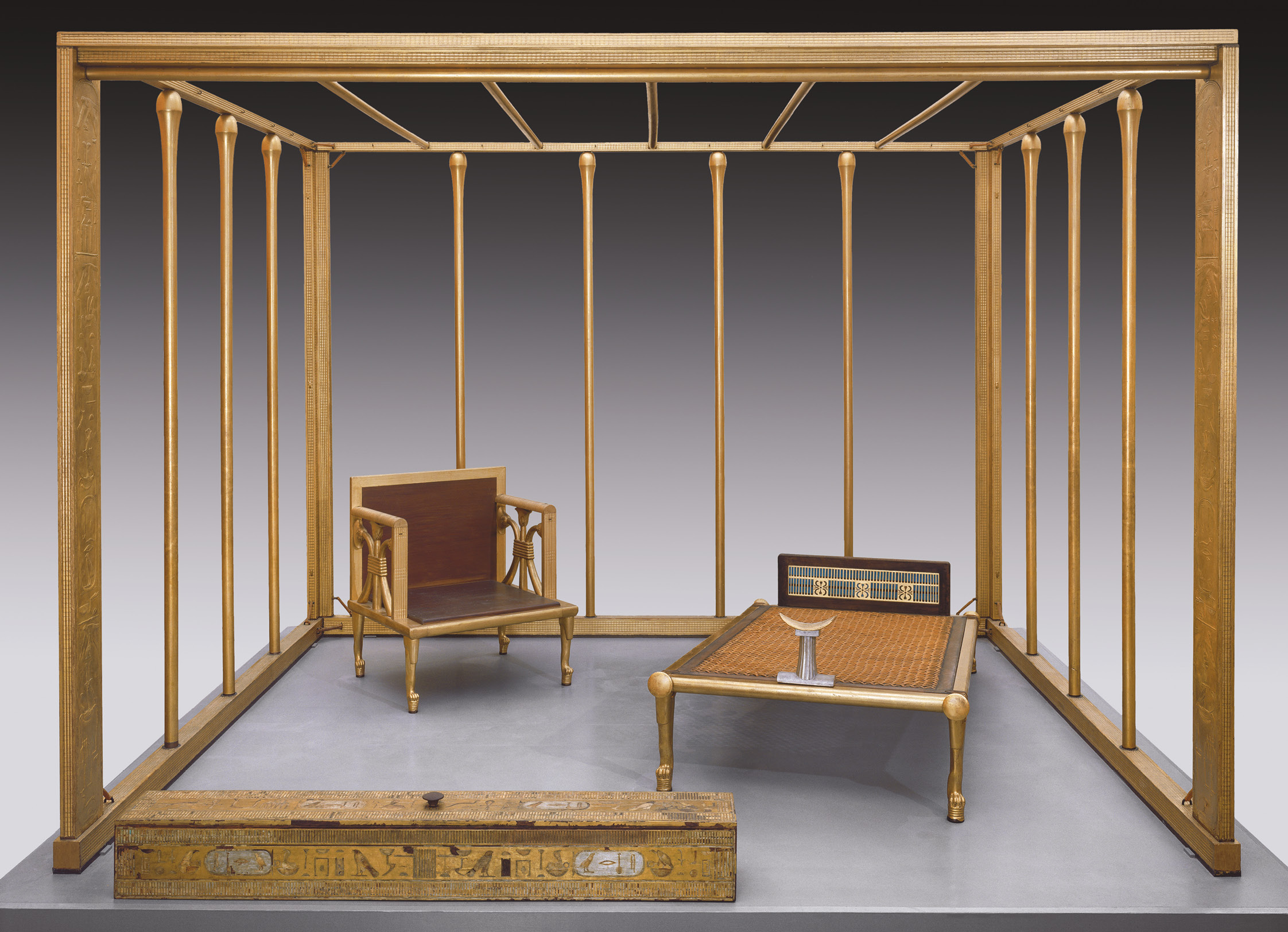
Publication
Dunham retired in 1956, but continued working and publishing the results of the expedition up until his death in 1984. The life and career of Dows Dunham is being celebrated in an exhibition at the Albany Institute of History and Art, New York. From the Hudson to the Nile: Dows Dunham and the archaeology of Egypt and Sudan, which explores his pioneering fieldwork in Egypt and Sudan, runs until 3 May 2026.
Dr Peter Lacovara received his PhD from the Oriental Institute of the University of Chicago, and is currently Director of the Ancient Egyptian Archaeology and Heritage Fund. Previously, he worked as Senior Curator of the Ancient Egyptian, Nubian, and Near Eastern Art collection at the Michael C Carlos Museum. He has organised several important Egyptian and ancient Near Eastern exhibitions and museum installations, and also directs an active field mission at Deir el-Ballas in Upper Egypt.