Subscribe now for full access and no adverts
The two last kings of the Twelfth Dynasty are not well-known figures. There is a wide range of sources for each, but those monuments do not provide that information a modern historian would regard as important. Therefore, the end of the Twelfth Dynasty remains shrouded in mystery and speculation.
Amenemhat IV
Amenemhat IV, who reigned c.1808- 1799 BC, was the last male ruler of the Twelfth Dynasty. The Turin Canon, a Ramesside king list, gives him 9 years, 3 months, and 27 days. His father is not known for certain, but was most likely Amenemhat III. Both kings ruled together in a coregency of about two years, and they are mentioned together on several monuments, in particular the private stelae of middle-ranking officials. Amenemhat IV’s mother Hetepti was depicted in the Temple of Renenutet at Medinet Madi (ancient Dja). In the much-destroyed inscription, she is called ‘king’s mother’, but not ‘king’s wife’. The latter title might simply have been lost, as the relief on the wall is not well preserved, but this still leaves some speculation about her relationship to Amenemhat III.

There are no known inscriptions naming a wife of Amenemhat IV, but he may have been married to the later ruling queen Sobeknefru who, according to the Egyptian-Greek historian Manetho, was his sister. Another lady named Neferuptah might also have been a sister (see AE 152). She is known from many monuments, and held a special position under Amenemhat III. It is probable that Neferuptah died during the reign of Amenemhat IV.
On becoming king, Amenemhat IV received the fivefold royal titulary of an Egyptian king:
Birth name: Amenemhat – ‘Amun is at the front’
Throne name: Maakheru-Ra – ‘The voice of Ra is true’
Horus name: Kheperkheperu – ‘Everlasting of manifestations’
Two ladies name: Sehebtawy – ‘He who makes the two lands festive’
Golden Horus name: Sekhembiknebunetjeru – ‘The golden Horus, powerful one of the gods’

The stela of an official with the cartouche of Amenemhat IV, now held by Museum der Universität Tübingen. Image: Wuselig, CC BY 4.0 via Wikicommons
Expeditions
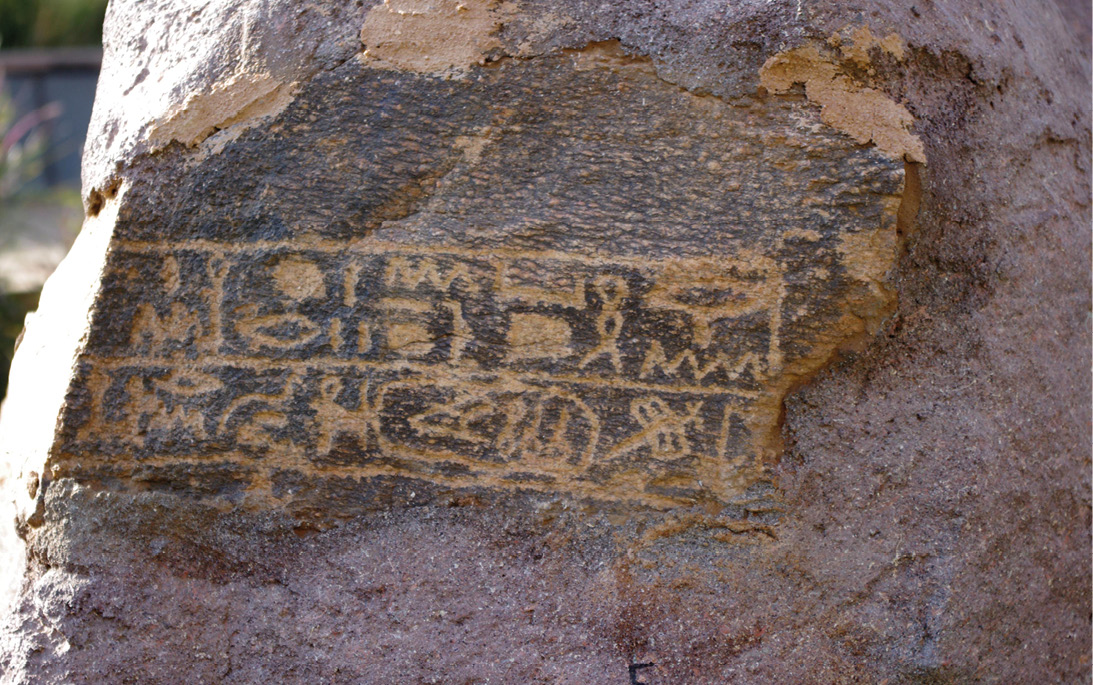
The wide range of sources for Amenemhat IV does not create a comprehensive picture of his reign. Nevertheless, he is fairly well attested by many expedition inscriptions, which provide evidence for ongoing enterprises at the borders of the country. Four expeditions to the Sinai are recorded. They date to the Years 4, 6, 8 and 9, and a number of these were led by an official called Horemsaef, who was ‘god’s sealer’ and ‘great chamberlain of the treasury’. One expedition to the Wadi el-Hudi (in Year 2) was led by the ‘beloved and favourite real royal acquaintance’ and ‘assistance of the treasurer’ Zahathor, who was charged with collecting amethyst for the king (for more about this stone, see here).
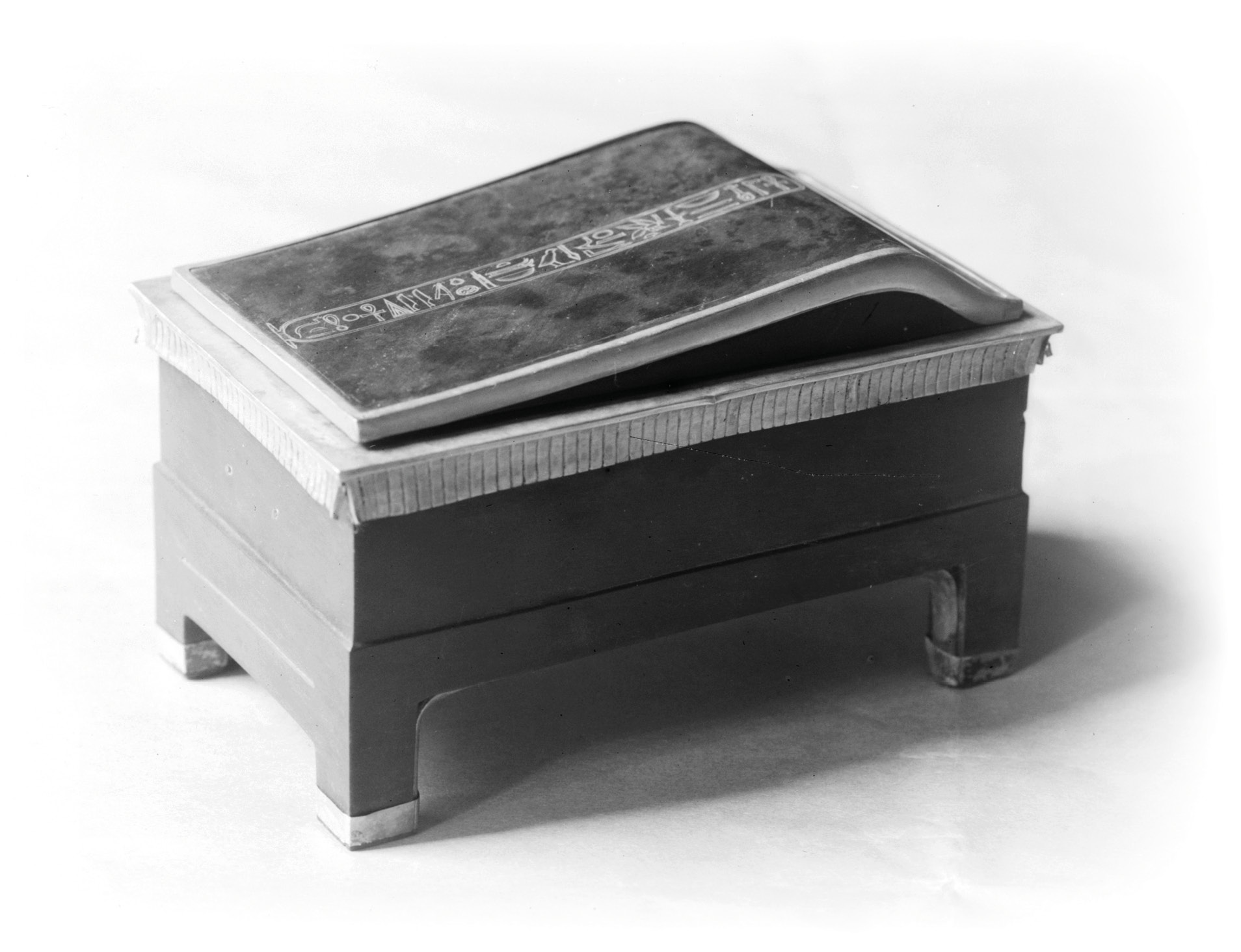
There is also evidence for expeditions to Punt via the Red Sea, where ‘wonderful things’ were collected. The official Ptahhotep was in charge in Year 7. He bears the highest titles, but his main function title is not preserved. A small obsidian box bearing Amenemhat IV’s name was found at Byblos in Tomb II, which belonged to the local king Ipshemuabi. Whether Ipshemuabi lived during the reign of Amenemhat IV is far from certain. It is possible that the box came to Byblos long before Ipshemuabi’s reign, and was taken from the palace treasury to be placed in the tomb at a later date.
Several inscriptions exist in Lower Nubia recording the Nile level under Amenemhat IV. They provide firm evidence that Lower Nubia was under Egyptian control. These records date to Years 5, 6, and perhaps 7. One also mentions the ‘royal sealer’ and ‘great overseer of troops’ Resseneb, who was in charge of the fortress at Semna.
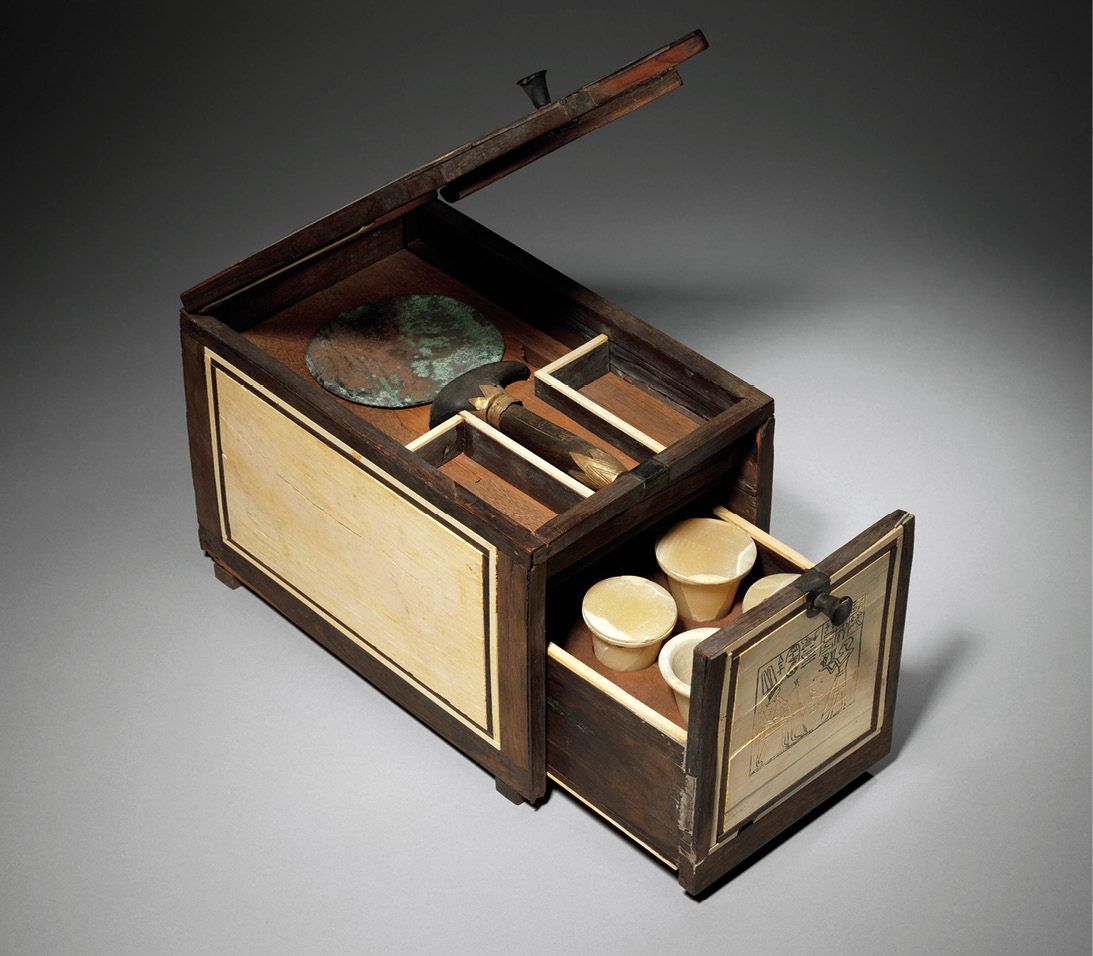

Only a small number of high officials are attested at the royal court. Apart from Ptahhotep and Resseneb, we know of a ‘royal sealer’ and ‘overseer of fields’ called Ankhu, who was most likely in office under the king. He is known from several sources, and lived at the end of the Twelfth and the beginning of the Thirteenth Dynasties. Several viziers are datable to the same period, such as Zamont or Senusretankh, although their precise placement is far from certain. A palace official called Kemeni is known from a box found in a Theban tomb on which he is depicted before the king.
There is evidence for expeditions to Punt via the Red Sea, where ‘wonderful things’ were collected.
Monuments
There is some evidence of a building programme during Amenemhat IV’s reign. He finished the small temple of snake goddess Renenutet at Medinet Madi that was begun by his likely father Amenemhat III. The reliefs in the temple are not well preserved, but it is the only decorated Middle Kingdom temple left standing today. Further work is attested at the Hathor temple at Sinai, and in the Amun temple at Karnak.
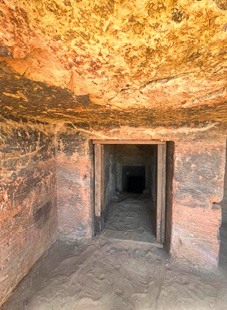
The burial place of the king is not known, but was perhaps in Dahshur, where the remains of a pyramid connected to the name ‘Amenemhat’ were discovered by accident (rather than during excavation work). However, there are a number of Thirteenth Dynasty kings with that name, so the identification is far from certain. It may be possible, too, that the reliefs bearing the king’s name originally came from the Amenemhat II or Amenemhat III pyramids at Dahshur, but we cannot be sure until these structures are properly excavated.

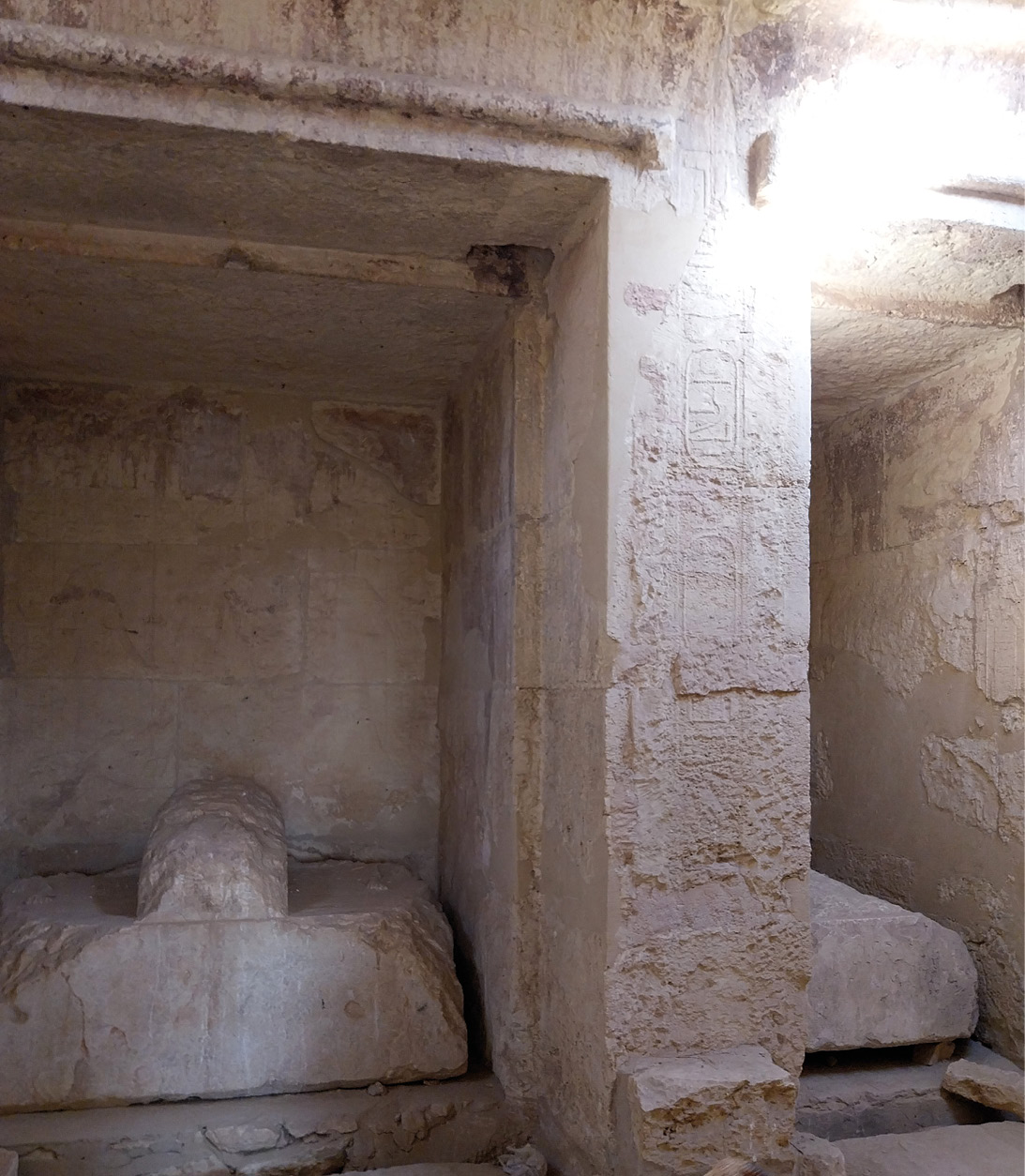
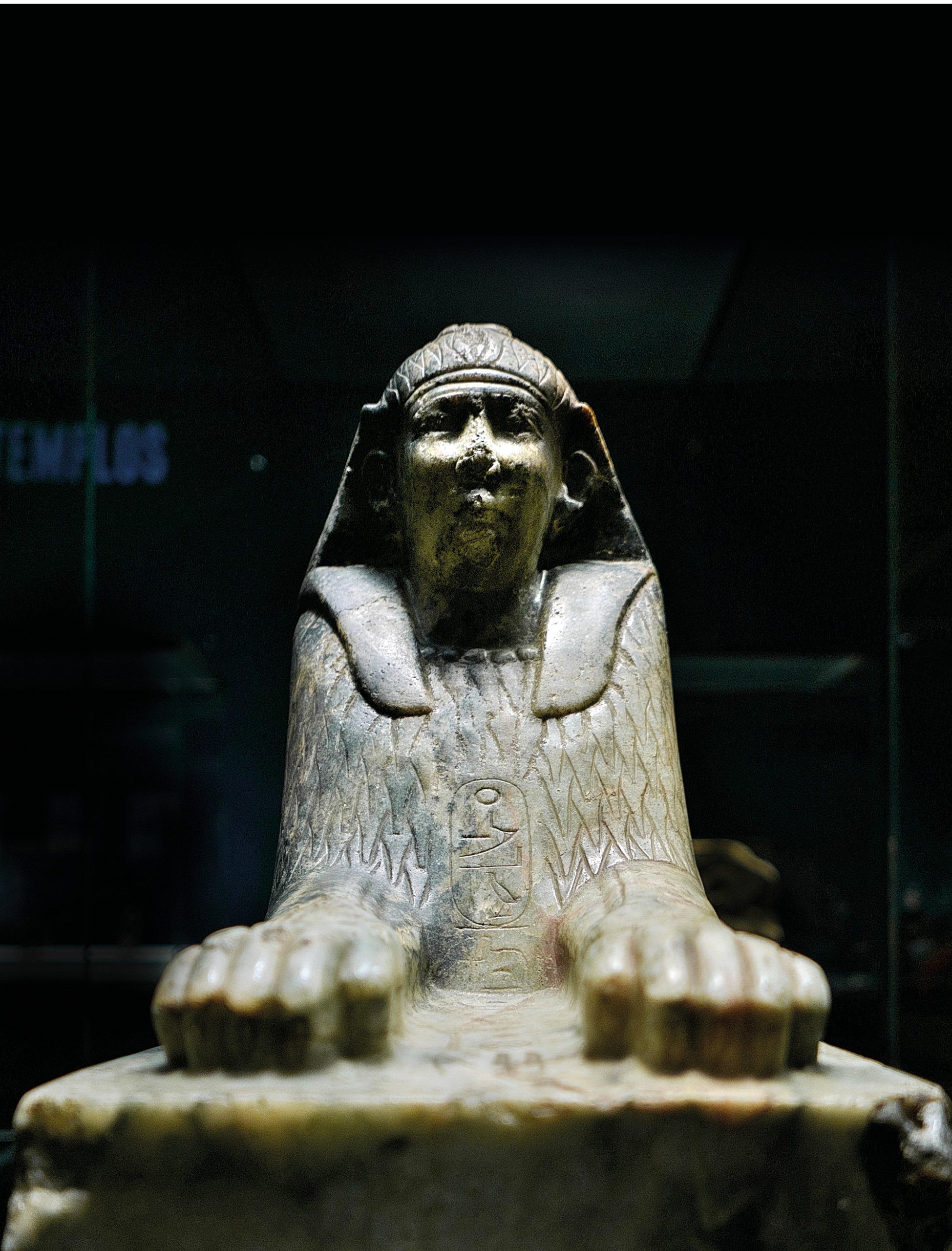
Few statues can be attributed to Amenemhat IV, and those that survive are often not well preserved. A sphinx in the British Museum belongs to this king, but the face is heavily destroyed. Several statues and heads in different collections have recently been ascribed to him. These have facial features that are typical for Amenemhat III, but some details are different, most noticeably the full cheeks, which are not found on known statues of Amenemhat III. Two colossal statues of Amenemhat IV were discovered at Herakleopolis Magna. Both were usurped by Ramesses II, but one still preserves traces of Amenemhat IV’s original cartouche. The king is seated, and there is partial damage to the faces. Small figures of women are depicted to the left and right of the king’s feet, which possibly represent the wife and mother of the king.

There is no obvious sign of a decline towards the end of Amenemhat IV’s short reign. The king’s name appears on the private stelae of several officials, a practice that is well attested throughout the Twelfth Dynasty. It was important for officials of this period to be seen to be close to the king. However, with few exceptions this custom disappeared in the Thirteenth Dynasty, indicating a different relationship between kings and officials, where the king was no longer the centre of officialdom. This change is not attested during the reign of Amenemhat IV.

Another possible head of Amenemhat IV, from the Petrie Museum, London. Image: MMA
Sobeknefru
We do not know how Amenemhat IV died nor what family he left behind, but he was succeeded by Sobeknefru (c.1799-1795 BC), his sister and possibly also his wife. She is the first female ruler to take the full titles of an Egyptian king and, according to the Turin Canon, she ruled for 3 years, 10 months, and 24 days.
Sobeknefru (or Nofrusobek) was the first of several kings whose names include the crocodile god Sobek, whose cult centre was the Fayum. The period of the late Twelfth and Thirteenth Dynasties is the ‘Age of Sobek’. Following the cultivation of the Fayum, and the attention that Amenemhat III gave to the region, Sobek became the main god of kingship and of the country.

On becoming ruling queen, Sobeknefru received the full fivefold titulary of an Egyptian king:
Birth name: Sobeknefru – ‘The beauty of Sobek’
Throne name: Sobekkara – ‘Ra is the ka of Sobek’
Horus name: Merytra – ‘Beloved of Ra’
Nebty name: Satsekhem-nebettawy – ‘The daughter of the powerful one is the Mistress of the Two Lands’
Golden Horus name: Djedetkhau – ‘Stable of appearance’
Surprisingly, although Sobeknefru ruled for only about four years, she is fairly well attested. There are two dated inscriptions: a Nile level record, and a rock inscription from the Eastern Desert which dates to Year 4. There is evidence of building work at Kom el-Akârib, not far from Herakleopolis Magna, where four columns bear her name. Several inscriptions with her name were found in the ‘Labyrinth’, the funerary temple of Amenemhat III at Hawara.

There is also a column (perhaps from the ‘Labyrinth’) that depicts her Horus name and that of Amenemhat III. The Horus falcon of Amenemhat III in this inscription is graphically providing ‘life’ (the ankh sign) to the nose of the Horus falcon of the queen’s name. So it seems that she connected herself directly with Amenemhat III, who may have been her father, thus legitimising her right to rule. None of her surviving monuments refer to Amenemhat IV, who is not attested in the ‘Labyrinth’ either.

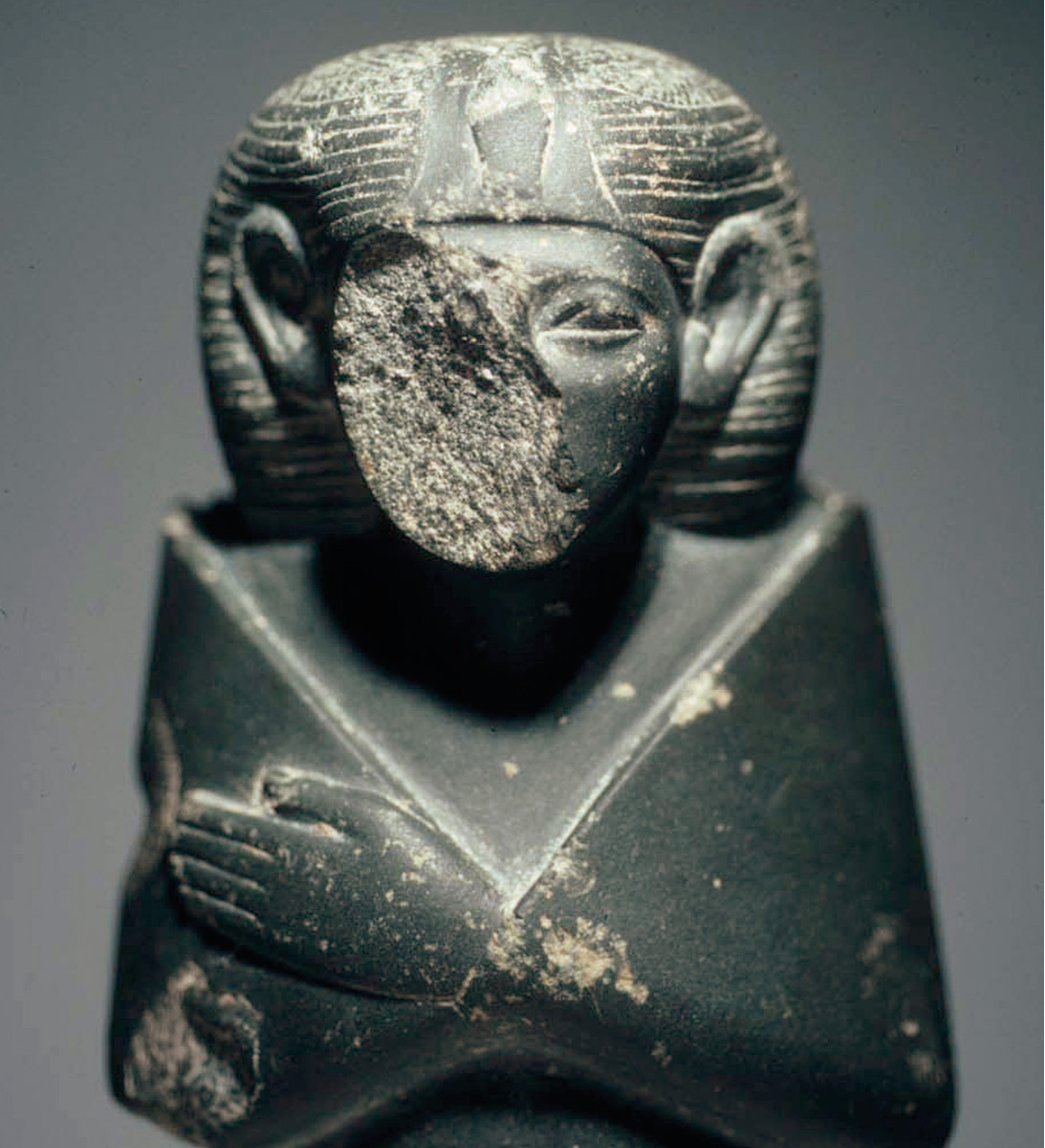
Several statues of Sobeknefru have survived, but sadly all are without a head. The statues show the ruling queen with female dress but with royal insignia, which up to this point was only known for male kings. In texts, she uses female grammatical endings so, unlike Hatshepsut, Sobeknefru is still depicted as a woman. No sculpture with a face can be ascribed with certainty to Sobeknefru, although several have been assigned to her, including a small statuette and a head in the Metropolitan Museum of Art in New York, and a statue in Berlin that was destroyed during World War II, although photographs and plaster casts survive.

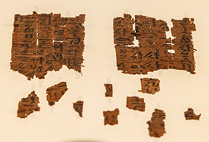
It is certain that Sobeknefru received a proper burial. There is a stela in Marseille dating to the Thirteenth Dynasty which mentions officials involved in the funerary cult of Amenemhat II and Sobeknefru. A papyrus found at Harageh in the Fayum names a place or object called ‘Sekhem-Sobeknefru’. This might be the name of her funerary complex, but it could also be the name of a statue or monument. Nevertheless, she was most probably buried in a pyramid that has yet to be identified.

Egypt’s first ruling queen
Why a woman should suddenly become king of Egypt at the end of the Twelfth Dynasty is still a mystery. The Old Kingdom queens Merytneith (the mother of king Den) and Ankhnespepy (the mother of king Pepy II) did not rule in their own right, but as regents for their young sons. No ruling queen took over the full royal title until the reign of Sobeknefru. It is often assumed that she stepped in because there were no surviving male heirs at the end of the Twelfth Dynasty. While we cannot be certain about the family relations of kings, it seems rather unlikely that such a situation ever arose. From better documented times and regions, we know that brothers or nephews would step in to rule should there be no direct heir. So it seems more likely that Sobeknefru was a strong woman who seized the opportunity and pushed all traditions aside to become king.

The reign of Sobeknefru appears rather normal in the sources, but unlike Amenemhat IV, she is not mentioned on any private stelae. She appears in a few later Egyptian king lists, but not in all. This means her memory was not erased. She was even known to Manetho, who called her Skemiophris.
The first king of the following Thirteenth Dynasty was perhaps a man called Sobekhotep. His relation to the Twelfth Dynasty is not known. The Thirteenth Dynasty kings ruled mostly only for a few years, while the administration continued without a break. For most people, life did not change very much, but politically the country became unstable, and at one point people from the Levant managed to take over the Eastern Delta. Only with the rise of the Eighteenth Dynasty pharaoh Ahmose could Egypt attain the power and wealth enjoyed by the strong line of Twelfth Dynasty kings.

Further reading:
• S Pignattari (2018) Amenemhat IV and the End of the Twelfth Dynasty: between the end and the beginning (Oxford: BAR).
• S Connor (2020) Être et paraître: statues royales et privées de la fin du Moyen Empire et de la Deuxième Période intermédiaire (1850-1550 av. J.-C.) (Middle Kingdom Studies 10; London: Golden House).