Subscribe now for full access and no adverts
Egyptian axes could be used to fell large trees.
Among the most prominent stone items in museum collections from prehistoric Egyptian cultures are axes shaped from flint or other hard stones. The simple Palaeolithic hand axe with a narrow tapering cutting edge, like a pickaxe, developed into a rectangular bifacial blade, which could be fixed to a forked or socketed shaft to be used as a woodworking tool or weapon. The first metal tools made from smelted copper began to appear around 3500 BC in the form of axe-heads, spear points, daggers, and adzes with hammer-sharpened edges. Gerzean (Naqada II) copper axe-heads shaped in imitation of polished stone axes were cast in open moulds, and at Maadi new blade shapes were developed to suit different purposes, especially relating to woodworking.
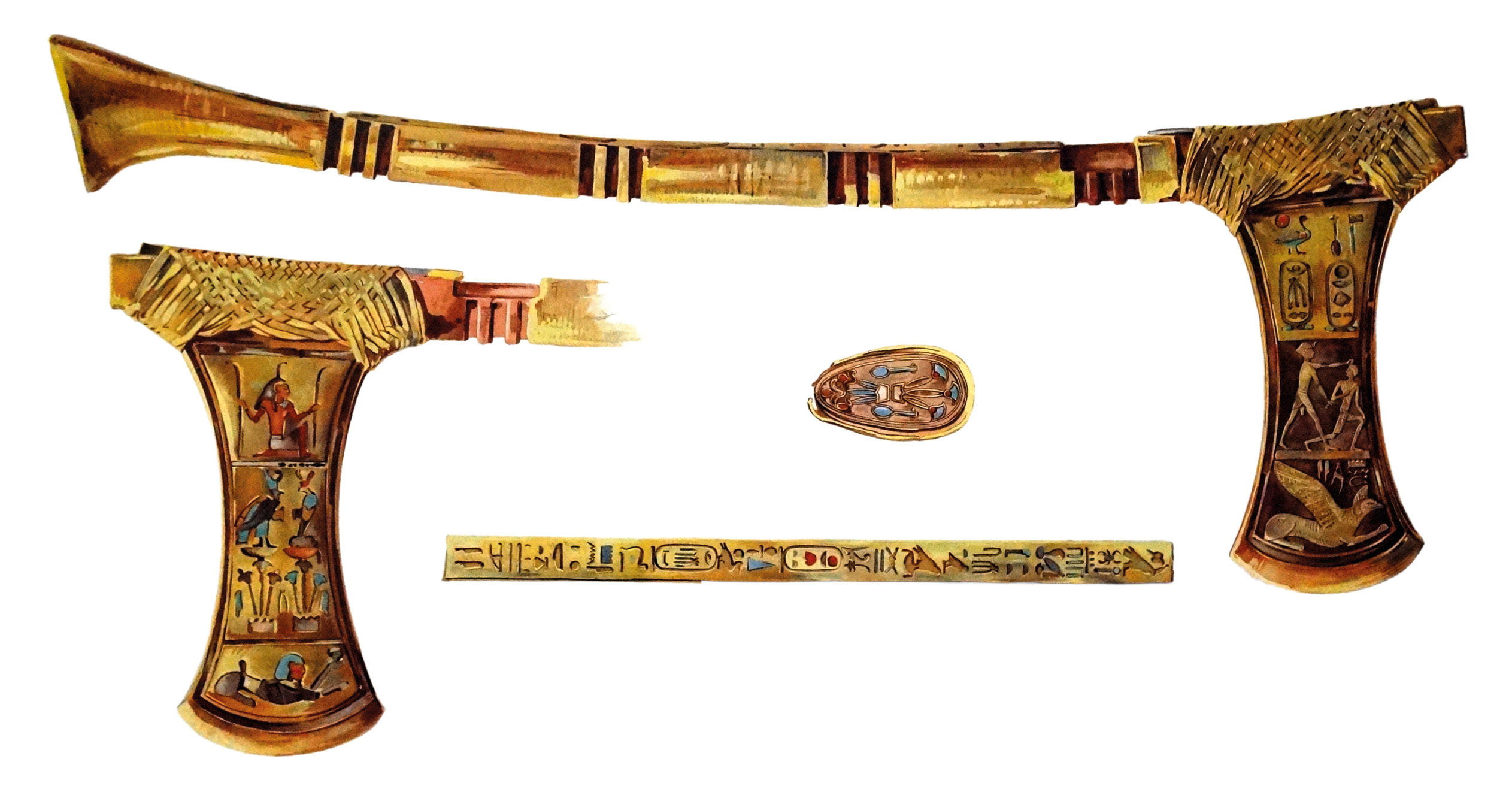
Image: drawing of ceremonial axe by Howard Carter, taken from F W Von Bissing (1900) Ein Thebanischer Grabfund aus dem Anfang Neuen Reiches
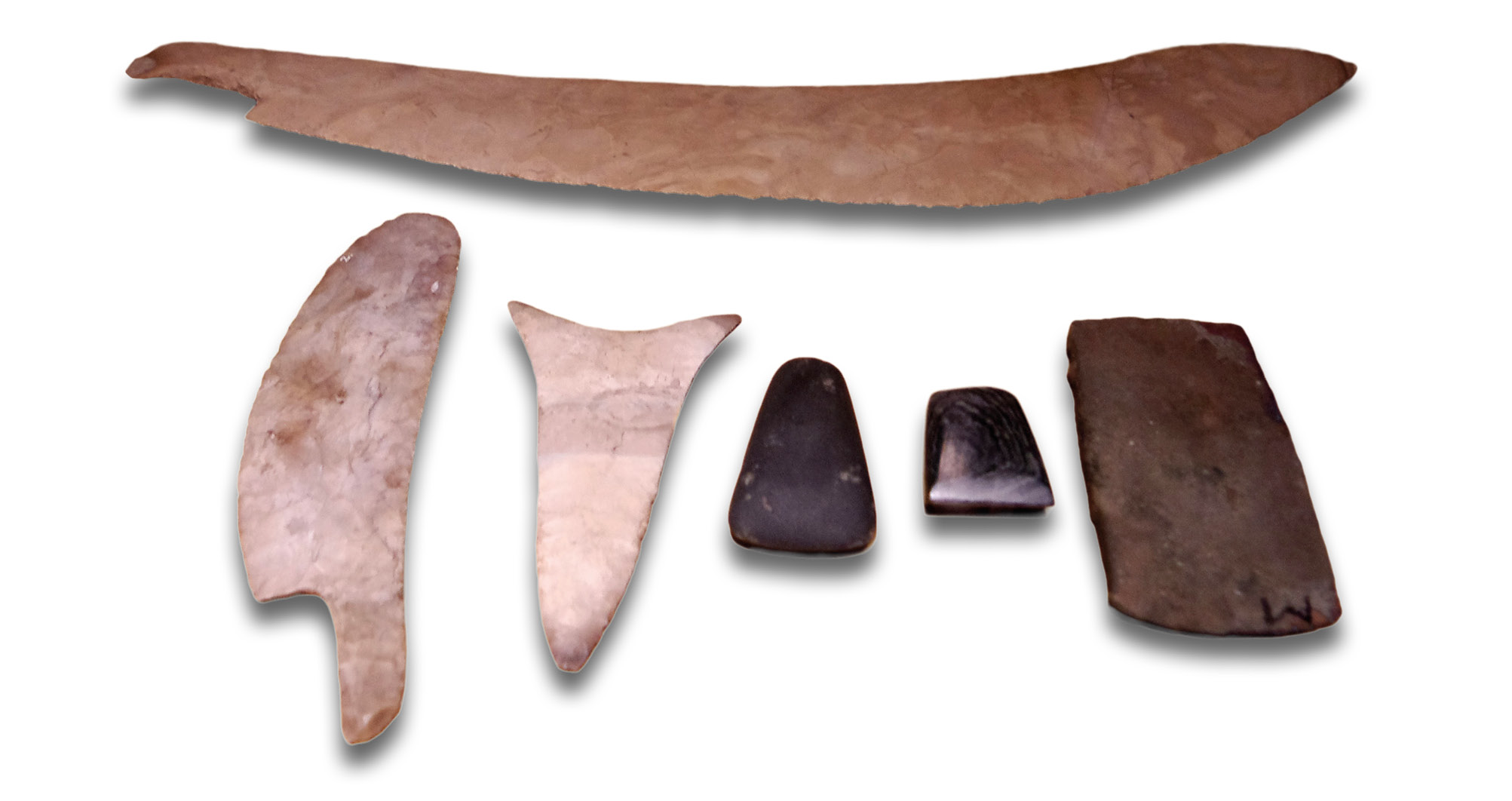
Woodworking tools
Developments in tool technology led to increasingly sophisticated carpentry techniques. These are apparent in Predynastic and Early Dynastic grave goods made from domestic timber such as acacia and sycamore. In the same era, the appearance of sizeable boats made from planked wood, such as those buried in brick-lined pits at Abydos, attributed to Khasekemwy (c.2686 BC), show that Egyptian axes could be used to fell large trees. The typical felling axe, as depicted in the hieroglyph T7, was wielded with two hands, and had a semi-circular blade with the cutting edge set parallel to the shaft, to which it was attached by rawhide thongs.

Hieroglyph Gardiner T7, which depicts an axe with semi-circular metal blade fixed to a curved shaft, typical of the Old Kingdom.
Improvements included more secure means of fixing the blades in place, such as perforations for threading the hide thongs or cords, and lateral extensions known as lugs, which fitted into slots in the shaft. The strongest, hardest blades were those made of copper with a significant arsenic content, and metallurgical advances led to improved alloys, notably bronze, which retained a sharpened edge for longer. Occasional depictions of tree-felling in tomb paintings and reliefs from the Old Kingdom onwards show the axe shaft was made from a naturally curving branch, often with a thicker lower end that helped to prevent users losing their grip. Model axes are commonly found in foundation deposits and among tomb furniture.
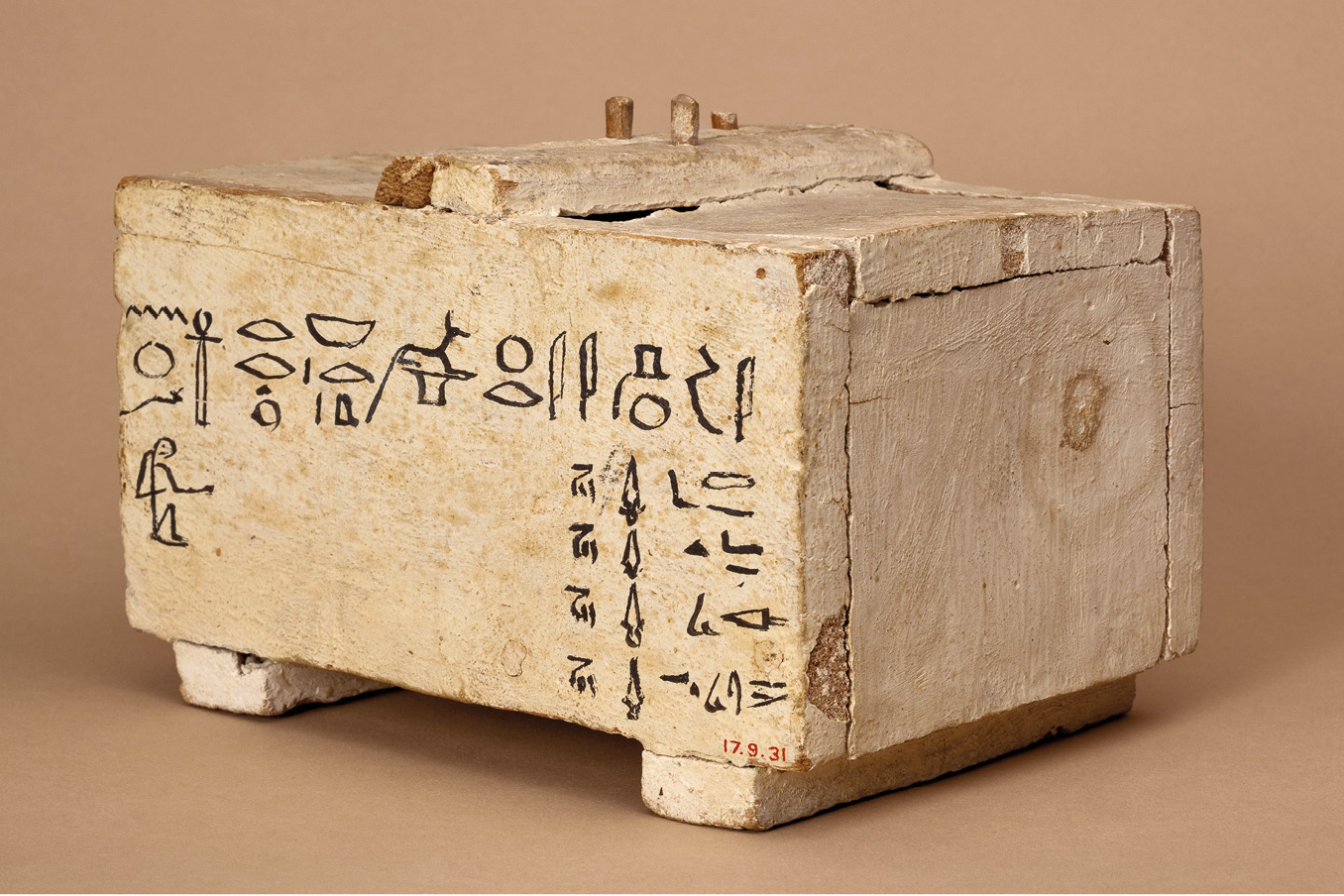
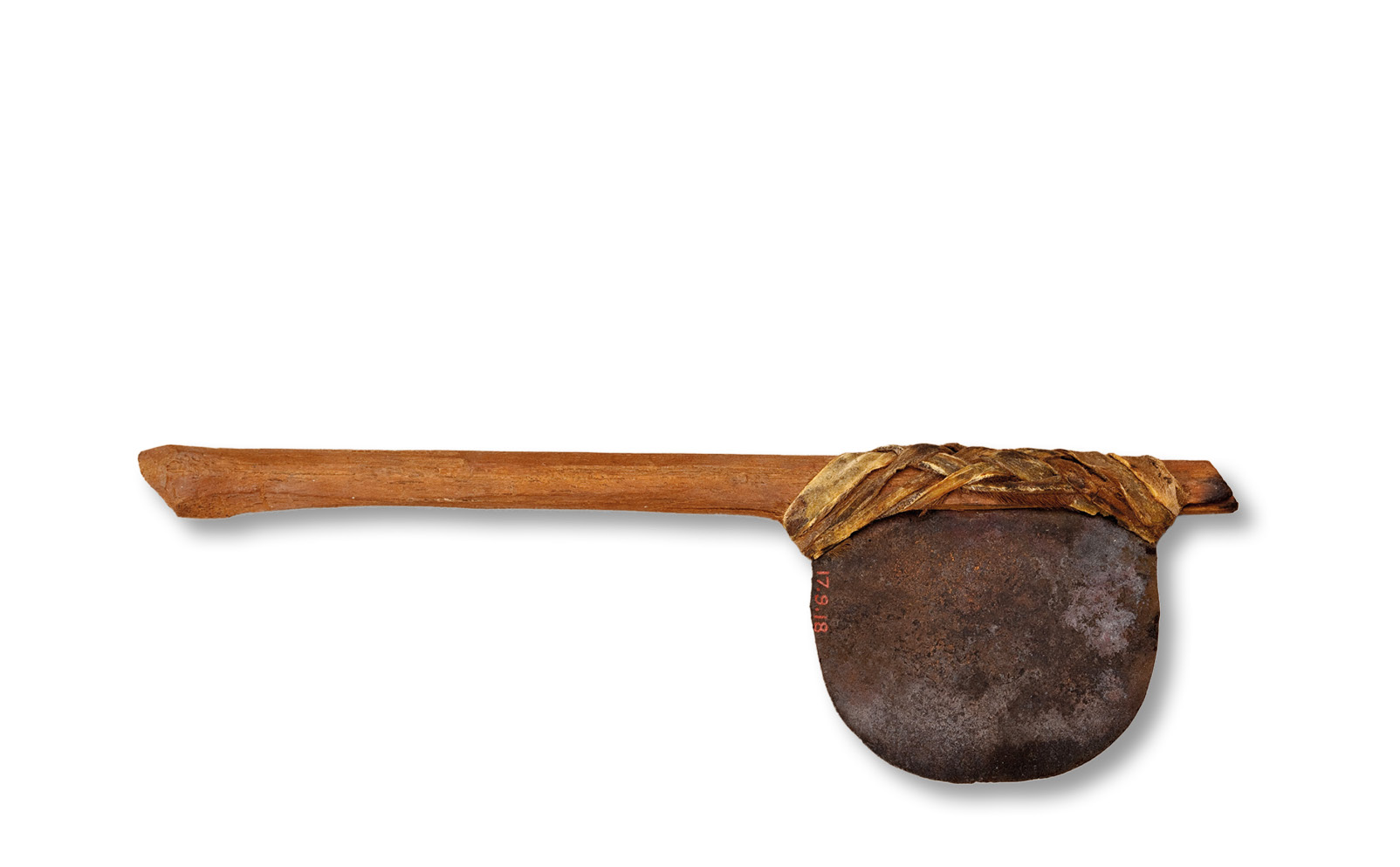

Felling trees
Metal axes made possible the exploitation of the Levantine pine and cypress forests, which were among the most significant and valuable of natural resources available to the Egyptians. As early as the First Dynasty, the use of large beams to support tomb roofs is evidence for the importation of timber from Syria-Palestine. The Palermo Stone records the acquisition, by Third and Fourth Dynasty kings, of boatloads of timber destined for the ornamentation of temples and the sacred barges of their gods, as well as for the construction of the very vessels that were sent to collect the tree trunks. Such deliveries are recorded in tomb and temple decoration throughout the Dynastic age, with cedar and ebony logs or planks being included among the precious commodities received into the royal and divine treasuries as ‘tribute’ from Asia and Nubia. At Karnak, Sety I (c.1294-1279 BC) recorded his first campaign to affirm Egyptian strategic and economic control of the Syria-Palestine region, which included the prized forests. On the outside of the Hypostyle Hall’s northern wall, the king is shown accepting the submission of Lebanese leaders, who were forced to cut down trees as tribute. The axes used by the chiefs have the longer blade, shaped like a splayed trapezium, which had become the commonest form for axes by the New Kingdom, and they used adzes to trim the lesser branches of the tall pine trees destined to become flag staffs in Amun’s temple.


Weapons
By the Middle Kingdom, metal axes with semi-circular or rectangular blades, essentially the same as those used by woodworkers, had joined the ancient stone mace as the standard weapons of the Egyptian infantry. Soldiers tucked their axes into their belts or carried them in hand, possibly secured by a wrist strap that was prevented from slipping off by the addition of a flared extension to the end of the short shaft. The First Intermediate Period introduction of a battle axe with a crescent-shaped blade, often with three tangs or points of attachment, had a longer cutting edge, which could cause significantly more damage, especially if mounted on a tall shaft in the manner of a halberd or poleaxe. This is often included in the racks of weapons shown on painted coffins of the Eleventh and Twelfth Dynasties, and in Middle Kingdom tombs, such as that of Khety at Beni Hasan.
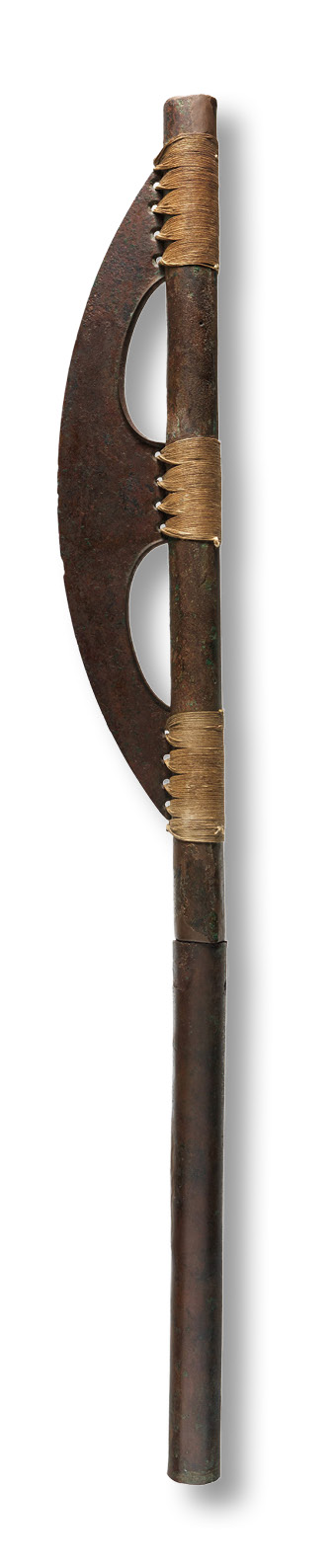
By the Seventeenth Dynasty, rounded blades were being replaced by axe-heads in the shape of a splayed trapezium or rectangle.

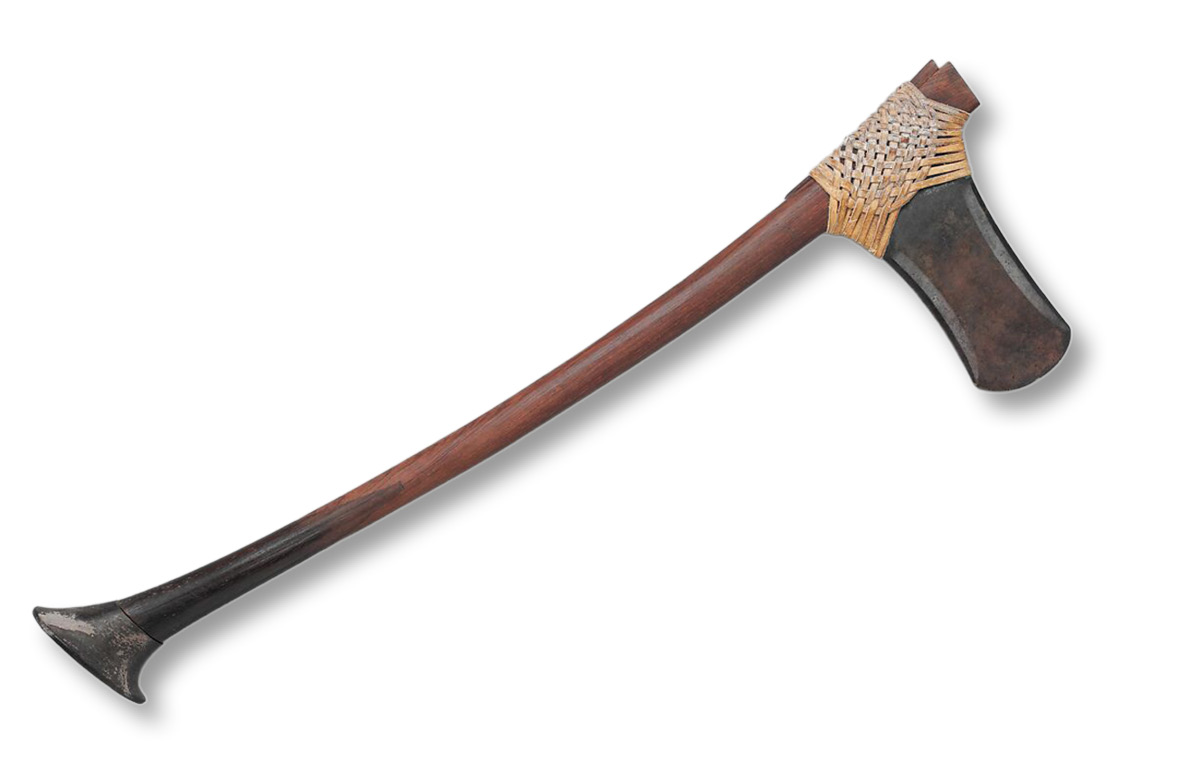
The heavier bronze blade could break bones and inflict devastating crush injuries, and its sharpened edge could penetrate leather armour. The hieroglyph A14*, representing a warrior slain by a blow to the head, was used as a determinative in the words mt and xpi, ‘to die, perish’, and the word xft, ‘enemy’.
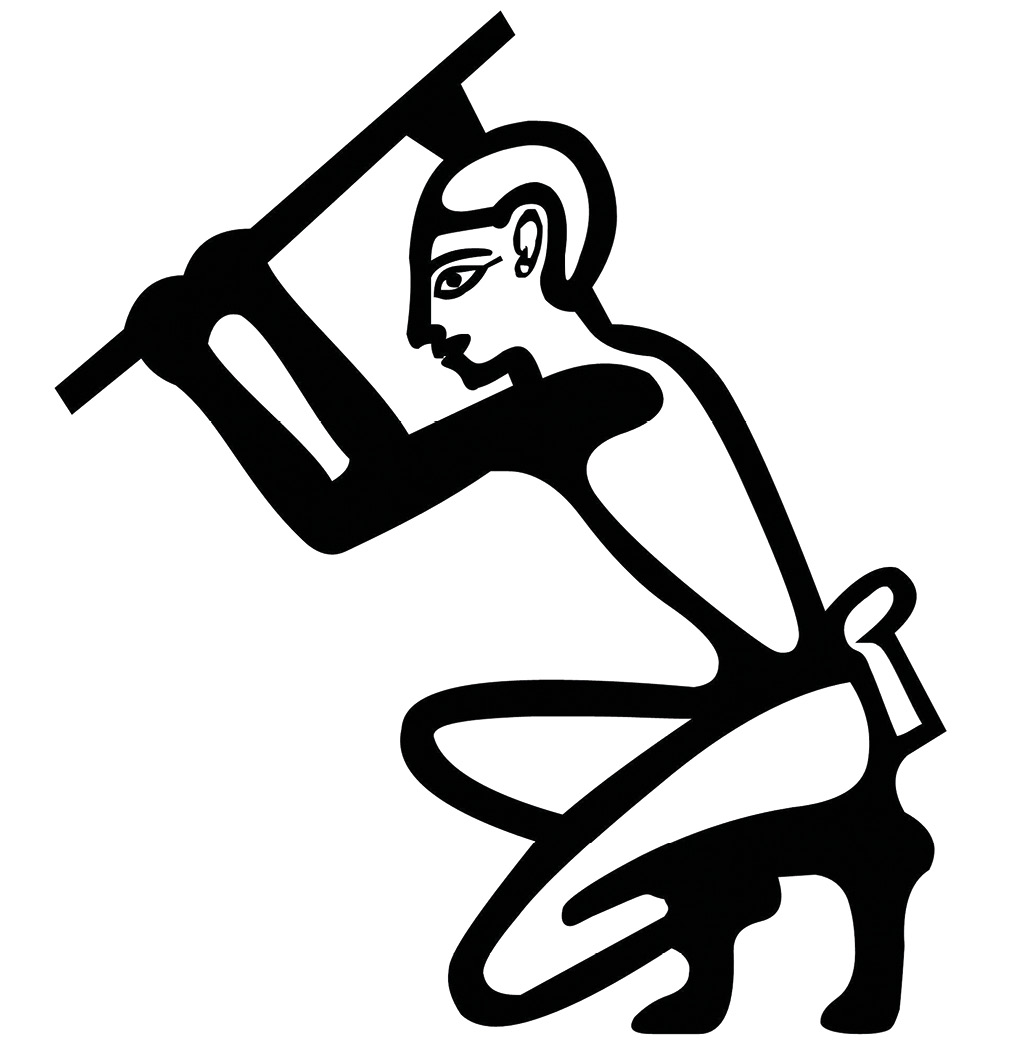
Hieroglyph A14*: a warrior slain by a blow from an axe.
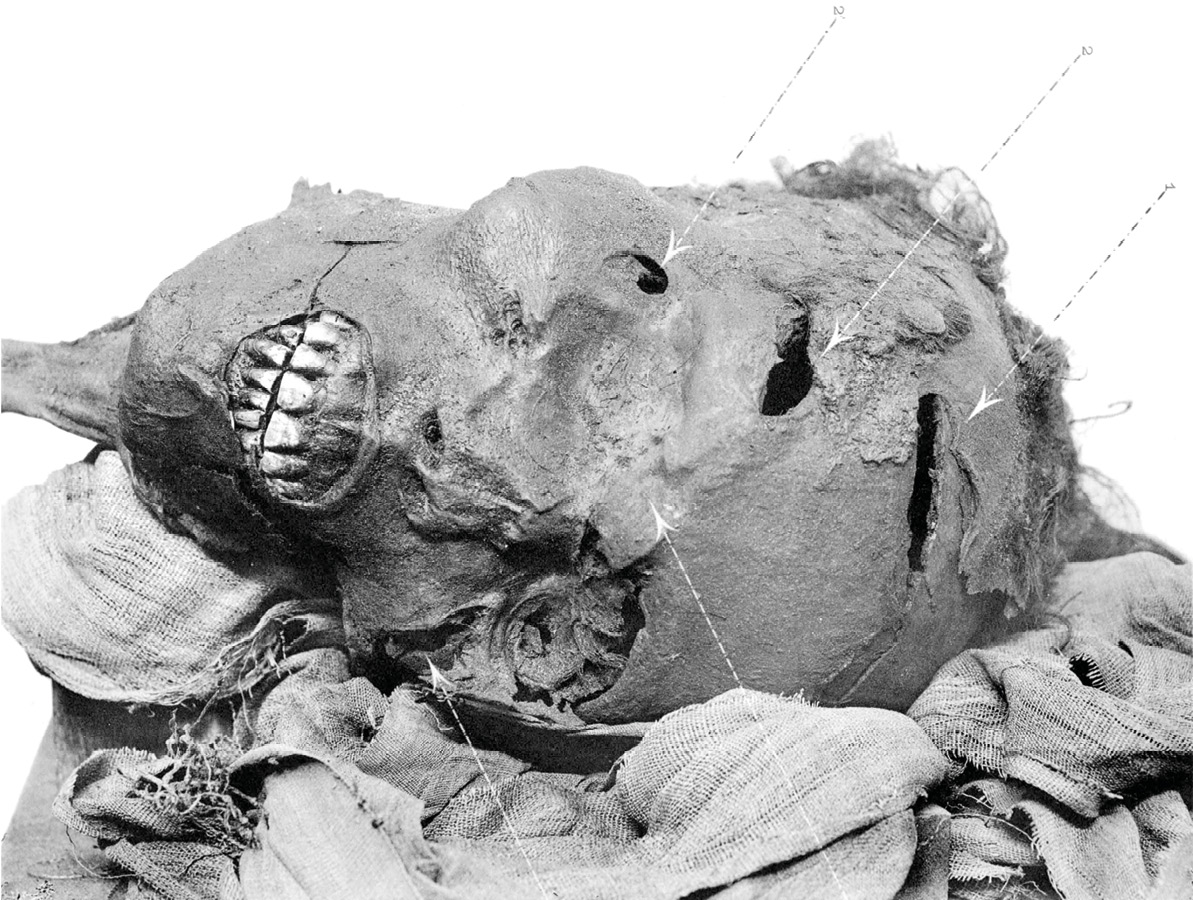
The weapon depicted is of the Asiatic type introduced to Egypt during the Second Intermediate Period, and one such axe, probably wielded by a Hyksos enemy, was responsible for the death in battle of Seqenenra Tao II. The wounds identified on the king’s body include an axe blow that had sliced deep into his cheek, fracturing his jaw, and another that had cut into his skull.
Ceremonial axes
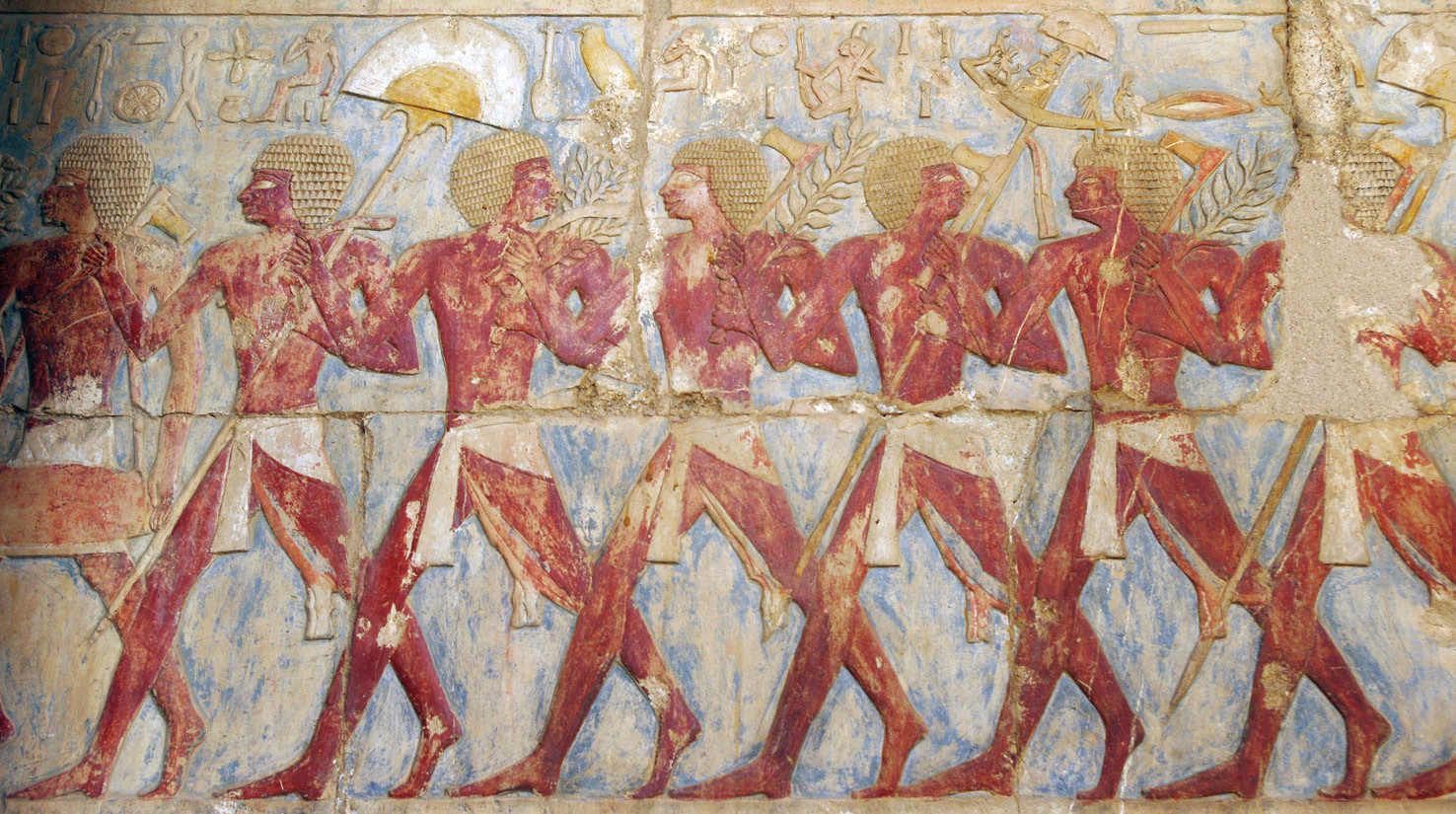
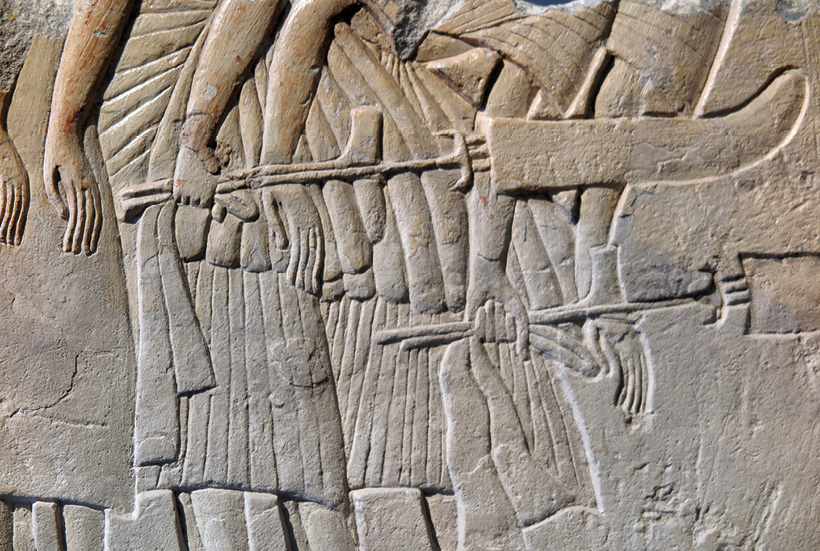
From the Eighteenth Dynasty, the Asiatic axe was the customary hand weapon of Egyptian soldiers, as carried by Hatshepsut’s honour guard at Deir el-Bahri.
It became a symbol of military rank or office, too, as illustrated at Saqqara, where senior military officials attending Horemheb’s investiture with the Gold of Honour are identified by the ceremonial axes they hold.
Examples of inscribed or decorative openwork blades may well fall into the category of emblematic rather than functional weapons.
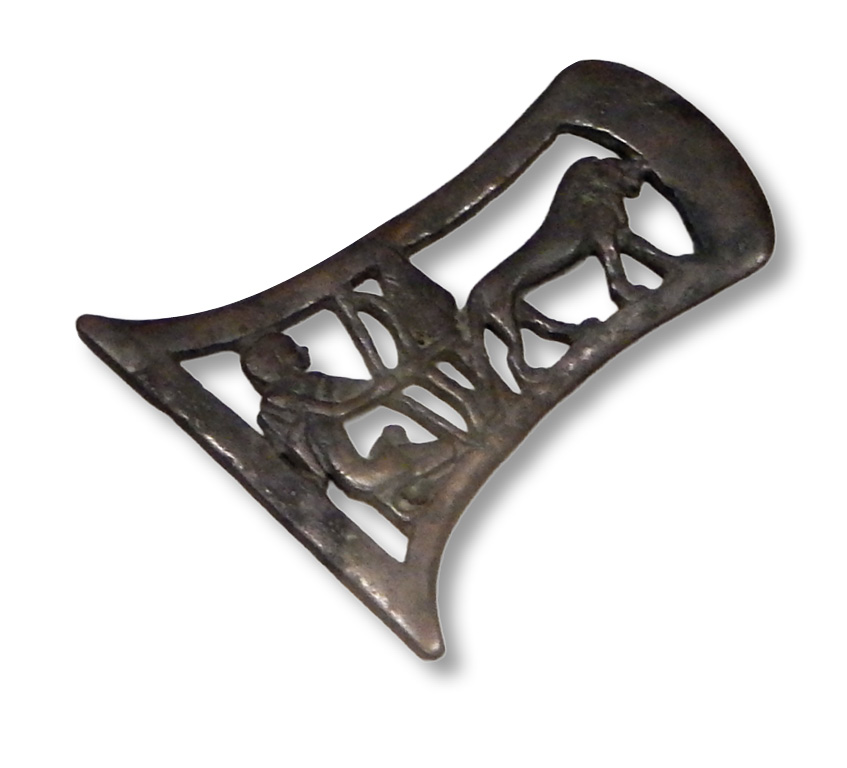
In the New Kingdom, kings established a tradition of awarding such weapons in recognition of military prowess or bravery. One of the earliest known examples of this custom is the golden battle axe found with the body of Seqenenra’s wife Ahhotep. The cedar shaft and copper blade are covered in gold foil, and inlaid decoration on the axe-head commemorates the victories of the queen’s son Ahmose, who liberated Egypt from more than a century of Hyksos occupation.
All images by Hilary Wilson (HW), except where otherwise attributed