Subscribe now for full access and no adverts
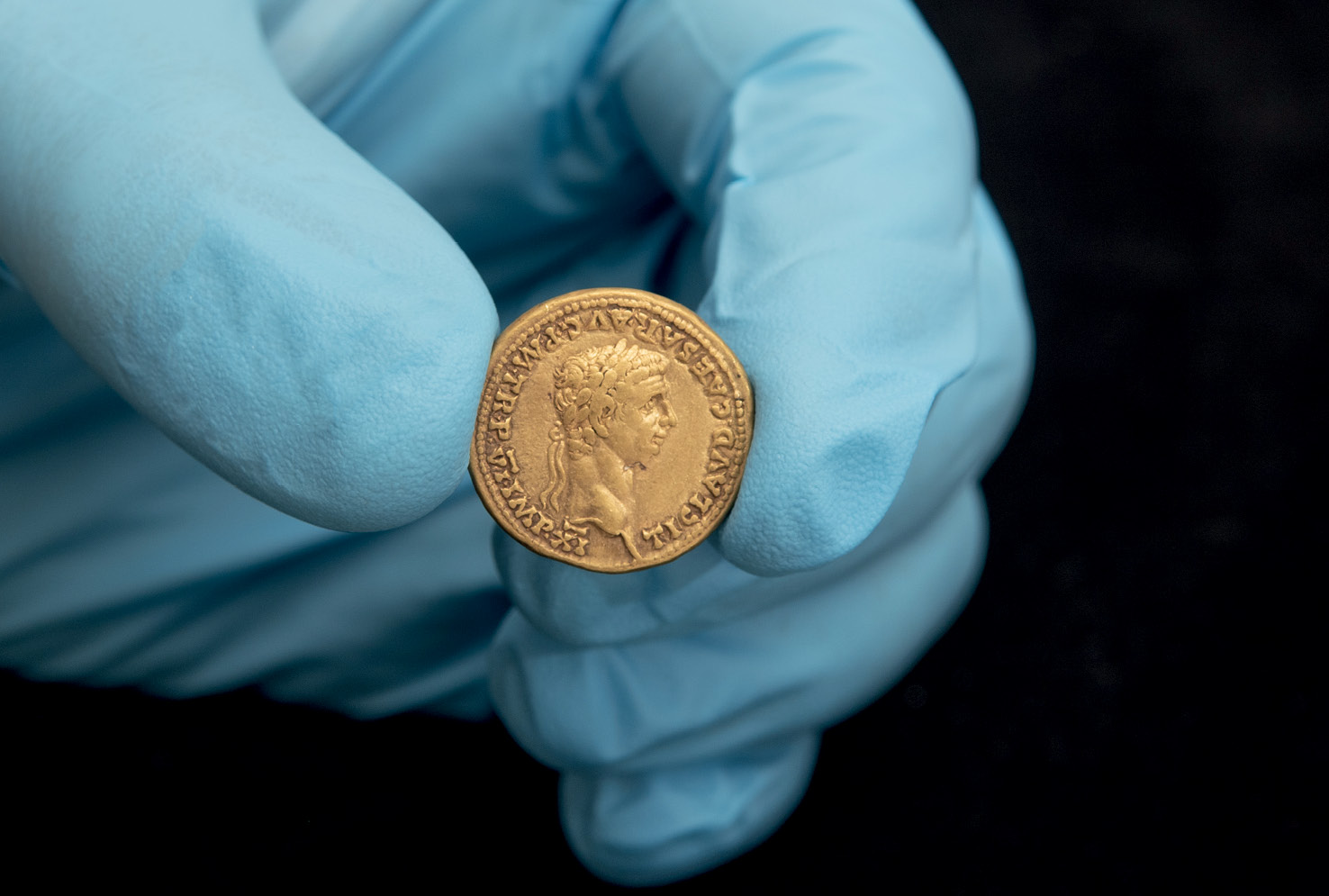
In October 2023, two metal-detectorists began searching a field in the Bunnik region of Utrecht province. On the face of it, their target was not a promising one for Roman-era finds. Although the wider region had been home to a significant military presence as part of the Lower German frontier or limes, the field in question was far removed from any known Roman-era sites. It was distinctly boggy, too, a quality that would have been just as apparent during antiquity, making the field quite unsuitable for ancient settlement or agriculture. Despite these shortcomings, prospecting by the detectorists produced a coin hoard that marks an extraordinary first for not only the Netherlands, but also continental Europe as a whole. The cache that they unearthed contained gold and silver Roman issues, alongside a collection of gold coins, known as staters, from Britain. These staters name the Iron Age king Cunobelin and were struck in his powerbase at Camulodunum, which is better known today as Colchester. This hybrid assemblage of Roman and British coins has only one close parallel, from Helmingham Hall in Suffolk. Both this eye-catching combination and the date of the latest coins in the hoard, AD 46-47, seemingly make a connection with the Roman conquest of Britain under the emperor Claudius irresistible.
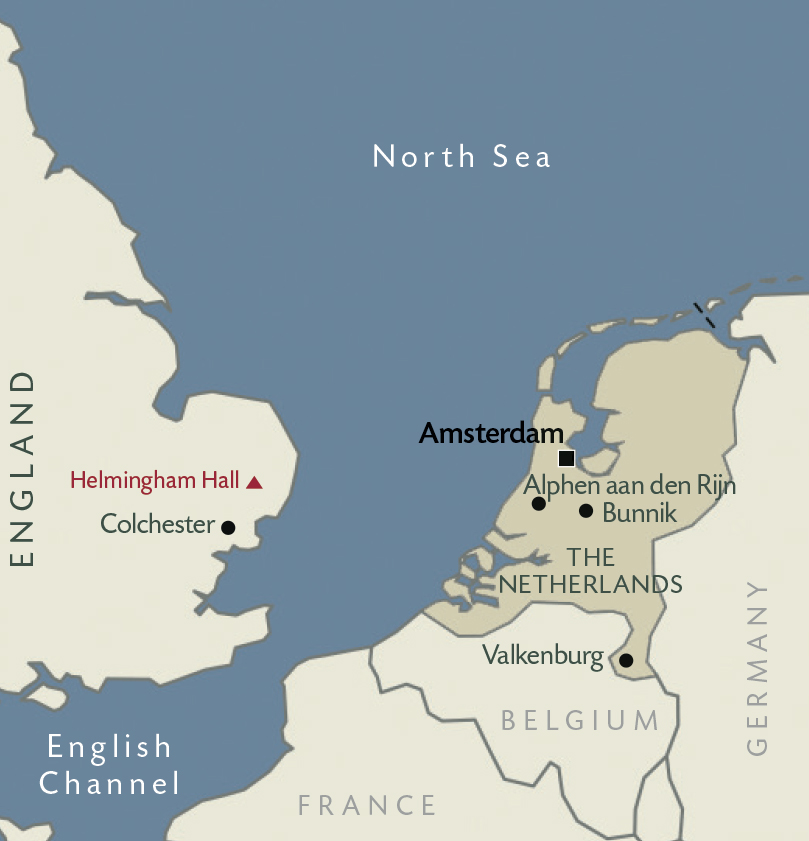
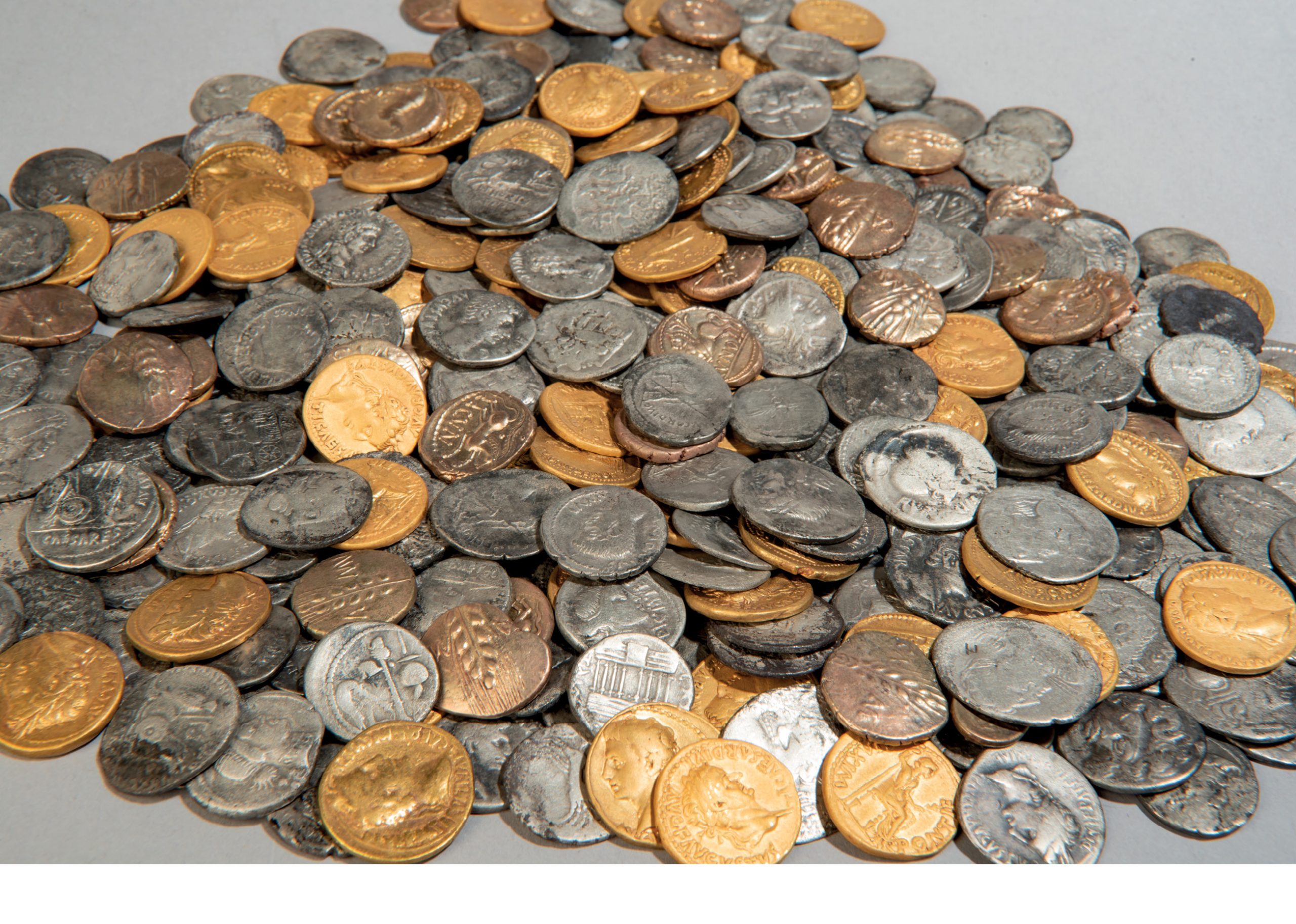
The initial tally recovered by the detectorists was 381 coins. After the find was formally reported to Landscape Heritage Utrecht’s Archaeology Hotline, a further 23 coins were found in the topsoil during subsequent archaeological fieldwork by the Dutch National Cultural Heritage Agency. The most likely explanation is that all the coins came from the same hoard, which had been deposited in a small pit, in a remote area that was otherwise devoid of archaeological features or finds. The contents of the hoard consisted of 288 silver coins, 72 gold aurei, and 44 of the British gold staters. At the time of deposition, the total value of these coins would have been almost 11 times the annual wage of a legionary soldier – a tidy sum by anyone’s reckoning. The coins were struck over a wide timespan, with the silver coinage dominated by issues from the Republican period, the oldest dating to 200 BC. A single coin minted under Juba I, king of Numidia from 60 BC to 46 BC, can also be counted among their number. The aurei run back as far as the emperor Augustus (27 BC-AD 14), and include examples minted by Tiberius (AD 14-38) and Claudius (AD 41-54), but not Claudius’ predecessor Caligula (AD 38-41). Although the British staters only name Cunobelin, who ruled over a group known as the Catuvellauni from roughly AD 5 to AD 40, it is believed that four of the coins were issued posthumously and incorporate symbols referencing his sons. What, then, can we learn from the presence of this singular assemblage in an otherwise archaeologically unremarkable corner of the Netherlands?
Caligula and Claudius
To understand the events that ultimately led to the deposition of the hoard, we must turn to the reign of the emperor Caligula. The ancient literature portrays him as an unpredictable leader with a fondness for wild schemes, and an interest in acquiring Britain. This reportedly culminated in an extraordinary episode when Caligula drew up his forces on the north coast of the continent opposite Britain, and then ordered his soldiers to gather seashells as spoils of his victory over Ocean. Given Caligula’s capricious character, it would be natural to suspect that this bizarre spectacle was the consequence of an imperial whim to invade Britain without undertaking sufficient preparatory work. The archaeology, though, tells a rather different story.
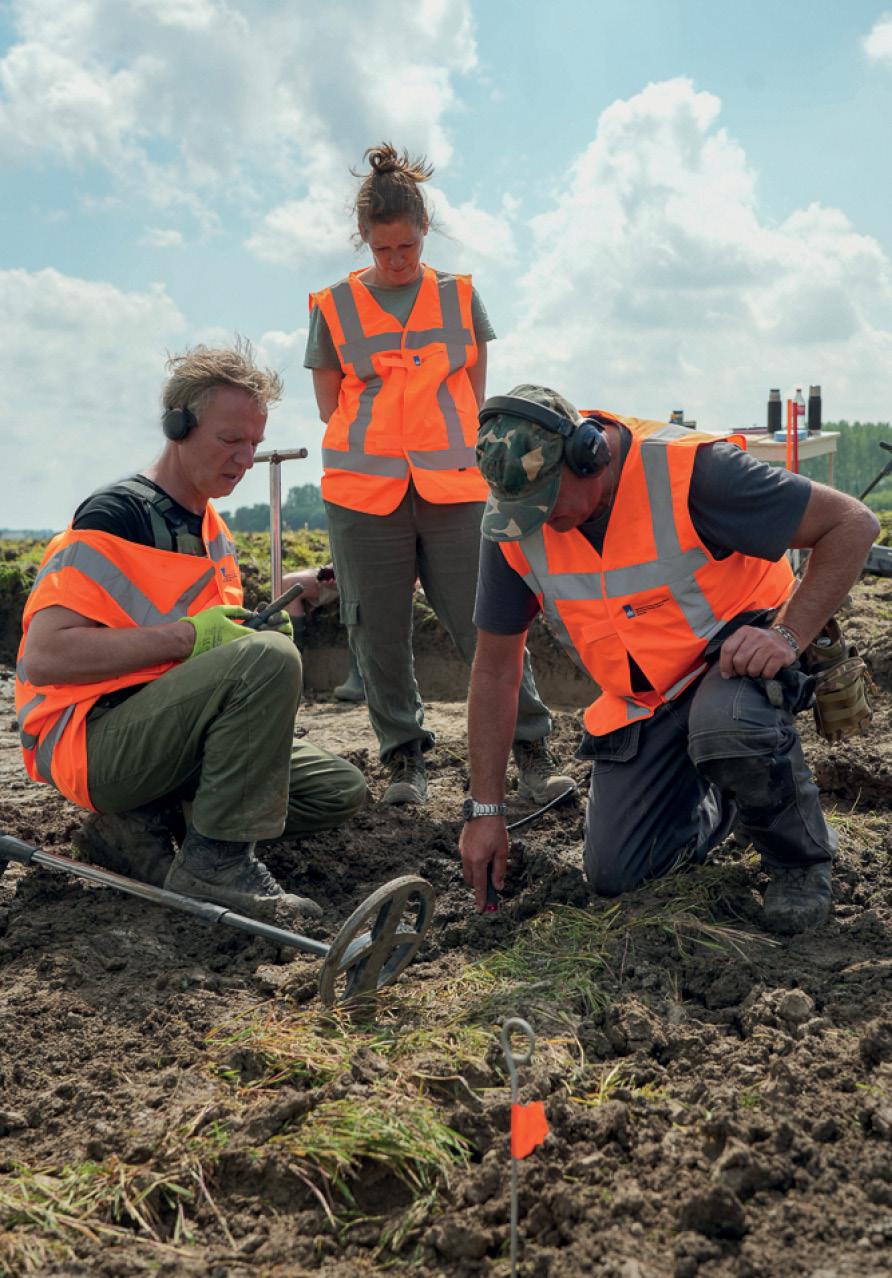
‘The significance of the Lower Rhine region to the Roman invasion of Britain is a relatively recent discovery,’ says Jasper de Bruin, Curator of the Roman Collection at the Rijksmuseum van Oudheden in Leiden (the Dutch National Museum of Antiquities), ‘which has only emerged over the last 25 years. It had long been appreciated that a conspicuous number of coins issued under Caligula had been found at many of the Roman forts in the area, even though these bases were generally thought to be later foundations. We know that in 41, after Caligula was murdered, his coins were taken out of circulation. Eventually, people started to think that the simplest explanation for the presence of so many coins was that they had been lost before being withdrawn from use – that is, during his reign. Then, 20 years ago, the small Roman fort of Alphen aan den Rijn was excavated and yielded dendrochronological dates of AD 40-41, showing that the wood for it came from trees felled under Caligula. We also have a new dendrochronological date from the legionary fortress at Valkenburg, which suggests it was built in AD 40. That fits with its Roman name – Praetorium Agrippinae – apparently referencing Caligula’s mother.’
‘On top of this, after the decision was taken to erase Caligula’s name following his death, a number of his coins were given a very specific new countermark that abbreviated the official title of the new emperor Claudius. The presence of lots of these countermarked coins in the Lower Rhine suggests that there were already plenty of people there – especially soldiers – during this period of transition. Now, the Rhine itself was not the edge of Roman control in the region at that time: there was another fort to the north at Velsen. So, why would there be a sudden need to build and man a line of forts creating a protective transport corridor behind it? We now tend to think that this new network of forts was initially set up by Caligula in preparation for the conquest of Britain. In the end, it was the emperor Claudius who was the beneficiary.’

Coins from the conquest
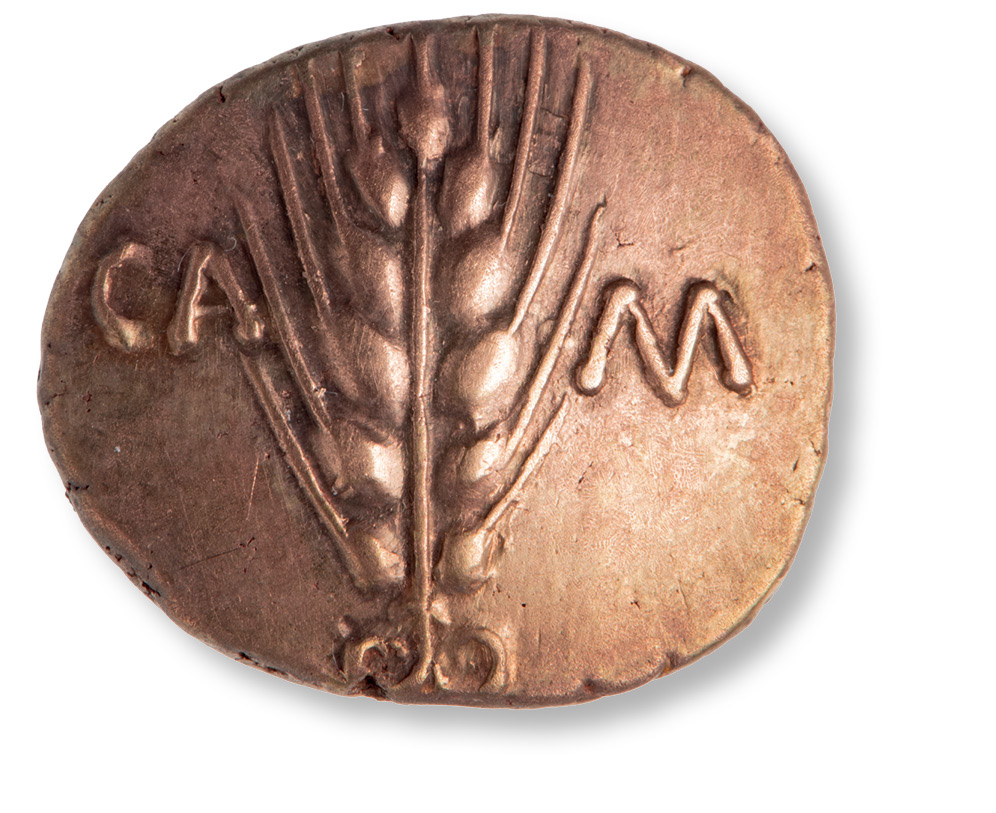
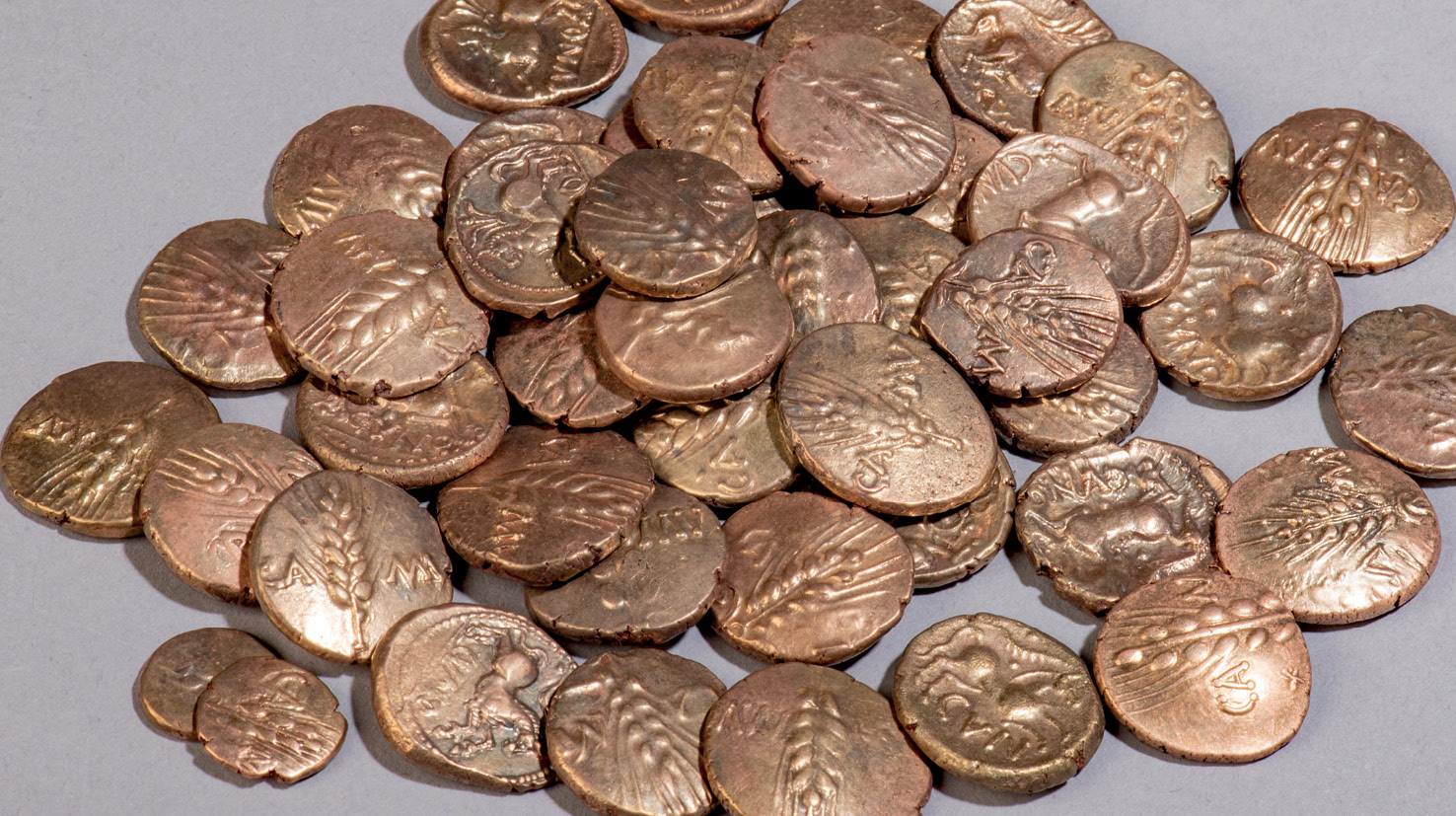
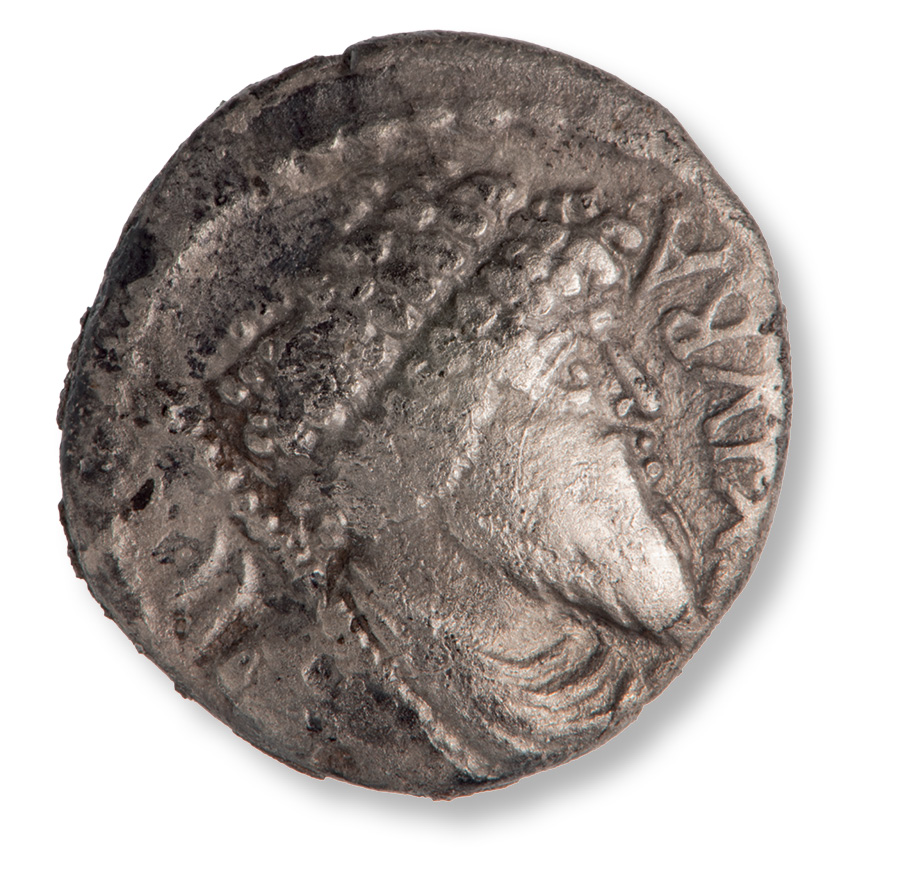
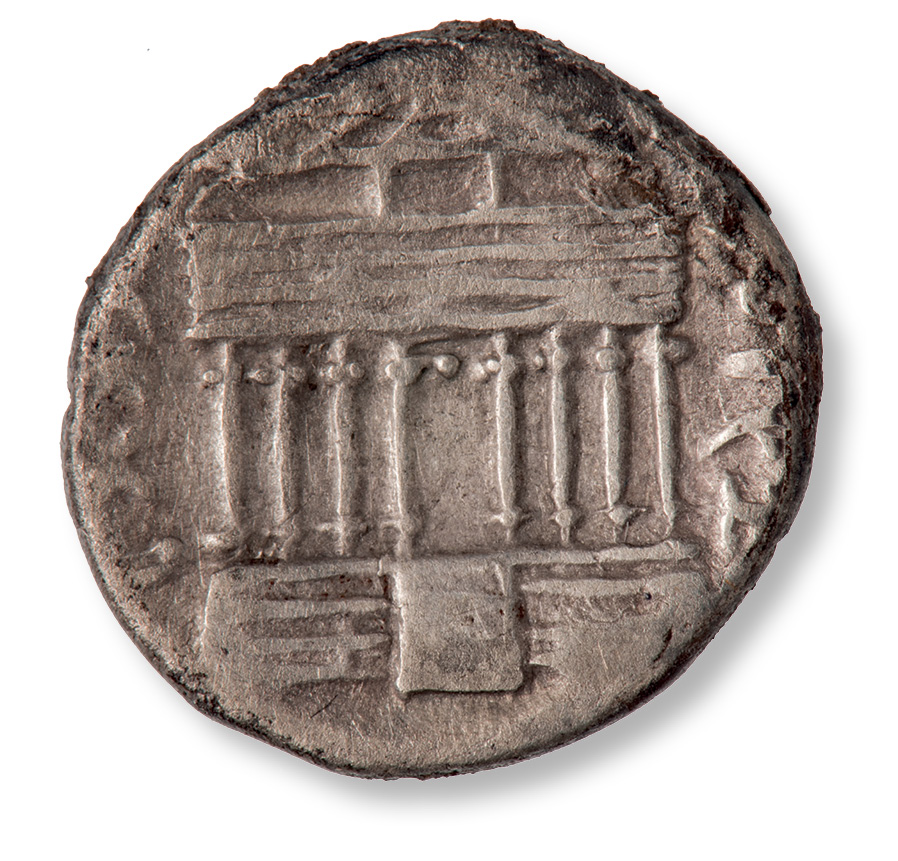
The presence of the British gold staters in the Bunnik hoard provides a clear link with Camulodunum, which was the main target of the initial phase of the Roman invasion. Indeed, Claudius famously travelled to Britain in order to oversee the capture of this key settlement. As the latest of the British coins appear to be posthumous issues naming Cunobelin, they would have been minted in about AD 43: the year of the invasion. There’s good reason to believe, then, that these coins represent the spoils of war. Indeed, they may even have been issued to the Roman soldiers present at Camulodunum as a formal donativum, which was a gift awarded after a successful campaign. A connection between the hoard and a person or people who had been on the ground in Britain fits with the nature of the silver Roman coinage, too. At first glance, the prevalence of issues dating back to the Republican period might seem an odd fit with conquest-era Britain. The invasion, though, was accompanied by an influx of much older silver Roman coinage into Britain, making the Bunnik set a natural fit with the contemporary coin profile. Seen this way, both the Camulodunum staters and the Roman denarii point to a connection with the early conquest period.
An additional factor in favour of a direct link with the Roman invasion is the striking similarity in the composition of the hoard found at Helmingham Hall, in Britain, in 2019. Both hoards contain a mix of gold coins of Cunobelin, gold Roman aurei, and silver Roman denarii. Indeed, the Helmingham Hall find boasts an even larger number of Republican silver coins than was unearthed at Bunnik. Even more curiously, both hoards also contain a single silver coin of Juba I of Numidia. It has been wondered if this might hint at their owners having a North African connection of some form. Either way, the simplest explanation is that the coins in the Bunnik hoard were assembled by a person or group who were in Britain during the initial conquest phase, before travelling to the Netherlands sometime around AD 47. It is entirely possible that this brought the owner(s) back to the area where they had embarked on the invasion four years earlier. Indeed, two of the aurei of Claudius were struck from the same die, an unusual occurrence in a hoard, which would be neatly explained if they both came from a single batch of military pay.
There’s good reason to believe that the British gold staters represent the spoils of war.
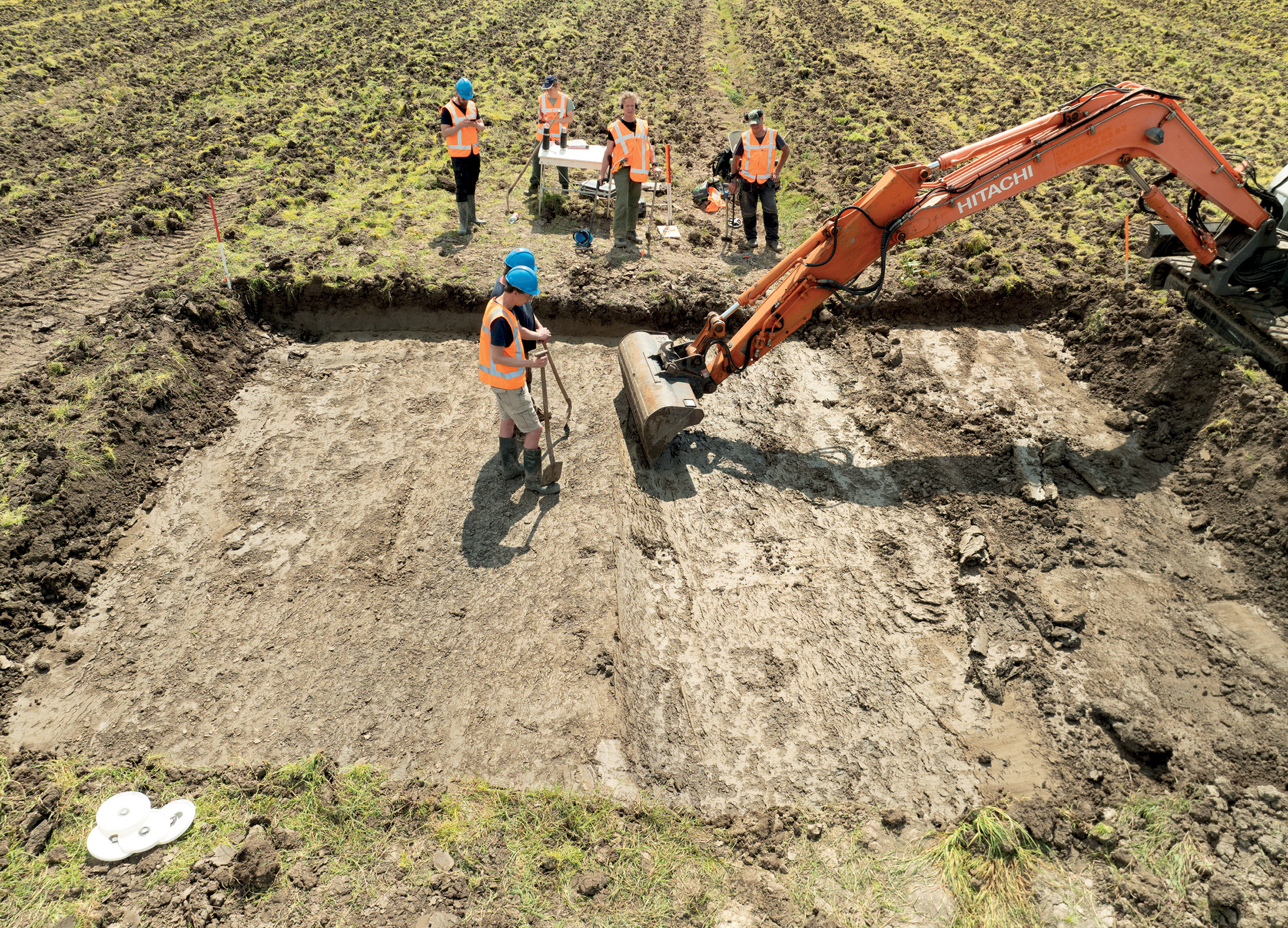
One thing we can be certain of is that the Bunnik hoard was deliberately deposited, rather than accidently lost in a costly calamity. Excavation of the find spot indicated that the coins were probably wrapped in a cloth or leather pouch when they were deposited in a shallow pit. ‘This was a very low part of the landscape,’ says Jasper. ‘The excavation provided some information about its contemporary nature. We know that the area was not wooded – it was quite open, and also boggy. Getting there would have involved genuine effort, because it was necessary to cross several streams, which suggests that someone made the journey in order to bury the coins. I think there are really only two possible motives for this. One is to hide the coins, either because they were stolen goods, or because the owner was worried that they would be stolen. If you’re concerned about someone taking your money, though, it seems safer to keep an eye on it, and not risk never being able to find it again. So, I favour this being some kind of sacrificial or ritual act. We cannot prove that, but the hoard was found near a stream, which is exactly the sort of location where we tend to make exceptional finds that defy easy explanation.’
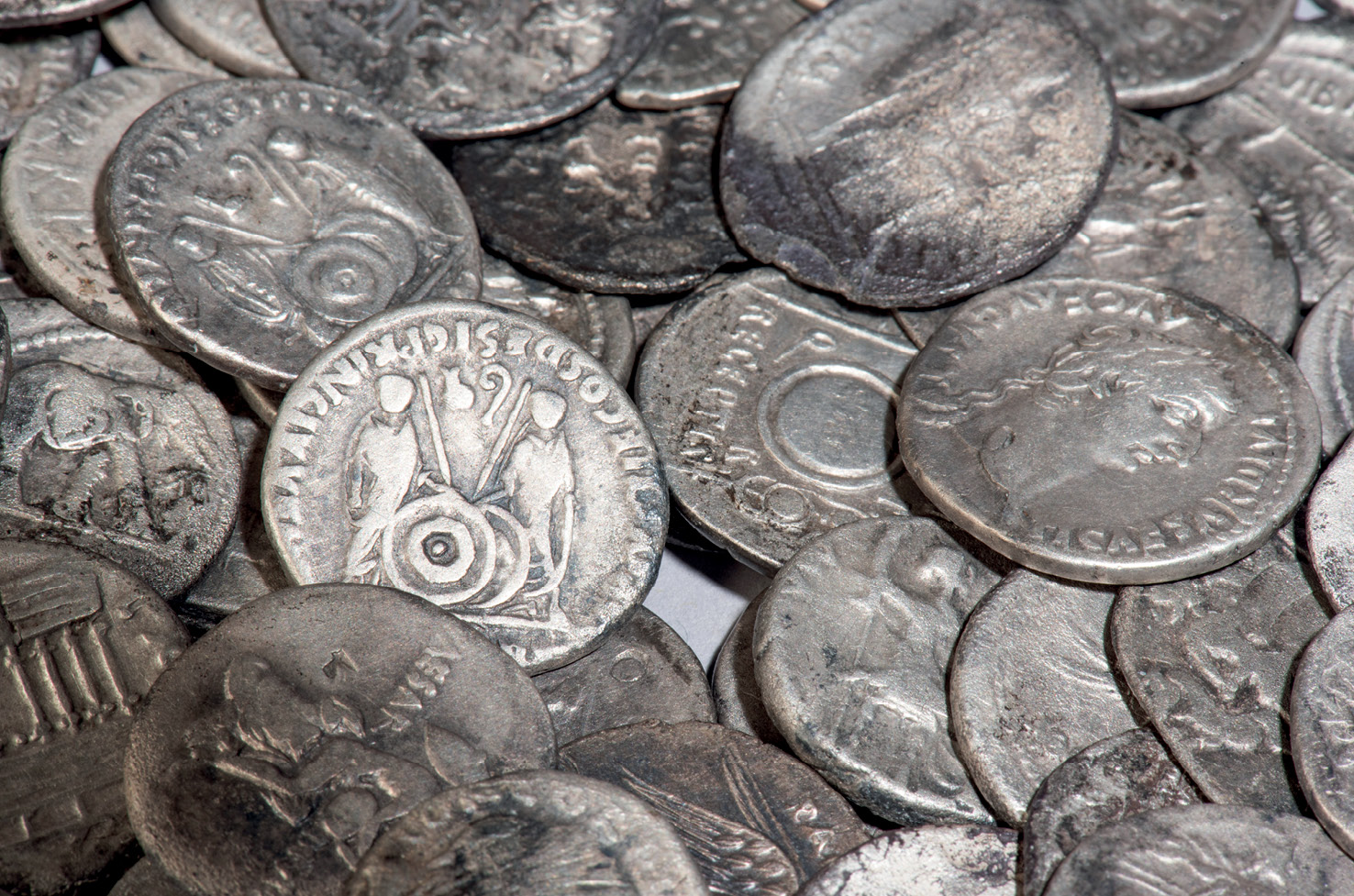
‘I think we should look, too, at whether there was any kind of deliberate selection of these coins. For example, we have one or two aurei from every year of the reign of the emperor Claudius up to AD 47, except for 43: the invasion year. Is that a deliberate choice, or did Claudius just not mint coins in 43? This is something that I am asking the numismatic specialists, and I think these sorts of questions are the way forwards if we want to understand this find. We also need to look beyond just the basic composition of the hoard in terms of what types of coins are present. There are odd markings or graffiti on some of these coins, for example, which were added after they had been minted. This might have happened when they were used, or perhaps it was when they were deposited. Maybe it’s like some kind of code. Perhaps there’s a message in these coins that we have not translated yet. I think that might go for the hoard in England as well.’
Brooches from Britain
While gold staters of Cunobelin are notably scarce in the Netherlands – only one other example is known, which was found back in the 16th century and had probably been transformed into a pendant – the coins in the Bunnik hoard are not the only artefacts from the Netherlands that can be linked to the early years of the Roman occupation of Britain. The excavations in Alphen aan den Rijn, for example, revealed half a dozen or so British brooches of the Colchester type, which date to before AD 70. One of them also had a small chain attached to it, suggesting that they were worn in pairs, something that is normally associated with women. This raises the question of whether these British brooches were being worn by British people, who were perhaps brought in as slaves or prisoners. Another possibility is a link with Roman military recruitment or conscription, as we know that auxiliary units originally raised in Britain later went on to be based in the Lower Rhine region.

Despite the exceptional nature of the Bunnik hoard, it slots neatly into a developing picture of material from the conquest period in Britain appearing in the Netherlands, emphasising the close links between these places. The apparent deposition date of AD 46-47 presents some tantalising possibilities as well. On the one hand, it coincides with a notable changing of the guard in Britain, when Claudius’ first governor Aulus Plautius handed the work of subduing the island to his successor. On the other, this period is also renowned for the campaigns of the Roman general Corbulo in the northern part of the Netherlands. He managed to advance so far that the emperor Claudius was ultimately forced to order him to return, much to Corbulo’s chagrin. This left him in charge of an army with nothing to do, so in AD 47 he set his soldiers to work building a canal. Could these events, too, be linked in some way with the coin hoard? One possibility is that Corbulo’s campaign was partly motivated by fears that an enemy in the northern Netherlands could threaten a supply line that was essential to sustain Roman fighting in Britain. If so, perhaps some of the forces in Britain were also withdrawn from the island to counter this new threat, and made sure to bring their booty with them.
Further Information: The original 381 coins found from the hoard are now on permanent display at the Rijksmuseum van Oudheden in Leiden, in ‘The Netherlands in Roman Times’ gallery. The partners in the project also include Landscape Heritage Utrecht’s Archaeology Hotline and the Dutch National Cultural Heritage Agency. CWA is grateful to Jasper de Bruin.