Subscribe now for full access and no adverts
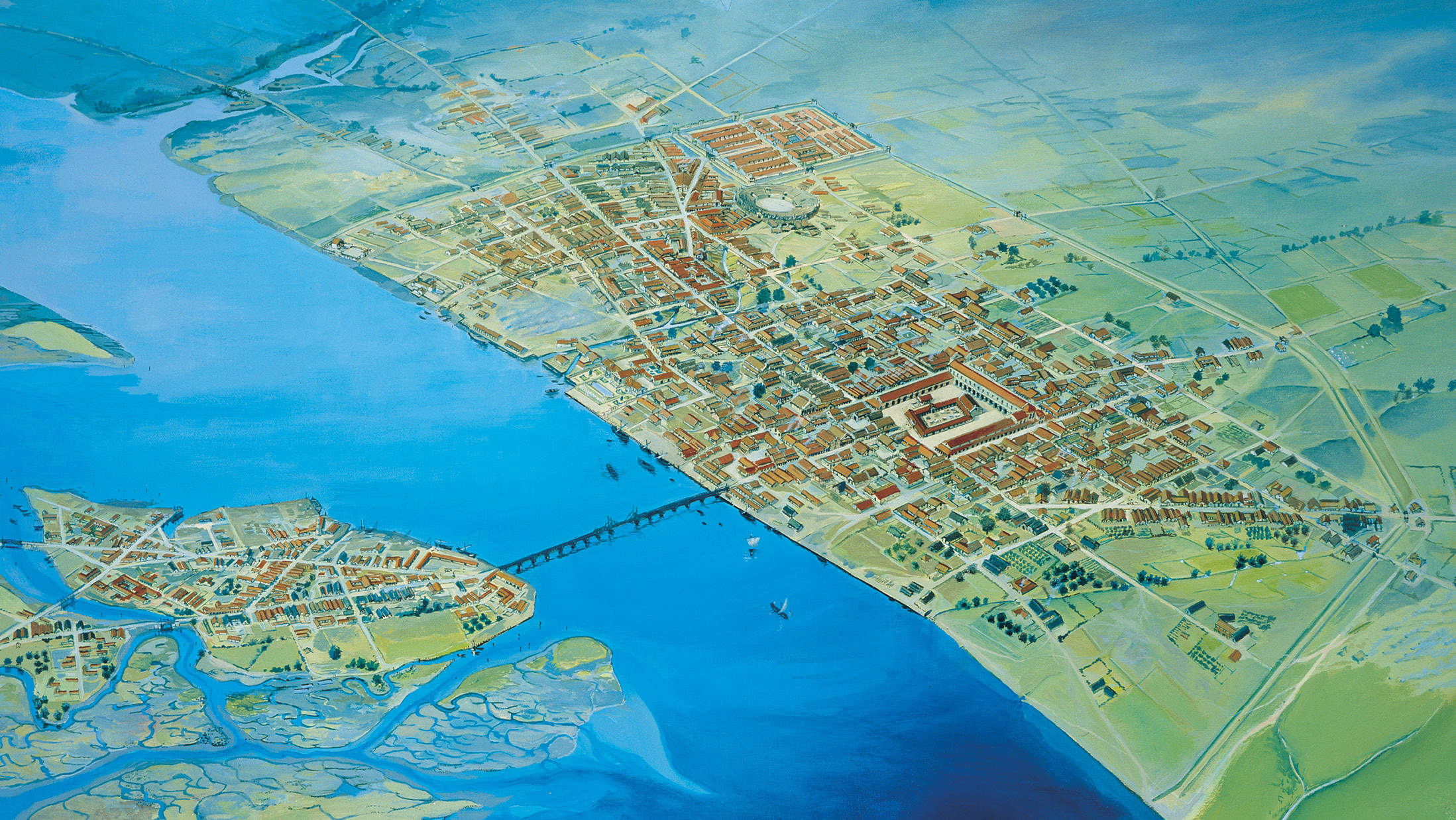
The City of London is renowned as the capital’s financial district; a landscape of towering buildings and lucrative deals. Recently, however, archaeologists have uncovered evidence of another imposing structure that oversaw commercial activity in the same area almost 2,000 years ago: part of the basilica that once soared above London’s first Roman forum. This hall would have been the centre of political, judicial, and financial activities within the settlement: the seat of local government, where criminal and property cases were heard, disputes were settled, and Londinium’s administration was based. Outside, the surrounding forum would have been a bustling meeting place thronged with shoppers, merchants, and the crowds that periodically came together for festivals and other religious events.
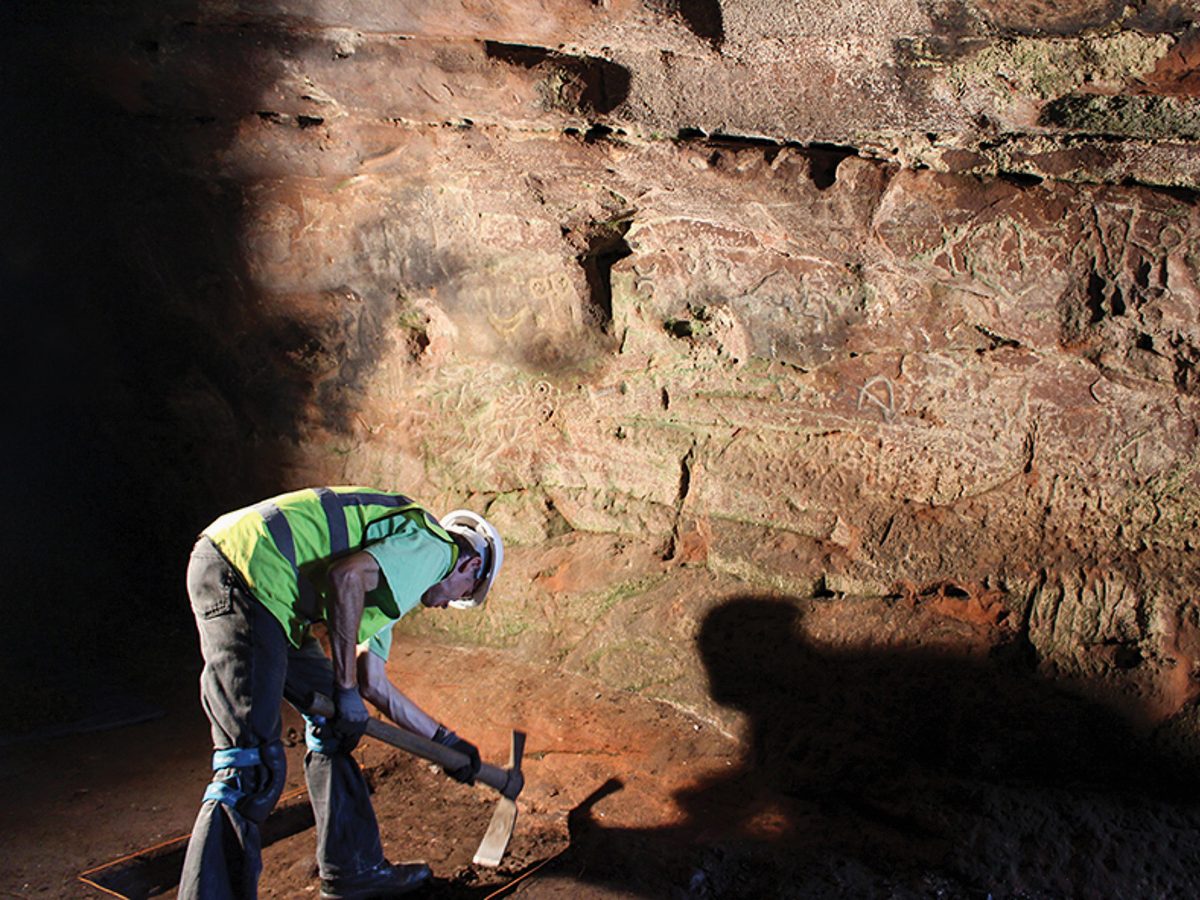
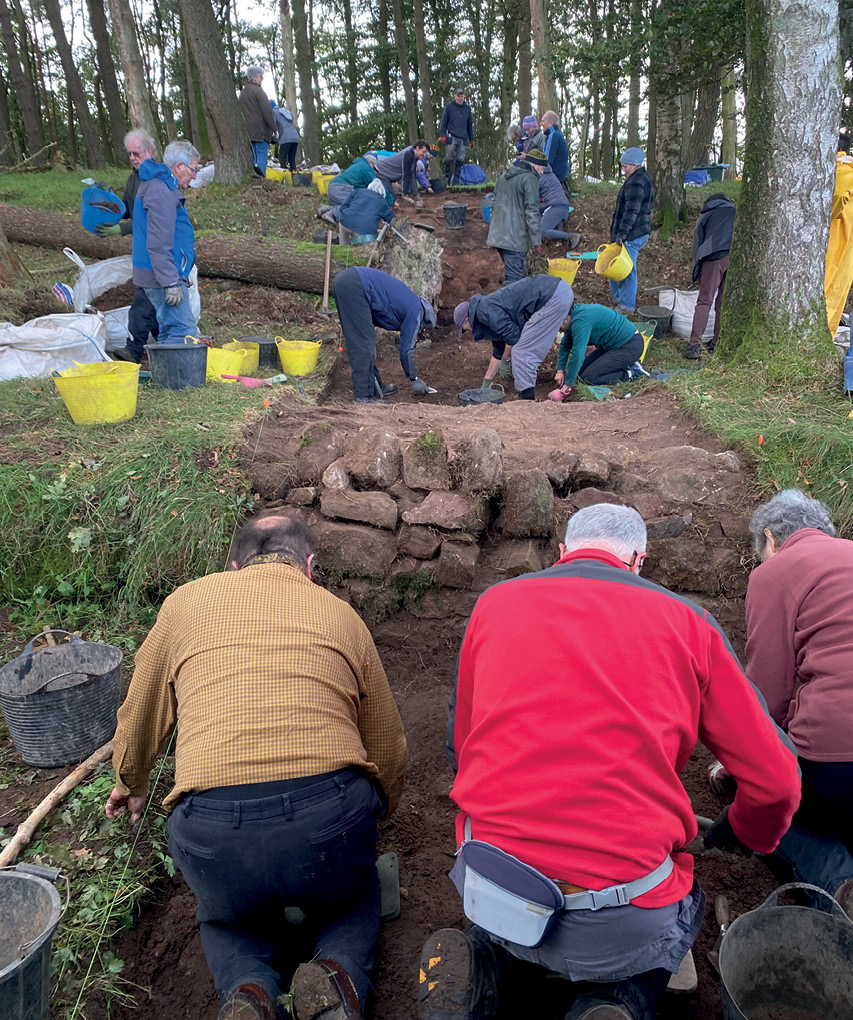
Now, echoes of this important site have emerged during pre-development excavations by MOLA archaeologists, in the basement of an eight-storey office block on Gracechurch Street, next to Leadenhall Market. Thanks to decades of previous research, it was already known that the tower stood over part of the basilica’s footprint – but rather less certain was how much of its masonry was still in situ. ‘The last time that these remains had been seen was in 1934, when the current building was constructed, though at the time it was not known that they belonged to the basilica,’ said Sophie Jackson, Director of Development at MOLA. ‘There have been various adaptations on the site since then, though, so we didn’t know how much had survived and how chopped about it would be.’
The team were therefore ‘very pleasantly surprised’, Sophie said, when their trial trenches revealed sections of Roman foundations and walls. ‘Working in one room of the basement, we found a chunk some 4-to-5m long, and another test pit located two rooms to the left revealed another piece, suggesting a stretch continuing for 10m,’ she said. Thought to represent part of the basilica’s northern end, the foundations were impressively proportioned, measuring 1m wide and up to 4m deep – clearly designed to support a very large structure. On top of these, neat rows of masonry represented the remains of equally substantial walls, constructed from a distinctive mix of flint, ragstone, and Roman tile. Their dimensions also testify to the scale of the long-vanished basilica – but what else do these discoveries add to our understanding?
Building the basilica
While we do not know exactly when the basilica was built, it is thought to have been constructed around a generation after the foundation of Roman London, probably during the governorship of Agricola (AD 78-84). Thanks to numerous archaeological excavations which have picked out portions of its footprint, we know that the classically proportioned hall measured some 40m long by 20m wide, set within a forum that covered an area roughly the size of a football pitch. As one of London’s first tall buildings, the basilica would have been like nothing that local British communities had seen before, and although the structure has long-since been reduced to its foundations, surviving remains paint a vivid picture of the effort and expense that evidently went into its construction.

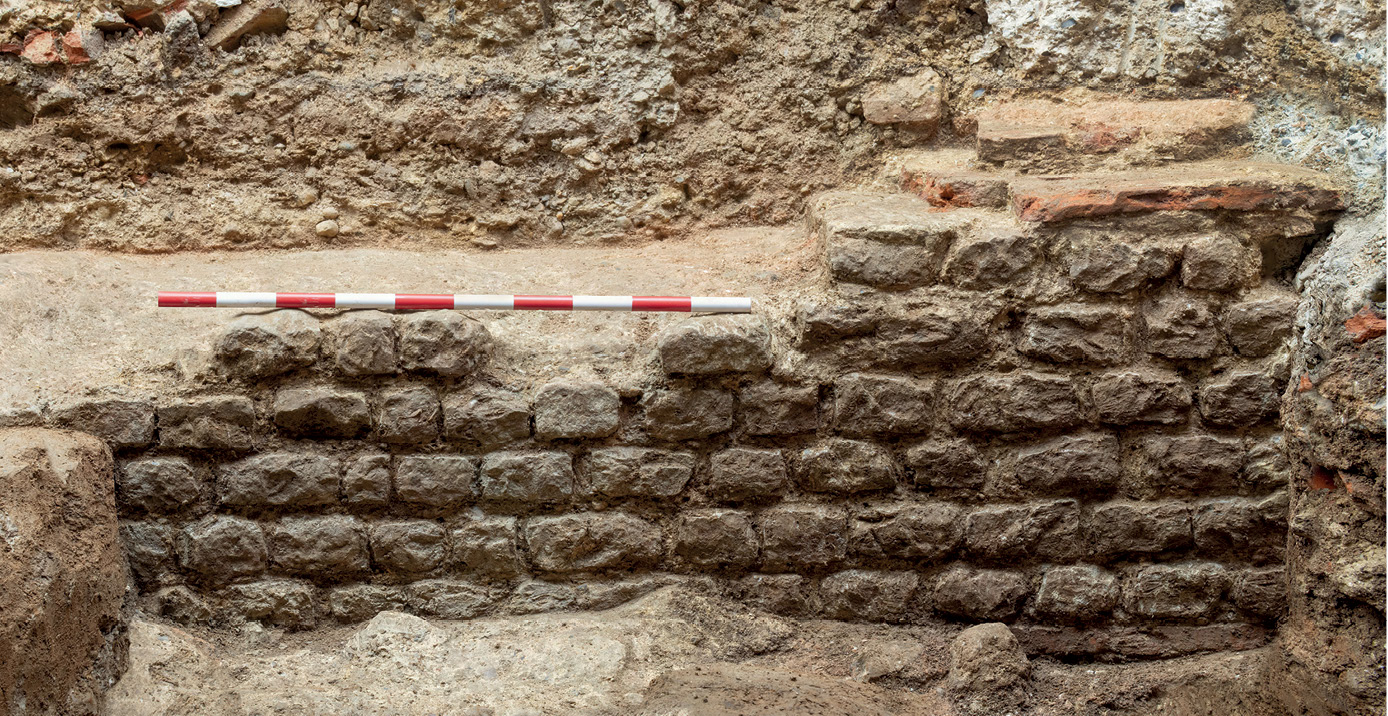
In order to build the basilica, labourers first dug massive foundation trenches, and then filled them with freshly quarried flint and mortar. On top of this they created a 1.5m-tall podium, raising the hall – which already crowned a natural high point today known as Cornhill – even further above its surroundings. From the size of its foundations, we can extrapolate a two-storey building standing as much as 12m (39ft) tall: a dominant feature of the London landscape, representing a conspicuous investment of time, money, and resources. Within just 10-to-15 years, however, this monumental building had evidently fallen from favour, perhaps outstripped by the growing demands of a flourishing town.
In c.AD 100, construction of an enormous new basilica, five times larger than its predecessor, began on the same spot. It is thought that the original hall remained in use while its replacement was being built but, in around AD 120, with the new facilities completed, the smaller basilica was systematically demolished. Its replacement was one of the largest Roman buildings north of the Alps (CA 59), bigger than St Paul’s Cathedral and set in a forum the size of Trafalgar Square.
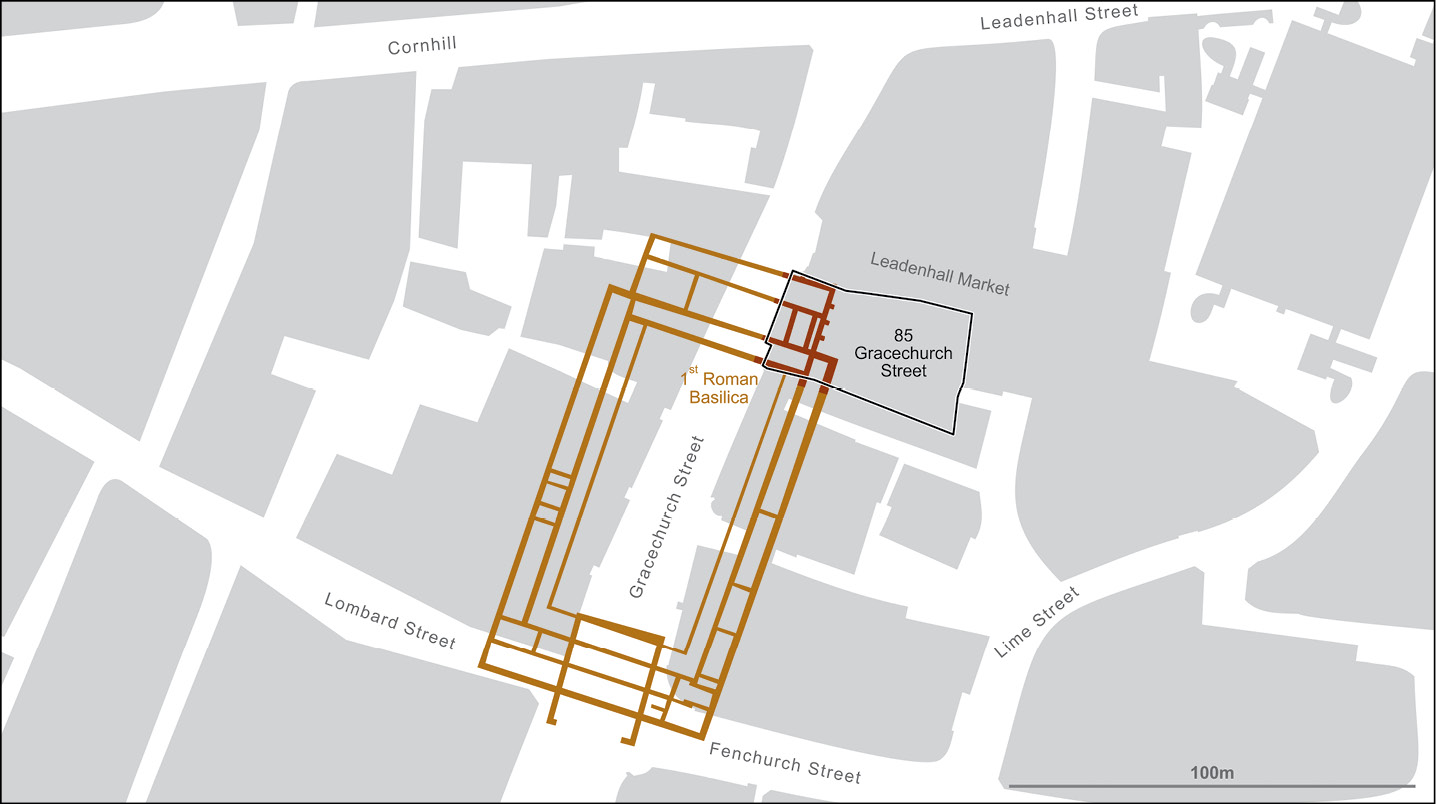
Over time, all memory of the earlier hall whose footprint lay buried beneath this grand new installation was lost to history. When Guildhall Museum archaeologist Frank Cottrill uncovered traces of the basilica in the 1930s, he was familiar with London’s large forum, but did not know that there had been an earlier incarnation. Crucial clues emerged in 1968, however, during excavations by Brian Philp and the Council for Kentish Archaeology (CA 19 and 377), and extensive work by Peter Marsden has proved vital in piecing the map of Roman London back together (CA 333). Thanks to decades of painstaking research, the location and layout of the first basilica and forum are now well-understood. What have MOLA’s finds added to this picture?
According to Peter Marsden’s plan, the basilica remains underlying 85 Gracechurch Street would have been at the ‘business end’ of the building, Sophie said, where a key area called the tribunal would have been located. This was a raised platform where magistrates, political leaders, and important officials would have presided over urban issues and adjudicated legal disputes. ‘This is one of the most significant discoveries made in the City in recent years. It’s like discovering the Speaker’s Chair and chamber of the House of Commons, 2,000 years into the future,’ Sophie commented.

Revisiting the Romans
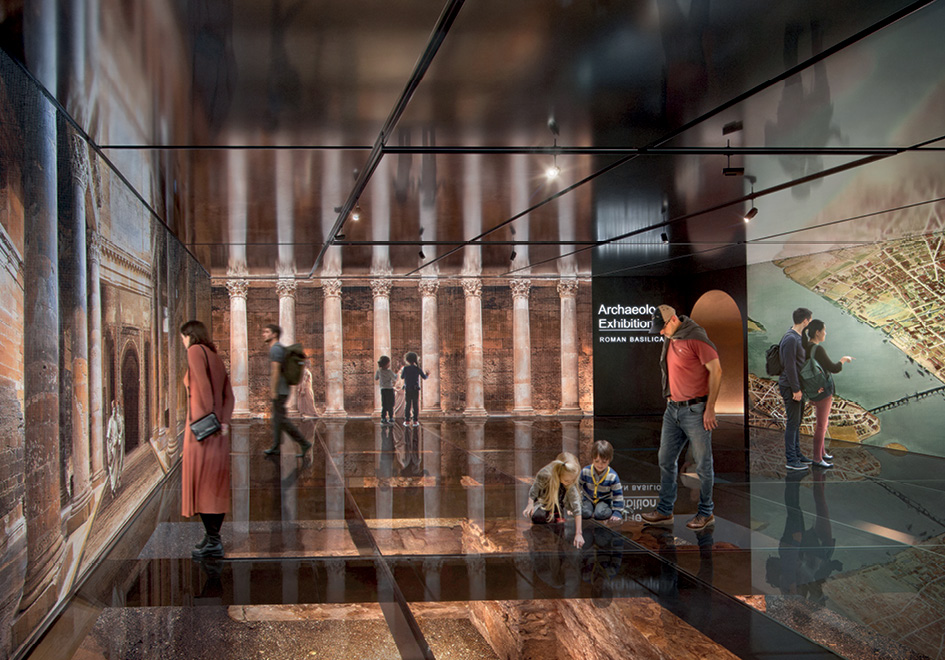
Just as the basilica and forum would have once thronged with people, it is hoped that modern visitors may eventually be able to walk in Roman footsteps on this spot. Following MOLA’s discoveries, an amended planning application has been submitted (with the enthusiastic support of the developer) to include the creation of a free, immersive experience incorporating the Roman remains into a new public exhibition and event space, in partnership with London Museum (formerly Museum of London).
If the planning application is approved, this will not only mean a new visitor attraction for London, but the opportunity for further MOLA excavations on the site, which they hope will reveal more information about how and when the original basilica was constructed, as well as clues to its appearance. ‘It’s tantalising,’ Sophie said. ‘We know that the Romans deliberately demolished the first basilica in the early 2nd century, and we assume that they would have taken its building materials and reused them elsewhere. They didn’t bother digging out the foundations, though, and hopefully they were not comprehensive in their clean-up. Perhaps we might find rubbish pits containing materials from the original basilica – painted wall plaster, marble veneers – that could give us a better understanding of how its interior looked.’
As well as aesthetic details, Sophie added, future investigations might also yield dating evidence that could help to answer questions about who commissioned the building (was it Agricola, or did the orders come directly from Rome?), which could shed light on the status of London at that time. The original basilica was built around 15 years after the conflagration of the Boudican revolt, and its construction came at around the same time as London’s first wooden amphitheatre, the Huggin Hill baths, and other significant public buildings, Sophie said. Might this indicate an official commitment to the success of the settlement and the wider province – or does the relatively modest size of the basilica, compared to its towering successor, suggest that authorities were still hedging their bets?
If plans are approved, the new visitor experience is expected to open in 2029/2030. It will join a steadily expanding map of areas of Roman London now preserved in museums, including the amphitheatre remains beneath the Guildhall (CA 137, 109, and 331), the section of city wall and bastion at Vine Street (CA 401), and the Mithraeum (CA 334), as well as sites that are occasionally accessible via special tours, such as the Billingsgate Bathhouse, and the western gate of Cripplegate fort. Gradually, a long-lost landscape is coming to light once more.