Subscribe now for full access and no adverts
Standing at the foot of the Cotswold escarpment, the village of Broadway has long been celebrated as one of England’s most picturesque settlements. Often described as the ‘Jewel of the Cotswolds’, its High Street is lined with honey-coloured limestone buildings, historic coaching inns, and galleries that attract visitors from across the world. Few of these visitors would imagine, though, that beneath the quiet fields on the village’s eastern edge lies one of the most complex archaeological landscapes yet discovered in Worcestershire.
Between the summers of 2024 and 2025, Worcestershire Archaeology’s excavations at Milestone Ground revealed a remarkable sequence of human activity stretching back c.8,000 years. From the earliest hunter-gatherers who moved through the landscape after the end of the last Ice Age, to Roman farmers and Saxon craftspeople, generations returned to this place again and again. The discoveries have transformed our understanding of Broadway’s past, revealing a landscape shaped by human lives for millennia. The story of this discovery, however, did not begin with the modern excavation. Instead, its rediscovery began almost a century earlier.

Rediscovering the landscape
In the 1930s, gravel extraction began in the fields between Childswickham Road and Station Road – and, as quarrying progressed, workers began to uncover unexpected remains. Human skeletons appeared in the gravel, along with fragments of pottery and other artefacts, while the discovery of large ditches cut into the natural geology hinted at ancient occupation of the landscape. News of these finds soon reached local archaeologists, who realised that important evidence was being uncovered – and potentially destroyed – by the ongoing extraction. Among those who responded was Catherine Nancy Smith (1901-1953; she was usually known by her middle name). At a time when archaeology was still largely dominated by men and women were often discouraged from its more ‘hands-on’ aspects, Smith took an active role in investigating the exposed remains, leading excavations and working on a voluntary basis to carefully uncover and record graves and associated features before they were lost to further quarrying. Her observations confirmed that the site was home to a Roman cemetery, as well as showing evidence of nearby settlement activity, and these discoveries were published in 1946 through the Worcestershire Archaeological Society, ensuring that this aspect of Broadway’s history was preserved for posterity.
For decades after this, the fields of Milestone Ground appeared quiet and unremarkable. Yet hints of the buried archaeology continued to emerge. Aerial photography revealed faint patterns appearing across the fields during dry summers: cropmarks tracing the outlines of ditches and pits. These extended over an area of some 2.3ha (5.7 acres), far beyond the outline of the old quarry, showing that the remains uncovered during the 1930s represented only part of a much larger archaeological landscape.

Further clues emerged in 2005, when members of the Worcestershire Young Archaeologists’ Club carried out fieldwalking in the area. Their finds included Mesolithic flints, indicating that human activity on the site stretched back thousands of years before the Roman occupation that had already been documented. Surveys in 2014 provided evidence of both Iron Age and Roman activity – and a couple of years ago archaeologists were provided with the opportunity to explore this underlying landscape in greater detail, when development proposals were put forward for the site.
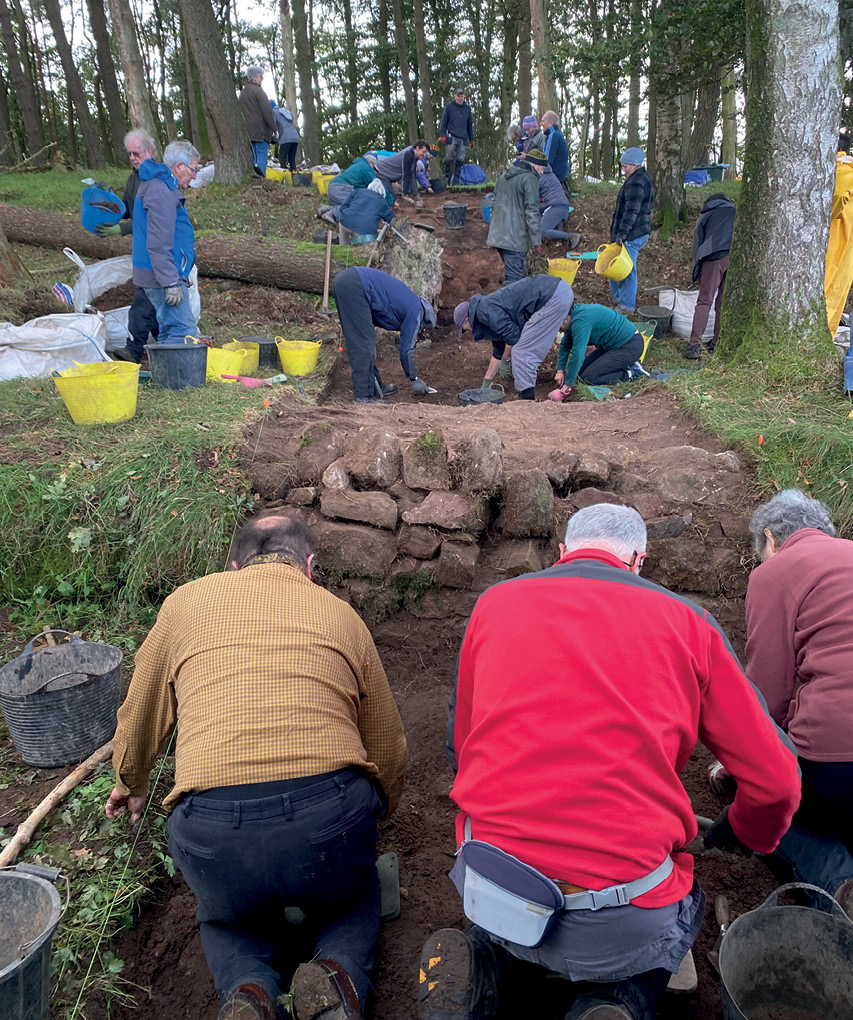
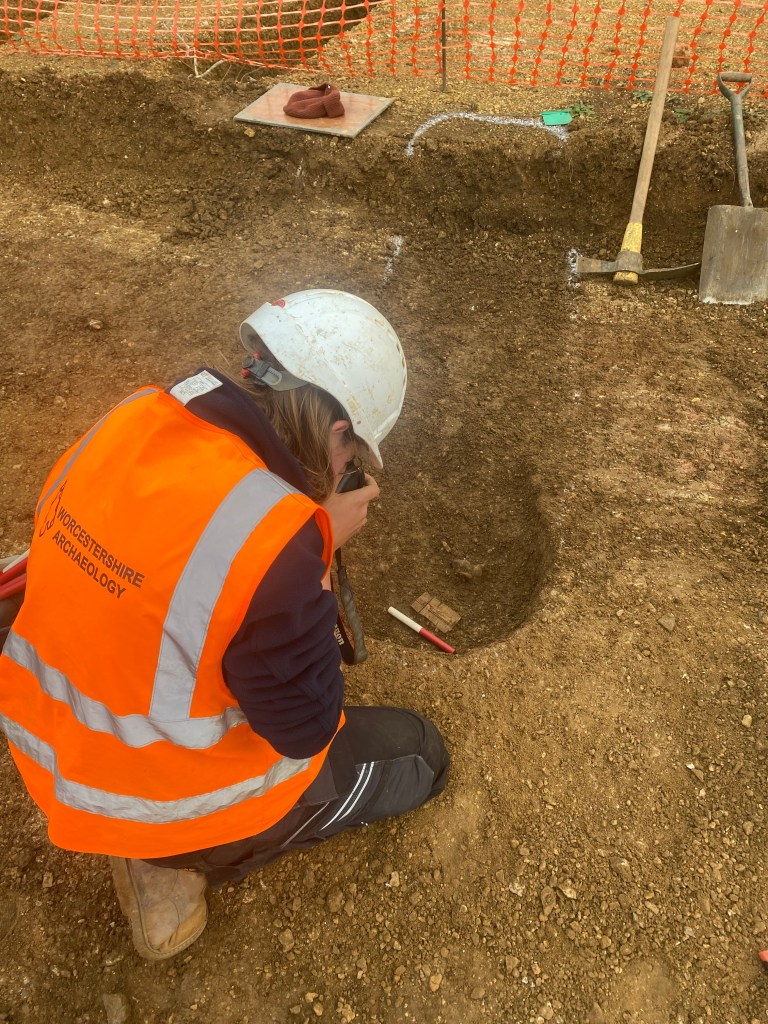
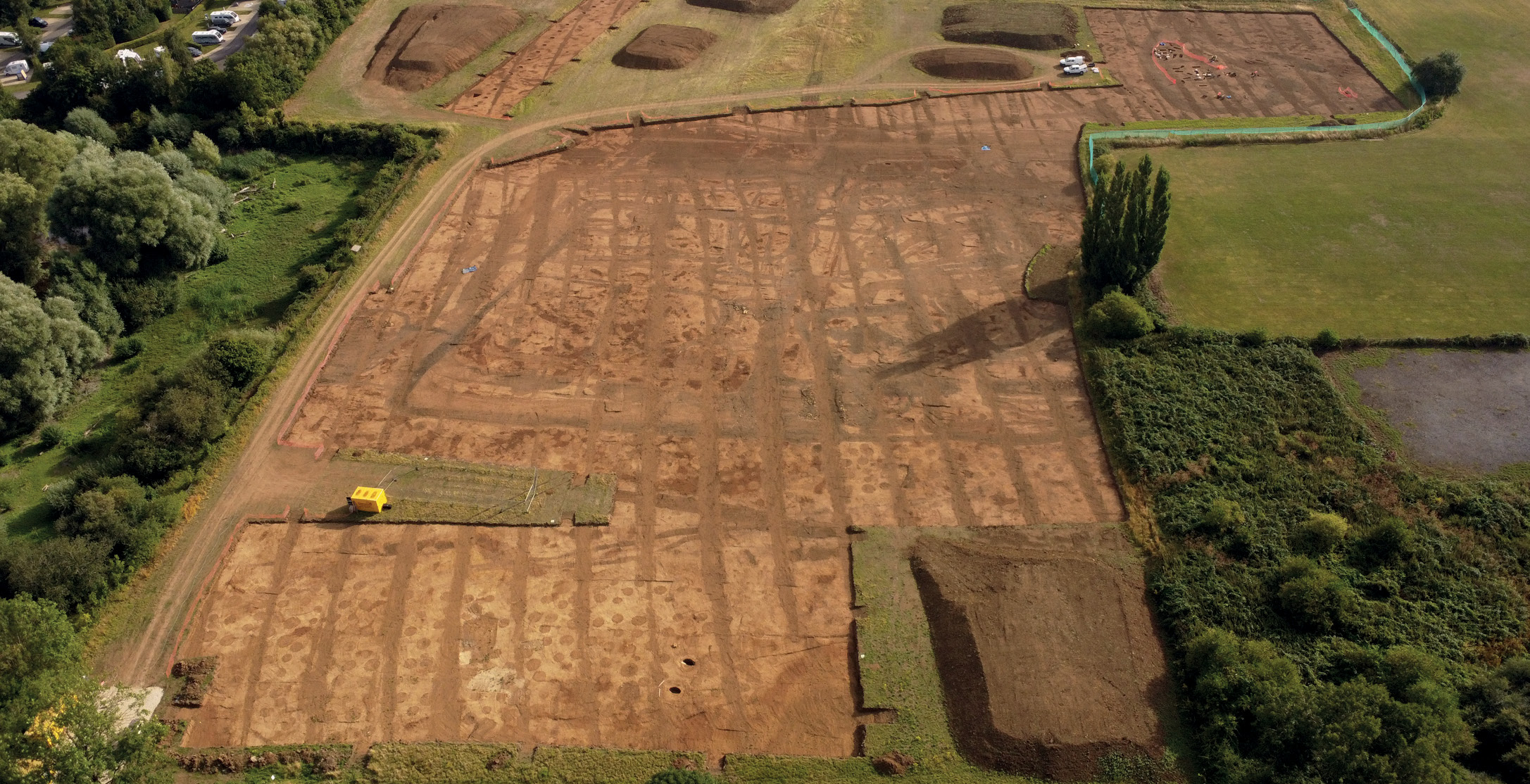
Wychavon District Council commissioned Worcestershire Archaeology (part of Worcestershire County Council) to carry out a large-scale excavation ahead of construction – and, as soon as the topsoil had been stripped away, the team was immediately struck by the density of archaeology that was preserved just 30-50cm (12-20in) under the surface. New features appeared daily as our investigations continued, and it quickly became clear that, rather than reflecting the remains of a single settlement, Milestone Ground was a place that had been repeatedly visited and reused over many millennia.
Hunter-gatherers and first farmers
The earliest evidence for a human presence at Milestone Ground dates back around 8,000 years to the later Mesolithic period, when Britain was blanketed by dense woodland and its inhabitants lived as nomadic hunter-gatherers moving seasonally across the landscape. Groups like these clearly visited Broadway, too, as our team found worked flints scattered across the site, in both contemporary and later deposits. They include a variety of tools that were probably used for tasks such as cutting meat, preparing hides, and working wood, as well as waste flakes produced during their manufacture or repair. Together, these objects offer a fascinating glimpse into the everyday life of the Mesolithic communities that passed through, and worked in, this transitional landscape on the edge of the Cotswold escarpment.

The flints add to a growing body of evidence which suggests that this area was significant for later Mesolithic populations. Just a short walk from Milestone Ground, on the south side of the Badsey Brook, an excavation undertaken ahead of flood alleviation works (known as the FAS site) also produced a substantial assemblage of nearly 4,000 Mesolithic flints. There, though, analysis revealed an emphasis on hunting implements rather than processing tools like scrapers, while palaeoenvironmental evidence confirmed the presence of aurochs, deer, and wild pig. It will be fascinating to compare the flints from Milestone Ground to these previous finds as post-excavation analysis progresses.

In the Neolithic period, the arrival of farming c.4000 BC transformed not only the lives of those who lived in Britain at the time, but the landscapes that they called home. Communities began clearing woodland, cultivating crops, and raising livestock, as well as making use of emerging technologies like pottery and polished stone tools. At Milestone Ground, we found more than 30 Neolithic pits across the site, often arranged in pairs and backfilled with a substantial quantity of pottery, animal bone, and other artefacts including flint, worked-bone tools, and fragments of polished axe.
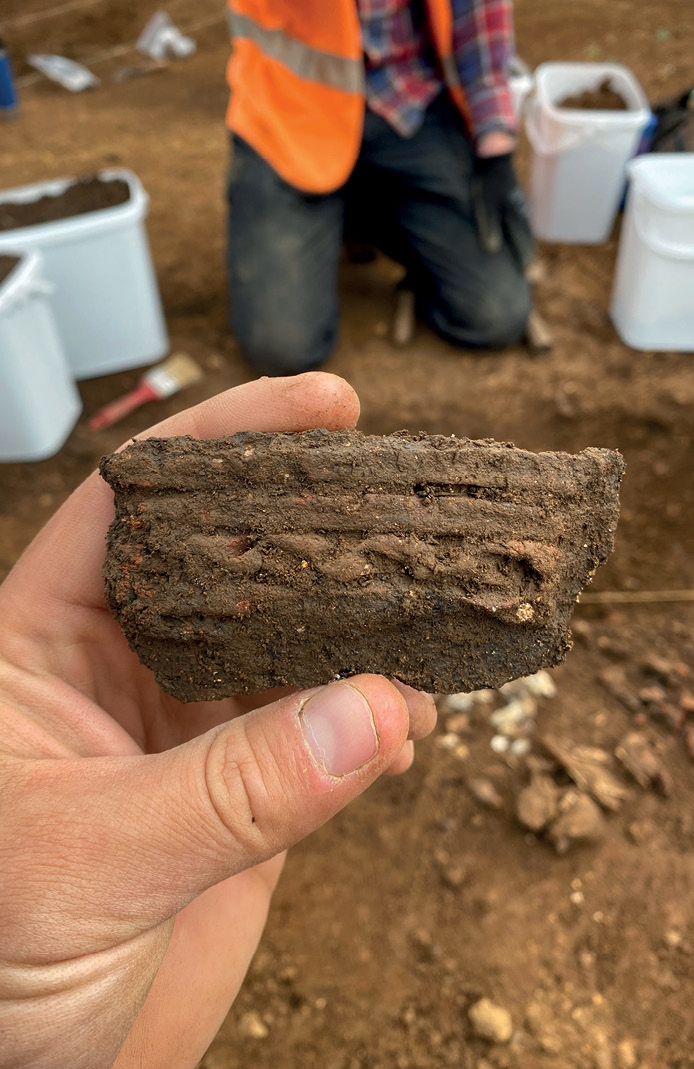
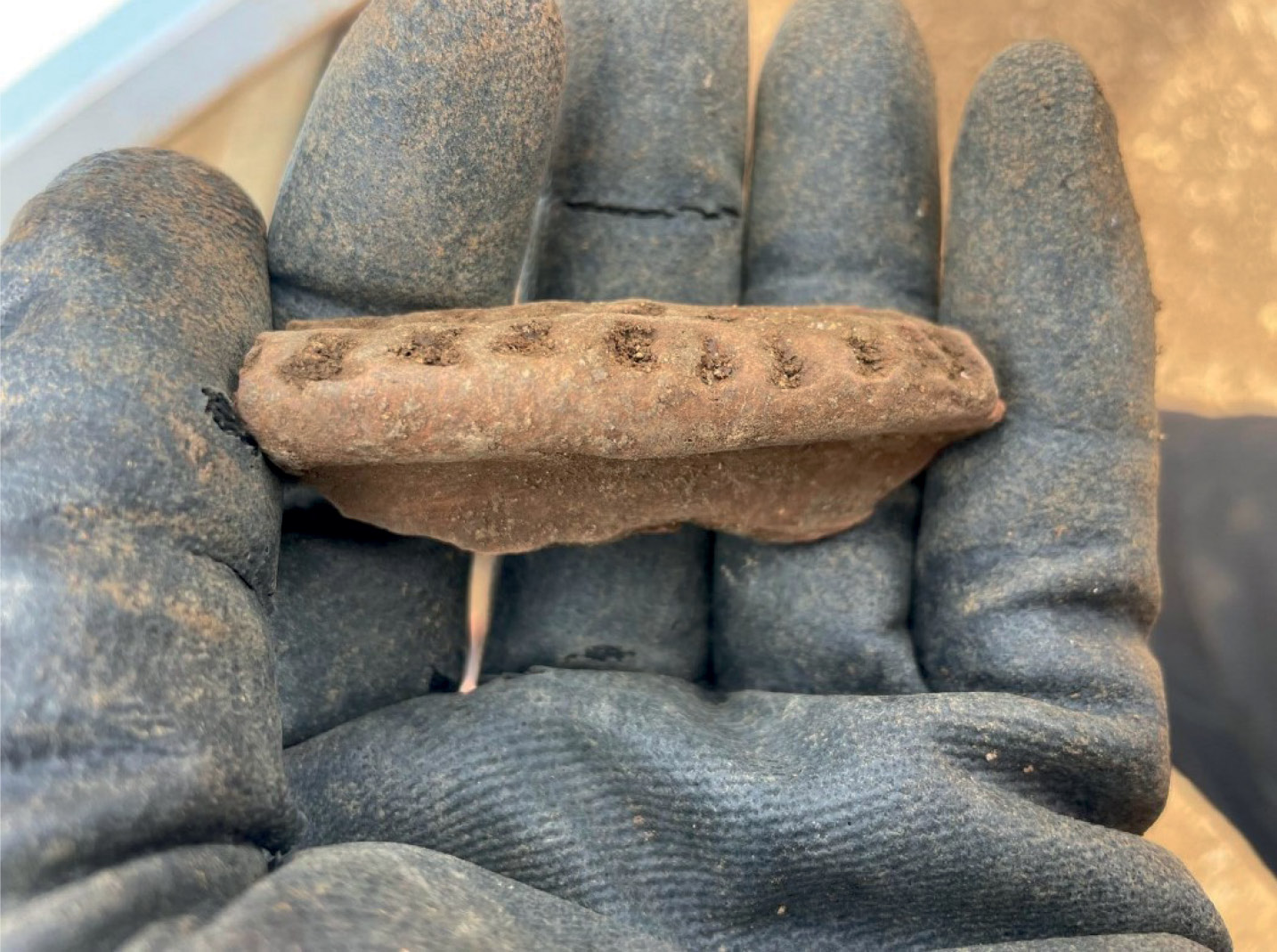
Interestingly, this did not mark the site’s first encounter with Neolithic pottery. Sherds of Grooved Ware were recovered during the excavations of the 1930s, and when Professor Stuart Piggott identified this distinctive style of flat‑based, decorated pottery as a recognisable group in 1936, the Broadway pieces featured in his early study. These fragments, combined with the large quantities from our more recent excavations, represent one of the county’s biggest assemblages of Grooved Ware yet found. This collection stands out, too, for its distinctive decoration, featuring a wavy line ‘pie-crust’ pattern that is also seen on examples from Anglesey, but is otherwise unknown in Worcestershire.
We have recovered pieces of Impressed Ware as well, which typically pre-dates Grooved Ware. Some of these sherds had been decorated with marks created using a bird bone, a small detail that reveals something of the creativity and craftsmanship of the people who produced this pottery. From such finds, we now know that early farming communities were active in the Broadway area nearly 6,000 years ago; we hope that forthcoming environmental work will reveal more about how the landscape was being used during this period.

Bronze Age boundaries, Iron Age intensification
Prehistoric activity continued on the site into the Early Bronze Age, with this new phase of activity represented by three burials. Two contained the remains of infants, while the third held an adult, and each was furnished with a distinctive Beaker vessel. Aside from these pots and the odd flint flake, though, the graves did not contain any other artefacts, and there was no sign of any associated mounds or other funerary monuments. Unfortunately, all three of the graves had been heavily disturbed (two in particular were very shallow, being located almost directly below the subsoil), but initial analysis of the Beaker vessels suggests that they may date from c.2100 BC (around the middle of the Beaker period). Their discovery means that a total of four such vessels have now been recovered from sites around Broadway; one was found on the FAS site, too, dating to the beginning of this period. Only limited evidence for Beaker period activity is known across wider Worcestershire, so these burials offer intriguing hints that Broadway may have been an important location during this transitional time.

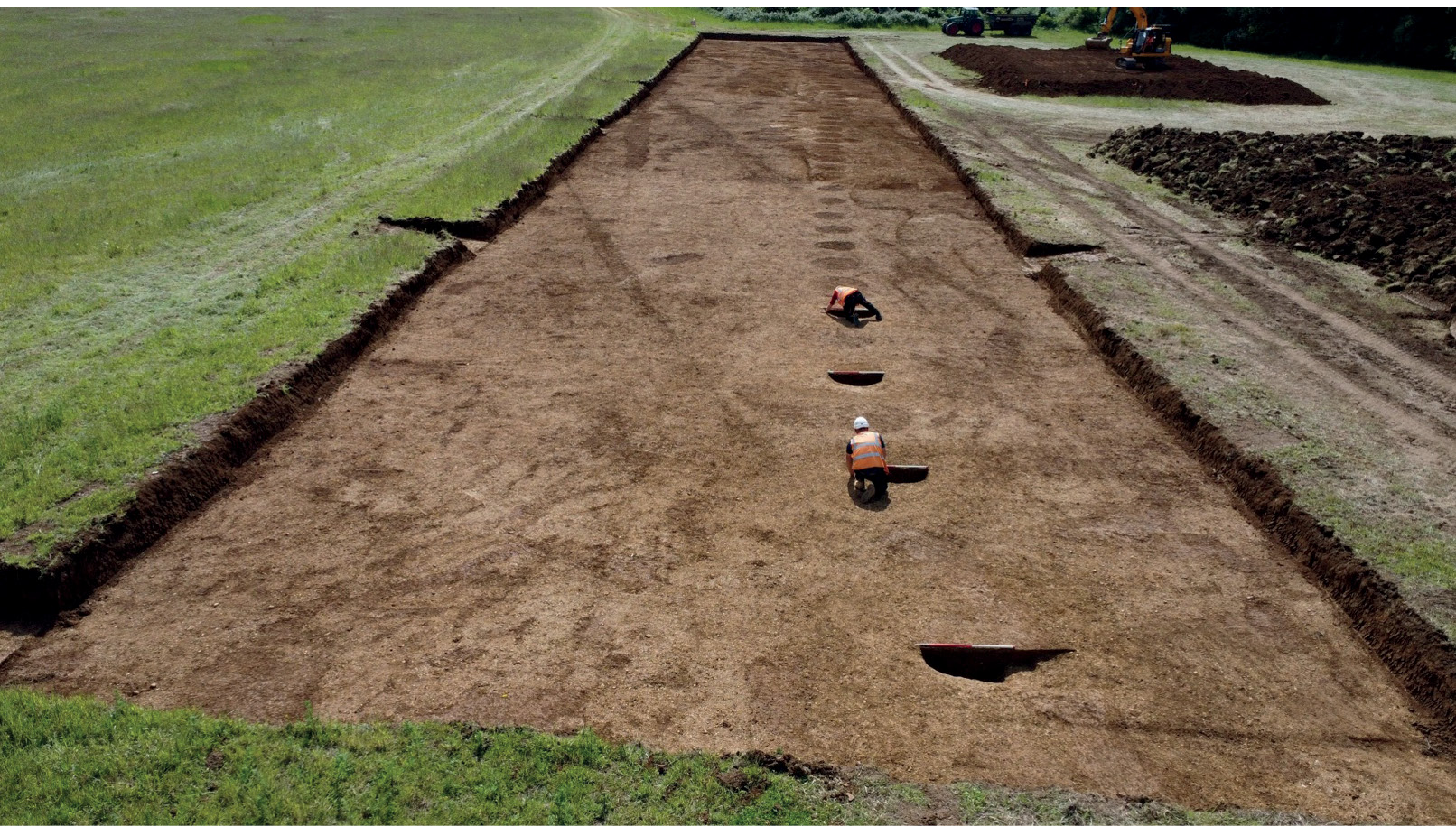
Another striking feature from the later prehistoric period was series of 59 pits forming a long, neat line that snaked north-east to south-west across the northern part of the site. Few such arrangements have been identified in Worcestershire, but they are known from other prehistoric landscapes in Britain. Their precise function remains uncertain: some believe they marked boundaries within agricultural land, while others suggest they may have formed part of ritual landscapes or routeways. We suggest that the example on our site might represent some kind of boundary within the landscape, possibly associated with the brook to the south.
While most of the pits from the Milestone Ground alignment contained little material, a few produced fragments of pottery dating to the late Bronze Age-early Iron Age transition. This suggests that they had been dug at an earlier time than many comparable Iron Age pit alignments known elsewhere. Whatever their purpose, they show that communities in the later Bronze Age were actively organising and shaping the landscape around Broadway. The site’s location along a natural route across the Cotswold escarpment may have made it an important place for movement and communication: long-distance trackways are known to have crossed the region in later prehistory, linking communities across the Midlands and beyond.
In contrast to these enigmatic traces, by the later Iron Age activity on the site had intensified dramatically. Our excavation revealed more than 400 large, circular storage pits, which were arranged in broadly equal groups. These pits rarely intercut, and their position suggests some level of planning, but we are still unpicking the chronology of how many were used at any one time. The pits were probably grain stores, suggesting large-scale agricultural production in the surrounding landscape, though as there was little evidence for contemporary domestic activity in the vicinity, it is possible that the pits were positioned close to important routes or resources such as the nearby Badsey Brook rather than directly beside a settlement. Intriguingly, three of the pits had been reused as graves, with each containing an Iron Age individual buried in a tightly crouched position.
Roman remains
The most substantial phase of activity at Milestone Ground dates to the Roman period, when a large, rural farmstead defined by extensive rectilinear enclosures and boundary ditches was established on the site. Some of these ditches were very substantial, measuring more than 2m deep (6.6ft) and over 6m wide (19.7ft), demonstrating the considerable labour that had been invested in constructing this settlement. From the slopes of Broadway Hill, which overlooks the modern village in the valley below, the enclosure complex would have been a prominent, imposing feature within the surrounding countryside. Evidence from our excavations suggests that it was home to a mixed farming economy combining arable cultivation with raising livestock. Bone preservation across the site was exceptional, allowing us to identify the remains of large numbers of cattle, sheep, pigs, and horses relating to this episode.
Further evidence of everyday life within the Roman settlement emerged elsewhere across the site, including five T-shaped crop-dryers that would have been used to dry grain before storage or milling. Some had been built within earlier Roman ditches, suggesting they belong to later phases of the farmstead’s lifespan. Meanwhile, the recovery of pottery sherds, brooches, and iron tools provided glimpses into the daily routines of the people who lived and worked here. Taken together, the discoveries evoke a thriving agricultural community connected to wider economic networks across Roman Britain.

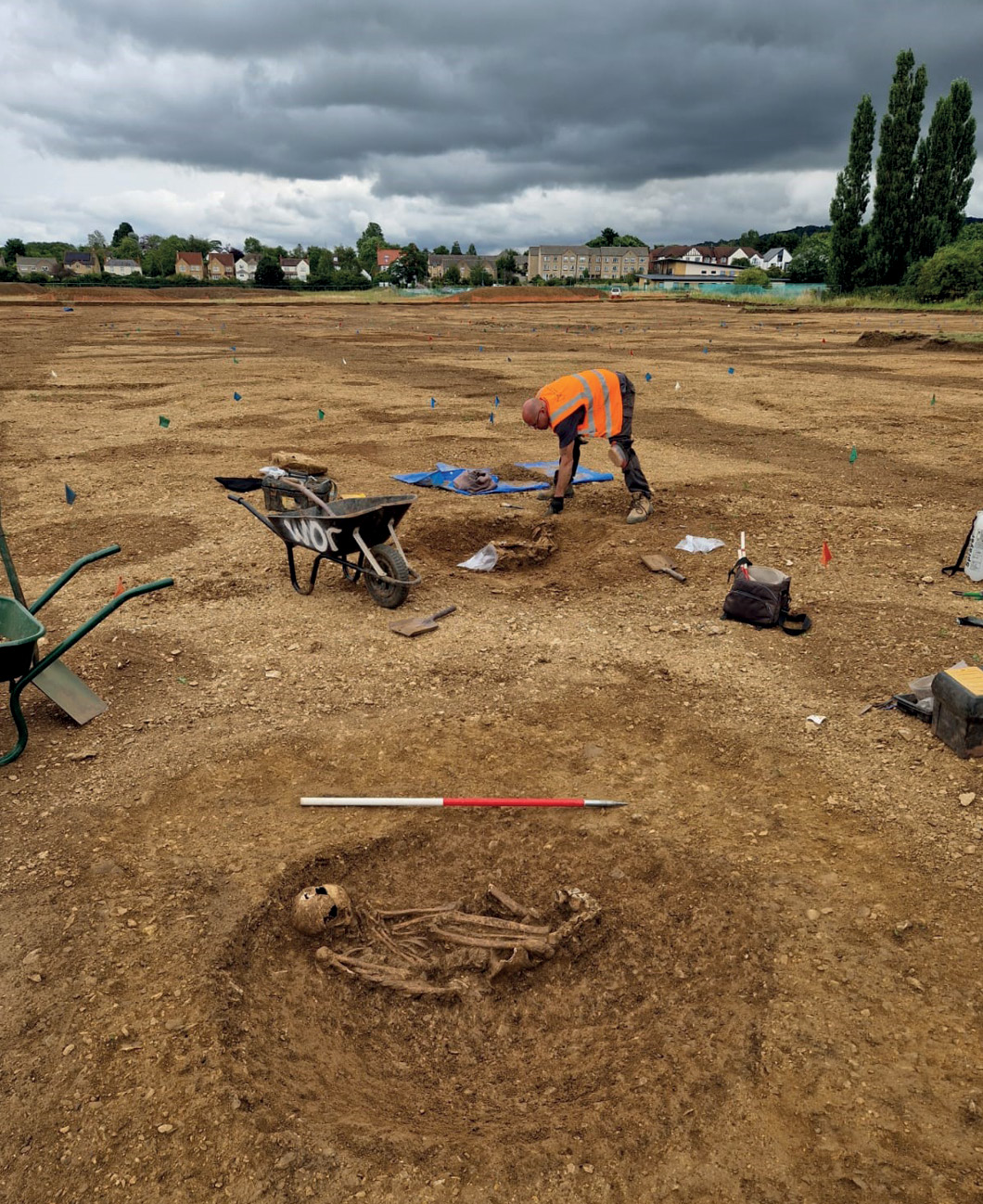
The most striking discovery of this period, however, emerged in the north-western part of the site. There, excavation revealed a D-shaped enclosure containing 79 graves, forming what is believed to be the largest late Roman cemetery yet discovered in Worcestershire. The scale of this burial ground quickly became clear as our investigations progressed and grave after grave appeared across the enclosure. Many had been carefully dug into earlier Roman features, while some of the graves intercut one another, suggesting that the cemetery had remained in use for several generations. Initial radiocarbon analysis has produced results ranging from the later 3rd century to the early 5th century, confirming that the burial ground remained in use during the latter stages of Roman Britain, and its main focus of activity appears to date from the 4th century AD.
There was considerable variation in how the graves were oriented (though many on the cemetery’s eastern edge were aligned north-west to south-east), but we could still identify several distinct clusters, which might hint at possible family groupings or burial practices changing over time. Some 12 graves contained evidence of coffins, and many of the excavated individuals were accompanied by grave goods. More than 30 had been buried with hobnail footwear, one person had copper-alloy bracelets, and another had 86 beads arranged around their pelvis, possibly part of a necklace or from decorative clothing. Two graves contained intricately carved bone combs, and one of these had stylised horse-head decoration. Such artefacts are rarely seen in Roman Britain before the later 4th century, providing further evidence for the cemetery’s date. In one particularly evocative burial, three late Roman coins had been placed in the deceased’s mouth – a practice that might echo the Classical tradition of providing payment to the ferryman who carried souls across the River Styx into the afterlife.
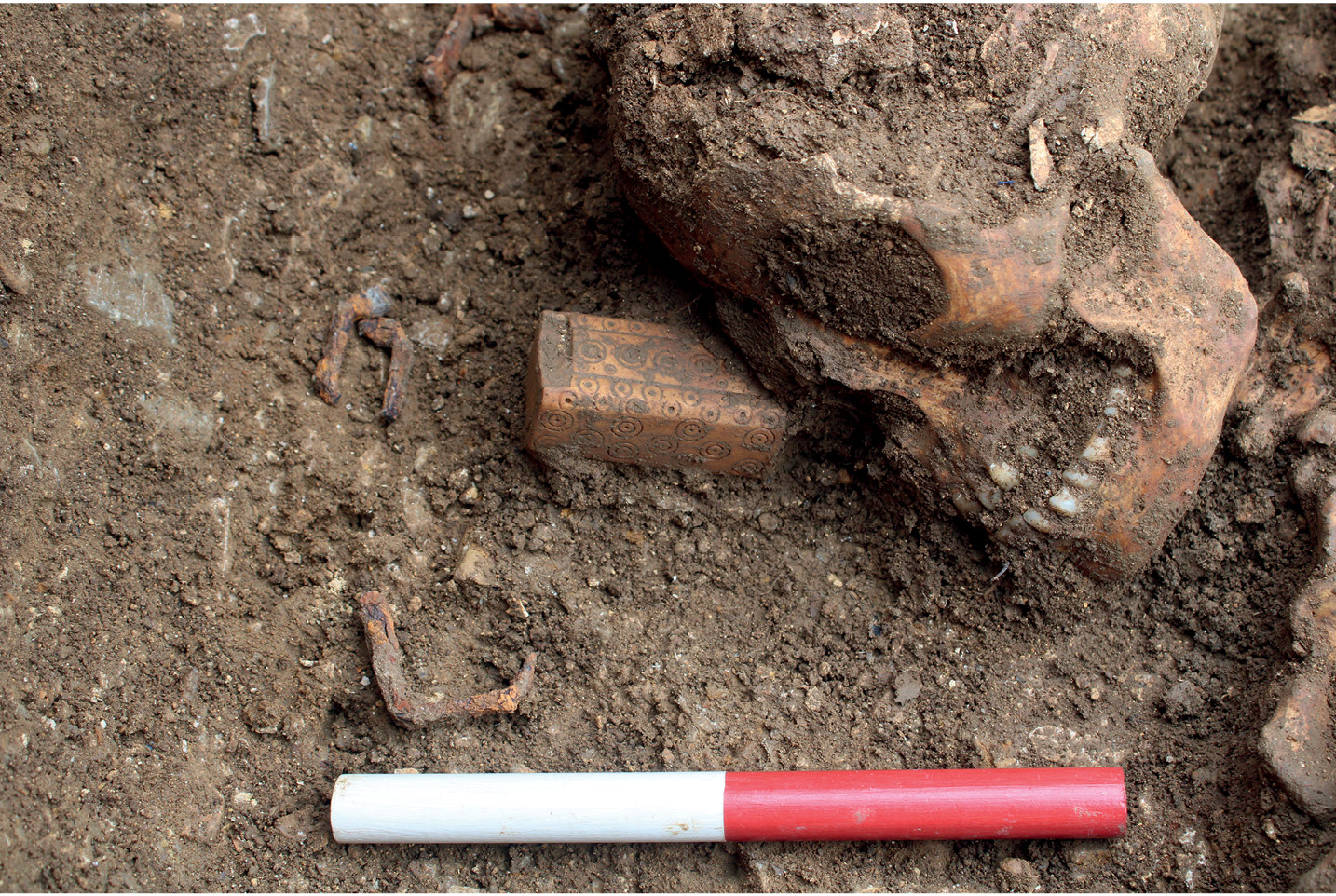
The most remarkable artefact from the cemetery, though, was a small, carved bone box that had been placed within the grave of a young woman aged around 25-30. Preliminary radiocarbon dating placed the burial in AD 318-415. The bone box is delicately worked, with distinctive ring-and-dot decoration, and currently has no comparable examples within Britain. Its precise purpose is not known, and of course the item may have had many uses over the course of its existence before it was carefully placed in the grave. What is more certain, however, is that the box clearly represented a special item to the young woman, and the wider community within Broadway who laid her to rest in the 4th century AD.
Alongside unusual artefacts, the cemetery produced a number of unusual burial practices. Eight individuals had been interred prone (face-down), ten had been decapitated, and two were both prone and decapitated. Where the head had been removed, in several cases the skull was found beside its owner’s legs or feet, while in others it was missing entirely. One burial even had a comb placed where the head should have been. Similar practices are known from late Roman cemeteries across Britain, though they usually represent only a small proportion of burials. At Milestone Ground, around 25% of the graves follow these practices, which appears unusually high, though it may partly reflect the excellent preservation of bone at the site. Such burials do not necessarily indicate punishment or a violent death, however: at some other sites decapitation appears to have taken place post-mortem and may instead reflect complex beliefs about the body and the afterlife.

Saxon Broadway
Activity at the site did not end with the collapse of Roman rule in the early 5th century. Our excavation revealed the remains of four sunken-featured buildings, often known as Grubenhäuser, which are typical of early Saxon settlements. These small timber structures were frequently used as workshops or workspaces, and finds from the Milestone Ground buildings point strongly towards textile production in this case. Loom weights, a spindle whorl, bone pins, and a delicate needle all speak of spinning and weaving, while we also recovered bone combs used for personal grooming, providing small but vivid reminders of everyday life alongside this productive activity.
Saxon sites are generally rare in Worcestershire, and so the discoveries at Milestone Ground offer an important opportunity for us to learn more about this fascinating period within the region. Ongoing work will look to tease out the site’s early medieval chronology, and it will be fascinating to see whether there is any continuity between the later Roman and Saxon occupation. The continued dating of the cemetery will help here, and it may yet throw up some surprises.
The story of Milestone Ground is far from complete. The discoveries made during Worcestershire Archaeology’s recent excavations are only the first step in understanding a landscape that has drawn people back to it for millennia. In the years ahead, post-excavation analysis – including targeted radiocarbon dating, and the study of aDNA and isotopes – will help specialists to refine the site’s timeline, reconstruct its ancient environment, and reveal more about the people buried there. Further work on the Roman pottery and other provenanced finds of this period may also shed light on trade links and cultural connections during this phase of the site’s occupation, linking this community not only with wider Britannia but also with networks reaching across the Continent.
From the earliest traces of Mesolithic activity to Saxon occupation, Milestone Ground preserves a remarkable record of long-term human presence. As research continues, this site promises to add new details to the story of how generations of people lived in, travelled through, and shaped this corner of the Cotswolds.
Constance Mitchell is a Community Project Officer at Worcestershire Archaeology. She specialises in community engagement and social value for commercial archaeology projects. Prior to this, she worked as a field archaeologist across the Midlands.

Further information: For updates and more details about the Broadway excavations (including dig diaries and a video of a talk by Jamie Wilkins, who led the excavations), see http://www.explorethepast.co.uk/project/milestone-ground-broadway.
All images: Worcestershire Archaeology, unless otherwise stated