
Subscribe now for full access and no adverts
New insights into the Plain of Jars in Laos
Xieng Khouang Plateau in northern Laos is dotted with hundreds of ancient stone jars. While they have been the subject of archaeological investigations for over a century, their full use and purpose is still somewhat mysterious. Recent research (published in Antiquity, https://doi.org/10.15184/aqy.2026.10352) at Site 75, 70km (40 miles) north-east of the town of Phonsavan, is shedding new light on the subject.
There, an exceptionally large jar, measuring 1.3m (4ft) high and more than 2m (6.5ft) wide, was found to contain the disarticulated remains of at least 37 people. Subsequent radiocarbon dating has revealed that they were deposited in multiple phases between c.AD 890 and 1160. Based on the arrangement of the bones and the absence of certain body parts, the team believe that this may have been a secondary interment, with the human remains moved to the jar from an initial burial location. A number of artefacts were also found inside the jar, including fragments of earthenware pottery, five stone slabs, an iron knife, a small, copper-based bell, and 20 glass beads.
Viking Age coin hoard discovered in Norway
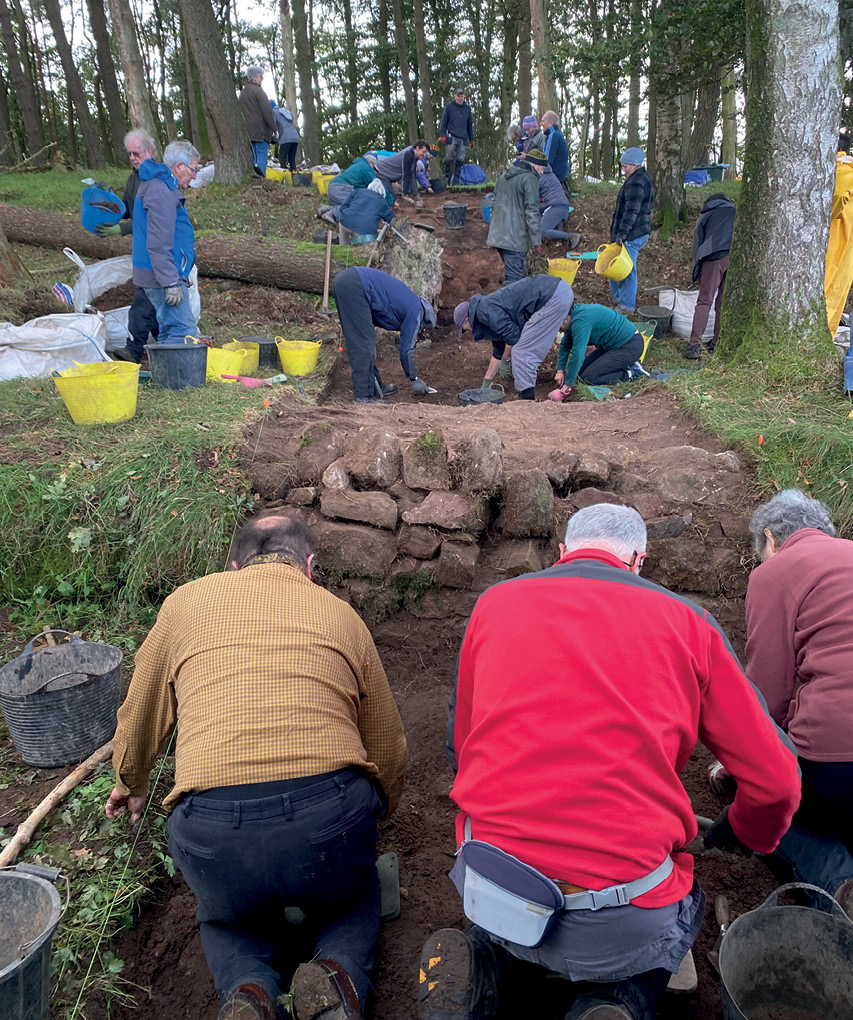
Norway’s largest coin hoard has been discovered in Østerdalen, Innlandet County. Known as the Mørstad Hoard, its first coins were found by two metal-detectorists who promptly reported their discovery, sparking a much larger archaeological investigation led by archaeologists from Innlandet County Municipality, the Museum of Cultural History, and the Norwegian Ministry of Cultural Heritage.
This team have so far recovered 4,886 coins – larger than the next four biggest Viking Age coin hoards from Norway combined – and this number is still growing as they continue to excavate the site. It is believed that the hoard was originally held in a leather bag or other organic container, which has since decomposed, and the coins have been subsequently scattered across the field by farming activity. Around 90% are English or German issues, and the hoard includes examples minted under Cnut the Great, Æthelred II, Otto III, and Harald Hardrada, with evidence pointing to it having been buried c.AD 1046/1047.

Before Hadrian’s Villa
Excavations at the Villa Adriana, the lavish palace complex built by the Roman Emperor Hadrian at Tivoli in the 2nd century AD, have revealed a hypogeum (underground chamber) that appears to pre-date the imperial residence. Uncovered by archaeologists from the Universidad Pablo de Olavide in the palazzo of the villa, it appears to have been used as a silo or storage area connected to a Republican-era villa that stood on the site before the palace was built. It was filled with construction debris and ceramic materials, including a collection of architectural terracotta pieces decorated with animal figures, perhaps hinting at this earlier villa’s appearance before it was abandoned and demolished.
Text: Kathryn Krakowka / Image: Innlandet County Authority