Subscribe now for full access and no adverts
On 16 July 1945, at Alamogordo in the New Mexico desert, a group of scientists gathered to witness an extraordinary and unique experiment: the test explosion of the first ever atomic bomb. They were not certain if the test would succeed or fail completely, or whether the atomic device might set off some sort of chain reaction that would destroy everything in the vicinity and possibly even around the world. In the 2023 movie Oppenheimer, General Leslie Groves (played by Matt Damon) asks the atomic scientist (Cillian Murphy) what are the chances of a chain atomic reaction that could destroy the planet. After some hesitation, Oppenheimer replies, ‘Near zero.’ ‘I would have preferred zero,’ says Groves. But they still went ahead with the test.
At 5.30am, the atomic bomb ignited and a huge fireball engulfed the area, sending a mushroom cloud thousands of feet into the air. One of the scientists present wrote, ‘Suddenly there was an enormous flash of light, the brightest light that I have ever seen, or I think that anyone has ever seen… we looked toward the place where the bomb had been; there was an enormous ball of fire which grew and grew.’ The test was a complete success. The energy released was assessed as roughly equivalent to 21,000 tons of TNT. The world had entered the Atomic Age.
The new US President, Harry Truman, was at the Potsdam Conference when later that day he was told of the successful test. Thanks to the development programme known as the Manhattan Project, the United States was now an atomic power and possessed the most powerful bomb created up to that point in history. A few days later, at the end of a session at the conference, Truman and his Secretary of State James Byrnes went across the room to Joseph Stalin and told him that the United States had a big new weapon. The Soviet leader replied almost casually, ‘Good, I hope the United States will use it.’ Truman thought Stalin had not understood. But the Soviet leader knew all about the development of the atom bomb through his spies inside the project. That evening Stalin ordered his own scientists to speed up work on developing the Soviet atom bomb.
Two weeks later, on 6 August, a B-29 bomber named Enola Gay dropped an atomic bomb that exploded over the Japanese city of Hiroshima. The heat from the explosion was so intense that roof tiles melted, houses were incinerated, and human bodies turned into ash. Almost nothing survived for several hundred yards from the epicentre of the explosion. Even two miles out from the epicentre, buildings were destroyed and bodies terribly burned. About 70,000 people were killed within minutes of the explosion. By the end of the year, this number had doubled, including deaths from radiation sickness.
The balance of power had turned into a balance of terror.
Just a few days later, on 9 August, a second atomic bomb was dropped on Nagasaki. In a city surrounded by high hills, the numbers killed were smaller, at about 40,000 within minutes of the explosion. The Japanese war cabinet continued to debate how to respond. Fearing that they would refuse to surrender, President Truman threatened the Japanese with a third bomb that would be dropped on Tokyo. However, there was a problem: there was no third bomb. The scientists had only been able to manufacture three bombs, including the test bomb. The atomic arsenal was now bare.
On the insistence of Emperor Hirohito, however, the Japanese military junta did surrender on 14 August. A few weeks later, General Douglas MacArthur presided over the surrender ceremony on board the USS Missouri in Tokyo Bay. He called for a new and better world dedicated to freedom and justice, summing up the moment by saying, ‘These proceedings are now at an end.’ The Second World War was over.

Existential danger
At this point, the United States enjoyed a complete and unchallenged monopoly in the development of atomic weapons. But only slowly did it begin to rebuild its nuclear arsenal. There was no particular need to develop a large store of atomic bombs. By the end of 1946, the US had 9 bombs, and by 1947 it had 13. However, the industrial capacity to produce nuclear weapons was ramping up rapidly. By the end of 1948, the US had 50 bombs. By the time of the Korean War in the summer of 1950, the number had increased to 299 – a hundred-fold increase in five years.
No clear strategy had emerged, however, as to how and when the US would use its rapidly growing nuclear stockpile. Truman and his successor as president, Dwight D Eisenhower, were totally convinced that these bombs were of exceptional quality: they were not simply bigger weapons than all the others, they were of an entirely new dimension, and would only ever be used in moments of rare and existential danger. When General MacArthur publicly suggested using atomic bombs against the Chinese People’s Army after it invaded Korea and forced American troops into retreat, he was firmly slapped down and subsequently fired. Without any clear policy as to why the nuclear bombs would ever be used, there was no need for a vast stockpile. But all that changed in the summer of 1949.
In August 1945, Stalin had put Lavrenti Beria, the sinister and cruel head of the secret police, in charge of the Soviet atom bomb project. He was to ensure that priorities were followed, and that everything was done to speed up the development of a Soviet atom bomb. Igor Kurchatov, a brilliant and lavishly bearded Soviet physicist, was made chief scientist, the Soviet equivalent to Robert Oppenheimer. The scientific budget was trebled – but Kurchatov was told that developing the atom bomb was an urgent national mission, and no expense was to be spared.

Hundreds of thousands of political prisoners in the Gulag were assigned work on building installations. Thousands more were sent to mine for uranium ore. At the end of 1946, a Soviet nuclear reactor succeeded in igniting a chain reaction – the first necessary step in building a bomb. The Soviet centralised economy was ideal for a project like this. Once a priority was set, vast resources could be allocated to it. A complete city, called Arzamas-16, was built about 250 miles east of Moscow. It was closed off to the public, and an army of thousands of scientists was sent there. They worked in total secrecy, just like the American scientists at Los Alamos, New Mexico, during the war years.
The scientists at Arzamas-16 worked relentlessly during the post-war years. Even with the information smuggled out from America, there were delays. This infuriated the paranoid Beria, who suspected many scientists of trying to delay the whole project.

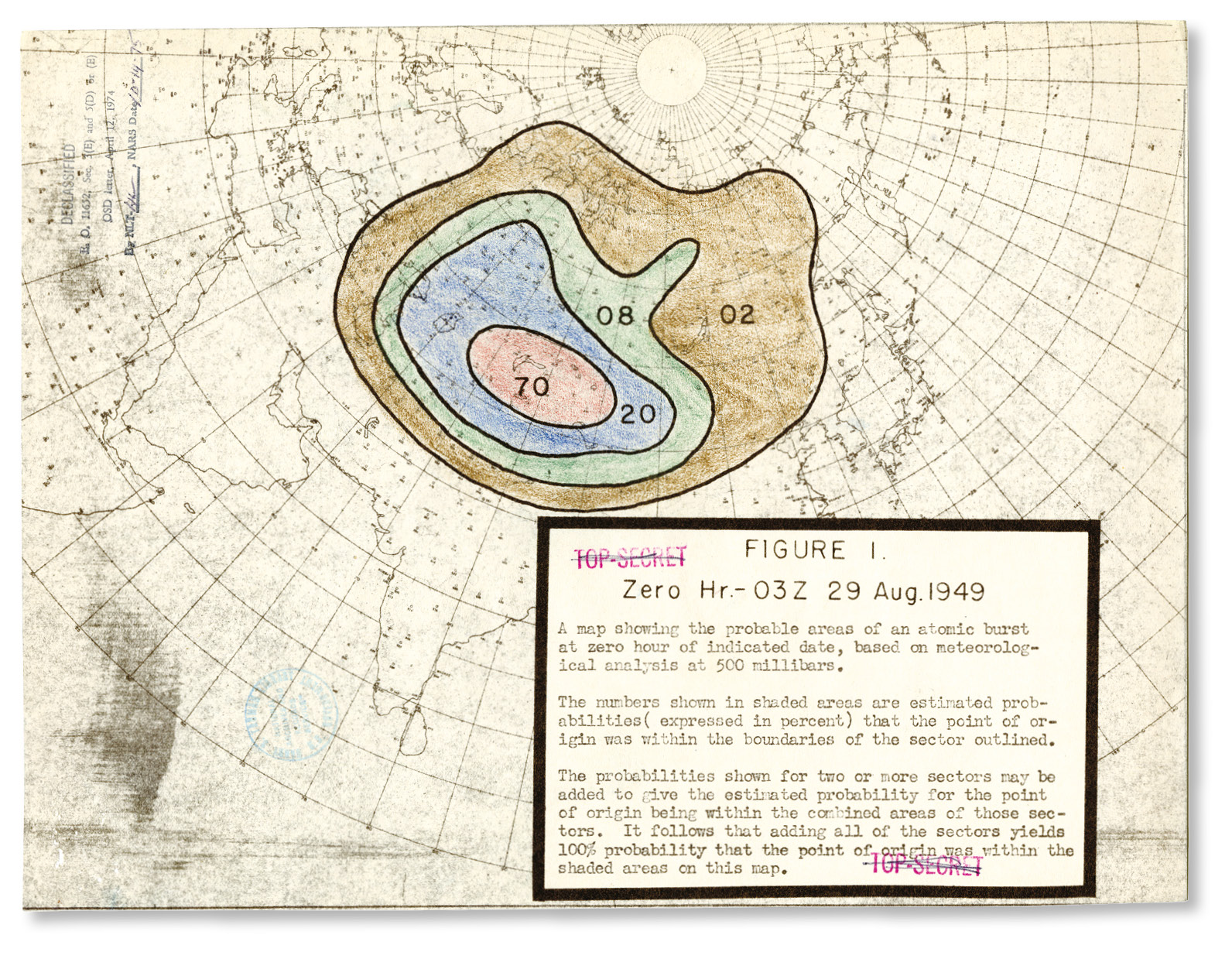
Finally, in August 1949, construction was completed on a huge launch site to test the new bomb in the wild steppe of north-east Kazakhstan. At dawn on the morning of 29 August, a team of senior scientists and military officials gathered around Kurchatov in an observation bunker. At the last minute, Beria arrived from Moscow. As at Los Alamos, no one knew if the test would succeed. But everyone knew that their lives depended on what would happen. If the test failed, then Beria would likely have the scientists assembled there shot. At 7am, the bomb was ignited, and a vast white fireball blew the launch tower to smithereens, sending thousands of tons of sand and soil rushing upwards into a mighty mushroom cloud. The scientists cheered and hugged each other. The Soviet Union had caught up. It had taken them about four years – only a little longer than it took scientists at the Manhattan Project to develop and build the bombs dropped on Japan. There was now nuclear parity.
When the US picked up irrefutable evidence of the explosion, President Truman announced the news to a stunned American public. The latest CIA intelligence reports had estimated the Soviets would not have a bomb until 1953. There was urgent debate about how they had caught up so quickly. The spies who had passed on secrets from Los Alamos were tracked down and put on trial. They argued they had done nothing wrong by passing information to a nation that was, at the time, an ally of the United States.
THE SOVIET SPIES
The Soviet atom bomb project benefited from secrets about the making of the American bomb that were smuggled out of Los Alamos by a small group of spies led by Klaus Fuchs. Fuchs was German but had British citizenship. He joined the Manhattan Project in 1944, and – along with another spy, David Greenglass – passed on diagrams about the implosion process used in building the plutonium bomb dropped on Nagasaki. They were smuggled out via Harry Gold, a laboratory assistant, who acted as courier to get the drawings and plans to the Soviets.
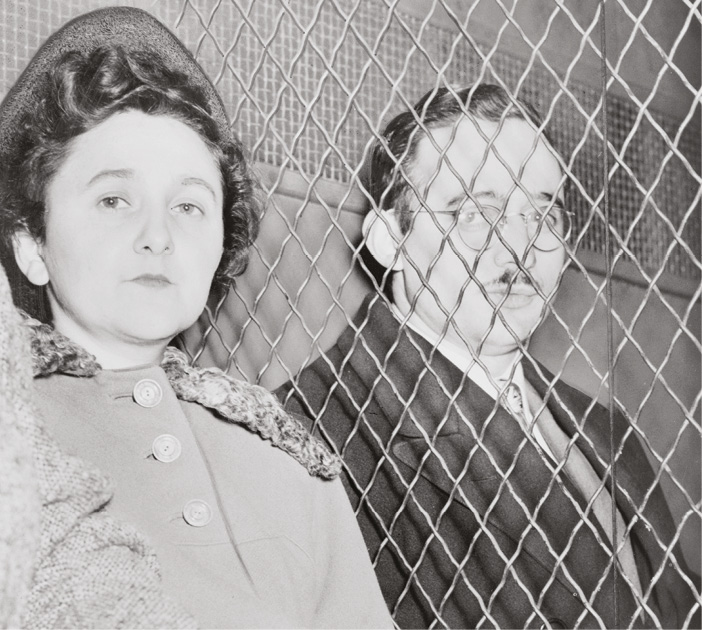
In February 1950, Fuchs was arrested and put on trial in London. He argued that atomic knowledge should not be the private property of one nation but should be available to all. He was sent to jail for nine years, and afterwards went to East Germany, where he continued his work as a physicist. Fuchs’s evidence referred to Gold and Greengrass, who were prosecuted and imprisoned in the US. Their evidence in turn implicated Julius and Ethel Rosenberg, an American married couple who were convicted of espionage, and who, amid the prevailing anti-Red hysteria, were executed at Sing Sing prison, New York State, in June 1953.
There has been intense debate over the importance of the information smuggled out by the atomic spies. Some experts have claimed it might have speeded up the development of a Soviet atom bomb by several years. But the most recent analyses emphasise that, even with the knowledge imparted by the spies, the Soviet scientists still had an immense amount of work to do. In the end, it probably speeded up the Soviet project simply by a matter of a few months.
Limitless capacity
Within a year of the Soviets catching up in the production of an atomic bomb, the American atomic scientists were discussing the development of a new Superbomb, a thermonuclear device. This Superbomb would involve the fusion of hydrogen atoms, and would release tremendous amounts of nuclear energy – up to 1,000 times the amount of an atomic bomb. Moreover, it would spread highly destructive radioactive particles over a much wider area. But there was a split in the scientific community in America.
Many civilian scientists rallied around Oppenheimer, who argued that the development of an atom bomb could be justified in war, when the fear was that the other side (particularly the Germans) might develop their own atomic weapon first. However, the development of a thermonuclear H-bomb in peace time, when there was no obvious need for such a weapon, was totally immoral. Oppenheimer argued before an advisory committee of the Atomic Energy Commission that the building of a Superbomb with almost limitless destructive capacity was a ‘danger to humanity as a whole.’ The H-bomb was an ‘evil thing’, he added.
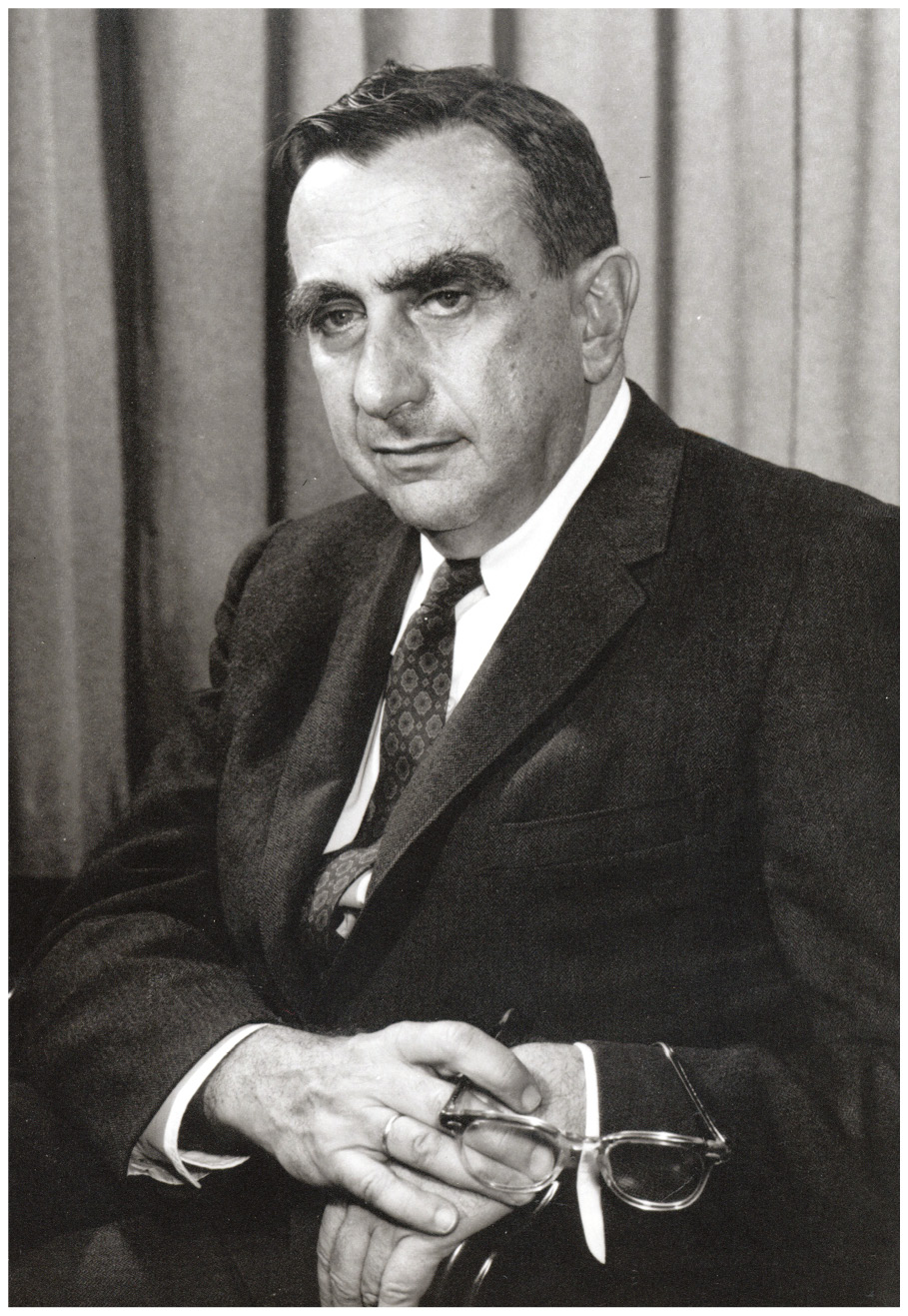
However, another group of scientists, led by Edward Teller, argued that the United States was in a long-term rivalry with a determined and relentless foe – the Soviet Union. Teller reasoned that if the US did not develop this new weapon, then the Soviets would, leaving them with a superiority that would make the American people vulnerable. This, he said, would leave the ‘security of the Western Hemisphere in jeopardy’ and could not be countenanced. The US military firmly backed Teller and his argument that the US must not fall behind.
On 31 January 1950, the issue came up for debate at the White House. It was decision time. Truman saw most issues in simple black-and-white terms – and barely had the case for and against the Superbomb been presented, when the President cut the discussion short. ‘What the hell are we waiting for?’, he asked his assembled advisers. ‘Let’s get on with it.’ That evening, he announced to the American people that a new ‘so-called hydrogen or Superbomb’ would be developed. He hoped never to have to use this new bomb – but it was essential to have such a weapon in the growing intensity of the Cold War.
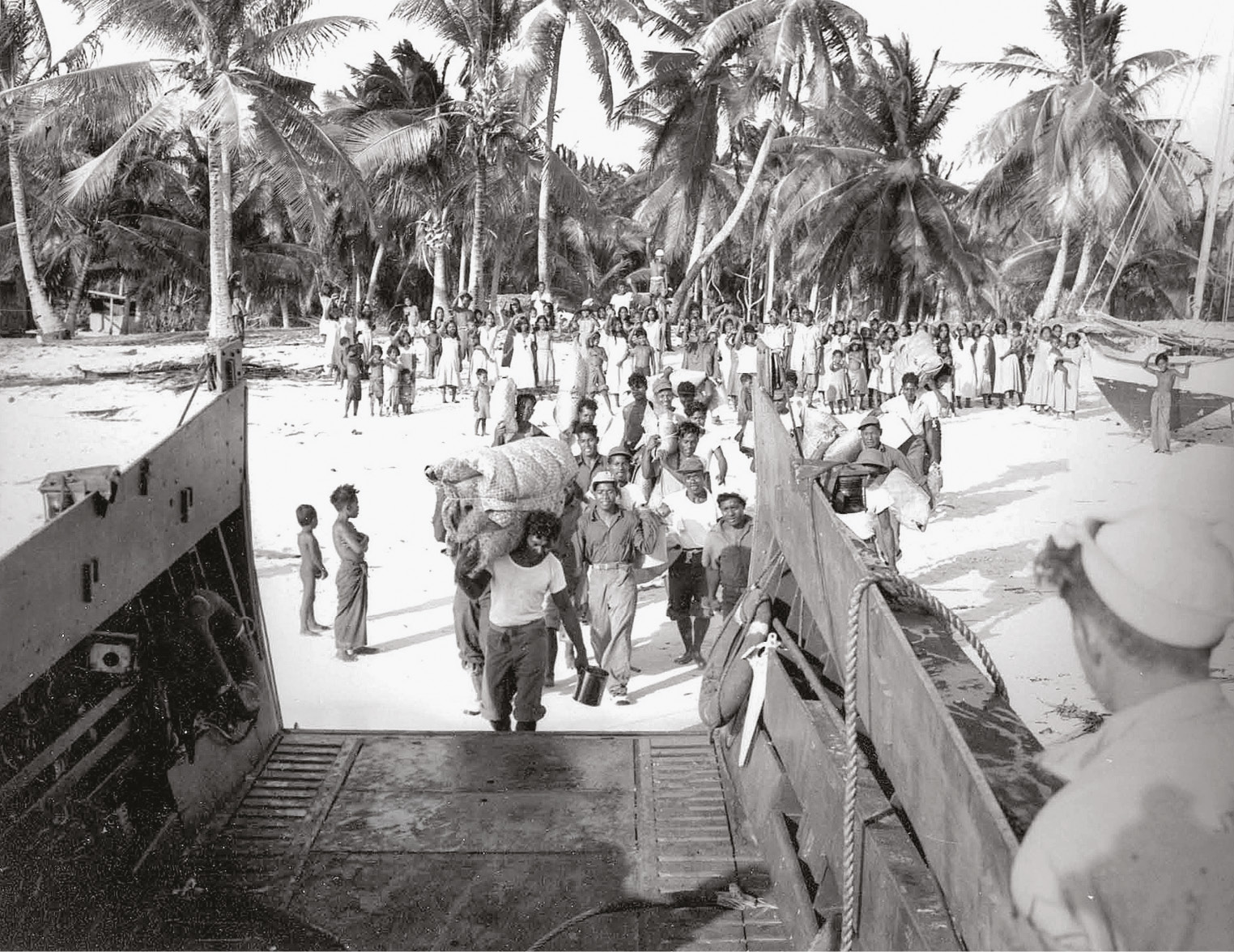
It took the US scientists under Edward Teller, who worked out of the original atomic-weapons research site at Los Alamos, two years and nine months to develop an H-bomb. In September 1952, the inhabitants of a tiny Pacific island called Eniwetok (in the north-west Marshall Islands) were evacuated from their homes. Six weeks were needed to assemble the 82-ton bomb in a giant refrigeration unit. Scientists and observers took up a position 30 miles from the test site.
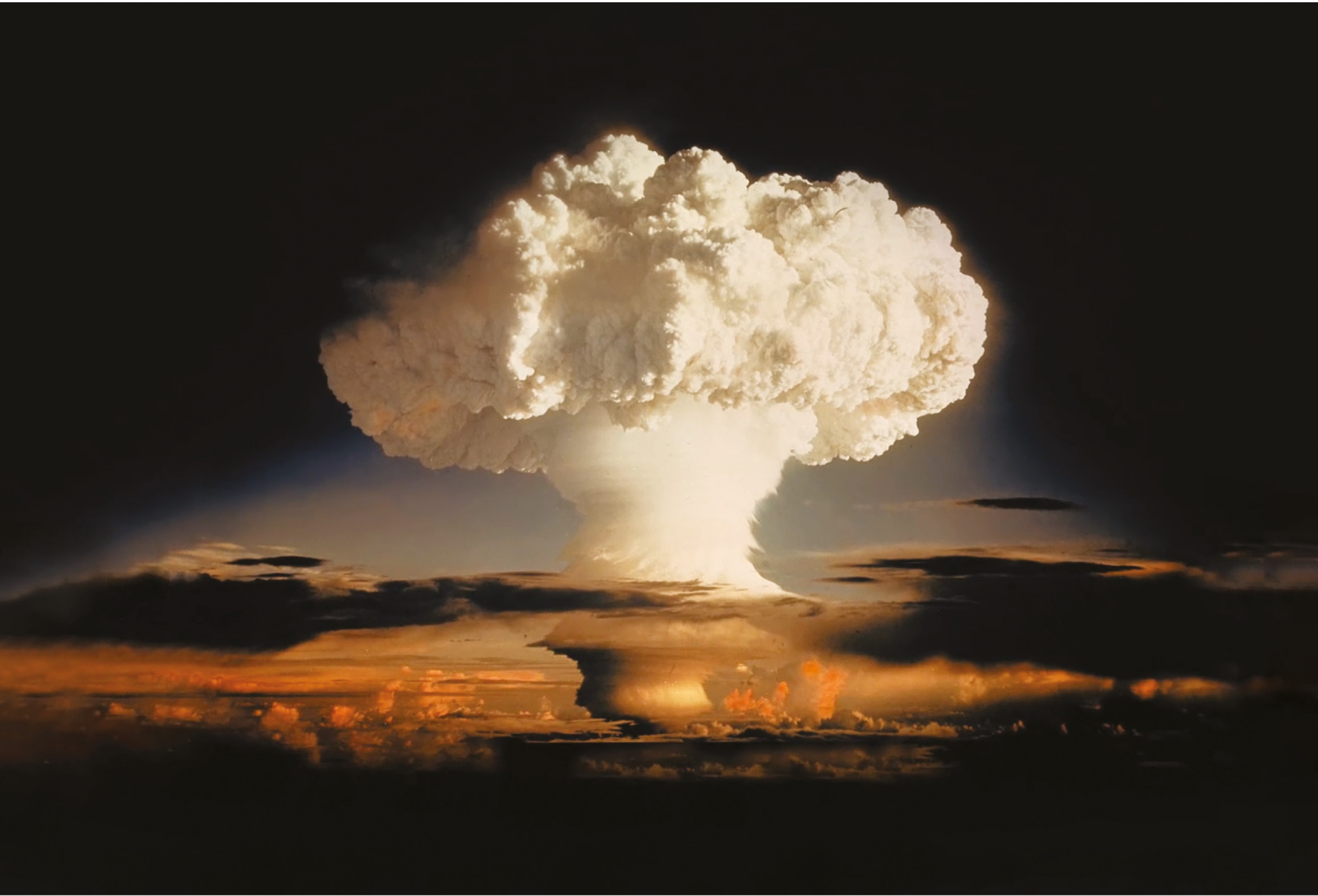
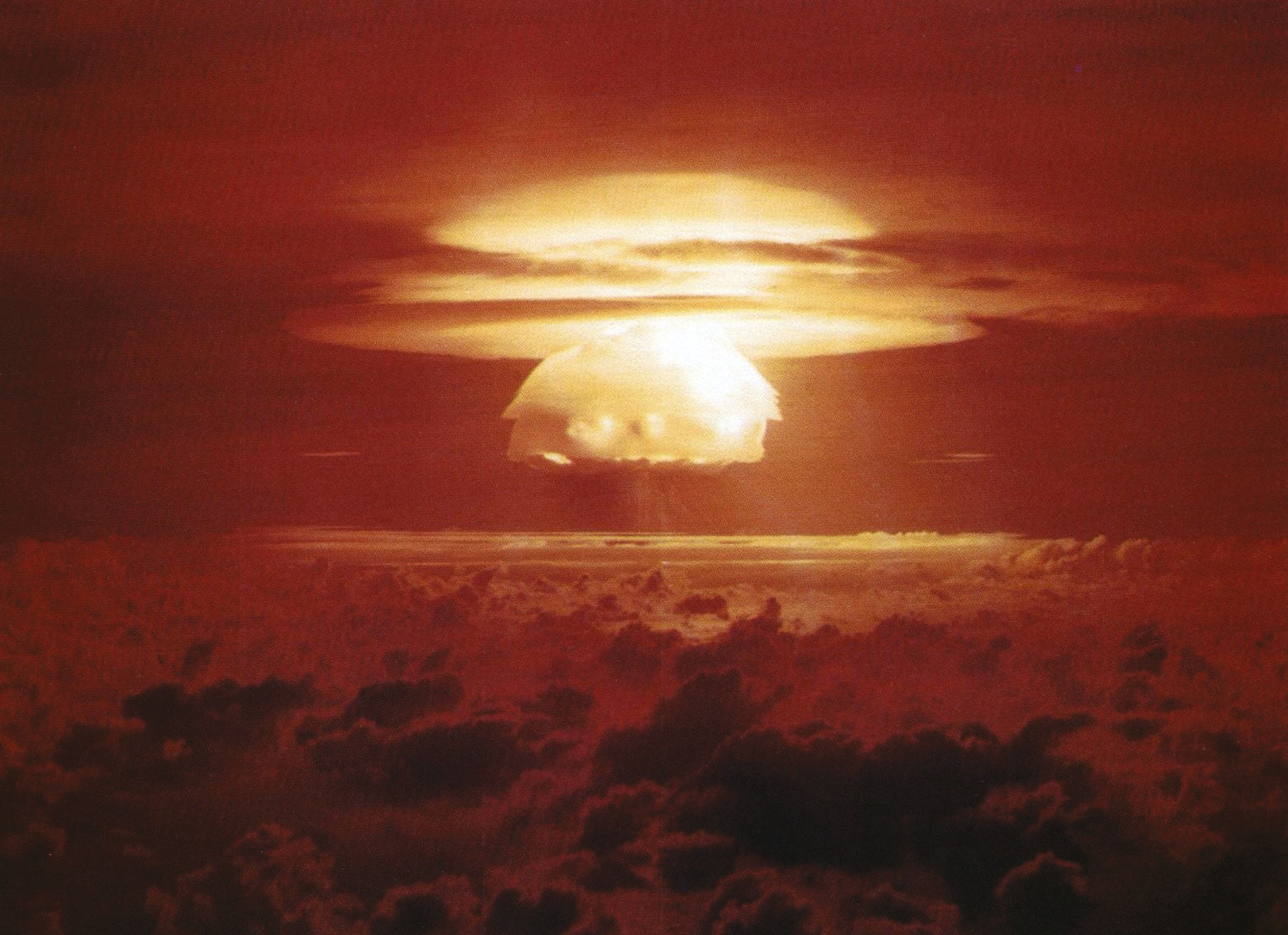
On 1 November 1952, the new Superbomb was ignited. Within seconds, the core reached a temperature hotter than at the sun’s centre. A blinding white fireball more than three miles across lit up the horizon. This was followed by a wall of heat spreading rapidly from the epicentre of the explosion. Even at 30 miles distant, the scientists began to get concerned. One described it as though the door of a very hot oven had been opened nearby. Five minutes after ignition, the mushroom cloud rising rapidly had reached the stratosphere. It then spread out into a huge canopy about 100 miles in diameter. Out of this dropped radioactive mud and then heavy rain over a vast area. The coral atoll of Eniwetok had ceased to exist. All that was left was a giant crater more than a mile wide and 200 feet deep.
It was calculated that the yield of the explosion was roughly equivalent to ten million tons of TNT – almost 1,000 times that of the Hiroshima bomb. The world now was introduced to a weapon whose destructiveness was measured not in kilotons (thousands of tons of TNT) but in megatons (millions of tons).
Only nine months later, on 12 August 1953, the Soviets exploded their first thermonuclear weapon in the remote Kazakhstan desert. This was a much smaller device – but, once again, the Soviet scientists had caught up with the Americans. Being smaller, it had a much less destructive yield (about 400 kilotons) – but, unlike the giant American bomb, the Soviet version was compact enough to be carried by a bomber or, in due course, by a missile.
On a knife edge
Over the next decade, the two superpowers took part in a new arms race to produce the ultimate weapons of mass destruction. A race that has never been matched to this day. In March 1954 at Bikini Atoll (also in the Marshall Islands), the Americans exploded a device with a yield of 15 megatons. The Soviets responded seven months later with a bomb yielding 20 megatons of explosive capacity. So the deadly race carried on, until, in October 1961, the Soviets ignited the biggest explosion ever recorded on earth – of 50 megatons, or 50 million tons of TNT. The Soviet leader Nikita Khrushchev said this weapon would hang ‘over the heads of the imperialists like the sword of Damocles’.
What distinguished the Cold War from all previous rivalries between Great Powers was not just the economic, political, and ideological rivalry between the two adversaries. It was also the possession by both sides of enough thermonuclear weapons to destroy civilisation in every continent of the planet, and even to destroy almost every living thing on the planet. One mistake – an accident, a computer malfunction, a misunderstanding, or a sudden escalation – would wipe out the human race. Humankind was on a knife edge.
The balance of power had been turned into a balance of terror. That balance would dominate world geopolitics during the decades to come. And it is still there today.
Taylor Downing’s latest book The Army that Never Was: D-Day and the Great Deception is out now in paperback (Icon Books, £10.99).
All images: Wikimedia Commons, unless otherwise stated