Subscribe now for full access and no adverts
It is 150 years this June since the dust settled on the hills surrounding the site of the encampment which attracted the unwelcome attentions of the 7th US Cavalry under the command of Lieutenant Colonel George Armstrong Custer. There is little to remind one of the brutal encounter that occurred there, save for the wind in the buffalo grass and the soft flutter of cottonwood leaves along the banks of the Little Bighorn River, or perhaps the unwelcome buzzing of a rattlesnake coiled in the dry sagebrush. What is perhaps most remarkable is that – for a military action that was incredibly minor in terms of its number of combatants, its duration, and its ultimate number of casualties – the battle on the Little Bighorn River in southern Montana maintains an incredible, almost hypnotic hold on historians and novelists. Even the most rudimentary check reveals that thousands of books and papers have been produced, and more continue to appear every year. Despite, or perhaps because of, the sheer quantity of material produced, it is inevitable that a number of myths, legends, and even bizarre theories have emerged about the battle. Luckily, we also have some very good, well-researched and documented accounts of the fight available to counter the more outlandish views of the events of 25 June 1876.
Part of the fascination with the engagement may come from the strange juxtaposition of the forces engaged – namely, an organised, well-equipped military force versus an irregular if combative native force. But this might equally apply to an engagement such as at Isandlwana three years later, in which a well-trained force of British regulars augmented by local forces and native levies were badly mauled by Zulu impis in South Africa. While the 7th Cavalry at Little Bighorn suffered some 268 deaths, Lieutenant-Colonel Durnford’s force at Isandlwana had more than 1,300 men killed in action. Nor was this restricted to natives with a strong organisational tradition. Consider the 1842 disaster at Gandamak, where a strong British force under General Elphinstone was cornered by Afghan tribesmen resulting in more than 16,500 soldiers and civilians killed, captured or missing. Thus the fight at Little Bighorn was not unique, except perhaps for the involvement of such outsized personalities as George Custer, Sitting Bull, and Crazy Horse.

The background
The operation that produced the fight on the Little Bighorn was probably prompted by the economic downturn known as the ‘Panic of 1873’, which had resulted in nationwide bank failures, bankruptcies, and massive unemployment. The discovery of gold in the Black Hills of Dakota Territory had spurred a population rush to that area by prospectors, miners, and people simply looking to restore their finances. The problem for President Ulysses S Grant’s administration was the fact that the Black Hills were in the midst of what was termed Indian Territory. When the tribes inhabiting the area refused to cede their rights to the land, the US government determined to force them off it and into established reservations. The Army was assigned the task of fulfilling the government’s intentions.
Part of a planned three-pronged assault on the hostile tribes believed to be operating in the area, General Alfred Terry’s overall concept of the campaign envisaged Custer’s force cooperating with troops under the command of Colonel John Gibbon (six companies of the 7th Infantry and four companies of the 2nd Cavalry) heading east from Fort Ellis in western Montana, while the command of Brigadier General George Crook (10 companies of the 3rd Cavalry, five companies of the 2nd Cavalry, two companies of the 4th Infantry, and three companies of the 9th Infantry) was moving north from Fort Fetterman in the Wyoming Territory. Custer’s 7th Cavalry consisted of 12 companies, which had moved west from Fort Abraham Lincoln in the Dakota Territory accompanied by two companies of the 2nd Cavalry, two companies of the 7th Infantry, and a Gatling gun detachment.
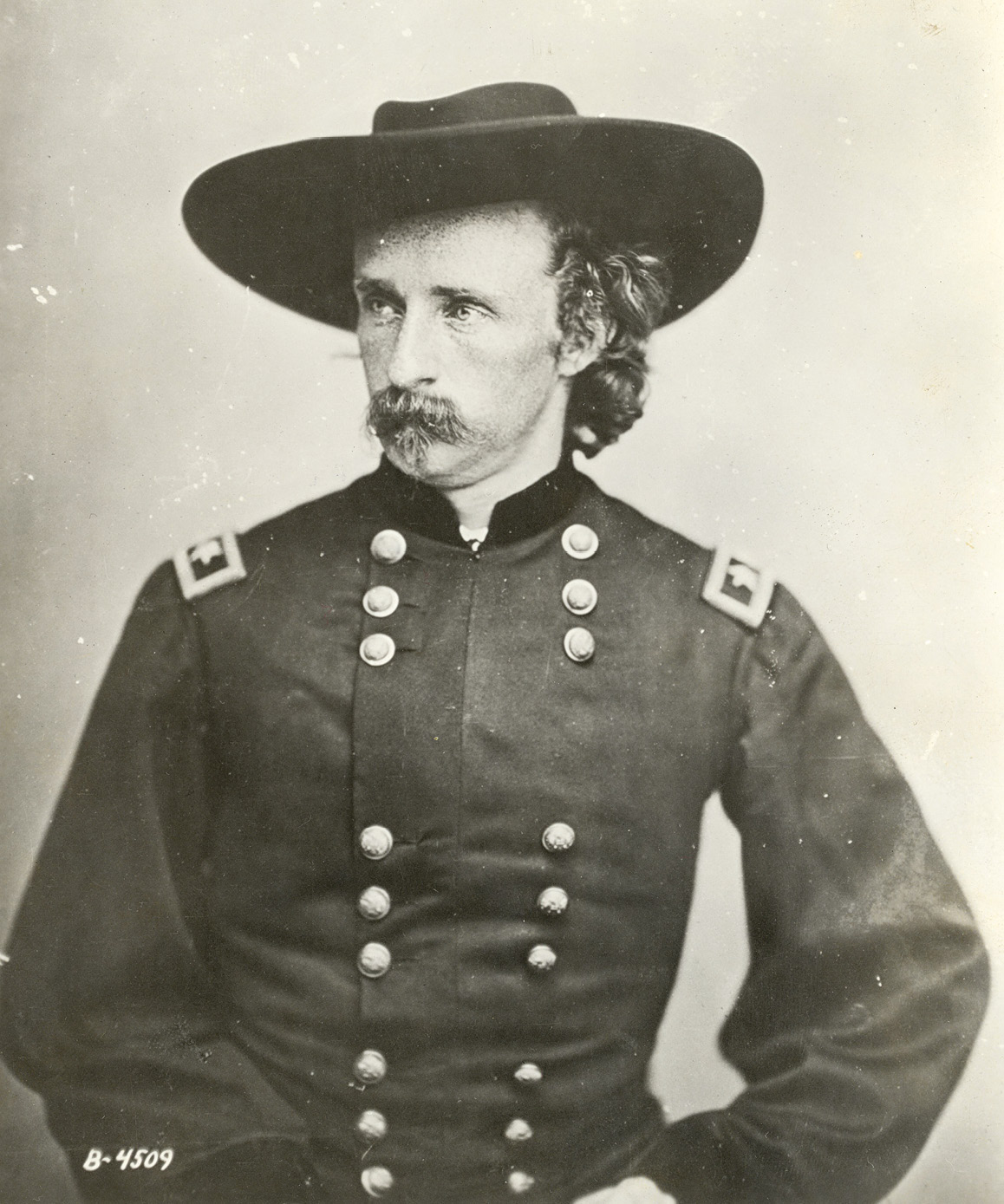
All told, the US government had fielded a force of approximately 2,500 men. The US Army’s intelligence, which was imperfect at best, estimated that there were between 1,500 and 2,000 warriors among the hostile tribes. But, based on previous experience, the officers planning the operations were of the opinion that Native American warriors invariably declined to offer battle to large formations, as they favoured tactics such as ambush and raid, wherein they held a distinct advantage and could withdraw at will.
The only experience of fierce resistance thus far had been encountered in 1866 outside Fort Phil Kearny (in present-day north-eastern Wyoming), where Captain William J Fetterman and 80 men had been wiped out by the Lakota, and later during Custer’s assault on a much smaller Cheyenne village on the Washita in 1868. In the case of the latter, Custer had not anticipated additional camps of Cheyenne, Arapaho, and Kiowa hearing the fighting and moving to aid their friends. The 7th Cavalry barely managed to extricate itself and declare its mission accomplished. Thus the Washita fight was a near-run thing for Custer – but having come through the experience successfully, the brash and self-assured Lieutenant Colonel thought no more of the matter, and so failed fully to consider the potentially disastrous effects of insufficient battlefield intelligence.
It is against this backdrop, then, that we must consider some of the most common myths concerning the Battle of the Little Bighorn.

1. Custer disobeyed orders when he opted to attack at Little Bighorn
The 7th Cavalry was split off from the main command and ordered out to locate the enemy, with General Terry’s plan being for Lieutenant Colonel Custer to pinpoint the location of the rumoured hostile encampment. The object, of course, was to locate the hostiles and then bring all three forces (Custer’s, Gibbon’s, and Crook’s) to converge on them simultaneously. Custer’s highly mobile 7th Cavalry (minus the 2nd Cavalry, the 7th Infantry, and the Gatling guns) was thus first ‘out of the box’.
As the 7th Cavalry was sent off on its mission, Terry issued a lengthy written order to Custer, saying in part: ‘It is impossible to give you any definite instructions in regard to this movement, and were it not impossible to do so the Department Commander places too much confidence in your zeal, energy, and ability to wish to impose upon you precise orders which might hamper your action when nearly in contact with the enemy. He will, however, indicate to you his own views of what your action should be, and he desires that you should conform to them unless you shall see sufficient reason for departing from them.’
The Crow and Arikara scouts were emphatic: they must attack now.
These orders were precisely what the ambitious Custer wanted. As far as he was concerned, the 7th Cavalry was being let off the leash, and he was delighted to be off on an independent mission. Terry was unaware that when he dictated his orders to Custer on 22 June 1876, his overall plan of campaign had already begun to unravel, for General Crook’s force had dropped from the equation on 17 June. Encamped on the banks of Rosebud Creek, it had been engaged by a strong force of Lakota and Cheyenne warriors under the general direction of Crazy Horse. The fierce six-hour battle resulted in relatively low casualty figures on both sides, despite the expenditure of large amounts of ammunition. While Crook’s forces retained possession of the field, they soon withdrew from the campaign to regroup without informing General Terry of their intentions.
Unaware of Crook’s discomfiture, the commanders of the planned thrusts from the west (Gibbon) and east (Custer) met with Terry on board the steamer Far West, moored on the Yellowstone River. There, the plans for the campaign were discussed with the common understanding that the three converging forces would link up to drive the recalcitrant tribes back to the reservation, before they could dissolve into scores of smaller parties and scatter throughout the territory, resulting in a much longer and more difficult campaign.
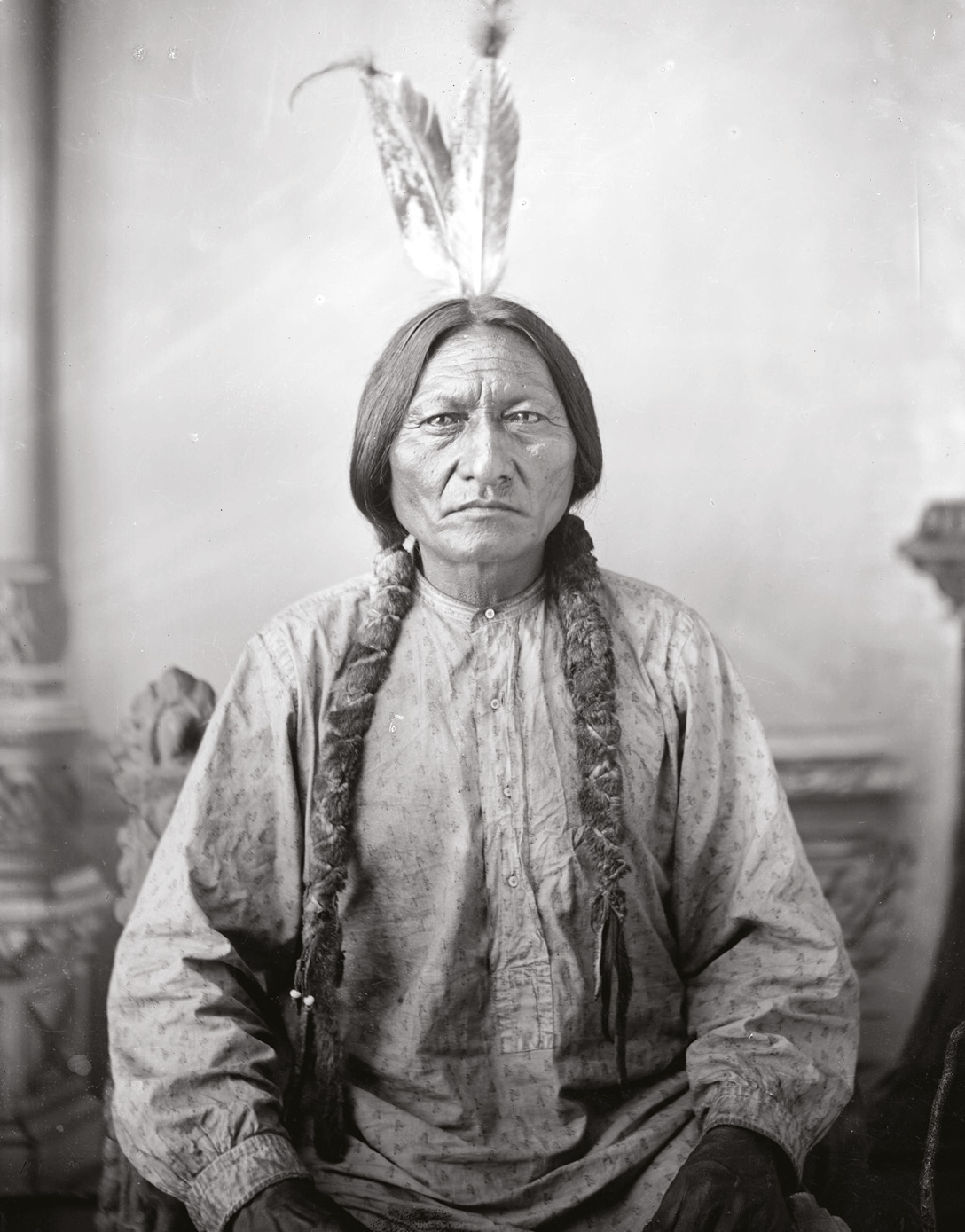
2. Sitting Bull and Lakota war chiefs set up an ambush and lured the 7th Cavalry into the village
This idea is little more than wishful thinking, and has no basis in reality. Were the Lakota, Cheyenne, and allied forces aware of US Army operations in the area? Certainly. The reports generated by scouts had alerted the assembled Indians to the presence of General Crook’s force in the area, and this had resulted in the foray led by Crazy Horse which confronted Crook on Rosebud Creek and fought him to a standstill. While, as noted above, casualties for both sides during that action were fairly minimal, it appeared to the Lakota and their allies that the fight on the Rosebud had frustrated the US Army’s actions in the area.
As Crook’s forces dropped back to recover and resupply, the Native American warriors returned to the main camp satisfied that any wasichu (white) threat had been effectively neutralised. Having tended their wounded and buried their dead, the tribesmen returned to the large encampment along the Little Bighorn River. According to numerous first-person accounts there was no suspicion that the encampment remained under threat. Life went on largely as it had done for weeks – warriors slept late and relaxed with their friends, women cooked and went out to gather wild turnips, boys tended the large horse herds, and people of all ages splashed in the cool waters of the Little Bighorn.
When a detachment commanded by Major Marcus Reno, the senior officer serving under Custer, began firing into the village, the residents were taken completely by surprise. As the Lakota warrior One Bull later recalled: ‘I was sitting in my tepee combing my hair… I saw a man named Fat Bear come running into camp and he said soldiers were coming on the other side of the river and had killed a boy named Deeds who went out to picket a horse. Then I came out of my tepee and saw soldiers running their horses toward our camp on the same side of the river.’
Warriors rushed into their lodges to snatch up weapons and then mounted ponies brought to them by young boys who had been tending the herd. Women snatched up their children and a few belongings and scurried away from the firing. Some warriors galloped about raising clouds of dust to obscure the flight of the families. Had the Native American warriors really planned to ambush the 7th Cavalry, they had done an especially bad job of it.


3. Custer disregarded the advice of his native american scouts
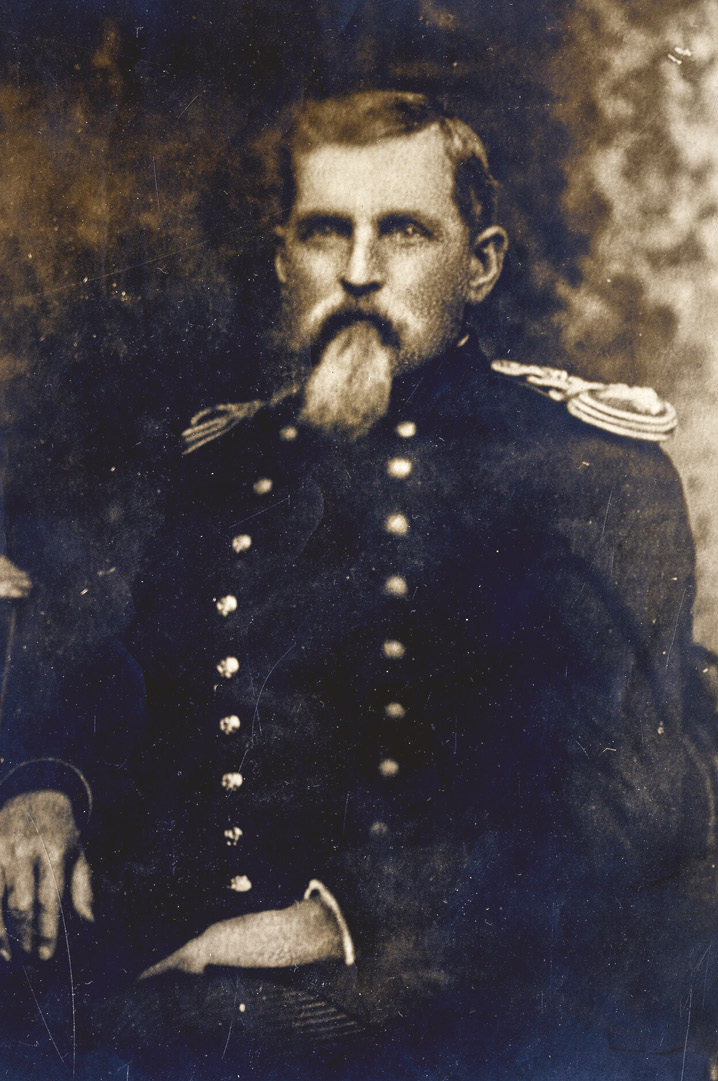
Custer was particularly friendly with his Native American scouts, both Arikara and Crow, and could converse with them easily using the universally recognised sign language of the Plains tribes. The Crow were quite familiar with the territory, as the country had previously been the traditional lands of their people before they had been ejected by the much more numerous and aggressive Lakota. While the scouts had indeed described the hostile encampment as especially large, Custer – unable actually to discern visually what the scouts had reported – believed that the 7th Cavalry was quite capable of handling the notoriously undisciplined Native American forces, especially considering the flawed intelligence which had been available at the planning session on the Far West. That consideration notwithstanding, he planned to give the 7th a day to rest and recover from the hard movement to the Little Bighorn, while at the same time conducting a more detailed reconnaissance of the reported village.
But the day of rest and reconnaissance was soon forgone, when two of the Arikara scouts spotted and attempted to intercept a pair of Lakota who were leading horses in the direction of the 7th Cavalry’s main body. The scouts were unsuccessful, and soon afterwards Lieutenant Varnum, Custer’s chief of scouts, observed a group of seven Lakota riding along a nearby ridge line. While the scouts had initially agreed that a closer reconnaissance of the suspected camp was in order, they now protested that the Lakota knew Custer’s force was approaching them. A subsequent report from the unit under Custer’s younger brother Tom noted that, while trying to retrieve some supplies dropped by pack mules, a detachment of troopers had discovered Lakota braves trying to break open a box of hard tack. Shots had been exchanged and the Lakota had fled the scene. The Crow and Arikara scouts were emphatic: they must attack now, as the element of surprise was lost.
To take an additional day to perform a full reconnaissance was to allow the Lakota to attack them first, or for the camp to break up and scatter in all directions. Custer finally agreed. The 7th had been chosen as the lead attack force, and Terry’s orders had given him the option to do as he saw fit. The circumstances appeared to dictate the logical course of action. The attack would be launched a day ahead of the proposed joint operation. The men and horses of the 7th were tired and hungry, especially as they had spent most of the previous night on a difficult trek – but Custer, whose reputation during the Civil War had been based largely on his aggressive risk-taking, was committed. The 7th Cavalry would attack.

4. The 7th Cavalry was a well-trained elite unit
While this was the image that Custer and many of his officers preferred, it was far from the reality. Authorised at 900 officers and men, the regiment at the time of the Little Bighorn numbered only 700 men, including Crow, Arikara, and civilian scouts and guides. Of these, just 172 could claim to have fought Indians previously. The unit as a whole had not been in a fight with Indians in more than three years.
A large proportion of the enlisted were younger men, some still in their teens. The United States had experienced a severe economic downturn in the Panic of 1873, and a great many new recruits were simply in search of a steady job and regular meals. There were also a sizable number of foreigners, making up almost half of the regiment in the ranks – including men from Italy, Germany, France, and Ireland, who had joined the army in hopes of acclimatising to their new country and learning the language. While there were certainly a few veterans among them, especially among the officers and senior non-commissioned officers, far too many of the soldiers were ‘city boys’ only recently adapted to handling horses.
It was only natural that with these equestrian neophytes there were a great many horse- or pack-mule-inflicted injuries in the regiment, from bitten fingers to crushed bones, sprains, and dislocations. Another anomaly discovered in forensic examinations of troopers’ remains was a high proportion of compressed vertebrae, probably the result of many hours of hard riding on uncomfortable saddles. Nor were the troopers in the best health, as army rations provided little nutrition, and a large proportion of the men suffered from rheumatism and poor dental care, often complicated by poor nutrition augmented by rampant tobacco and alcohol abuse. Exhausted from hours of horseback travel and suffering from a number of physical maladies, the 7th Cavalry was hardly a first-rate unit.
Marksmanship was yet another fly in the ointment. Allocated a mere 15 rounds per month for training, few of the troopers could be considered proficient with firearms – either with the ‘trapdoor’ (a form of breech-loading mechanism) Springfield carbine or the Colt revolver. A Lakota warrior would later declare that ‘soldiers were poor shots’. Further, there was no training in how to use these firearms on horseback, and few of the horses were acclimatised to gunfire. Thus the normal method of fighting was for the troopers to dismount, with every fourth trooper designated as the horse-holder, leading his own and three of his comrades’ horses to a position behind the firing line, where he would attempt to control the skittish mounts as they reacted to the sound of gunfire.
The result of this procedure did not play out well for Major Reno’s wing, when deployed in the wood line along the Little Bighorn. As the firing and the fighting became more intense, a number of the cavalry mounts broke free from the horse-holders, and as the unit began to withdraw under pressure, some of the men were left without horses. Some were pulled up behind their comrades, while others were left behind to their fate. Sergeant John Ryan, who had served throughout the Civil War and been with the 7th Cavalry since its inception, later wrote: ‘Individually the Indians were better soldiers than our troops, for every Indian was a perfect rider and a good soldier.’

5. The 7th Cavalry was wiped out at the Little Bighorn
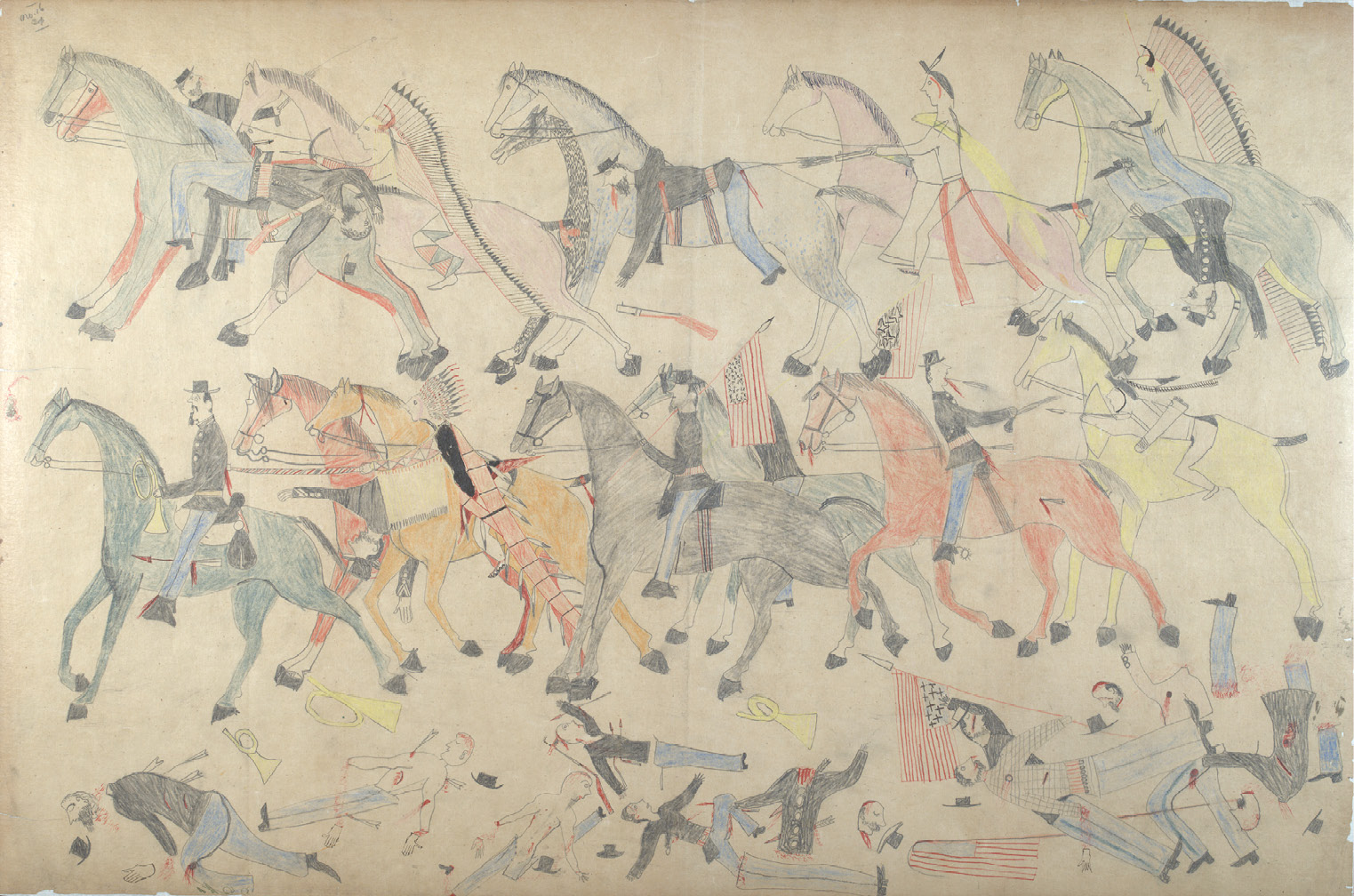
While frequently referred to as a massacre of Custer and his troops, this is unquestionably an overstatement of the case. Yes, it was certainly a defeat for the 7th Cavalry, but the entire regiment was not annihilated. Custer and the five companies of the 7th Cavalry who accompanied his wing of the assault were killed in action – all those who made the trek to what is now referred to as ‘Last Stand Hill’, or some 210 men. However, the bulk of the regiment under the commands of Major Reno and Captain Frederick Benteen managed to establish defensive positions on the bluffs above the Little Bighorn, and fought off successive assaults by Lakota and Cheyenne warriors. Thus, the total US casualty count amounted to 268 killed in action, with some having been killed inside the timber along the Little Bighorn itself, and others during Reno and Benteen’s defence of their position on the bluffs. Some 55 men were severely wounded, with six later dying of their wounds.
After the second day of fighting, there were in fact 432 survivors of the Battle of the Little Bighorn. So, not the massacre proclaimed in the nation’s newspapers. However, news of the fight, coming on the heels of the celebrations surrounding the centenary of the nation’s founding, made a profound impression on the American public. One hundred and fifty years later, it still has the power to command interest.
Fred Chiaventone is a military historian, retired cavalry officer, and Professor Emeritus for International Security Affairs at the US Army’s Command and General Staff College.
Further reading:
• James Donovan, A Terrible Glory: Custer and the Little Bighorn – the last great battle of the American West (Back Bay, 2009).
• James Welch, Killing Custer: the Battle of Little Big Horn and the fate of the Plains Indians (W W Norton, 2007).
• John Stephens Gray, Custer’s Last Campaign: Mitch Boyer and the Little Bighorn reconstructed (University of Nebraska, 1991).
• Nathaniel Philbrick, The Last Stand: Custer, Sitting Bull, and the Battle of the Little Bighorn (Penguin, 2011).
• Gregory Michno, Lakota Noon: the Indian narrative of Custer’s defeat (Mountain Press, 1997).
All images: Wikimedia Commons, unless otherwise stated