Subscribe now for full access and no adverts
The 20th century was the golden age of the military coup. Although largely unknown in the stable countries of the Anglosphere, military takeovers were for some time a more common way of changing governments than elections across Latin America and the newly independent states of Africa and Asia. The coup-makers were encouraged by the Cold War, with both the USA and the USSR plotting to put their ideological supporters in power in crucial countries via military interventions. Sympathetic regimes thus installed could act as proxies, backing either the capitalist West or the communist East.
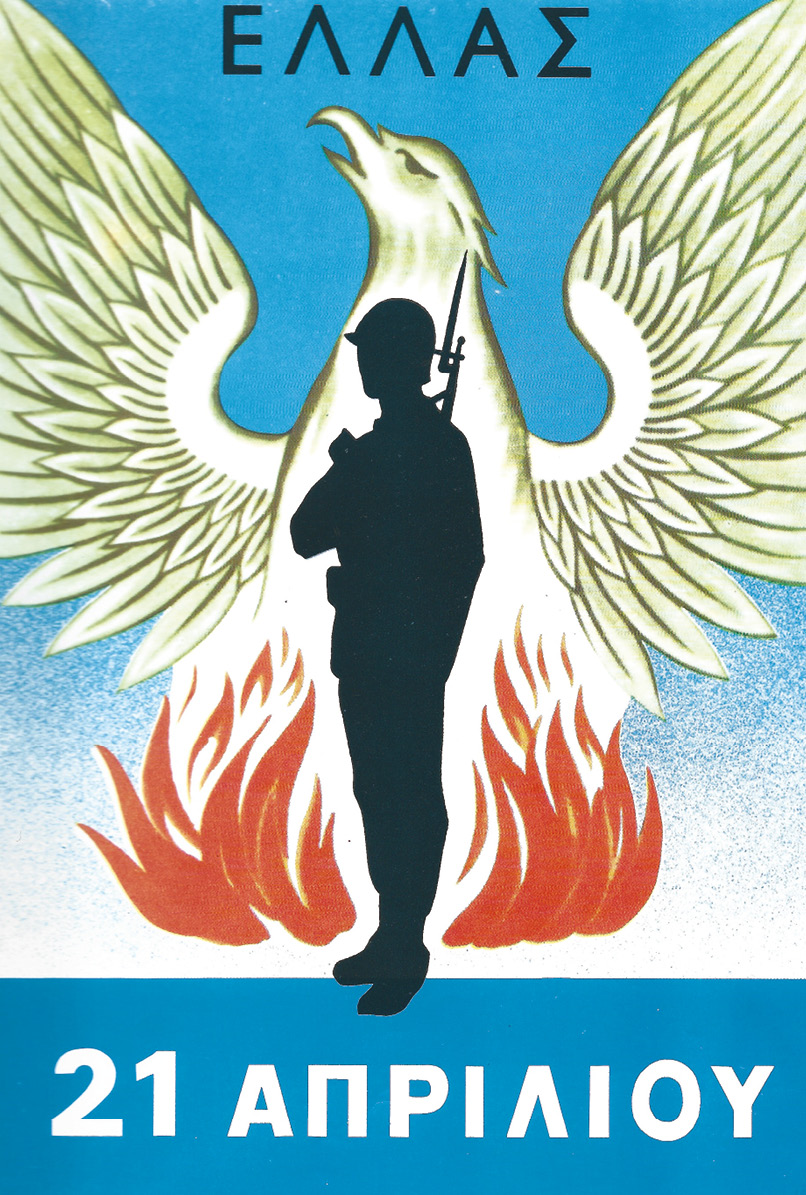
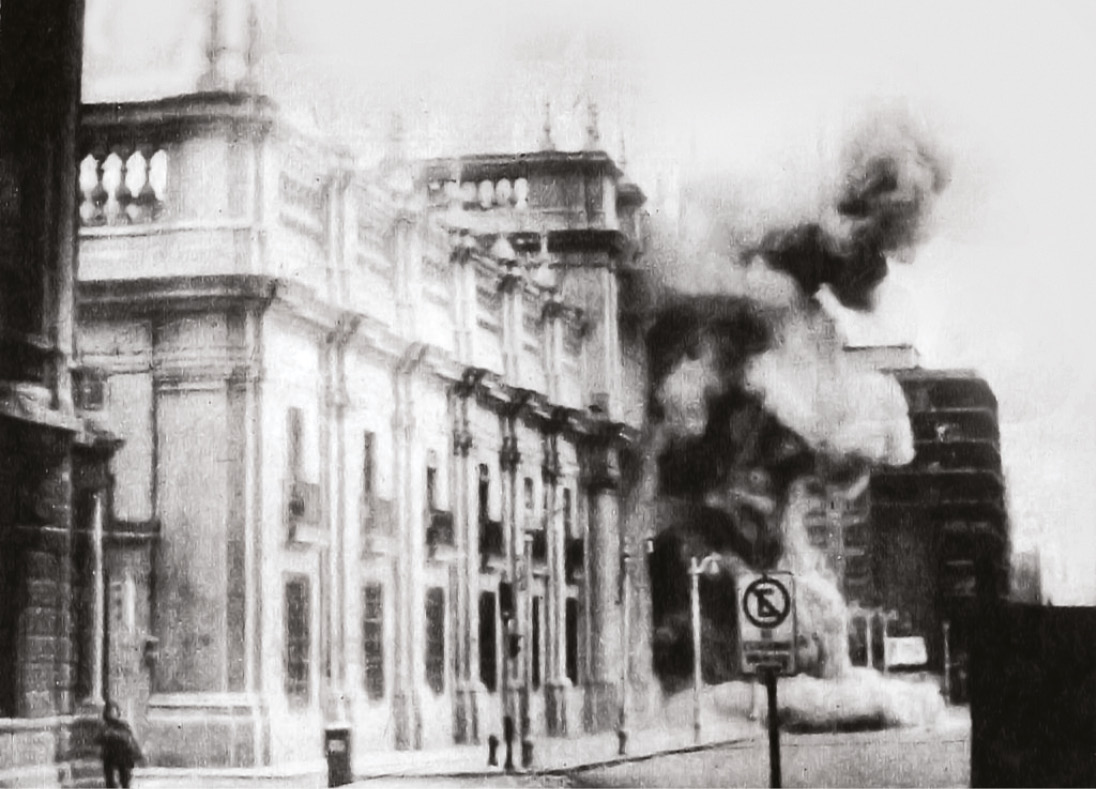
Notable examples of American-backed right-wing coups were the overthrow of leftist governments in Brazil (1964) and Indonesia (1965); the so-called Colonels’ coup in Greece in 1967; and the bloody end of Salvador Allende’s socialist presidency in Chile in 1973. For its part, the Soviet Union was particularly active in the Middle East, encouraging leftist coups in Iraq, Syria, and Yemen in the 1960s, along with the ultimately disastrous communist takeover in Afghanistan in 1979.
Many historians trace the origins of the modern coup to Europe, where in December 1851, Napoleon I’s nephew, Louis Napoleon Bonaparte, who was already the elected President of the French Second Republic, suddenly consolidated his power at a stroke – by arresting his opponents, banning rival political parties, exiling enemies such as the writer Victor Hugo, and censoring the press. His seizure of the state was completed by proclaiming himself Emperor – emulating his uncle, who had seized power in Paris by force in 1799, ending ten years of chaos that had followed the 1789 French Revolution. Napoleon III’s Empire lasted for 20 years, before falling after France’s defeat in the 1870-1871 Franco-Prussian War.

Coups were particularly prevalent in Latin America throughout the late 19th and early 20th centuries. A typical pattern would see a general using the army to overthrow a weak or unpopular civilian president, thereby himself becoming a dictator at the head of a military ‘junta’ (or ‘committee’). Such regimes were often themselves short-lived: for example, the downfall of long-standing Mexican dictator Porfirio Díaz in 1911 led to decades of revolution, civil war, and ‘government by assassination’, in which almost all presidents met a violent end. In the years after that revolution, Mexico got through eight presidents in as many years.
Putting a stop to such mayhem was often the excuse offered by military juntas to justify them moving against elected governments. The discipline and order of military life allowed armies to present themselves as the saviours of the nation, the final repository of such values as patriotism, order, tradition, hierarchy, and honest governance against the corruption and chaos of civilian rule.
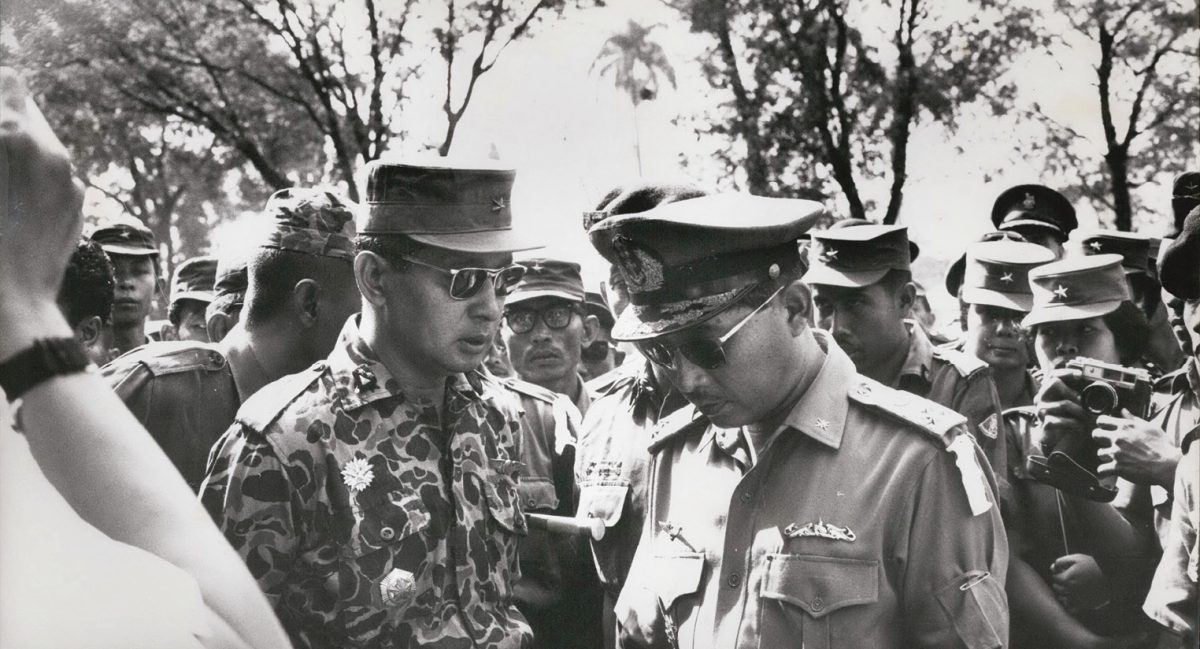
One of the bloodiest coups of the Cold War era took place in Indonesia in September 1965, when the powerful communist party tried to seize power from the ailing dictator Ahmed Sukarno. In doing so, they murdered six of the officers leading the armed forces, and threw their bodies down a well. However, two other targeted generals, Suharto and Nasution, survived, and organised a counter coup. The Muslim population of the far-flung archipelago country joined in with enthusiasm, and up to a million communists were slaughtered in revenge.
The disastrous involvement of the United States in the Vietnam War was boosted when America’s President John F Kennedy encouraged a coup to overthrow and kill the unpopular dictator of South Vietnam, Ngo Dinh Diem, in 1963. Instability followed, with a succession of further coups and military regimes, which were successfully exploited by communist North Vietnam to discredit the republic of South Vietnam.
Left or right?
Most military coups are associated with the political right – but this is by no means always the case. The Bolshevik coup in St Petersburg in 1917 is the classic example of a left-wing coup carried out by a disciplined cadre of armed revolutionaries, leading to a totalitarian regime that dominated one of the world’s superpowers for 70 years. And Europe’s last military coup, the so-called Carnation Revolution of April 1974 in Lisbon, was mounted by a group of leftist Portuguese army officers exasperated by their country’s sclerotic right-wing dictatorship under António de Oliveira Salazar, and the unwinnable wars it was waging in Portugal’s African colonies.
That coup presaged the downfall of another durable dictatorship in neighbouring Spain, where the death of General Franco in the following year ended his right-wing regime, which had come to power in 1939 after a brutal civil war which killed half a million people – many of them murdered in cold blood behind the lines by the warring sides.
The Spanish Civil War was itself triggered in 1936 by a half-successful coup by the Spanish army against an elected left-wing Republican government. Although the army rebels seized control of some towns and cities, they failed to take the major centres of Madrid and Barcelona, where working-class communist and anarchist militias fought back and resisted the takeover. The resulting civil war saw leftists from around the world, supported by Stalin’s Russia, stream into Spain to fight fascism in the communist-controlled International Brigades, while Franco’s armies were helped to win by the troops and air forces of Nazi Germany and Fascist Italy, as well as by Moors from Spain’s North African territory in Morocco.
Unlike Franco’s, most military regimes are of relatively short duration, with the juntas pledging to return to their barracks once ‘order’ has been restored, and promising controlled elections to return a more acceptable government than the ones against which they had risen. But perhaps the longest-lasting current military regime is the one that first took power in Burma in 1962, and, after changing the country’s name to Myanmar, has ruled it for most of the time since. In February 2021, the army – known as the Tatmadaw – staged another coup, and arrested the civilian prime minister Aung San Suu Kyi. But the ousted civilians did not accept their removal, and some have joined forces with Myanmar’s many ethnic guerilla groups, who have been battling the Tatmadaw for decades in an increasingly successful rebellion that has taken control of much of the isolated country’s territory.
Secret meetings
How, then, is a typical coup organised and carried out? Most originate among a group of younger officers dissatisfied with an existing regime. They often plan their coup in secret meetings, and on the appointed day move their units to take over the commanding hubs of a modern state in its capital, including the presidential palace and parliament. TV and radio studios are also seized, as well as vital utilities such as electricity and power plants. Normal broadcast programmes are replaced by martial music, interspersed with appearances by officers in uniform announcing the formation of a junta of ‘national salvation’ which aims to ‘cleanse’ the country of a corrupt regime. Officials and politicians of the old regime are arrested or even executed, jets fly overhead threateningly, and tanks and armoured vehicles patrol the streets to deter any opposition. Such scenes became familiar in many emerging states in Africa and Latin America, particularly in the 1960s.

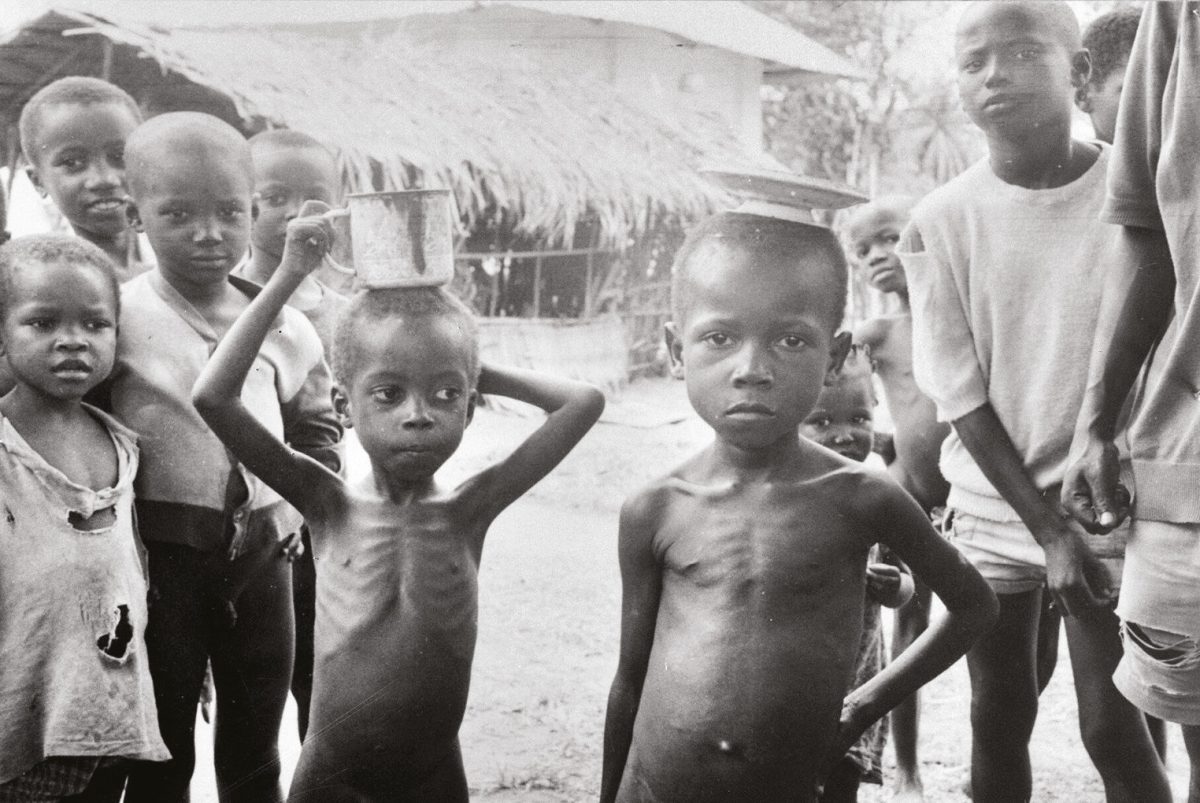
Sometimes coups have disastrous long-term consequences. For instance, a bloody coup by young Christian officers in Nigeria in 1966 was resented by Muslim northerners, who launched a racial pogrom of the Christian Igbo tribe in response. This persecution led to the Igbo seceding to form their own state, named Biafra, leading to a bloody civil war between 1967 and 1970, and shocking scenes of mass starvation before Biafra was crushed.
In the 21st century, military coups have become unfashionable rarities. This is for a number of reasons: the end of the Cold War put an end to coups by proxies of the contending superpowers; sophisticated state surveillance made it more difficult for conspirators to plot their interventions in secret; and powerful international organisations made their disapproval of coups plain to all. In Latin America, the traditional ‘home’ of the coup, the atrocities carried out against civilians by military regimes in Argentina, Brazil, and Chile in the 1970s – with thousands arrested, tortured, kidnapped, and killed – sparked such revulsion that elected governments have become the unfamiliar norm, and military dictatorships a fading memory.

Before that, however, some countries had shown themselves to be particularly prone to experiencing military coups. In Turkey, the army saw themselves as guardians of the secular modernising ideology of the father of the nation, Kemal Atatürk, and mounted successful coups in three successive decades, the 1960s, 1970s, and 1980s, when they felt that Atatürk’s legacy was in danger from backsliding civilian regimes. Only after one more coup attempt in 2016 – this time unsuccessful – did the authoritarian President Recep Tayyip Erdog˘an succeed in purging the army and consolidating his Islamic ideology.
One very consequential coup that might have changed the whole course of the Second World War took place in Yugoslavia in April 1941, when British agents inspired the military in Belgrade to overthrow the pro-German regent, Prince Paul, and establish a pro-Allied regime. A furious Hitler then bombed Belgrade, before launching a full-scale invasion and occupation of Yugoslavia – a move which delayed his planned invasion of Russia by more than a month, which some historians believe eventually cost him victory on the Eastern Front. On the other side of the coin, a pro-Nazi coup in Iraq the same year, which could have handed the whole Middle East to Hitler, was swiftly snuffed out by a rapid British military response and intervention.
In 1953, British agents, with their American CIA colleagues, were also involved in inciting a coup in Iran. This brought down a nationalist president, Mohammad Mosaddegh, who had threatened to take over Western-owned oilfields, and installed the pro-Western Mohammad Reza Pahlavi, the last Shah of Iran, who would rule until he was ousted in the 1979 revolution which established the current Islamic republic.
What is a coup?
A distinction must be drawn between military coups and popular revolutions. A coup or ‘putsch’ (from the Swiss German for ‘knock’ or ‘thrust’) is the work of a small group of dedicated plotters using the state’s armed forces to achieve specific and usually limited aims. By contrast, revolutions, like that in Iran in 1979 or Fidel Castro’s takeover of Cuba in 1959, are carried out by masses of the civil population, driven to risk their lives because their situation has grown beyond intolerable.
Just as countries like Turkey have undergone repeated coups, some long-established democracies – such as those in Scandinavia, the UK, the USA, and the rest of the Anglosphere – seem completely coup-proof. Parliamentary democracy and stable institutions backed by the rule of law and supported by popular consent appear to be the best guarantees against soldiers taking the law and the state into their own hands. In Britain, this is coupled with respect for our long-established monarchy, and the oath of loyalty that officers swear to the sovereign – offering a compelling reason why no Army officer has attempted to seize command of the kingdom since Oliver Cromwell in the 1650s.
So, as we move further into the 21st century, has the military coup been consigned forever to history by modern technology and the reluctance of professional soldiers to take up the increasingly difficult business of ruling a complex modern state? Only time will tell.
Nigel Jones is a historian, journalist and broadcaster, who has published widely on topics ranging from the Tower of London to the Valkyrie Plot to assassinate Hitler.
All images: Wikimedia Commons, unless otherwise stated