
Subscribe now for full access and no adverts
The British army’s role in 18th-century Scotland is little known today, except perhaps for the savage repression of the Highland population following the final Jacobite defeat at Culloden in April 1746. Yet for half a century, the army formed the front-line of defence against a movement dedicated to removing Britain’s ruling royal dynasty. How was the army organised and armed to meet the Jacobite challenge? What was it like as a fighting force, and what mark did it leave on Scotland after crushing the Stuart cause?
This article also assesses the strengths and weaknesses of the Jacobite armies. Often underestimated in the past as brave but poorly organised Highlanders, there is now a much fuller appreciation of the threat they posed, especially in the two largest uprisings of 1715 and 1745. This was a force which, in its last appearance, won two of the three battles it fought – at Prestonpans and Falkirk Muir – and came within 125 miles of London. The Jacobites should not be lightly dismissed – their opponents, after all, did not make that mistake at the time.

A Highland police
By Continental standards, the British army of the early 18th century was relatively small. Although it expanded in response to periodic crises, there were usually no more than 12,000 troops stationed in Scotland. This reflected traditional unease that a large standing army might be used as an instrument of state tyranny. As it was, the force that existed was composed of Highland and Lowland Scots as well as English soldiers. There was a deep social divide between the rank-and-file and their officers, who typically came from the gentry and bought their commissions – a practice that was not abolished until 1871.
A soldier who succumbed to the appeal of a touring recruitment party theoretically enlisted for life, but usually for a much shorter period as regiments were reduced in size at the end of a war. Many did, however, choose to re-enlist. Recruits could expect a bounty of £4 on joining up, followed by a daily wage of 8d (roughly equivalent to £10 today), from which stoppages for uniform and other expenses were made. A proportion of the troops were allowed to take their wives with them on campaign, the women performing cooking, nursing, and other roles, and sharing the hardships of army life.
The most common motives for enlistment were the prospect of regular pay – by contrast with the insecurity of most working-class employment – and the desire to escape debts or other private troubles. For some, the defence of country and religion against the ‘foreign’ Catholic Jacobite ideology was a factor. Following the victory at Culloden, for example, soldiers burned meeting houses used by ‘non-juring’ Episcopalian congregations, who rejected the established Protestant church.

Throughout the Jacobite era, British government troops wore a red coat, their headgear changing from a broad-brimmed felt hat at Killiecrankie in July 1689 to a tricorn or cocked hat by the beginning of the 18th century. Elite grenadiers had a distinctive mitre-shaped cap, which made it easier for them to shoulder their muskets and hurl grenades.
Physical punishments, ranging from flogging to hanging for the most serious offences, were regarded as indispensable for maintaining order. Discipline was toughened by the passing of the 1689 Mutiny Act, which extended military law from wartime to peace. Nevertheless, men continued to risk harsh penalties by resisting unpopular orders. The most serious incident was in May 1743, when the Black Watch regiment was summoned to London for a royal review. Rumours spread that they were to be posted to the West Indies – regarded as a place of disease and death – causing more than 100 soldiers to desert, of whom three were executed as a warning to the others.
The core responsibility of the army in Scotland was to act as a police force, dealing with cattle thieves, smugglers, and other criminals, as well as suppressing Jacobite activity. Troops were tasked with enforcing the Acts of Parliament passed after the ’15 and the ’45 risings, disarming Jacobites and enforcing a ban on the wearing of Highland dress by civilians. The latter, a bid to dismantle the clan system which had fostered Jacobitism, was particularly contentious, and saw the military sometimes undermined by uncooperative local judges. Highland regiments, incidentally, were not subject to the ban.
Keeping control
To prepare troops for the ultimate challenge of battle, officers relied heavily on repetitive drilling. Steadiness in face of the enemy assault could not always be guaranteed, as at Killiecrankie in July 1689. But soldiers were trained in the concerted use of volley-fire, which was essential to overcome the limited range and accuracy of the individual musket. They formed three continuous ranks, the front kneeling, the second crouching forward, and the third standing upright, enabling a rolling series of firings.
Infantry at Killiecrankie used a mixture of older matchlocks and newer flintlocks, and some troops still carried pikes for defence against cavalry. The flintlock musket, with a maximum effective range of 100 yards and a rate of fire of three shots per minute, was the standard infantry weapon by the 1720s. Standing shoulder to shoulder, an infantry formation could have a devastating effect on an advancing enemy, as at Culloden. But the weapon was less effective in bad weather when the gunpowder was damp.
Artillery underwent significant improvement during the period. At Killiecrankie, General Mackay’s army had three ‘leather guns’ – iron cannon sheathed in leather – which had the advantage of lightness and mobility, but lacked accuracy and reliability. At Culloden, 3-pounder field pieces disabled the Jacobite guns, then fired grapeshot and canister into the advancing enemy ranks. They were supplemented by Coehorn mortars (designed by the Dutch military engineer Menno van Coehoorn), which projected 5.5-inch explosive shells in a high arc. Cavalry came into their own in the closing stages of the action, after infantry-fire had broken the Highland charge. Light horse and dragoons, whose principal weapon was the sword, cut down the surviving Jacobites as they retreated to Inverness.
Engaging the enemy in the field was not the army’s only role in the Jacobite wars. Its most enduring legacy was an ambitious network of roads and fortifications, mainly laid down between the ‘15 and the ‘45 to facilitate future troop movements. The most accomplished feat of military engineering, however, was constructed after Culloden. This was Fort George, built on a spit projecting into the Moray Firth in north-east Scotland, and discussed in detail in MHM 129 (August/September 2022). It eclipsed the three strongholds erected or reinforced between 1690 and 1725 along the Great Glen, at Fort William, Fort Augustus, and Inverness. The last two had proved alarmingly vulnerable to enemy assault in the 1745-1746 rising.
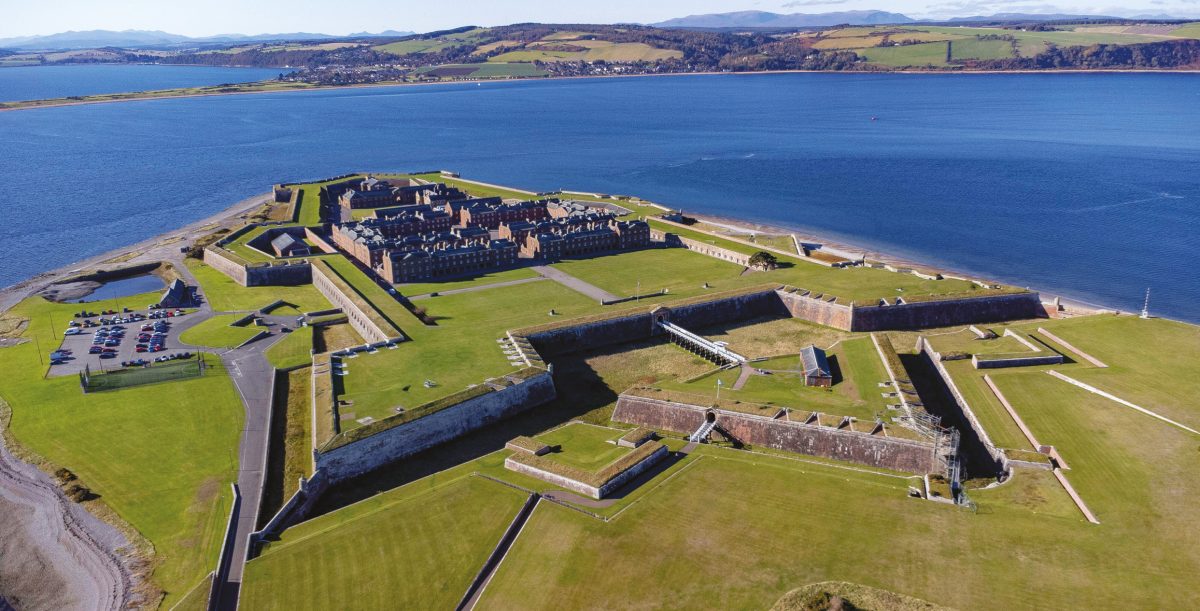
Fort George took 20 years to complete. The site covered 42 acres, and 1,000 men were employed in building it. Stone-faced ramparts stretched for almost a mile, while sloping grassy banks could absorb artillery-fire. The star-shaped fortress accommodated 1,600 men and 80 guns. The main defences were concentrated on the landward side, from which a Jacobite threat was most likely to come, with projecting bastions and redoubts enabling covering fire in the event of an assault.
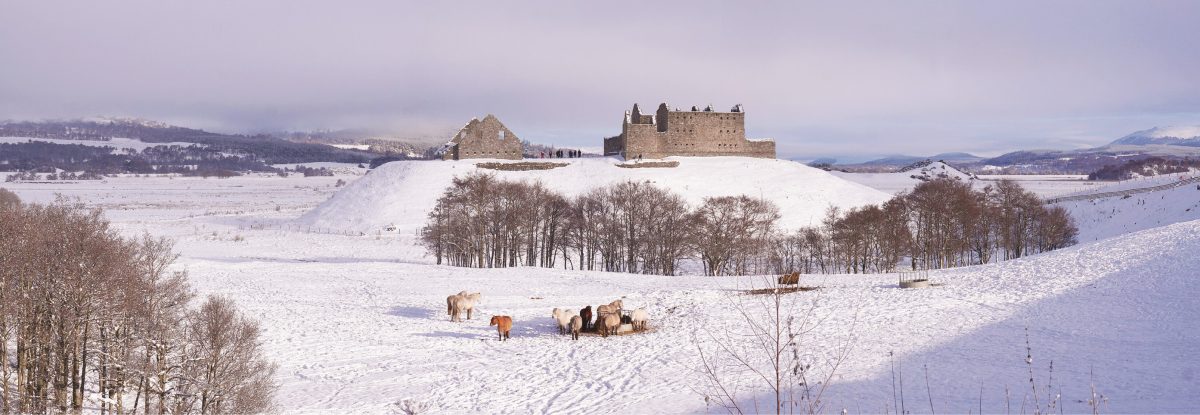
The programme of works included a major shift from the billeting of soldiers on private householders – which often caused civil/military tensions – to the construction of purpose-built barracks. A surviving example, based on a design by the noted architect Nicholas Hawksmoor, can be seen in the strategically important town of Berwick-upon-Tweed, near the Anglo-Scottish border. Further north, on a prominent mound close to Kingussie, stand the ruins of Ruthven Barracks. This was one of four similar structures built after the ’15. Consisting of a pair of three-storey blocks, forming two sides of an enclosure, it was destroyed by the retreating Jacobites in April 1746.
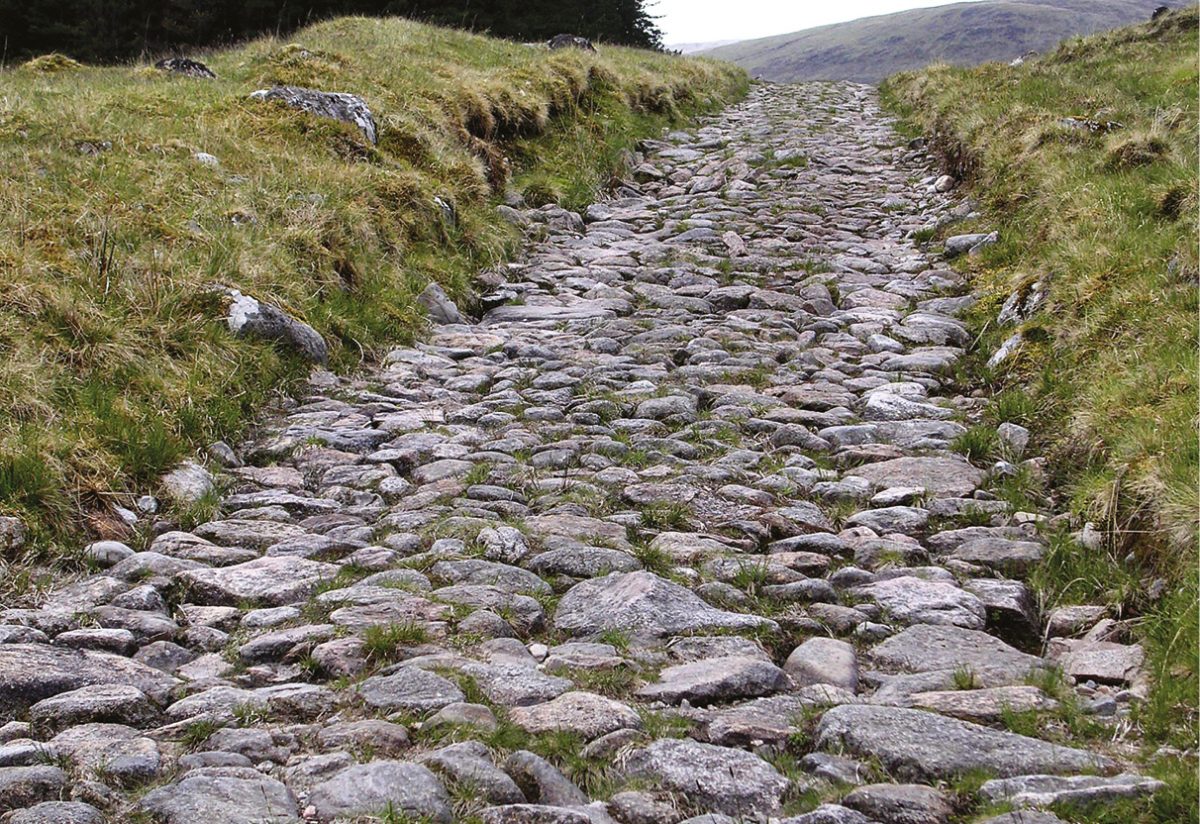
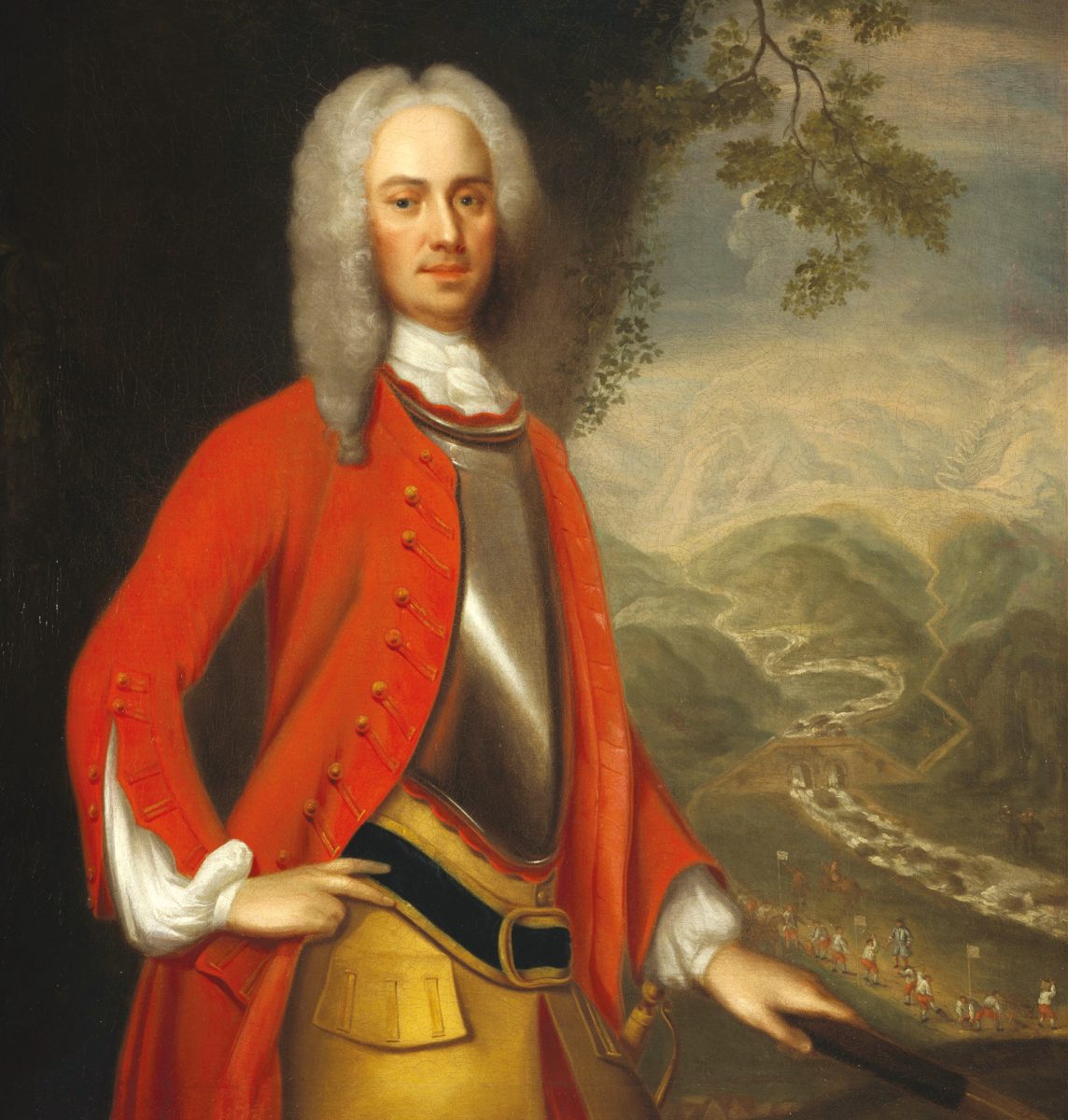
Even more remarkable are the 250 miles of military roads built across the Highlands by General George Wade, and more than 800 miles under his successor Major William Caulfeild. When the army arrived, most Scottish roads were poorly maintained tracks or drovers’ routes. Sent to report on the state of communications in 1724, Wade stressed the ‘great disadvantages regular troops are under when they engage with those who inhabit mountainous situations’.
The roads were mostly built to a standard width of 16 feet and were made as straight as possible. Wade ran them along hillsides where feasible, clear of low-lying boggy ground. Soldiers were employed on road-building during the summer months, either living in hutted encampments or being billeted on local civilians. By the mid-1730s, Inverness had been linked to Fort William and Dunkeld. The road connecting Ruthven Barracks and Fort Augustus included the 2,526ft Corrieyairack Pass, once the highest route in Britain. Ironically, it proved more helpful to Jacobite forces in the summer of 1745, enabling them to move swiftly from the western Highlands to Perth. Wade and Caulfeild were also responsible for more than 600 bridges, of which the best known is a spectacular five-arched structure over the Tay at Aberfeldy in Perthshire.
Jacobites at war
Opposing the London government’s armies were forces raised through a combination of old-fashioned feudal obligation and voluntary enlistment, supplemented by smaller numbers of French, Irish, and English troops. In the Highlands, tenants owed military service to their clan chiefs. They were often recruited by tacksmen – middlemen who leased land and sublet it to smaller tenants. Undoubtedly, a proportion of the Jacobite soldiers were pressed into service. But their number may have been exaggerated by hostile writers, seeking to undermine the idea that the cause enjoyed genuine popular support in Scotland.
In 1689, the Jacobite army was almost entirely drawn from the Highlands. By contrast, in 1715 and 1745, the region provided about 45% of the Jacobite’s total strength. The north-east and Perthshire were fertile recruiting grounds, while Presbyterian-dominated south-west Scotland was the least supportive area. The ’15 and the ’45 did not straightforwardly pit Highland Jacobites against Lowland loyalists. Contrary to the older belief that better-off Scots shunned the movement, it seems to have contained a cross-section of society. Analysis of volunteers in north-eastern Scotland suggests that in 1745, approximately half the recruits were merchants, tradesmen, and tenant farmers.
Jacobite soldiers lacked a common uniform, although most Highlanders wore a jacket and tartan plaid – a large piece of fabric wrapped around the body – or the shorter kilt. Their bonnets commonly sported a white cockade as a sign of their allegiance to the Stuart dynasty. The army consisted primarily of infantry, while the limited numbers of cavalry were used for scouting rather than fighting. Artillery played little part in the 1689 and 1715 battles. By 1745, however, the Jacobites had approximately 85 cannon – mostly light, mobile pieces – and mortars. They included French artillery and captured English guns.
This was more than a disorderly rabble of ‘barbaric’ Highlanders. The soldiers were organised in regiments and there was a standardised pay system, even if the levels of remuneration were generally lower than those awarded to government troops. Training was limited in the 1689 and 1715 risings, but had improved 30 years later, with French officers giving instruction on marching in column and the use of firepower.
There was, inevitably, a degree of improvisation when it came to supplying the Jacobite forces. Lacking access to local depots, and needing to move as rapidly as possible, without the encumbrance of long supply trains, they relied heavily on local requisitioning of food. In Derby in the ’45 – the furthest south that Charles Edward Stuart’s army reached before deciding to retreat to Scotland – soldiers were billeted in private houses, alienating civilians through the resulting dirt and damage to property.
Doomed to defeat?
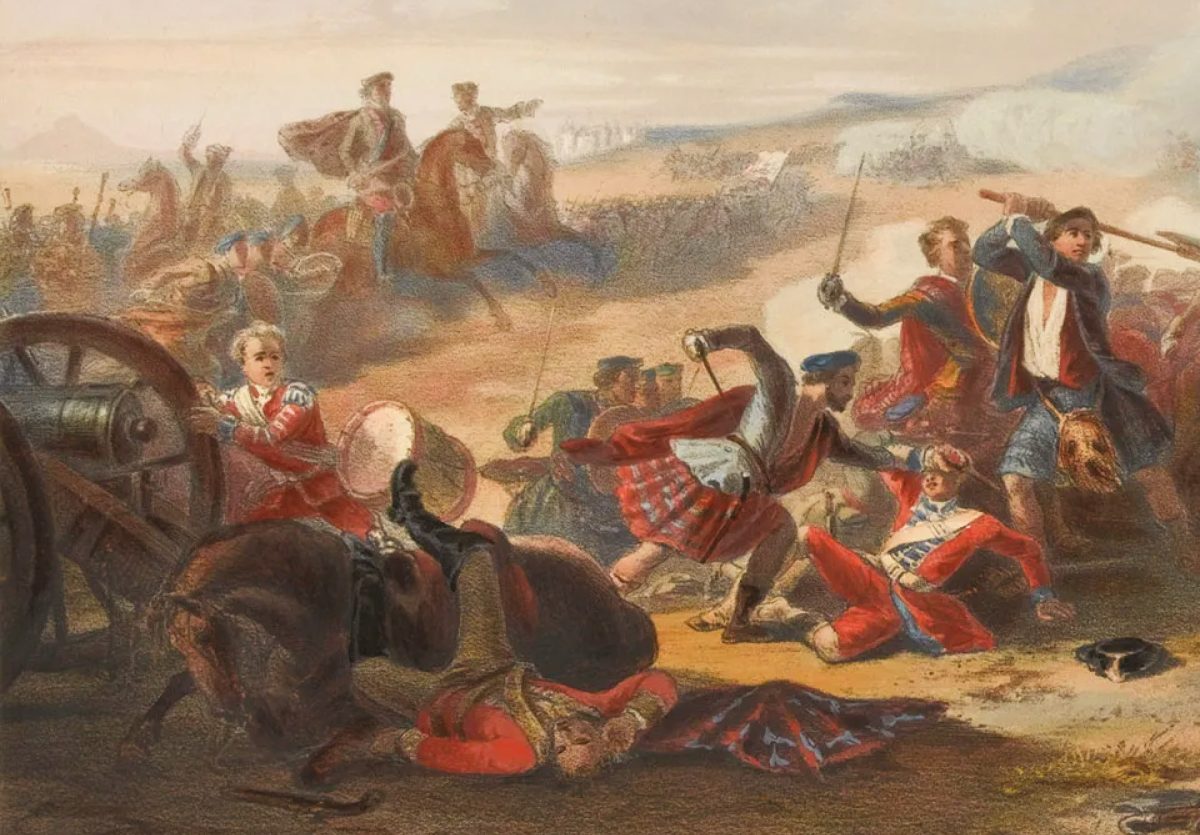
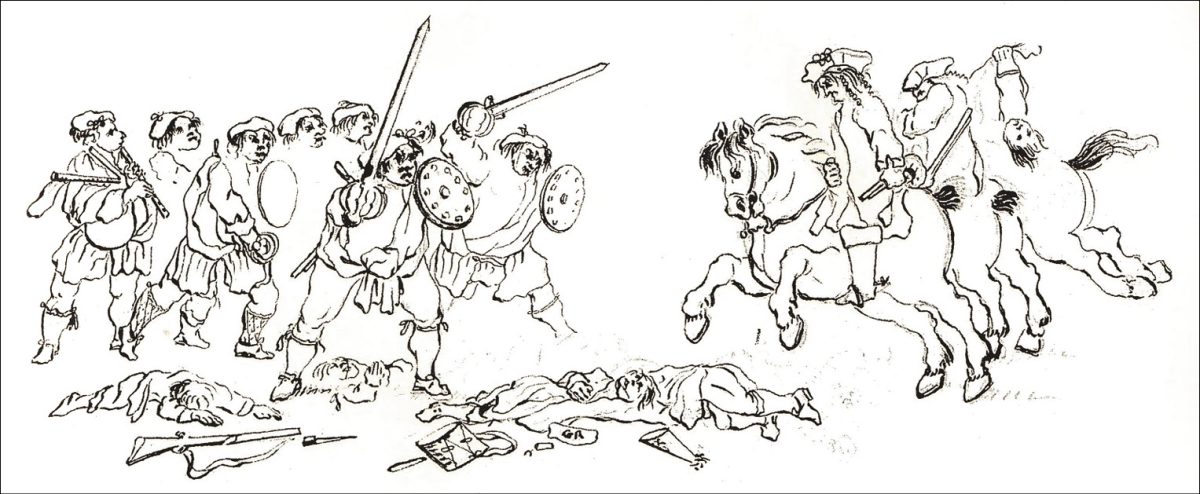
Traditionally, Jacobite forces relied on the frontal charge, using their momentum to break up fixed enemy positions. They surged forward in groups, three or four ranks deep, until they were some 50 yards from the government lines. They would then fire a ragged volley, before throwing down their firearms and racing on to cause mayhem with their swords.
Donald McBane, a redcoat famous for allegedly jumping an 18ft gorge to escape the Jacobite pursuit at Killiecrankie – an episode known as the ‘soldier’s leap’ – left an eye-witness account of the onslaught. He described the Highlanders heading towards the government lines ‘like madmen, without shoe or stocking, covering themselves from our fire with their targes [small, wooden, leather-covered shields]. At last they cast away their muskets, drew their broadswords and advanced furiously upon us, and were in the middle of us before we could fire three shots apiece, broke us and obliged us to retreat.’
This plays to the classic image of Jacobite troops wielding basket-hilted broadswords as their weapon of choice. Modern research, however, indicates that the army was becoming better-armed over time. Historian Murray Pittock’s analysis of captured weapons after Culloden suggests that muskets significantly outnumbered swords. Targes had virtually disappeared from the battlefield by then. Jacobite troops used defensive as well as offensive tactics. At Falkirk Muir in January 1746, musket-volley firing by three regiments on the Jacobite right flank caused havoc among advancing government dragoons. They finished the job by dropping to the ground and using their dirks (long-bladed thrusting daggers) on both riders and horses.
In both 1715 and 1745, the Jacobites were let down by weaknesses of leadership and logistical limitations, combined with a lack of active support from France or from English sympathisers. Their numbers were far from negligible. In the ’15, they raised up to 20,000 men. The government army was outnumbered by three to one at Sheriffmuir in November 1715. At the start of the ’45, most of the British army’s estimated 55,000 strength was stationed abroad. Up to 14,000 men joined Charles Edward Stuart at the peak of his success. Numbers fluctuated during the campaign, and not surprisingly, there were desertions as the tide began to turn against the cause.
Arguably, the best hope of victory for the Jacobite army was to push on rapidly to London, rather than withdrawing northwards, after they reached Derby in December 1745. This would, of course, have run the risk of encirclement. Meanwhile, the government gained time to draw on its greater resources, recalling men from Flanders and drafting German troops. A case can be made that the outcome was not a foregone conclusion. The Jacobite movement posed a clear and present danger to the governing regime. In the concluding articles in the series, we will examine the causes of its eventual failure more fully.
Graham Goodlad has taught history and politics for more than 30 years. He is a freelance writer and a frequent contributor to MHM.
• Victoria Henshaw, Scotland and the British Army 1700-1750: defending the Union (Bloomsbury Academic, 2014).
• Murray Pittock, The Myth of the Jacobite Clans: the Jacobite army in 1745 (Edinburgh University Press, 2009).
• Chris Tabraham and Doreen Grove, Fortress Scotland and the Jacobites (Historic Scotland, 1995).
In the next issue of MHM: The Jacobite Wars, Part 3: why the Stuarts failed to recover the throne in 1715 and 1719.